Veda in Buddhist Scriptures: Experiential Knowledge, Not Vedas
This article examines the meaning of Veda in Buddhist scriptures, specifically within the Tipitaka, and refutes Brahminical claims. For centuries, a deliberate falsehood has been peddled: that the word ‘Veda’ appearing in Buddhist texts refers to the four Vedas of Brahminism. Is this true? The evidence from Pali etymology and the Tipitaka exposes the real meaning: ‘Veda’ signifies experiential knowledge—a direct realization—not a collection of hymns. Understanding this distinction dismantles the myth of a Vedic origin for Buddhism and reasserts the independent, evidence-based rationality of the Dhamma.
The False Equivalence: How Brahminism Hijacked Buddhist Terminology
The Propaganda of Equating ‘Veda’ with the Four Vedas
Does the occurrence of ‘Veda’ in Pali texts prove the existence of the Rig, Yajur, Sama, and Atharva Vedas? This is a common but deceitful tactic. The Tipitaka uses the term extensively, yet never refers to a textual corpus of hymns. Instead, the linguistic and philosophical context reveals meanings tied to knowing and experiencing. But why would anyone push this false equivalence? The answer lies in semantic manipulation aimed at appropriating Buddhist authority.
The Pali Language: A Language of the Learned
It is often claimed that Pali was the language of the masses, while Sanskrit belonged to the learned. This narrative is historically false. Ashoka’s inscriptions, written in Pali and Prakrit for a literate population, prove these were scholarly mediums. If Sanskrit were truly the language of the elite, Ashoka would have used it. The inversion of this reality seeks to diminish the intellectual sophistication of Buddhism and project a fabricated antiquity onto Sanskrit.[source] Read more: The History of Vedanta in India: Unveiling the Truth
The Etymological Root: ‘Vid’ Dhatu and the Genesis of ‘Veda’
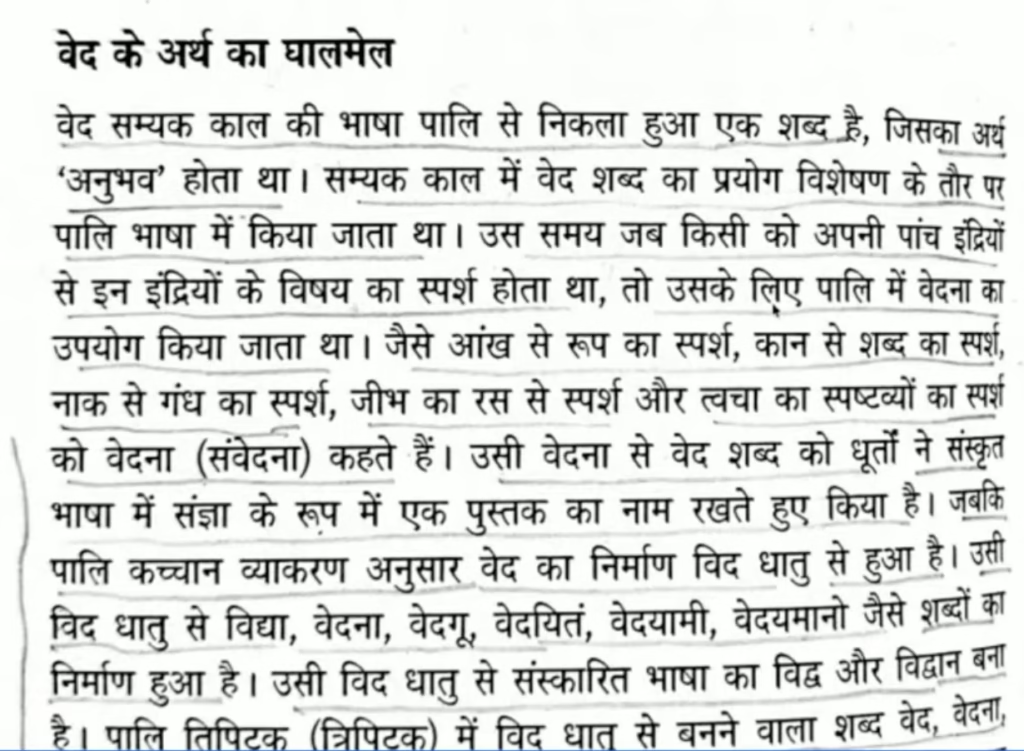
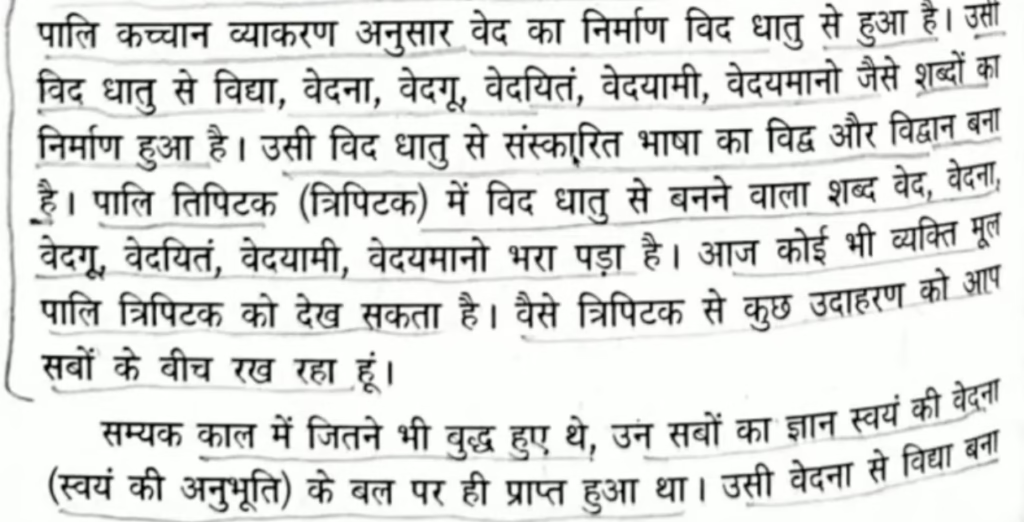
According to Pali grammarian Kaccayana, ‘Veda’ derives from the root ‘vid’ (विद्), which means to know, experience, and understand. This root generates a rich family of Pali terms: vedana (sensation), vedagu (one who has attained knowledge), vidya (knowledge), vidita (known), and vedayami (I experience). Such abundance shows that ‘Veda’ is native to Buddhist linguistics. In contrast, the term stupa is rare and foreign in Vedic texts, lacking derivative forms, which proves it was borrowed from Buddhist culture.[source]
The Buddhist Definition: Veda as Experiential Knowledge
The Three Types of Knowledge in Buddhism
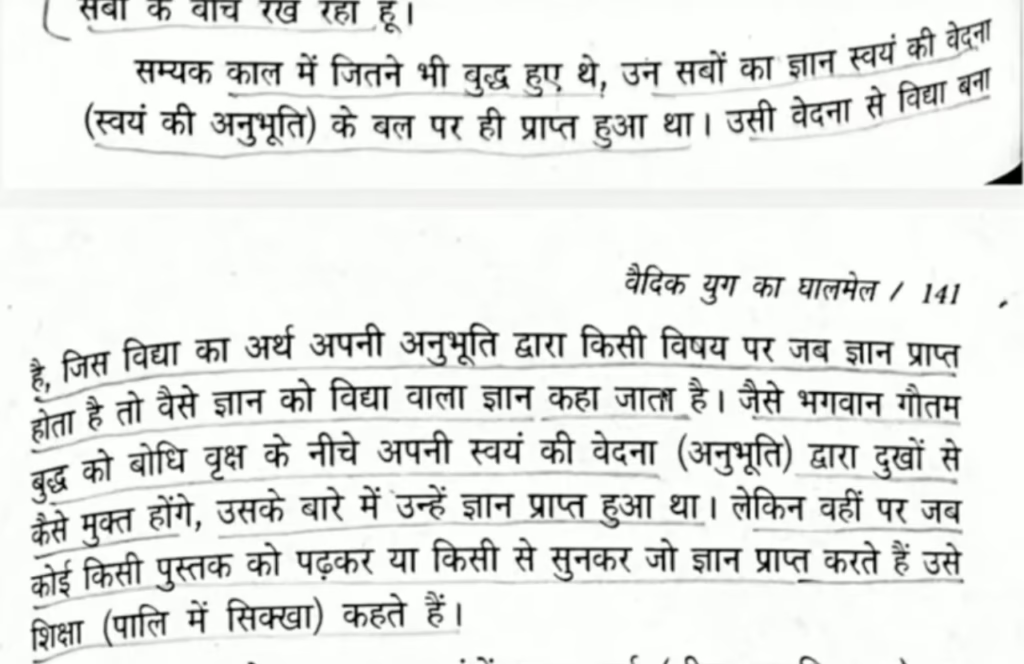
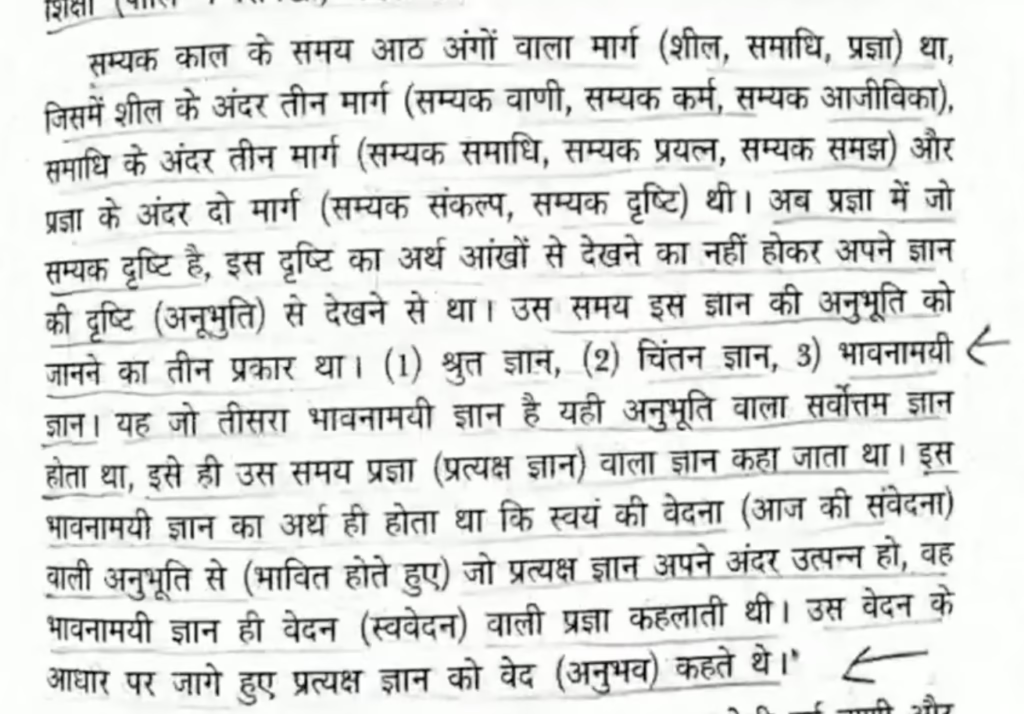
Buddhism classifies knowledge into three categories: suta-maya (heard), cinta-maya (thought), and bhavana-maya (direct experience). The term ‘Veda’ aligns with bhavana-maya gnana—knowledge from personal realization. This is not book-learning. The Buddha’s enlightenment, under the Bodhi tree, came from deep contemplation based on direct observations, not memorizing pre-existing texts. Could anything be further from the notion of revealed scriptures?
Vedana: The Core Meaning of Sensation and Experience
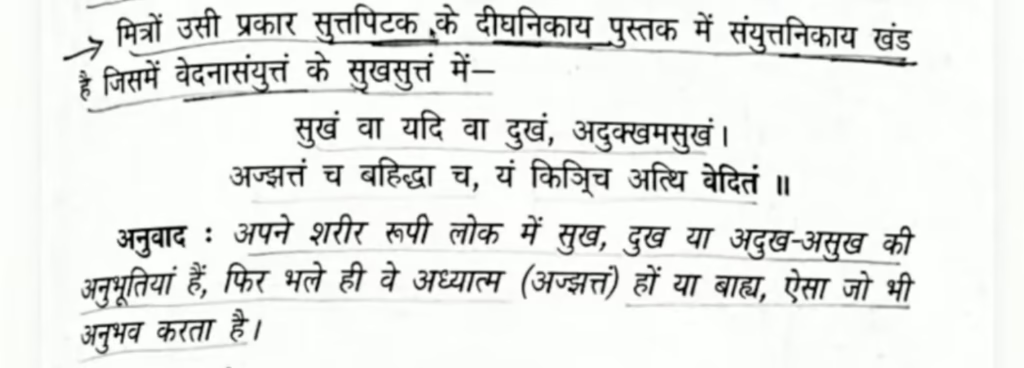
The Pali word ‘vedana‘ is central to Buddhist psychology and has been grossly mistranslated. Its actual meaning is ‘sensation’ or ‘feeling’—the raw experience through the six sense doors. Some reduce vedana to ‘suffering’ (duhkha), but this is a deliberate misrepresentation. In the Tipitaka, vedana includes both pleasant (sukha) and painful (dukkha) sensations. For example, ‘sukham vedanam vedayami’ means ‘I experience a pleasant sensation.’ This clear distinction exposes the manipulative translation that obscures the experiential foundation of Buddhist teachings.
How the Buddha Attained Knowledge: Direct Perception, Not Scripture
The Buddha’s path was empirical. He did not rely on hearsay or textual authority. He contemplated how contact at the sense doors gives rise to sensations and investigated their arising and cessation. This method of observing, analyzing, and directly knowing embodies ‘Veda’ in Buddhism. It is about verified experience, not written scripture. So, why do some insist on equating it with the Vedas?
Textual Evidence from the Sutta Pitaka
Digha Nikaya: Mahasatipatthana Sutta — Vedana Section
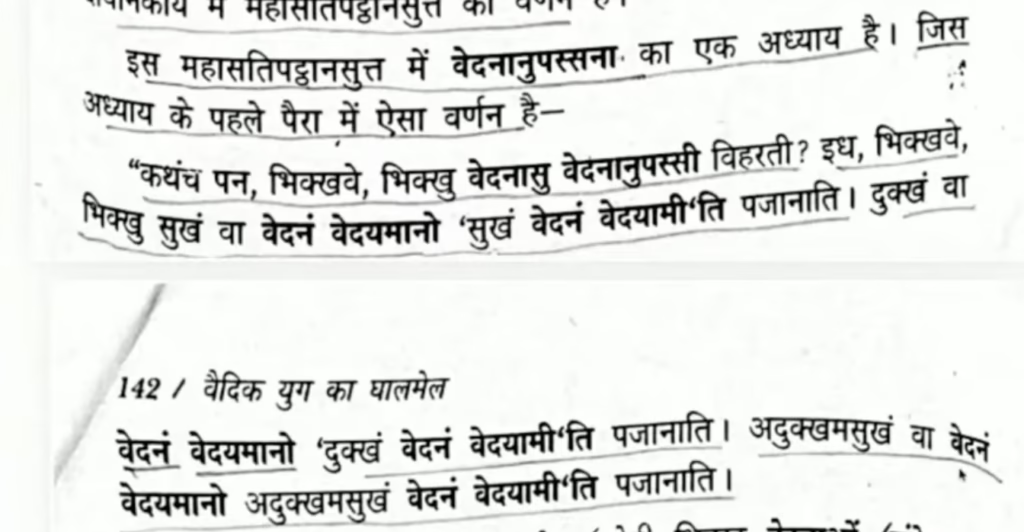
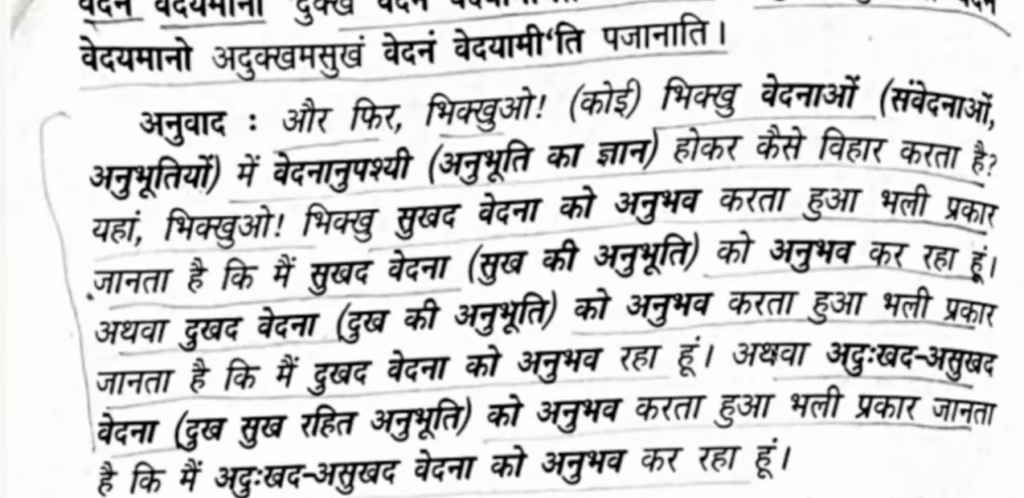
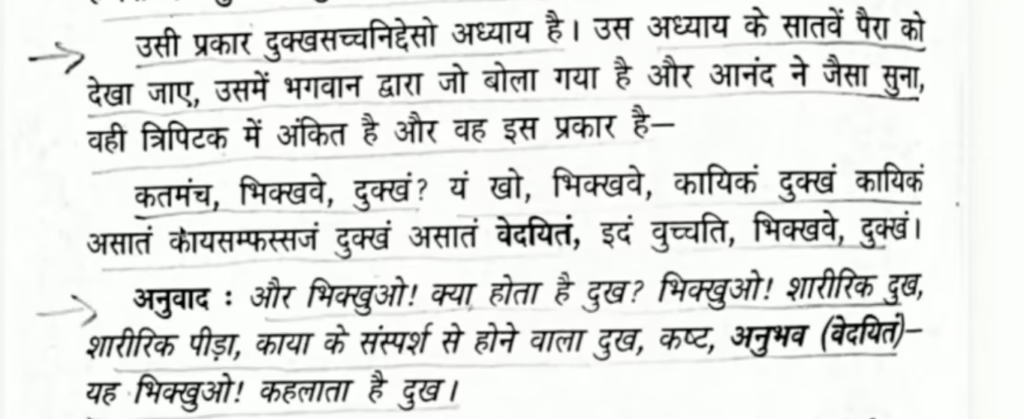
The Digha Nikaya contains the Mahasatipatthana Sutta with a dedicated section on Vedana. There is a passage which translates as: “And how, monks, does a monk dwell contemplating feelings in feelings? Here, a monk, when experiencing a pleasant feeling, knows ‘I am experiencing a pleasant feeling’.” Notably, the verbal repetition of ‘veda’-based words exclusively refers to sensory experience, not any sacred text.
Samyutta Nikaya: Dukkha Sutta and Other References
In the Samyutta Nikaya, the Dukkha Sutta similarly uses ‘vedana‘ in the context of experiencing suffering and pleasure: experiencing a painful feeling, one knows ‘I am experiencing a painful feeling.’ This consistent usage across multiple suttas reinforces that ‘veda‘ and its derivatives are invariably about personal experience. Can we find a single passage where it means the four Vedas? There is none.
Anguttara Nikaya and Other Collections: Consistent Usage
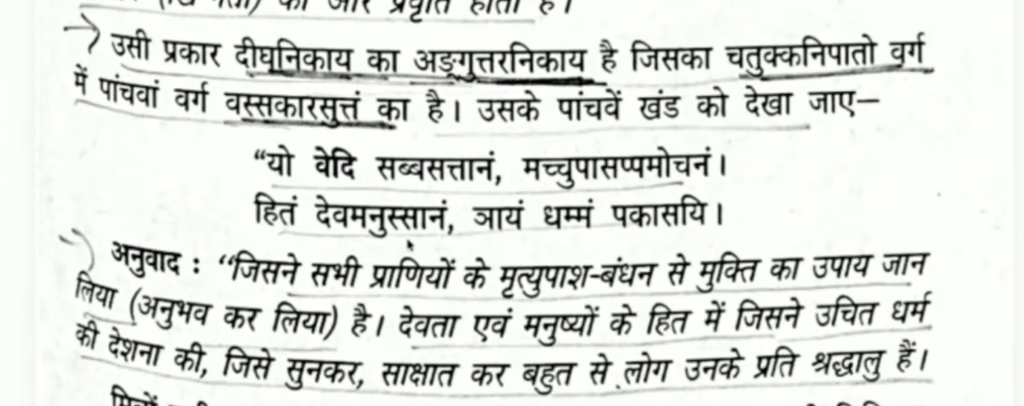
The Anguttara Nikaya also employs ‘veda‘ in the sense of knowledge. For example, ‘vedagu‘ denotes one who has attained ultimate knowledge, and the Buddha is often ‘loka-vidu‘—knower of the world. These usages clearly refer to wisdom, not scriptures. The uniform treatment of ‘veda‘ as a cognitive term across the Sutta Pitaka solidifies the Buddhist definition.
Evidence from the Milinda Panha and Later Texts
Debate Between Nagasena and King Milinda
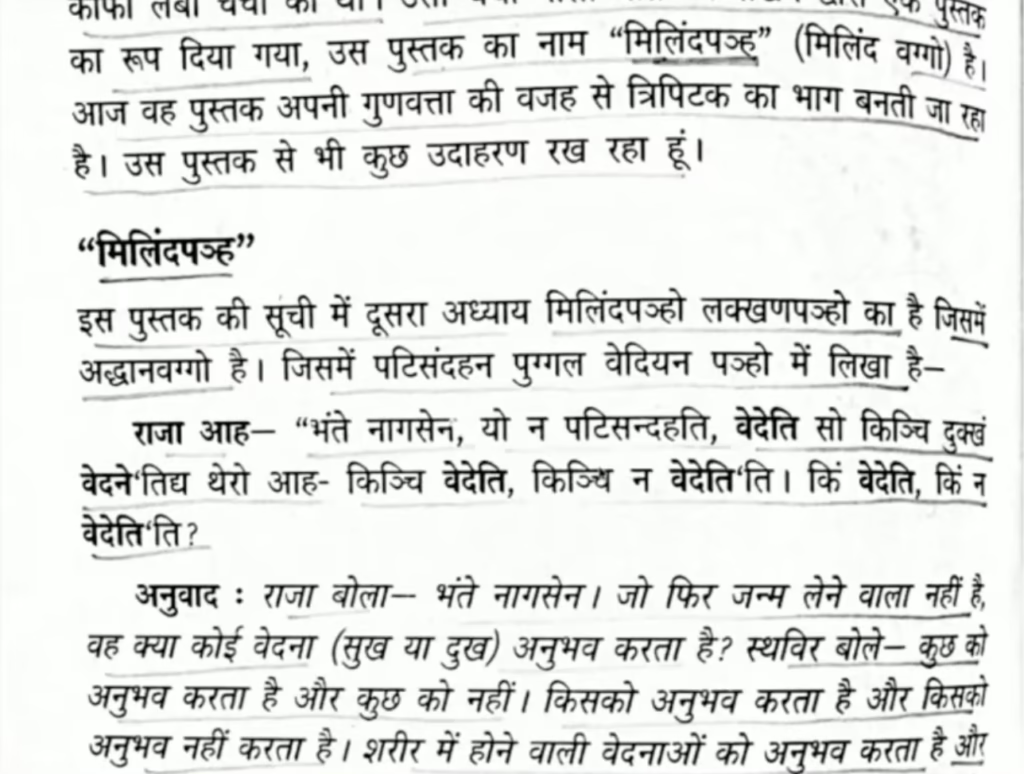
The Milinda Panha records a debate between King Milinda and the monk Nagasena. This translates to: “The king said: Venerable Nagasena, does one who does not feel, feel any pain? The elder said: He feels some things, he does not feel others.” Here, ‘vedeti‘ means ‘feels’ or ‘experiences.’ Even in this post-canonical text, the meaning remains consistent with sensation, not the Vedas.
Usage in Abhidhamma and Commentarial Literature
The Abhidhamma Pitaka extensively analyzes vedana as the feeling aggregate arising from contact. Commentaries like the Visuddhimagga elaborate on pleasant, painful, and neutral feelings without any hint of a Vedic corpus. This rigorous philosophical analysis demonstrates that ‘veda’ as a scriptural reference is entirely foreign to Buddhist thought.
The Role of Translational Deception
Systematic mistranslation has been a tool for distortion. For instance, vedana is often rendered solely as ‘suffering,’ ignoring its broader sensory meaning. Similarly, vidya is sometimes equated with the three Vedas, but in Pali it simply means knowledge. This epistemic violence obscures the original teachings and misleads generations. To counter it, one must demand precise linguistic and contextual evidence.
Historical and Epigraphic Proof: Ashoka’s Bairat Inscription
The Discovery and Significance of the Bairat Edict
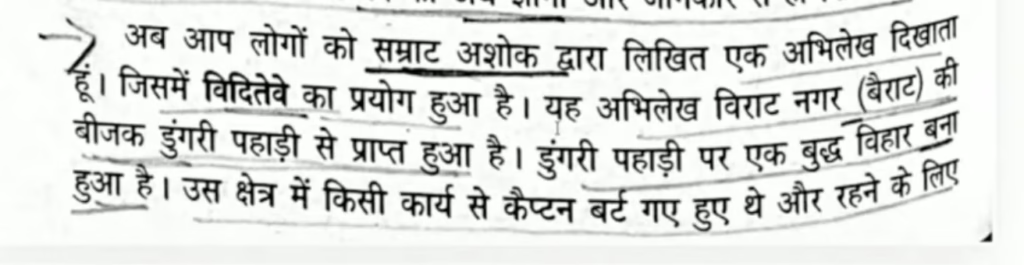
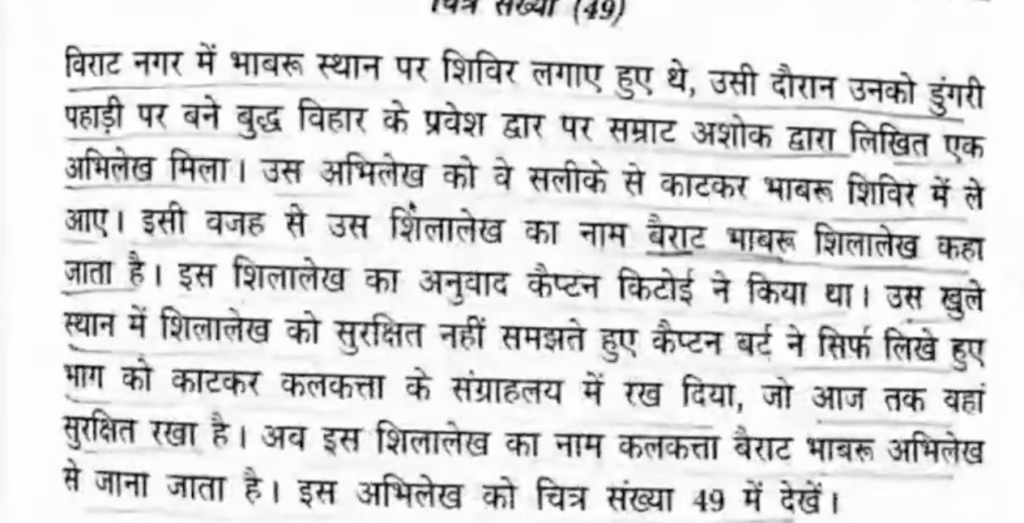
One of the most compelling pieces of evidence is the Bairat (Bhabru) inscription of Emperor Ashoka, discovered at Bairat, Rajasthan. Captain Burt recognized its historical value, had it cut and transported to the Indian Museum in Kolkata. This edict uniquely mentions specific Buddhist texts and uses the word ‘viditeve,’ derived from the root ‘vid.’
The Seven Texts Named by Ashoka
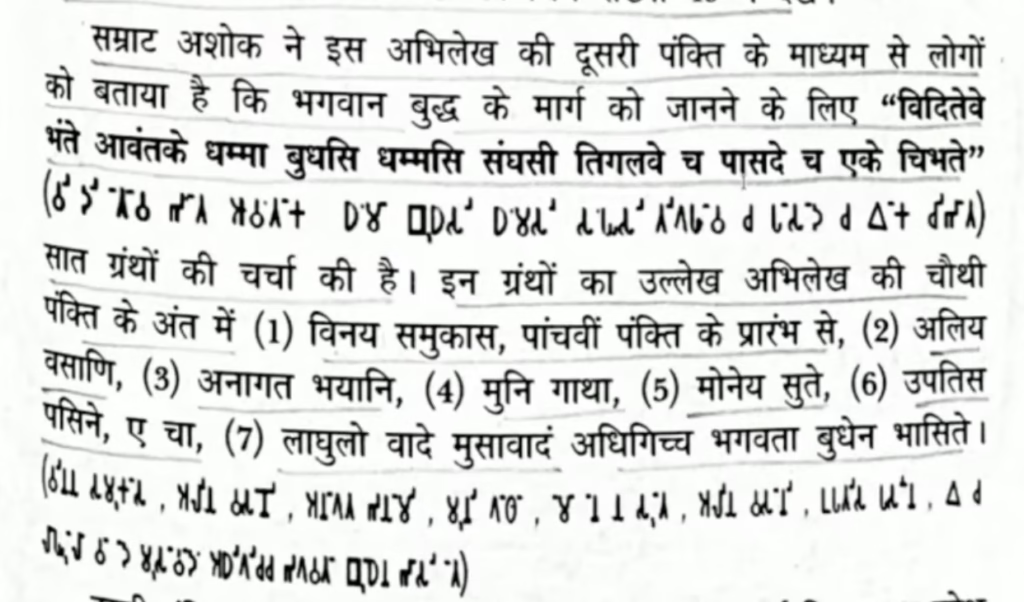
Ashoka’s edict explicitly recommends seven texts for study: Vinaya-samukase, Aliya-vasani, Anagata-bhayani, Muni-gatha, Moneyya-sute, Upatisa-pasine, and Rahulovada. All are identifiable Buddhist texts. Conspicuously, the inscription makes no mention of anything resembling the Rig, Yajur, Sama, or Atharva Vedas. If these were dominant scriptures, would not a devout Dhamma promoter like Ashoka have acknowledged them? Their absence is deafening.
Ashoka’s Use of ‘Viditeve’ in Context
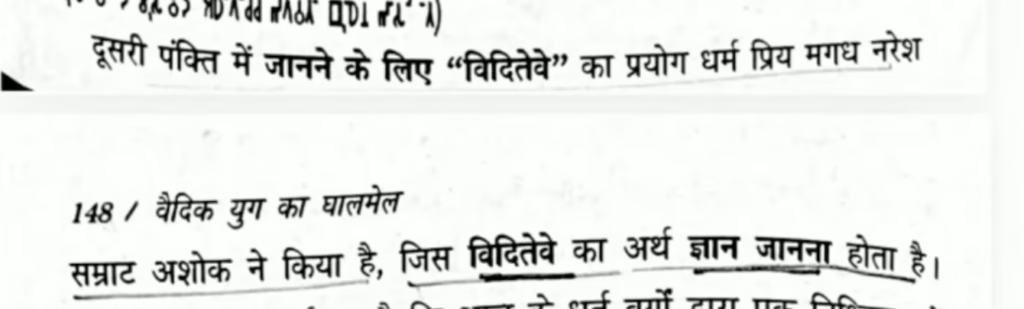
In the Bairat edict, Ashoka writes: “viditeve bhamte, avakate dhamma…” Here, ‘viditeve‘ means ‘it is known’ or ‘it is realized.’ It functions as a verb, not a proper noun for scripture. This aligns perfectly with Pali textual usage, proving that during the Mauryan period, ‘veda’ and its cognates signified knowledge—not a collection of hymns. The Brahminical claim of pre-Mauryan Vedas is contradicted by this material evidence.
Comparing Buddhist and Brahminical Terminology: The Theft of Words
Buddhist Origin of Terms Like ‘Bhagava’, ‘Dhamma’, ‘Sangha’
Many terms central to Brahminical discourse actually originate in Buddhism. ‘Bhagava’ (the Blessed One), ‘Dhamma’ (teaching), and ‘Sangha’ (monastic community) appear in Buddhist contexts long before Brahminical texts. The Bairat inscription itself references ‘Buddhas, Dhammas, Sanghas’ and calls the Buddha ‘Bhagavata.’ This appropriation is a historical inversion designed to claim false antiquity and authority.
The Foreign Nature of ‘Stupa’ in the Vedic Corpus
The word ‘stupa‘ is exceedingly rare in Vedic texts and lacks a family of related words. In contrast, Pali has a rich vocabulary built around it (e.g., thupa, thuparama). This linguistic foreignness indicates that ‘stupa‘ was adopted from Buddhist culture, which had a developed stupa-building tradition. The Vedic corpus shows no authentic ritual or architectural connection to stupas, exposing a borrowed and superficial usage.
How Brahminical Redactors Inserted Their Ancestors into Buddhist Texts
The Brahminical rewriting of history involved converting Buddhist words into mythical figures. For instance, the Buddhist term ‘brahmana‘ refers to an enlightened person (arahant), not a caste. Yet, apologists claim the Buddha spoke about Brahmin priests. Similarly, ‘manusya‘ (human) is twisted to refer to a mythical Manu. This process of insertion and alteration subsumes Buddhism under a fabricated Vedic umbrella. Read more: Vedic Period Myth: Pre-Buddha History Evidence
The Archaeological Void: No Evidence for a Vedic Period
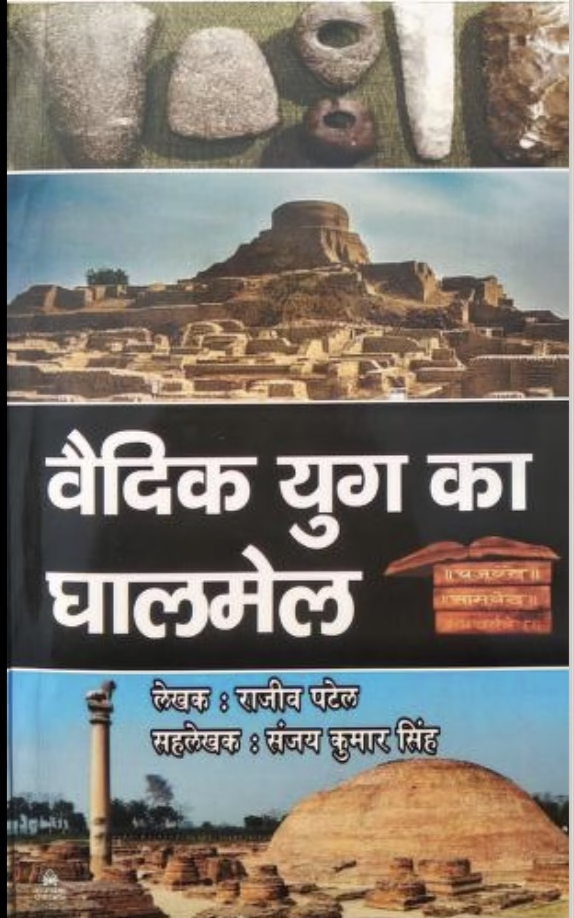
The Cover Image Analogy: Stone Age, Indus Valley, Dark Gap, Buddhism
The transcript describes the cover of the book “Vaidik Yug Ka Gholmel” by Rajiv Patel: a timeline showing Stone Age, Indus Valley Civilization, then a black void labeled “Vedic Age” with no material evidence—just four books floating in space. Then comes the Buddhist period, rich with artifacts. This image captures the reality: the so-called Vedic period exists only on paper, without physical corroboration.
The Missing Material Culture of the Vedic People
If the Vedic civilization were as grand as claimed, it would have left settlements, pottery, tools, seals, or inscriptions. Instead, there is a stark absence. The claim of an exclusively oral tradition for thousands of years defies historical practice. Every complex culture developed writing to record important texts. This oral-only rationalization is a post hoc explanation for the lack of evidence.
Why the Vedic Texts Cannot Be Dated Before the Buddhists
Linguistic evidence shows that Vedic Sanskrit was influenced by Prakrit and Pali, which were spoken languages before Sanskrit was standardized. The first written records in India are Ashoka’s Prakrit edicts; the earliest Sanskrit inscriptions appear centuries later. This chronology suggests that Vedic texts were compiled and written down only after Buddhism, likely as a reaction to its prominence and institutional strength. Read more: Deep Roots of Conspiracy Theories in Indian History
What Can You Do?
To counter the propaganda, start by reading the Pali sources directly and critical works like “Vaidik Yug Ka Gholmel” and “Brahm Ka Pulinda.” Challenge anyone who repeats the ‘Veda’ fallacy to provide concrete textual proof from the Tipitaka. Engage in public debates and share the linguistic and epigraphic evidence. Support independent researchers and publications that uphold true history. Together, we can dismantle the fabricated narratives and uphold the authentic legacy of the Dhamma.
You can read the book for free here.
Conclusion
The claim that ‘Veda’ in the Tipitaka refers to the four Vedas is a deliberate falsehood. Overwhelming Pali evidence shows it means experience, knowledge, and realization. Ashoka’s Bairat inscription confirms this by using the root ‘vid’ for knowing and listing only Buddhist texts. The lack of archaeological material for a Vedic period further exposes the myth. We must reclaim these distorted words and restore the evidence-based heritage of Buddhism.
Frequently Asked Questions
Does ‘Veda’ in Pali mean the same as Veda in Hinduism?
No. In Pali, ‘Veda’ comes from the root ‘vid’ meaning to know or experience, and it refers to experiential knowledge. It does not denote the Hindu scriptures.
What is the significance of Ashoka’s Bairat inscription?
The Bairat inscription is a rock edict from the 3rd century BCE that names specific Buddhist texts and uses the root ‘vid’ in the sense of knowing. It omits any reference to Vedic scriptures, challenging claims of their contemporaneous dominance.
How can I refute the claim that Buddhism borrowed from the Vedas?
Point to the linguistic evidence: Pali ‘Veda’ and its derivatives (vedana, vedagu) are native to Buddhist terminology and consistently refer to personal experience. Also, note the absence of Vedic texts in early inscriptions like Ashoka’s.
Why do some translations equate ‘vedana’ with suffering?
This is a deceptive translation. While vedana can include painful feelings, its primary meaning is sensation or feeling, encompassing pleasant, painful, and neutral experiences. Limiting it to ‘suffering’ obscures the Buddha’s full teaching.
Is there any archaeological evidence for the Vedic period?
No. Despite claims of a Vedic civilization, there is a stark absence of material culture—no cities, pottery, coins, or inscriptions. The earliest written records in India are from the Buddhist period, in Prakrit.
Disclaimer
Key Terms and Their Meanings in Context:
- Veda (in Pali): Knowledge, experience, or realization; derived from the root ‘vid’. Not a proper noun for scriptures.
- Vedana: Sensation or feeling, one of the five aggregates; not ‘suffering’ exclusively.
- Vidya: Knowledge or science; not equivalent to three Vedas.
- Bhagava: A title for the Buddha meaning ‘Blessed One’; a Buddhist term later appropriated.
- Brahmana (in Buddhist context): An enlightened person, an arahant; not a caste designation.
- Tipitaka: The Pali Canon of Buddhist scriptures, consisting of Vinaya, Sutta, and Abhidhamma.
- Ashoka’s Bairat Inscription: A rock edict discovered at Bairat, Rajasthan, now in Kolkata Museum; 3rd century BCE.
The views expressed are based on textual and epigraphic analysis and are intended to foster scientific temper and historical accuracy.
Do you disagree with this article? If you have strong evidence to back up your claims, we invite you to join our live debates every Sunday, Tuesday, and Thursday on YouTube. Let’s engage in a respectful, evidence-based discussion to uncover the truth. Watch the latest debate on this topic below and share your perspective!

Skeptical Indian is an independent researcher documenting
caste discrimination through primary sources, Hindu
scriptures, court records, and government data.
CasteFreeIndia.com has published 100+ evidence-based
analyses since 2024.