Introduction
The Chachnama provides critical evidence of early Brahmin collaboration during the Arab invasion of Sindh. This chronicle challenges the simplified narrative of foreign invaders versus native resistance. Instead, it documents how Brahmins often facilitated conquest to preserve their status. This article examines the text’s account of Chachnama Brahmin collaboration, revealing a pattern of strategic surrender and astrological manipulation. The analysis exposes how the caste system was reinforced by these actions, shaping India’s history. Read more: Chachnama and Caste Origins: How Ancient Oppression Began
The Brahmin Strategy of Preemptive Surrender
The Brahmin-Arab Alliance in Deval
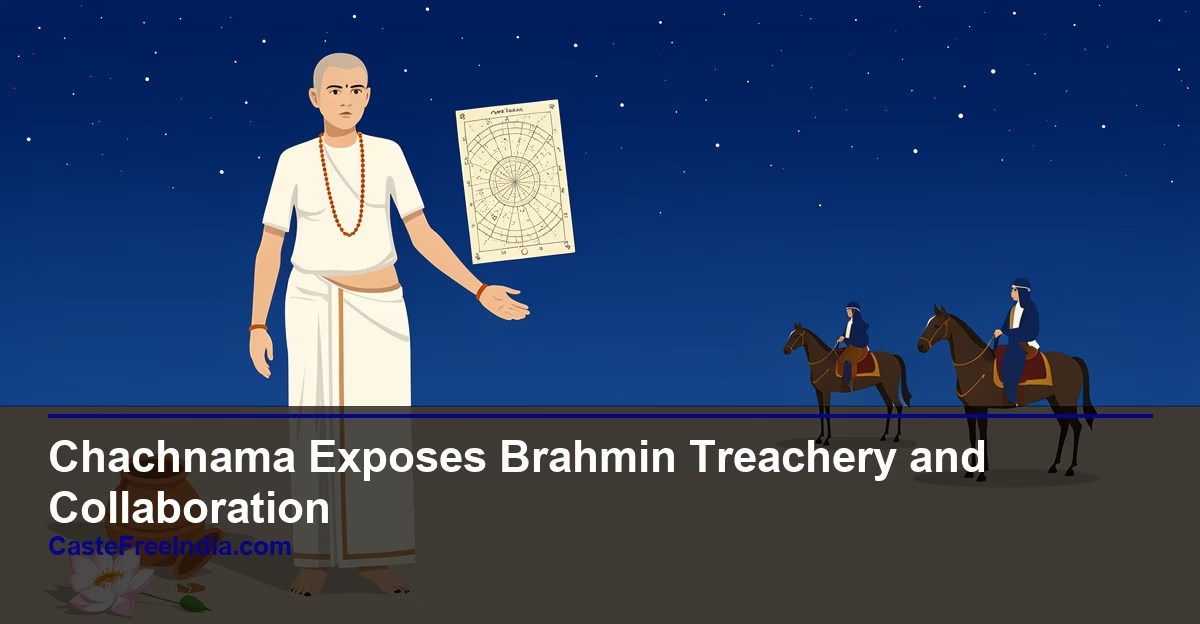
Before Muhammad bin Qasim’s army advanced, the Brahmins of Sindh chose their side. The Chachnama records how Brahmins used their control over jyotish (astrology) to spread fear among the ruling clans. They broadcast that “Islam’s conquest is inevitable” and that “the ruler of Islam will win.” This broke the morale of local kings. Consequently, resistance collapsed before it began.
Astrology as a Weapon of Mass Surrender
At that time, Brahmins did not follow a separate Vedic religion. They operated within Buddhism, but twisted its astronomy into superstitious astrology. They told the kings: “The learned men, by examining their Jyotish books, have discovered that this country will be ruled by Islam.” This prophecy was preached relentlessly. The Chachnama shows a pattern: wherever Brahmins were, they used astrological predictions of Islamic victory to convince rulers to surrender without a fight.
The Cost of Cowardice
By collaborating, Brahmins secured land grants, positions, and protection. Many converted to Islam to retain their privileges. The Chachnama states that “a large number of Brahmins became Muslims and became landlords.” The traitors were rewarded. Their descendants now sit atop the caste hierarchy—still practising astrology, still manipulating politics. Meanwhile, the ones who refused to surrender faced slaughter or subjugation.
The Jat Resistance That Brahmin Astrology Sabotaged
The Buddhist Jats Prepare for War
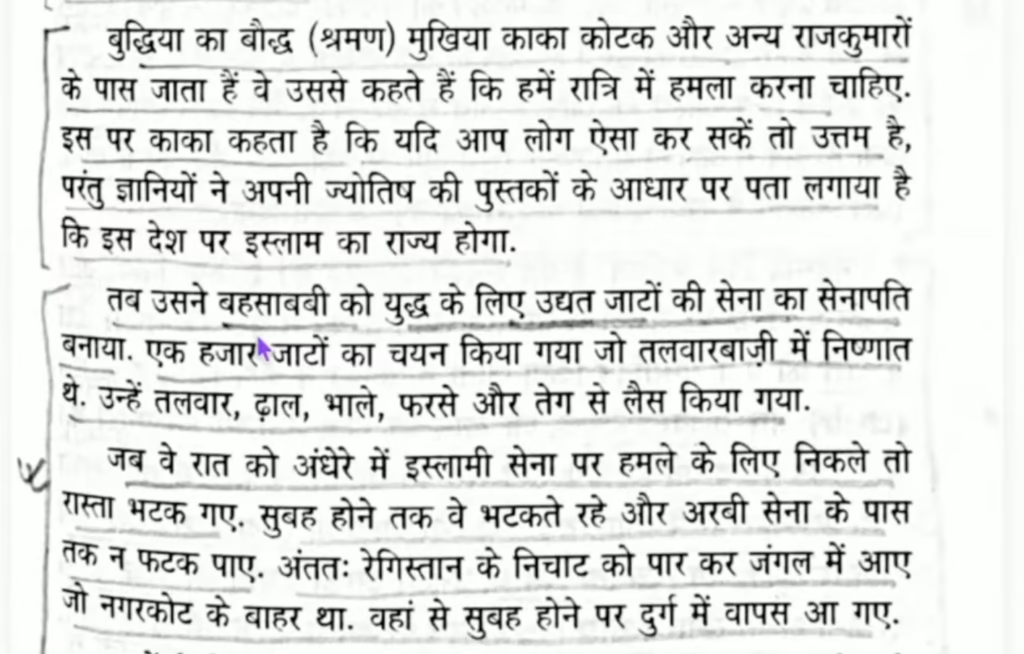
The Jats of 8th-century Sindh were a martial community rooted in Buddhism. The Chachnama describes how a Buddhist shramana (monk) chief—himself a Jat—rallied the Jat clans. He approached Kaka Kotak and other Jat leaders, declaring: “We must launch a night assault on the Arab camp.”[source]
The Astrological Sabotage
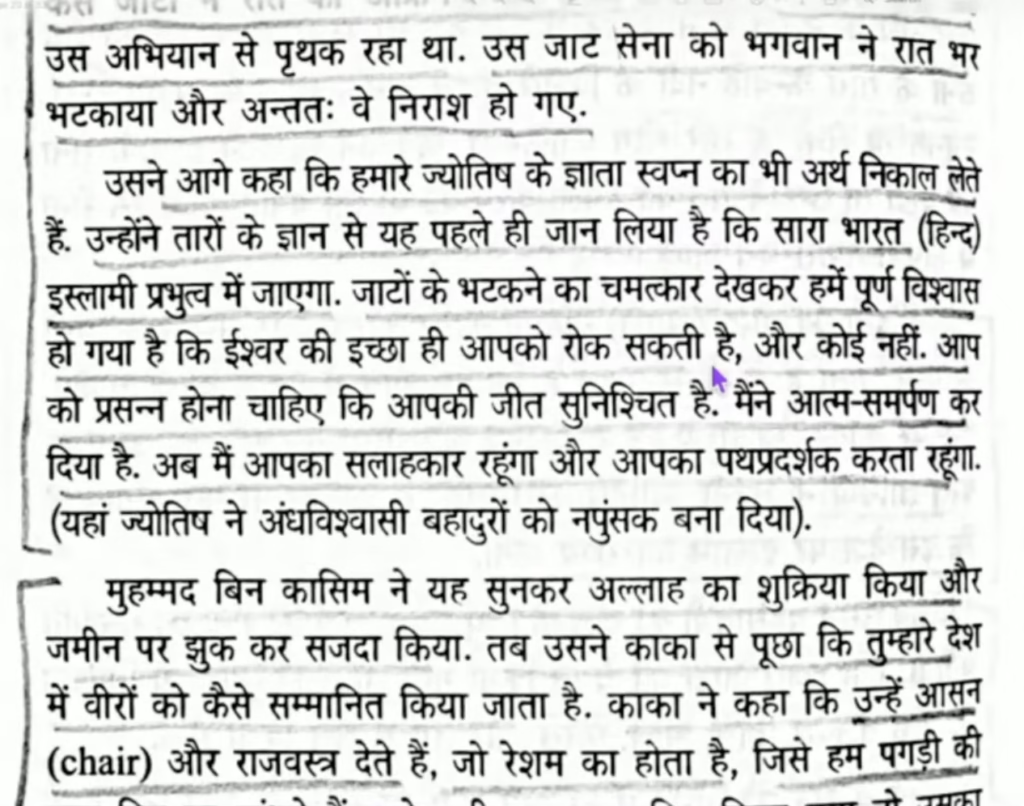
However, the Brahmin astrologers had already infiltrated the Buddhist leadership. When 1,000 strong men were selected, armed with swords, shields, spears, and axes, Kaka reminded them of the Brahmin prediction: “The wise men have discovered through their Jyotish books that Islam will rule this land.” Despite this, the Jats set out at night to attack. But they lost their way in the darkness and wandered all night. They never found the Arab camp. By dawn, they returned to their fort, defeated not by the enemy but by psychological disarray.
Kaka’s Surrender and the Fall of the Jats
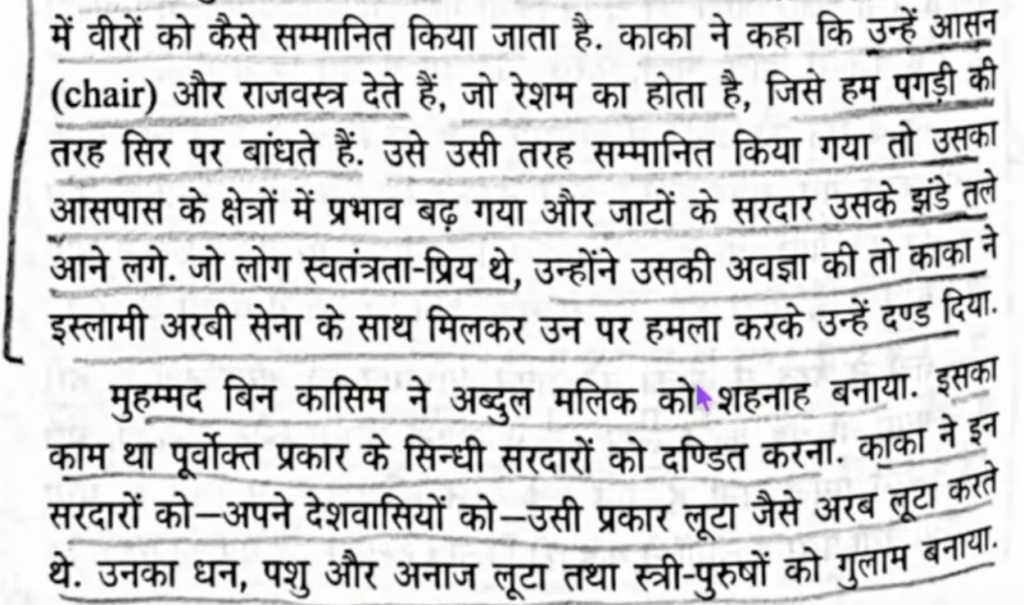
The failed mission broke Jat morale. Kaka, the leader for his bravery and intelligence, now declared: “The astrologers were right. Our failure proves the truth of their prophecy.” He went personally to Muhammad bin Qasim and surrendered, becoming a collaborator and advisor. He even revealed the Jats’ plan to attack and received robes of honour. The Chachnama records his words:
Our astrologers, who correctly interpret dreams, have already known from the knowledge of the stars that the whole of Hind will come under Islamic rule. The miracle of the Jats’ wandering at night has given us complete faith that it is God’s will—and only God’s will—that can stop you, while no one else can.
Those Jats who surrendered joined the Arab army and received silk robes, chairs, and turbans—items previously prohibited by Brahminic rules. Those who resisted faced massacre.
The Lohana Jats: A Branded Underclass
Brahminical Restrictions on Lohana Jats
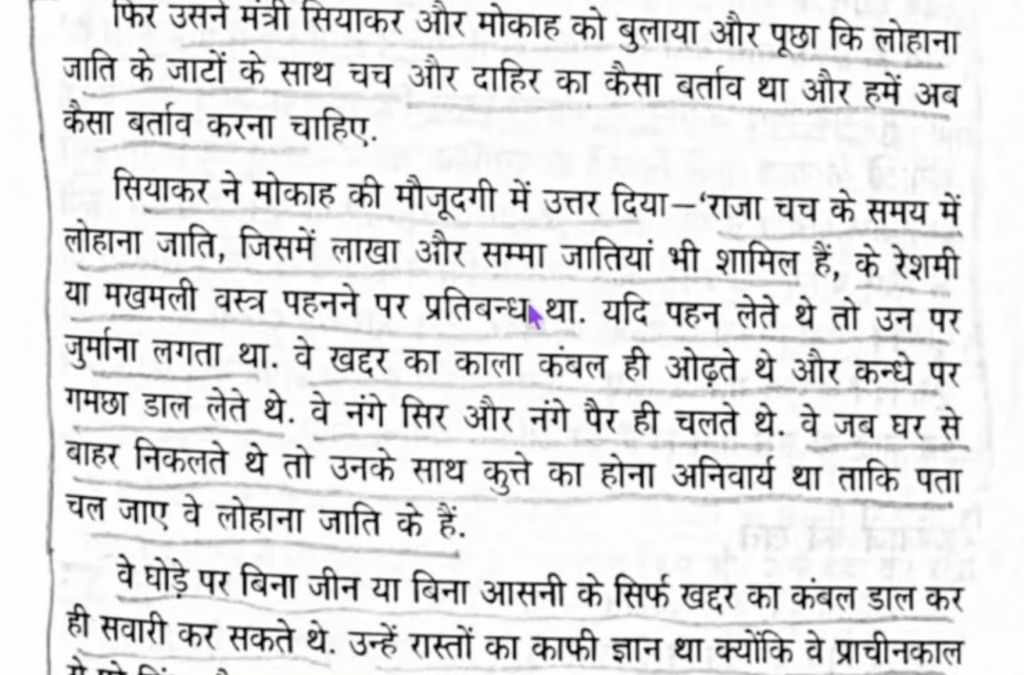
After Dahir’s fall, Muhammad bin Qasim held a council with his Brahmin ministers. They discussed how to treat the Lohana Jats, a sub-group including the Lakha and Samma clans. The Brahmin ministers informed him of the existing Brahminical social codes. The Lohana Jats faced several restrictions:
- They could not wear silk or velvet clothes. If caught, they paid a fine.
- They had to wear only coarse black blankets and carry a towel on their shoulders.
- They had to go bare-headed and barefoot.
- When outside, they had to be accompanied by a dog so that everyone knew they were Lohana.
Continuity of Oppression Under Islamic Rule
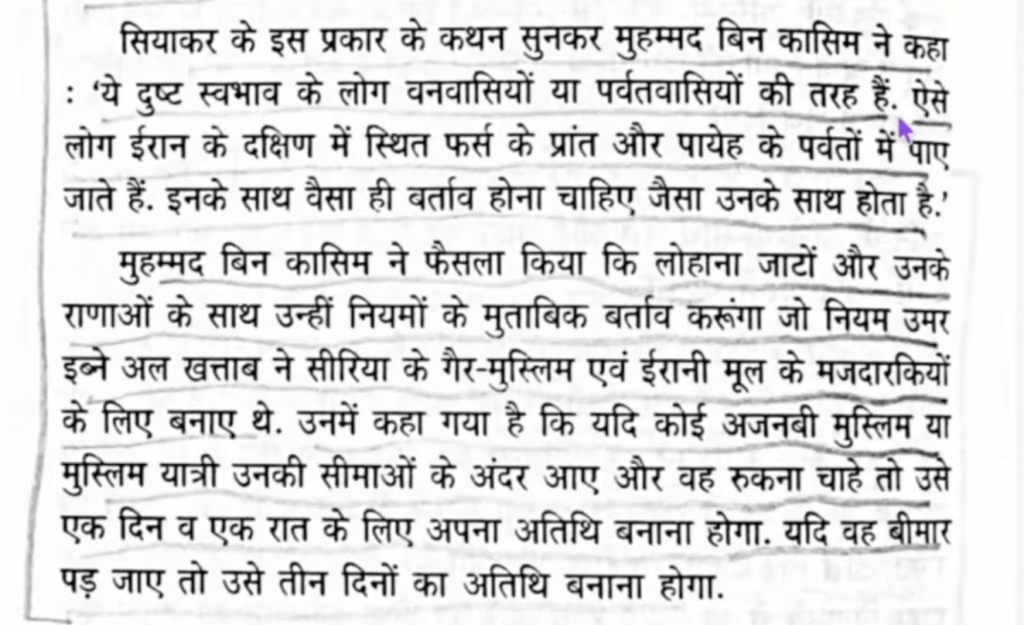
The Brahmin ministers advised Muhammad bin Qasim not to change these rules. They argued that maintaining the existing system would avoid rebellion. Thus, the Arab conqueror continued the Brahminical caste regime. The Chachnama states that Muhammad bin Qasim declared: “I will deal with the Lohana Jats and their chiefs according to the same rules that Umar ibn al-Khattab laid down for the non-Muslim and Iranian Zoroastrians.” The Jats had to provide hospitality to Muslim travellers, act as guides, and supply the royal kitchens. Any deviation was severely punished.
No Rebellion from Brahmins
This explains why Brahmins never rebelled against Muslim rule: their cultural and social privileges were preserved. The Muslim rulers found a ready-made oppressive system that kept the masses in check. By not disturbing Brahminical supremacy, they avoided internal uprisings. The Jats, however, remained an oppressed caste. This status had been thrust upon them by Brahmins long before Islam arrived.
The Rajputs and Samma Jats: Submission Patterns
The Dhole-Majira Welcome
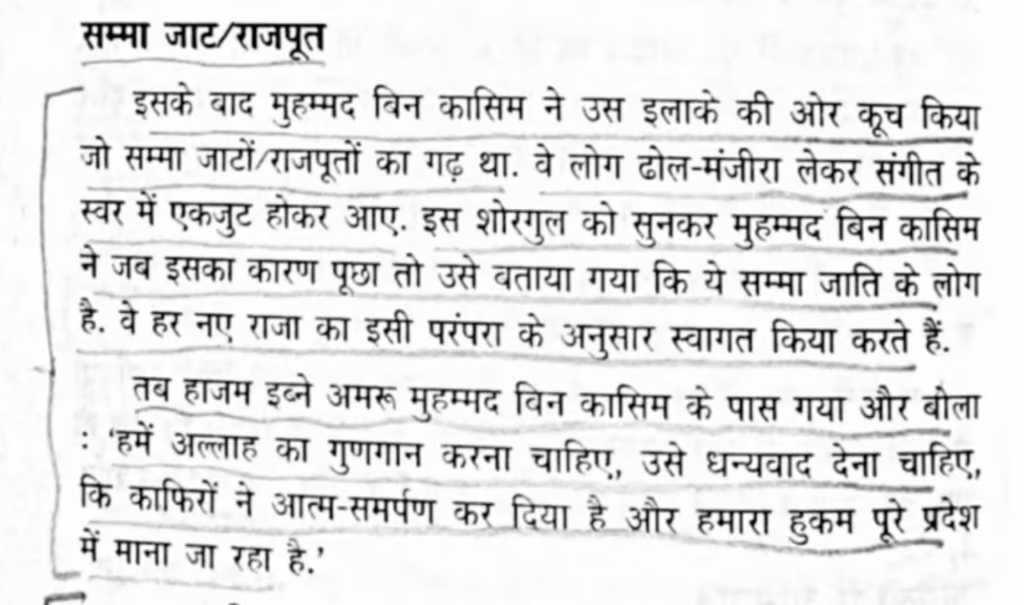
When Muhammad bin Qasim marched towards the Samma Jats, who are also identified as Rajputs, he witnessed a bizarre spectacle. The residents came out with dholes (drums) and majiras (cymbals), dancing and singing in his honour. The Chachnama reports:
This was the custom of the Samma people: to welcome every new king with song and music.
Their submission was immediate and culturally ingrained. Muhammad bin Qasim appointed a governor and told them to continue their dance and music; he even distributed 20 dinars to the performers.
The Sahota Jats: Bare-Headed Submission
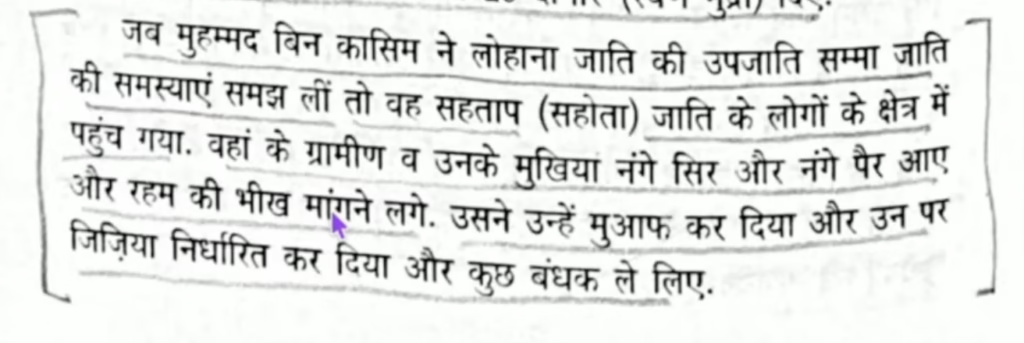
In the Sahota Jat territory, the village headmen approached Muhammad bin Qasim bare-headed and barefoot, begging for mercy. Those who had not already come with drums and music received punishment with jizya (poll tax) and were taken as hostages. The ones who surrendered without a fight were spared and even integrated into the administrative structure. This pattern—surrender and earn privilege, resist and face annihilation—was relentlessly repeated.[source]
The Creation of a Warrior Class Myth
Contrary to modern pride in “Rajput valour,” the Chachnama shows a more complex picture. At that time, Rajput was not yet a fixed caste identity; it was a status achieved through martial service. Many Jat clans later evolved into Rajputs. The surrender of the Samma Jats thus foreshadows the absorption of certain groups into the Kshatriya fold by Brahmins in later centuries. This erased their original Buddhist identity and rewrote history to present an unbroken tradition of “Hindu resistance.”
How Brahmin Ministers Designed the Occupation Policy
The Role of Siyakar and Moka
Muhammad bin Qasim, being only 17, relied heavily on his Brahmin ministers for local governance. Siyakar and Moka, Brahmins who had served under Dahir, became his key advisors. When he asked how to treat the various communities, they simply reiterated the Brahminical regulations that had been in force under the previous Hindu kings. The Chachnama explicitly names them and records their advice.
Jizya and the Caste Ladder
The poll tax (jizya) was imposed not just on religious lines but also on caste lines. Those who had submitted—like the Brahmins and merchants who paid tax—were left in peace and even given back their property. The Jats who had not actively collaborated faced jizya and forced servitude. The Chachnama also mentions that Buddhist monasteries were targeted, and their wealth looted. Brahmin informants, jealous of Buddhist influence, often helped in this process.
The Long-Term Impact
This policy cemented a collaborationist upper caste that survived all subsequent invasions. Whether Turk, Mughal, or British, the Brahmins always positioned themselves as the natural mediators between the ruler and the masses. They preserved their own status while delivering the vulnerable castes to exploitation. The Chachnama is the earliest documentary evidence of this strategy. Read more: Exposing Caste: Evidence Against Hereditary Supremacy
The Chachnama’s Forgotten Evidence: No Hinduism, Only Buddhism
The Absence of Vedic Religion
A careful reading of the Chachnama reveals a startling fact: there are no references to Vedic yajnas (fire sacrifices), Hindu mandirs, or murti puja (idol worship). The religious structures mentioned are invariably Buddha viharas, stupas, and nav-viharas. When the text says “mandir,” it is a clear mistranslation—the original refers to a Buddhist monastery. The people, including the Brahmins, were all Buddhists. The Brahmins, however, were a class within Buddhism, not a separate “Hindu” priesthood. They used Buddhism’s astronomical knowledge for astrological manipulation, thereby maintaining their social dominance.
The Creation of “Hindu” Identity
“Hindu” as a religious identity is a much later construction. It was imposed first by Persian and Arab invaders as a geographic-cum-cultural label, and later solidified in the colonial period. The Chachnama proves that in 712 CE, the populace was Buddhist—or at least non-Vedic. The Brahmins who later became “Hindus” were the same ones who had betrayed the land and then rewrote history. They portrayed themselves as eternal defenders of sanatana dharma (eternal duty).
Why This Evidence Is Suppressed
Brahmin historians of modern India either dismiss the Chachnama or call it unreliable because it exposes their forefathers’ collaborationist role. But the text’s authenticity is not in question. It was written in the 13th century by Ali Kufi from older Arabic sources. It was translated into Persian for the sultans of Sindh. Professional historians like Manan Ahmed Asif have studied it extensively and confirm its value as a political chronicle of conquest and accommodation. The suppression of the Chachnama in mainstream discourse is deliberate. It dismantles the myth of a united Hindu resistance to Muslim invaders.
What the Chachnama Tells Us About Jihad
The Real Meaning of Jihad
Modern apologists often claim “jihad” means personal struggle, not war. The Chachnama leaves no room for such distortion. In a letter to Dahir’s son, Jai Singh, the Arab commander writes:
Your foul behaviour has crossed all limits. I have taken permission from the Caliph to perform jihad against you. … I hope that, with Allah’s help, I will fight you and defeat you, humiliate you, and cut off your head and take it to Iraq. Then, in this jihad, I will surrender my life to Allah. … Performing jihad is our religious duty, because Allah has commanded in the Quran: ‘Fight against the disbelievers and the hypocrites.’
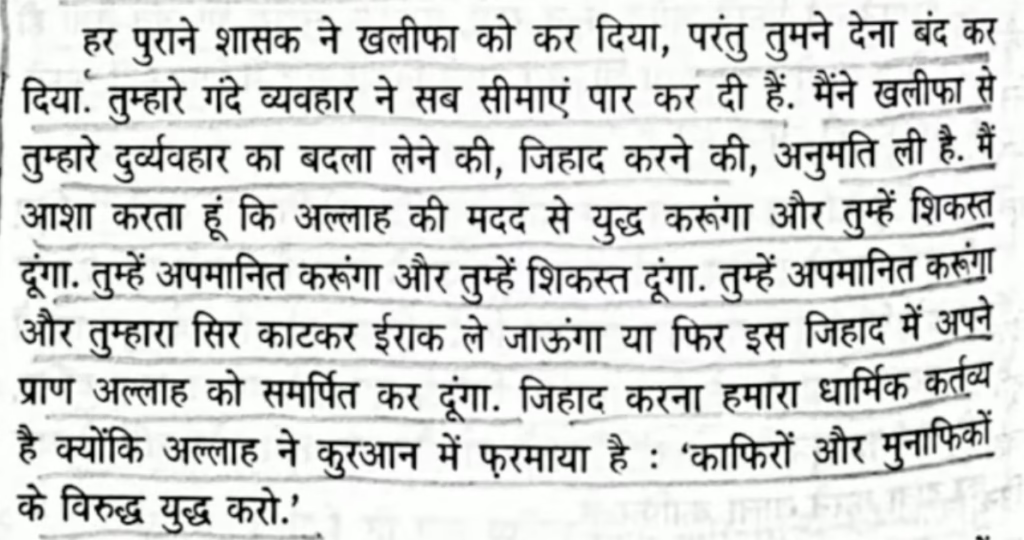
This is the unambiguous, textual meaning of jihad as holy war. It was the justification for the invasion of Sindh.
The Brahmin Role in Legitimising Jihad
The Brahmins not only surrendered but also helped legitimise the Islamic conquest. They validated the astrological predictions of Muslim rule. They effectively endorsed the idea that divine will was on the side of the invaders. This psychological warfare was far more effective than swords. The Chachnama shows that Brahmin prophecies drove mass collaboration, making jihad seem inevitable and just.
The Double Standard of Modern Hindutva
Today’s Hindutva forces try to blame Muslims for the caste system. But the Chachnama shows the reverse: Brahmins used Islam to preserve caste. When the Arabs wanted to know how to treat the “lower” communities, the Brahmin ministers told them to continue the discriminatory laws. The caste system was hoisted upon subaltern communities by Brahmins, not by Muslim rulers. The Brahmin historians who now cry “cultural genocide” are the descendants of those very collaborators.
Conclusion: The Unbroken Chain of Betrayal
The evidence from the Chachnama is clear and devastating. The Brahmins of Sindh were the first collaborators with the Islamic invasion of India. They used astrology to break the will of brave Jat and Rajput warriors. They surrendered without a fight and then became the architects of discriminatory policies under occupation. The Jats and Rajputs who dared to resist faced massacre. Those who submitted were allowed some privileges—but always under Brahminical social codes that the Muslim rulers conveniently adopted.
This pattern repeated with every subsequent invasion. Brahmins always positioned themselves as intermediaries, ensuring their own survival while sacrificing the lower castes. The Chachnama is the foundational text of this anti-caste historical reality. It must be read, taught, and disseminated widely—not as a communal tool, but as a weapon against the Brahminical lies that have distorted our past.
What Can You Do?
Read the Chachnama yourself—the Samyak Prakashan Hindi translation by Dr. Surendra Agyat is an excellent start. Don’t let anyone tell you it’s “unreliable” without reading it first. Share this article with friends and family. Support anti-caste platforms that are reclaiming our true history. And next time a Brahmin tells you about their “great resistance” against Muslim invaders, ask them: What does the Chachnama say?
Frequently Asked Questions
What is the Chachnama?
The Chachnama is a 13th-century Persian translation of an earlier Arabic chronicle. It details the Arab conquest of Sindh in the 8th century. It is a key historical source for early medieval India. Read more: Arab Accounts of Ancient India: Hidden History
How did Brahmins collaborate according to the Chachnama?
According to the Chachnama, Brahmins used astrology to predict Islamic victory, broke the morale of local rulers, and surrendered preemptively. They later served as advisors to Muhammad bin Qasim, helping to enforce caste-based discrimination.
Is the Chachnama a reliable historical source?
Yes, professional historians like Manan Ahmed Asif have studied it extensively. While it is a political chronicle with biases, it provides valuable insights into the period. Its authenticity is generally accepted for understanding the conquest and local dynamics.
What does the Chachnama reveal about caste?
The Chachnama shows that caste discrimination existed before the Arab invasion and was perpetuated by Brahmins. It documents how the invaders adopted and reinforced Brahminical social codes, oppressing groups like the Jats.
Why is the Chachnama not widely known?
The Chachnama challenges the narrative of a unified Hindu resistance to Muslim invaders. Brahmin historians often suppress it because it exposes early Brahmin collaboration and undermines the myth of a timeless Hindu identity.
Do you disagree with this article? If you have strong evidence to back up your claims, we invite you to join our live debates every Sunday, Tuesday, and Thursday on YouTube. Let’s engage in a respectful, evidence-based discussion to uncover the truth. Watch the latest debate on this topic below and share your perspective!

Skeptical Indian is an independent researcher documenting
caste discrimination through primary sources, Hindu
scriptures, court records, and government data.
CasteFreeIndia.com has published 100+ evidence-based
analyses since 2024.