What Arab Travellers Saw in Ancient India: Hidden History
Numerous travellers have journeyed to India throughout history, leaving behind their observations and accounts. The crucial question remains: how authentic are these records, and are we being taught the history as they saw it? Those who claim to be the custodians of Indian knowledge often speak of ancient epochs like Satya Yuga (the Golden Age), Kali Yuga (the present dark age), and Treta Yuga (the Silver Age), sidestepping concrete historical evidence. This raises a significant point: can we gain a better understanding of history by examining the firsthand accounts of travelers who witnessed India’s environment and society with their own eyes? The possibility is substantial, much like how the study of texts by travelers such as Faxian, Yijing, and Xuanzang provided invaluable insights into Buddhism and its great monastic universities in India. Let’s discuss Ancient india from Arab point of view.[source] Read more: Mahad Satyagraha: Dismantling Caste Water Deprivation
Similarly, visitors from other parts of the world, including the Arabs, came to India. Even before the advent of Islam in Arabia, Arab traders sailed to India, procuring spices and other goods to trade globally, forming the backbone of their economy. In an era before widespread knowledge of oil, these spices, along with precious stones and jewels, were vital commodities. These traders meticulously documented their observations about India, its people, its languages, customs, and needs, creating valuable records for future generations of traders and countrymen.
Table of Contents:
- Historical Interpretation
- Arab Accounts of Buddhism in Sindh: Challenging Brahmanical Narratives
- Elliot’s Struggle: Distinguishing Buddhism from Brahmanism in Arab Records
- The Role of Arab Scholars and Misinterpreting Social Stratification
- Conclusion: Reclaiming History Through External Evidence
- What Can You Do?
However, a significant challenge in understanding Indian history lies in the prevalent practice of seeking it within the Puranas and Vedic narratives, while often disregarding the detailed notes left by these travelers. This post aims to bring to light the narratives that have been overlooked, focusing on the historical truths etched in stone and recorded by those who had no vested interest in altering them. Unlike scriptures, which can be altered, the physical evidence and external accounts offer a more stable, albeit sometimes slightly imprecise, window into the past. By examining these external records, we can approximate a truer historical understanding of ancient India.
We will delve into the observations of Arab travellers who visited India, offering a perspective on what India was like through their eyes. What did they witness regarding untouchability? Did they observe the social segregation in dining and social interactions? What were their perceptions of women from different communities, warrior classes, and their societal roles? What was the status of Buddhists and Brahmins? By compiling and analyzing these Arab travellers accounts, we can begin to piece together a more accurate historical mosaic.
Historical Interpretation
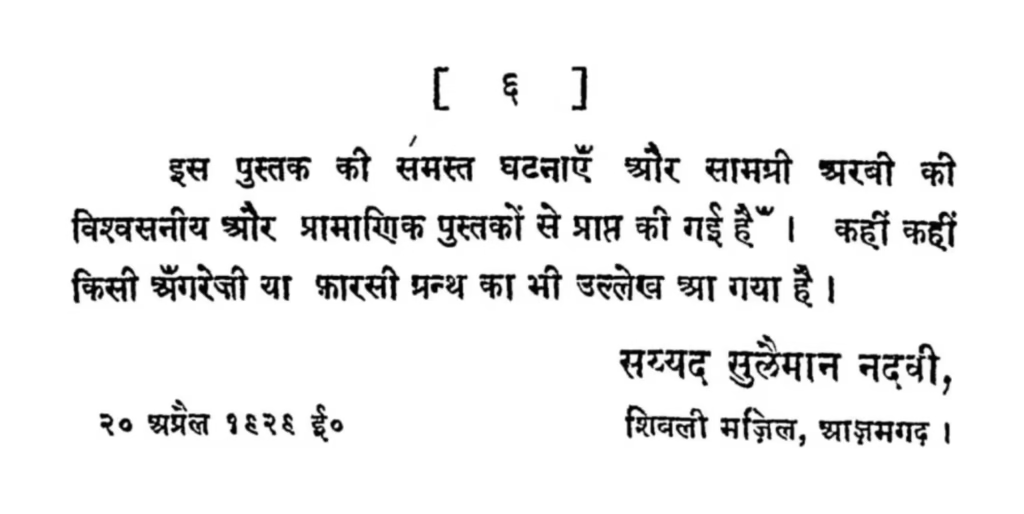
Before we embark on this exploration, it’s important to note that the discussions and presentations here aim to foster a scientific temperament. The views expressed by guest speakers are their own responsibility. This exploration into historical accounts is based on scholarly compilations, notably a significant work by Syed Suleman Nadvi, titled “Arab aur Bharat ke Sambandh” (Relations Between Arabs and India), published by Hindustan Academy, Allahabad. Compiled by Syed Suleman Nadvi of the Shivli Manzil, Azamgarh, this book draws extensively from reliable and authentic Arabic texts, with occasional references to English or Persian sources.
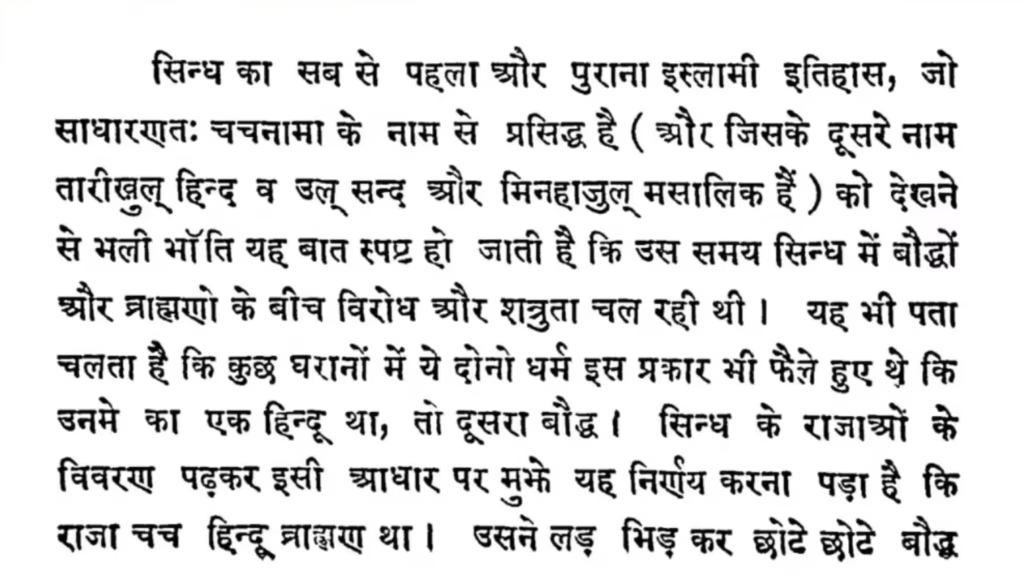
Consequently, a primary challenge encountered in historical research, particularly concerning this period, is the confusion that existed among scholars, including Muslims and the British, in distinguishing between Buddhists and Brahmins. This confusion pervades accounts from the 6th to the 12th centuries. Indeed, observers often misidentified Buddhists as Brahmins and vice versa, sometimes referring to them as priests without clear differentiation. This ambiguity is highlighted by the English scholar Elliot, who noted the difficulty in distinguishing between the two groups due to similarities in rituals, traditions, and worship practices, with only subtle differences apparent.
Moreover, Elliot’s perplexity stemmed from the fact that while Vedic Brahmins practiced animal sacrifice in their rituals (Yajnas (Vedic fire rituals) and Havans (fire offerings)), this was absent in Buddhism. The lack of a clear, easily discernible distinction led to a significant historical blind spot. This confusion persisted because, during that era, Brahmins were increasingly integrating into Buddhist practices and customs, adopting them as their own. This infiltration and assimilation blurred the lines, making it difficult for contemporary observers, and subsequently later scholars, to differentiate between the two.
Arab Accounts of Buddhism in Sindh: Challenging Brahmanical Narratives
Syed Suleman Nadvi’s compilation sheds light on the prevalence of Buddhism in Sindh during the late 1st century Hijri and the early 8th century CE. This aligns with previous discussions indicating Buddhist influence in regions like Turkey. While contemporary Muslims may not be aware of this historical fact due to their own historical disconnect, scholars from the British era and earlier Muslim scholars acknowledge it. Early Arab accounts consistently refer to Buddhists as “Samaniyah.”Read more: Deep Roots of Conspiracy Theories in Indian History
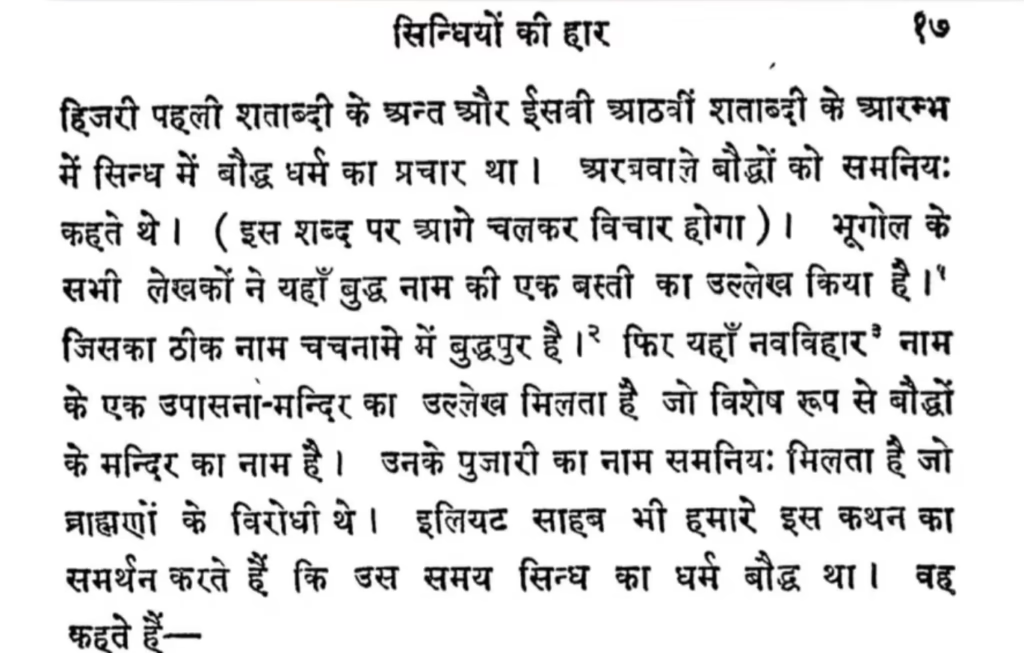
Geographical records from that period mention a settlement named after Buddha in Sindh, specifically Chachnama, referred to as Budhpur. Furthermore, the existence of a temple named “Nau Vihar” is documented, explicitly identified as a place of worship for Buddhists. This is a crucial point because Brahmanical texts often reinterpreted such sites as Hindu temples, conveniently omitting the Buddhist connection. The Nau Vihar temple, however, is unequivocally described as a Buddhist place of worship, with no mention of it being a Hindu or Brahmin temple.
What does this mean?
Therefore, this suggests that Brahmanism, as a distinct religious entity, had little to no established presence in these areas during that specific period. The narrative often presented is that Brahmins infiltrated Buddhism, adopting its practices while introducing their own concepts like reincarnation and deifying Bodhisattvas as their own avatars. This assimilation process is believed to be the root cause of the confusion observed by later scholars.[source]
The compilation further notes that the priests of these temples were referred to as “Samaniyah,” who were also described as opponents of Brahmins. This detail, while seemingly contradictory, further complicates the picture, hinting at internal or external conflicts. Nevertheless, there is no mention of Brahmin temples or specific Brahmin rituals being practiced there. The text implies that the dominant religious practice was associated with the “Shaman” (Buddhists), and that Brahmanical elements were either present as an opposing force or, more likely, attempting to infiltrate and co-opt.
Elliot’s Struggle: Distinguishing Buddhism from Brahmanism in Arab Records
The confusion between Buddhism and Brahmanism is further evidenced by the work of Elliot, an English scholar. He struggled to differentiate between the two due to the perceived similarities in their rituals, traditions, and even the names of deities and practices. Elliot observed that both groups practiced similar rituals, observed similar mourning periods (Shradh (post-death remembrance ceremonies)), and engaged in charitable donations, making it difficult to pinpoint definitive distinctions.[source]
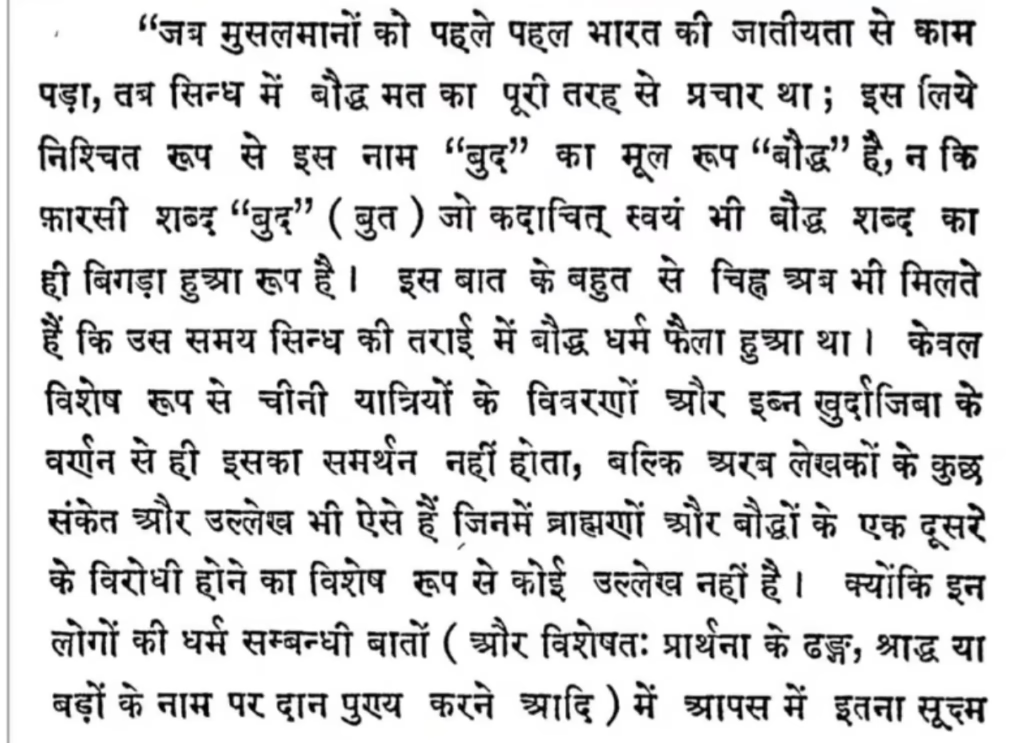
He noted that while Vedic Brahmins performed animal sacrifices, Buddhism did not. Yet, the perceived similarities in other aspects led him to question the fundamental differences. This quandary is central to understanding why external observers struggled to categorize the religious landscape of ancient India.
Elliot’s interpretation suggests that the integration of Brahmanical practices into Buddhism had advanced significantly by that era. He posits that observers might have overlooked the differences because they were subtle and overshadowed by the adopted customs. This perspective, however, risks downplaying the historical agency of the communities involved and may stem from a preconceived notion of a clear-cut Brahmanical dominance that was not universally present in the historical record. Read more: Origins of Shivalinga Worship: Historical & Scriptural Views
The Role of Arab Scholars and Misinterpreting Social Stratification
The Arab scholars, focused on trade and governance, often provided candid observations on the social stratification they encountered, which provides necessary counter-narratives to insulated theological histories. Specifically regarding caste, their accounts often detail rigid segregation that contradicts narratives suggesting a fluid, merit-based system. They noted specific exclusionary practices concerning food and water, which are fundamental indicators of deep-seated social hierarchy.[source]
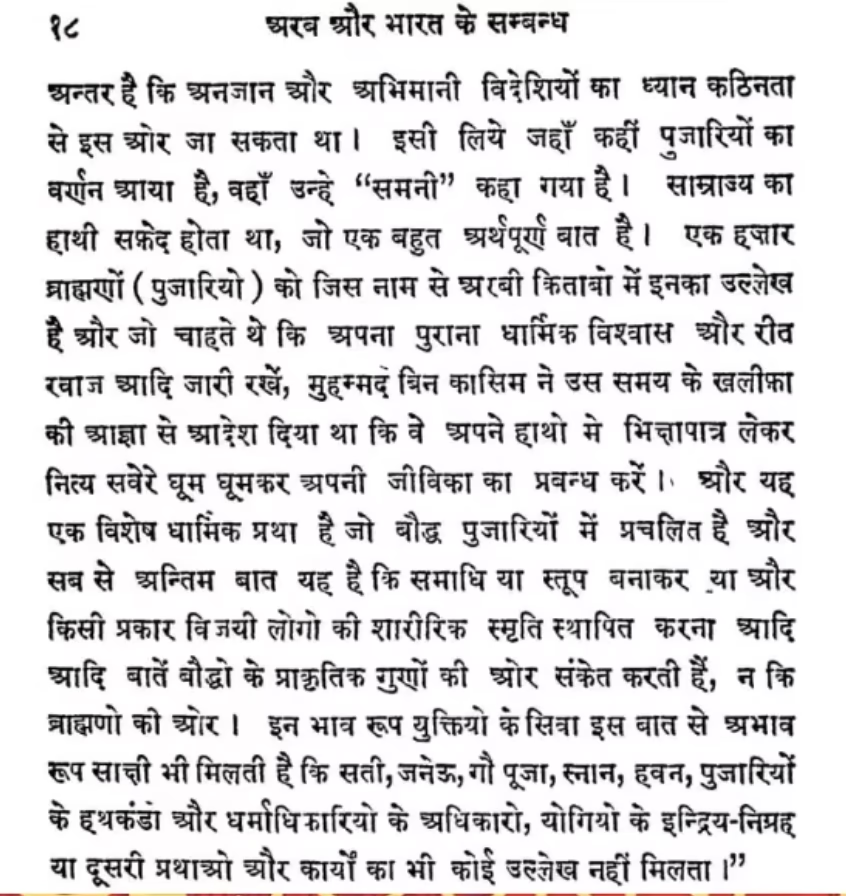
Furthermore, the writings frequently detail the perceived low status of groups performing manual or traditionally ‘unclean’ labor, suggesting an entrenched system of hierarchy based on birth, not just occupation. Analyzing these external views helps illuminate the lived experience under rigid social structures, independent of internal religious justifications developed later. These Arab accounts on ancient India society offer a critical lens through which to view the origins of enduring inequality.
Conclusion: Reclaiming History Through External Evidence
The records left by Arab travelers serve as an essential, relatively unmediated source for reconstructing the social, religious, and political landscape of ancient and early medieval India. By focusing on external, observational data—whether detailing the dominance of Buddhism in regions like Sindh or noting the visible segregation practices—we gain crucial context that is often obscured in purely indigenous textual interpretations. The historical confusion noted by scholars like Elliot underscores that the social reality observed by these outsiders was complex and arguably characterized by distinct religious populations struggling with assimilation or conflict.
Ultimately, integrating these historical truths from Arab travelers accounts ancient India history provides a more robust, evidence-based understanding of the past, moving beyond entrenched mythological frameworks to reveal the actual societal structures that existed centuries ago.
What Can You Do?
- Support evidence-based historical research by sharing articles that rely on verifiable external sources.
- Read foundational scholarly works, such as those compiled by Syed Suleman Nadvi, to see primary source analysis.
- Challenge narratives that dismiss external historical accounts in favor of purely scriptural ones.
- Advocate for curricula that include diverse, global perspectives on ancient Indian history, including Arab records.
Do you disagree with this article? If you have strong evidence to back up your claims, we invite you to join our live debates every Sunday, Tuesday, and Thursday on YouTube. Let’s engage in a respectful, evidence-based discussion to uncover the truth. Watch the latest debate on this topic below and share your perspective!

Skeptical Indian is an independent researcher documenting
caste discrimination through primary sources, Hindu
scriptures, court records, and government data.
CasteFreeIndia.com has published 100+ evidence-based
analyses since 2024.