The Elusive Vedic Age: Where is the Evidence?
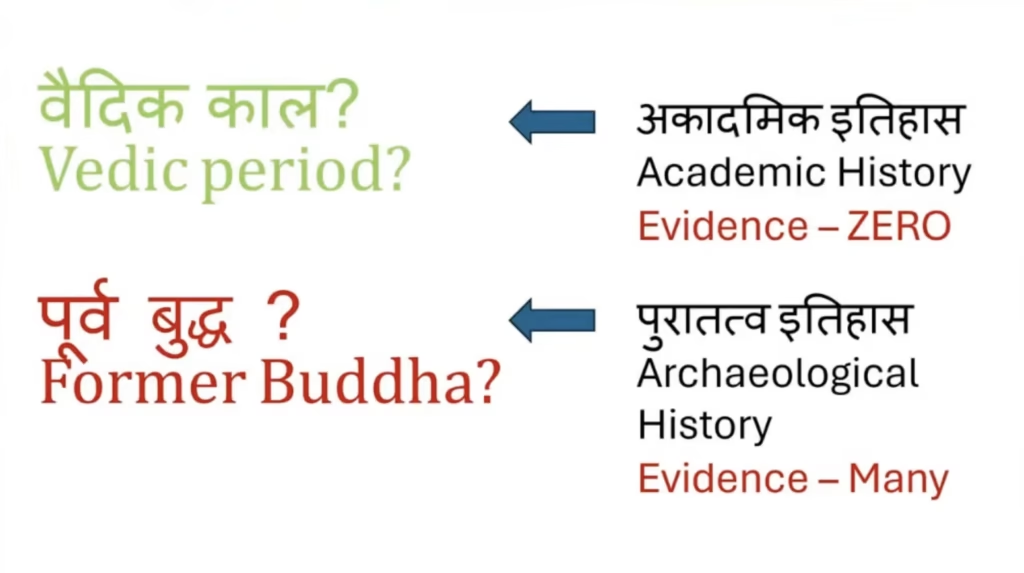
Is the commonly presented narrative of a flourishing Vedic period before Buddha accurate? Or is it a constructed illusion? This post rigorously examines historical and archaeological records to reveal the truth about what existed before Buddha. We invite all historians, religious scholars, and proponents of a pre-Buddha Vedic period to a public debate, challenging them to present their evidence.[source]
Questions like “Who were Buddha’s parents?” or “Can you prove Buddhism existed before Emperor Ashok?” are often met with evasiveness. When a precise answer is missing, the premise—the existence of a Vedic period—is assumed true. This logical fallacy, used to mislead, obscures the fundamental question: If this pre-Buddha Vedic period existed, where is the proof?
Academic history, as commonly taught, posits a Vedic period preceding Buddha, divided into Vedic and post-Vedic eras, supposedly following the Indus Valley Civilization. This narrative fills textbooks. However, tangible evidence for this supposed Vedic period remains elusive. When challenged, proponents often claim a lack of evidence for pre-Buddha Buddhism, conveniently ignoring their own narrative’s deficiencies. It’s as if a civilization vanished after the Indus Valley, replaced by a mythical Vedic era without a trace.[source]
Reality vs Myth
The reality is that existing evidence does not support a pre-Buddha Vedic age. Instead, it points to pre-Buddha traditions and figures. The persistent claim of no pre-Buddha Buddhist evidence serves to establish the Vedic narrative by default. When asked for proof of the Vedic period, responses are often evasive or a dismissive “no proof,” which is then twisted into “therefore, it must have existed.” This is the kind of history peddled by certain historical narrative creators, a history permeating academic circles and leading to widespread misconceptions.
Consequently, what does archaeology reveal? Buddha appears suddenly in historical records. He is often presented as part of a so-called Hindu tradition, reformed by Jains and Buddhists—a fabrication. Without evidence for a pre-Buddha Vedic or Hindu period, how can Buddha and the Jains be seen as reformers of a non-existent tradition? The claim that Buddhism and Jainism emerged from a pre-existing Hindu framework lacks substantiation. Therefore, when evidence is questioned, we must ask: whose evidence is being found—that of the Vedic period or of pre-Buddha figures?
Table of Contents:
- The Paucity of Evidence for Vedic Rishis
- Challenging the Literary Foundation of the Vedic Age
- The Journey of Foreign Travelers: Witnesses to Pre-Buddha Traditions
- Archaeological Vindication: Excavations Unearthing Pre-Buddha Realities
- The Maurya Dynasty: Buddhist Roots, Not Vedic
- Debunking the Narrative of Religious Substitution
- The Archaeology of Early Buddhist Sites: Pillars of Truth
- The Myth of a Hypothetical Vedic Past
- What Can You Do?
- Frequently Asked Questions
- What is the primary evidence cited against the existence of a Vedic period before Buddha?
- How do foreign travelers' accounts support the existence of pre-Buddha traditions?
- What role did Emperor Ashok play in validating pre-Buddha figures?
- Why is the Buddhist literary tradition considered more verifiable than Vedic literature in this context?
- What do archaeological excavations at sites like Gutihawa reveal?
- Disclaimer
The Paucity of Evidence for Vedic Rishis
No Archaeological Footprints
Regarding the Vedic period, we are told of sages and Rishis. Yet, a striking absence of archaeological evidence for any Rishi, their Gurukuls, ashrams, or even simple dwellings, has been found. Nothing concrete corroborates the existence of these figures historically or archaeologically.
Abundant Evidence for Pre-Buddha Figures
Conversely, evidence for pre-Buddha figures and traditions is abundant. As civilizations advance, niche practices become widespread. Similarly, as civilization progressed around Buddha’s era and Emperor Ashok’s time, the traditions and legacies of earlier figures were recognized and memorialized. If these pre-Buddha figures were as prominent as the Vedic narrative suggests, their traces should be as evident as those of later figures. The extensive evidence for pre-Buddha traditions, contrasted with the archaeological invisibility of Vedic figures, is telling.
Civilization and the Spread of Traditions
As civilizations develop, traditions tend to be embraced by various communities. If Buddhism was flourishing during the Maurya period, other contemporary or preceding traditions would logically leave their mark. The argument that only Brahmins celebrated certain traditions is flawed; as civilization advances, practices become more inclusive. The lack of evidence for pre-Buddha Vedic practices, alongside abundant evidence for pre-Buddha traditions, suggests a different historical reality. Read more: Origins of Shivalinga Worship: Historical & Scriptural Views
Challenging the Literary Foundation of the Vedic Age
The Unverified Nature of Vedic Texts
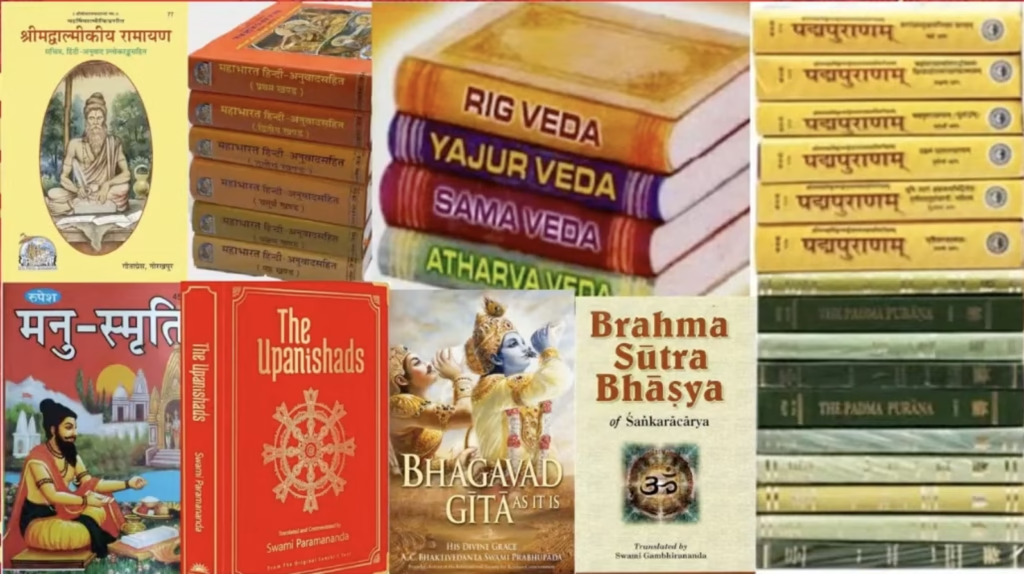
A common argument against challenging the Vedic period posits that literature should be considered alongside archaeology. However, examining Vedic literature—the Vedas, Puranas, Upanishads, Gita, and Smritis—reveals a glaring disconnect with archaeological findings. Verification for these texts is missing. Unlike Buddhist and Jain literature, which finds corroboration in archaeological discoveries, Vedic texts remain largely unverified by tangible evidence.
The Absence of Linguistic and Scriptural Proof
Crucially, there is no evidence of the language or script used during the purported Vedic period. The texts attributed to this era are written in scripts and languages that emerged much later. The claim that the Vedas prove a Vedic age is unsubstantiated without proof of their origin, language, and script from that purported time. Furthermore, descriptions within these texts often veer into the fantastical, with stories of divine births and miraculous events, lacking grounding in historical reality or verifiable events concerning sages’ lives or locations. Read more: Deep Roots of Conspiracy Theories in Indian History
Buddhist Literature: A Verifiable Counterpart
In contrast, Buddhist scriptures, such as the Tripitaka, hold significant historical value. While language evolves and translations introduce nuances, the core teachings possess a basis in verifiable history. These texts encourage critical thinking, urging followers to accept only what withstands reason and logic, acknowledging their compilation over different periods and potential layers of additions.
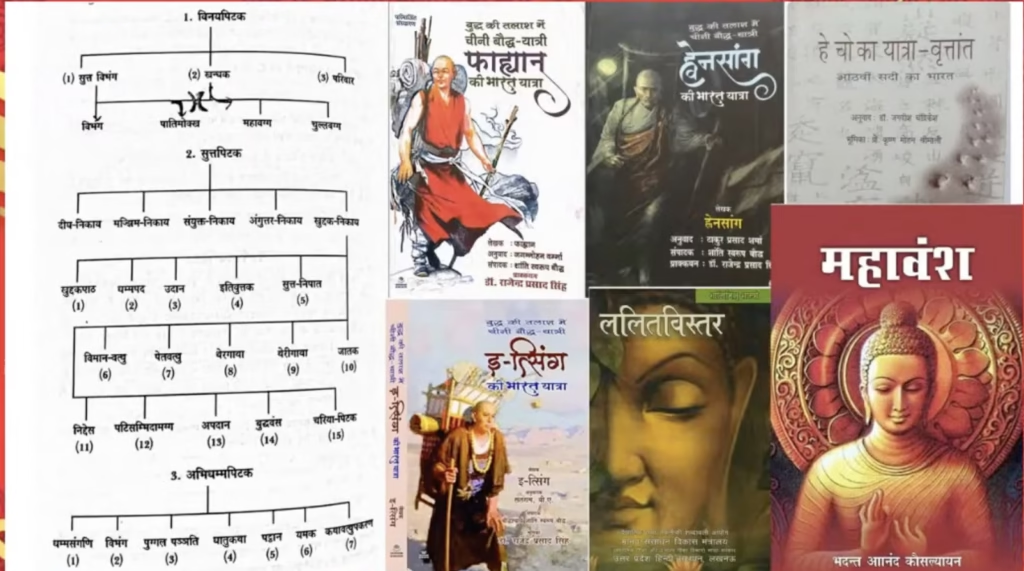
Furthermore, Buddhist texts are consistently corroborated by archaeological findings. Foreign travelers’ travelogues, like those of Faxian, Xuanzang, and Yijing, provide detailed accounts aligning with archaeological discoveries. For instance, Nalanda University’s excavation was informed by information in these texts. Extensive discoveries of Buddhist sites, stupas, and artifacts attest to the historical accuracy of Buddhist scriptures—a level of verification conspicuously absent for Vedic texts.
The Journey of Foreign Travelers: Witnesses to Pre-Buddha Traditions
Faxian’s Accounts: Early Evidence of Pre-Buddha Buddhas
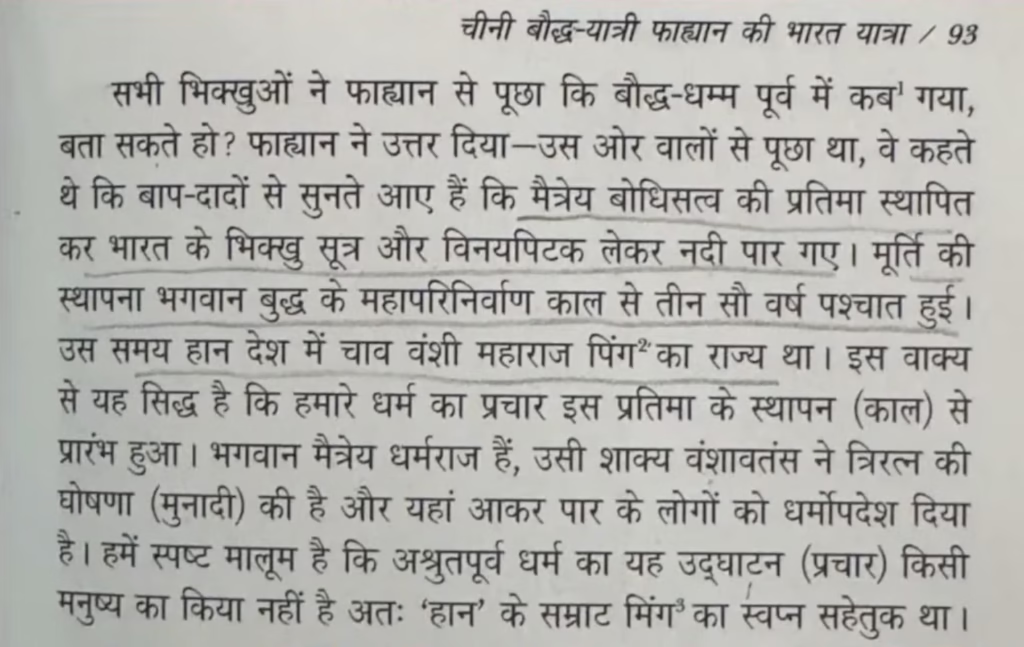
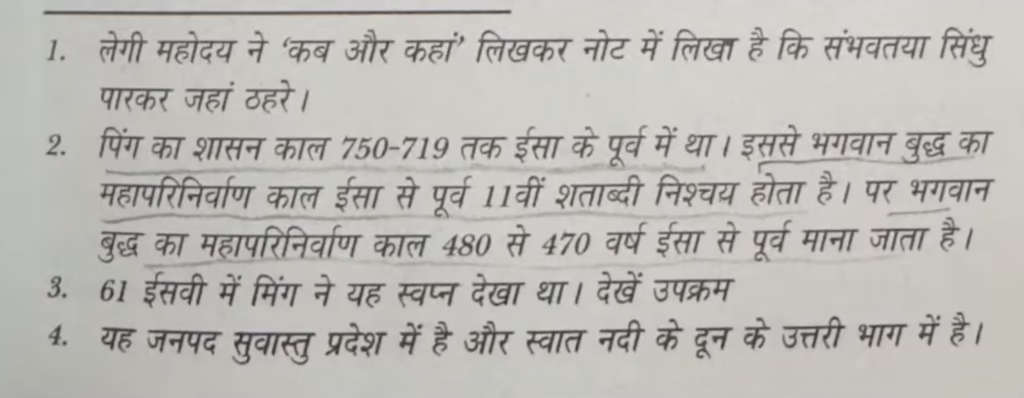
Faxian, a Chinese Buddhist monk who traveled to India in 399 CE, extensively documented his observations. His writings provide crucial evidence for pre-Buddha traditions. He recorded locals mentioning that the Maitreya Bodhisattva statue was established by monks carrying Buddhist texts approximately 300 years after Buddha’s Mahaparinirvana. This places the tradition well before the commonly accepted timeline for Buddhism’s influence in China.
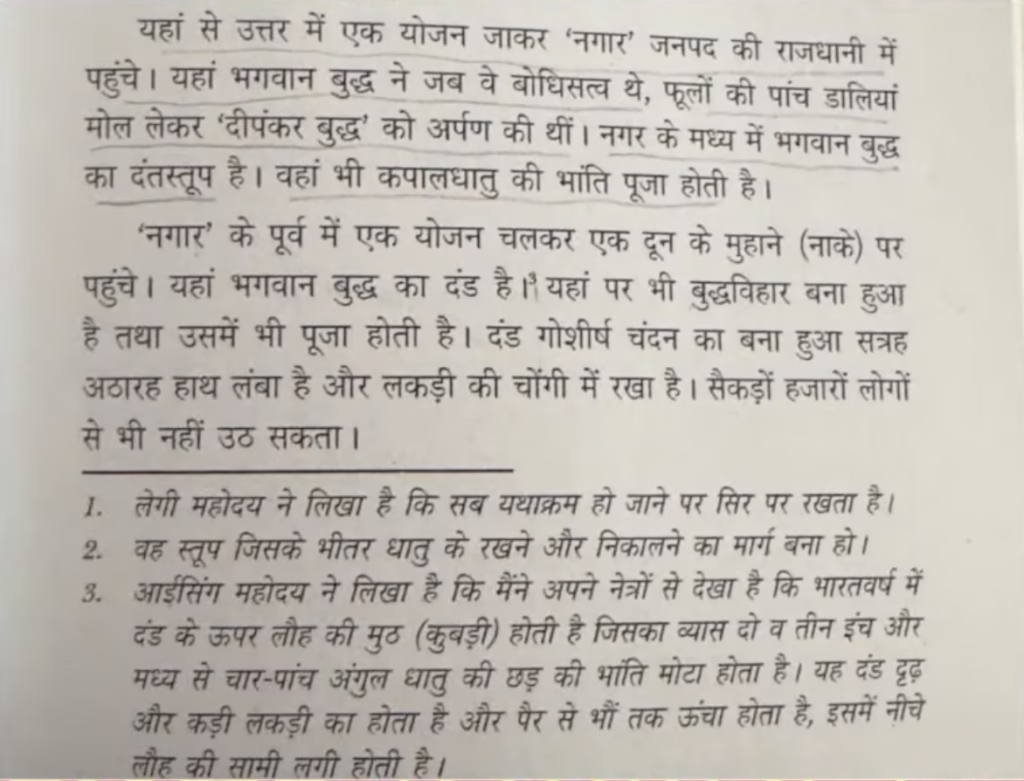
Faxian also recounted an encounter in the Nagara जनपद where he learned that the Bodhisattva (in a previous life as Buddha) had offered flowers to the Dipankara Buddha. This direct reference to Dipankara Buddha, a pre-Buddha figure, found in a text from 399 CE, predates claims of later fabrications of 28 Buddhas. The existence of stupas dedicated to these pre-Buddha figures, witnessed by Faxian, further strengthens the argument for their historical presence.
The 28 Buddhas: A List with Ancient Roots
The tradition of 28 Buddhas is well-documented in Buddhist scriptures, starting with Takkhaka Buddha and including figures like Mekha, Sakkhaka, and importantly, Dipankara Buddha, culminating in Gautama Buddha. These accounts appear in texts like the Buddhavamsa and the Jatakas. The detailed descriptions of these Buddhas and their Bodhi trees offer a rich tapestry of pre-Buddha spiritual history. While some traditions list 24 or 25 Buddhas, the complete enumeration often reaches 28, acknowledging figures like Dipankara Buddha, whose existence Faxian reported as early as 399 CE.[source]
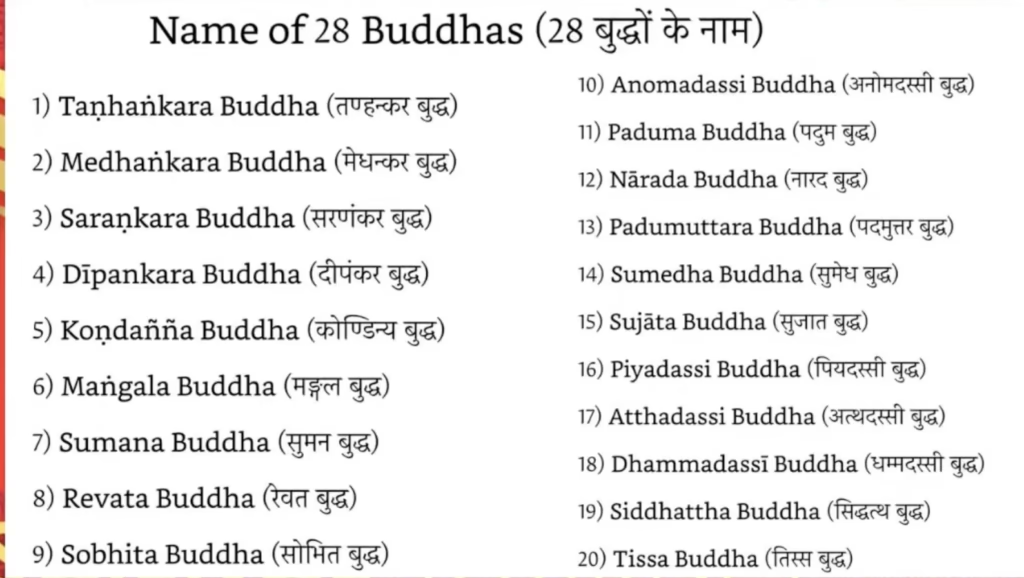
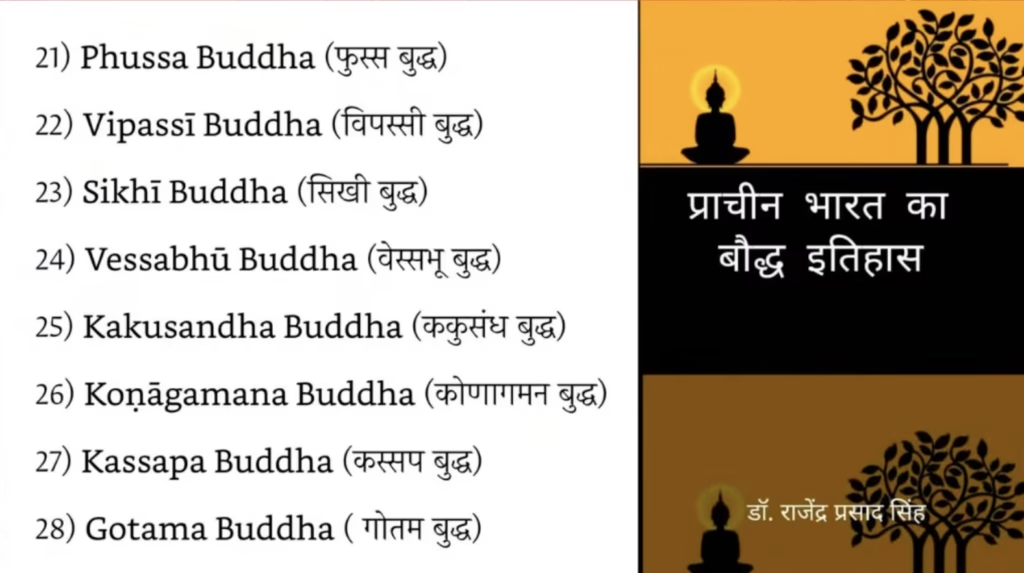
The assertion that the list of 28 Buddhas was a later invention is debunked by Faxian’s early account. His direct observation of traditions related to Dipankara Buddha in 399 CE confirms the antiquity of this lineage.
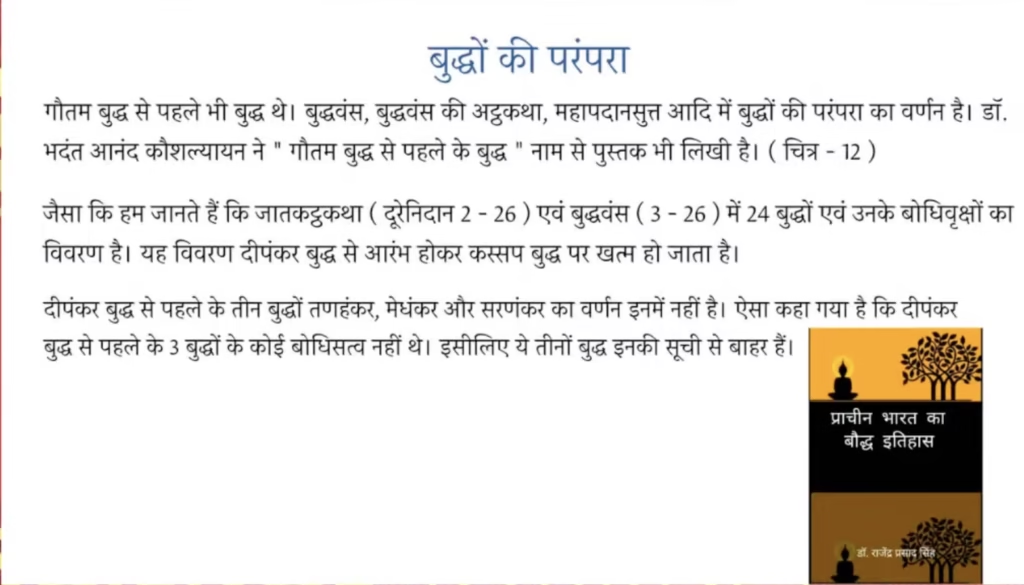
“The details… begin with Dipankara Buddha and end with Kashyap Buddha. The descriptions of the first three Buddhas before Dipankara Buddha—Tadgata, Mekha, and Sankha—are not included in these. It is said that these three Buddhas had no Bodhisattvas, hence these three Buddhas are excluded from their list.”
Xuanzang’s Observations: Expanding the Narrative
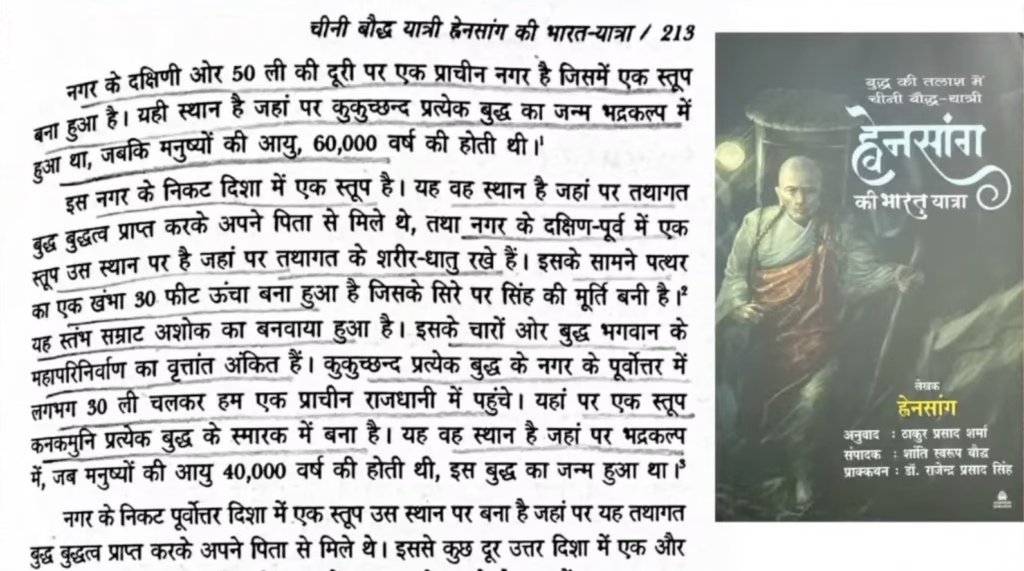
Xuanzang, arriving in India around 629 CE, further expanded on accounts of pre-Buddha figures. He documented stupas and historical sites associated with Kasyapa Buddha, Krakucchanda Buddha, and Kanakamuni Buddha, describing their birthplaces and Nirvana sites. Xuanzang’s travelogues provide detailed geographical and historical information that, when cross-referenced with archaeology, offer compelling evidence for these pre-Buddha traditions.
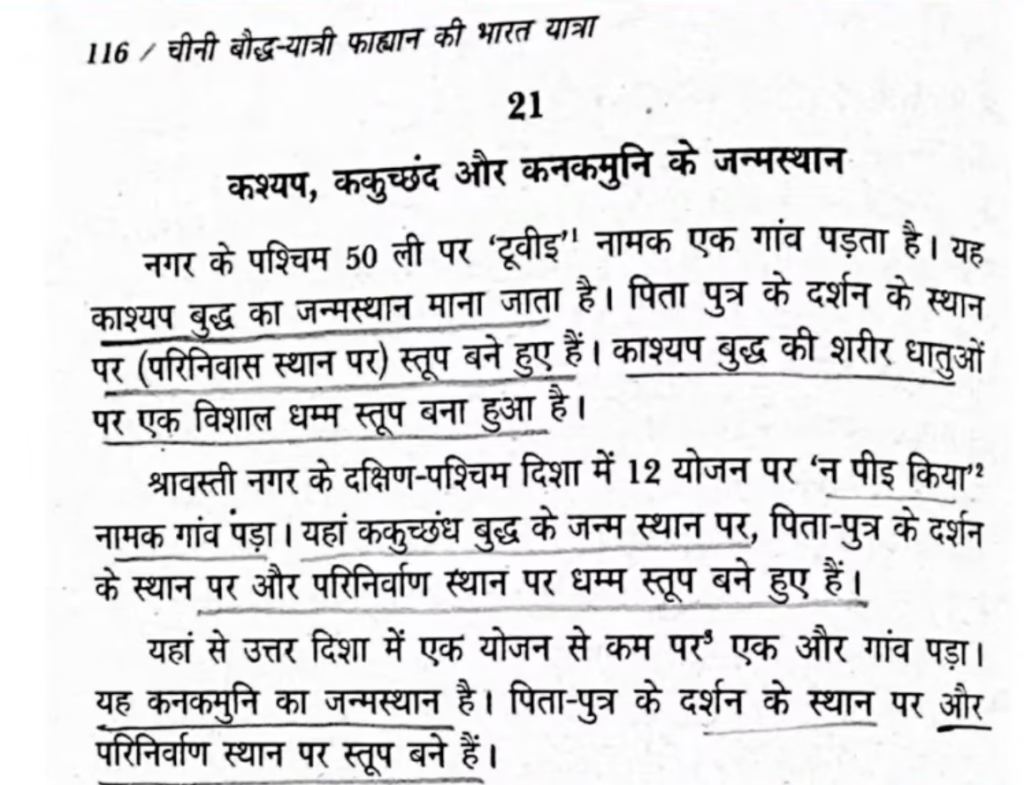
Xuanzang noted that human lifespans during Krakucchanda Buddha’s time were 60,000 years, and during Kanakamuni Buddha’s, 40,000 years. While these figures seem exaggerated, they reflect a belief system emphasizing antiquity. This practice of attributing long lifespans to ancient beings became more pronounced by the 7th century CE, appearing in later Jain texts and the Ramayana.
The Significance of Traveler Accounts
Consistent accounts from travelers like Faxian and Xuanzang, describing stupas and traditions related to pre-Buddha figures, are invaluable. While their narratives may contain embellished stories, the core information about the existence of these sites and figures is often corroborated by archaeology. Unlike the purely literary claims of the Vedic period, these accounts are tied to physical locations and observable structures.
Archaeological Vindication: Excavations Unearthing Pre-Buddha Realities
The Gutihawa Excavations: Concrete Proof of Krakucchanda Buddha
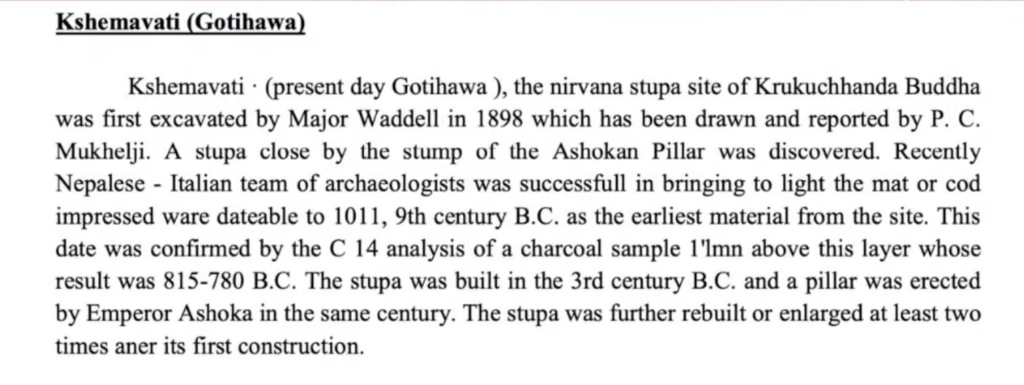
Archaeological excavations have provided undeniable proof of pre-Buddha figures. In Gutihawa, Nepal, excavations revealed evidence of Krakucchanda Buddha. Carbon dating of charcoal found at the site indicated a period around 800 BCE. Crucially, Emperor Ashok, in the 3rd century BCE, erected a pillar at this site, explicitly mentioning it as the birthplace of Krakucchanda Buddha. The inscription clearly states the king visited the stupa site of Krakucchanda Buddha.[source]
The Nigali Sagar Pillar: A Monument to Kanakamuni Buddha
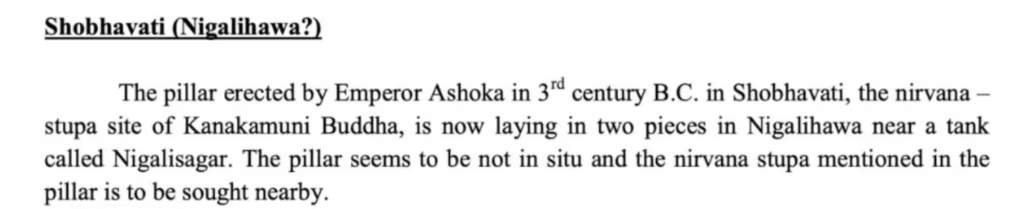
Similarly, the Nigali Sagar pillar, also inscribed by Emperor Ashok, confirms the existence of Kanakamuni Buddha. The inscription states that Ashok visited the Nirvana site of Kanakamuni Buddha and expanded the existing stupa. These inscriptions, dating to the 3rd century BCE, are direct, written evidence from a historical figure validating the existence of these pre-Buddha Buddhas and their venerated sites.
The Systemic Erasure and Reconstruction
The findings at these sites are significant because Emperor Ashok chose places with existing historical or religious importance for his pillars. The presence of his inscriptions and expanded stupas indicates these sites were already recognized. Meticulous excavation processes, including carbon dating, have systematically unearthed layers of history, confirming human activity and Buddhist veneration dating back to around 800-900 BCE. This contradicts the narrative of a post-Buddha Vedic age and supports the reality of a pre-Buddha spiritual landscape.
The Maurya Dynasty: Buddhist Roots, Not Vedic
Faxian’s Testimony on Maurya Stupas
Faxian’s travelogue from 399 CE offers compelling evidence regarding the Maurya dynasty’s connection to Buddhism. He explicitly mentions seeing a stupa built by the Mauryas in Pipili Vana, reportedly using embers from Buddha’s funeral pyre distributed by Drona. This account places the Mauryas, including Chandragupta Maurya, as patrons of Buddhism long before any credible evidence of a Vedic revival.[source]
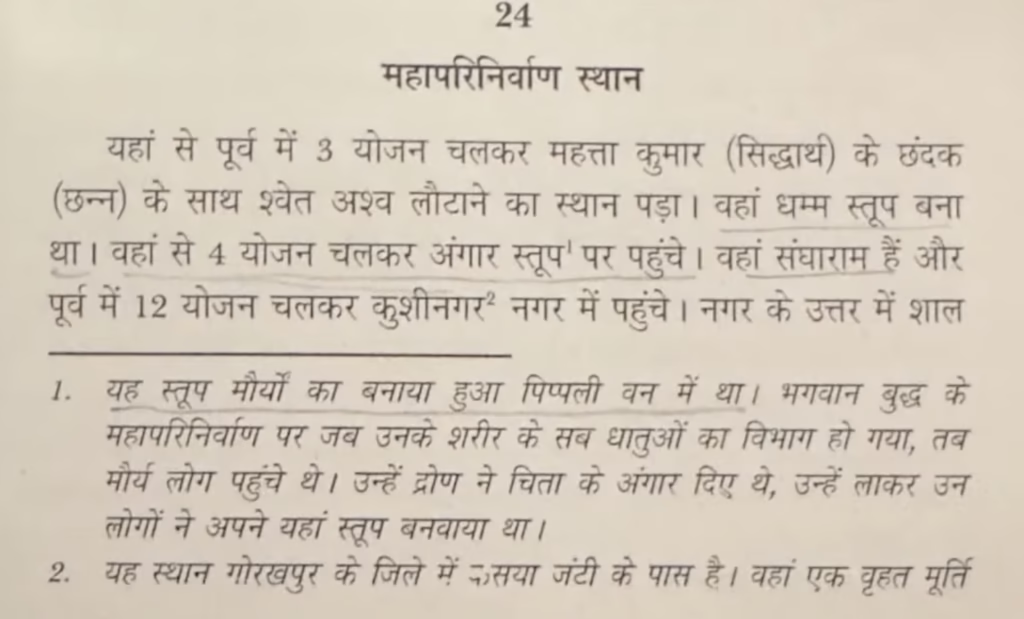
The notion that Chandragupta Maurya or his ancestors followed Hinduism is a later construct. Faxian’s direct observation of Maurya-built Buddhist stupas in 399 CE provides a historical counter-narrative. If the Mauryas built Buddhist stupas using relics from Buddha’s cremation, it strongly suggests their allegiance to Buddhist traditions, not a supposed pre-existing Vedic framework. Read more: Bhavishya Purana: Puranic Chronology & Foreign Influence
Ashok’s Legacy: A Buddhist Emperor
Emperor Ashok’s conversion to Buddhism and his propagation of the Dhamma are well-documented historical facts. His edicts and numerous stupas across the subcontinent attest to his devotion. The fact that he honored pre-Buddha Buddhas with pillars and expanded stupas further underscores the continuous lineage of Buddhist tradition, extending well before his reign.
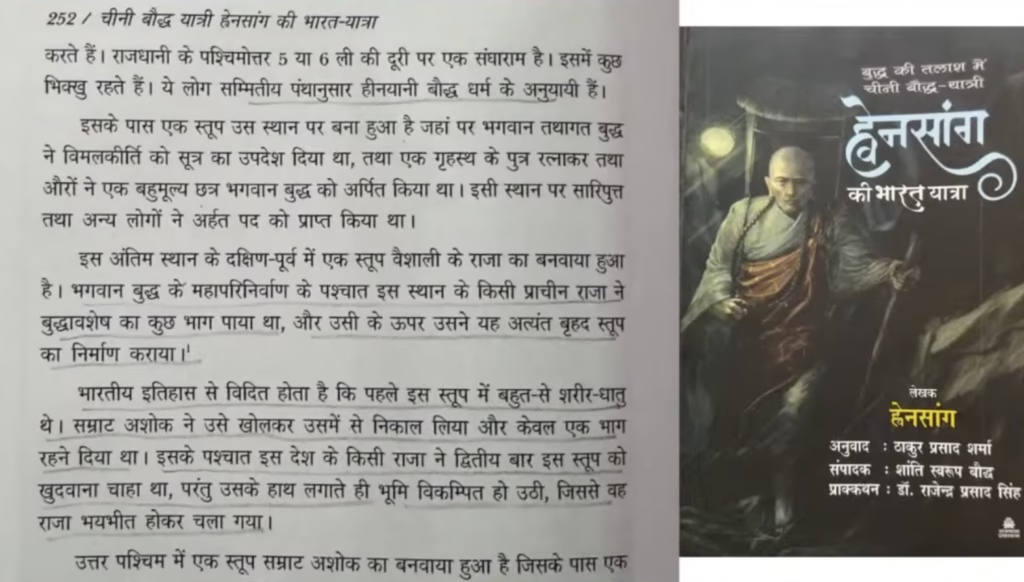
The evidence clearly indicates the Maurya dynasty was deeply intertwined with Buddhism from its inception. Attempts to retroactively assign Vedic or Hindu identities to figures like Chandragupta Maurya and Ashok ignore substantial historical and archaeological evidence pointing to their Buddhist affiliations.
Debunking the Narrative of Religious Substitution
The Distortion of Buddhist Terms and Figures
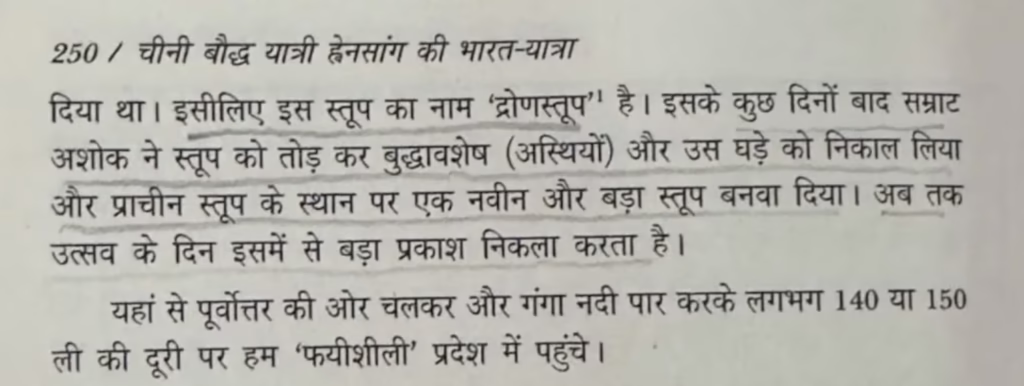
There is a deliberate effort to erase Buddhist history and appropriate its figures and terminology. For instance, the Buddhist term ‘Drona Stupa,’ associated with the embers of Buddha’s funeral pyre, was allegedly transformed into ‘Guru Drona’ in the Mahabharata. This distortion serves to obscure Buddhist origins and replace them with a fabricated Vedic narrative. Similarly, the description of Bhardwaj Rishi’s semen falling into a pot, leading to Drona’s birth, is a mythological construct designed to supplant the historical reality of the Drona Stupa.
The Appropriation of Sites and Relics
The destruction and appropriation of Buddhist sites and relics by later rulers, often identified with Vedic or Brahmanical traditions, is a recurring theme. Xuanzang documented how Emperor Ashok himself dismantled existing stupas, extracted relics, and rebuilt them on a grander scale. This practice of dismantling older structures and constructing new ones, often over existing Buddhist foundations, has led to the loss of much early evidence. However, surviving remnants and the meticulous work of archaeologists and foreign travelers continue to piece together the true history.
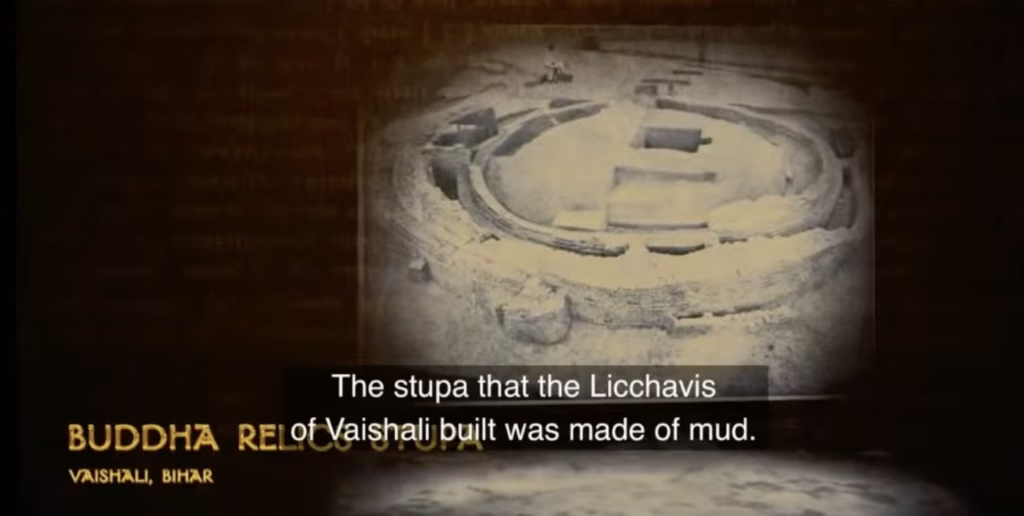
The discovery of structures made of unbaked bricks at sites like Vaishali, predating the baked brick stupas built by Emperor Ashok, provides tangible evidence of pre-Ashok Buddhist constructions. This suggests that Buddhist activities and constructions predated Ashok, and his work often involved expanding or reconstructing already existing sacred sites.[source]
The Archaeology of Early Buddhist Sites: Pillars of Truth
Pillar Inscriptions as Primary Evidence
Emperor Ashok’s pillars are invaluable historical documents. Inscriptions on these pillars, like the Rummindei pillar, confirm Lumbini village as Buddha’s birthplace. More importantly, the Rummindei pillar also mentions Ashok exempting the village from taxes, indicating its significance as a sacred site. Furthermore, inscriptions on pillars at sites associated with Kanakamuni Buddha explicitly name him, validating his existence and the importance of his associated sites even in the 3rd century BCE.[source]
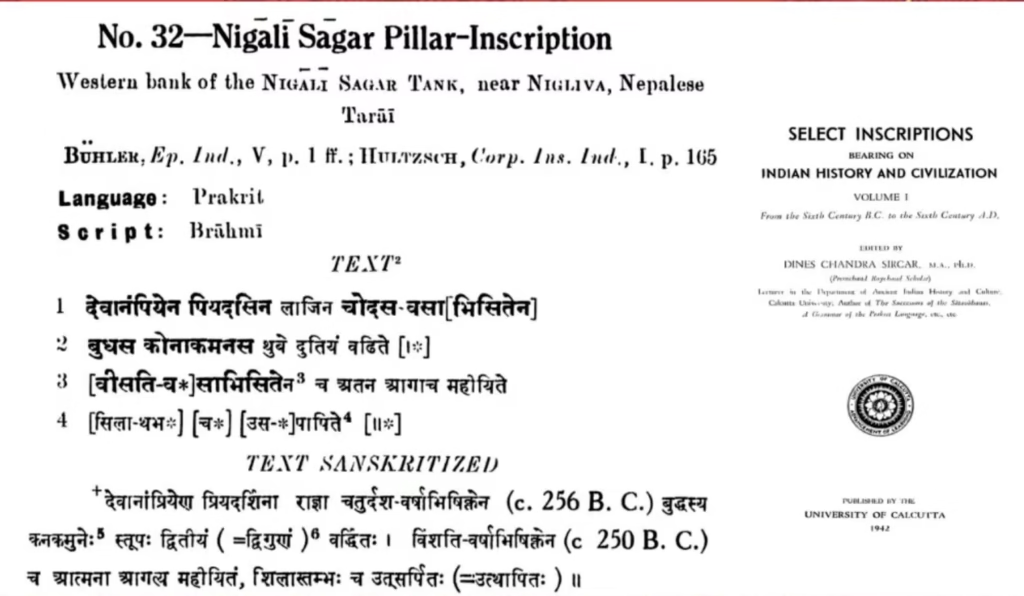
These inscriptions are not mere legends; they are official pronouncements carved in stone by a powerful emperor. They provide direct, contemporary evidence of the veneration of Buddha and pre-Buddha figures during Ashok’s reign. The erection of these pillars at specific locations associated with these figures demonstrates that these traditions were already established and recognized.
Excavations Confirming Ancient Buddhist Settlements
Archaeological excavations at various sites have unearthed evidence of settlements and structures dating to periods preceding Emperor Ashok. The discovery of early stupas, pottery, and other artifacts, often found in lower strata, points to a long history of Buddhist presence. For example, early Buddhist structures at Sarnath and Sanchi, predating Ashok’s constructions, indicate these were already significant religious centers before his time.
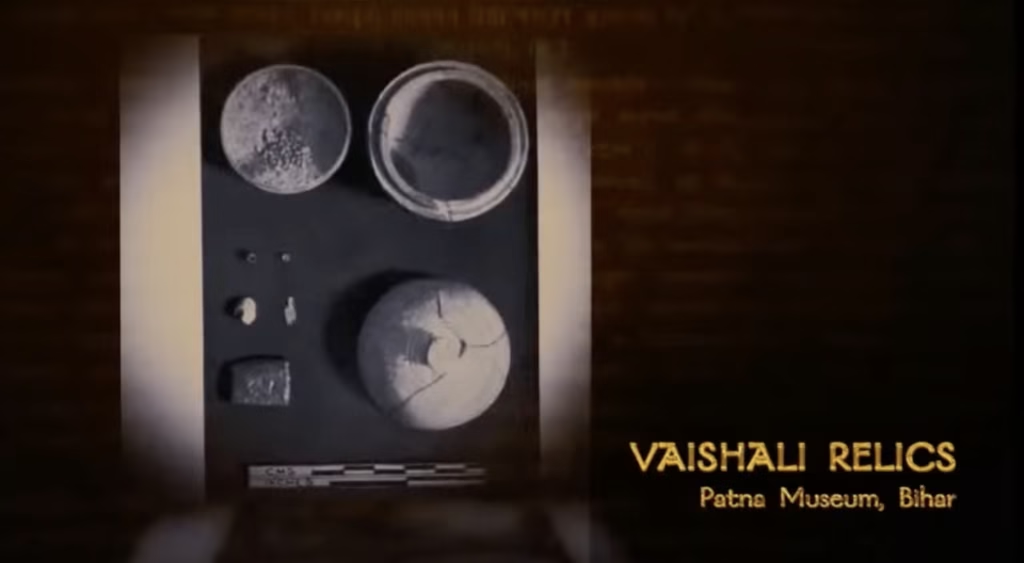
The evidence from these excavations, combined with inscriptions and foreign traveler accounts, paints a consistent picture: Buddhism has deep historical roots in India, extending far beyond commonly accepted timelines and certainly predating any verifiable Vedic period.
The Myth of a Hypothetical Vedic Past
Where is the Archaeological Proof?
Despite claims of a Vedic age preceding Buddha, a profound lack of archaeological evidence supports this. No artifacts, structures, or inscriptions definitively linked to a Vedic period have been unearthed. The narrative of a Vedic past is sustained purely by literature whose origins and dating are highly contested and lack external corroboration.[source]
Contrasting Evidence for Pre-Buddha Traditions
The situation is entirely different for pre-Buddha traditions. Archaeological findings, supported by travelogues from Faxian, Xuanzang, and others, consistently point to the existence of Buddhist sites, figures, and practices centuries before the common era. Ashok’s pillars, excavated stupas, and documented accounts affirm the reality of a pre-Buddha spiritual landscape.
The contrast is stark: a narrative of a Vedic age built on unverified texts versus a history of pre-Buddha traditions supported by converging archaeological evidence, epigraphy, and historical accounts. The logical conclusion is that the Vedic age, as presented, is a fabricated narrative, while the pre-Buddha era, deeply rooted in Buddhist traditions, is historically verifiable.
What Can You Do?
- Educate Yourself: Seek evidence-based historical accounts and archaeological findings. Question taught narratives and look for corroborating evidence.
- Share the Truth: Circulate this information and other evidence-based resources to counter misinformation about India’s ancient history.
- Support Research: Encourage and support academic and archaeological research focused on uncovering factual historical evidence rather than perpetuating myths.
- Demand Open Debate: Call for open, evidence-based discussions on historical topics. Challenge unsubstantiated established narratives.
Frequently Asked Questions
What is the primary evidence cited against the existence of a Vedic period before Buddha?
The primary evidence cited against a pre-Buddha Vedic period is the lack of corroborating archaeological findings. While Vedic texts exist, they lack tangible, verifiable support from excavations, unlike the evidence found for pre-Buddha Buddhist traditions.
How do foreign travelers’ accounts support the existence of pre-Buddha traditions?
Travelers like Faxian and Xuanzang documented stupas and sites associated with pre-Buddha Buddhas (e.g., Dipankara, Krakucchanda, Kanakamuni) in their writings from centuries ago. These accounts, when cross-referenced with archaeological findings, provide a historical basis for these figures and traditions existing long before the commonly accepted timelines.
What role did Emperor Ashok play in validating pre-Buddha figures?
Emperor Ashok erected pillars at significant sites, including the birthplaces and Nirvana sites of pre-Buddha Buddhas like Krakucchanda and Kanakamuni. Inscriptions on these pillars, dating to the 3rd century BCE, explicitly name these figures and confirm their veneration, providing direct epigraphic evidence.
Why is the Buddhist literary tradition considered more verifiable than Vedic literature in this context?
Buddhist scriptures, particularly the Tripitaka, have found consistent corroboration through archaeological discoveries and foreign travelers’ accounts. In contrast, Vedic texts largely lack such external validation, with their origins, language, and historical context being subjects of much debate and lacking definitive archaeological links to a specific pre-Buddha era.
What do archaeological excavations at sites like Gutihawa reveal?
Excavations at Gutihawa, Nepal, revealed evidence linked to Krakucchanda Buddha, with carbon dating pointing to around 800 BCE. This is further supported by Emperor Ashok’s inscription at the site from the 3rd century BCE, confirming it as Krakucchanda Buddha’s birthplace and indicating the site’s significance predated Ashok’s reign.
Disclaimer
Vedic Period: In this article, this refers to a purported historical era in ancient India claimed to have preceded Buddhism. The article argues there is a lack of verifiable archaeological or historical evidence for such a distinct period before Buddha.
Pre-Buddha Buddhas: Refers to enlightened beings in Buddhist tradition who existed before Gautama Buddha, such as Dipankara, Krakucchanda, and Kanakamuni Buddha.
Tripitaka: The three main categories of Buddhist scriptures: Vinaya Pitaka (monastic rules), Sutta Pitaka (discourses), and Abhidhamma Pitaka (philosophy).
Faxian, Xuanzang, Yijing: Chinese Buddhist monks who traveled to India between the 4th and 8th centuries CE, documenting their observations and providing valuable historical information.
Emperor Ashok: A Mauryan emperor (3rd century BCE) known for his conversion to Buddhism and propagation of Dhamma, evident in his edicts and stupa constructions.
Archaeology: The study of human history through excavation and analysis of physical remains.
Epigraphy: The study of inscriptions, especially ancient ones.
Carbon Dating: A scientific method for determining the age of organic materials by measuring carbon isotope decay.
Maurya Dynasty: An ancient Indian empire (c. 322–185 BCE) founded by Chandragupta Maurya, argued in this article to have strong Buddhist affiliations.
Do you disagree with this article? If you have strong evidence to back up your claims, we invite you to join our live debates every Sunday, Tuesday, and Thursday on YouTube. Let’s engage in a respectful, evidence-based discussion to uncover the truth. Watch the latest debate on this topic below and share your perspective!

Skeptical Indian is an independent researcher documenting
caste discrimination through primary sources, Hindu
scriptures, court records, and government data.
CasteFreeIndia.com has published 100+ evidence-based
analyses since 2024.