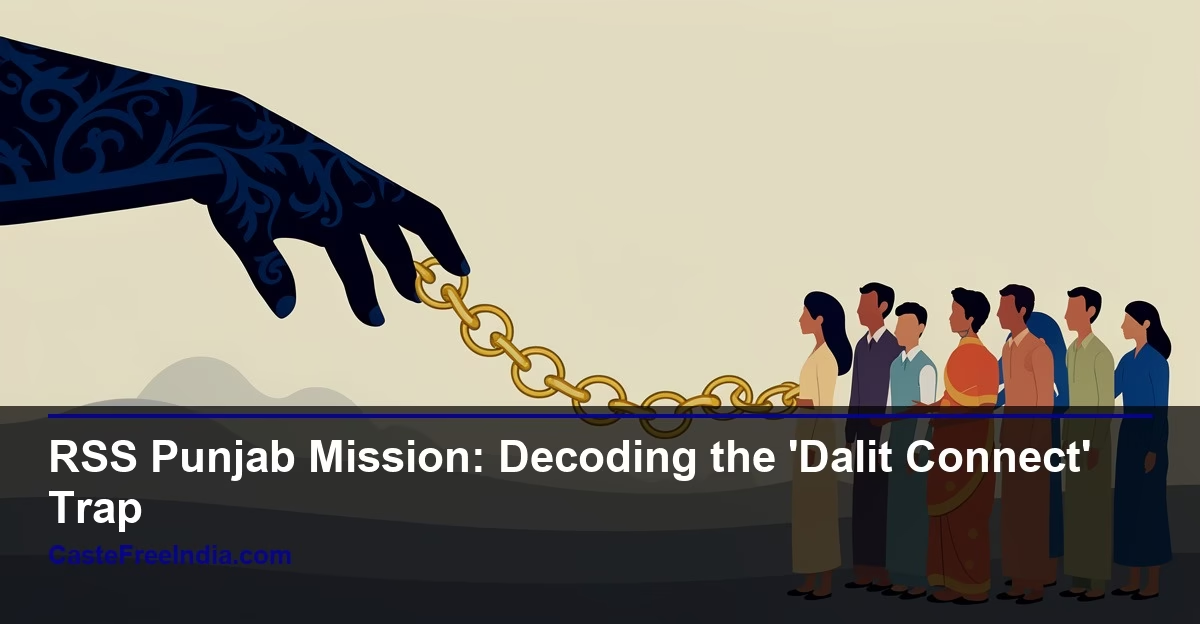
The Silent War for the Mind: RSS’s ‘Dalit Connect’ Campaign in Punjab
Brahmanical forces persistently seek to consolidate their power. This is a defining characteristic of Indian socio-political history. While the world focuses on global issues, these forces remain active. They weave intricate plans to absorb marginalized communities into the Hindutva fold. Their primary objective is clear: secure political dominance and exploit the masses. This strategic maneuvering often goes unnoticed. It is dismissed as inconsequential by the very communities it aims to ensnare. Let’s discuss the RSS Dalit Connect Campaign.
In contrast, Bahujan society often appears dormant. It is caught in a quagmire of historical grievances and internal squabbles. Debates over religious symbolism and iconography consume much energy. The focus remains on past battles and spiritual engagement with temples and scriptures. Meanwhile, the tangible, present-day machinations of Brahmanical powers continue unabated. This disconnect from contemporary reality leaves the Bahujan community vulnerable to manipulation. The RSS, a prominent arm of these Brahmanical forces, exemplifies this strategic approach. Their consistent pursuit of political power, often cloaked in cultural or religious unity, demands critical examination. Initiatives like their so-called ‘Dalit Connect’ campaign, more accurately termed ‘Dalit Trapping,’ warrant close scrutiny.
This post demystifies this campaign. It draws insights from reports, particularly a significant one in Dainik Bhaskar. The goal is to expose the underlying strategy and its implications for the Bahujan community. We aim to equip readers to recognize these tactics. Understanding the true intent behind them fosters informed engagement with the socio-political landscape.
Table of Contents:
- The RSS Strategy: Cultivating Hindutva for Political Harvest
- Dainik Bhaskar Report: Unveiling the RSS's Punjab Mission
- Decoding 'Samrasta': Harmony or Hindutva Hegemony?
- The RSS's Five-Point Strategy: A Blueprint for Dalit Integration
- Unifying Cemeteries: A Symbol of Superficial Equality
- Reconnecting Dalits with Hinduism: The 'Ram Connection'
- The 'Valmiki Tirth' Initiative: Reclaiming a Dalit Icon
- 'Ghar Ghar Valmiki Ramayan': Disseminating an Alternative Narrative
- Leveraging Dalit Saints and Symbols
- The 'Homecoming' Strategy: Resisting Conversion
- The Deceptive Nature of 'Samrasta'
- The Deeper Implications: Beyond Superficial Harmony
- A Call to Action: Recognizing and Resisting Manipulation
- What Can You Do?
- Disclaimer
The RSS Strategy: Cultivating Hindutva for Political Harvest
A Persistent Pursuit of Power
The Rashtriya Swayamsevak Sangh (RSS), alongside its political offshoot the Bharatiya Janata Party (BJP), is perpetually engaged in its mission for political supremacy. Regardless of external circumstances, their focus remains fixed on capturing and retaining political power. The RSS excels at creating a conducive environment for the BJP. It does this by relentlessly propagating Hindutva across society. This is not a sporadic effort but a continuous, deeply ingrained process. It explains their electoral successes.
The Dormant Giant: Bahujan Society
In stark contrast, the Bahujan society, historically oppressed, often finds itself in a state of slumber. Even those with some awareness frequently delve into the past. They engage in debates about religious texts or fight symbolic battles over temples and deities. This preoccupation with history diverts attention from pressing issues. The RSS’s strategic endeavors, on the other hand, are meticulously planned. They are executed with a clear understanding of political realities.
The Punjab Case Study: A Microcosm of a Larger Game
A critical case study illustrating the RSS’s strategy is their purported ‘Dalit Connect’ campaign in Punjab. This state has historically seen a negligible BJP presence. This campaign, as detailed in a Dainik Bhaskar report, is a calculated attempt to integrate the Dalit population into the Hindutva fold. The RSS openly declares its intention to connect Punjab’s large Dalit population with Hinduism. The unambiguous goal is to create favorable electoral ground for the BJP. This is a public display of intent. It highlights the audacity and transparency of Brahmanical forces. The underlying objective is to leverage this consolidated vote bank for political power. This demonstrates a pattern of systematic, long-term objectives.
Dainik Bhaskar Report: Unveiling the RSS’s Punjab Mission
The ‘Punjab Vijay Mission’ and Electoral Ambitions
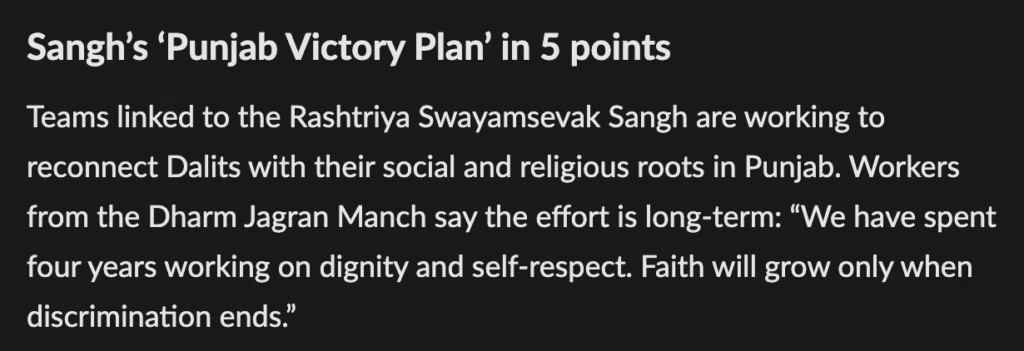
The Dainik Bhaskar report highlights the RSS’s concerted efforts in Punjab. The BJP struggles to secure even a handful of seats here. Under the banner of the ‘Punjab Vijay Mission,’ the RSS is preparing the ground for the BJP. The focus is on the state’s significant Scheduled Caste (Dalit) population. Their voting power influences many seats. The RSS strategy involves gradually integrating these communities into Hindutva ideology. This mission is a meticulously crafted four-year plan. It is now intensifying as elections approach.
Mobilizing Volunteers and Targeting Vulnerable Communities
The operation involves dedicated RSS volunteers. They are referred to as ‘Dharm Jagran Manch’ (Religious Awakening Forum) workers. Their task is to engage with weaker sections in Punjab, particularly Dalits. They aim to instill a sense of affinity towards Hindutva. This is achieved through various programs. These are designed to gradually influence thinking and beliefs. The report indicates a long-term strategy. The RSS aims for the ‘dignity and respect’ of these communities over four years. This suggests a sustained effort to embed their ideology.
The Demographic Imperative: Punjab’s Dalit Population
Punjab’s demographic landscape presents a significant opportunity for the RSS. The Dalit population constitutes approximately 38% of the state’s total population. They represent a crucial vote bank. The RSS has identified this demographic reality. They devised a five-point strategy to capitalize on it. Their aim is to influence voters in constituencies currently dominated by the Aam Aadmi Party (AAP). By connecting with the Dalit population, the RSS seeks to shift electoral dynamics. This could enable the BJP to contest elections on all 117 assembly seats. This strategic focus underscores the calculated nature of RSS operations.
Decoding ‘Samrasta’: Harmony or Hindutva Hegemony?
Ambedkar vs. RSS: Equality vs. Harmony
A key aspect of the RSS narrative is ‘Samrasta’ (harmony). In the context of caste, this term is deeply problematic. It carries a dangerous undertone. Dr. B.R. Ambedkar, the architect of the Indian Constitution, advocated for social equality. He championed the annihilation of caste. He envisioned a society of equals. Discriminatory caste systems would be dismantled. In contrast, the RSS’s ‘Samrasta’ seeks to preserve the caste structure. It does so with a veneer of superficial coexistence.
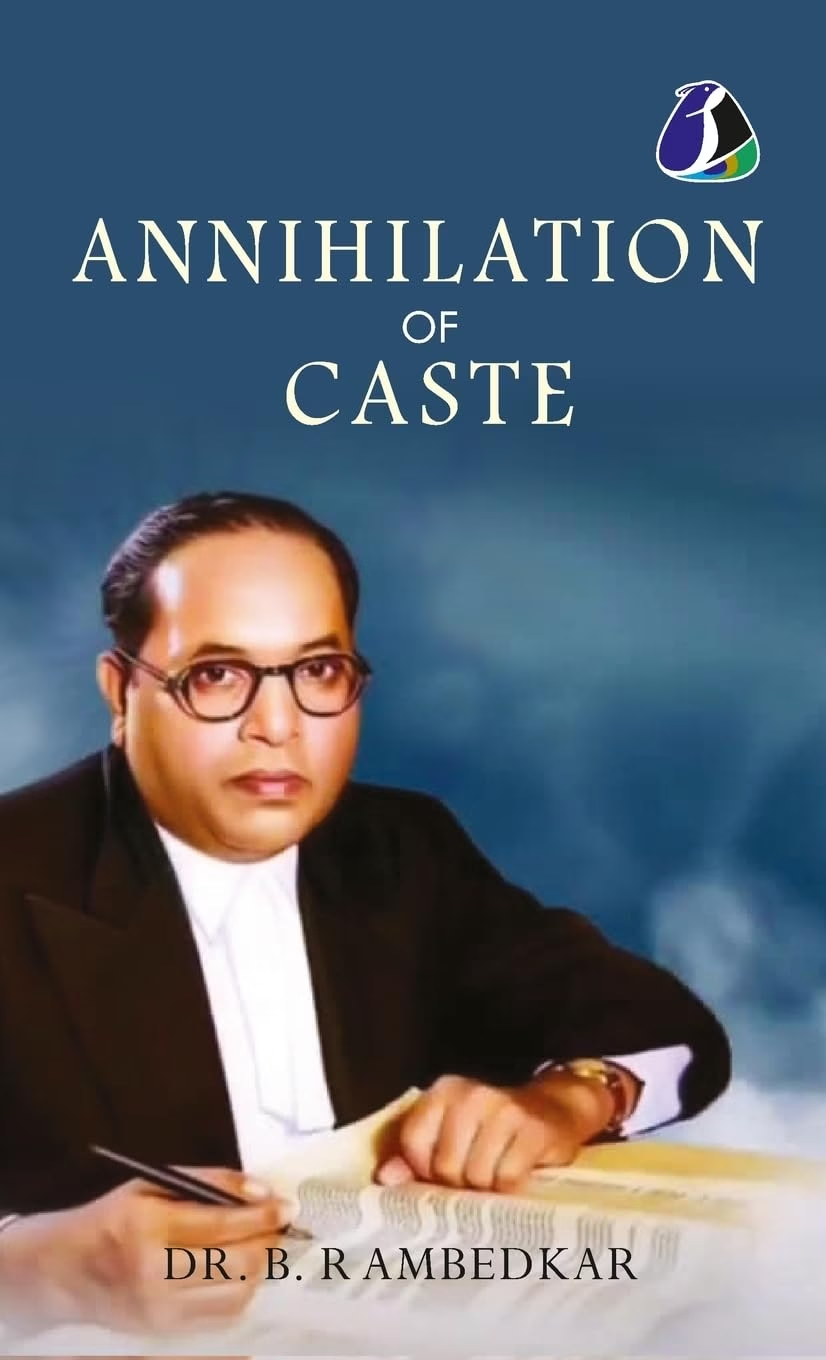
Annihilation of Caste is a seminal work by the Indian social reformer, Dr B.R. Ambedkar. Originally written as a speech, the book examines the deeply entrenched caste system in India and argues for its complete abolition. Dr Ambedkar exposes the injustices and inequalities perpetuated by the caste system and advocates for a society based on principles of liberty, equality, and fraternity. This book remains a powerful and influential critique of caste and a call to action for social justice and equality in India and beyond.
A powerful critique of the caste system in India.
Written in a clear and persuasive style, presenting logical arguments and evidence to support Ambedkar’s vision of a casteless society.
The book was originally written as a speech in 1936, and its publication in book form helped to ignite a movement for social justice and human rights in India.
Explores the intersections between caste, class, gender, and other forms of oppression.
The book continues to inspire activists and intellectuals to work towards a more just and equitable world.
The Dangerous Illusion of Coexistence
The RSS concept of ‘Samrasta’ implies castes will continue to exist. Each will perform traditional roles. While they might coexist peacefully, the underlying hierarchy remains. The inherent superiority of certain castes is maintained. This differs fundamentally from Ambedkar’s vision of equality. The RSS approach suggests intact castes functioning within prescribed boundaries. This allows harmonious interaction. It preserves the caste system’s essence. It also quells overt conflict. This makes it a dangerous tool for maintaining Brahmanical dominance.
Annihilation of Caste vs. Preservation of Hierarchy
Dr. Ambedkar’s call for ‘Annihilation of Caste’ was radical. It aimed to dismantle the entire discriminatory framework and it was not about castes living together. It was about ensuring caste ceases to exist. The RSS, by promoting ‘Samrasta,’ actively works against this. Their goal is not to eliminate caste. It is to ensure the caste system, with its hierarchies, persists. This is achieved by encouraging interaction and coexistence. This reinforces the idea that castes are natural and permanent. This serves their political interests. It creates a consolidated Hindu identity for electoral purposes. The foundational structures of inequality remain untouched.
The RSS’s Five-Point Strategy: A Blueprint for Dalit Integration
Unifying Cemeteries: A Symbol of Superficial Equality
One striking initiative under the RSS’s five-point strategy is unifying burial grounds for Dalits and upper castes. The report highlights separate cremation grounds exist in many Punjab villages. This reflects deep-seated discrimination. The RSS plans to convert these separate grounds into a single, shared space. While this appears to promote social harmony, it is primarily symbolic. The aim is to create an illusion of equality. It addresses a visible marker of caste segregation. It does not challenge the underlying caste hierarchy. The intention is to make Dalits feel accepted within the Hindu fold. This strengthens their allegiance to the Hindutva narrative.
Reconnecting Dalits with Hinduism: The ‘Ram Connection’
A core objective of the RSS campaign is re-establishing the connection between Dalits and Hinduism. The report acknowledges religious discrimination in Punjab. Segregation in temples and gurdwaras is a significant issue. The RSS plans to promote the Hindu faith among Dalits. They encourage them to return to Hinduism. This is especially for those who converted to Sikhism or Christianity due to caste discrimination. This is often framed as a ‘homecoming’ to their original faith. It reinforces the idea of a unified Hindu identity.
The ‘Valmiki Tirth’ Initiative: Reclaiming a Dalit Icon
To foster belonging and respect among Dalits, the RSS promotes Valmiki as a Dalit figure. Valmiki is traditionally associated with the Ramayana. Renaming the Ram Tirth site in Amritsar to Valmiki Tirth is a deliberate move. It connects Dalits with a revered figure from their perceived community. The narrative emphasizes Maharishi Valmiki, a Dalit sage, provided shelter to Sita. This portrays Dalits as integral to the Hindu pantheon. This is presented as recognizing Dalits as mainstream members of Hinduism. It counters their marginalized status. However, this narrative overlooks historical caste discrimination. It ignores their marginalized status within Hindu epics.
‘Ghar Ghar Valmiki Ramayan’: Disseminating an Alternative Narrative
As part of the campaign, the RSS distributes the ‘Valmiki Ramayan’ across households in Punjab. This initiative familiarizes Dalits with a version highlighting Valmiki’s Dalit identity. Distribution is coupled with organized recitations by Dalit saints. This reinforces the narrative. The underlying message is that Hinduism is inclusive. Figures like Valmiki, Kabir Das, and Ravidas are presented as Dalit saints. They are shown as integral to Hinduism. This strategy counters the perception of exclusion. It encourages Dalits to embrace the faith wholeheartedly.
Leveraging Dalit Saints and Symbols
The RSS involves Dalit saints and leaders in its campaign. The 750th birth anniversary of Sant Ravidas is being celebrated with year-long festivities. The RSS plans to place idols of Valmiki and Ravidas in every temple. This integrates these Dalit figures into the broader Hindu religious landscape. They are building a network of Dalit saints. These saints will propagate narratives of Ram and Lav-Kush. They link these to Dalit heritage. Construction of Lav-Kush temples and promotion of their birth stories in Valmiki’s ashram foster shared heritage. This creates a sense of belonging among Dalits within Hinduism.
The ‘Homecoming’ Strategy: Resisting Conversion
The RSS acknowledges many Dalits in Punjab converted to Sikhism or Christianity due to discrimination. The ‘homecoming’ strategy aims to bring them back to Hinduism. They establish numerous schools under Vidya Bharti, a Sangh affiliate. This attracts and retains Dalit children within the Hindu educational system. This is presented as countering missionaries who allegedly convert through educational incentives. By providing education and reinforcing Hindu identity, the RSS hopes to prevent conversions. It strengthens commitment to the faith.
The Deceptive Nature of ‘Samrasta’
Caste Preservation, Not Annihilation
The RSS concept of ‘Samrasta’ is an illusion. It is designed to perpetuate the caste system. It promotes coexistence, not equality. The intention is not to eradicate caste. It is to ensure different castes live together harmoniously. Each fulfills traditional roles. This approach preserves the hierarchical caste structure. Status and privilege are determined by birth. By advocating coexistence, the RSS creates a unified Hindu identity for political mobilization. Fundamental inequities of the caste system remain intact. Read more: UP Govt Bans Caste Rallies: Implications for Social Justice
Political Power as the Ultimate Goal
The ultimate objective behind RSS initiatives, including the ‘Dalit Connect’ campaign, is political power. Consolidating the Hindu vote, by integrating Dalits into the Hindutva fold, aims to secure electoral victories. The BJP seeks to maintain its dominance. The RSS strategy demonstrates how religious and cultural narratives achieve political ends. Gaining power is paramount. The empowerment of marginalized communities is secondary.
The Danger of Accepting the Status Quo
The RSS narrative of ‘Samrasta’ encourages acceptance of the status quo. It suggests Dalits should remain within their caste while living in harmony. This is a dangerous proposition. It hinders progress towards social justice and equality. By promoting harmony without dismantling caste, the RSS discourages true equality and liberation. This strategy pacifies and controls, rather than empowers.
The Deeper Implications: Beyond Superficial Harmony
Reinterpreting History to Serve Present Agendas
The RSS reinterprets history. Narratives about Valmiki, Kabir, and Ravidas serve a specific agenda. Portraying these figures as integral to Hinduism creates a sense of shared heritage. However, this narrative often omits their critical stance against caste. It downplays their opposition to Brahmanical orthodoxy. The emphasis is on their inclusion within Hinduism. Their anti-caste message is diluted or ignored. This selective retelling is a powerful tool for ideological manipulation.
The Trap of Religious Acceptance
Seeking acceptance within the dominant religious framework can be a trap for marginalized communities. The desire for validation from the ruling class leads to compromises. These undermine the struggle for liberation. Dr. Ambedkar recognized this danger. He opposed seeking acceptance from oppressors. True freedom comes from self-reliance. It comes from asserting one’s rights. It does not come from seeking validation within a discriminatory system. The RSS strategy plays on this desire. It offers superficial belonging for political loyalty.
Education as the True Path to Liberation
In contrast to the RSS’s religious and cultural integration, Dr. Ambedkar saw education as the path to liberation. He stressed modern, scientific education as key to empowerment. Religious texts, he argued, perpetuated caste and inequality. The focus should be on critical thinking and scientific temper. Acquiring knowledge enables challenging oppressive structures. The RSS campaign diverts attention to religious narratives. This distracts from genuine progress.
A Call to Action: Recognizing and Resisting Manipulation
The Urgency for Bahujan Awareness
The Bahujan community must awaken from its slumber. It must recognize the insidious nature of Brahmanical forces. The RSS’s ‘Dalit Connect’ campaign exemplifies their operation for dominance. Bahujan activists and parties must counter these narratives. They must raise community awareness. The focus must shift from symbolic battles to addressing manipulative strategies.
Challenging the Narrative of ‘Samrasta’
The RSS concept of ‘Samrasta’ is a dangerous fallacy. It perpetuates caste inequality. It is crucial to challenge this narrative. Emphasize social equality and caste annihilation, as Dr. Ambedkar advocated. True progress lies in dismantling caste, not harmonizing within it. This requires critical engagement with RSS ideology. It demands rejection of its deceptive claims.
Prioritizing Modern Education Over Religious Indoctrination
The true path to liberation for the Bahujan community is modern, scientific education. Religious indoctrination is not the answer. The RSS focus on religious narratives distracts from empowerment. Bahujan individuals must prioritize knowledge. This knowledge enables challenging oppressive structures. It helps build a just society. Focus on critical thinking, rationality, and secular education. This fosters social mobility and breaks caste shackles.
What Can You Do?
- Educate Yourself and Others: Share this information. Understand RSS strategies and manipulation behind terms like ‘Samrasta’.
- Support Anti-Caste Movements: Contribute to and amplify voices working for caste annihilation and social justice.
- Promote Critical Thinking: Encourage critical engagement with religious texts. Focus on historical context and potential for inequality.
- Advocate for Secular Education: Support secular education systems. Empower individuals with knowledge and critical thinking skills.
- Engage in Political Discourse: Participate in political discussions. Hold leaders accountable. Demand policies addressing caste discrimination and promoting equality.
Disclaimer
Brahmanical Forces: Refers to entities upholding Brahmanism, characterized by caste hierarchy and dominance.
Bahujan Samaj: Encompasses Scheduled Castes (Dalits), Scheduled Tribes (Adivasis), Other Backward Classes (OBCs), and marginalized communities facing oppression.
Hindutva: An ideology defining Indian identity based on Hindu traditions. Critics argue it promotes political interests and marginalizes minorities.
RSS (Rashtriya Swayamsevak Sangh): A Hindu nationalist volunteer organization and parent body of the BJP. Read more: The RSS Ideology: Influence, and Identity Explained
Dalit: A term for formerly untouchable communities, signifying a history of oppression and struggle for justice.
Samrasta (Harmony): RSS term for peaceful coexistence between castes. Critics say it preserves caste hierarchy.
Annihilation of Caste: Dr. B.R. Ambedkar’s concept for complete eradication of the caste system. Read more: Yes, Caste was asked: But Why, When, Where and Who asked?
Social Equality: The principle of equal rights, opportunities, and treatment for all individuals.
Dainik Bhaskar: A prominent Hindi-language daily newspaper in India.
Valmiki Tirth: A pilgrimage site associated with Sage Valmiki, promoted by RSS for Dalits within Hinduism.
Sant Ravidas: A medieval saint revered for promoting social equality and critiquing caste.
Lav-Kush: Legendary sons of Lord Rama and Sita, linked to specific communities in narratives.
Do you disagree with this article? If you have strong evidence to back up your claims, we invite you to join our live debates every Sunday, Tuesday, and Thursday on YouTube. Let’s engage in a respectful, evidence-based discussion to uncover the truth. Watch the latest debate on this topic below and share your perspective!

Skeptical Indian is an independent researcher documenting
caste discrimination through primary sources, Hindu
scriptures, court records, and government data.
CasteFreeIndia.com has published 100+ evidence-based
analyses since 2024.