This analysis critically examines the Srimad Bhagavatam Purana, a significant Sanskrit text within Hinduism, focusing on its claims regarding science and the devaluation of women. Operating under the principles of the Indian Constitution, this content aims to foster logical and scientific thinking by presenting historical documents and evidence. It encourages rational discourse and scientific thought without endorsing any specific ideology. While this presentation may contain objectionable material, readers are advised to use their discretion.
The Srimad Bhagavatam Purana is a scripture revered by many, particularly within the Vaishnavism tradition. However, a close, rational examination reveals numerous passages that are unscientific, morally questionable, and demonstrably devalue women. This article delves into specific examples from the text, contrasting its narratives with scientific understanding and logical reasoning. We will explore how the Bhagavatam presents absurd creation stories, implausible events, and a perspective that systematically undermines the dignity and agency of women.
The Origin of Gold and Silver: Shiva’s Semen
Shiva’s Infatuation with Mohini
One striking example of the Bhagavatam’s problematic narratives is the origin of gold and silver. The text describes Lord Shiva becoming infatuated with the beauty of Mohini. The story recounts that Shiva chased Mohini, embracing her tightly. This uninvited embrace led to sexual intercourse, after which Mohini managed to escape. Shiva continued to pursue her, and wherever her body touched the Earth, mines of gold and silver were formed. This narrative, found in the Srimad Bhagavatam Purana, Skandha 8, Adhyaya 12, Shloka 32, exemplifies a theme where male deities are depicted as driven by lust and resorting to non-consensual acts.
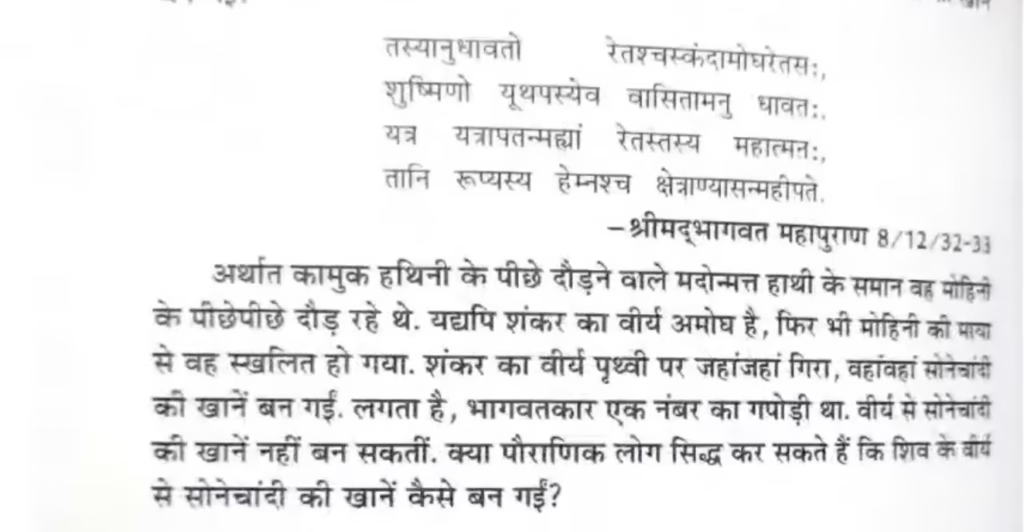
This passage suggests that the very elements considered precious and worn by devotees are derived from a divine act of sexual pursuit. It raises questions about the morality and symbolism embedded within such origin stories, particularly when attributed to revered deities.
The Creation of Beings: From Various Body Parts
Brahma’s Creations from Emotions and Body Parts in Bhagavatam Purana
The Bhagavatam presents highly implausible accounts of creation. For instance, Rudra is said to have been born from Brahma’s eyebrows in a state of helpless anger. Similarly, snakes are depicted as originating from Brahma’s hair, and Asuras from his sweat. These narratives, detailed in various sections of the Srimad Bhagavatam Purana (e.g., Skandha 3, Adhyaya 20, Shlokas 47-48 for Rudra, and Shloka 23 for Asuras), portray a creator deity producing beings through physical expulsions and emotional outbursts rather than any biologically plausible means.[source]
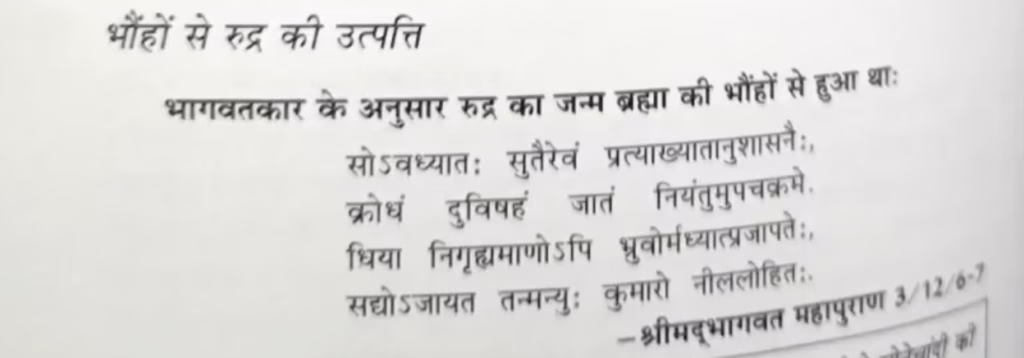
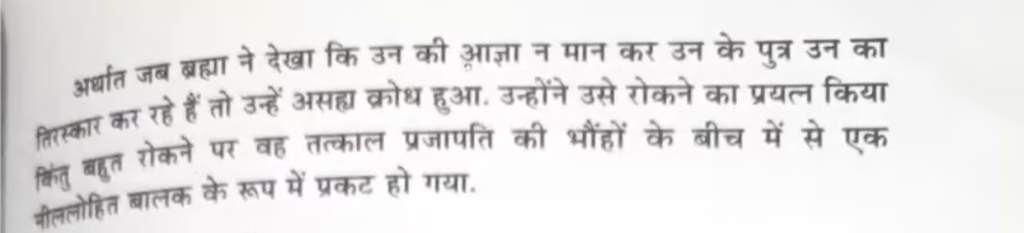
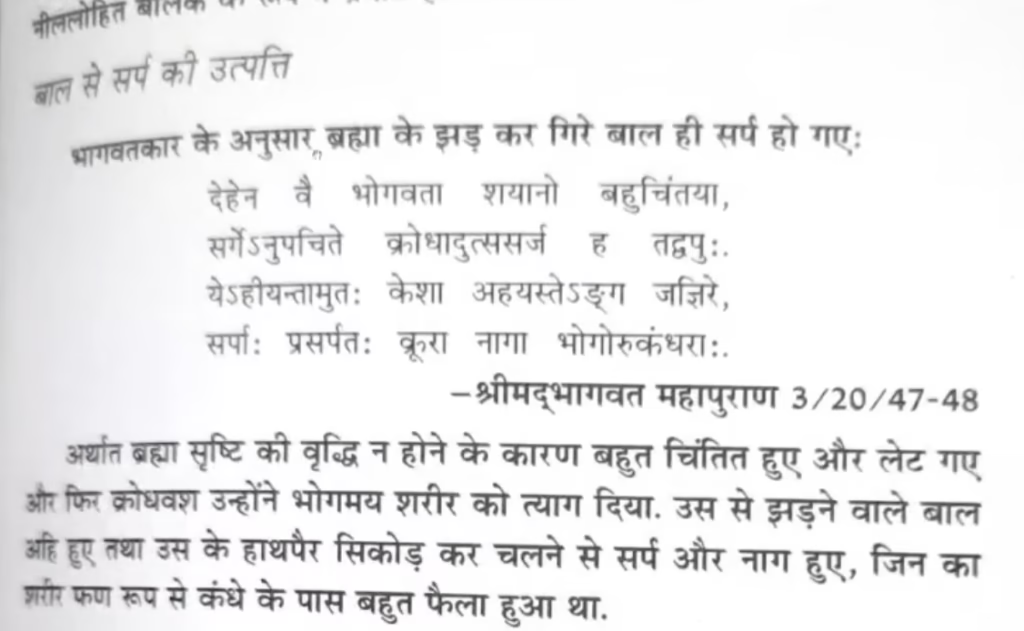
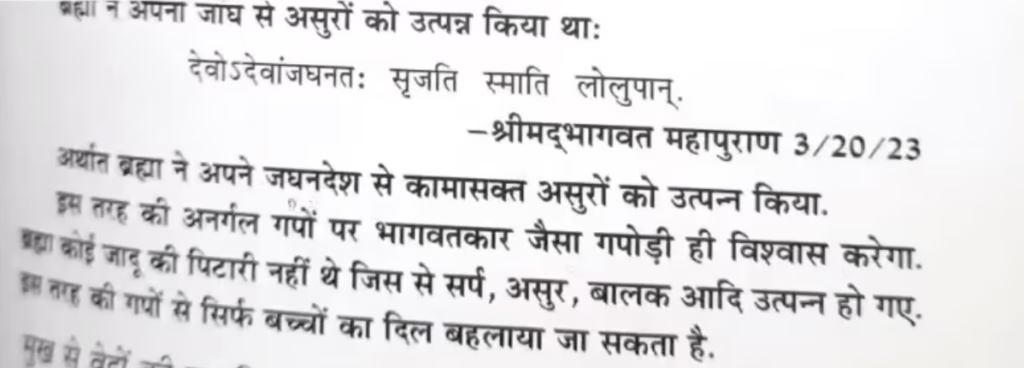
These tales reduce the act of creation to something akin to a magician pulling rabbits from a hat, offering little in the way of scientific or even coherent mythological explanation. The idea that entire species emerge from bodily fluids or hair is fundamentally unscientific.
The Vedas from Brahma’s Mouth
Another creation narrative claims that the four Vedas sprang forth from Brahma’s mouths as he contemplated the universe. This is cited from Srimad Bhagavatam Purana, 3/12/34.
Once, Brahma was thinking about how to create the well-ordered worlds as before. At that time, the four Vedas sprang forth from his mouths.
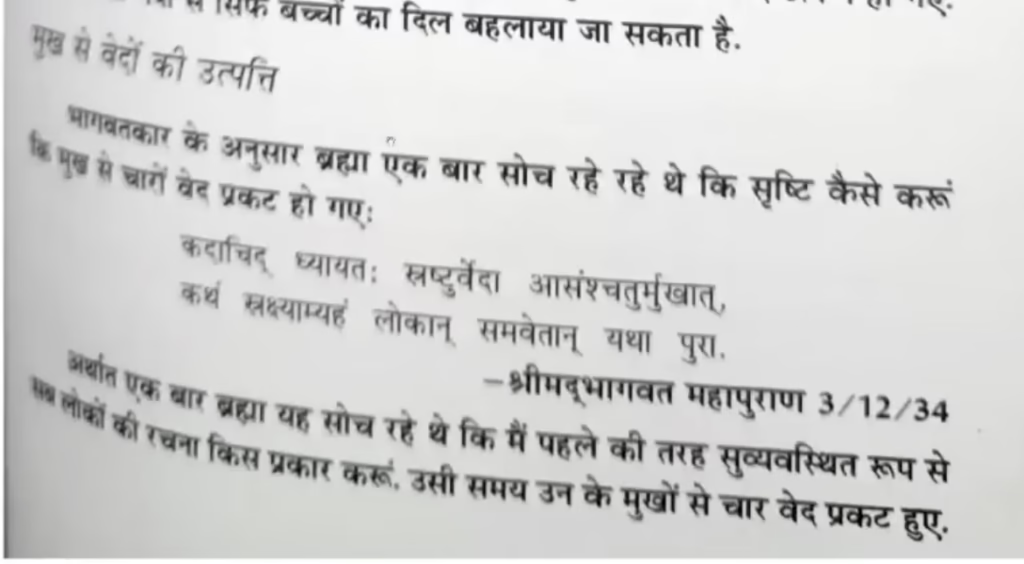
This assertion challenges the traditional understanding of the Vedas as divinely revealed knowledge transmitted through generations. It presents them as physical texts manifested from a deity’s utterance, raising questions about their historical development and authenticity. The notion that the Atharva Veda, for example, appeared later is also challenged by this account, suggesting a less organic and more fabricated origin.
The Origin of the Boar and Snakes in Bhagavatam Purana
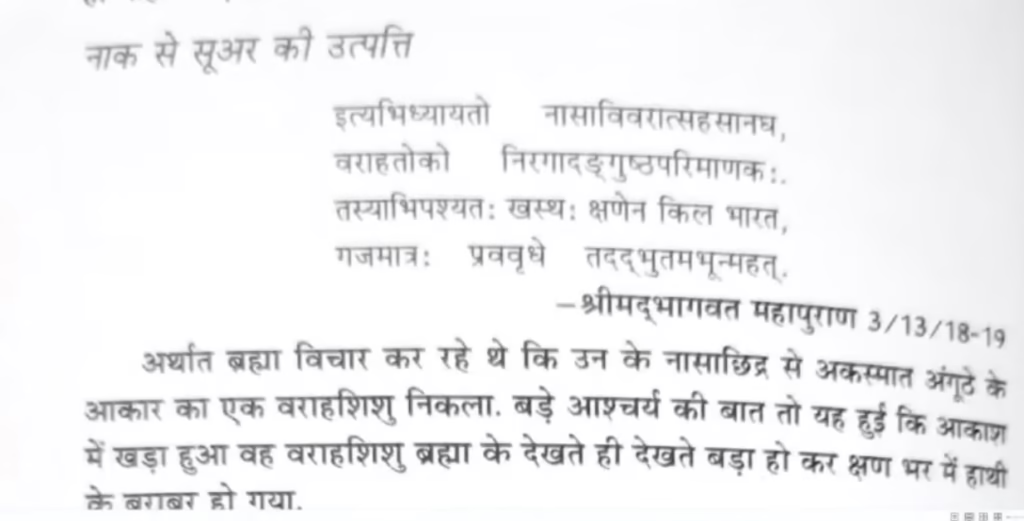
The text further describes a boar emerging from Brahma’s nostril, which then grew to the size of an elephant. This is presented as fact, despite being biologically impossible and lacking any scientific basis, as noted in critiques of the Bhagavatam’s origin stories.[source]
The Astonishing Numbers and Implausible Events in the Bhagavatam
Vast Armies and Giant Trees in Bhagavatam Purana
The Bhagavatam is replete with exaggerated numbers and impossible scales. For instance, it mentions King Agramas leading an army of 100 million soldiers (Srimad Bhagavatam Purana, Skandha 10, Chapter 90, Shloka 42). Such figures defy any realistic demographic or logistical possibility, even for ancient times.[source]
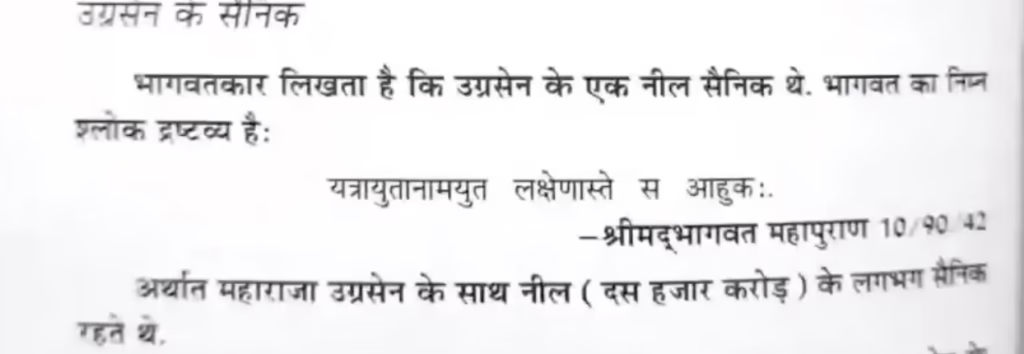
King Agramas led an army of 100 million soldiers.
Additionally, the text describes trees that are kilometers high. One passage mentions a tree 1280 kilometers high, a scale that is physically impossible for any known tree, even considering ancient or mythical flora.
The Story of Urvashi, Mitra, and Varuna
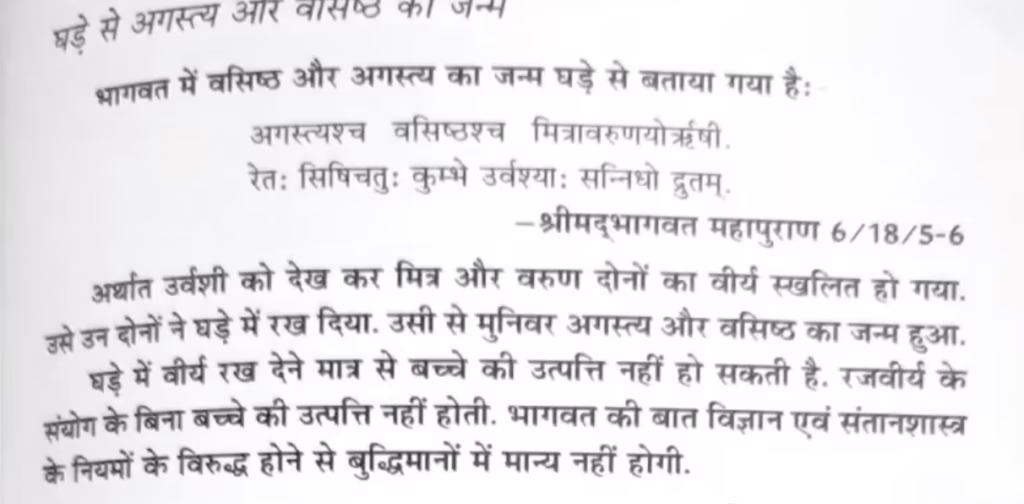
The narrative of Mitra and Varuna being overcome with lust upon seeing the celestial nymph Urvashi, resulting in their semen being released, highlights the problematic portrayal of divine figures. This incident, leading to the birth of sages like Agastya and Vishwamitra from the collected semen in a pot, further underscores a theme of divine beings acting upon lustful desires. This not only portrays a lack of moral restraint in gods but also presents an unscientific understanding of reproduction. Read more: Rigveda: Obscenity, Origins & Historical Puzzles
The Devaluation of Women in Scriptural Narratives
Forced Encounters and Unnatural Births in Bhagavatam Purana
The Bhagavatam consistently devalues women, often portraying them as objects of divine lust or instruments for procreation without agency. The story of Mitra and Varuna’s released semen being collected in a pot to produce sages exemplifies this, bypassing the role of a female biological partner entirely.
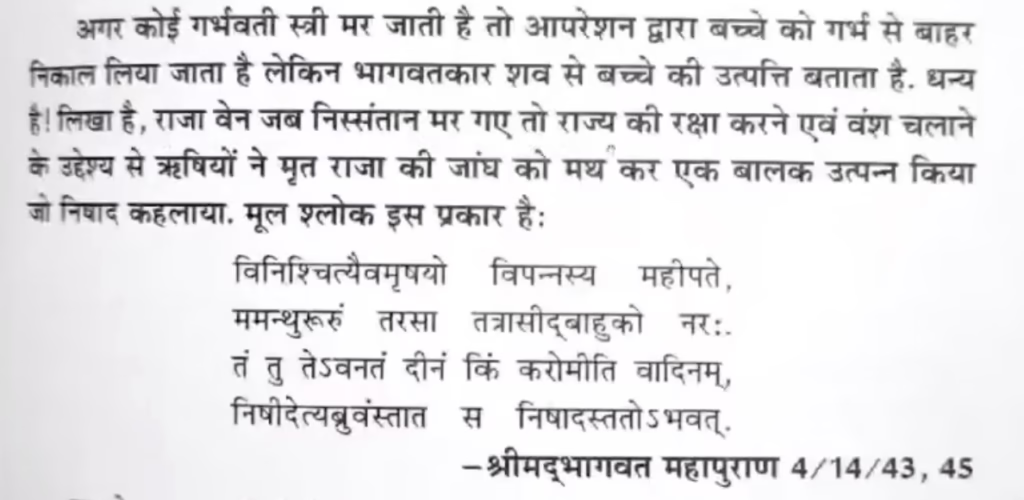
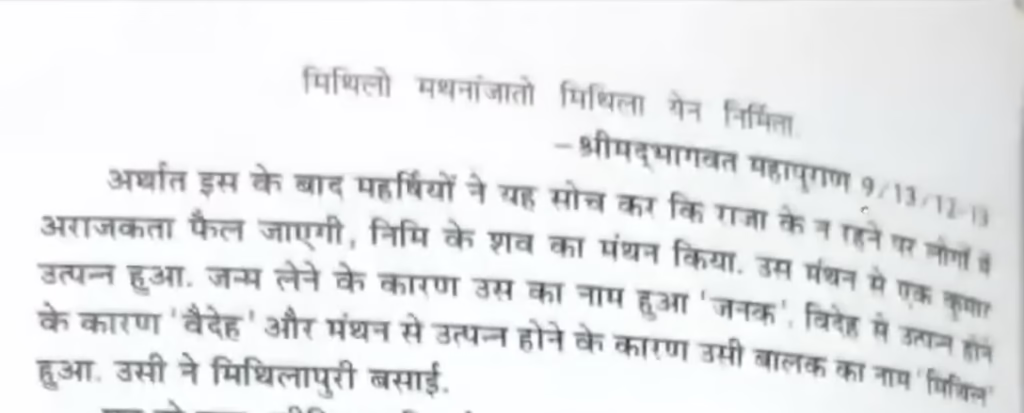
Furthermore, the text describes the birth of King Nishad from the churning of King Vena’s thigh, and later, a prince named Mithila from the churning of King Nimi’s body (Srimad Bhagavatam Purana, Adhyaya 14, Shlokas 43 and 45; Adhyaya ). These accounts disregard the biological necessity of both male and female roles in reproduction and suggest a creator deity or sages capable of manufacturing beings from inanimate processes.[source][source][source][source]
The narrative also includes the concept of dowry, such as the ten thousand elephants and three hundred thousand skilled female slaves given by King Nagnajit as dowry to Shri Krishna upon his marriage to Satyabhama (Srimad Bhagavatam Purana, Skandha 10, Adhyaya 58, Shlokas 50-51). Such descriptions of women as commodities or slaves in a dowry system reflect a deeply patriarchal and exploitative worldview.[source]
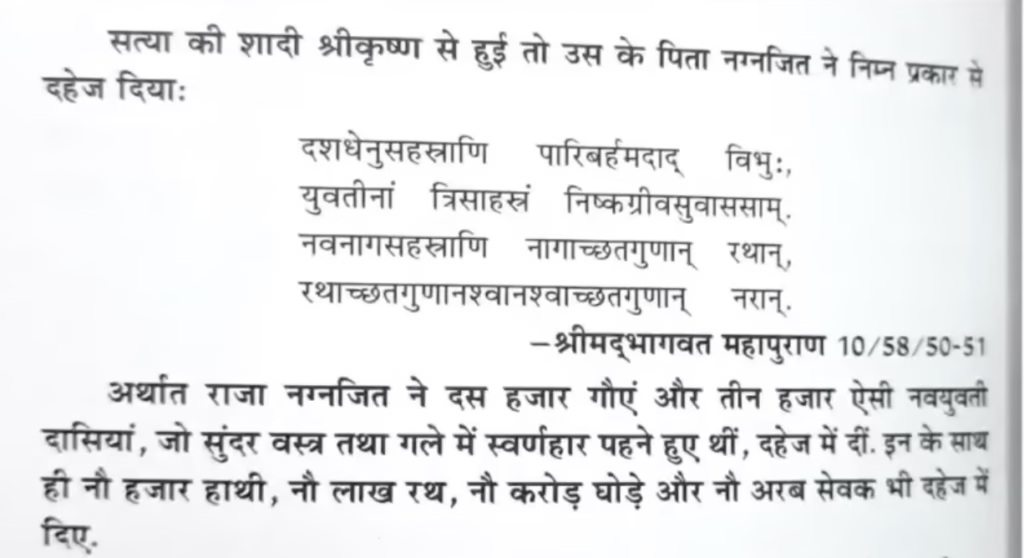
The Dowry of Lord Krishna
The Bhagavatam details a massive dowry given by King Nagnajit to Shri Krishna, including ten thousand elephants and three hundred thousand skilled female slaves. This depiction frames women as possessions to be traded, contributing to their devaluation within the scriptural narrative. Such accounts raise concerns about the moral framework and social values implicitly promoted by the text.
The Unscientific Claims Regarding Bodily Functions and Hygiene in Bhagavatam Purana
The Aroma of Excrement in Vedic Times
Perhaps one of the most bizarre and unscientific claims found in the Bhagavatam concerns bodily functions. The text suggests that in ancient times, the excrement of sages smelled like perfume. It is stated that Rishabhadeva engaged in eating, drinking, and passing urine and stool, and this is presented as astonishing. Specifically, the text in Srimad Bhagavatam Purana, Skandha 5, Adhyaya 5, Shlokas 32-33, implies that excrement could perfume the air for extended distances.[source]
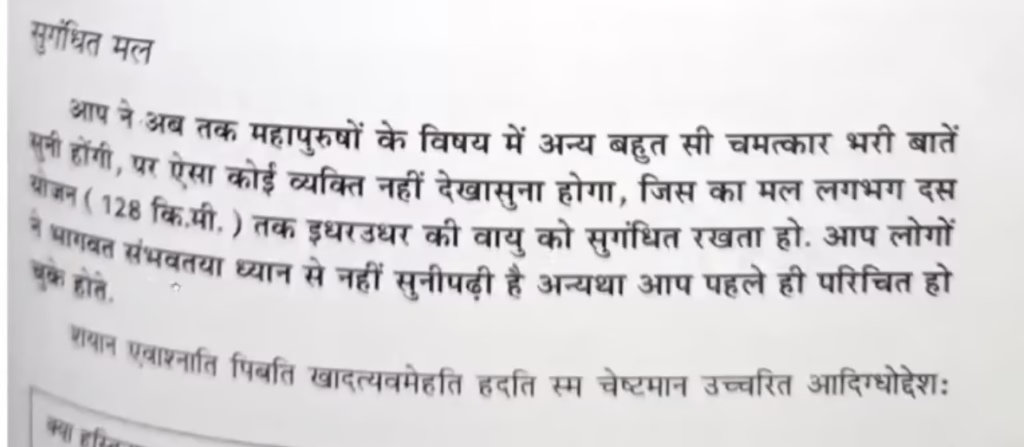
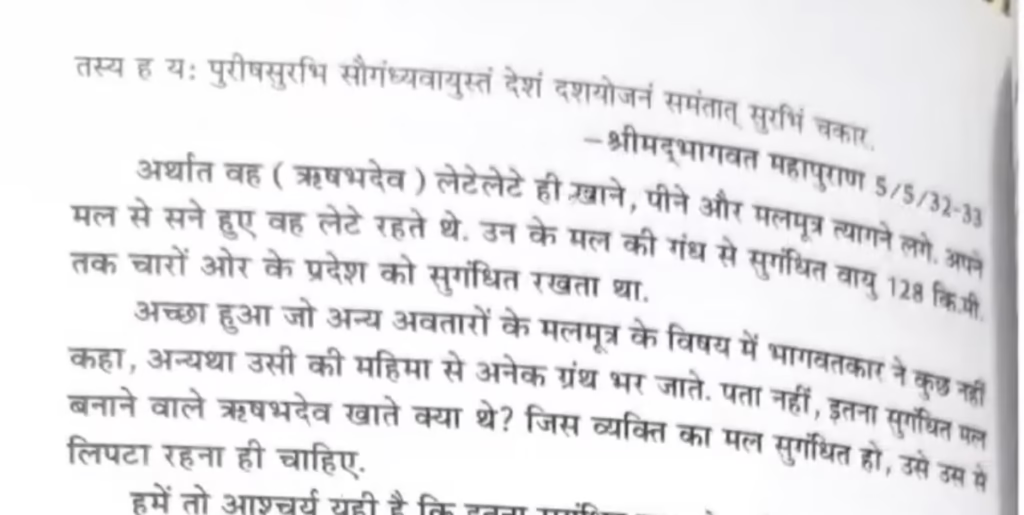
He (Rishabhadeva) began to eat, drink, and pass urine and stool. This is surprising.
This claim is not only unscientific but also deeply unhygienic and repulsive. It serves as an example of the Bhagavatam’s tendency to present extraordinary and unbelievable phenomena as fact, seemingly to elevate certain individuals or eras to a mythical status.
Gigantic Trees in Bhagavatam Purana and Their Implausibility
The scripture also includes descriptions of impossibly large trees. A great banyan tree is described as one hundred yojanas high (approximately 1280 km or 800 miles) with branches spreading over seventy-five yojanas (Srimad Bhagavatam Purana, Skandha 5, Adhyaya 5, Shlokas 31-32). This scale far surpasses any known biological limits for trees and is physically implausible, especially in environments like the Himalayas where deities are said to reside.
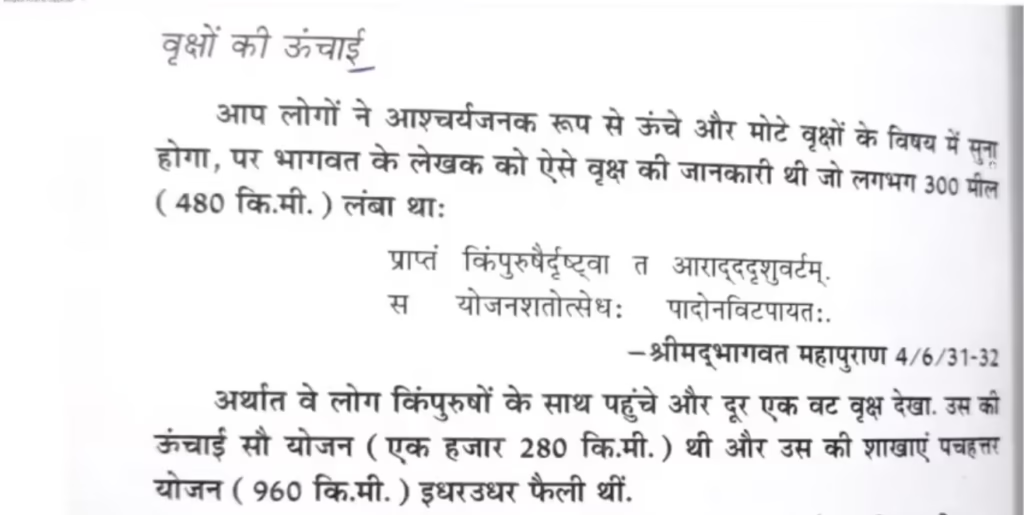
They then approached the great banyan tree, which was one hundred yojanas high and whose branches spread out over an area of seventy-five yojanas.
These exaggerated descriptions serve no scientific purpose and further highlight the fantastical nature of the text.
The Unbelievable Tales of Birth and Rebirth in Bhagavatam Purana
Jarasandha’s Body and the Miraculous Assembly
The Bhagavatam is filled with tales of miraculous births and physical transformations that defy biological laws. The story of Jarasandha, whose body was split into two but was miraculously reassembled by a demoness named Jara, is one such example. This narrative suggests that human bodies can be divided and restored, a concept contrary to all known biology. The text references the formation of two human bodies from the womb of Vriddharatha’s second wife, which were then pieced together (Srimad Bhagavatam Purana, Skandha 9, Adhyaya 22, Shloka 8).[source]
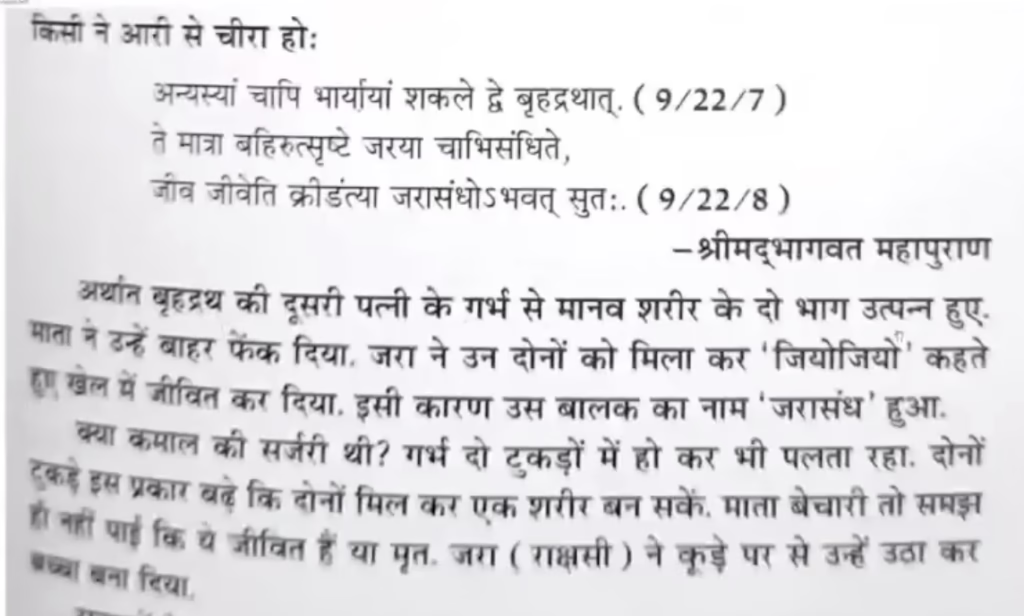
Two human bodies were produced from the womb of Vriddharatha’s second wife. The mother threw them out. Jara, picking them up, brought them to life playing and laughing. Hence, the child was named Jarasandha.
These stories appear to be attempts at myth-making rather than factual accounts, prioritizing narrative drama over biological accuracy.
The Hundred-Year Pregnancy and the Fractured Fetus
The text also presents the extraordinary claim of a hundred-year pregnancy. Deeti, it is said, carried her pregnancy for a century. Furthermore, Indra entered her womb and cut the fetus into seven pieces, which miraculously survived and even cried out (Srimad Bhagavatam Purana, Skandha 3, Adhyaya 15, Shloka 1). This narrative is not only biologically impossible but also disturbingly violent, depicting divine figures engaging in horrific acts.
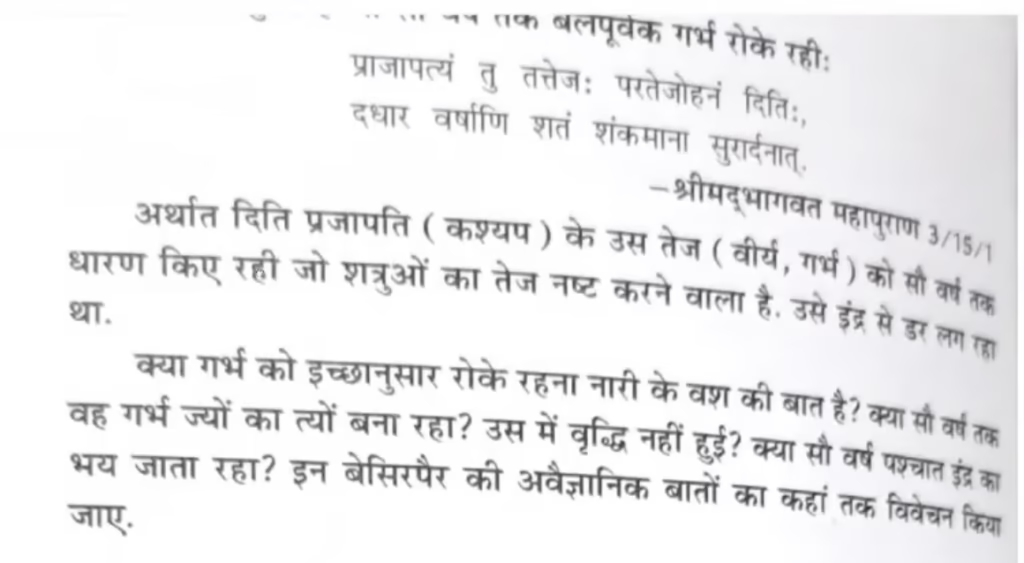
Such stories strain credulity and reveal a disregard for the realities of human biology and ethics.
Weird Reproductive Stories
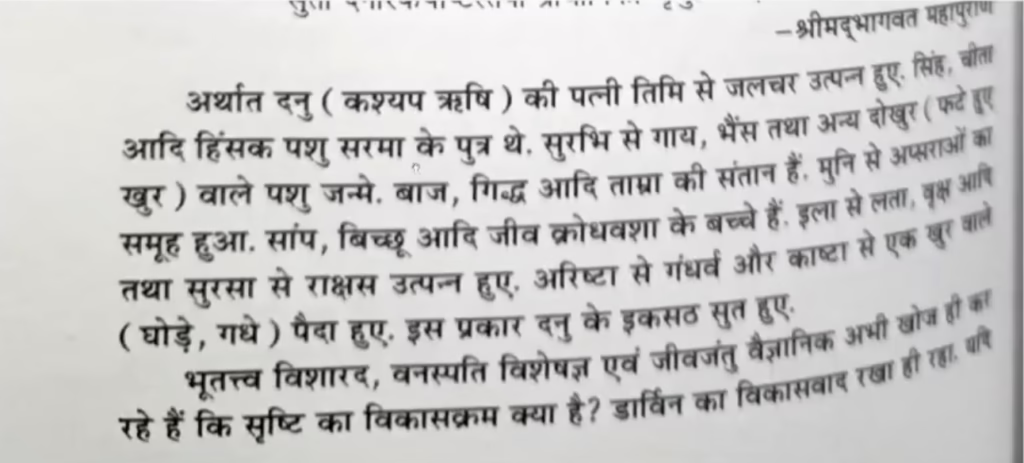
The Bhagavatam also describes a bewildering array of reproductive scenarios, including the birth of aquatic creatures, lions, cheetahs, cows, buffaloes, Gandharvas, one-footed horses, and donkeys from the wife of Kashyap Rishi (Srimad Bhagavatam Purana, Skandha 6, Adhyaya 26-29). This challenges established biological principles like species-specific reproduction and the theory of evolution, suggesting a primitive or fantastical understanding of zoology.
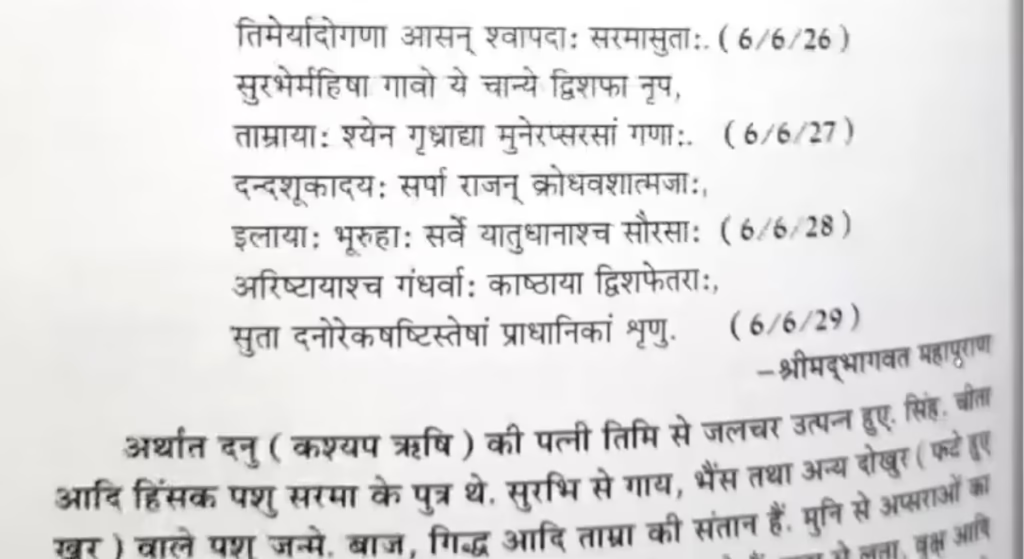
Another instance involves Kunti obtaining knowledge from sage Durvasa to summon the Sun God, who then impregnates her, resulting in the birth of Karna (Srimad Bhagavatam Purana, Skandha 9, Chapter 24, Shlokas 32-36). This narrative of divine conception bypasses natural processes and raises questions about consent and the nature of divine interaction.[source] Read more: Mahabharata: History, Lineages, and the Truth of ‘Niyoga’
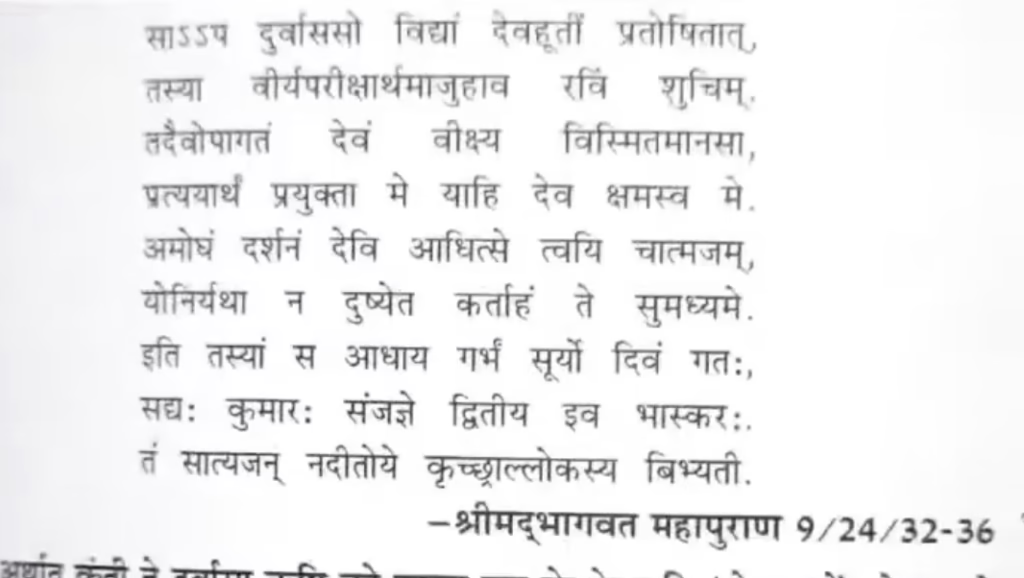
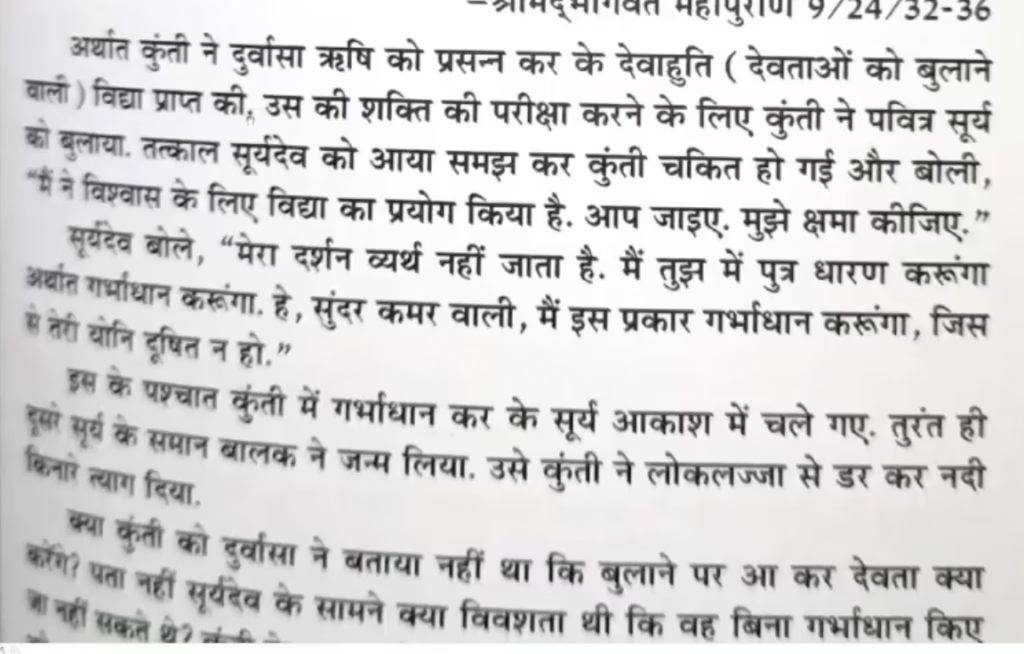
Thus, Kunti obtained the knowledge of summoning deities from the sage Durvasa. Her power summoned the Sun God. Immediately, the Sun God understood, but Kunti was surprised. When she tried to use the mantra, Kunti exclaimed, ‘I used the knowledge for a trial. Please go; forgive me.’ The Sun God said, ‘My visit will not be in vain. I will impregnate you with a son. O beautiful-waisted one, I will impregnate you in such a way that there will be no other children from you.’ After this, Kunti conceived and the Sun God went into the sky. Immediately, a child like the second sun was born. Fearing social stigma, Kunti abandoned him on the riverbank.
Conclusion
The Srimad Bhagavatam Purana, upon critical examination, reveals a text saturated with unscientific claims, nonsensical narratives, and deeply problematic depictions of women and reproduction. The stories presented often defy biological laws, logic, and basic morality. From the origin of precious metals from divine semen to impossible creation myths and exaggerated scales of armies and trees, the Bhagavatam consistently prioritizes fantastical storytelling over factual accuracy.
The pervasive devaluation of women, portrayed as objects of lust or instruments for divine procreation without agency, is particularly concerning. These narratives, far from offering enlightenment, appear to be a collection of fabrications designed to entertain, manipulate, and perpetuate a worldview where logic and science are secondary to myth. The continued reverence for such a text in the 21st century underscores the need for critical engagement and a commitment to evidence-based understanding over blind faith.
What Can You Do?
- Educate Yourself: Critically analyze religious texts, seeking evidence-based explanations and historical context rather than accepting narratives at face value.
- Promote Critical Thinking: Share this analysis and encourage discussions that question unsubstantiated claims in religious scriptures.
- Advocate for Rationality: Support scientific temper and rational discourse in society, challenging superstitions and blind faith.
- Demand Accountability: Encourage religious institutions to address the unscientific and harmful elements within their scriptures.
Disclaimer
This article critically analyzes the Srimad Bhagavatam Purana. The interpretations and criticisms presented are based on a rational and scientific worldview, contrasting the scriptural claims with established scientific principles and historical evidence. Read more: Unveiling the Truth: Hindu’s Ancient Science or Modern Propaganda?
Key Terms and Their Meaning in Context:
Shruti Tradition: Refers to the body of Vedic literature considered to be divinely revealed and transmitted orally through generations.
Bhagavatam Purana: A significant Sanskrit text of Hinduism, part of the Puranic genre, considered a scripture by many Hindus, particularly within the Vaishnavism tradition.
Brahminism: Refers to the religious and social traditions associated with the Brahmin caste in Hinduism, often critiqued for its role in perpetuating caste hierarchy and patriarchal norms.
Sanatan Dharma: A term often used to refer to Hinduism, emphasizing its perceived eternal and unchanging nature.
Rishis: Sages or ascetics in ancient India, believed to have perceived or communed with divine truths and scriptures.
Asuras: Often depicted as demons or anti-gods in Hindu mythology, frequently in conflict with the Devas (gods).
Bahujan Samaj: A term referring to the majority of the population in India, often encompassing lower castes and marginalized communities who have historically faced oppression.
Yogamaya: A divine power or illusion, often associated with Vishnu, used to conceal or reveal divine activities.
Do you disagree with this article? If you have strong evidence to back up your claims, we invite you to join our live debates every Sunday, Tuesday, and Thursday on YouTube. Let’s engage in a respectful, evidence-based discussion to uncover the truth. Watch the latest debate on this topic below and share your perspective!

Skeptical Indian is an independent researcher documenting
caste discrimination through primary sources, Hindu
scriptures, court records, and government data.
CasteFreeIndia.com has published 100+ evidence-based
analyses since 2024.