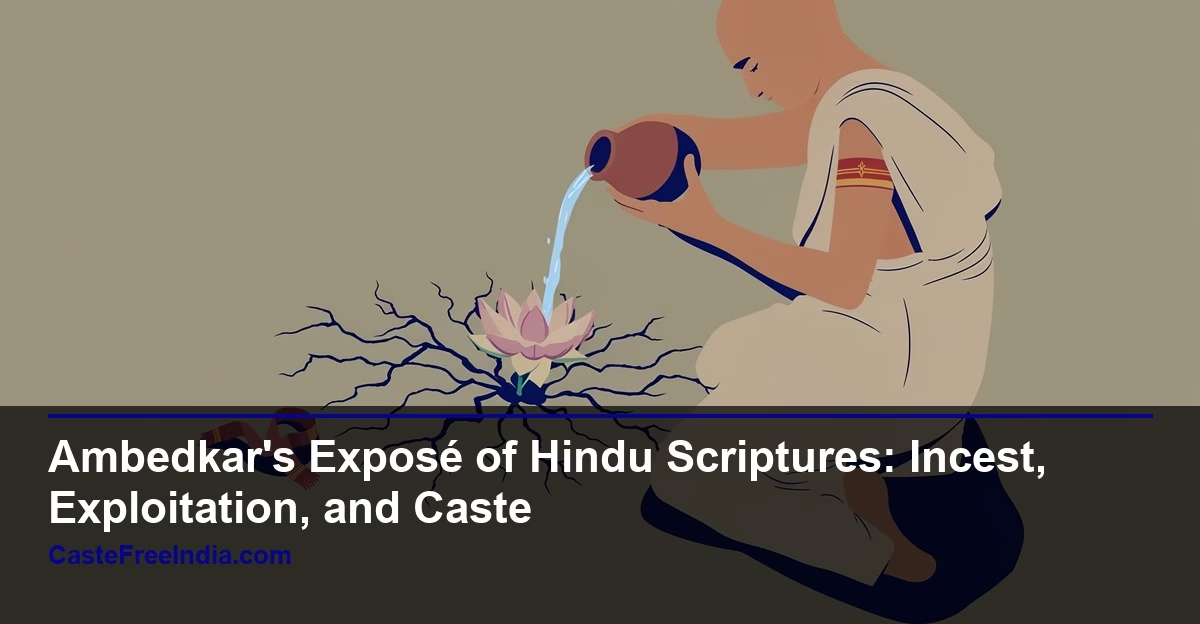
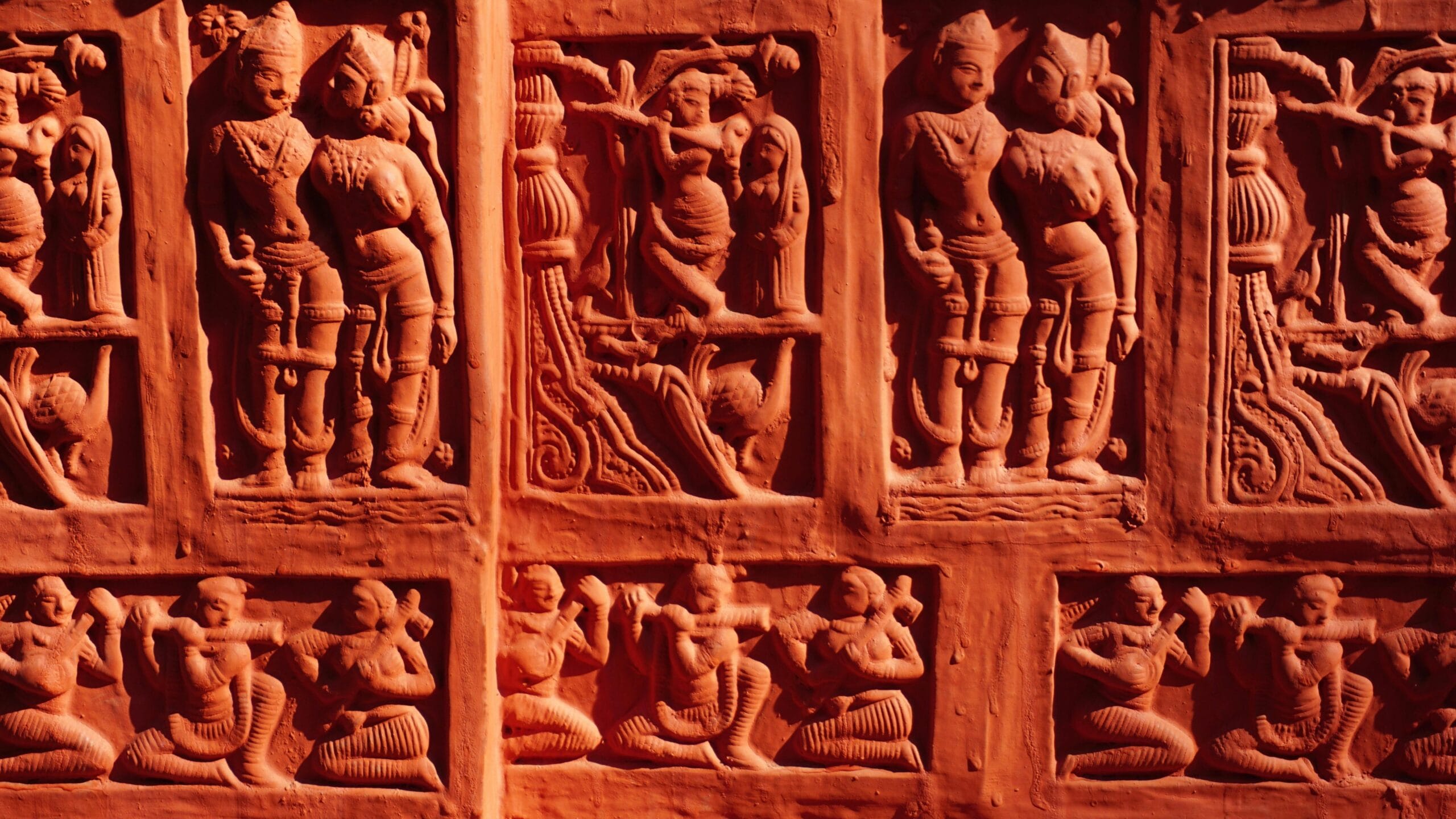
What if the revered texts of a civilization contained not moral guidance but a litany of exploitation? Dr. B.R. Ambedkar examines this in Revolution and Counter-Revolution in Ancient India. He asks readers to confront uncomfortable evidence without avoiding debate.
Imagine opening a Pandora’s box of sanctioned abuse where gods and sages act as predators. Ambedkar’s method is forensic, cross-reading sources to reveal patterns of power. Through a careful study of Hindu Scriptures—Vedas, Mahabharata, Puranas, and Grihya Sutras—he reveals a startling truth.
Ambedkar’s findings challenge cherished assumptions about traditional authority in many communities. Readers confront how sacred texts have been used to justify abuse across generations. This work urges critical examination of ancient norms and their enduring modern echoes.
Social reformers either whitewashed these texts or actively propagated them. Consequently, caste oppression and moral decay were cemented. This post delves into Ambedkar’s evidence, chapter by chapter. It exposes hidden scandals that continue to shape Hindu Scriptures and society. We examine incestuous marriages among gods and sages. Additionally, we explore ritualized prostitution, bestiality, and the insidious theology of jus primae noctis disguised as the saptapadi.
Two ancient Indian civilizations: the Shramana culture and Brahmanism. Shramana culture, represented by the Buddha, Kabir, Guru Ravidas, and Guru Nanak, centered on peace, knowledge, and social harmony. Their teachings rejected violence, advocated equality, and promoted scientific temper. In stark contrast, Brahminical texts revel in violence, caste hierarchy, sexual transgression, and superstition.
Ambedkar’s book highlights how the Shramana tradition offered a radical break. Buddhism discarded regressive practices entirely. Unlike later reformers, it did not merely polish and re-package Brahminical dogma. Read more: Ambedkar’s 22 Vows and Buddhism: Path to Equality
The Shramana Path: Non-Violence and Equality
Shramana philosophy is inherently non-violent. Its literature speaks of compassion, wisdom, and the uplift of all beings. Whether the Buddha’s Dhamma or the verses of Bhagat Ravidas, the core message is: Live and let live. There are no commands to kill, subjugate, or exploit. Instead, the emphasis is on dismantling social hierarchies. Furthermore, it fosters inner awakening. This stands in complete opposition to the Brahminical obsession with ritual purity, caste supremacy, and divine sanction for violence.
Brahminical Literature: A Celebration of Atrocity
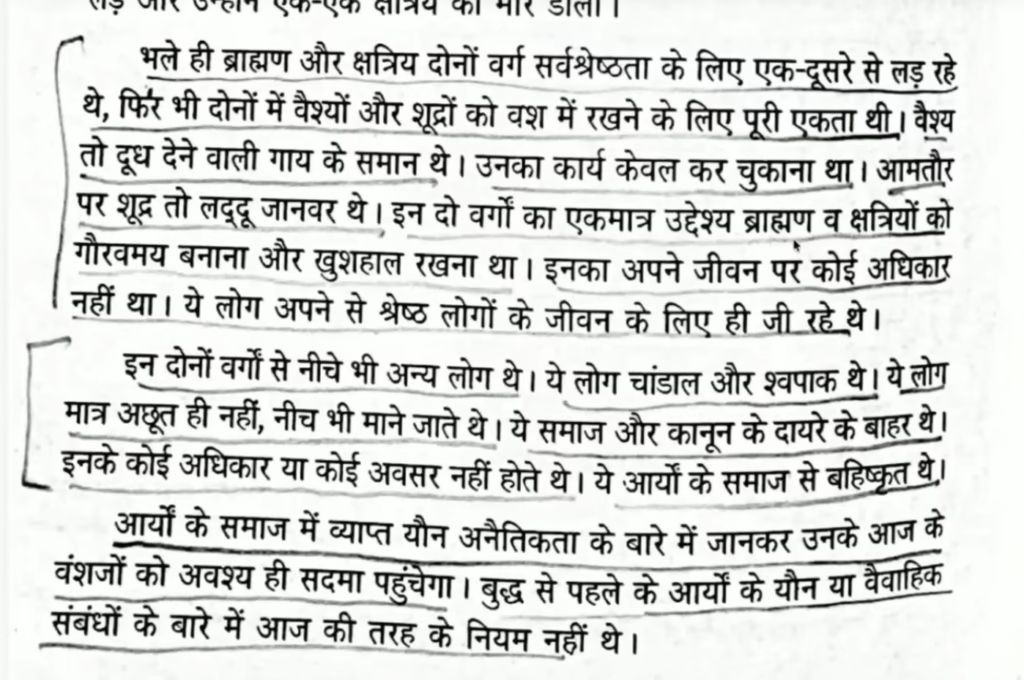
In contrast, Brahminical scriptures normalize and often glorify violence, caste discrimination, and sexual impropriety. The heroes are not peacemakers but warrior gods who slaughter. Sages curse and copulate indiscriminately. Ambedkar points out that whenever a god incarnates, it is typically to commit violence. This culture of atrocity is central to maintaining Brahminical power. Furthermore, the literature conditions its followers—predominantly Brahmins and Kshatriyas—to view Shudras and Untouchables as subhuman.
Manusmriti 1.91:For the sake of the prosperity of the worlds, he created the Braahmana, the Kshatriya, the Vaishya, and the Shudra from his mouth, arms, thighs, and feet respectively. This verse is foundational to the caste hierarchy that Ambedkar opposed.
How Reformers Betrayed the Shramana Ideal
Ambedkar’s central thesis is that modern Hindu reformers failed to challenge the core of Brahmanism. Instead of rejecting texts sanctioning incest, rape, and slavery, they reinterpreted them metaphorically. Or they simply ignored their existence. This glossing over, Ambedkar argues, makes them complicit in perpetuating caste. True reform would have required discarding these texts entirely, as the Buddha did. By preserving them, even in sanitized form, these reformers ensured the continuity of a worldview steeped in injustice.
Gambling and Alcohol: Aristocratic Vices in Brahminical Culture
Ambedkar’s exposure of gambling and alcoholism in Hindu Scriptures can be discussed now. These were celebrated practices among the Aryan elite. The term Aryan here denotes the Brahmin-Kshatriya nexus within the Varna system, not a racial group. Ambedkar demonstrates, using episodes from the Mahabharata, that gambling was a matter of prestige for kings. Pride in gambling was as strong as pride in caste, he notes. Consequently, this section uses the stories of Nala and Yudhishthira to illustrate the moral bankruptcy of the ruling class.
Royal Gambling: From Nala to Yudhishthira
Nala, a king, gambled away his kingdom, wealth, servants, and even his wife Damayanti. Yudhishthira went further. He staked and lost his brothers, himself, and his wife Draupadi—a woman treated as mere property. In Brahminical texts, this is not condemned as moral depravity. Instead, it is presented as an honorable, albeit tragic, pastime. The ethical framework is so inverted that refusing a gambling invitation was seen as a loss of honor. This normalization of destructive behavior set a precedent for the reckless exploitation of the powerless.
Mahabharata, Sabha Parva: The dice game episode where Yudhishthira successively loses everything is a clear illustration of the regressive values embedded in the epic. Source: Mahabharata, Sabha Parva, Chapters on Dyuta.
Soma and Sura: Ritual Intoxication
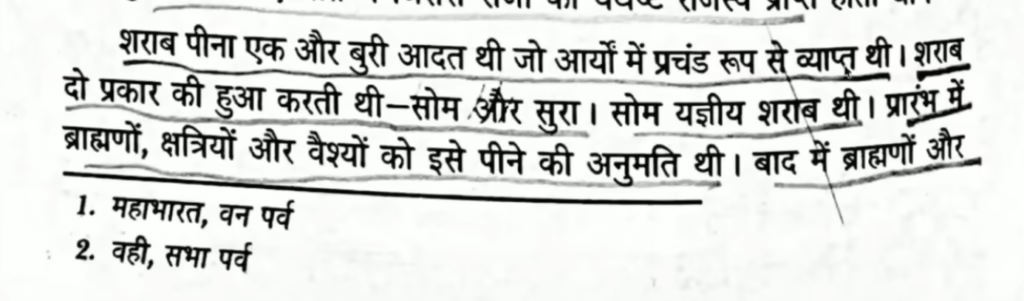
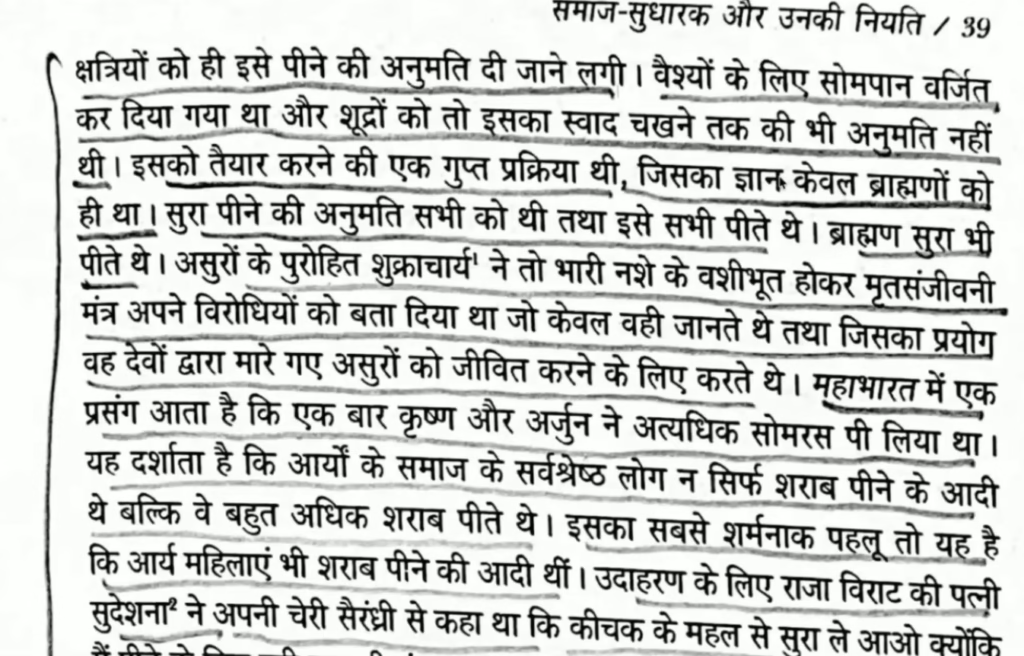
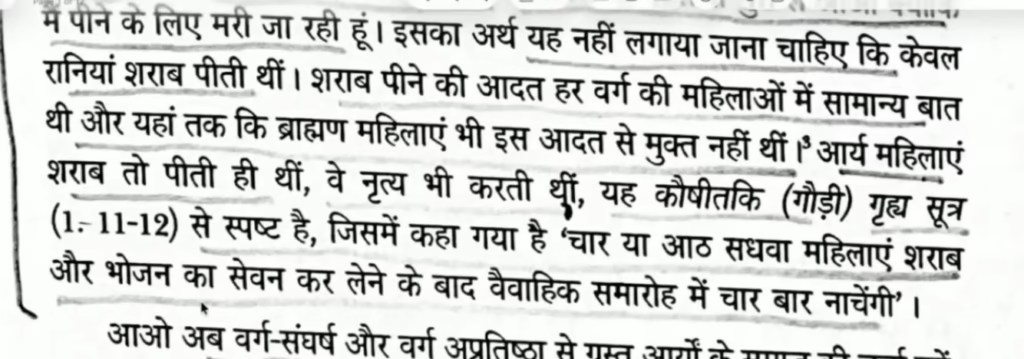
Drinking was not merely a vice; it was ritualized. Ambedkar distinguishes between Soma, a sacrificial liquor, and Sura, a fermented drink. Initially, Brahmins, Kshatriyas, and Vaishyas were permitted to drink. Later, Vaishyas were excluded, leaving the intoxicating privilege to the top two varnas. The Mahabharata itself records Lord Krishna and Arjuna getting drunk on Soma. Aryan women were also habitual drinkers. Queen Sudeshna, who sent her maid to fetch Sura from Keechaka’s palace because she was dying to drink. The Kaushitaki Grihya Sutra prescribes that four or eight married women must drink wine and dance four times at a wedding ceremony.
Rigveda 8.2.12:We have drunk Soma; we have become immortal; we have gone to the light; we have found the gods. This verse shows the divine sanction for alcohol consumption, contradicting later moralistic postures.
Shudra Exclusion and the Modern Reversal
Ambedkar highlights a cruel irony. While Shudras were historically barred from even tasting alcohol, today’s Brahminical strategy is the opposite. Liquor shops are deliberately pushed into Bahujan colonies to induce addiction and social decay. This policy stalls their progress and keeps them trapped in poverty. This inversion is a calculated adaptation of caste oppression. The scripture’s rule that Shudras were not permitted to even taste Sura has been replaced by enforced intoxication. Consequently, the competitive edge of Bahujans is blunted.
Incest in the Vedas and Puranas: The Gods as Predators
Let’s plunge into the most disturbing evidence: rampant incest chronicled in Brahminical creation myths. Ambedkar writes that a modern Brahmin would be shocked to read the doings of his ancestors. The genealogies of the gods themselves are mired in criminal sexual relationships. Brahma, the creator, has multiple sons and a daughter. The ensuing unions form the basis of the cosmic order. Ambedkar’s detailed references leave no room for metaphorical escape.
Brahma’s Family: Brother-Sister and Father-Daughter Marriages
Brahma had three sons and one daughter. One son, Daksha, married his own sister. From this sibling marriage, daughters were born. Some of these daughters married Kashyapa (son of Marichi, another son of Brahma). Some married Dharma, the third son of Brahma—effectively marrying their cousins and uncles. Most appalling is that Daksha himself gave his daughters to his father Brahma. In other words, Brahma married his own granddaughters. The notorious sage Narada was born from this union. Ambedkar cites Harivamsha Purana, Chapter 3, as the source.[source]
Harivamsha Purana 3: The genealogical account of Daksha’s daughters being given in marriage to Kashyapa, Dharma, and even to Brahma is documented here. This scripture provides the basis for Ambedkar’s claim of father-daughter and grandfather-granddaughter incest.
The Yama-Yami Dialogue: An Explicit Seduction in the Rigveda
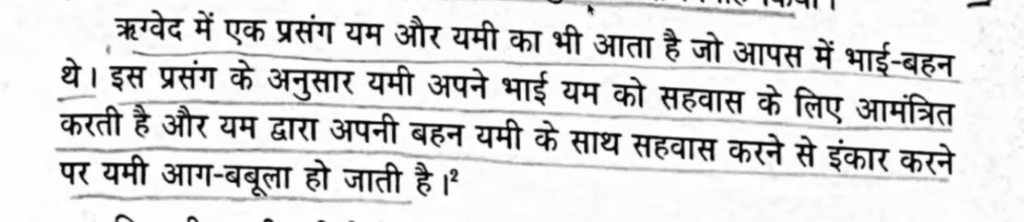
The Rigveda itself contains a hymn where Yami, the twin sister of Yama, attempts to seduce him. She invites him to have sexual intercourse to produce offspring. Yama refuses on moral grounds. However, the very presence of this explicit proposition in the most sacred Vedic text is telling. It shows that such relationships were contemplated and recorded, if not always sanctioned. Furthermore, Yami’s anger upon rejection underscores the normalization of incestuous desire.
Rigveda 10.10: The dialogue between Yama and Yami includes Yami’s plea: Wouldst thou, then, O Yama, abandon me? No one else than I, Yama, is lord of thy breath. The hymn is an explicit incestuous invitation.
Rishi Vashistha and Manu: Fathers with Their Daughters
Vashistha married his own daughter Shatrupa when she came of age. This is the same Vashistha revered as the family priest of the Ikshvaku dynasty, including Lord Rama. Manu married his daughter Ila. Jahnu married his daughter Jahnavi. Surya, the sun god, married his daughter Usha. These are central figures in Hindu mythology and daily worship. Ambedkar’s documentation from the Harivamsha Purana strips away the sanctity. It reveals a pattern of sexual predation by patriarchs.[source]
Harivamsha Purana: The text details Manu’s marriage to his daughter Ila and Vashistha’s marriage to Shatrupa. These examples are part of Ambedkar’s exhaustive list of incestuous unions in Brahminical mythology.
Polyandry, Prostitution, and Public Intercourse: A Culture of Exploitation
The evidence extends beyond incest to institutionalized polyandry and open-air sexual rituals. Ambedkar distinguishes the polyandry found in Brahminical texts from other forms. Here, multiple men of the same bloodline share one woman. They are example of the ten Prachetas and Soma. They all cohabited with Marisha, Soma’s own daughter. This is not a marginal practice but a scripturally endorsed norm.
The Prachetas and Marisha: Collective Incest
In the Harivamsha Purana, the ten Prachetas were performing penance underwater. Meanwhile, the earth became covered with forests. A divine agent brokered a deal. The Prachetas and Soma would all have intercourse with Soma’s daughter Marisha to repopulate the world. Ambedkar presents this as an example of blood-related males sharing a female. It is also incestuous. The narrative treats this arrangement as a sacred necessity, blurring all moral lines.
Harivamsha Purana: The story of the ten Prachetas and Marisha is found in this text, confirming the practice of consanguineous polyandry.
The Vamadevya Vrata: Ritualized Public Intercourse
Perhaps the most shocking revelation is the Vamadevya Vrata. This was a religious ritual performed on the sacrificial ground itself. Ambedkar describes it: If a woman came there and expressed a desire for intercourse, and asked the sage for her satisfaction, the sage would have intercourse with her then and there, openly on the sacrificial ground. Sage Parashara’s seduction of Satyavati (Matsyagandha) is a classic example. The ritualistic nature of this act—sanctioned in texts like the Ashvalayana Grihya Sutra—indicates that such practices were sanctified religious duties.
Ashvalayana Grihya Sutra 1.7: This text outlines the Vamadevya Vrata, describing the chanting and offering ritual that could include sexual union on the yajna ground.
The Meaning of ‘Ayoni’: Open-Air Conception
Ambedkar deconstructs the term ayonija—often translated as not born from a womb. He reveals its original, literal meaning: conception outside the house, i.e., in an open place. Sita and Draupadi, both praised as ayonija, were born in fields and sacrificial pits, respectively. This euphemism masks the reality of their births. They resulted from public or non-marital sexual acts. The glorification of such births normalizes the very exploitation Ambedkar seeks to expose.
Renting Out Women and Divine Right: The Laja Homa Secret
This reveals another institutionalized atrocity. Wives and daughters were rented out. Ambedkar notes that even royal families participated. The story of Madhavi from the Mahabharata is harrowing. King Yayati gifted his daughter Madhavi to the sage Galava as a fee. Galava then rented her out to three different kings—Haryashva, Divodasa, and Ushinara. Each fathered a son with her. After serving these three terms, she was married off to Sage Vishwamitra. She bore him a son, and was then returned to her father.
The Madhavi Catena: A Daughter’s Repeated Sale
Madhavi’s body was treated as currency. First, to settle a debt. Then, to produce royal heirs for three separate monarchs. Finally, as a wife to a sage who also used her for procreation. Afterwards, she was discarded back to her family. At every stage, her consent was irrelevant. This narrative is far from censured. It is presented as an example of filial piety and sage-dealings. Ambedkar’s citation forces a reckoning with the text’s underlying ethos of female commodification.
Mahabharata, Udyoga Parva, Chapters 103-121: The full account of Madhavi’s life, where she is given by her father, lent to kings, and finally married to Vishwamitra, is detailed here.
The Theology of Laja Homa: Jus Primae Noctis for the Gods
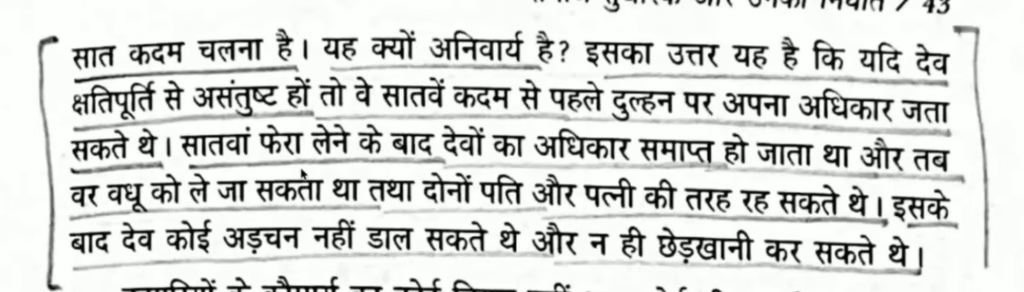
Ambedkar then dissects the ubiquitous Hindu wedding ritual of saptapadi (seven steps) and the accompanying laja homa (offering of parched grains). He argues that this ritual is a vestige of the jus primae noctis claimed by gods over every Aryan bride. The Ashvalayana Grihya Sutra explains that during the seven steps, the gods still hold a sexual claim over the bride. If they are not satisfied with the offerings, they can assert their right before the seventh step is completed. Only after the seventh step is the divine claim relinquished. Then, the groom can take his wife.
Ashvalayana Grihya Sutra 1.7.6-7:He leads her three times around the fire… The seventh step she takes… Here the gods take their share. The ritual effectively transfers the bride’s sexual ownership from the gods to the husband.
The Legal Status of Saptapadi in Modern Hindu Law
Today, saptapadi remains required for a Hindu marriage to be valid under Section 7 of the Hindu Marriage Act. However, without the ritual that symbolically completes the gods’ sexual rights, the marriage lacks recognition. This means that every Hindu marriage continues to perform a rite whose origin lies in divine predation. Ambedkar’s revelation should prompt a radical rethinking of marriage customs, and Hindu Scriptures corroborate the call for reform. This is especially true for those seeking to break from caste and Brahminical patriarchy.
The Hindu Marriage Act, 1955, Section 7(2):Where the rites and ceremonies include the saptapadi, the marriage becomes complete and binding when the seventh step is taken. This modern law codifies the ancient ritual Ambedkar critiqued.
Bestiality and Sacrificial Orgies: The Depths of Depravity
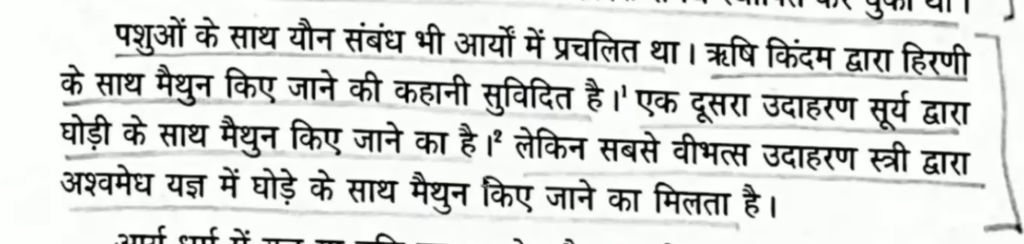
They descends further into the horrific details. It documents instances of bestiality in Brahminical texts. Ambedkar lists examples. Sage Kindamba copulated with a deer. Surya had intercourse with a mare. The most grotesque is the Ashvamedha Yajna, where the chief queen had to simulate sexual intercourse with a slaughtered horse. This ritual, glorified as an imperial sacrifice, involved obscene acts. No civilized society would tolerate them. Yet, it is recorded as a pinnacle of Vedic ritualism.[source]
The Ashvamedha Ritual: Bestiality as Sacrament
In the Ashvamedha, the queen lies down with the horse after it has been sacrificed. Explicit dialogues are recited between her and the priests. Ambedkar’s reference to the woman having intercourse with the horse in the Ashvamedha sacrifice mentioned in Yajurveda. This is not a folk tale. It is a solemn rite detailed in the Shrauta Sutras. The inclusion of such acts in the highest form of sacrifice reveals a culture devoid of basic human decency. Yet, it is cloaked in the language of cosmic order.
Yajurveda (Taittiriya Samhita) 7.4.19: The obscene dialogues between the queen and the priests during the Ashvamedha are recorded here, demonstrating the sexual nature of the ritual.
Animal-Human Intercourse in Puranic Stories
The Puranas are replete with stories of gods and sages engaging in bestiality. Surya transformed into a stallion to mate with Sanjna in mare form. This resulted in the birth of the Ashvins. Sage Kindamba’s encounter with a deer is another example. These stories are often sanitized as divine leela. In contrast, Ambedkar forces us to see them for what they are.
They represent a brutal sexual theology that degrades both women and animals. They reflect a worldview where the powerful can take sexual pleasure from anyone or anything without moral restraint.
The Cannibalistic Yajna and Vamadevya
We can allude to the list of 21 traditional sacrifices. This includes the Vamadevya Vrata, which involved public intercourse. Some of these sacrifices, like the Purushamedha (human sacrifice), were eventually discontinued. However, the fact that they were scripturally prescribed highlights the violent core of Brahmanism.
Ambedkar’s point is that a religion that once sanctioned human sacrifice and sexual rites cannot claim moral superiority. The reformers kept these texts as sacred. Even if they stopped the literal acts, they preserved the ideology that makes exploitation holy.
The Sociology of Scripture: How Texts Shape Society
Ambedkar was not merely cataloguing obscenities. He was demonstrating a causal link between text and practice. We emphasize this connection: Whatever you write, read, see, hear, that will run in your mind. For centuries, Brahmins memorized and recited these stories. Consequently, the mental conditioning from daily exposure to narratives of incest, rape, and caste supremacy is the root of Brahminical psyche. This section explores how this ideological programming directly produces atrocities against Dalits, women, and other marginalized groups. The high rates of sexual violence in India are not unexpected when divine models are predators.
Pornographic Theology and Its Social Consequences
Modern research shows that exposure to pornography normalizes sexual aggression and objectification. If secular pornography is harmful, how much more damaging are religious texts that present sexual violence as sanctified?
We can draw this analogy explicitly. Countries ban pornographic websites to protect children. Yet these scriptures are forced upon entire populations, often from childhood, as sacred history. The constant iteration of gods and sages as sexual aggressors creates a template for real-world predators. This is especially true for those from caste-privileged backgrounds who see themselves as heirs to this tradition.
The Brahminical Mindset: Arrogance, Lust, and Violence
Ambedkar’s analysis shows that the Brahmin-Kshatriya coalition was bonded by a shared contempt for the lower orders. They competed for preeminence among themselves. However, they were united in oppressing Vaishyas and Shudras. The texts depict Vaishyas as milch-cows. Shudras are seen as burden-bearing animals. This dehumanization is not incidental.
It is the very purpose of the scripture. By constantly reading that Shudras are born from the feet of God, the Brahminical subject internalizes a permanent hierarchy of cruelty. Every atrocity against Dalits, from manual scavenging to public lynchings, has its seed in this scriptural anthropology.
Manusmriti 1.91 & 10.51: These verses discuss the creation of varnas from body parts and the degrading duties assigned to Chandala and Svapaka, revealing the scriptural basis for untouchability.
The Reform That Never Was
The tragedy, as Ambedkar notes, is that several later reformers failed to call out these texts. Instead, they joined the chorus glorifying the golden age. True social reform, following the Shramana model, would demand the complete rejection of these scriptures. This means no allegorical reinterpretation. The so-called reformers who offer butter-coated versions of the Manusmriti are accomplices in the ongoing caste project.
Ambedkar’s Irrefutable Method
Ambedkar’s approach was meticulous. He read the original Sanskrit, used standard editions, and provided precise citations. When writing in English, he made these ideas globally accessible. Critics who accuse him of using faulty translations are usually unaware. Ambedkar relied on multiple sources and cross-verified. Hindi translation by Dr. Surendra Agyat, published by Samyak Prakashan, is fully faithful. Any sincere attempt to refute Ambedkar must first confront the exact verses he quotes. Personal attacks will not suffice.
Why the Pain? The Internationalization of Ambedkar
The real reason for the backlash is not scriptural fidelity. It is the global prominence of Ambedkar. His works are studied in universities worldwide. UNESCO has recognized his contributions. The Jai Bhim slogan echoes in parliaments from India to the United Kingdom. This internationalization terrifies those invested in Brahminical hegemony. It means their scriptures are being judged by universal standards of justice and human rights. They can no longer rely on insular, self-serving interpretations. The pain in their limbs comes from a Bahujan intellectual successfully exposing their so-called divine revelation.
The Call for Conversion and the Homecoming
Dr. Ambedkar calls for the rejection of Hindu marriage rites that symbolically encode divine rape. To participate in saptapadi is to ritually acknowledge that the gods have the first right over one’s bride. For anyone with an iota of self-respect, the speaker argues, the logical step is to abandon such traditions. Embrace a framework like the Buddhist Dhamma, which has no such obscene rituals. This is framed as ghar wapsi—a homecoming to the original Indian ethos of peace, equality, and enlightenment.
What Can You Do?
The path forward demands more than awareness. It demands resolute action. Here is what you can do:
Read the Source: Obtain a copy of Revolution and Counter-Revolution in Ancient India. Read the chapter Social Reformers and Their Destiny. Verify the references.
Engage in Public Debate: Challenge those who glorify these texts. Use Ambedkar’s citations to hold them accountable. Do not let them escape with metaphors.
Reject Casteist Rituals: Refuse to participate in ceremonies like saptapadi that encode divine sexual exploitation. Explore Buddhist wedding rites that affirm equality.
Educate Your Community: Share this article and the evidence within it. Organize study circles on Ambedkar’s works. Break the silence around scripture-based violence.
Support Anti-Caste Organizing: The battle is not just intellectual but political. Join movements that fight caste discrimination and demand the complete annihilation of the Varna system.
Embrace Dhamma: For those ready to walk away from Brahmanism, the Shramana tradition—particularly Buddhism—offers a rational, compassionate, and liberating path. The 22 vows of Dr. Ambedkar are a starting point.
We cannot claim ignorance. The evidence has been laid out, by one of the greatest minds of modern India. Remaining silent or continuing to participate in oppressive traditions is a choice. Let us choose truth.
Disclaimer
This article is a commentary on a discussion about Dr. B.R. Ambedkar’s book Revolution and Counter-Revolution in Ancient India. The purpose is to encourage scientific temper and critical examination of religious scriptures, as guaranteed by Article 51A(h) of the Indian Constitution. Aryan: A term used here contextually to denote the Brahmin-Kshatriya class within the Varna system, not a racial group. Shramana: An ascetic tradition including Buddhism and Jainism, emphasizing renunciation and non-violence. Brahmanism:
The socio-religious system based on the supremacy of the Brahmin varna, as propounded in texts like the Manusmriti. Saptapadi: The Hindu marriage ritual of seven steps around a sacred fire. Jus primae noctis: The alleged right of a lord or deity to have sexual relations with a bride on her wedding night. All quotes from scriptures are as cited by Dr. Ambedkar. Readers are encouraged to consult primary sources and form their own conclusions. Read more: Ambedkar Buddhism: Vision & Conversion Explained
Frequently Asked Questions
What are the main Brahminical scriptures that Ambedkar exposed for containing incest? Ambedkar cited the Rigveda, Harivamsha Purana, and other Puranas. He pointed to specific instances like Brahma’s family, the Yama-Yami dialogue, and sages marrying daughters. These texts record incestuous unions among gods and sages.
How does Ambedkar connect caste oppression to sexual exploitation in Hindu texts? Ambedkar showed that scriptures dehumanize lower castes and normalize sexual violence. For example, the Manusmriti assigns degraded status to Shudras. Furthermore, rituals like saptapadi encode divine sexual rights, linking caste hierarchy with exploitation.
What is the significance of the saptapadi ritual in Ambedkar’s critique? Ambedkar revealed that saptapadi perpetuates jus primae noctis for gods. The Ashvalayana Grihya Sutra details gods claiming sexual rights over the bride. This continues in modern Hindu law, making it a key symbol of Brahminical patriarchy.
Were there any reformers who opposed these practices according to Ambedkar? Ambedkar argued that most reformers failed. They either whitewashed or ignored the regressive content. He praised the Shramana tradition, like Buddhism, for completely rejecting these texts and advocating equality and non-violence.
Do you disagree with this article? If you have strong evidence to back up your claims, we invite you to join our live debates every Sunday, Tuesday, and Thursday on YouTube. Let’s engage in a respectful, evidence-based discussion to uncover the truth. Watch the latest debate on this topic below and share your perspective!
Skeptical Indian is an independent researcher documenting
caste discrimination through primary sources, Hindu
scriptures, court records, and government data.
CasteFreeIndia.com has published 100+ evidence-based
analyses since 2024.
When you login first time using a Social Login button, we collect your account public profile information shared by Social Login provider, based on your privacy settings. We also get your email address to automatically create an account for you in our website. Once your account is created, you'll be logged-in to this account.
DisagreeAgree
Connect with
I allow to create an account
When you login first time using a Social Login button, we collect your account public profile information shared by Social Login provider, based on your privacy settings. We also get your email address to automatically create an account for you in our website. Once your account is created, you'll be logged-in to this account.