Exposing the Myth of Buddha’s ‘Unnatural’ Birth
A wave of misinformation deliberately attempts to tarnish the image of Buddha and Buddhism by fabricating stories about Buddha’s birth. These claims are historically inaccurate. They serve a malicious agenda to discredit Buddhist philosophy. This article delves into the evidence, debunks baseless narratives, and reveals the truth behind the deliberate distortion of historical facts.
The Fabricated Claims and Their Sources
The misinformation centers on a few key claims. These are often supported by selectively presented or misinterpreted artistic depictions and Sanskrit verses. The claims suggest Buddha’s birth was miraculous or unnatural, mirroring the mythical births of Hindu deities. This is a deliberate attempt to equate Buddhism with the very practices and beliefs it sought to reform. The Brahmanical System seeks to absorb Buddhism, neutralizing its critique. Read more: The History of Vedanta in India: Unveiling the Truth
Misinterpreted Sculptures: The Maya Dream Panel
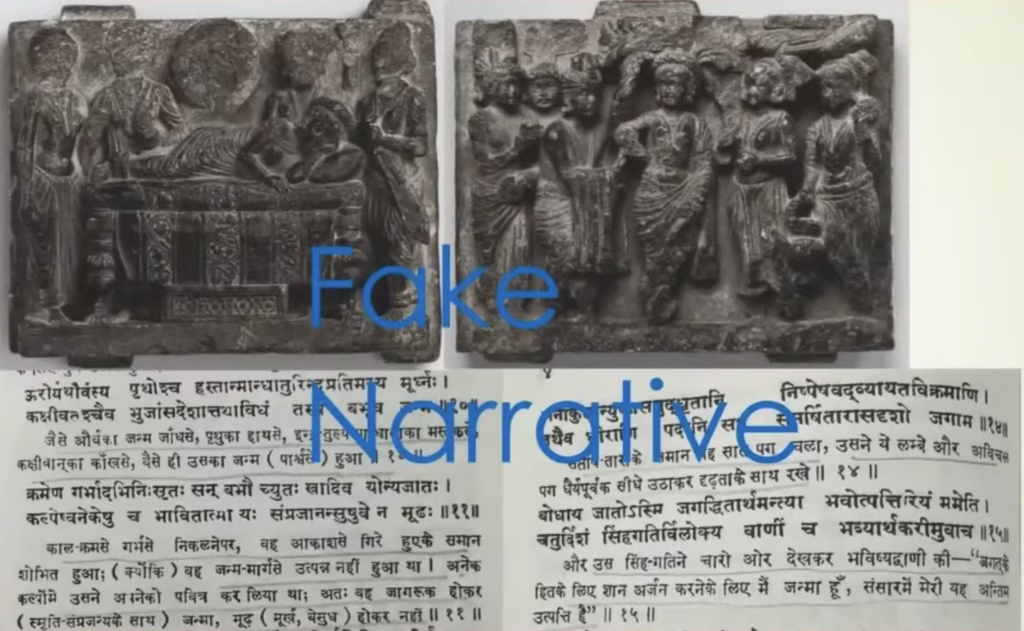
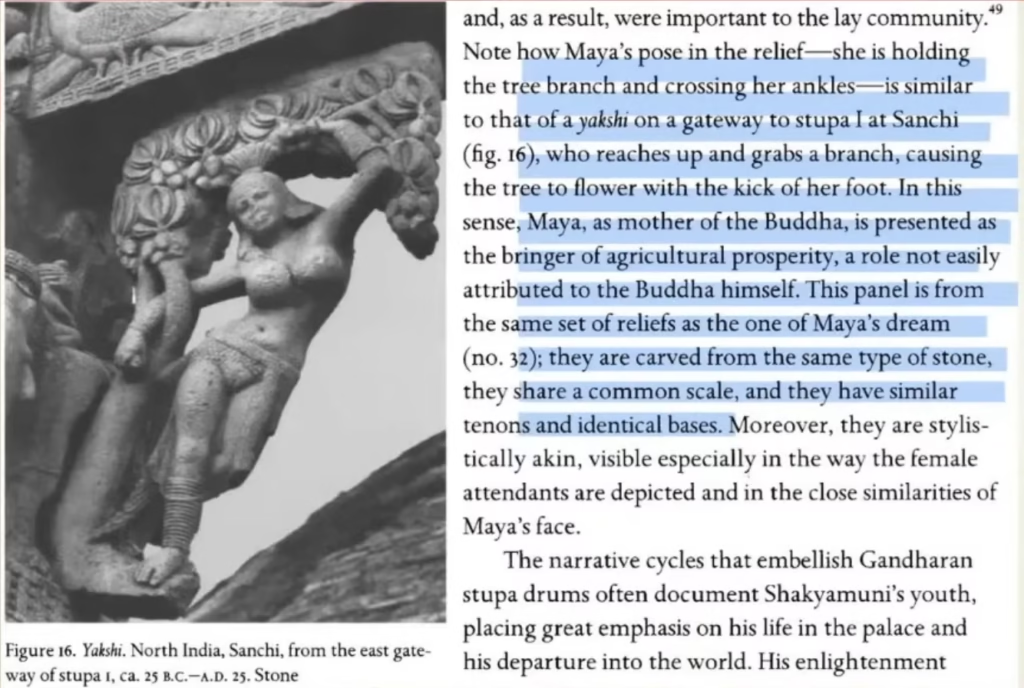
A frequently circulated image shows a reclining woman, flanked by attendants, with an elephant nearby. This is presented as evidence of Maya, Buddha’s mother, conceiving from an elephant. However, the original artwork, dating to the 2nd century AD, shows Maya reclining, holding a branch, with attendants. One attendant carries a sword. The disk above likely represents an elephant, a symbol of purity. It is not depicted as a physical act of conception but as a dream or auspicious omen. This interpretation has been twisted to suggest an unnatural birth.
- Misinterpreted Sculptures: Birth from the Hip
- The 'Budh Charitam' Verse: A Misappropriated Text
- Evidence Debunking Misinformation About Buddha's Birth
- The Motivation Behind the Fake Narratives
- The Actual Buddhist Perspective on Birth and Enlightenment
- Conclusion: The Fight Against Historical Distortion
- What Can You Do?
- Frequently Asked Questions About Buddha's Birth
- Disclaimer
Misinterpreted Sculptures: Birth from the Hip
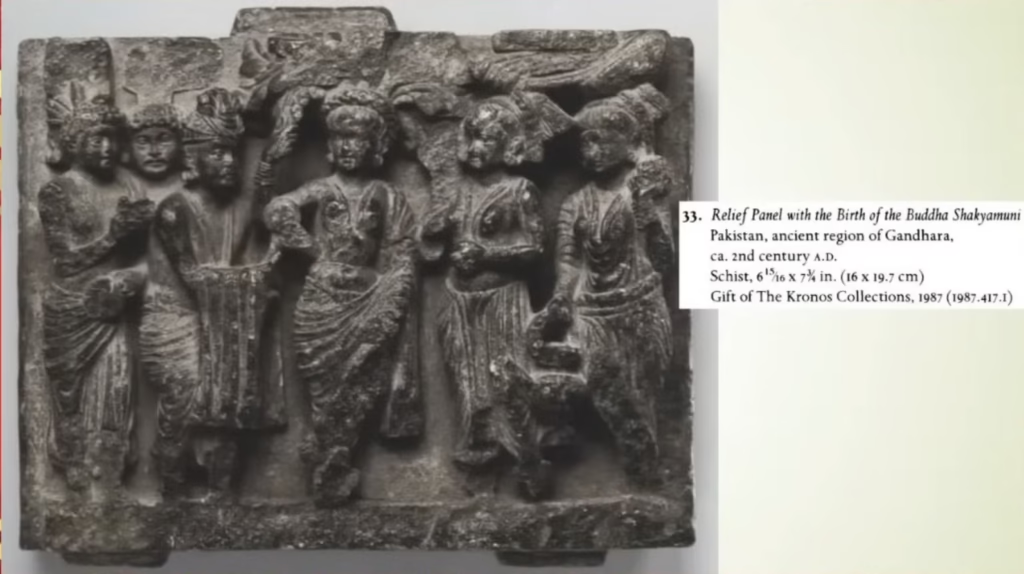
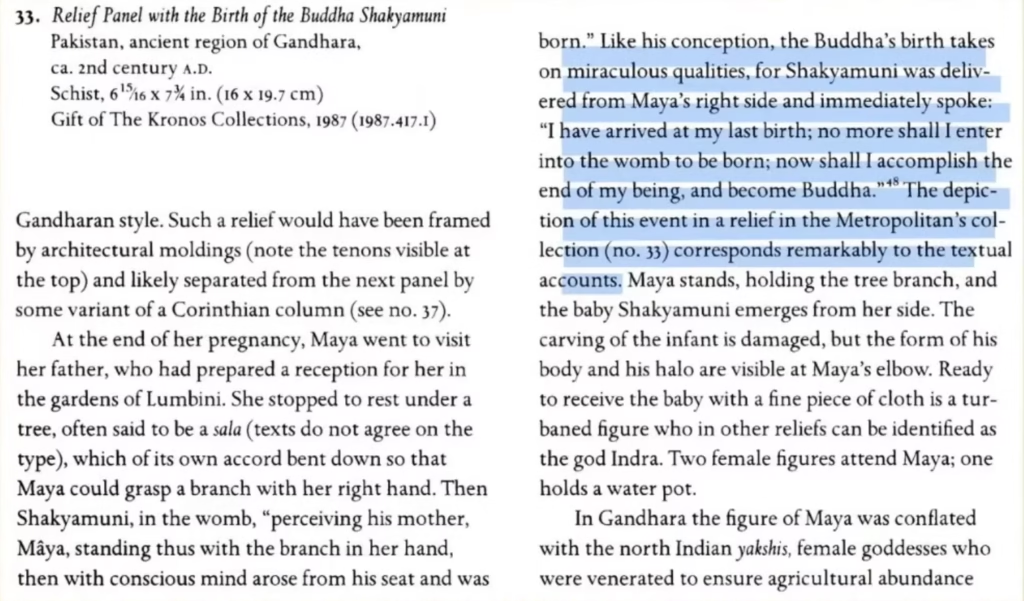
Another widely circulated image shows a woman standing, with a child emerging from her side or hip. This is falsely claimed to represent Buddha’s birth. The sculpture actually depicts a childbirth scenario. It may illustrate medical practices of the time or a symbolic birth without pain. It is not linked to Buddha’s birth in any authentic text. The narrative pushes a false equivalence: if Hindu deities have ‘unnatural’ births (e.g., from an ear, thigh, or even excrement, as per some distorted interpretations of scriptures), then Buddha must also have had a similarly ‘unnatural’ birth. This tactic attempts to align Buddha with practices like Niyog, which involved conception outside marital relations, to falsely frame his birth narrative.
The ‘Budh Charitam’ Verse: A Misappropriated Text
Proponents of fake narratives cite verses from Sanskrit texts, particularly the ‘Budh Charitam’ by Ashvaghosha. A verse is presented to suggest birth can occur from a thigh or hip, implying Buddha’s birth was unusual. This is a deliberate misrepresentation of the text and its context. Ashvaghosha’s work is a biographical epic poem, not core scripture.[source]
Evidence Debunking Misinformation About Buddha’s Birth
The Gandhara Art Influence
The sculptures used to support these claims originate from Gandhara art. This region was influenced by Greco-Roman styles. These depictions are a fusion of Buddhist themes with foreign artistic conventions. Artists, likely Greek or Roman, created visual narratives based on circulating stories, often centuries after Buddha’s death.
Ashvaghosha’s ‘Buddha Charita’: A Later Work, Not Core Scripture
Ashvaghosha’s ‘Buddha Charita’ was written centuries after Buddha’s death (1st-2nd century AD). It is not part of the Tripitaka, Buddhism’s core scriptures. The ‘Buddha Charita’ aimed to compile a narrative of Buddha’s life, influenced by the cultural milieu and artistic interpretations of his time, including Gandhara style.
The ‘Maya’s Dream’ Panel: A Dream, Not Reality
The panel depicting Maya with an elephant is explicitly labeled ‘Relief Panel with the Dream of Queen Maya.’ Maya is shown holding a tree branch. This aligns with textual accounts of her dream. The dream signifies the birth of a significant being, not a literal conception event.[source][source][source]
The ‘Birth from the Side’ Sculpture: A Symbolic Representation
The sculpture showing birth from the side also comes from Gandhara art. Its style, particularly the drapery, shows strong Roman resemblance, indicating foreign influence. The depiction can be seen as symbolic. It may represent a birth without pain or suffering, aligning with Buddhist ideals. Archaeological evidence from Lumbini, Buddha’s birthplace, including inscriptions by Emperor Ashoka, supports traditional accounts of his birth without miraculous claims.[source][source][source]
The ‘Seven Steps’ Narrative: A Later Addition
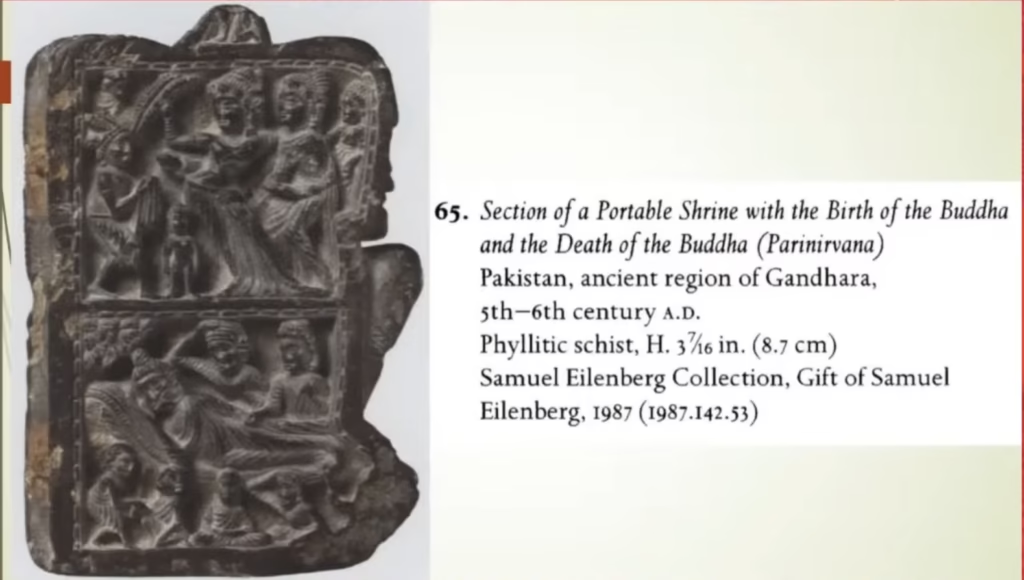
The narrative that Buddha took seven steps after birth is a later embellishment. It appears in sculptures from the 5th-6th century AD. Earlier 2nd-century sculptures do not depict this. This evolution shows how stories developed over time, influenced by prevailing trends, rather than historical fact.[source][source]
The Motivation Behind the Fake Narratives
Discrediting Buddhism by Association
The primary motivation behind these fabricated narratives is to discredit Buddhism. They aim to associate it with mythical birth stories prevalent in Brahmanical traditions. By falsely claiming Buddha had an ‘unnatural’ birth, these groups try to equate Buddhism with Hinduism. This undermines Buddhism’s distinct philosophical foundation and obscures the reformist nature of Buddha’s teachings.
Distorting the ‘Buddha Charita’
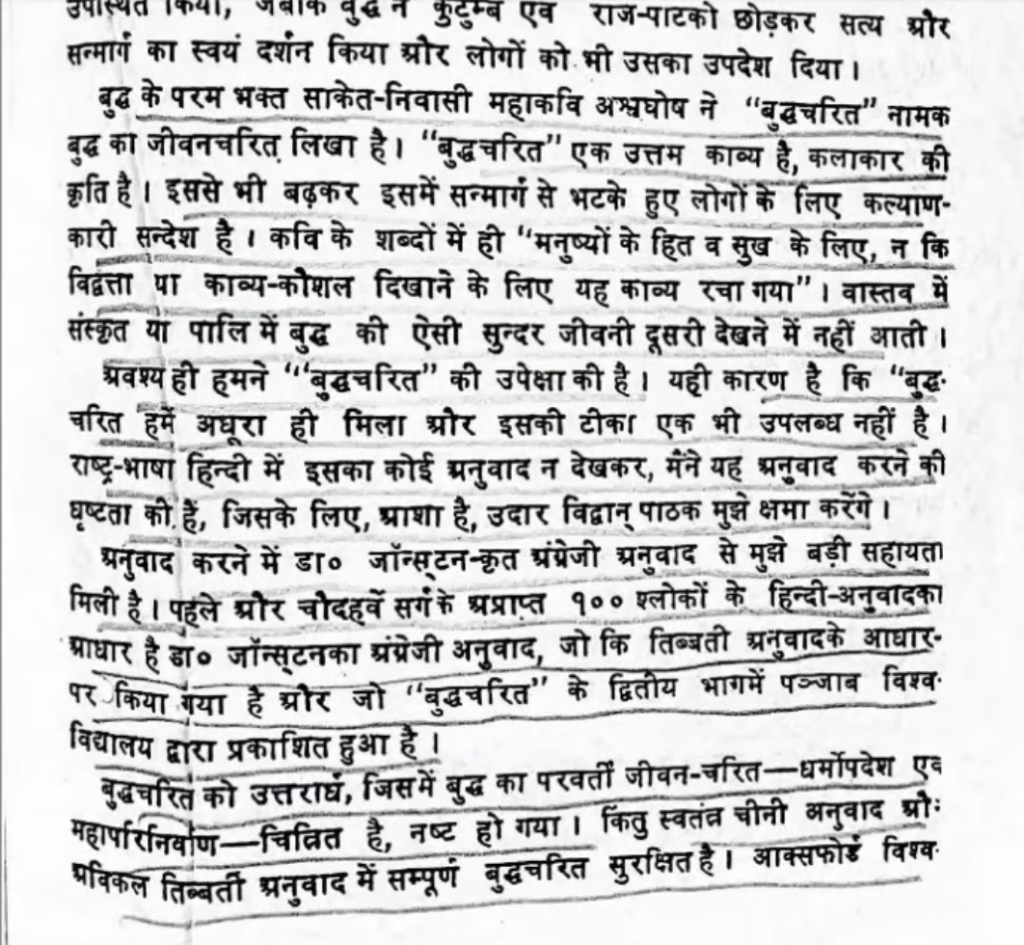
The ‘Buddha Charita’ itself has been subject to significant manipulation. Early translations and manuscripts show discrepancies. Many chapters are missing from Indian traditions, found only in Chinese and Tibetan translations compiled centuries later. There is evidence suggesting later parts of the text were deliberately suppressed or lost in India. Speculative additions were made to earlier parts, including the supposed birth narrative.[source]
The fragmented nature of the ‘Buddha Charita’ and interpolations by later scholars demonstrate how the text has been altered. The claim that Ashvaghosha, the author, was a Brahmin is used to further this narrative. However, historical evidence suggests Ashvaghosha was a prominent Buddhist scholar.[source][source] Read more: Deep Roots of Conspiracy Theories in Indian History
Protecting Brahmanical Hegemony
The rise of Buddhism challenged the rigid caste system and Brahmanical authority. The Brahmanical system has a history of attempting to co-opt or discredit reformist movements. Creating stories that make Buddha’s birth similar to Hindu deity births attempts to absorb Buddhism into the existing Brahmanical framework. This neutralizes Buddhism’s critique of their social and religious order.
Misrepresenting Ancient Indian Society
Sculptures like the Maya dream panel show women with agency, with attendants, one carrying a sword. This contradicts patriarchal narratives. These depictions are evidence of more egalitarian societies in certain periods, a fact often ignored or distorted by those upholding traditional hierarchies.
The Actual Buddhist Perspective on Birth and Enlightenment
The Tripitaka: Buddha’s Actual Teachings
Buddha’s core teachings, in the Tripitaka, focus on the Four Noble Truths, the Eightfold Path, and the nature of Dukkha. His emphasis was on personal liberation through wisdom, ethics, and mental discipline, not miraculous origins. The Tripitaka details Buddha’s life as a human who attained enlightenment through his own efforts, offering an accessible path to all.[source][source] Read more: Ambedkar’s 22 Vows and Buddhism: Path to Equality
The Importance of Reason and Logic
Buddha encouraged critical thinking and reason. In the Kalama Sutta, he advised followers not to accept teachings based on tradition, scripture, or authority. Instead, they should test them through experience and rational inquiry. This principle counters the blind acceptance of fabricated narratives.[source]
The Humanistic Approach to Enlightenment
The Buddhist narrative emphasizes Buddha’s human journey. His mother, Maya, died seven days after his birth, a fact mentioned in Buddhist texts. This human aspect, the suffering and impermanence of life, is central to Buddhist philosophy. The idea of a birth free from pain is a poetic device highlighting Buddha’s exceptional nature and compassion, not a literal, supernatural event. It signifies delivering beings from suffering, not being delivered from the natural process of birth.[source][source]
Conclusion: The Fight Against Historical Distortion
The deliberate creation and spread of misinformation regarding Buddha’s birth are part of an agenda to undermine Buddhism and its principles. By misinterpreting art, manipulating texts, and fabricating stories, certain groups aim to distort history and maintain hegemonic narratives. It is crucial to rely on authentic historical and archaeological evidence. Understanding the context of ancient texts and upholding the rational, humanistic core of Buddhist philosophy is essential.
What Can You Do?
- Educate Yourself: Seek reliable sources on Buddhist history, philosophy, and archaeology. Understand the difference between core scriptures like the Tripitaka and later interpretations.
- Share the Truth: Counter misinformation by sharing accurate information and evidence-based analyses. Debunk fake narratives with facts.
- Support Authentic Research: Encourage scholars and institutions dedicated to preserving and disseminating accurate historical and religious information.
- Promote Critical Thinking: Embrace rational inquiry, as Buddha advocated. Question unsubstantiated claims and always look for evidence.
- Advocate for Historical Integrity: Speak out against the distortion of history and the manipulation of religious and cultural heritage for divisive purposes.
Frequently Asked Questions About Buddha’s Birth
Is it true that Buddha was born from his mother’s side?
This is a misinterpretation of certain Gandhara art depicting childbirth. While some sculptures show a birth emerging from the side, this is generally understood as symbolic or representative of childbirth practices, not a literal account of Buddha’s birth.
Did Buddha’s mother conceive from an elephant?
No, this is a misinterpretation of the ‘Maya Dream Panel.’ The panel depicts Queen Maya’s dream, where an elephant is a symbol of purity and auspiciousness, not a literal participant in conception. The narrative has been deliberately twisted.
Is the ‘Buddha Charita’ a reliable historical text for Buddha’s birth?
‘Buddha Charita’ is a poetic epic written centuries after Buddha’s life. While it offers a narrative, it is not a core scripture and has been subject to manipulation and interpolation over time. It should not be treated as definitive historical evidence for his birth.
What do the core Buddhist scriptures say about Buddha’s birth?
The core scriptures, the Tripitaka, describe Buddha’s birth as that of a human being. They focus on his life, teachings, and path to enlightenment, emphasizing his human journey rather than miraculous origins.
Why do some people spread false stories about Buddha’s birth?
These false stories are often spread to discredit Buddhism, associate it with Hindu mythology, and undermine its distinct philosophical foundation. It’s a tactic to co-opt or neutralize Buddhism’s reformist challenge to existing social and religious structures.
Disclaimer
Brahmanical System: Refers to the social and religious system based on the authority of the Vedas and the caste hierarchy, with Brahmins at the top. In this context, it is used to refer to the traditional Hindu religious and social order that Buddhism sought to reform.
Niyog: An ancient Indian practice where a woman, usually a widow or one unable to conceive, could have intercourse with a man other than her husband (often a sage or her brother-in-law) for the sole purpose of procreation.
Gandhara Art: An artistic style that developed in Gandhara (modern-day Pakistan and Afghanistan) from the 1st century BCE to the 5th century CE. It is characterized by a blend of Indian Buddhist themes with Hellenistic (Greek) and Roman artistic influences.
Tripitaka: The three baskets of Buddhist scriptures, considered the core canon of Theravada Buddhism. It contains Buddha’s discourses, monastic discipline, and philosophical analysis.
Buddha Charita: An epic poem on the life of Gautama Buddha, composed by the Indian Buddhist poet Ashvaghosha in the 1st or 2nd century CE. It is a literary work and not part of the Tripitaka.
Shilp Kala: Literally means ‘art and craft’ or ‘sculpture.’ In this context, it refers to ancient Indian art forms, particularly sculptures and reliefs, used to depict religious and cultural narratives.
Dukkha: A fundamental concept in Buddhism, often translated as ‘suffering,’ ‘stress,’ or ‘unsatisfactoriness.’ It refers to the inherent dissatisfaction and impermanence of all conditioned existence.
Do you disagree with this article? If you have strong evidence to back up your claims, we invite you to join our live debates every Sunday, Tuesday, and Thursday on YouTube. Let’s engage in a respectful, evidence-based discussion to uncover the truth. Watch the latest debate on this topic below and share your perspective!

Skeptical Indian is an independent researcher documenting
caste discrimination through primary sources, Hindu
scriptures, court records, and government data.
CasteFreeIndia.com has published 100+ evidence-based
analyses since 2024.