The Elaborate Lie of Mahashivratri Origins
Mahashivratri is celebrated with great fanfare across India, with proponents sharing various narratives about its ancient roots. This festival, observed predominantly by those identifying as Hindu, raises critical questions about its true commencement. It is vital to examine the Mahashivratri historical evidence because the narratives we are fed often obscure the actual timeline of this major event.
We aim to uncover the truth by examining historical documentation and textual analysis. If you inquire about the origin of the celebration, advocates typically offer the same story: Lord Shiva and Goddess Parvati married on this day, and the festival commemorates this union. However, when pressed for verifiable proof, like a specific date or documented record, they offer silence, relying only on repeated assertions that the story is written somewhere. Our immediate follow-up must be: where precisely is this documented?
This analysis will rigorously test the claims surrounding the festival’s antiquity by looking for concrete evidence detailing when and how this celebration began.
Table of contents:
- Al-Biruni's Account: Absence of 11th Century Evidence
- Examining the Puranas: The Shiv Mahapuran Critique
- The Preposterous Scale of the Wedding Procession
- Societal Norms Depicted in the Wedding Narrative
- The 'Gargacharya' and Buddhist Influence
- Questionable Depictions of Deities and Morality
- The Myth of Dowry and Social Endorsement
- The Historical Evolution of Mahashivratri
- Conclusion: Challenging the Dominant Narrative
- What Can You Do?
Al-Biruni’s Account: Absence of 11th Century Evidence
To establish a reliable historical baseline, we turn to Al-Biruni, the renowned 11th-century scholar who meticulously documented various festivals prevalent in India during his extensive travels. His writings offer an invaluable, non-partisan window into historical practices and beliefs.
The current claim places Mahashivratri on the 15th day of the lunar month of Phalgun, the new moon (Amavasya), preceding Holi. Our objective here is to encourage a scientific temper by rigorously testing prevalent claims against documented history.
What Al-Biruni Actually Recorded
Al-Biruni documented festivals with precision. He noted that the full moon of Phalgun marked a festival of women, known as ‘Udadh’ or ‘Dhool’. He detailed other observances, such as the 8th of Phalgun (‘Altavi Phalgun’), where flour and ghee dishes were prepared specifically for Brahmins. Significantly, Al-Biruni makes no mention of any festival occurring on the new moon of Phalgun.[source]
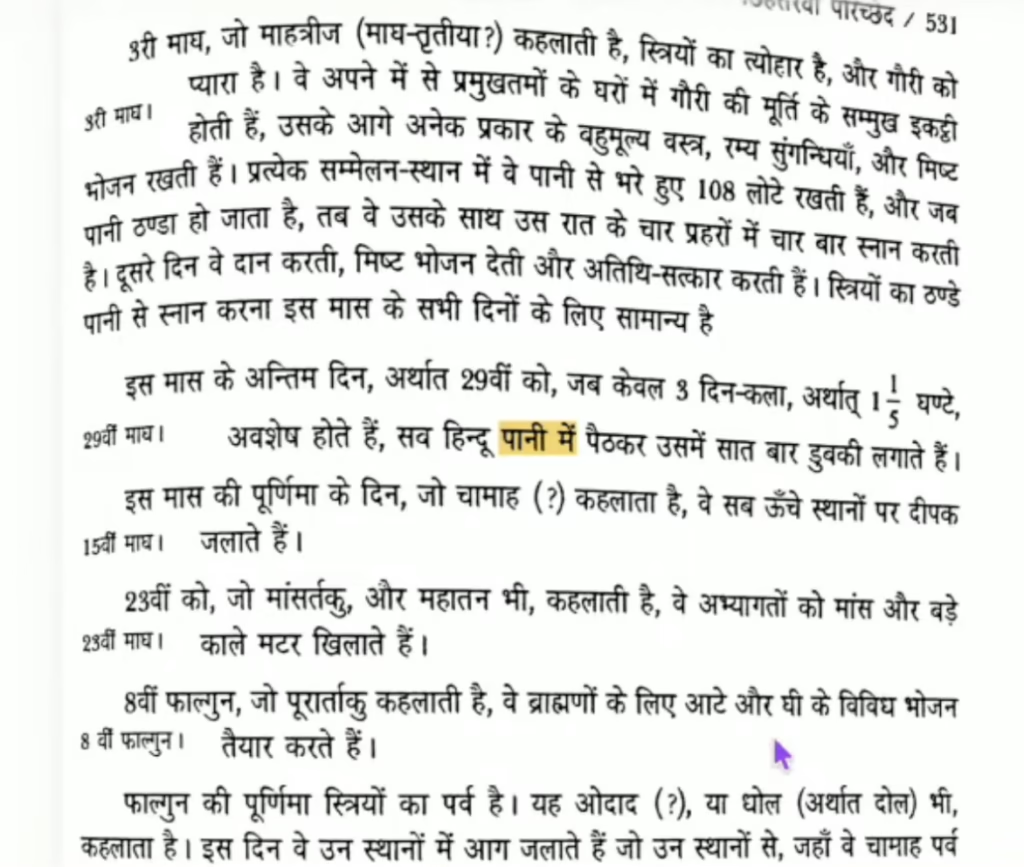
Crucially, Al-Biruni’s comprehensive 11th-century account completely omits Mahashivratri. If this festival possessed the profound antiquity claimed today, it would almost certainly have been recorded by major travelers and scholars preceding or during his era.
Absence in Earlier Scholarly Accounts
Further research into the meticulous records of earlier travelers and scholars, including Itsing, Xuanzang, and Faxian, confirms the absence of any reference to Mahashivratri. While terms like ‘Maheshwar’ (an epithet for Shiva) appear, and even ‘Mahakal’ (referenced as a Buddhist Bodhisattva in Itsing’s notes), the specific festival named ‘Mahashivratri’ is entirely missing from these foundational documents. Read more: Deep Roots of Conspiracy Theories in Indian History
The complete silence regarding Mahashivratri in the 11th century and prior travelogues strongly implies that the festival, in its present form and fixed timing, had not yet emerged or achieved widespread recognition.
Examining the Puranas: The Shiv Mahapuran Critique
When historical external evidence is lacking, proponents frequently redirect attention to religious texts, particularly the Shiv Mahapuran, asserting it details Shiva and Parvati’s wedding with precise astrological charts matching modern Hindu customs. They often cite the authority of the priest Gargacharya in preparing this chart.
The Shiv Mahapuran: A Closer Look at the Text
We examine the Shiv Mahapuran, specifically the Parvati Khand published by Gita Press, Gorakhpur, which allegedly contains the wedding narrative. Many within the Bahujan community often rely on social media assertions; therefore, factual verification is paramount.
In Chapter 35 of the Parvati Khand, the text describes Vashishtha and Narada approaching the Himalayas to negotiate Parvati’s marriage to Shiva. The parents expressed hesitation, noting Shiva’s unconventional nature as a mendicant and performer of ascetic rites.
The Discrepancy in Wedding Dates
A major conflict appears regarding the precise date of the wedding. The text notes that after a week, a rare and auspicious planetary yoga would align for Shiva’s wedding. It describes the planetary positions and the lunar day. However, the text explicitly names the month as Margashirsha, not Phalgun. The relevant verse states:
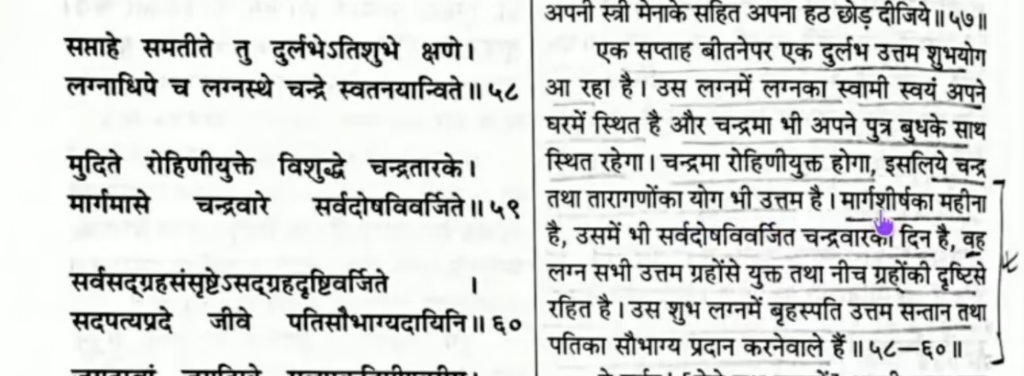
Marg mase sarvadosh vivarjit chandravar ka din hai.
(In the month of Margashirsha, on a Monday, a day without any planetary afflictions.)
This is a decisive discrepancy. Mahashivratri is celebrated on the new moon of Phalgun today, but the purported authoritative text, the Shiv Mahapuran, places the wedding in Margashirsha. The Sanskrit phrase ‘Marg mase’ confirms this, suggesting the celebratory date has been subsequently shifted or widely misinterpreted.
Geographical and Physical Depictions
The text also furnishes geographical and physical details. Shiva is described as fair-complexioned, residing in Kailash (now in occupied Chinese territory). Conversely, Parvati’s location is Himachal, and her complexion is described as dark, occasionally referred to as ‘Kali’. This dark complexion description recalls earlier narratives where she becomes enraged after being called dark.
The ‘Lagana Patrika’ and its Omissions
The narrative progresses with the Himalayas agreeing to the marriage and issuing the astrological chart (lagana patrika), prepared by Gargacharya. Despite the extensive detailing of wedding preparations and invitations sent to mountain deities, there is no mention that the wedding occurred on the new moon of Phalgun.
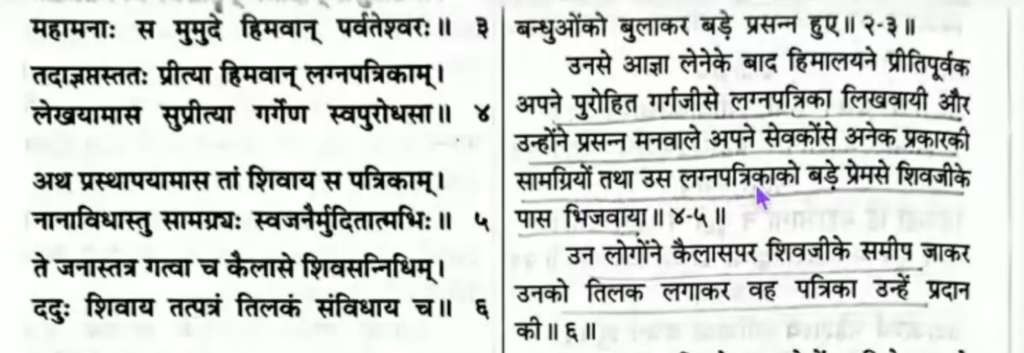
The text elaborates significantly on the scale of the procession and the vast collection of provisions, describing the immense revelry. Yet, the essential detail—the wedding date being the new moon of Phalgun—is systematically absent from this supposed primary source.
The Preposterous Scale of the Wedding Procession
The Shiv Mahapuran details Shiva’s wedding procession (baraat) on a scale that defies belief, pointing towards extensive mythical embellishment rather than historical recounting.
Astronomical Attendance Figures
The text enumerates numerous ‘Ganas’ (Shiva’s attendants), with attendant groups numbering in crores (tens of millions). Shankh Kan, a Gana, reportedly brought one crore attendants. Rakshas arrived with 10 crore. Vikrit with 8 crore, and Ganapati Vishakh with 4 crore. The figures ascend rapidly, culminating when one Gana, Pipala, reportedly arrived with one thousand crore (10 billion) attendants.
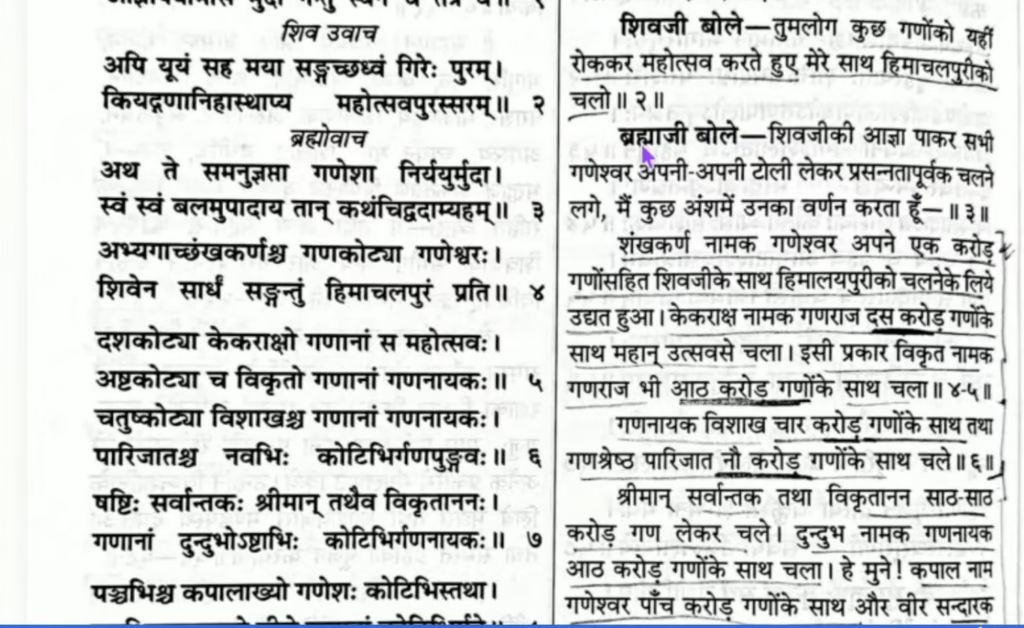
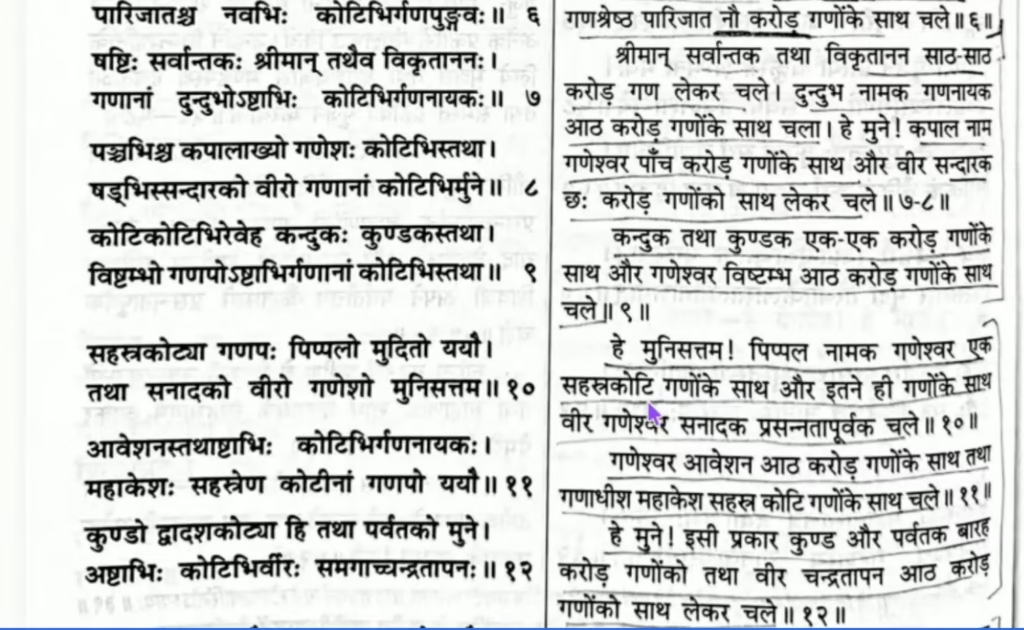
The description intensifies as Shiva’s sister-in-law, Chandi, appears with 11,000 crore Rudra Ganas. The sounds of conches and drums underscore a celebration of literally unimaginable magnitude.
A Crisis of Credibility
When confronted with such astronomically inflated figures, the narrative’s intent becomes questionable. Whether literal or symbolic, the fantastical portrayal lacks any grounding in plausible reality, strongly suggesting the text was composed much later to create a grand myth rather than record factual history.
The sheer number of attendees described, far surpassing the current global population, renders a literal interpretation impossible. This fantastic portrayal casts serious doubt on the historical veracity of the Shiv Mahapuran as a record of ancient events.
Societal Norms Depicted in the Wedding Narrative
Beyond the mythical numbers, the Shiv Mahapuran’s depiction of the wedding reveals underlying societal norms, particularly concerning caste and ritual conformity.
The Upanayana Samskara and Caste Alignment
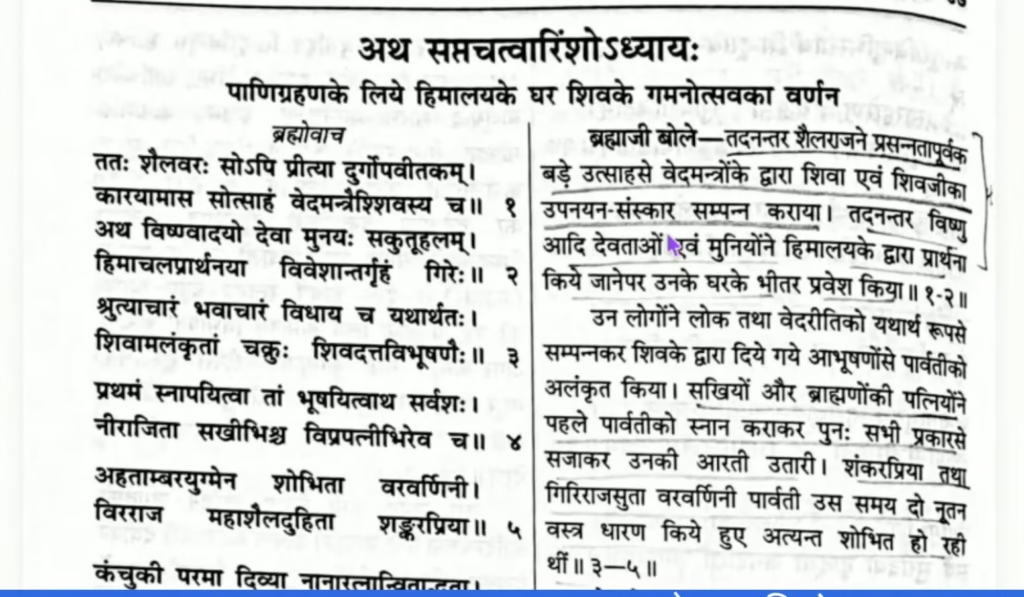
A notable event described is Shiva’s Upanayana Samskara (sacred thread ceremony) performed prior to the wedding. This ritual is historically restricted to upper castes. The inclusion of this rite for Shiva—often depicted as an ascetic outside the traditional system—suggests a later strategic effort to integrate him firmly into the Brahminical social structure. Furthermore, the text implies Shiva’s origin stems from ‘Tamoguna’ (the quality of darkness/inertia), traditionally linked to Shudras, contrasting with Brahmins originating from ‘Satoguna’ (the quality of goodness/knowledge).[source]
The ‘Bail’ vs. ‘Ghodi’ Tradition Shift
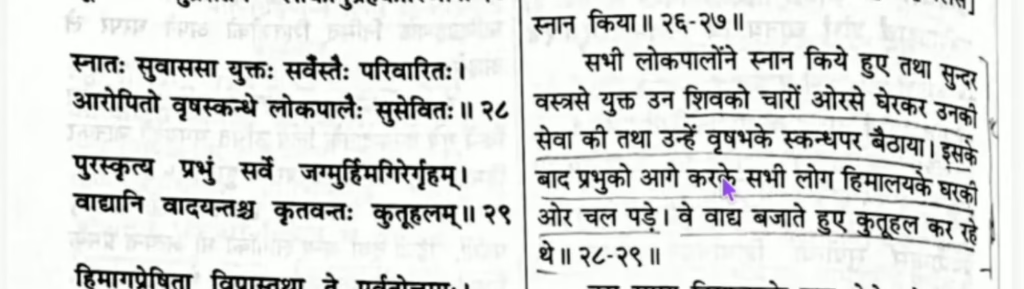
The text specifies that Shiva rode a bull (Vrishabha) to the wedding. This directly contrasts with the contemporary practice where grooms ride horses (‘ghodi’). This indicates significant cultural evolution, where certain customs originating from other communities or regions might have been adopted or superimposed over time, reflecting shifting power dynamics.[source]
The ‘Gargacharya’ and Buddhist Influence
The presence of Gargacharya, a celebrated priest in orthodox Hindu tradition, is noted during the wedding proceedings. However, the text also mentions the use of a ‘Ghatika Yantra’ (a timekeeping instrument) within the wedding setting.
Buddhist Chronometry in Hindu Texts?
The Ghatika Yantra is a precise, water-based clock documented by scholars like Itsing as being used extensively within Buddhist monastic systems. Its inclusion in a Puranic text strongly suggests either a vast intermingling of traditions during compilation or, more probably, that the text was composed in a later period when Buddhist intellectual influence was still strong and its scientific elements were being absorbed into evolving religious narratives. Read more: Origins of Shivalinga Worship: Historical & Scriptural Views
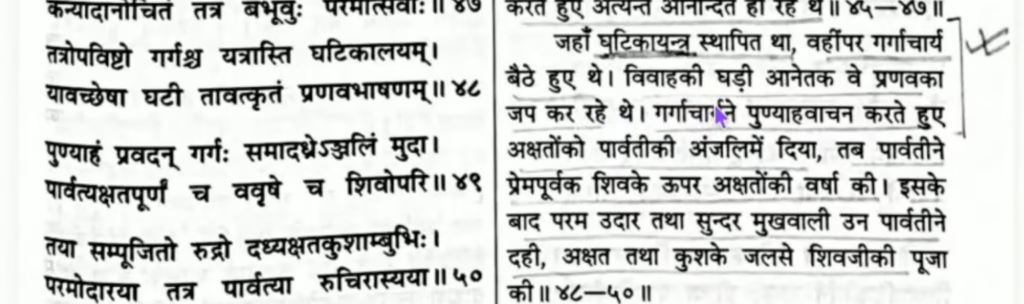
The description of the Ghatika Yantra as a water clock featuring a sinking diya clearly points to sophisticated timekeeping methods associated with Buddhist educational centers like Nalanda University. Its presence in the Shiv Mahapuran indicates a compilation date far removed from the events supposedly described, borrowing elements from contemporary scientific traditions.
Questionable Depictions of Deities and Morality
The Shiv Mahapuran’s narrative contains morally questionable descriptions of deities, raising further doubts about the text’s overall authenticity and the nature of the worship it seeks to establish.
Brahma’s Lustful Gaze and Conflict
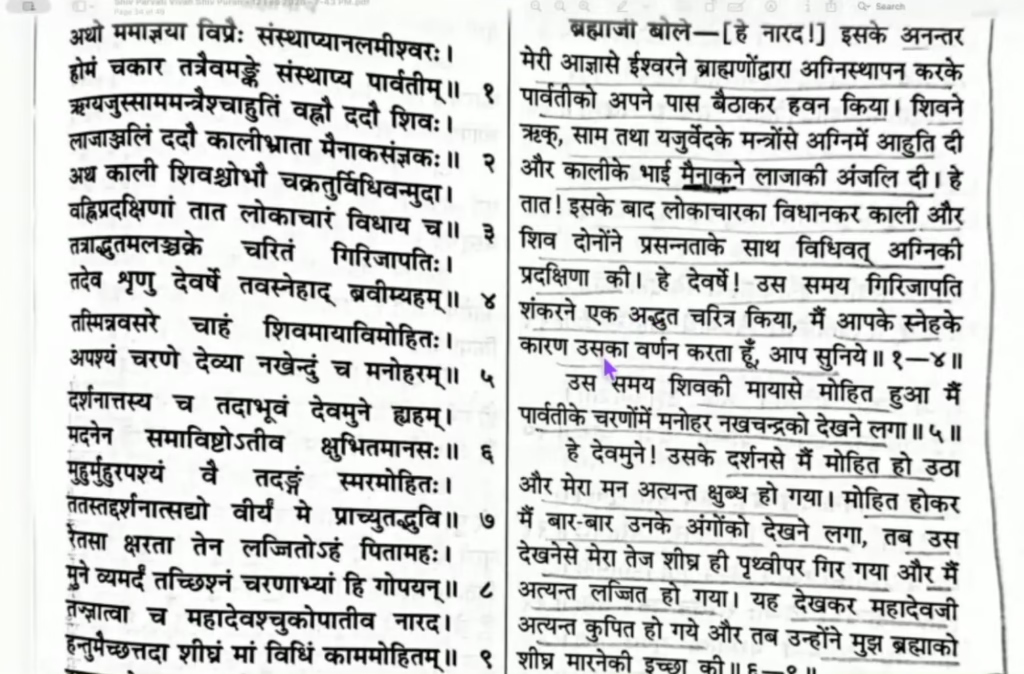
During the ritual circumambulation of the sacred fire, the text describes the creator god, Brahma, becoming fixated on Parvati’s toenails. He is depicted as mesmerized to the point where his ‘semen’ falls upon the earth. This infuriates Shiva, who prepares to execute Brahma. This bizarre and morally dubious incident, depicting a supreme deity so shamefully, severely undermines the narrative’s claim to divine righteousness.[source]
Lineage Interrogation and Caste Retrofitting
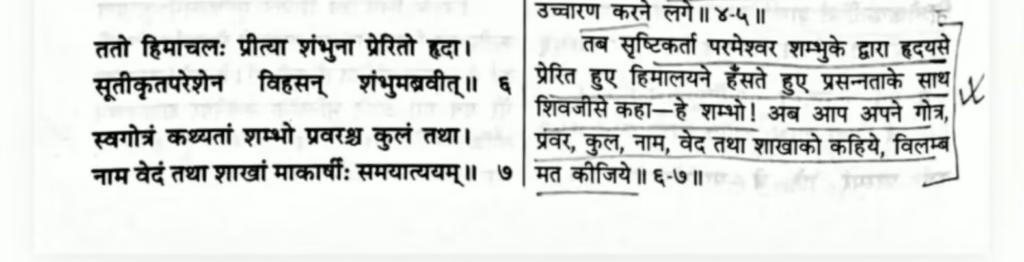
The narrative further illustrates societal concerns being projected onto the divine. Shiva’s father-in-law, Himavan, directly challenges Shiva regarding his lineage, caste affiliation, and Vedic adherence. Shiva’s inability to provide satisfactory answers, necessitating Narada’s intervention, reveals that the structured caste and lineage concepts of later Brahminical systems were actively being retroactively applied to ancient mythical figures during the text’s composition. Read more: Bhavishya Purana: Puranic Chronology & Foreign Influence
The Myth of Dowry and Social Endorsement
The Shiv Mahapuran exhaustively details the gifts, or dowry, presented by Himavan to Shiva. These gifts are cataloged as extravagantly immense: one lakh (100,000) decorated cows, 100 horses, one lakh adorned maidservants, and one crore (10 million) elephants, alongside chariots crafted from gold and precious jewels.
Legitimizing the Dowry System
This portrayal of Shiva accepting an overwhelming dowry without protest or refusal is highly problematic. In a society perpetually struggling with the social evil of dowry, depicting a revered deity accepting such lavish material wealth can easily be perceived as an endorsement or sanctification of the practice. There is zero textual support for Shiva rejecting or even questioning the received dowry.
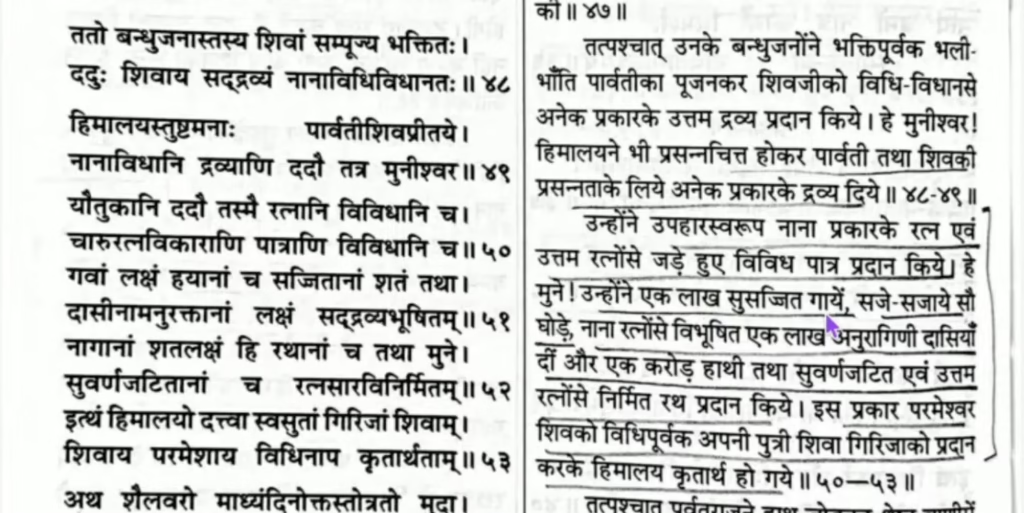
This element strongly suggests the text was written or substantially revised during an era when dowry was a deeply entrenched social norm, and the authors sought divine validation for this practice by linking it to a central religious wedding narrative.
The Historical Evolution of Mahashivratri
Analyzing the collective evidence—Al-Biruni’s silence, the internal contradictions within the Shiv Mahapuran, and the later introduction of specific rituals—it becomes evident that Mahashivratri, as observed today, is not an ancient, static festival.
A Festival of Post-Classical Origin
The absence of the festival in 11th-century accounts like Al-Biruni’s, contrasted with its highly detailed, yet internally flawed, presence in texts like the Shiv Mahapuran, suggests the festival likely solidified its prominence much later in history. The incorporation of advanced elements like the Ghatika Yantra and the meticulous scrutiny of caste and lineage point toward a compilation and revision phase occurring centuries after the purported events took place.
Standardization Through Imposition
The critical shift in the celebration date to the new moon of Phalgun, directly contradicting the Margashirsha month cited in the Shiv Mahapuran, signals a deliberate reinterpretation or standardization process. This methodology likely involved imposing formalized Brahminical rituals and timelines onto pre-existing folk traditions or localized myths.
The current, widespread adherence to the specific Phalgun date for Mahashivratri, often performed without historical scrutiny, showcases how constructed religious narratives can become deeply embedded in daily societal practice over time when critical examination is suppressed.
Conclusion: Challenging the Dominant Narrative
The investigation into Mahashivratri’s origins reveals a history marked by myth-making, significant textual evolution, and the strategic imposition of social hierarchies. The specific narrative of Shiva and Parvati’s wedding occurring on the new moon of Phalgun, celebrated as Mahashivratri, appears to be a much later construction, lacking foundation in earlier historical documentation and suffering from severe internal inconsistencies.
The Imperative for Critical Inquiry
It is imperative for individuals to cultivate a habit of critical inquiry concerning religious festivals and inherited traditions. Unquestioning adherence to narratives, divorced from historical accuracy or contemporary societal implications, inevitably perpetuates misinformation and upholds outdated, often oppressive, practices.
The documented evidence strongly suggests that Mahashivratri, in its contemporary form, is not as ancient as widely believed. The specific date, the codified rituals, and even the core wedding narrative seem to have evolved across centuries, likely driven by the need to consolidate religious authority and reinforce social stratification.
A Call to Action for Evidence-Based Culture
We stand at a clear intersection: the stark contrast between available historical evidence and popular, inherited belief. The Shiv Mahapuran itself provides a conflicting timeline and context for the wedding, and earlier historical accounts fail to corroborate the existence of Mahashivratri as a significant festival during their time.
What Can You Do?
- Educate Yourself on Historical Evidence: Actively seek out academic and historical resources detailing the evolution of religious festivals and cultural traditions to understand context.
- Question Narratives Systematically: Refuse to accept traditional explanations without evidence. Pose critical, specific questions regarding the historical basis and societal impact of the practices you observe.
- Promote Scientific Temper: Champion critical thinking and evidence-based reasoning within your immediate communities and families, especially when religious or cultural narratives are presented as immutable fact.
- Support Anti-Caste Discourse: Engage with and financially support platforms and movements dedicated to evidence-based anti-caste discourse that actively challenge the perpetuation of caste ideologies embedded within religious interpretations and festival narratives.
Key Terms Explained for Context
- Al-Biruni: A 11th-century Persian scholar who traveled extensively in India and provided crucial documentation of the local culture, customs, and history of the time.
- Shiv Mahapuran: One of the eighteen major Puranas, an extensive genre of ancient Indian literature focused on recounting the life and deeds attributed to Lord Shiva.
- Parvati Khand: A specific section contained within the Shiv Mahapuran that dedicates its narrative to Goddess Parvati and her eventual union with Shiva.
- Margashirsha: The ninth month in the traditional Hindu lunar calendar, generally aligning with November to December.
- Phalgun: The twelfth month of the Hindu lunar calendar, corresponding roughly to February and March.
- Amavasya: The day signifying the new moon in the Hindu lunar system, characterized by the moon being completely invisible.
- Purnima: The day marking the full moon in the Hindu lunar calendar.
- Gana: The collective term for the attendants, followers, or semi-divine entities associated with Lord Shiva.
- Upanayana Samskara: A foundational Vedic ritual marking initiation, traditionally performed for upper-caste males, signifying their eligibility for formal Vedic education and their ‘twice-born’ status.
- Tamoguna/Satoguna: Two of the three fundamental modes of nature in Hindu philosophy. Tamoguna relates to ignorance and inertia; Satoguna relates to goodness, purity, and knowledge.
- Ghatika Yantra: A precise water clock utilized historically within Buddhist monastic and educational institutions, like Nalanda, for regulating daily schedules.
- Madhuparka: A ritual offering traditionally presented to esteemed guests, often involving honey and ghee, with historical associations sometimes including other ritual components.
Do you disagree with this article? If you have strong evidence to back up your claims, we invite you to join our live debates every Sunday, Tuesday, and Thursday on YouTube. Let’s engage in a respectful, evidence-based discussion to uncover the truth. Watch the latest debate on this topic below and share your perspective!