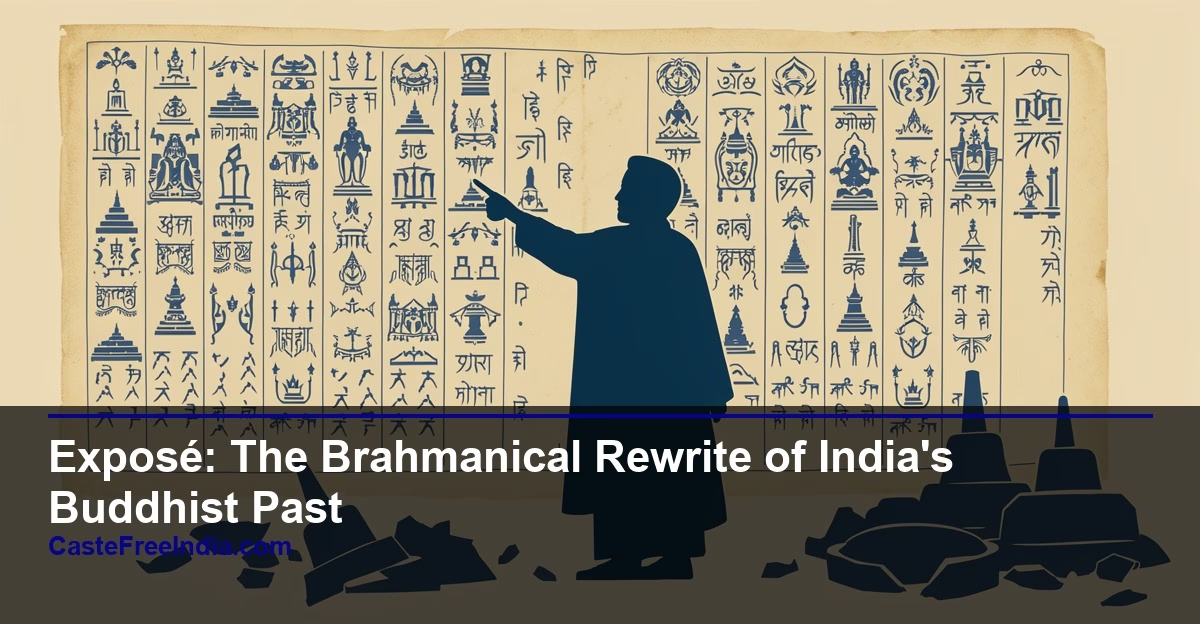
Exposé: The Brahmanical Rewrite of India’s Buddhist Past
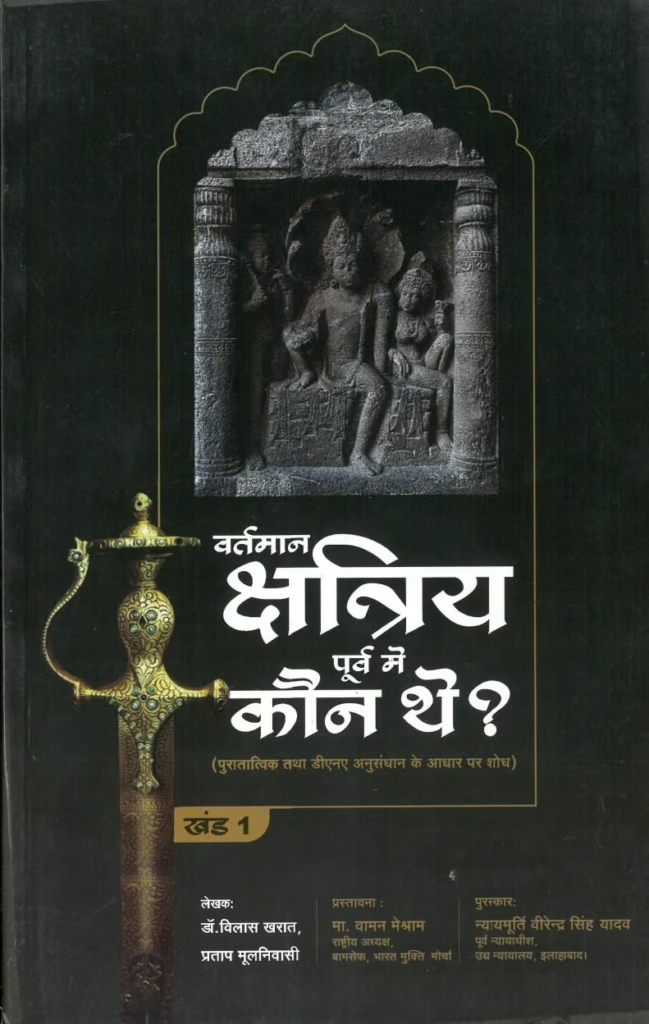
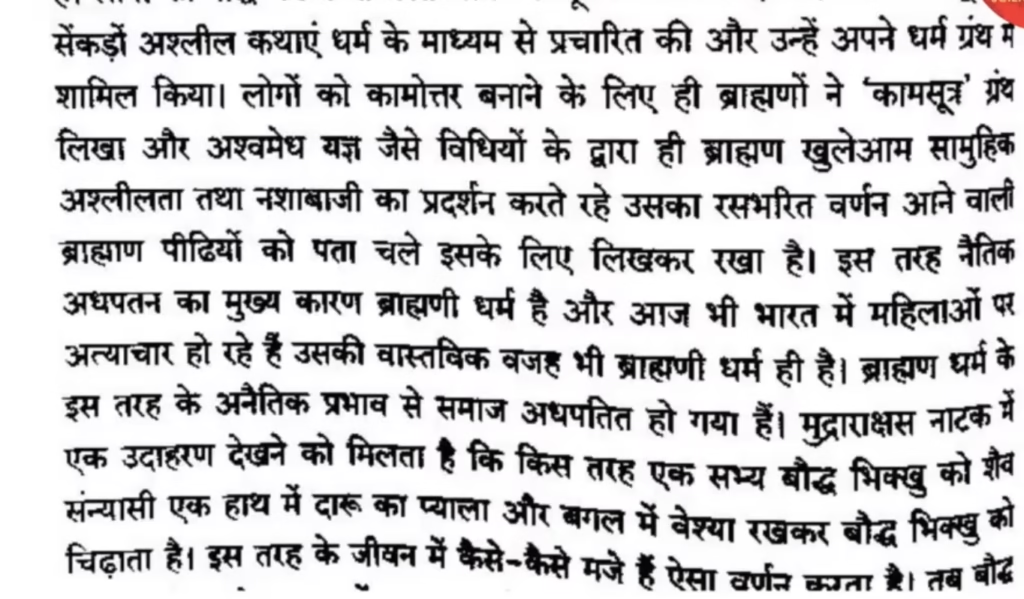
The narrative of India’s history has long been dominated by a singular perspective, a story carefully curated and disseminated to uphold specific power structures. But what happens when the foundations of this accepted history are systematically dismantled, revealing a past far more complex and deliberately obscured? This is precisely what Dr. Vilas Kharat’s seminal work, Vartaman Kshatriya Purv Mein Kaun The? (Who Were the Present-Day Kshatriyas in the Past?), first volume, seeks to achieve. It is a rigorous examination that challenges the very bedrock of historical accounts, particularly the systematic erasure and distortion of India’s rich Buddhist heritage by Brahmanical historians. Let’s discuss India’s Buddhist Past.
Brahmanical, in this context, refers to narratives and interpretations heavily influenced by the traditional Hindu hierarchical structure, often promoting Brahminical supremacy and reinforcing caste distinctions. This book is not merely a collection of facts; it is a clarion call to re-examine everything we thought we knew about ancient and medieval India. It posits that the history we have been taught is not a neutral recounting of events, but a carefully constructed narrative designed to serve a particular agenda.
The central argument is that a deliberate and sustained effort by Brahmanical scholars and writers has led to the marginalization and misrepresentation of indigenous communities and the vibrant history of Buddhism, replacing it with a fabricated Brahmanical lineage and supremacy. This exposé dives deep into the alleged conspiracies, historical distortions, and the profound impact these have had on understanding India’s true past.
The Brahmanical Conspiracy to Rewrite History
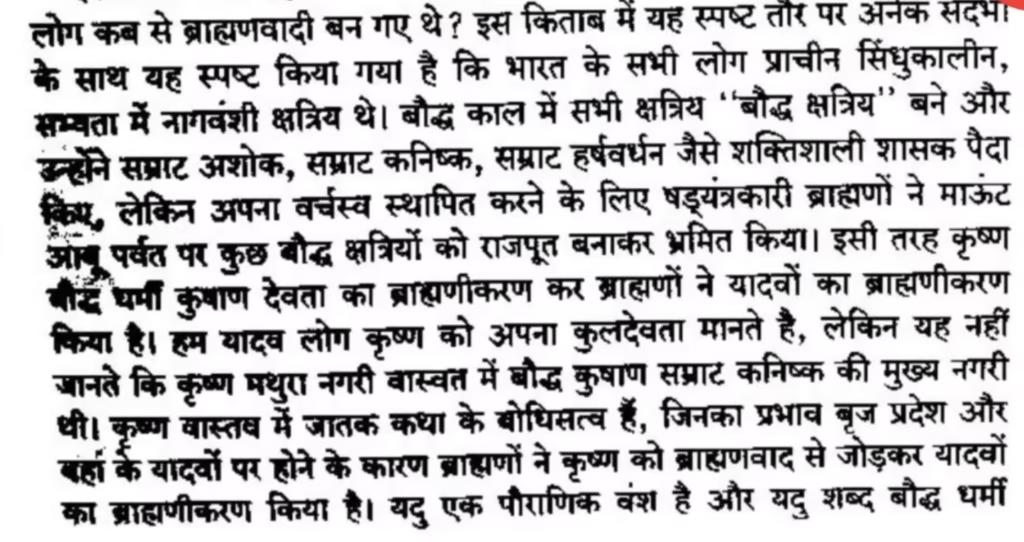
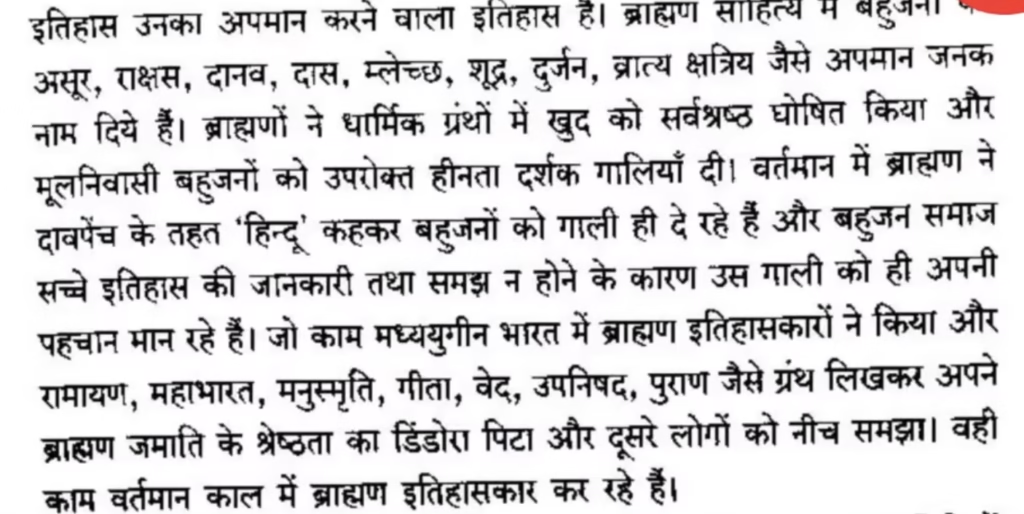
A central theme explored is the Brahmanical attempt to label many indigenous Indian communities as foreigners. The book argues that this is a deliberate conspiracy to deny their original inhabitancy and historical significance. It specifically mentions how certain castes have been portrayed as foreign invaders in historical texts, a claim the book seeks to debunk. The author points out that historians who are considered the most impartial and distinguished by the Brahmanical establishment have, in fact, engaged in significant manipulation and fabrication of history, supported by evidence presented within the book.[source][source] Read more: Deep Roots of Conspiracy Theories in Indian History
The Claim of Foreign Origins for Indigenous Peoples
This tactic of labeling indigenous groups as invaders served a clear political purpose: to undermine their rootedness in the land and delegitimize their claims to historical authority, paving the way for a narrative centered on Brahmanical origin myths. The systematic misrepresentation aims to position the Brahmanical tradition as the primary, autochthonous heir to ancient Indian civilization, effectively erasing pre-existing structures like flourishing Buddhist empires. Read more: Origins of Shivalinga Worship: Historical & Scriptural Views
Historical Erasure of Buddhism
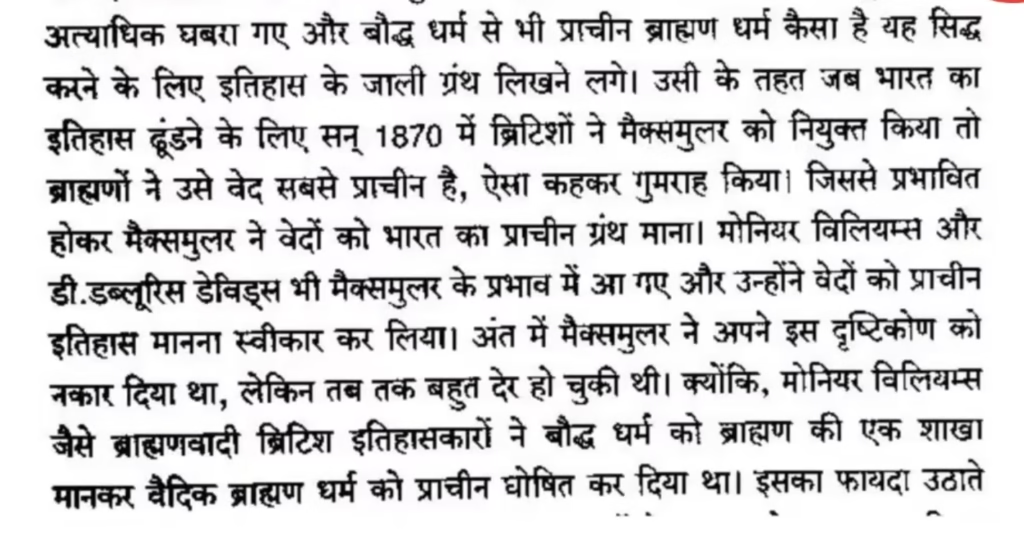
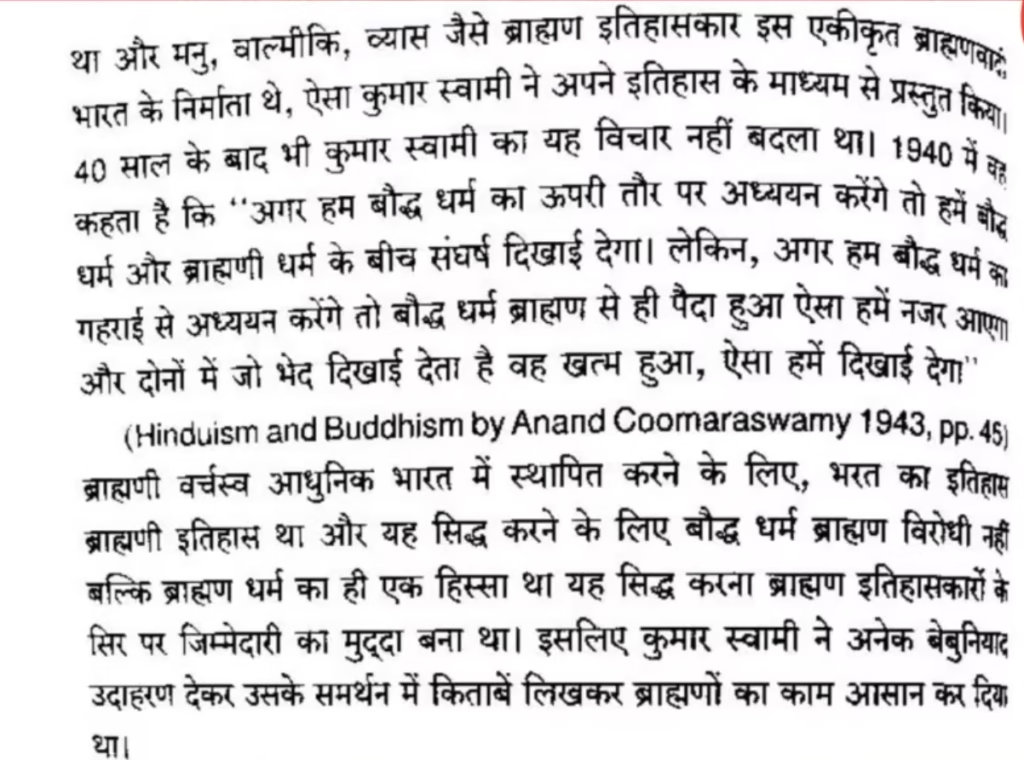
The book meticulously details how the narrative surrounding the decline of Buddhism in India was often twisted. Instead of acknowledging socio-political factors, the narrative frequently leans towards an internal decay or absorption, minimizing the role of persecution or calculated ideological suppression enacted by dominant elements. Kharat examines primary sources to demonstrate how key figures and movements associated with Buddhism were either minimized or actively recast to fit the emerging Brahmanical historical framework.
The Politics of Historical Narratives
The book moves beyond simple claims of bias to analyze the mechanics through which historical consensus is formed and maintained, often excluding marginalized perspectives.
Understanding the Historian’s Caste
The work begins by questioning a fundamental aspect often overlooked: the caste identity of the historian. It observes a common Indian tendency to immediately search for the caste of a sportsperson or a medal winner. This same instinct, the book argues, must be applied to those who write and teach history. The author contends that understanding the caste of the historian is crucial because it often dictates their perspective and the narrative they choose to promote. If the history being taught is curated by those belonging to a particular dominant caste, it is highly probable that the narrative will reflect and reinforce their worldview and interests.[source] Read more: History of Caste and Surname in India: A Comprehensive Guide
The Illusion of Neutrality
A significant challenge posed by the book is how to verify the impartiality of a historian. In a system where historical education is often delivered through prescribed textbooks, and where the social circle of students, teachers, advisors, and peers predominantly belong to dominant castes, the information received is rarely neutral. The book highlights that for centuries, Shudras, Ati-Shudras, Adivasis, and other marginalized communities were denied access to education. Even with reservations, their representation in educational institutions remains disproportionately low.
Therefore, the historical references and interpretations presented are likely to be from the perspective of those who have historically held power and access to education, perpetuating their version of history. This systemic imbalance ensures the continued dominance of the Brahmanical historical lens, making anti-caste historical analysis necessary for accuracy.
The Absence of Subaltern Voices
The absence of historical records and writings from the oppressed and marginalized communities is a critical point. If these communities were historically denied education, their ancestral writings and perspectives are largely unavailable. While some writings have emerged in the last century or two, the true historical accounts from much earlier periods, those that would reflect the experiences of the marginalized, are indeed missing. This void is then filled by the dominant narrative, further entrenching a one-sided view of history.
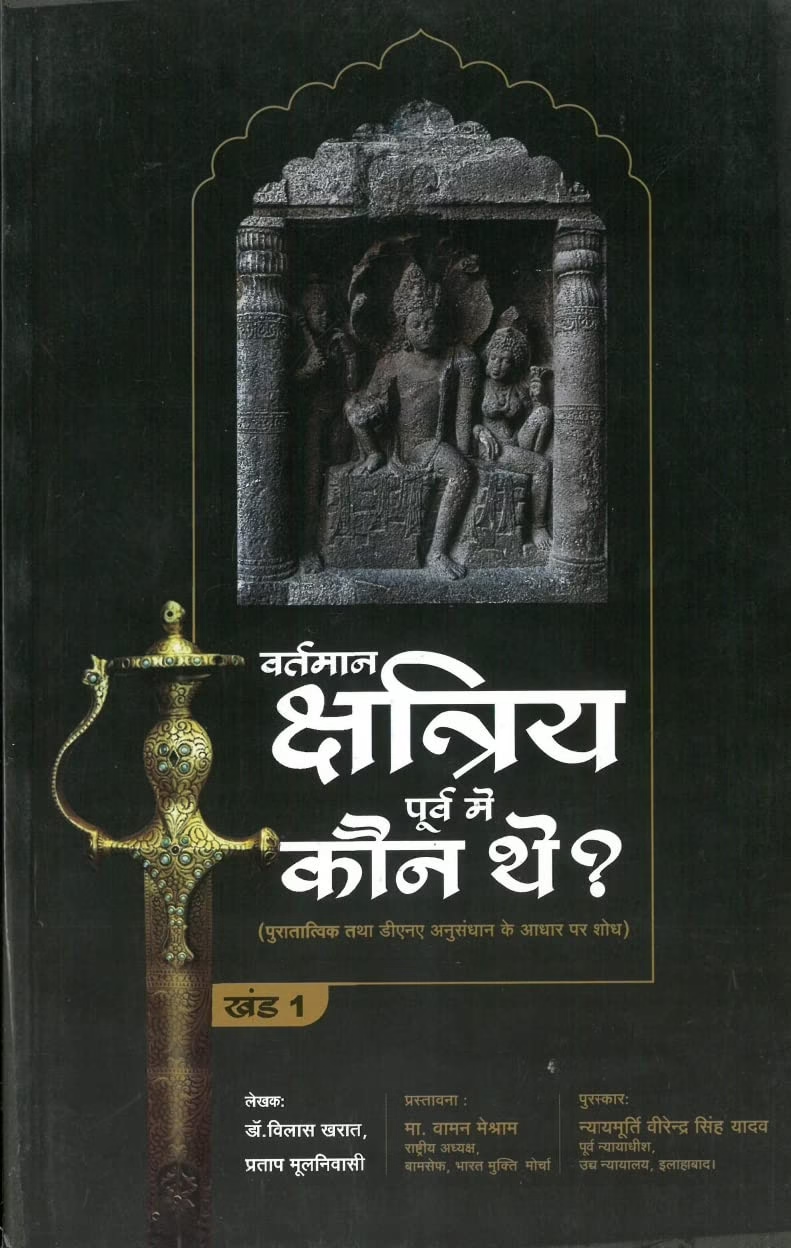
The book “वर्तमान क्षत्रिय पूर्व मे कौन थे ?” explores the historical origins and evolution of the Kshatriya (warrior) caste in Indian society.
Key aspects:
Examines the history of India’s caste system and religious structures
Investigates who the present-day Kshatriyas were in earlier periods
Provides factual analysis of historical records and social evolution
Written in Hindi and published by Dr. Babasaheb Ambedkar Research Centre
The book is described by readers as excellent for history enthusiasts and fact-checking, offering insights into the reality behind historical narratives about India’s social structure.
Conclusion: The Imperative for Evidence-Based History
Dr. Kharat’s investigation, Vartaman Kshatriya Purv Mein Kaun The?, serves as a vital resource demonstrating how historical writing can be weaponized to maintain social hierarchies. By exposing the systematic erasure, particularly concerning India’s powerful Buddhist heritage, the book compels readers to adopt a critical lens toward established historical canons. A true understanding of India requires acknowledging the deep-seated biases embedded within centuries of historiography, moving toward an evidence-based, anti-caste approach that restores the voices and histories systematically silenced by dominant groups.
What Can You Do?
- Support and read anti-caste scholarship that challenges mainstream historical narratives.
- Demand critical evaluation of history textbooks in local and national educational syllabi.
- Amplify the research of scholars like Dr. Vilas Kharat who rigorously document historical distortions.
- Engage in conversations that distinguish between religious tradition and documented historical fact.
Do you disagree with this article? If you have strong evidence to back up your claims, we invite you to join our live debates every Sunday, Tuesday, and Thursday on YouTube. Let’s engage in a respectful, evidence-based discussion to uncover the truth. Watch the latest debate on this topic below and share your perspective!

Skeptical Indian is an independent researcher documenting
caste discrimination through primary sources, Hindu
scriptures, court records, and government data.
CasteFreeIndia.com has published 100+ evidence-based
analyses since 2024.