Introduction: The Crisis of Scientific Temper in India
India, with its 1.4 billion people, lags behind nations with populations a fraction of its size in technological and scientific advancement. From medical equipment to electronics and automobiles, India relies heavily on imports. This dependence is not due to a lack of human resources but a deeply rooted cultural problem: the absence of scientific temper. Scientific temper, an attitude of logical reasoning and evidence-based thinking, is enshrined in the Indian Constitution (Article 51A).
The root cause of this stagnation can be traced directly to Brahminical myths and the caste system they enforce. These texts are filled with unscientific narratives that are still promoted as divine truth, suppressing critical thinking and rational inquiry. Instead of fostering innovation, vast sums are spent on mythological projects like the Ram Mandir in Ayodhya, built on a site with a Buddhist history. This article exposes the absurd, unscientific genealogies and narratives from scriptures like the Valmiki Ramayana and Shrimad Bhagavatam, which form the backbone of caste supremacy and anti-science attitudes in India.
The refusal to question these texts has allowed a small, privileged group to dominate discourse while the majority remain trapped in superstition. However, the following sections will dissect specific examples from these scriptures, revealing how they contradict basic science and historical facts. We will also show how these false stories have been weaponized to dispossess indigenous and lower-caste communities, erasing their history and seizing their lands. Therefore, this is not a matter of faith versus reason but a deliberate strategy to maintain power and prevent India from becoming a scientifically advanced society.
The Unscientific Birth of Rama: A Story That Defies Biology
The Kheer Ritual and Divine Conception
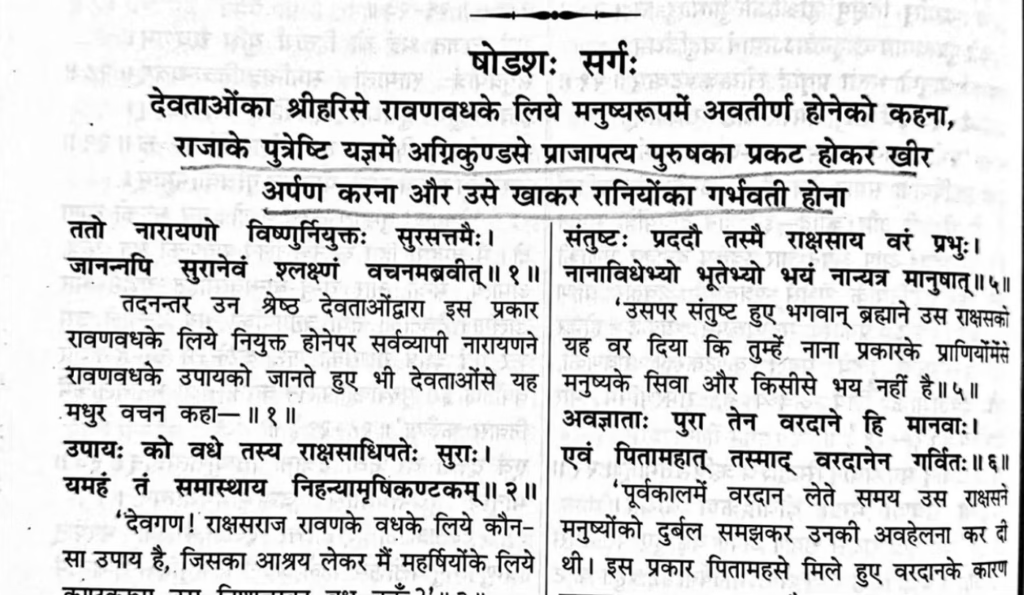
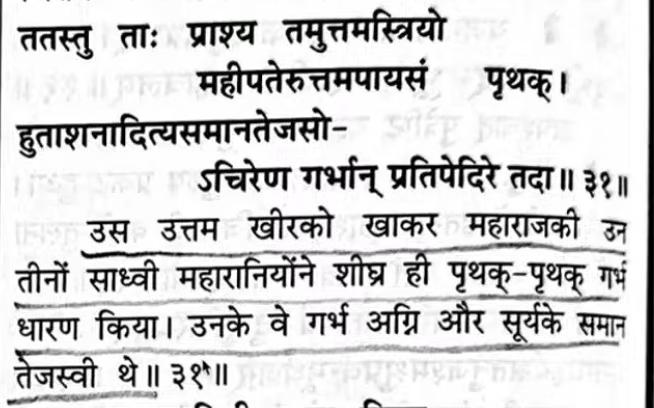
The Valmiki Ramayana, one of the most revered Hindu texts, describes the birth of Rama through a ritualistic consumption of kheer (a sweet rice pudding). According to the Bala Kanda, a divine being emerged from a sacrificial fire and presented the kheer. The queens then ate it, leading to their pregnancy. This narrative is explicitly unscientific, as no human birth can result from eating a substance without biological conception. The passage states:
That excellent kheer was consumed by the three virtuous queens of the great king, and they immediately conceived separately.
Such a claim, if presented in a modern context, would be dismissed as fantasy. Yet, millions accept it as historical truth, and public resources are poured into celebrating and institutionalizing this myth.
The Suppression of Rational Questions
In the 21st century, the public has failed to demand accountability for the investment in unscientific beliefs. When the Ram Mandir was constructed, no significant movement questioned the validity of Rama’s story as depicted in scripture. What if we applied the same logic of kheer to modern medicine? Would we accept a pregnancy caused by a special dessert?
This lack of scrutiny indicates a deliberate suppression of scientific temper, orchestrated by those who benefit from perpetuating these myths. The Brahminical class, which controls the interpretation of these texts, has a vested interest in maintaining the status quo. Consequently, they have chosen to promote anti-science practices over encouraging research and development, which could have propelled India forward.
The Broader Pattern of Anti-Science in Scriptures
The birth of Rama is not an isolated incident; it is part of a larger pattern of unscientific narratives in Hindu scriptures. These stories are not mere allegories but are presented as literal history. By revering such accounts, society is conditioned to accept the impossible, which stifles critical thinking. This conditioning begins with childhood exposure to these myths and continues through religious practices. As a result, it becomes difficult for individuals to embrace scientific reasoning in their daily lives.
Impact on India’s Scientific Progress
If the same energy and resources devoted to mythologizing Rama were directed toward scientific education and research, India could match or surpass smaller nations that lead in technology. Instead, the focus remains on constructing temples and promoting rituals, which yields no technological or economic benefit. This misallocation of resources is a direct consequence of a worldview shaped by Brahminical scriptures, which prioritize fantasy over fact.
Bharata’s Diet of Cow Urine: A Testament to Unscientific Practices
The Scriptural Claim
A lesser-known but equally bizarre narrative from the Shrimad Bhagavatam involves Bharata, Rama’s brother. The Shrimad Bhagavatam is a major Puranic text that details the lives of various divine figures. The text claims that during Rama’s exile, Bharata subsisted on barley porridge cooked in cow urine. The relevant passage reads: [source] Read more: Bhagavatam Purana Critique: Science & Women
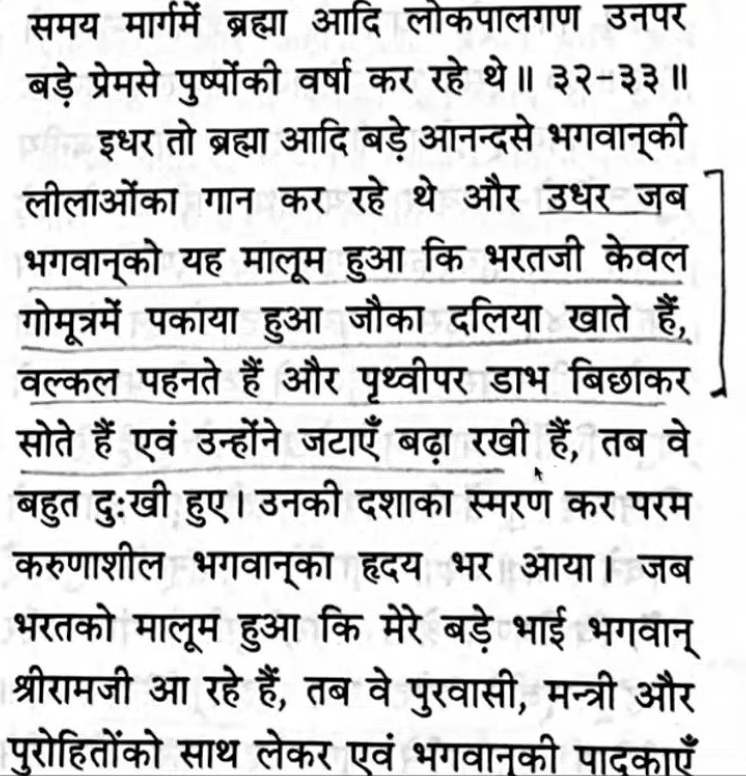
When the Lord learned that Bharata was eating only barley porridge cooked in cow urine, wearing tree bark, and sleeping on a bed of grass on the ground, he became very distressed.
This story is used to illustrate Bharata’s austerity and devotion. However, it promotes a practice that is not only unscientific but also hazardous. Cow urine has no nutritional value and can be harmful if consumed regularly.
The Normalization of Superstition
Such narratives are not criticized; they are celebrated as examples of piety. This normalization of superstition has real-world consequences. People in India are led to believe in the curative powers of cow urine and dung. This belief persists despite scientific evidence to the contrary, and it diverts attention from actual medical treatments. Therefore, the promotion of these practices is a direct outcome of scriptural authority remaining unchallenged.
The Role of Brahminical Leadership
The Brahminical class has historically chosen to emphasize these unscientific elements over rational thought. They had the choice to guide society toward science, but they opted for anti-science practices that keep people dependent on religious intermediaries. This choice is not accidental; it is a strategy to maintain cultural and political dominance. By keeping the masses entangled in superstition, they ensure that the privileged castes retain control over resources and opportunities.
The Consequence for Lower Castes
The Bahujan communities-including Scheduled Castes, Scheduled Tribes, and Other Backward Classes-are disproportionately affected by these beliefs. Many from these groups emulate Brahminical practices in hopes of upward mobility. Consequently, they adopt unscientific habits. This imitation only reinforces their subjugation and prevents them from challenging the system that keeps them oppressed.
The Absurd Genealogy of Rama: A Lineage of Repeated Authorship
Vishwamitra and Vasishtha Across Generations
The Puranas provide a detailed genealogy of Rama’s ancestors, spanning over 30 generations. A glaring inconsistency in this lineage is the presence of the sages Vishwamitra and Vasishtha at multiple points across these generations. For instance, Vasishtha is present during the time of Trishanku, who lived many generations before Rama, and again during Rama’s own time. Similarly, Vishwamitra appears in both eras. The text states that these sages remained alive and active, cursing and blessing various kings, without any logical explanation for their immortality or longevity.[source]
The Story of Trishanku and the Triple World
Trishanku, an ancestor of Rama, wished to ascend to heaven in his mortal body. When Vasishtha and other Brahmins cursed him, he became a Chandala (a term for an outcaste or untouchable). Vishwamitra then used his powers to send Trishanku to heaven, but the gods pushed him back. Vishwamitra stopped his fall mid-air, creating a separate heaven for him. This story, filled with magical elements, is presented as history:
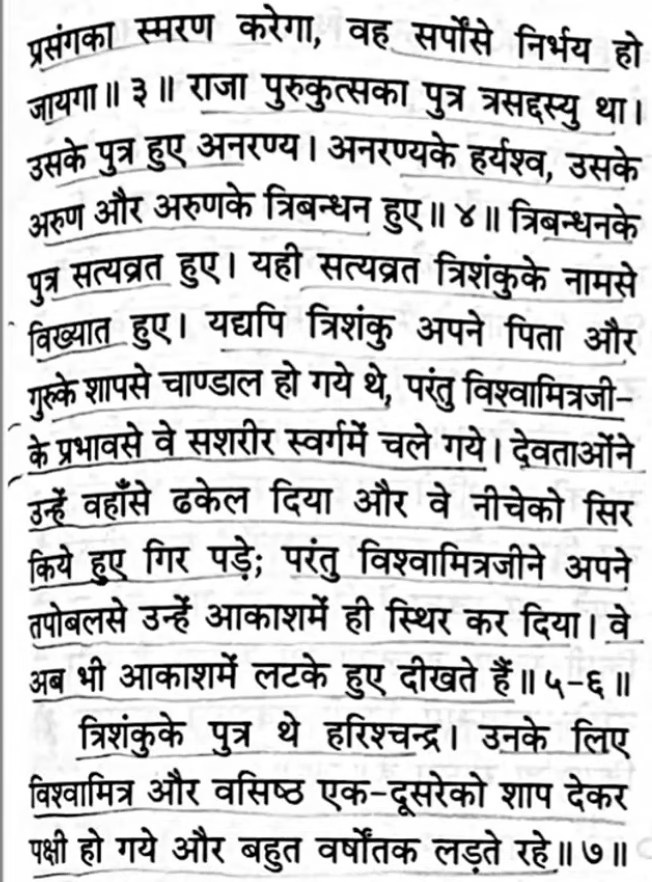
Although Trishanku became a Chandala due to his father’s and guru’s curse, by Vishwamitra’s influence, he went to heaven in his mortal body.
Such tales defy physics and logic but are accepted as factual by believers. Is it reasonable to accept a mid-air suspension as historical fact?
The Lineage of Harishchandra and the Sale of a Son
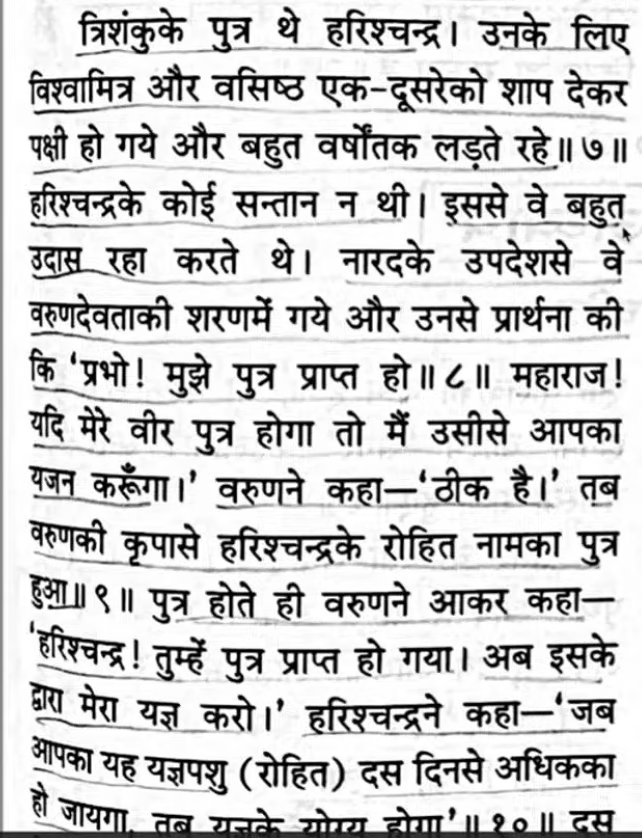
Harishchandra, another ancestor, was childless and prayed to Varuna for a son, promising to sacrifice the child. After his son Rohita was born, he delayed the sacrifice, and Rohita eventually fled. The narrative involves divine interventions, curses, and the eventual sacrifice of a Brahmin boy instead. This story is not only unscientific but also morally repugnant. Yet, it is glorified as an example of truthfulness and sacrifice.
The Repetition of Vasishtha’s Role
The genealogy continues with repeated interventions by Vasishtha in matters of procreation. For example, Vasishtha is involved in the birth of Ashmaka, a 22nd generation descendant, by striking the pregnant queen’s belly with a stone. The text says: [source]
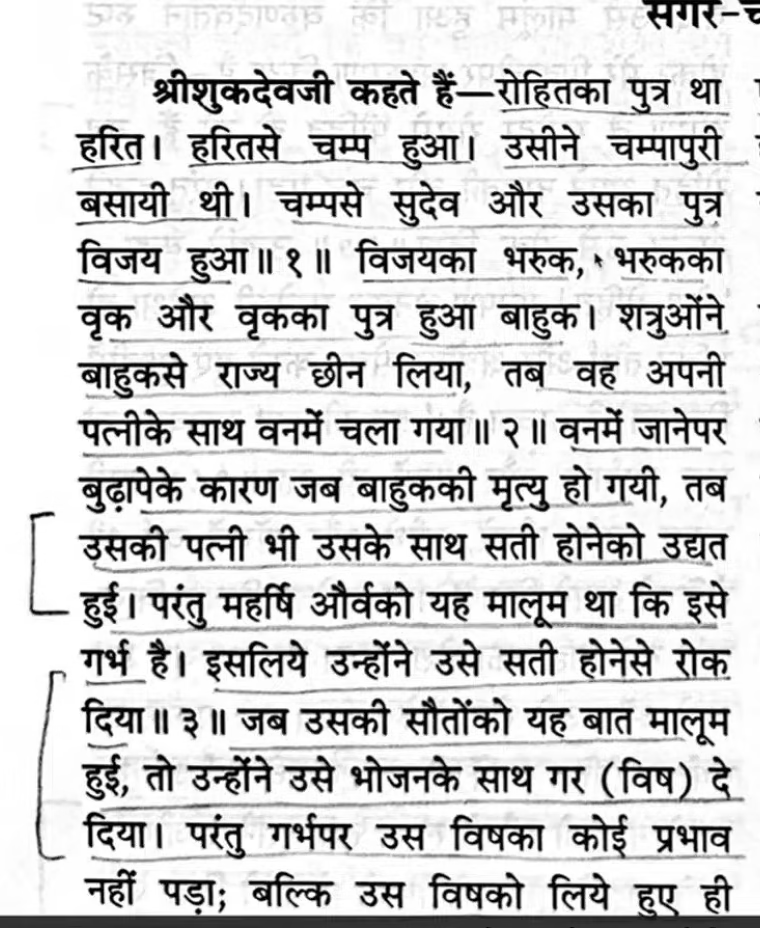
Then Vasishtha struck her belly with a stone, and the child born from that blow was called Ashmaka.
Such details reveal the authors’ disregard for biological reality and their inconsistent storytelling. The repetition of Vasishtha’s role across generations underscores the Brahminical agenda to insert themselves into every lineage, asserting their indispensability.
The Brahmins’ Monopoly on Fertility: A Pattern of Caste Control
The Vedic and Puranic Precedence
The scriptures repeatedly depict Brahmins as the arbiters of fertility. From Rohita’s birth through Varuna’s blessing to Ashmaka’s birth through Vasishtha’s intervention, the message is clear: no royal lineage can continue without Brahminical assistance. This pattern is not coincidental; it is a calculated narrative strategy to establish Brahmins as the essential link between the divine and the worldly. By controlling the means of reproduction in these stories, they assert their superiority over other castes. Read more: Mahabharata: History, Lineages, and the Truth of ‘Niyoga’
The Implications for Caste Hierarchy
These stories imply that Kshatriya and other castes are biologically dependent on Brahmins for progeny. Consequently, this notion reinforces the caste hierarchy, placing Brahmins at the top as the givers of life and destiny. By ingraining this belief, the scriptures ensure that lower castes remain subservient. Moreover, they seek Brahminical blessings for basic human needs. This psychological manipulation has lasted for centuries, keeping the caste system intact.
The Modern Repercussions
Even today, many people from oppressed castes seek Brahmin priests for rituals related to childbirth, marriage, and death, perpetuating the dependency. This undermines any efforts to build scientific temper, as people turn to myths instead of medicine. Therefore, the cycle of superstition and caste oppression continues, with scriptures providing the ideological foundation.
The Resistance to Scientific Inquiry
Questioning these narratives is met with hostility, as seen in social media attacks and real-world violence against those who challenge Brahminical supremacy. This resistance is a major barrier to developing scientific temper in India. It is not a lack of intelligence but a deliberate suppression by those who benefit from the ignorance of the masses.
The Flood Myth: How Ganga Was Weaponized to Erase Land Rights
The Descent of Ganga and the 60,000 Sons
The story of Ganga’s descent is tied to the 60,000 sons of Sagara, who were burned to ash by Kapila Muni. To liberate their souls, Bhagiratha brought Ganga from heaven to earth, and Lord Shiva caught her in his locks. The text claims:
Then, merely by the touch of Ganga’s water on their ashes, they went to heaven.
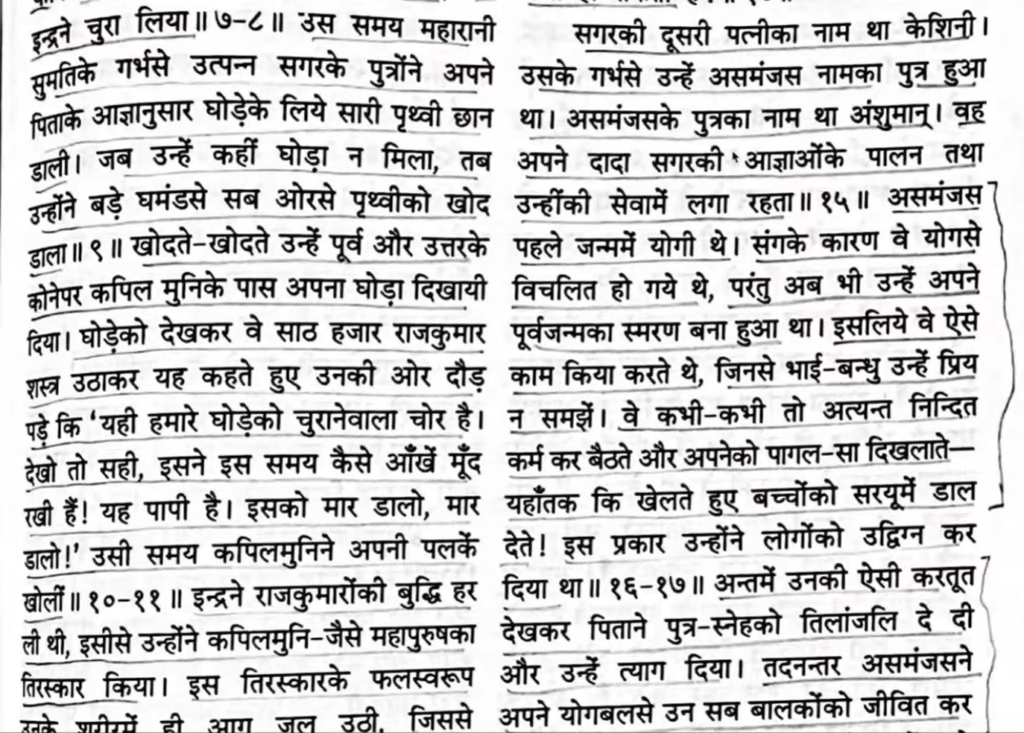
This myth is used to promote the belief that immersing ashes in the Ganga ensures salvation. However, this narrative has a darker, material purpose: the destruction of ancestral land markers.
The Destruction of Stupas and Land Grabbing
Before this myth became widespread, indigenous and lower-caste communities built stupas on their land to mark the graves of their ancestors. A stupa is a Buddhist burial mound or relic structure. These stupas served as permanent records of land ownership. By promoting the idea that ashes should be immersed in the Ganga rather than buried, the Brahminical system facilitated the erasure of these land claims. Without physical markers, land could be easily seized by upper castes. In other words, this was a systematic method of dispossessing native communities.
The Archaeological Evidence
Archaeological findings show that stupa building was prevalent among Buddhist and pre-Hindu communities. The shift to immersion practices coincided with the decline of Buddhism and the rise of Brahminical dominance. The correlation is striking: as stupas disappeared, Brahminical landholdings expanded. This history is seldom discussed in mainstream discourse, but it is a crucial part of understanding how scriptures were used for material gain.
The Legacy of Dispossession
The belief in the sanctity of Ganga immersion continues today, with millions of families dispersing their ancestors’ ashes in the river. Meanwhile, their ancestral lands have long been appropriated by dominant castes. This disconnect between spiritual practice and historical reality is a direct result of the unscientific narratives embedded in scriptures. By uncritically following these myths, people unknowingly perpetuate the cycle of dispossession that began centuries ago.
The Impossible Longevity of Sages: A Logical Nightmare
The Immortal Sages Across 31 Generations
The genealogy of Rama requires a suspension of all biological and historical logic. Vishwamitra and Vasishtha appear at both ends of a lineage that spans 31 generations, while kings and their children live and die. This inconsistency reveals the composite and fabricated nature of these texts. The authors were so focused on inserting Brahminical figures into every era that they ignored basic temporal coherence. Such narratives cannot be historical; they are mythological constructs designed to serve a social and political purpose.
The English Name in the Genealogy: Edwin
A particularly absurd detail is the appearance of the name “Edwin” (or “Edvil”) in the lineage. Dasharatha, of the 24th generation, is said to have a son named Edwin. This is not a Sanskrit or ancient Indian name; it is distinctly English and points to the puranic texts being written or modified much later than claimed. This anachronism is a clear indicator that the scriptures are not timeless revelations but human-authored documents shaped by their times.[source]
The Overall Loss of Scientific Credibility
When a society bases its identity on such flawed texts, it inevitably loses its capacity for scientific reasoning. The uncritical acceptance of these genealogies prevents people from questioning other baseless beliefs, from astrology to miracle claims. This intellectual stagnation is a direct cause of India’s underdevelopment in science and technology. To progress, India must confront the illogical core of its revered scriptures.
The Real Cost: How Anti-Science Myths Drain India’s Potential
Misallocation of Resources
India spends billions on temples and religious festivals, often at the expense of education and healthcare. The Ram Mandir construction, for example, cost vast sums that could have funded thousands of schools or research institutions. This misallocation is justified by the belief in the literal truth of these myths, which is promoted by Brahminical leaders. Consequently, the result is a country that invests in stone idols rather than scientific infrastructure.
The Brain Drain
India’s brightest minds often seek opportunities abroad because the domestic environment is hostile to scientific inquiry. Research institutions are underfunded, and critical thinkers face social ostracism or worse. This brain drain further weakens India’s scientific capacity, creating a vicious cycle. The root cause is an education system and public culture that prioritize religious dogma over evidence-based knowledge.
The Global Comparison
Compare India’s 1.4 billion people with South Korea’s 51 million: South Korea has become a global leader in electronics and automobiles, while India remains an assembler of foreign designs. The difference lies in cultural values. South Korea, despite having religious traditions, has largely separated faith from public policy and education. India’s failure to do so is a direct consequence of the Brahminical hold on social consciousness.
The Path Forward
To develop scientific temper, India must demand evidence for claims, including those in scriptures. It must teach critical thinking from an early age and challenge the authority of texts that contradict science. This is not an attack on faith but a necessary step for national progress. Without this shift, India will continue to lag behind, no matter its demographic dividend.
Conclusion: Reclaiming Rationality for a Scientific Future
The evidence is overwhelming: the unscientific narratives of Hindu scriptures are not harmless myths but active impediments to scientific temper. They are used to justify caste hierarchy, dispossess marginalized communities, and divert resources from development. As long as these stories are treated as sacred truth, India will struggle to foster innovation and critical thinking. The choice is clear: continue to worship the impossible, or embrace a future grounded in reason and evidence.
The Bahujan communities, in particular, must recognize that their emancipation depends on rejecting these Brahminical constructs. The scriptures that glorify their oppressors cannot be the guide to their liberation. Instead, they should turn to the rationalist traditions of Buddha, Phule, Periyar, and Ambedkar, who saw through these myths and fought for a scientific outlook. India’s future depends on its ability to discard superstition and embrace the scientific temper enshrined in its own constitution.
What Can You Do?
- Question Narratives: Ask for evidence when confronted with scriptural claims. Share the rationalist perspective on social media and in your community.
- Educate Yourself and Others: Read the works of anti-caste thinkers like Jyotirao Phule, Periyar, and Dr. B.R. Ambedkar to understand the roots of these myths.
- Support Scientific Education: Advocate for increased funding for scientific research and critical thinking in schools, rather than religious buildings.
- Challenge Caste Supremacy: Speak out against the internalization of Brahminical values in Bahujan communities. Reject practices that have no scientific basis.
- Engage in Debate: Use platforms like Rational World to participate in evidence-based discussions and debates. Challenge apologists of these scriptures to open forums.
Frequently Asked Questions
What is scientific temper, and why is it important in India?
Scientific temper is an attitude of logical reasoning, evidence-based thinking, and a questioning mindset. It is important in India because it helps counter superstition, promotes rational public policy, and is constitutionally mandated under Article 51A. A society with scientific temper can better allocate resources toward development rather than myth-based projects.
How do Brahminical myths suppress scientific temper?
Brahminical myths, found in texts like the Valmiki Ramayana and Shrimad Bhagavatam, present unscientific stories as literal truth. This discourages questioning and critical analysis. The social and religious authority of these texts makes it difficult for people to challenge their factual inaccuracies, thus stifling the growth of a rational, evidence-based outlook.
What are some examples of unscientific narratives in Hindu scriptures?
Examples include the birth of Rama through the consumption of kheer (a sweet pudding), Bharata surviving on cow urine, and sages like Vasishtha and Vishwamitra living across 30 generations without aging. These narratives contradict basic biology, chemistry, and historical consistency.
How has the Ganga myth been used to dispossess lower castes of land?
The Ganga myth promotes immersion of ashes rather than burial in stupas. Stupas traditionally marked land ownership for lower-caste and indigenous communities. By shifting to immersion, these physical markers were erased, allowing upper castes to seize the land without visible claims of prior ownership.
What can individuals do to promote scientific temper in India?
Individuals can question unscientific beliefs, educate themselves and others about rationalist thinkers like Ambedkar and Periyar, advocate for better science education, challenge caste-supremacist practices, and engage in public debates that demand evidence over faith. Even small actions in communities and on social media can contribute to a larger cultural shift.
Disclaimer
Scientific Temper: An attitude of logical reasoning and evidence-based thinking, as advocated by the Indian Constitution (Article 51A).
Brahminical Scriptures: Texts such as the Vedas, Puranas, and epics that have been interpreted to establish Brahmin supremacy and caste hierarchy.
Brahmin: The priestly caste that has historically wielded social and religious power and is responsible for composing and propagating these scriptures.
Bahujan: A term for the majority of India’s population, including Scheduled Castes, Scheduled Tribes, and Other Backward Classes, who have been oppressed by the caste system. Read more: Casteism in India: An Unflinching Contemporary Examination
Stupa: A Buddhist burial mound or relic structure, used by indigenous and non-Brahminical communities to mark graves and land ownership.
Do you disagree with this article? If you have strong evidence to back up your claims, we invite you to join our live debates every Sunday, Tuesday, and Thursday on YouTube. Let’s engage in a respectful, evidence-based discussion to uncover the truth. Watch the latest debate on this topic below and share your perspective!

Skeptical Indian is an independent researcher documenting
caste discrimination through primary sources, Hindu
scriptures, court records, and government data.
CasteFreeIndia.com has published 100+ evidence-based
analyses since 2024.