The Global Manifestation of Caste Bias: Beyond Indian Borders
The discourse surrounding caste continues to ignite intense emotion and scrutiny, particularly when evidence surfaces suggesting its persistence in global arenas. A critical examination of contemporary events reveals a determined effort by certain groups, often self-identifying as ‘so-called upper castes’ or Swarna (a term referring to the four traditional upper varnas in the Hindu social hierarchy), to maintain hierarchical distinctions even in international settings.
The activities observed in places like California, USA, where attempts were made to resist legislation aimed at banning caste discrimination, serve as a stark illustration. While much of the world strives toward equality and the eradication of discrimination, these actions demonstrate a deep-seated resistance to parity. The core argument presented here relies on documentary evidence to expose the inherent contradictions in upholding a system predicated on birthright superiority while simultaneously advocating for universal human rights.
Table of Contents:
- Resistance to Equality Legislation in the West
- The Demand for Documentary Proof
- The Role of Education and Hypocrisy
- Historical Legal Entrenchment of Caste Privileges
- The Fight Over Kshatriya Status and Caste Fluidity
- The Outrageous Suppression of Lower-Caste Women’s Attire
- The Ongoing Battle for Entry and Dignity
- The Foundation of Dominance: The Intellectual Justification
- Conclusion: The Enduring Legacy of Hegemony
- What can you do?
Resistance to Equality Legislation in the West
The pushback against anti-caste legislation in places like the United States highlights a fundamental fear among those who benefit from the existing structure. If the principles of justice and equality are truly just, why fear their formal codification into law? Isn’t that like demanding exceptions to traffic laws because you believe you deserve to drive faster? This fear manifests as active campaigning against such measures. Evidence from public demonstrations shows proponents holding banners advocating against the prohibition of caste-based discrimination, demanding that the existing social stratification remain untouched.
This resistance suggests an ingrained belief that their inherited status grants them privileges that must be legally protected. The concern is not about being falsely accused, but about losing the systemic advantage built over centuries. This situation mirrors historical legal frameworks where certain groups were explicitly exempt from consequences for actions against others, a concept directly traceable to ancient legal texts.
The Demand for Documentary Proof
A perpetual challenge in discussions concerning social justice in India is the frequent demand for concrete, written evidence—the documentary evidence—that substantiates claims of systemic oppression. While oral traditions and lived experiences are powerful, proponents of the status quo often dismiss them without tangible records. This discussion aims to supply precisely that documentation, drawing from historical legal milestones and colonial-era records. The evidence presented uncovers how the existing power structures were codified and upheld through legal mechanisms, both before and during colonial rule. Understanding this documentary evidence of caste oppression is crucial for comprehending why the DNA of caste bias remains so potent today, even among highly educated individuals globally.
The Role of Education and Hypocrisy
There is a prevailing, yet flawed, assumption that higher education inherently eradicates caste prejudices. The reality, however, often presents a disturbing contradiction. Numerous highly educated individuals occupying prominent positions globally, including leadership roles in major international corporations like Google and YouTube, continue to exhibit discriminatory attitudes or actively work to preserve caste hierarchies. When inquiries were made, for instance, to ascertain the demographic breakdown of Indian employees in these major tech firms based on the traditional Varna system (Brahmin, Kshatriya, Vaishya vs. SC, ST, OBC), the reluctance or inability to provide transparent data speaks volumes.
This illustrates that education, in this context, has not fostered a scientific temperament or a commitment to universal humanism, but rather has equipped proponents of the system with better tools to maintain their advantage globally. The educated bigot, it can be argued, poses a greater systemic threat as they can mask their prejudice behind professional competence. How can a system preach meritocracy while actively guarding its inherited gatekeeping mechanisms?
Historical Legal Entrenchment of Caste Privileges
The foundation of caste-based privilege is not merely social custom; it was aggressively institutionalized through law. Examining specific historical milestones, primarily documented in recent scholarly works, reveals the systematic collusion between the ruling elite and external powers to cement these distinctions. This exploration into caste legal history provides the framework for modern resistance.
The Early Colonial Patronage: 1795 East India Company Edict
A pivotal moment occurred in 1795, shortly after the consolidation of East India Company power. As documented in scholarly accounts detailing legal milestones in Hindu India, the Company granted significant concessions to the Brahmins of Benares (Varanasi). Following the principles laid out in the Manusmriti (an ancient Hindu legal text prescribing social conduct and duties), the Company agreed to a stipulation that exempted Brahmins from the death penalty for any crime committed.
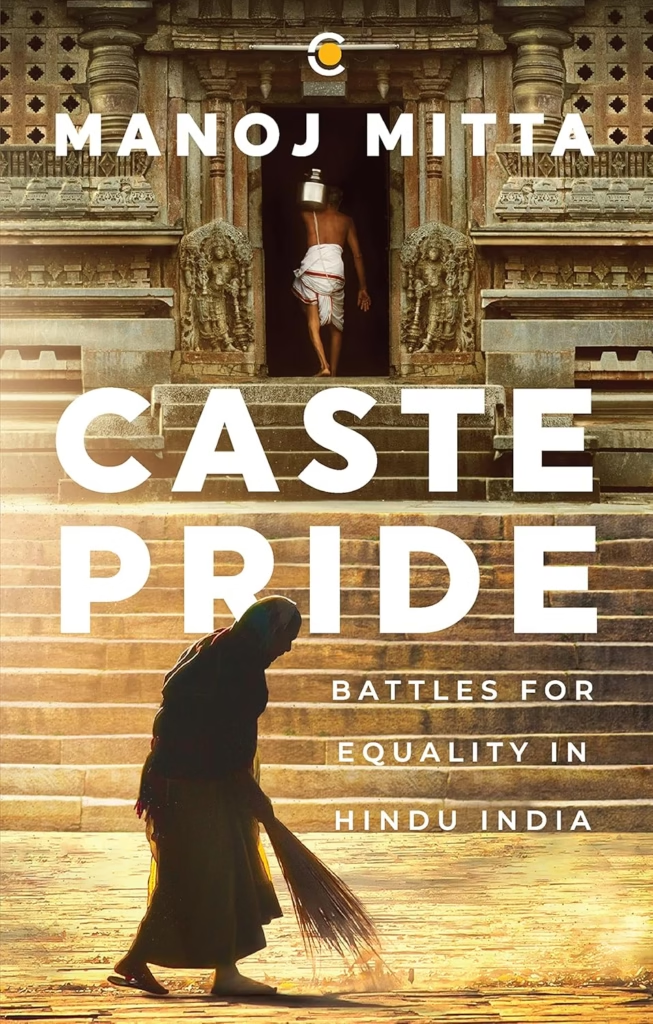
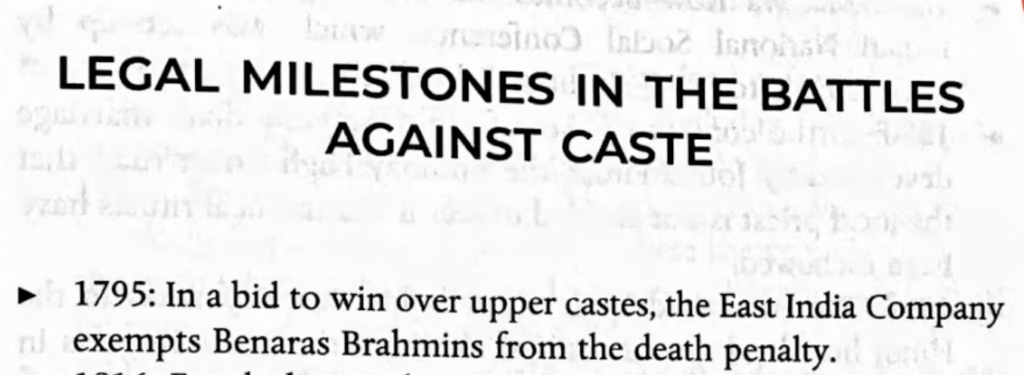
This early legal accommodation effectively placed Brahmins above the reach of capital punishment, validating an ancient claim of ritual superiority through colonial statute. This act of appeasement—where the British recognized and legally enforced a foundational element of the caste hierarchy—set a dangerous precedent. It demonstrated a pragmatic willingness by the colonizers to align with the existing domestic power structure to facilitate governance. For the beneficiaries, this felt like a continuation of their perceived ‘Akbar-like’ protection, cementing their dominance over the rest of the populace by securing immunity from the severest legal penalty.
Codification of Punishment for Lower Castes: 1816 Regulations
Contrasting sharply with the immunity granted to Brahmins, regulations concerning lower castes were simultaneously tightened. By 1816, specific punitive measures were formalized against those categorized as lower castes. These rules included harsher punishments for minor offenses, such as confinement in stocks (imprisonment).
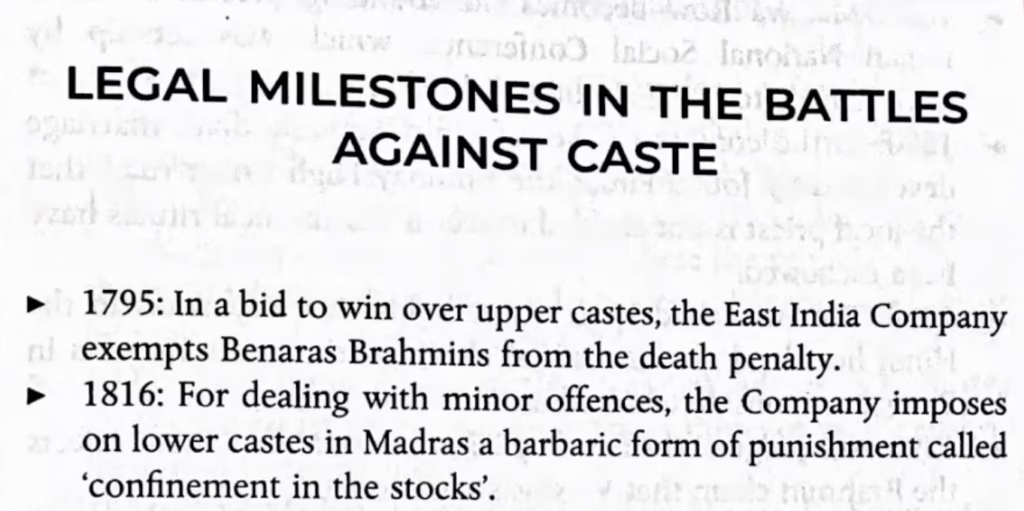
This disparity is crucial: one group was legally shielded from death, while another group faced immediate and severe incarceration for petty infractions. This legal architecture ensured that the subordinate status of the lower castes was not just a social reality but a legally enforced mandate, creating an environment of constant vulnerability and fear necessary for maintaining social control.
Evolution of Legal Application: 1817 Reassessment
Twenty-two years after granting the initial immunity, by 1818, as the colonial establishment became more entrenched, the legal landscape shifted slightly. Having fully integrated themselves into the administrative fabric through the initial compliance with Manusmriti’s dictates, the legal status for Brahmins was subtly altered. The British began applying the death penalty to Brahmins as well.

This change did not signify a sudden commitment to equality but rather a consolidation of British judicial authority, asserting that their law, not purely the religious text, would ultimately govern capital crimes. However, the initial 1795 concession had already served its purpose: securing elite cooperation for the smooth takeover of administrative control.
The Sati Abolition: A Reform with Complex Underpinnings (1829)
The move by William Bentinck in 1829 to outlaw Sati—the practice of a widow immolating herself on her husband’s pyre—is frequently cited as a key social reform. However, the context reveals that figures associated with the established order, such as Raja Ram Mohan Roy (who was an advisor to the Mughal emperor Akbar II), played a role in advocating for this change, often framing it as a voluntary act by the woman. The law stipulated that whether the act was self-willed (voluntary) or coerced, it would be treated as culpable homicide.
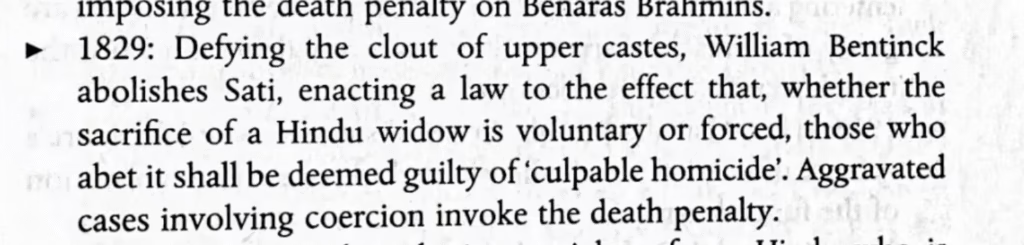
While ostensibly a positive step for women’s bodily autonomy, this move also represented an encroachment by the colonial state upon traditional practices, often initiated or supported by elites who could navigate and influence the new administration, while simultaneously ignoring deeper structural oppressions faced by lower-caste women.
The Fight Over Kshatriya Status and Caste Fluidity
The struggle to maintain or achieve higher Varna status was a persistent feature of social maneuvering, even against the colonial powers who ultimately administered the land.
The Rajput Struggle Against Shudra Designation (1855)
By 1855, the conflict over social identity reached the Privy Council in London. Certain groups, notably the Rajputs, found themselves being categorized as Shudras (the lowest of the four major varnas) by the dominant Brahminical interpretations within the administration.

The Rajputs, along with Kayasthas, Lingayats, and others, legally contested this classification, arguing for their Kshatriya status. The London court, in its ruling, acknowledged the Rajput claim to Kshatriya status but explicitly stated they did not endorse the Brahminical claim that Parashuram had annihilated the Kshatriyas 21 times—a mythological justification often used to downgrade martial classes. This legal intervention, while confirming Kshatriya status for some, also highlighted how the Brahminical system sought to delegitimize other dominant landowning or warrior classes, seeking to maintain a monopoly on the upper tiers of ritual purity.
The Double Standards of Social Reformers
The hypocrisy of certain historical figures positioned as social reformers becomes glaring when examined through the lens of these legal battles. While some reformers fought against practices like Sati, others actively participated in maintaining the degradation of other castes. The text points to the participation of some ‘upper-caste’ individuals, who styled themselves as heroes of reform, in systems that actively suppressed lower castes. This dissonance is central to understanding why the fight for equality is ongoing: the same individuals or groups who advocate for one reform often fiercely guard their privileges in another sphere.
The Outrageous Suppression of Lower-Caste Women’s Attire
Perhaps the most visceral and documented evidence of caste oppression relates to restrictions placed on the bodies and attire of lower-caste women, particularly in South India.
The Travancore Imposition: Nudity as Caste Enforcement (1858)
In the Travancore region of modern Kerala, under the administration of the Marathi Brahmin Dewan (chief minister), Tim Madhav Rao, a draconian rule was enforced around 1858. This decree mandated that women from marginalized communities, including the Sadars (Nadar community), were forbidden from covering their upper bodies—their breasts—in public.

They were required to remain bare-chested above the waist, a practice designed to enforce absolute visual subjugation and humiliation. This was justified by the ruling elite based on the notion of ritual impurity and the supposed superiority of the upper castes. The ruling class, having secured administrative control through cooperation with the British, used their newfound authority to codify such extreme forms of public degradation. This is the core of the Travancore dress code law in action.
The Conversion Factor and Continued Discrimination
The severity of this oppression led many in these marginalized communities to seek refuge in other faiths. For instance, many converted to Christianity (becoming early ICs—Indian Christians/converts) simply to gain the right to wear an upper garment. Colonel Munro, in 1812, had attempted to grant the right to wear a shoulder cloth (or breast covering) to Christian converts, recognizing the barbarity of the existing practice. However, the entrenched local Brahminical power structure strongly resisted this change. By 1814, the local king, likely under heavy influence from the Brahmin administration, rejected Munro’s proposal.
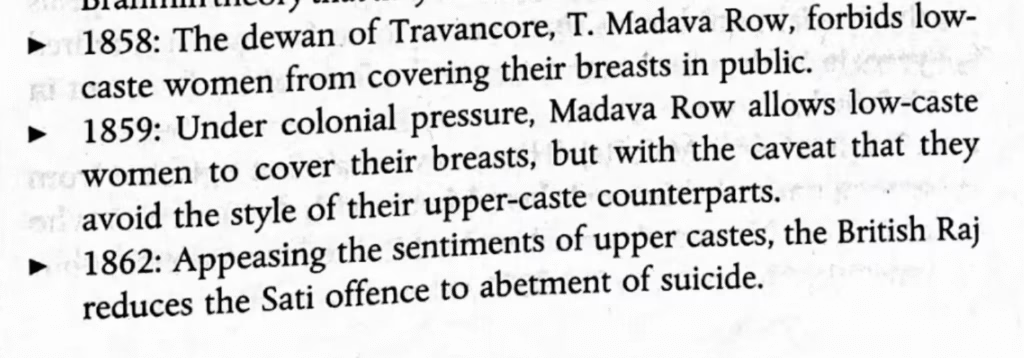
The conflict escalated, with violence erupting by 1858 when upper castes attacked those who dared to adopt minimal covering. It took immense pressure from the colonial center, particularly after the 1857 uprising, for the rule to be partially relaxed, only to be replaced by a nuanced restriction: marginalized women could cover their breasts but not in the same manner as upper-caste women. This demonstrates a persistent, almost obsessive, need to control the visual representation of caste difference.
The Hypocrisy of Modern Critique
It is necessary to contrast this historical reality with contemporary social narratives. While immense focus is placed on perceived historical wrongs committed by Muslim rulers (Mughals), the systemic and state-sanctioned brutality inflicted by indigenous social hierarchies, such as the Travancore breast-cloth tax/rule, often remains buried or downplayed. The very same people who decry historical wrongs elsewhere fail to highlight or address these episodes where native rulers codified state-sponsored public nudity for entire classes of women. This selective moral outrage underscores the continuing effort to protect the historical narrative of the dominant caste groups.
The Ongoing Battle for Entry and Dignity
Legal battles over basic human dignity, such as temple entry, further illustrate the depth of resistance to equality.
Temple Entry Battles: Judicial Recognition of Exclusion
The fight for access to public religious spaces was protracted and legally contested. By 1908, a significant court decision recognized the illegality of preventing members of lower castes from entering temples.
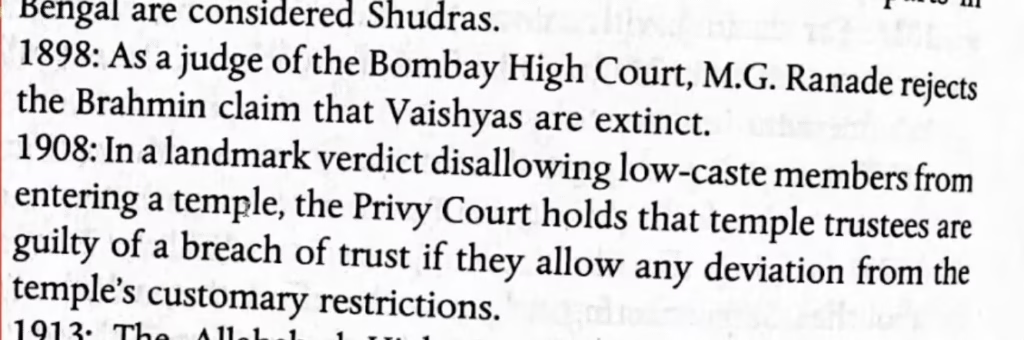
The court held the temple trustees accountable for these discriminatory practices, labeling the exclusion as fundamentally unjust. This ruling confirms that exclusion was not accidental but an actively maintained policy by those in control of the religious infrastructure.
The Paradox of Reformers: Motilal Nehru and Sati Defense (1913)
In a striking example of historical revisionism or defense of status, the figure of Motilal Nehru (father of Jawaharlal Nehru) appears in records from 1913 associated with defending Sati in a legal case, suggesting that the practice was accidental rather than ritualistic.
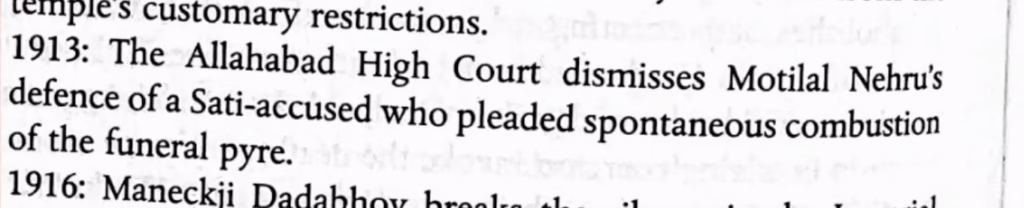
This suggests that even figures who later championed nationalist causes were sometimes entangled in defending or minimizing actions deeply rooted in the established social order, revealing the pervasive nature of these hierarchical loyalties.
The Foundation of Dominance: The Intellectual Justification
The persistence of the desire to maintain caste supremacy, even among the educated, finds its intellectual roots in texts that claim inherent superiority.
The Concept of Inherent Privilege
The belief system driving the resistance to equality legislation is rooted in the idea that being born into a certain Varna, specifically Brahmin, grants an inherent, inalienable right to discriminate. This is not a belief adopted recently; it is justified by ancient scriptural mandates, such as those within the Manusmriti, which state that a Brahmin cannot be killed or severely harmed, regardless of their actions. This divine sanction provides the psychological framework for today’s ‘nanga naach’ (shameless display or indecent behavior) against equality laws. They fear the loss of this legally and ritually sanctioned immunity.
The Power Dynamics of Colonial Collaboration
The entire structure of social control was maintained through a calculated collaboration with external powers. The premise was simple: ‘You (the British) grant us administrative control and uphold our social hierarchy, and we will deliver the loyalty and administration of the rest of the population.’ This arrangement ensured that administrative posts, tax collection roles, and judicial positions were overwhelmingly occupied by individuals from the dominant castes, thereby creating an inescapable apparatus of oppression for the majority. Any rebellion, like the one hinted at around 1857, was born out of the disruption of this alliance—when both the ruling class (Mughals) and the collaborating elites saw their traditional power slipping to the British.
The Enduring DNA of Subjugation
The ingrained habit of subjugation, passed down through generations, creates a feedback loop. When ancestors were forced to bow and accept humiliation, their descendants internalize that deference as the natural order. This explains why, even when legal protections are in place, there is an automatic inclination towards yielding to perceived authority figures from dominant castes. This cultural trauma is the unseen inheritance that reformers struggle against, even when the visible legal chains have been broken.
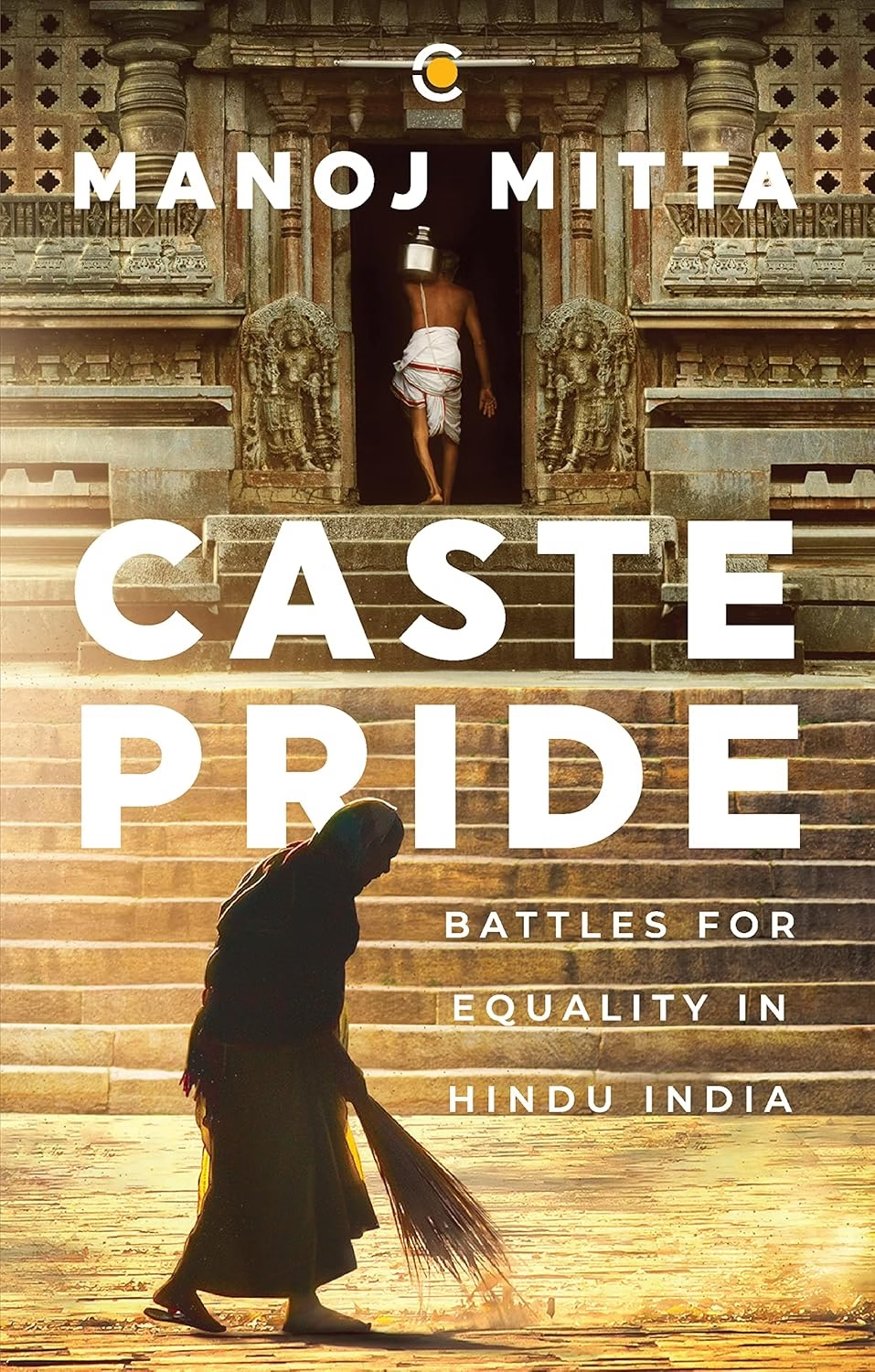
A RADICALLY NEW HISTORY OF CASTE BASED ON PREVIOUSLY UNSEEN LEGISLATIVE AND JUDICIAL RECORDS
In this masterful work, Manoj Mitta examines the endurance and violence of the Hindu caste system through the lens of the law. Linking two centuries of legal reform with social movements, he unearths the characters, speeches, confusions and decisions that have shaped the war on caste, mitigating how this ancient institution discriminated between Hindus across the board. Where they could live, how they could dress, whether they could go to a shop, a stream, walk a street or mingle, enter a temple, whom and how they could marry, which scriptures applied to whom, whether their actions, innocent or criminal, would attract punishment or impunity.
Conclusion: The Enduring Legacy of Hegemony
The documentary evidence presented—from colonial legal concessions in 1795 to the Travancore dress codes of 1858—irrefutably demonstrates that caste hierarchy has been systematically institutionalized and defended at every turn by the dominant groups. The resistance observed globally is merely the modern echo of this entrenched, documentable history of privilege acquisition and systemic exclusion. The audacity to demand that discrimination remain legal shows that the ideological conditioning to dominate remains powerful and structurally protected.
What can you do?
To effectively counter this deeply ingrained ideology, immediate and proactive steps are essential. The goal is to shift the public discourse from subjective claims to concrete historical facts.
- Educate Broadly: Share this documented history, moving beyond anecdotal evidence to highlight specific legal milestones. Focus on the material impact of colonial-era legal codifications and indigenous administrative cruelties like the Travancore dress code law. Utilize accessible formats to disseminate these facts to counter the often-unquestioned narratives currently dominating public discourse.
- Demand Transparency: Continue to press major national and international institutions, especially corporations, for transparent demographic breakdowns based on social origin (Varna, SC/ST/OBC status). Silence or obfuscation on these data points is a continuation of the historical cover-up.
- Support Critical Scholarship: Engage with and promote scholarly works that meticulously compile and analyze these historical records. These detailed accounts provide the necessary ammunition to dismantle the façade of benevolent or outdated tradition, replacing it with concrete documentary evidence of caste oppression.
- Internalize History: Recognizing that the fight for self-respect began with resistance to practices like the breast-cloth tax shows that autonomy was fiercely contested. Internalizing this history of struggle is vital for maintaining self-respect and refusing to perpetuate inherited deference.
Read more about Examining Historical Caste Status: Texts & Legal Battles
Do you disagree with this article? If you have strong evidence to back up your claims, we invite you to join our live debates every Sunday, Tuesday, and Thursday on YouTube. Let’s engage in a respectful, evidence-based discussion to uncover the truth. Watch the latest debate on this topic below and share your perspective!