Decoding the Indian Constitution: Your Comprehensive Guide
The Indian Constitution is the supreme law of India, laying down the framework that defines fundamental political principles, establishes the structure, procedures, powers, and duties of government institutions, and sets out fundamental rights, directive principles, and the duties of citizens. Understanding this document is crucial for every Indian citizen. This Indian Constitution guide aims to simplify the Constitution’s complex structure and principles, making it easier to grasp.
Table of Contents
- Introduction
- The Basic Structure of the Indian Constitution
- The Preamble: Ideals and Objectives
- Key Terms in the Preamble
- Directive Principles of State Policy
- Fundamental Rights in the Indian Constitution
- Amendments to the Indian Constitution
- Supremacy of the Indian Constitution
- Role of the Judiciary in the Indian Constitution
- The Indian Constitution and Citizenship
- Conclusion
Introduction
The Constitution of India is not just a legal document; it is a living testament to the aspirations and values of a nation. It provides the framework for governing the country and ensures the protection of the rights and freedoms of its citizens. However, many find the legal jargon and complex structure of the Constitution challenging to understand.
This Indian Constitution guide aims to simplify the key aspects of the Indian Constitution, making it accessible to all. The Indian Constitution is like the blueprint of a building. Without it, the nation would lack structure and direction. How can citizens ensure this blueprint is followed correctly?
The Basic Structure of the Indian Constitution
The Indian Constitution comprises 395 articles, divided into 22 parts, and 12 schedules. It establishes a parliamentary form of government with a clear division of powers among the executive, legislature, and judiciary. The executive implements laws, the legislature makes laws, and the judiciary interprets and enforces them.

The Executive
The executive branch is responsible for implementing and enforcing the laws. At the national level, it consists of the President, Vice-President, Prime Minister, and the Council of Ministers. In states, the Governor is the head of the executive, assisted by the Chief Minister and the Council of Ministers.
The Legislature
The legislature, or Parliament, is responsible for making laws. It consists of two houses: the Lok Sabha (House of the People) and the Rajya Sabha (Council of States). The Lok Sabha is directly elected by the people, while the Rajya Sabha represents the states and union territories.
The Judiciary
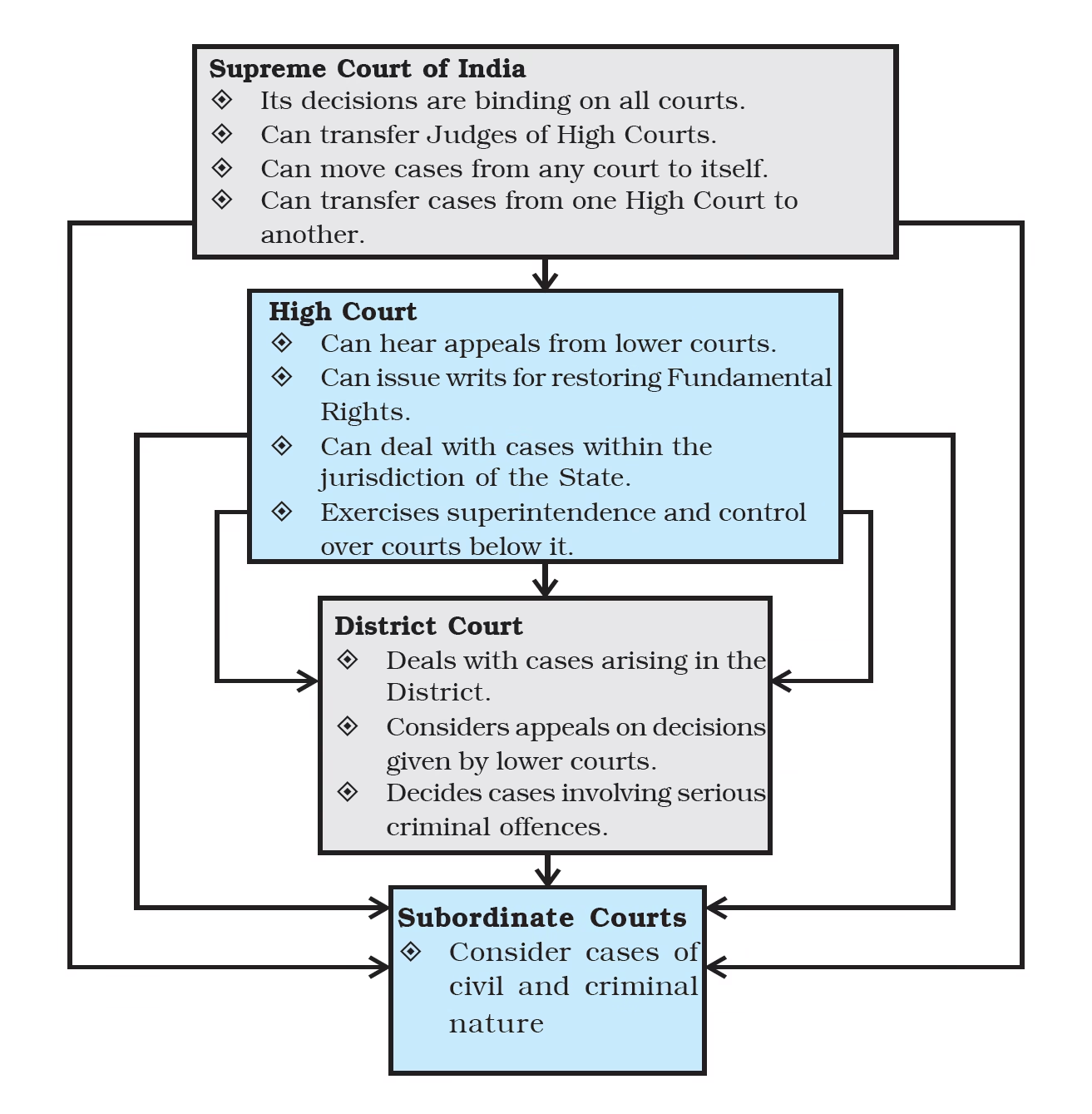
The judiciary is the guardian of the Constitution, responsible for interpreting laws and ensuring their enforcement. The Supreme Court is the highest judicial authority, followed by High Courts at the state level and subordinate courts at the district level.
The Preamble: Ideals and Objectives
The Preamble serves as the introduction to the Constitution, outlining its goals and objectives. It declares India to be a Sovereign, Socialist, Secular, Democratic, Republic and secures to all its citizens: Justice, Liberty, Equality, and Fraternity. The Preamble reflects the aspirations of the framers of the Constitution and provides guidance for its interpretation.
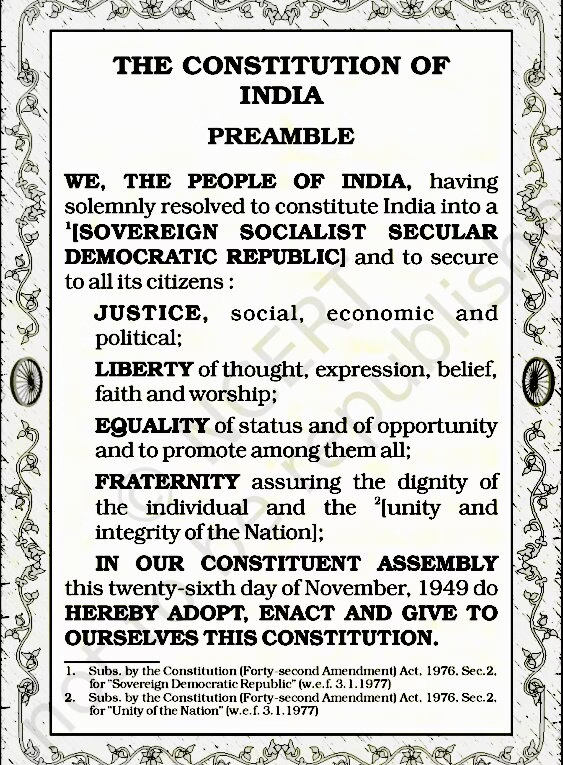
The Preamble is significant because it explicitly mentions that the Constitution is adopted, enacted, and given to themselves by the people of India. This underscores the principle of popular sovereignty, highlighting that the ultimate authority rests with the citizens of the country.
Sovereign
Sovereignty implies that India has the supreme power to make decisions on internal and external matters without any external interference.
Socialist
Socialism indicates a commitment to social and economic equality, aiming to reduce disparities in wealth and opportunity.
Secular
Secularism ensures that the state does not favor any particular religion and that all religions are treated equally.
Democratic
Democracy means that the government is elected by the people and is accountable to them.
Republic
A republic signifies that the head of the state is an elected representative and not a hereditary monarch.
Key Terms in the Preamble
Several key terms in the Preamble define the essence of the Indian political system. Understanding these terms is crucial for grasping the Constitution’s spirit. Is the Indian Constitution truly accessible to all citizens, or does its complexity create a barrier to understanding our rights and responsibilities?
Justice
Justice encompasses social, economic, and political dimensions, aiming to ensure fairness and equity in society. Social justice seeks to eliminate discrimination based on caste, religion, and gender. Economic justice aims to reduce inequalities in wealth and opportunity. Political justice ensures equal participation in the governance of the country.
Liberty
Liberty includes freedom of thought, expression, belief, faith, and worship. However, these freedoms are not absolute and are subject to reasonable restrictions to maintain public order and morality.
Equality
Equality guarantees equality of status and opportunity, ensuring that all citizens are treated equally before the law. It seeks to eliminate discrimination and provide equal opportunities for all.
Fraternity
Fraternity promotes a sense of brotherhood and unity among all citizens, emphasizing the dignity of the individual and the unity and integrity of the nation.
These terms form the bedrock of India’s political and social ethos, guiding the interpretation and implementation of the Constitution.
Directive Principles of State Policy
Directive Principles of State Policy are guidelines to the state to be followed while framing laws and policies. While not enforceable by any court, these principles are considered fundamental in the governance of the country. They aim to create a social and economic order where justice prevails. They promote the welfare of the people by ensuring social, economic and political justice,
Examples of Directive Principles
- Article 39(b): The state directs its policy towards securing that the ownership and control of the material resources of the community are so distributed as best to subserve the common good.
- Article 41: The State shall, within the limits of its economic capacity and development, make effective provision for securing the right to work, to education and to public assistance in cases of unemployment, old age, sickness and disablement, and in other cases of undeserved want.
- Article 43: The State shall endeavor to secure, by suitable legislation or economic organisation or in any other way, to all workers, agricultural, industrial or otherwise, work, a living wage, conditions of work ensuring a decent standard of life and full enjoyment of leisure and social and cultural opportunities and, in particular, the State shall endeavor to promote cottage industries on an individual or co-operative basis in rural areas.
Fundamental Rights in the Indian Constitution
Fundamental Rights are enshrined in Part III of the Constitution and guarantee civil liberties such as freedom of speech, freedom of religion, and equality before the law. These rights are enforceable by the courts, and any law that violates them can be declared unconstitutional.
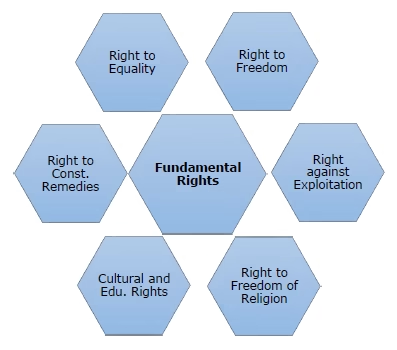
Right to Equality in the Indian Constitution
Ensures equality before the law, prohibition of discrimination, equality of opportunity in matters of public employment, and abolition of untouchability and titles.
Right to Freedom in the Indian Constitution
Includes freedom of speech and expression, freedom to assemble peacefully, freedom to form associations or unions, freedom to move freely throughout the territory of India, freedom to reside and settle in any part of India, and freedom to practice any profession or to carry on any occupation, trade, or business.
Right Against Exploitation in the Indian Constitution
Prohibits trafficking in human beings and forced labor, as well as the employment of children below the age of 14 in factories, mines, or other hazardous occupations.
These rights are sacrosanct and form the cornerstone of individual liberty and social justice in India.
Amendments to the Indian Constitution
The Parliament can amend the Constitution to adapt to changing circumstances and societal needs. However, the power to amend is subject to certain limitations. The basic structure of the Constitution, as defined by the Supreme Court, cannot be altered. Amendments must also be passed by a special majority in both houses of Parliament.
Key Amendments in Indian Constitution
Several key amendments have shaped the Constitution over the years. The 42nd Amendment Act, 1976, also known as the “Mini Constitution,” made significant changes, including adding the words “Socialist” and “Secular” to the Preamble. The 73rd and 74th Amendments introduced Panchayati Raj and Municipalities, respectively, strengthening local self-governance.
The Amendment Process
The process of amending the Constitution is outlined in Article 368. An amendment bill must be introduced in either house of Parliament and passed by a special majority, i.e., a majority of the total membership of the house and a majority of not less than two-thirds of the members present and voting. Certain amendments that affect the federal structure of the country also require ratification by the legislatures of at least one-half of the states.
Supremacy of the Indian Constitution
The Constitution of India is the supreme law. This means that all laws and government actions must conform to its provisions. No law or action can override the Constitution. The judiciary upholds this supremacy, and it has the power to review and strike down any law that is found to be unconstitutional. It gives powers to judiciary for judicial review.
Role of the Judiciary in the Indian Constitution
The judiciary plays a vital role in safeguarding the Constitution. It acts as an interpreter of the Constitution and ensures that all laws are in accordance with it.
The Supreme Court has the power of judicial review, which allows it to examine the validity of laws and executive orders. If a law is found to violate the Constitution, the Supreme Court can declare it null and void. It act as a guiding force and ensures laws are in accordance with the constitution.
Judicial Review
Judicial review is a powerful tool that enables the judiciary to protect the fundamental rights of citizens and uphold the rule of law. It ensures that the government does not exceed its powers and that the Constitution remains the supreme law of the land.
Landmark Judgments
Over the years, the Supreme Court has delivered several landmark judgments that have shaped the interpretation and application of the Constitution.
The Kesavananda Bharati case (1973) established the doctrine of basic structure, limiting the power of Parliament to amend the Constitution. The Minerva Mills case (1980) further strengthened the doctrine of basic structure, reaffirming the judiciary’s role as the guardian of the Constitution.
The Indian Constitution and Citizenship
The Constitution of India defines who is a citizen of India and lays down the rules for acquiring and losing citizenship. Part II of the Constitution deals with citizenship.
It defines who were citizens of India at the commencement of the Constitution on January 26, 1950. The Citizenship Act, 1955 provides for the acquisition and termination of citizenship after the commencement of the Constitution.
Subscribe to get the next part in your mail.
Conclusion
Understanding the Indian Constitution is essential for every citizen to participate effectively in the democratic process and protect their rights and freedoms. This Indian Constitution guide has provided a simplified overview of the Constitution’s key aspects, including its structure, principles, and fundamental rights. By engaging with this document and understanding its provisions, citizens can contribute to building a just and equitable society.
Take the time to read and understand the Constitution of India. Your knowledge and participation are vital to upholding its values and principles. Enhance your understanding further—explore related articles and resources to become a more informed and engaged citizen.
Read more about the SC-ST Act getting weaker due to Court Decisions.
Watch the video here.