The Myth of Kalki: A New Movie, An Old Deception
A recent movie, set in the year 2800, attempts to depict a future scenario. Its narrative, however, is deeply rooted in ancient Indian texts and contemporary social dynamics. The film, ostensibly about the Kalki avatar, presents a world that draws heavily from existing Indian traditions and conflicts. If you reside in India, you’ve likely encountered tales of the Kalki Puran. The movie introduces a curious element: a Buddhist influence in the fictional land of Sambhala. This is depicted as a center of rebellion and struggle.
While the creators are Indian, they’ve woven Buddhist imagery into this narrative. Yet, this portrayal contrasts with the persistent influence of the Brahminical system. This creates confusion about the film’s true message. How does the Kalki Puran, which foretells Vishnu’s tenth avatar as a slayer of Buddhist kings and enslaver of their women, align with a film that seemingly embraces Buddhist aesthetics and portrays Sambhala as a haven for Tibetan or Buddhist people, complete with their art and attire? Read more: Brahminical Takeover of Buddhist Sites: Evidence
Unraveling the Kalki Puran’s Narrative
The Kalki Puran, as presented to the masses, speaks of Vishnu’s tenth avatar. This avatar will arrive to vanquish Buddhist rulers and subjugate their women. This narrative starkly contrasts with the film’s visual representation, which showcases Buddhist influences in Sambhala. The film depicts people in saffron robes and intricate art forms reminiscent of Tibetan Buddhism. This discrepancy demands a deeper investigation into the Kalki Puran origins and intentions.
The core issue lies in understanding creativity versus destruction. Those who harbor hatred and whose scriptures denigrate Buddhism, as seen in texts like the Valmiki Ramayan, or which call for the annihilation of Buddhist kings and subjects, as in the Kalki Puran, are unlikely to possess genuine creativity. Their focus is on destruction and elimination, not creation or human betterment.[source]
Conversely, genuine creativity, as observed in Buddhist philosophy, stems from a desire for human welfare, progress, and the eradication of suffering. Buddhist texts often explore how to achieve equality and alleviate pain. They guide people toward righteous paths. In contrast, texts driven by hatred and destruction preach violence, condemnation, and sycophancy.
The Kalki Puran: A Product of Imitation?
The Kalki Puran, therefore, appears to be a text born not of original thought but of imitation and distortion. It seems to have copied and corrupted existing narratives to serve its own agenda. Just as a bird meticulously builds its nest, only for a monkey to destroy it, this text appears to have dismantled the creations of Buddhism. It reshaped them to fit a Brahminical worldview. Buddhism, with its universities, literature, and emphasis on learning, offered a rich foundation. This was seemingly appropriated and corrupted by Brahminism, infused with hatred and self-serving interpretations.
The rapid and often clumsy nature of this appropriation is frequently evident, making the plagiarism apparent. This brings us to a legal disclaimer.
The True Objective of the Kalki Puran
Challenging the Age of Kali Yuga
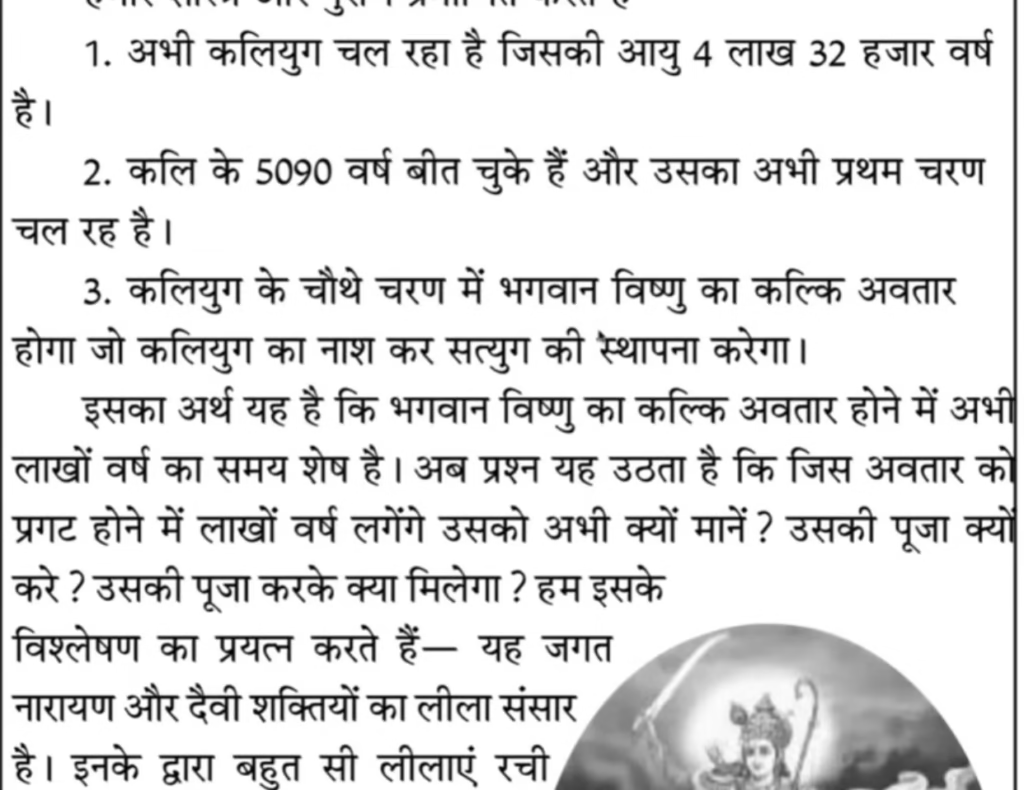
The Kalki Puran, as propagated, suggests the current Kali Yuga spans 432,000 years. It posits that Vishnu’s Kalki avatar will appear in the fourth phase of Kali Yuga to destroy it and establish Satya Yuga. However, the narrative in the Kalki Puran and its widespread promotion suggest an immediate threat. This prompts premature calls for the Kalki avatar.
This urgency arises from a perceived threat to the Brahminical order. As stated in these texts, Brahmins are abandoning Vedic scriptures and occupying all positions of power. They claim even the most uneducated Brahmin will now study Vedas and Puranas, while educated Brahmins will seize all power and desirable roles. Meanwhile, others are converting to different religions, especially after Dr. Ambedkar’s call for religious homecoming. Read more: Bhavishya Purana: Puranic Chronology & Foreign Influence
This perceived threat has led to the current emphasis on the Kalki Puran. The text primarily focuses on the destruction of Buddhists, with no mention of the annihilation of Muslims or Christians. Crucially, the Kalki Puran is a relatively recent text, believed to have been written during the British colonial era. It is a plagiarized work, heavily borrowing from Buddhist scriptures, a fact that will be elaborated upon later.
Distorting Buddhist Narratives
The Kalki Puran’s objective, therefore, is to popularize the concept of Kalki. The text describes the signs of the fourth phase of Kali Yuga manifesting even in the first phase. These include a decline in dharma, truth, compassion, forgiveness, and purity. It also notes the rise of the wealthy and hypocritical, an imbalanced natural environment with excessive rains and droughts, and widespread suffering due to demonic forces and diseases. This description eerily mirrors prophecies found in Tibetan Buddhist texts concerning the decline of Buddhism. These Buddhist texts mention 18 types of decline, including the degradation of women. The Kalki Puran appears to have appropriated these descriptions, rebranding them as Hindu prophecies.[source]
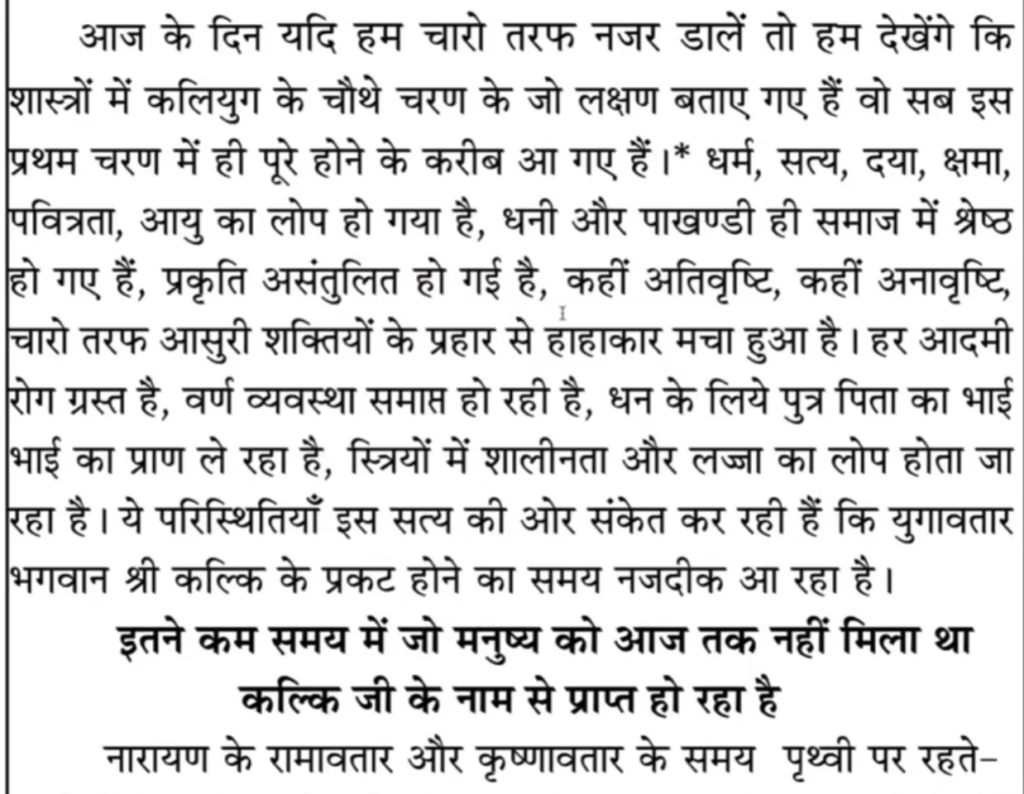
The text further laments the erosion of moral values, stating, “For wealth, brother kills brother. Modesty and shame are disappearing among women.” This commentary on women’s modesty starkly contrasts with the Buddhist perspective, where women are depicted as wise and intelligent. The appropriation by Brahminism, however, twists these narratives to fit its own agenda.
The Kalki Puran’s assertion that humanity has never faced such times in such a short period is a fabrication. It claims that the Kali Yuga, meant to be 432,000 years long, is rapidly concluding within 5,000 years. This is a clear indication of its fraudulent nature.
The Claim of Non-Recognition of Rama and Krishna
The text boldly claims that during the earthly reigns of Rama and Krishna, society did not recognize them as divine. This is a baseless assertion, especially when contrasted with Buddhist Jataka tales. The Kalki Puran’s claim that only a select few devotees, sages, and ascetics knew of these avatars is a narrative designed to elevate the Kalki avatar. It suggests that even before his birth, people are prepared to worship him. This is presented as a unique and unparalleled divine play.
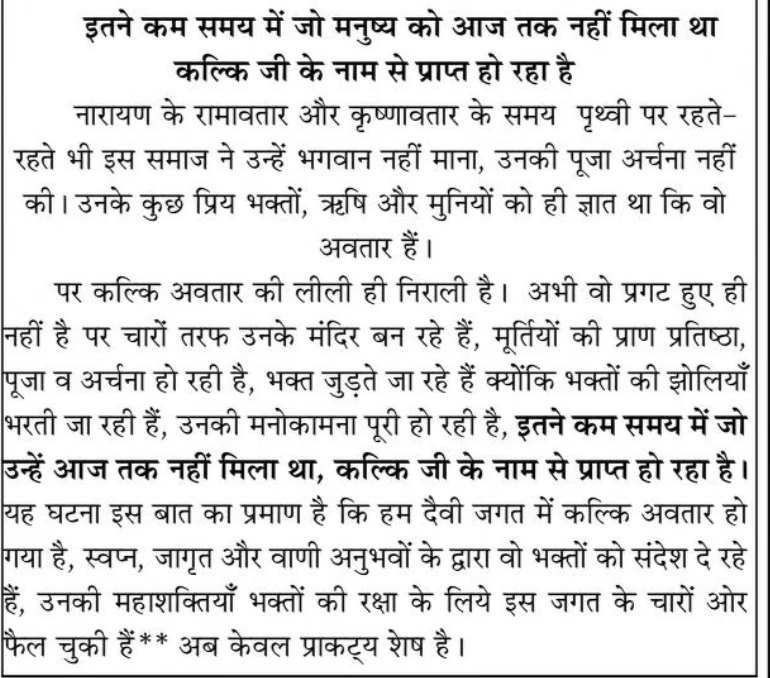
The narrative then shifts to fear-mongering. It argues that without the Kalki avatar, Hinduism would vanish like the Dodo bird. This comparison is misleading and reveals a deep-seated fear of Buddhism. While Buddhist followers have never attacked Brahminism with swords, the Kalki Puran promotes the idea of Buddhist aggression. It conveniently ignores historical events like the arrival of Mughals and their temple destructions, focusing instead on a fabricated threat from Buddhism.
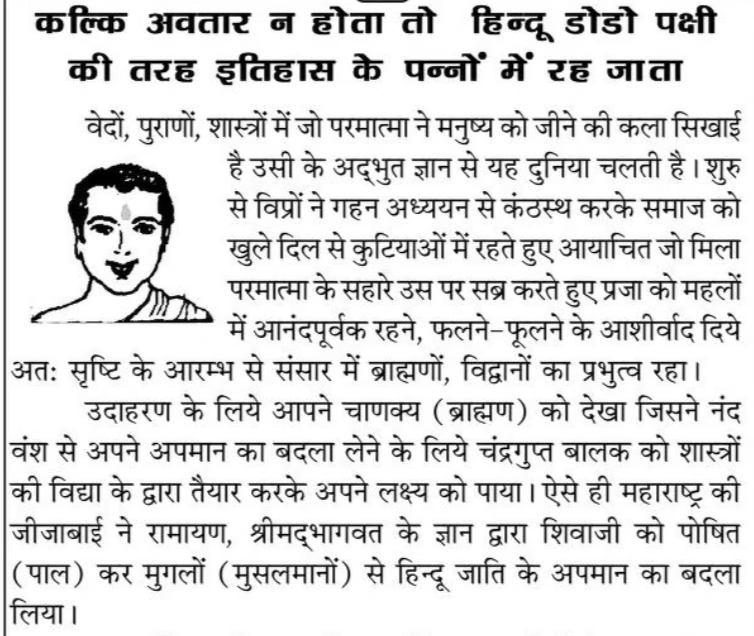
Plagiarism and Historical Revisionism
The Kalki Puran, notably absent from the 18 Puranas compiled during the Mughal era, is a later creation, likely written during the British period. It is a blatant copy of Buddhist texts. While Alberuni mentioned the Bhavishya Purana (a Sanskrit text containing prophecies) in the 11th century, later edits incorporated figures like Akbar as Brahmin brothers. This suggests a pattern of historical revisionism aimed at self-aggrandizement.[source]
The perceived threat isn’t from Muslims, Christians, or the British, but from Buddhism, Dr. Ambedkar, and the Bahujan society. This is why Vishnu, the deity, is depicted as wielding a sword and riding a white horse named Devadatta. The text claims that Brahmins have always dominated India, citing Chanakya as an example. It then paradoxically claims Shivaji, whom Brahmins historically considered a Shudra, avenged insults to the Hindu community from the Mughals, while Brahmins themselves collaborated with the Mughals.[source]
The text mentions Mangal Pandey’s rebellion, attributing it to the beef fat on rifle cartridges. We can argue that if Pandey were truly concerned about the nation, he would not have served the British. This perspective dismisses the anti-colonial struggle and focuses on a contrived religious conflict. It highlights the hypocrisy of focusing on dietary practices (vegetarianism vs. non-vegetarianism) while ignoring the violence inherent in sacrifices within Hinduism.
Targeting Buddhists: The Core Agenda
Despite the Hindu-Muslim framing, the Kalki Puran’s true target is Buddhism. The text, particularly in its second part (chapters six and seven), explicitly details the annihilation of Buddhist kings and their armies. For instance, it describes the destruction of 6,000 Buddhist soldiers and the killing of 110,000 soldiers by Bhagya and his army. This directly contradicts the narrative of fighting against Muslims and Christians.[source]
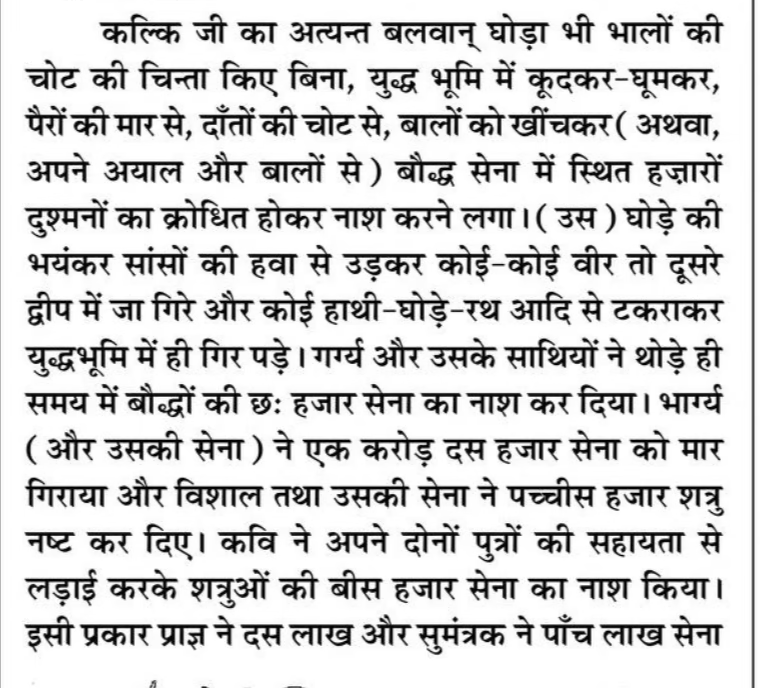
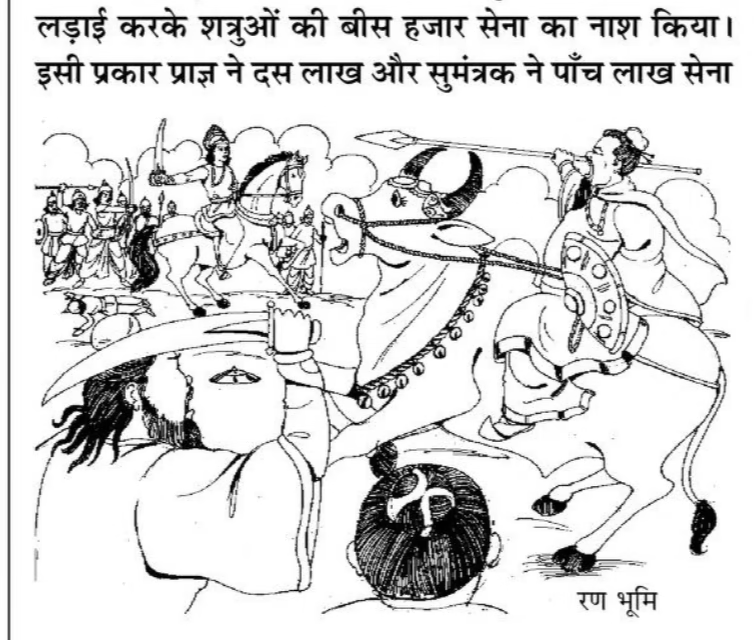
The imagery used, such as kings wearing crowns, is attributed to British influence, not Indian tradition. This further underscores the text’s fabricated nature. The central conflict, as depicted, is not between Hinduism and Islam, but between Brahminism and Buddhism.
The March to Kikatpur: The Geopolitical Target of the Kalki Avatar
The Kalki Purana explicitly names the geographical and ideological target of Vishnu’s final incarnation. After securing material wealth, establishing his family, and surrounding himself with ministers, Kalki approaches his father with a definitive declaration of war. He announces his intention to embark on a Digvijaya—a military campaign to conquer all directions—by first subduing the regional rulers to amass wealth for an Ashvamedha Yajna.
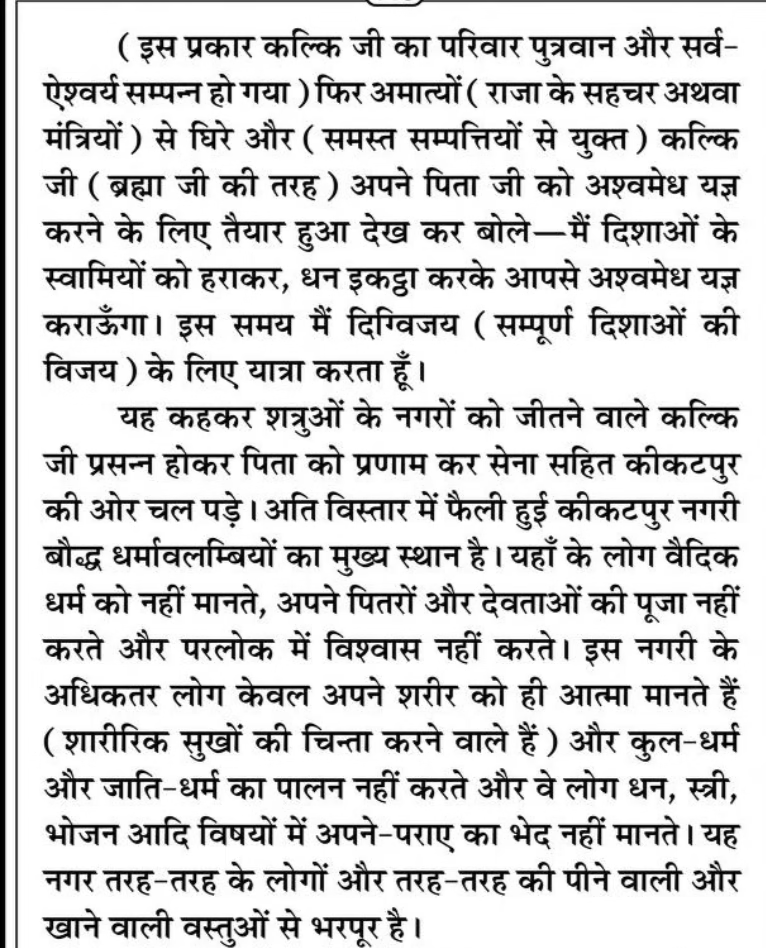
Far from fighting external colonial powers or later monotheistic religions, Kalki’s immediate military campaign is directed inward, toward the city of Kikatpur. The text describes Kikatpur not as a foreign wasteland, but as a vast, prosperous, and sprawling metropolis. Crucially, the Purana identifies Kikatpur as the primary stronghold of the Buddhists (Bauddh-Dharmavalambi). This choice of target exposes the core anxiety of the text’s authors: the primary enemy to be eradicated was the indigenous, egalitarian philosophy of Buddhism.
Anatomy of Brahminical Anxiety: Deconstructing the ‘Sins’ of Kikatpur
The Purana’s description of Kikatpur’s citizens reads like a checklist of Brahminical grievances against Buddhist society. The text explicitly laments that the people of this city:
- Reject Vedic Authority: They do not adhere to Vedic rituals or the Varna (caste) system.
- Abandon Ritualistic Worship: They do not perform traditional sacrifices for their ancestors (Pitrus) or the Vedic deities (Devas).
- Embrace Material and Rational Realism: The text accuses them of believing that the body itself is the soul, criticizing their focus on earthly welfare and their lack of fear regarding a Brahminical afterlife.
- Abolish Social Segregation: Most tellingly, the Purana complains that the citizens do not observe Kula-Dharma (lineage duties) or Jati-Dharma (caste duties). It notes with disdain that in matters of wealth, food, and relationships, they do not practice strict discrimination or maintain rigid boundaries of “ours” and “theirs.”
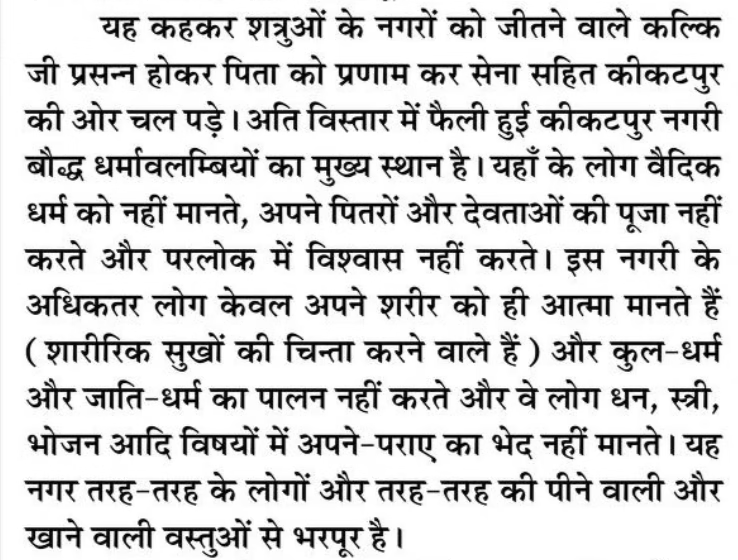
This description reveals a society that had broken free from caste hierarchies, ritualistic exploitation, and social division. To the authors of the Kalki Purana, a society practicing social equality and rejecting caste-based discrimination was viewed as a chaotic, chaotic threat that required divine military intervention.
The Military Might of the Buddhist Resistance
To counter the narrative that Buddhism was entirely passive or easily erased, the Kalki Purana acknowledges the immense power of the Buddhist state. Upon hearing of Kalki’s hostile invasion, King Jina, the ruler of Kikatpur, marches out of the city gates to defend his realm.
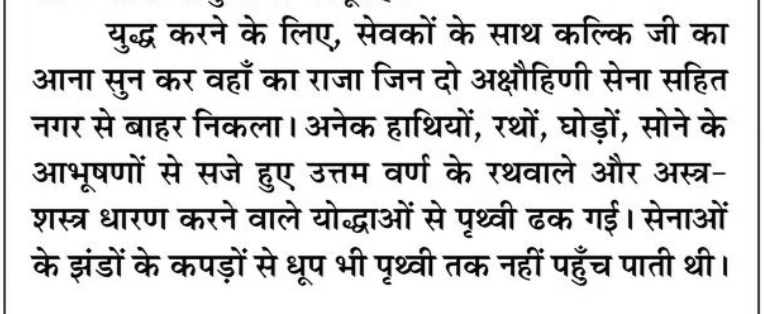
The text describes King Jina leading a massive army consisting of two Akshauhini divisions. The Purana paints a vivid picture of a highly advanced and heavily equipped defense force: thousands of war elephants, armored chariots, cavalry, and infantry soldiers adorned in gold ornaments and wielding sophisticated weaponry. The army was so vast, and its battle standards and flags so numerous, that the text notes they literally blocked out the sun, casting a massive shadow over the earth.
This depiction proves that the text is not describing a spiritual debate, but a brutal, heavily militarized campaign designed to crush a powerful, sovereign Buddhist kingdom that refused to bow to Brahminical hegemony.
The Rationalist Resistance: King Jin vs. Destiny
The battlefield dialogue in the Kalki Purana exposes a deep philosophical clash between Brahminical fatalism and Buddhist logic. When Kalki attempts to intimidate the Buddhist commander, King Jin, by mocking him and telling him to submit to his “destiny” (Bhagya or Daiva), Jin refuses to cower. He boldly declares the core stance of Buddhist empiricism: “Destiny is never visible. We are Pratyakshavadi Buddhists—we only believe in what can be directly perceived and proven.”
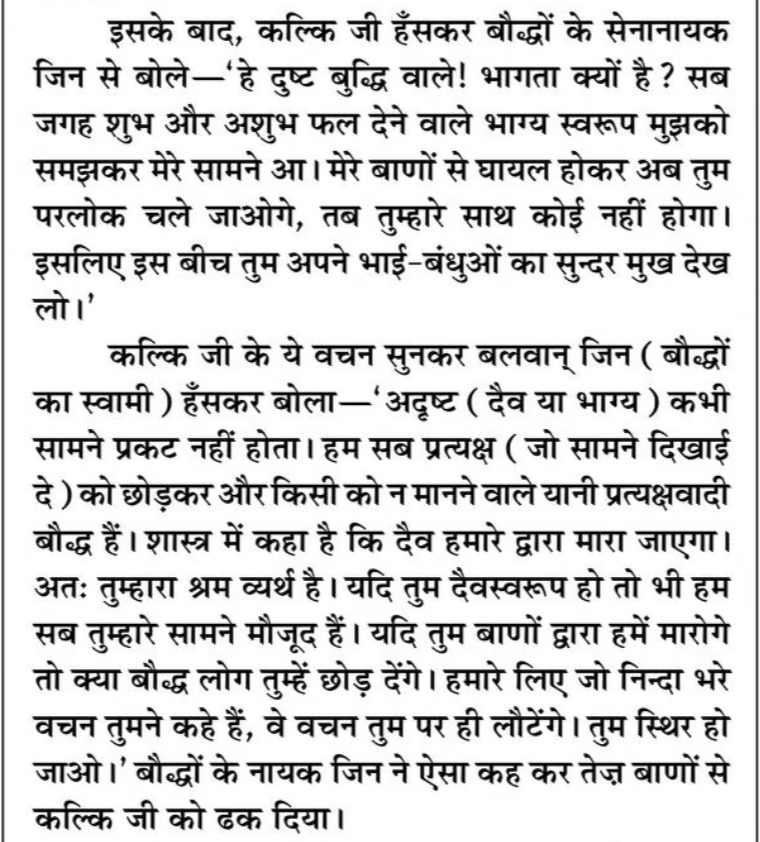
Even when faced with supernatural, divine weapons like the Brahmastra, Jin does not yield to myth. Relying entirely on physical courage and human martial skill, he tackles Kalki in raw, hand-to-hand combat. The text’s depiction of Jin—who shares a recognized title with Gautama Buddha—shows a leader who refuses to validate the supernatural claims of his oppressor, maintaining his adherence to reality even in the face of death.
Hijacking History: The Weaponization of Buddha’s Family
To construct its narrative, the Kalki Purana resorts to blatant identity theft, systematically looting revered historical figures from Buddhism and transforming them into battlefield targets. When King Jin falls, the general who rushes to attack Kalki is named Shuddhodhan. In actual history, Shuddhodhan is the revered father of Gautama Buddha. By demoting him to a mere foot soldier meant to be crushed, the authors intentionally drag a sacred figure into a violent narrative of defeat.
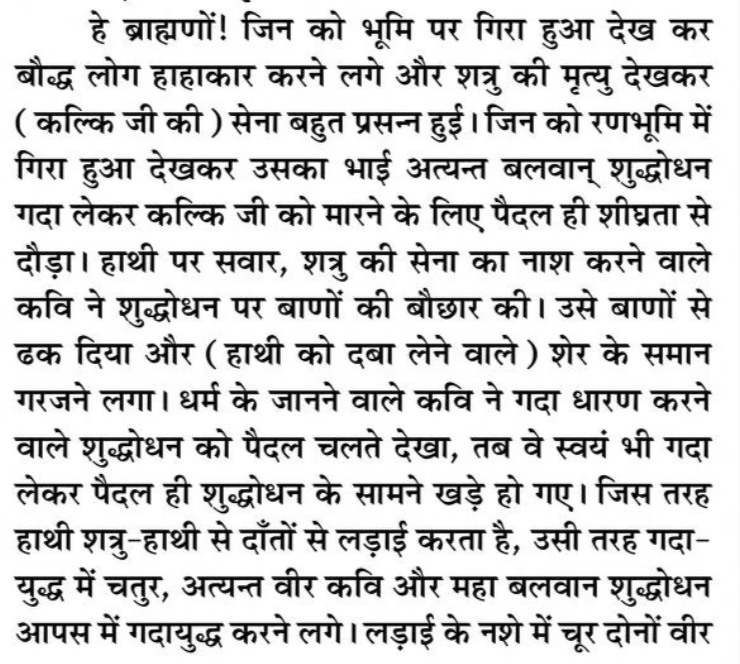
The defamation extends to the rest of the Buddha’s lineage. The text transforms Maya Devi—the Buddha’s mother—into a terrifying, weaponized illusion surrounded by jackals, crows, and personified vices like lust and greed. Paradoxically, Kalki’s own white horse is named Devadatta, which is the name of the Buddha’s treacherous cousin. This cynical re-casting of Buddhist history turns the religion’s internal legacy into an inside joke used to demean its followers.
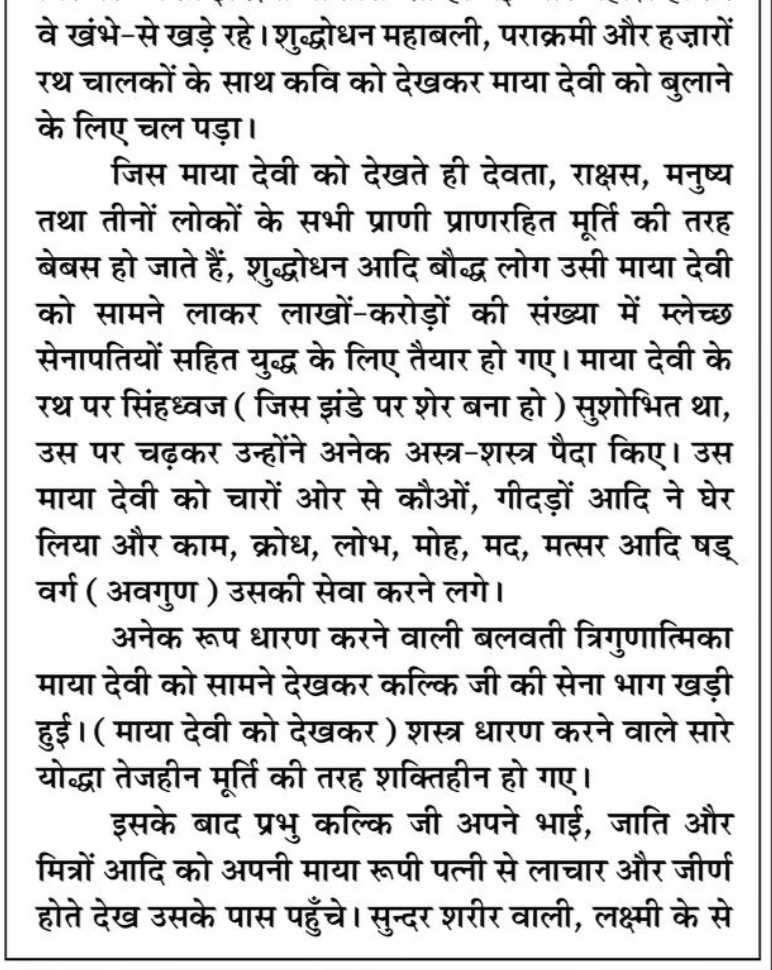
The Threat of the Independent Woman: Slurs and Slander
The text exposes a deep-seated Brahminical anxiety regarding the autonomy and strength of women in egalitarian Buddhist societies. Unlike the rigid strictures of orthodox texts that confined women, the Buddhist women of Kikatpur do not commit Sati when their husbands fall. Instead, they actively arm themselves, mount war elephants, camels, and horses, and aggressively march onto the battlefield to lead the resistance themselves.
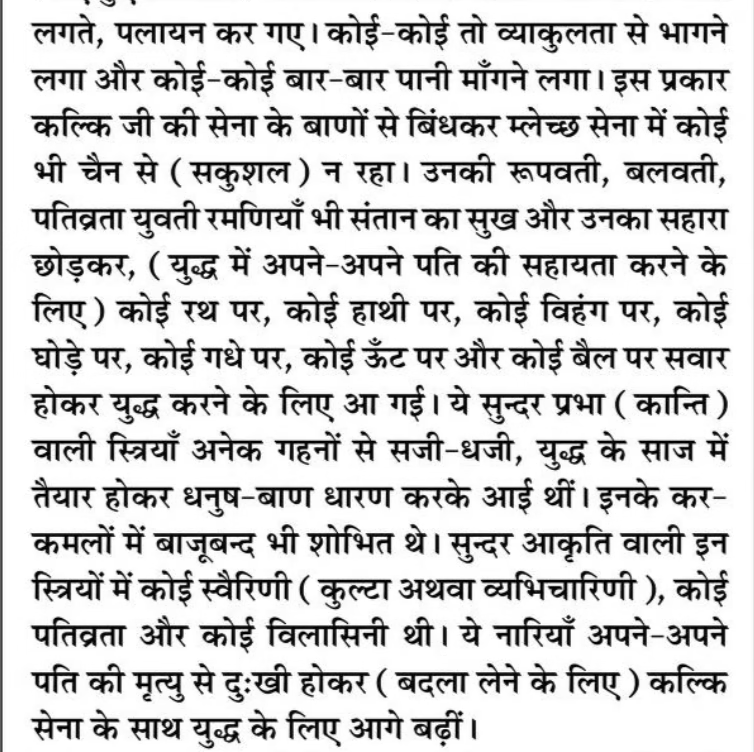
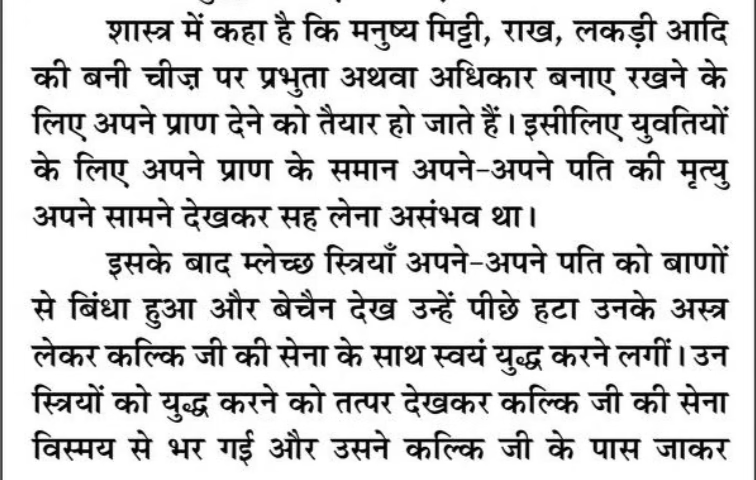
To discredit this formidable display of female agency, the authors resort to severe linguistic degradation. The text explicitly slanders these brave female fighters by labeling them as Kulta (a highly derogatory term for an adulteress or harlot) alongside terms like Vyabhicharini (wanton women). It even compares the retreating army to a “heroine whose waist has been stripped naked in the middle of sexual combat (Rati-yuddha).” By reducing politically active women to hyper-sexualized caricatures, the text attempts to strip them of their dignity and justify their subjugation.
The Patriarchal Fantasy: Disarming Women Through Flattery
The resolution of the women’s rebellion showcases a deeply patronizing worldview: the belief that independent women can be easily disarmed and tamed through superficial physical flattery (tareef). Kalki does not face these heavily armed women in combat. Instead, he objectifies them, asking: “Who could shoot arrows at your moon-like faces, your heavy breasts that look like Shiva, and your flawless hips?”
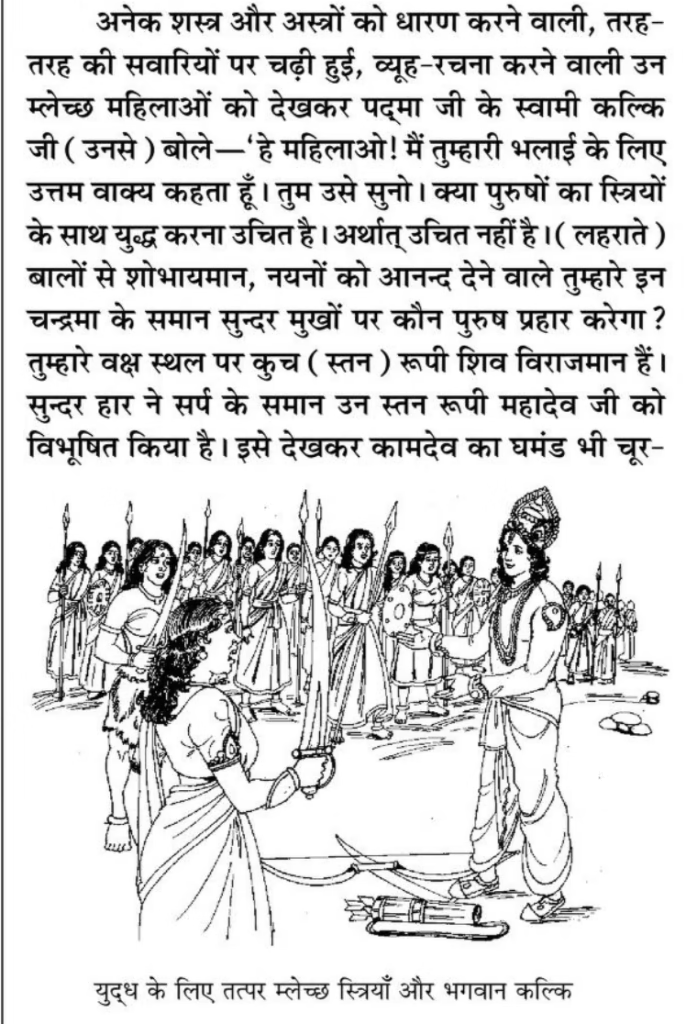
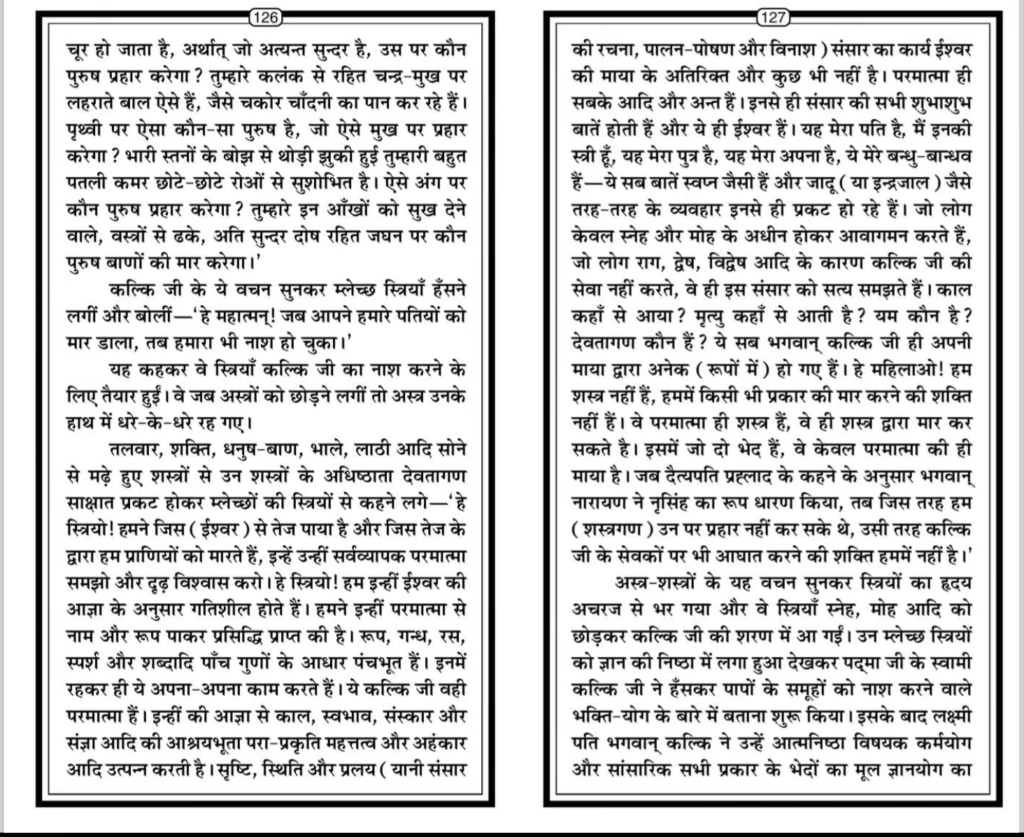
This narrative implies that a woman’s political fury and agency dissolve the moment a man compliments her sexual utility. Following this flattery, the text claims their weapons miraculously freeze and speak to them, instructing them to surrender. The ultimate humiliation is framed as a spiritual victory: the women are stripped of their defensive capability, abandon their independence, and are forcefully converted into docile devotees of Kalki.
Cui Bono: The Transactional Exploitation of Faith
To understand the true motive behind this text, one must look at its concluding promises. The Kalki Purana explicitly lays out massive transactional rewards for reading, hearing, or propagating this violent narrative. It guarantees that anyone who shares this tale of massacring Buddhists and Mlechhas will have all their sorrows removed.
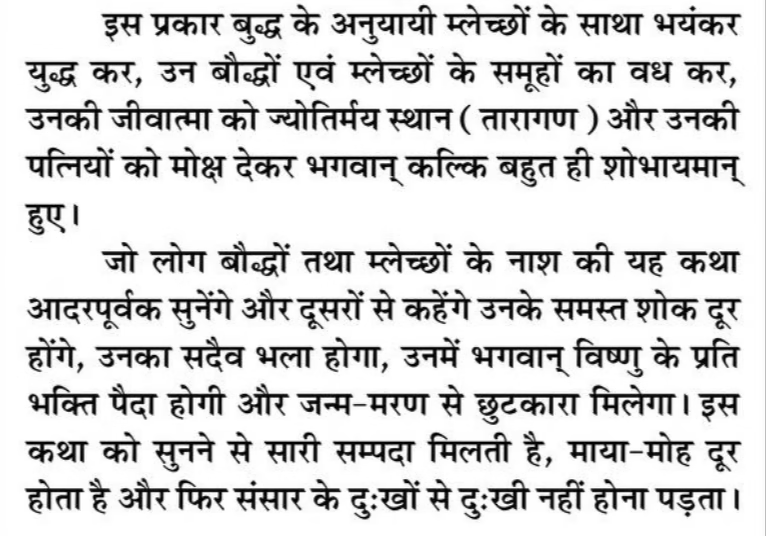
More importantly, it promises immense material wealth, property (Sarpada), and instant liberation (Moksha) from the cycle of birth and death. By explicitly promising worldly riches and spiritual absolution in exchange for celebrating the total annihilation of an egalitarian society, the text functioned as a powerful psychological tool. It incentivized elites to internalize and spread hatred against anti-caste traditions under the guise of holy duty.
Key Deceptions to Notice in the Text
As you read the highlighted sections of the manuscript, notice how the authors deliberately constructed this propaganda:
- The Stolen Names: Notice the explicit use of Jin (the Buddha), Shuddhodhan (Buddha’s father), and Maya Devi (Buddha’s mother) as enemies to be slaughtered or demonized.
- The Rationalist Declaration: Look for the term Pratyakshavadi (प्रत्यक्षवादी). This proves the Buddhists were targeted for relying on science, logic, and visible proof rather than blind faith and supernatural destiny.
- The Degradation of Women: Spot the word Swairini (स्वैरिणी). Notice how the text labels women who fight for their society as harlots and uses terms like Rati-yuddha (रतियुद्ध – sexual combat) to describe warfare.
- The Flattery Tactic: Notice the long passages where Kalki describes the women’s breasts, waists, and faces. The text pushes the fantasy that women’s anger is just a performance that can be “tamed” by male validation.
- The Bribe for Hatred: Check the final paragraph. Notice the exact promises of wealth (Sarpada / सारी सम्पदा) and salvation given as a reward for simply listening to a story about slaughtering Buddhists.
The True Origin of the Kalki Concept
Copying from Buddhist Scriptures: Kalachakra Tantra
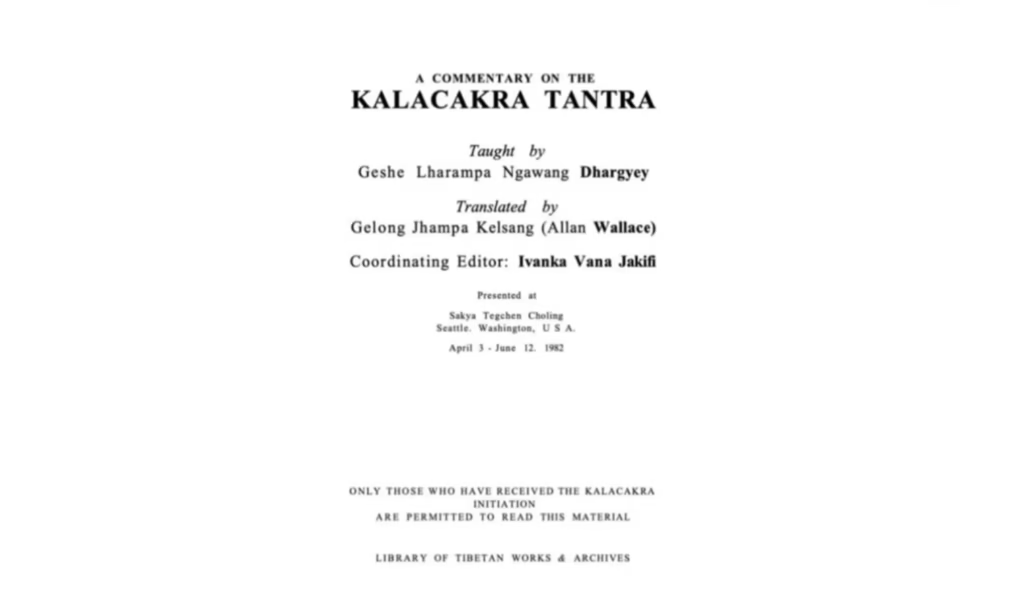
The concept of Kalki is not original to Brahminism but is derived from Buddhist scriptures, specifically the Kalachakra Tantra. This Tibetan Buddhist text describes 18 types of decline in Buddhism, one of which involves the degradation of women. The Brahminical texts have twisted this concept to portray women as morally corrupt. They then appropriated the Kalki concept to signify the destruction of Buddhism.[source] Read more: Ambedkar Buddhism: Vision & Conversion Explained
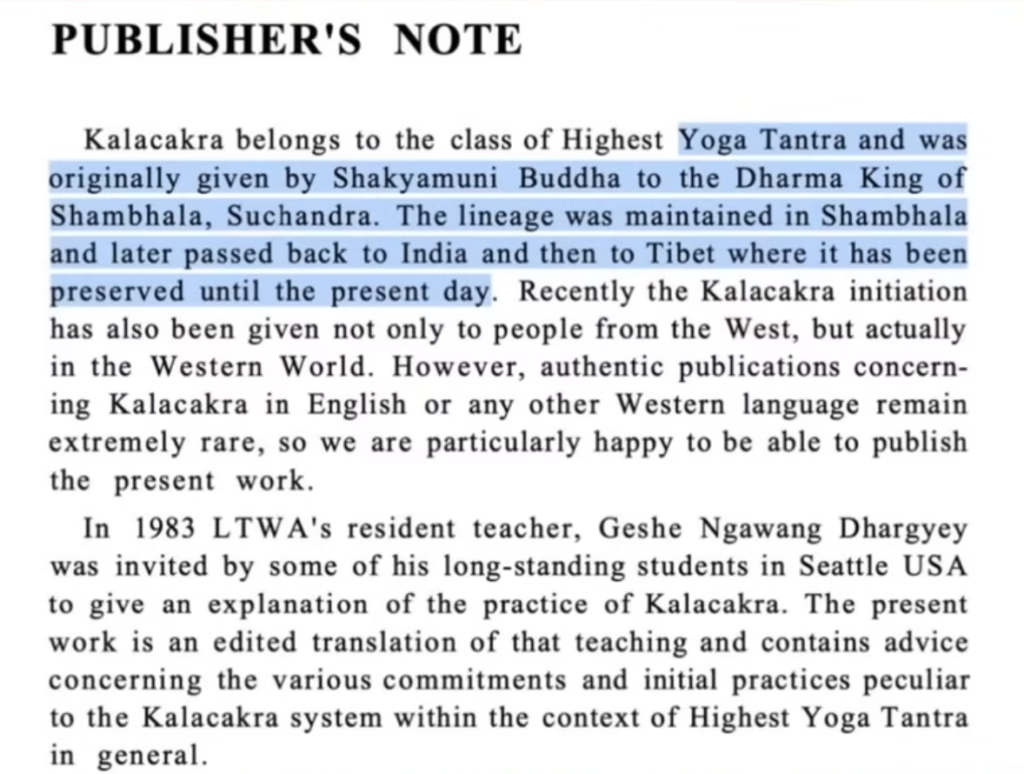
The Kalachakra Tantra was originally given by Shakyamuni Buddha to King Chandrapala of Sambhala. This text, preserved in Sambhala and later in India and Tibet, predates the Kalki Puran. The Brahminical texts have taken this concept and distorted it. They replaced the idea of unification under a Bodhisattva (a being who seeks enlightenment for all) with a violent avatar intended to destroy Buddhists.[source]
The Buddhist Reality: Women as the Embodiment of Wisdom
To truly understand the malice behind the Kalki Purana’s depiction of Buddhist women as hyper-sexualized “harlots” (Swairini), one must look at how actual Buddhist texts treat women. While the Purana attempts to strip women of their agency through crude physical objectification and submission, Buddhist philosophy elevates them to the highest intellectual and spiritual planes.
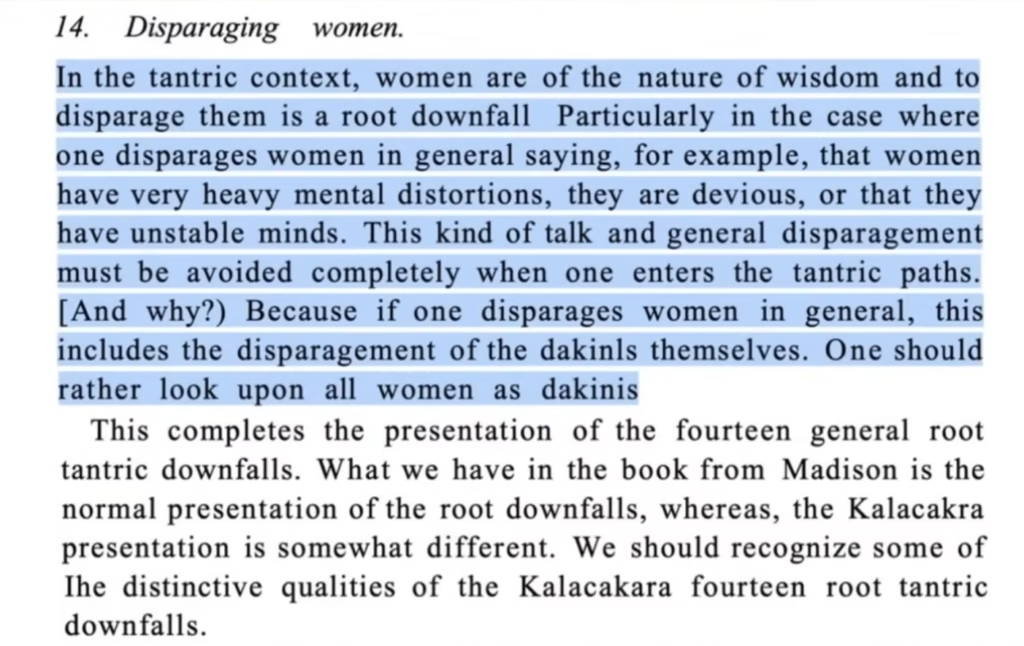
Disparaging Women as a “Root Downfall”
As evidenced by the Buddhist Tantric text above, the Buddhist worldview starkly contrasts with orthodox patriarchal systems. The text explicitly declares that “women are of the nature of wisdom.” Furthermore, it establishes a strict moral absolute: to disparage or insult women is categorized as a “root downfall.” In Buddhist practice, a root downfall is not a minor mistake; it is a fundamental collapse of one’s spiritual vows and ethics. Insulting the dignity of women literally disqualifies a practitioner from the spiritual path.
Shattering Patriarchal Stereotypes
The provided text directly confronts and outlaws the exact patriarchal stereotypes that orthodox scriptures historically used to control women. It explicitly forbids the generalization that women:
- Have “heavy mental distortions”
- Are “devious”
- Have “unstable minds”
Orthodox texts often framed women as intellectually inferior, emotionally erratic, or inherently deceitful to justify keeping them under the strict control of fathers, husbands, and sons. In complete opposition, this Buddhist teaching mandates that such degrading talk “must be avoided completely.”
Every Woman as a Dakini
Instead of reducing women to physical attributes meant to be “tamed” by a male savior—as Kalki attempts to do on the battlefield—the Buddhist instruction demands profound reverence: “One should rather look upon all women as dakinis.”
In Buddhist tradition, a Dakini is a fierce, sacred, and powerful embodiment of enlightened energy and supreme wisdom. By equating everyday women with Dakinis, the philosophy inherently respects their intellect, autonomy, and absolute spiritual equality.
Distorting the Meaning of ‘Kal’ and ‘Kulika’
The Sanskrit name ‘Kalki’ is also found in Buddhist texts, where it is a variant of ‘Kulika.’ In the Kalachakra Tantra, ‘Kulika’ signifies one who unifies and holds together all castes and clans. This is a concept of unity and integration, diametrically opposed to the destructive agenda presented in the Kalki Puran.[source]
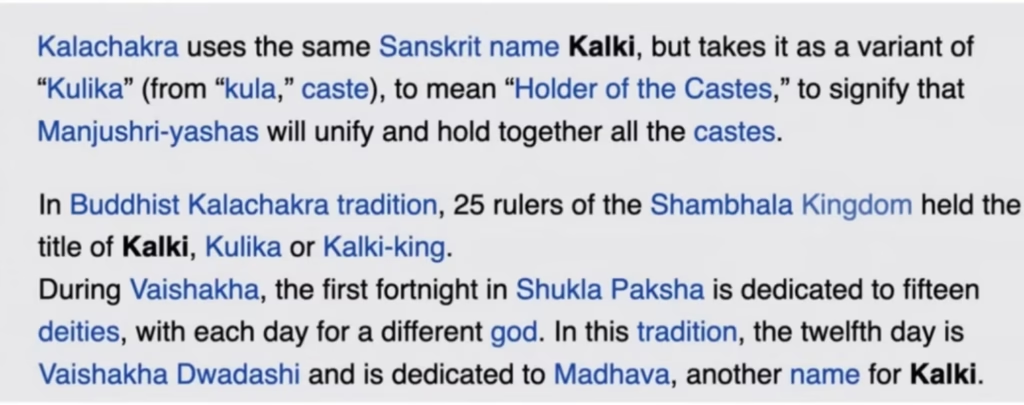
The text further claims that the Kalki concept is found in six Buddhist texts. It highlights that the Kalachakra tradition refers to 25 rulers of the Sambhala kingdom who held the title of ‘Kulika’ or ‘Kalki King.’ The name ‘Madhav,’ another name for Kalki, is also found in Buddhist calendars. It is associated with the first fortnight of the lunar month, dedicated to various deities. This name ‘Madhav’ was later appropriated by Brahmins and associated with Krishna.
The Concept of Bodhisattva and Avatars
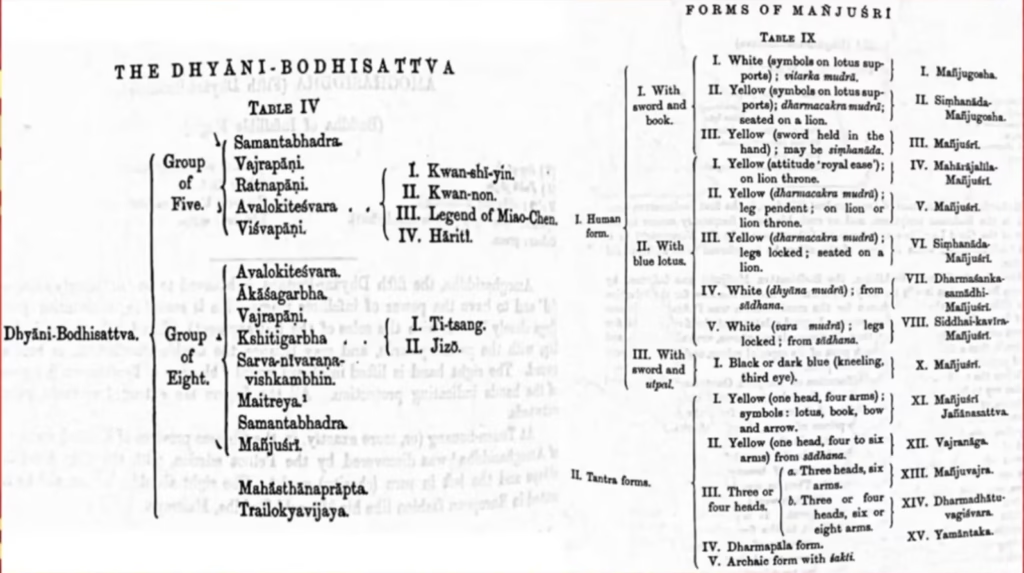
The Buddhist concept of Bodhisattvas, beings who strive for enlightenment for all sentient beings, has also been corrupted. In Buddhism, figures like Manjushri, armed with a sword and book, represent wisdom and the unification of different groups. The idea of an avatar, as presented in the Kalki Puran, is a distortion of this compassionate and wisdom-driven ideal. It shifts the focus from enlightenment and universal well-being to destruction and sectarian dominance.[source]
Conclusion
The Kalki Puran, far from being an ancient prophecy, is a relatively recent text demonstrably rooted in the appropriation and distortion of Buddhist scriptures. Its narrative serves to advance a Brahminical agenda, fueled by historical anxieties and a desire to assert dominance. The film’s portrayal, while seemingly modern, engages with these deeply ingrained, often deceptive, historical narratives. Understanding the Kalki Puran origins is crucial to recognizing its manipulative nature and its role in perpetuating caste-based divisions and religious animosity.
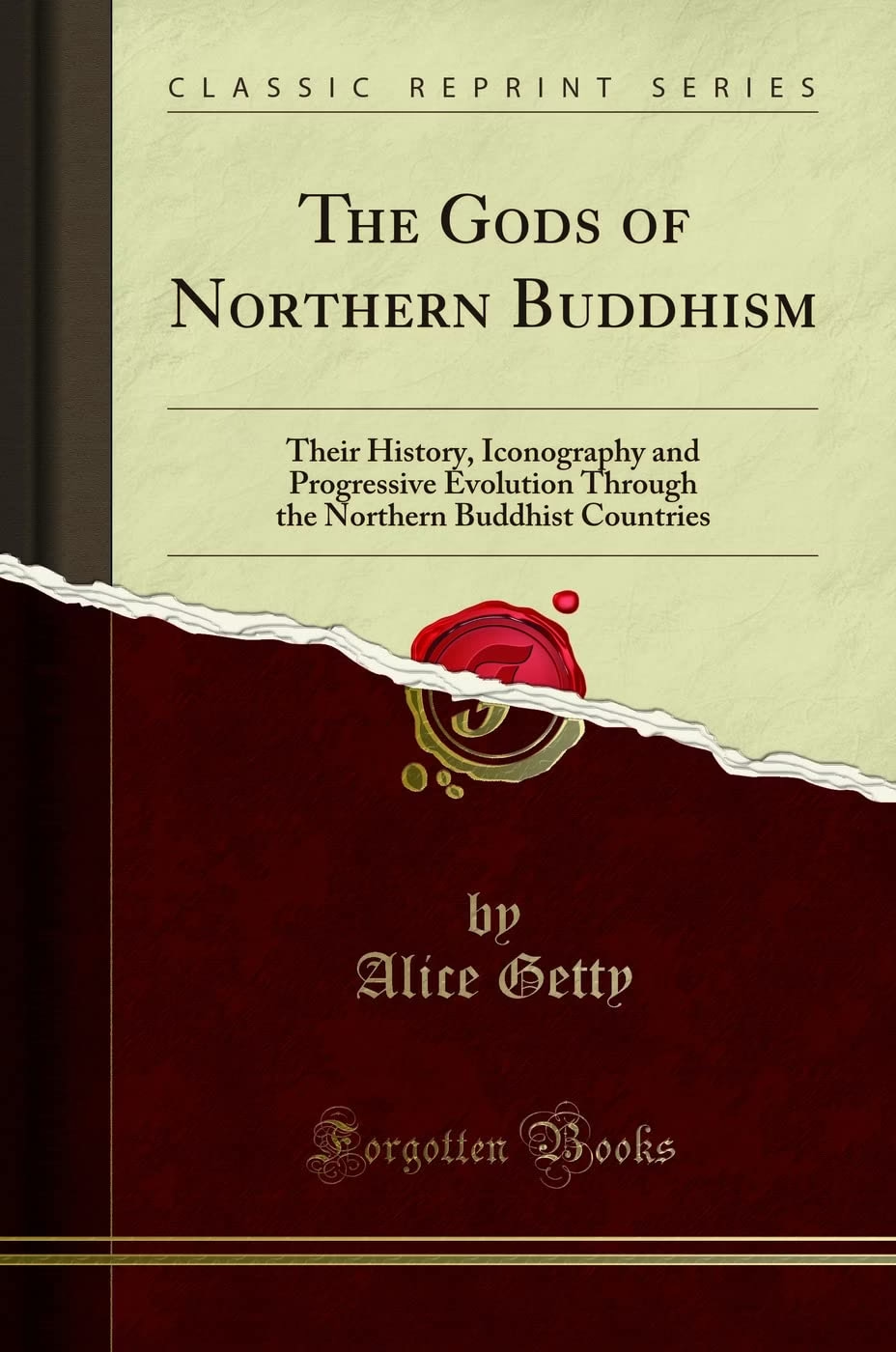
Excerpt from The Gods of Northern Buddhism: Their History, Iconography and Progressive Evolution Through the Northern Buddhist Countries IT is difficult for those who are unacquainted with the iconography of the gods of the Mahayana Pantheon to realize the degree of interest that may be attached to even a crude representation of a Northern Buddhist divinity. To the uninitiated the images of these deities are only of value as works Of art, or as grotesque curios, with their various heads and many arms but to the initiated, apart from their artistic merit, they furnish an almost inexhaustible fund for study and research.
Read the Kalchakra for free here
What Can You Do?
Educate yourself and others about the historical and religious contexts of texts like the Kalki Puran. Support anti-caste initiatives and evidence-based scholarship that challenges historical distortions. Share this information to foster critical thinking and promote a more inclusive understanding of our shared history.
Frequently Asked Questions
What is the main narrative of the Kalki Puran?
The Kalki Puran describes Vishnu’s tenth and final avatar, Kalki, who is prophesied to appear at the end of the Kali Yuga to destroy evil, including Buddhist kings and rulers, and usher in a new era of righteousness (Satya Yuga).
What are the purported origins of the Kalki Puran?
While presented as an ancient Hindu scripture, evidence suggests the Kalki Puran is a later, plagiarized text that significantly borrows from Buddhist scriptures, particularly the Kalachakra Tantra. Its composition is believed to date back to the British colonial era.
How does the Kalki Puran relate to Buddhism?
Contrary to its narrative of destroying Buddhism, the Kalki Puran’s concepts and prophecies are largely derived from Buddhist texts. It appears to have distorted Buddhist prophecies about the decline of dharma and the concept of ‘Kulika’ (a unifier) into a narrative of destruction aimed at Buddhists.
Why is the Kalki Puran considered a historical deception?
It is considered a deception because it plagiarizes Buddhist scriptures, distorts their meanings, and presents itself as an ancient Hindu text while being a relatively recent creation. Its agenda appears to be the assertion of Brahminical supremacy and the demonization of Buddhism.
What is the significance of Sambhala in relation to the Kalki Puran?
Sambhala is a mythical kingdom often associated with Buddhism in Tibetan traditions. Its depiction in modern narratives, sometimes as a center of Buddhist resistance, contrasts sharply with the Kalki Puran’s aim to portray it as a place to be destroyed. The film’s inclusion of Buddhist elements in Sambhala highlights the tension between the text’s original intent and its modern interpretations.
Do you disagree with this article? If you have strong evidence to back up your claims, we invite you to join our live debates every Sunday, Tuesday, and Thursday on YouTube. Let’s engage in a respectful, evidence-based discussion to uncover the truth. Watch the latest debate on this topic below and share your perspective!

Skeptical Indian is an independent researcher documenting
caste discrimination through primary sources, Hindu
scriptures, court records, and government data.
CasteFreeIndia.com has published 100+ evidence-based
analyses since 2024.