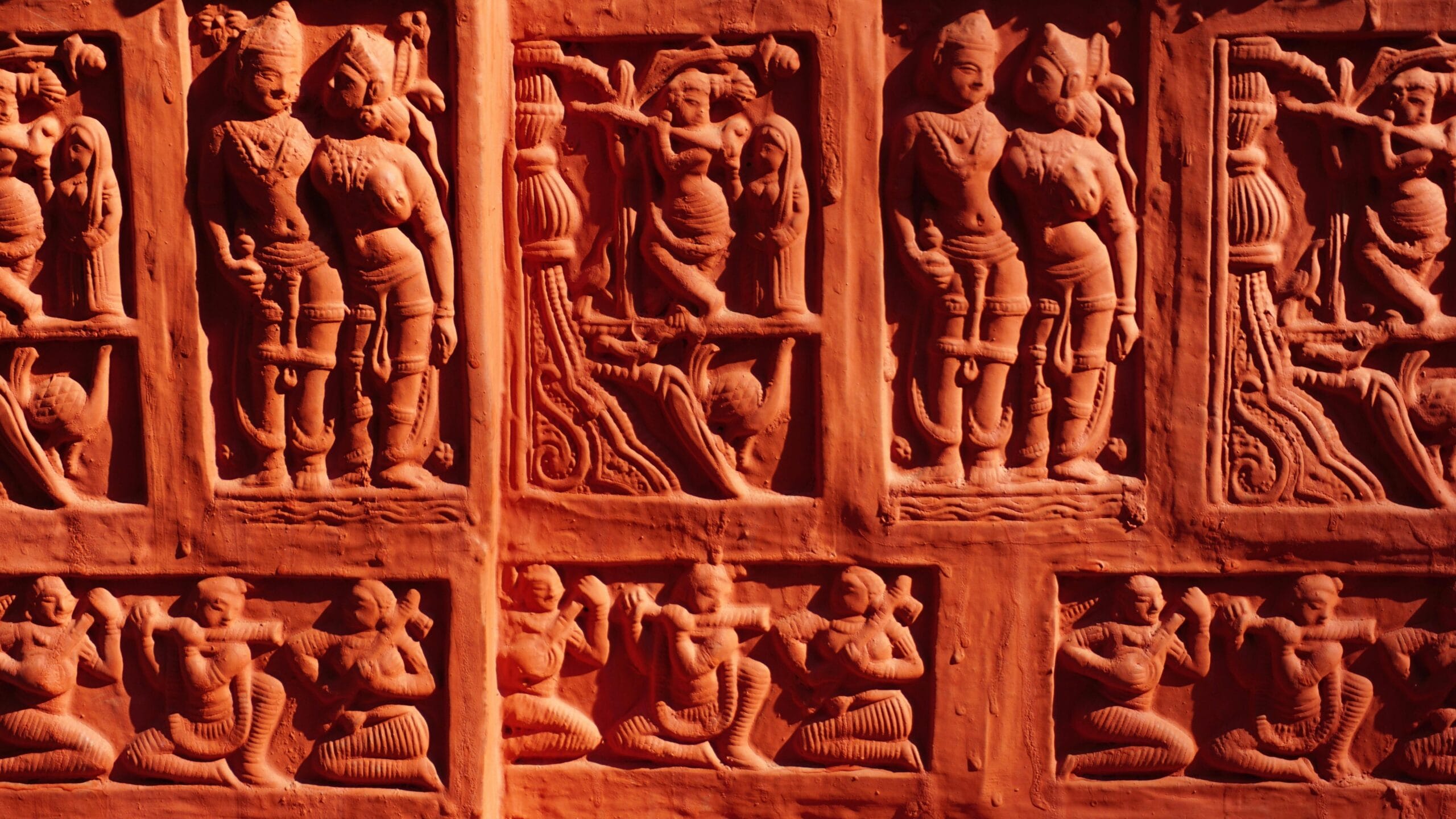
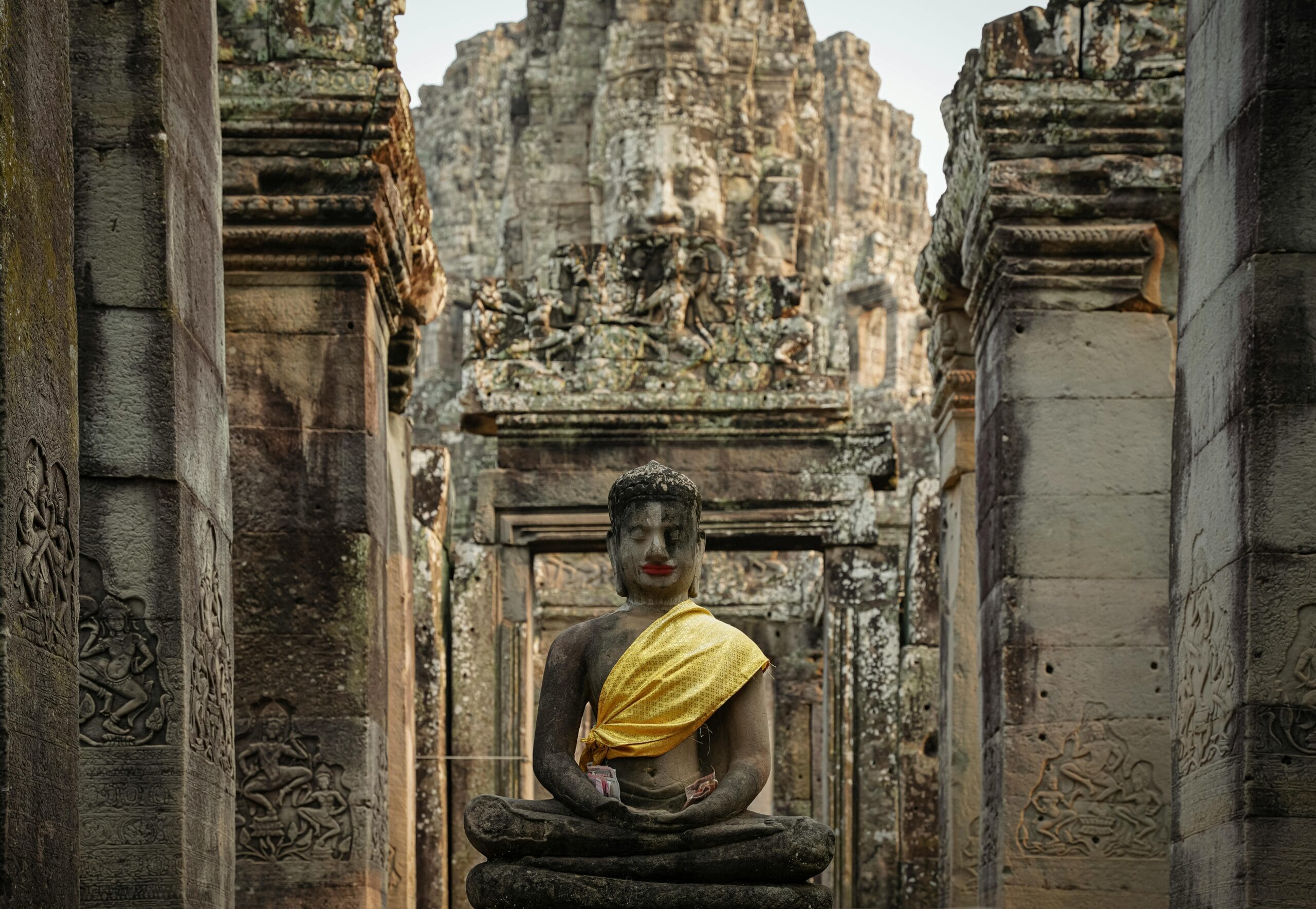
When you walk into the National Museum in New Delhi, you are led to believe that you are walking through an objective, chronological corridor of Indian history. We are taught to trust the placards, to accept the institutional labels, and to view these ancient stone structures as the absolute truth. But if you stop reading the descriptions and start looking at the actual Buddhist sculptures on display, a deeply unsettling pattern of institutional erasure begins to emerge.
The history we understand is frequently a constructed narrative; as highlighted in discussions regarding Al-Biruni’s historical accounts, the self-proclaimed custodians of history, the Brahmins, have heavily influenced how India’s past is interpreted. What we are witnessing in these museum galleries is not objective archaeology, but the active, ongoing Brahmanization of India’s vast Buddhist heritage.
By analyzing the physical evidence of these sculptures, cross-referencing them with scriptural realities, and noting the glaring institutional double standards, it becomes clear that early Buddhist artifacts have been systematically mislabeled and absorbed into the Hindu pantheon.
The Double Standard: The Burden of Pali Proof
Before examining the specific physical features, we must address the systemic double standard at play in how these artifacts are classified.
There is a staggering discrepancy in the burden of proof required by these historical institutions. If an ancient sculpture is found, it is almost automatically defaulted to a Hindu classification—labeled as Shiva, Parvati, or Lakshmi. The only time the institution seems willing to accurately label a statue as Buddhist is if it features an explicit, undeniable Pali inscription carved directly into the stone declaring it as such.
But what happens when that text wears away, or if the statue was carved without an inscription? Suddenly, despite having the exact same elongated earlobes, the same meditative mudras, and the identical physical postures of a Bodhisattva, the statue is slapped with a “Hindu” label. This isn’t an innocent mistake; it is a systemic historical whitewashing. Similar to how archaeological findings have been crucial in challenging the fallacious narratives surrounding sacred cities like Ayodhya and Mathura, we must apply that same critical, evidence-based lens to the artifacts sitting in our national museums.
Exhibit A: The Missing Markers of Shiva
To understand this appropriation, we must look at the Hindu scriptures. The descriptions of Shiva are highly specific and unmistakable. Scripturally, Shiva is defined by distinct iconography: a prominent crescent moon and star on his head, the Ganga river flowing from his top-knot, and a snake coiled tightly around his neck.
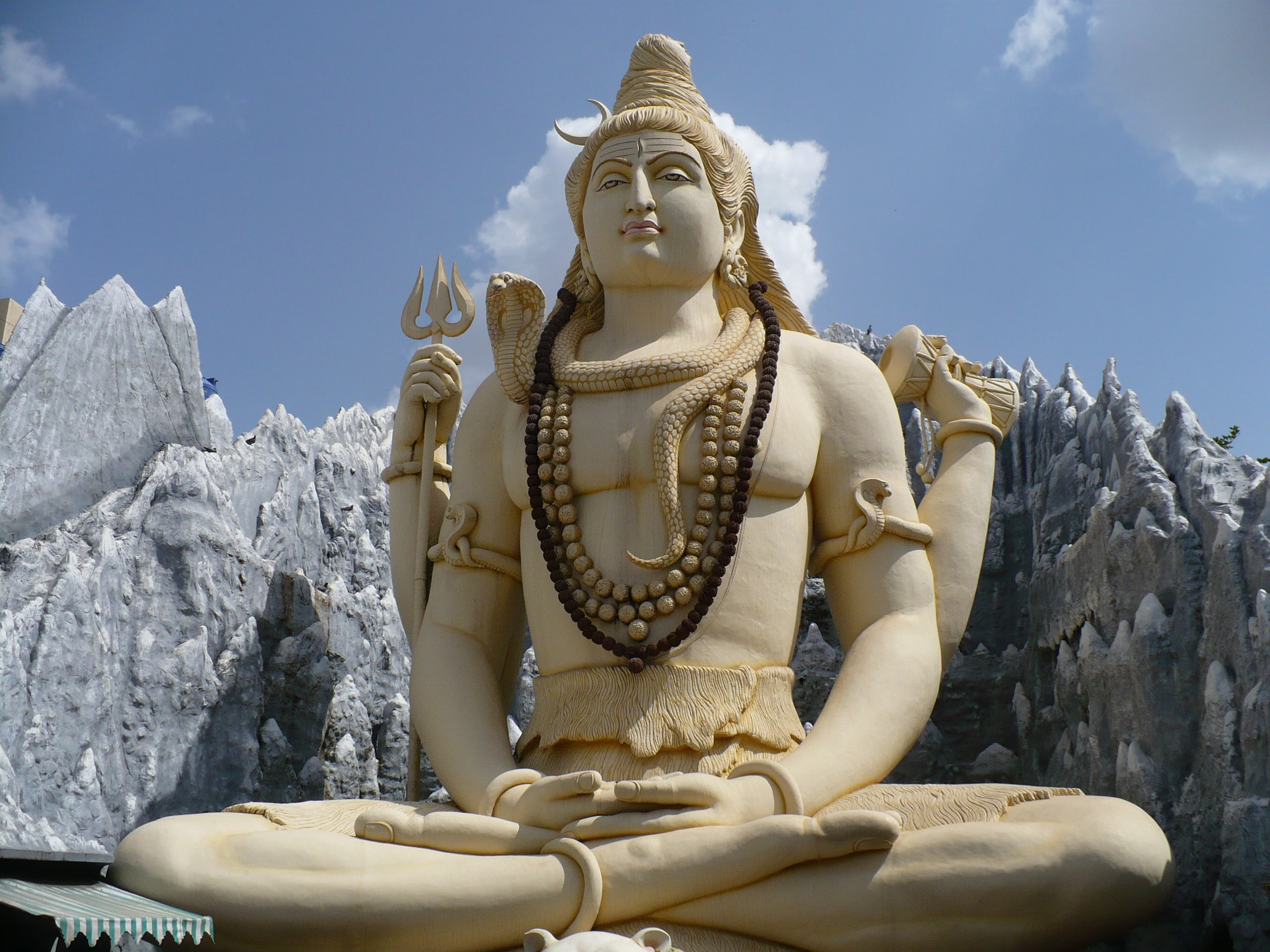
Yet, when we examine the statues labeled as “Shiva” in the museum, these mandatory scriptural elements are entirely absent. Instead, we find textbook Buddhist iconography.
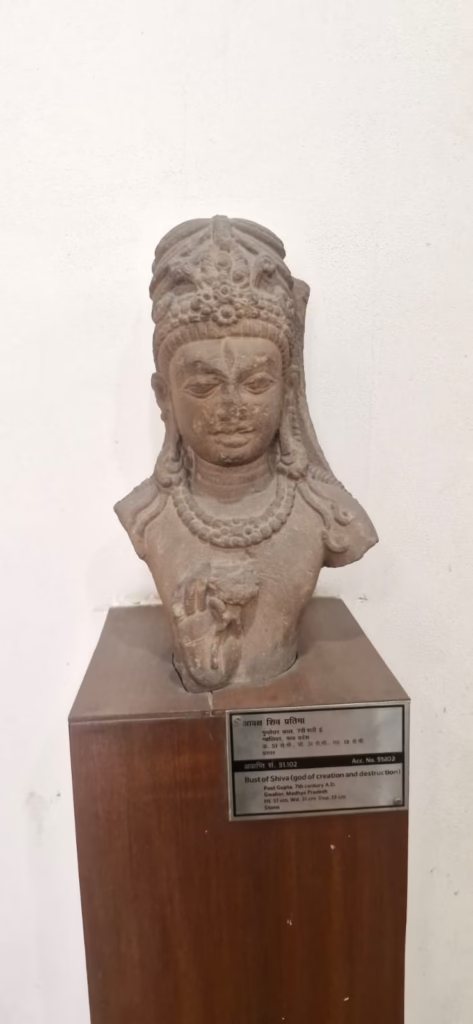
The Bust of Shiva : This sculpture is labeled as the god of creation and destruction. However, it features a deeply serene expression and the elongated earlobes that are universally recognized as a Buddhist marker of a great being. There is no snake, no moon, and no flowing river. The visual language speaks entirely of Buddhist serenity, not Brahmanical destruction.
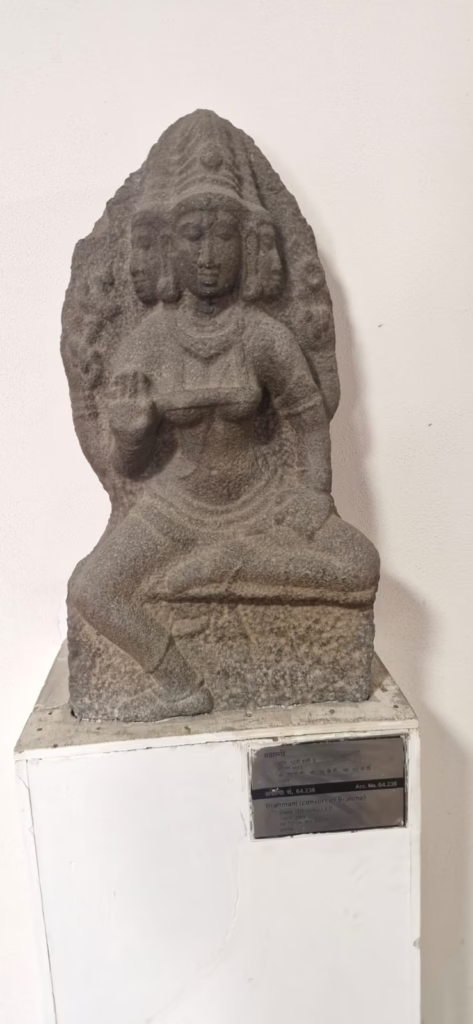
Shiva Vamana and The Multi-Faced Deity : Even in these more complex forms—the dwarf form (Vamana) or the multi-faced seated deity—the reliance on specific hand mudras is dominant. Hand gestures like the Dhyana (meditation) and Abhaya (fearlessness) are central to Buddhist teachings and art. The museum relies heavily on the viewer’s ignorance of these mudras, hoping they will just accept the “Shiva” label without questioning the fundamentally Buddhist posture and expression.
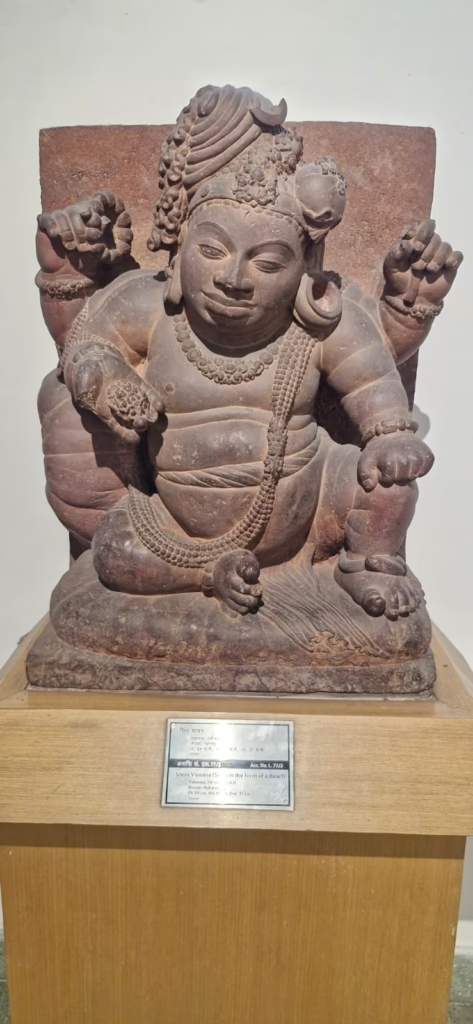
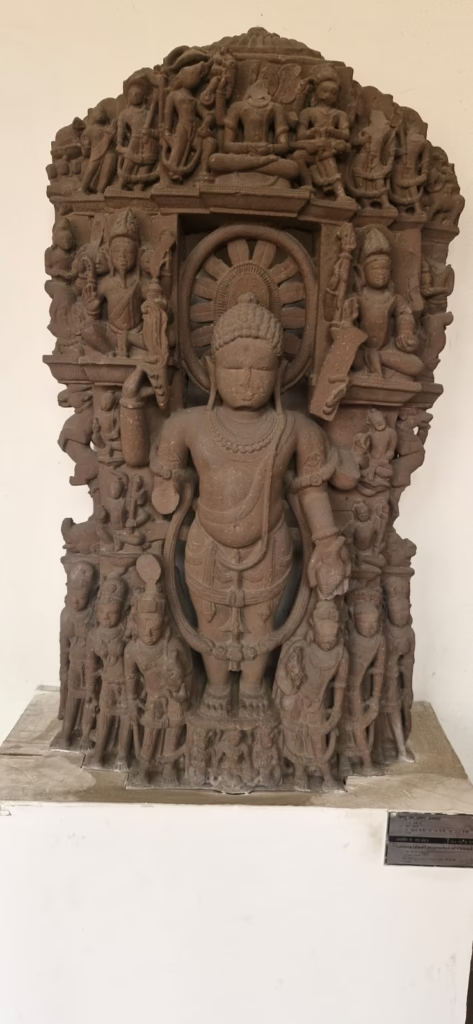
Exhibit B: The Ascetic Teachers and Appropriated Postures
One of the most glaring examples of this retrofitting is how the institutions handle figures in deep meditation.
- Lakulisha and Dakshinamurti : Look at the seated figures labeled as Lakulisha (Shiva as a teacher with a club) and Dakshinamurti (Shiva as the supreme teacher). They are sitting in perfect lotus postures. They radiate quiet meditation and utilize exact Buddhist hand mudras. Furthermore, their matted hair is piled up on top of their heads in a way that perfectly mimics the ushnisha (the top-knot of the Buddha).
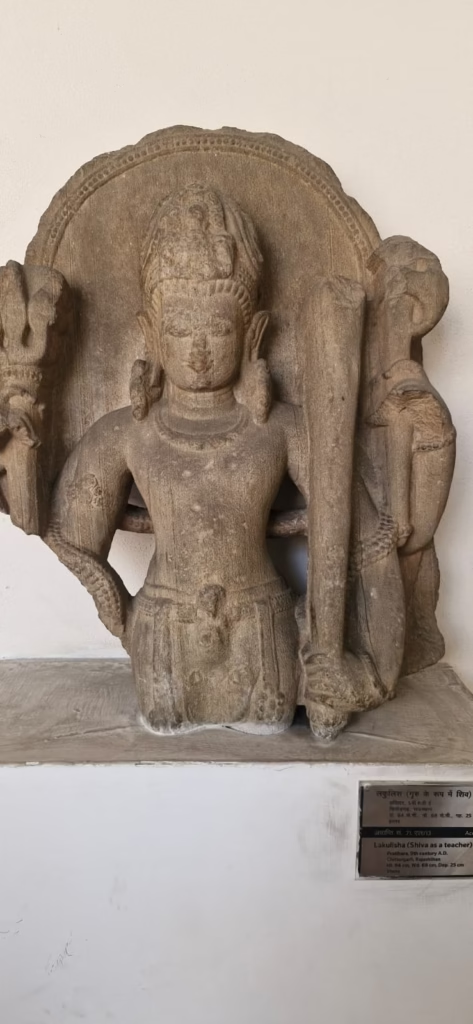
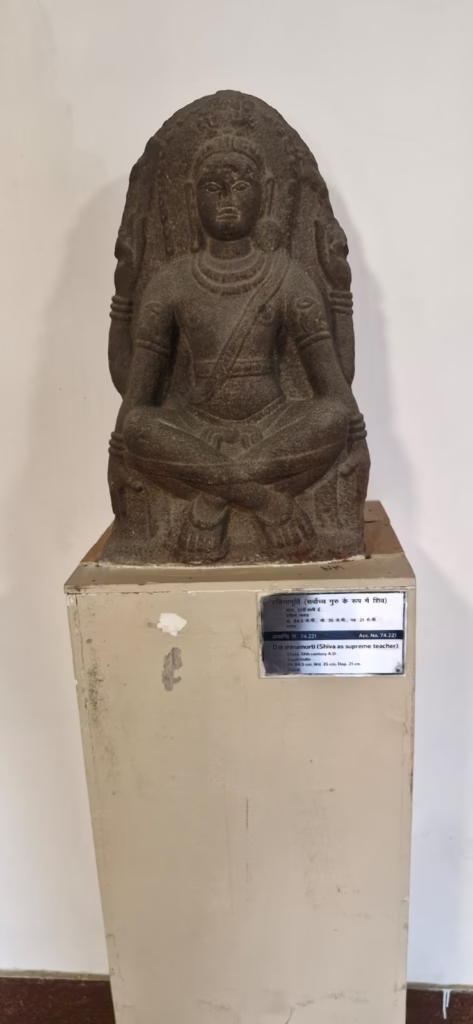
By labeling these meditating figures as “Shiva as a teacher,” the historical custodians created a convenient loophole to absorb Buddhist art. They took the image of the meditating Buddha, stripped it of its original context, and claimed it as an ascetic form of a Hindu god.
Exhibit C: The Subversion of the Divine Feminine
Perhaps the most logically inconsistent aspect of this Brahmanization is how female figures are handled.
- Lakshmi and the Standing Goddess : Look at the statue of Lakshmi and the stunning white marble/stone goddess. These figures radiate independence, power, authority, and deep meditative strength.
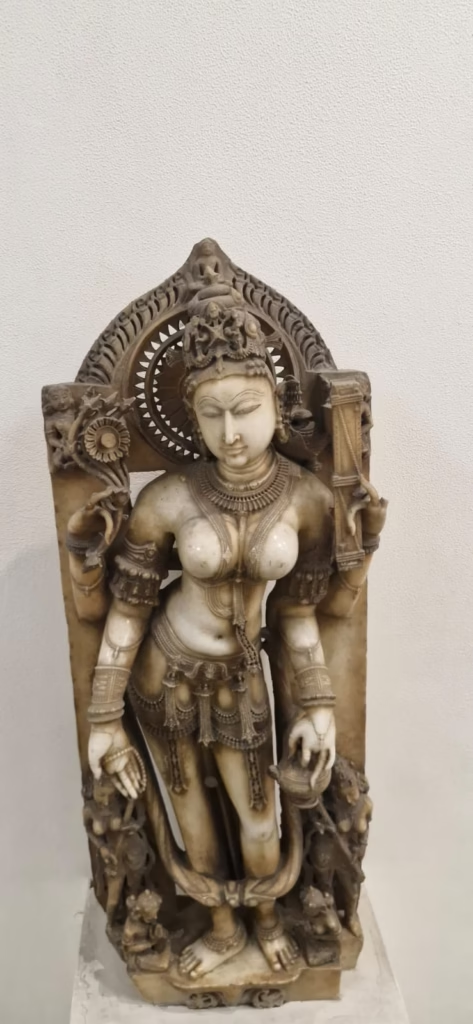

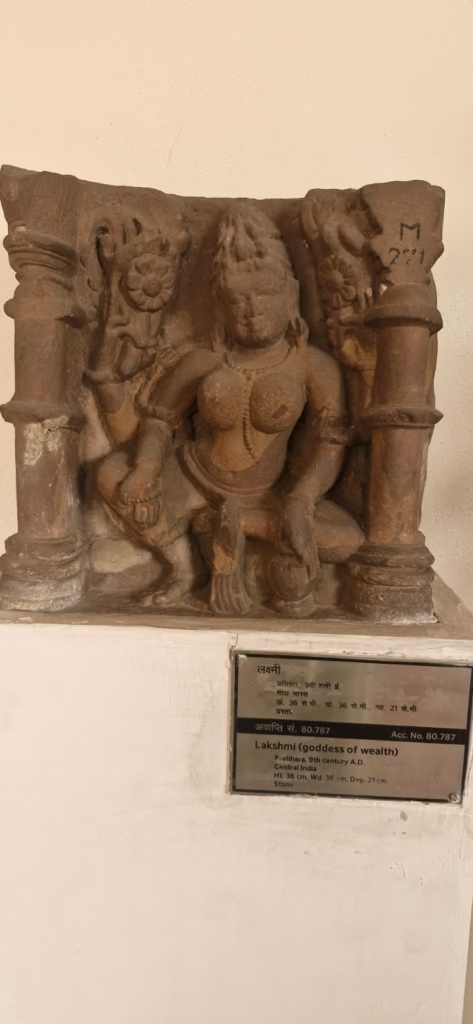
If we look honestly at the historical and scriptural realities of Hinduism, women were not granted this kind of supreme spiritual autonomy. The rigid patriarchal structures mandated that a woman’s primary role was subservient, she was expected to care for her husband as if he were a god. The idea of an independent, supreme female figure sitting in a posture of ultimate spiritual authority heavily contradicts historical Brahmanical texts.
However, in Buddhism, female figures like Tara hold immense, independent spiritual power. They are enlightened beings in their own right. Rather than admitting that these powerful, authoritative statues are empowered Buddhist figures, the museum retrofits them into a religious framework that did not historically afford women that kind of standing. They are labeled as Hindu goddesses simply by default, erasing the progressive nature of the original Buddhist art.
Exhibit D: The Broken Faces and Intentional Defacement
Finally, we must address the physical trauma inflicted on these stones.
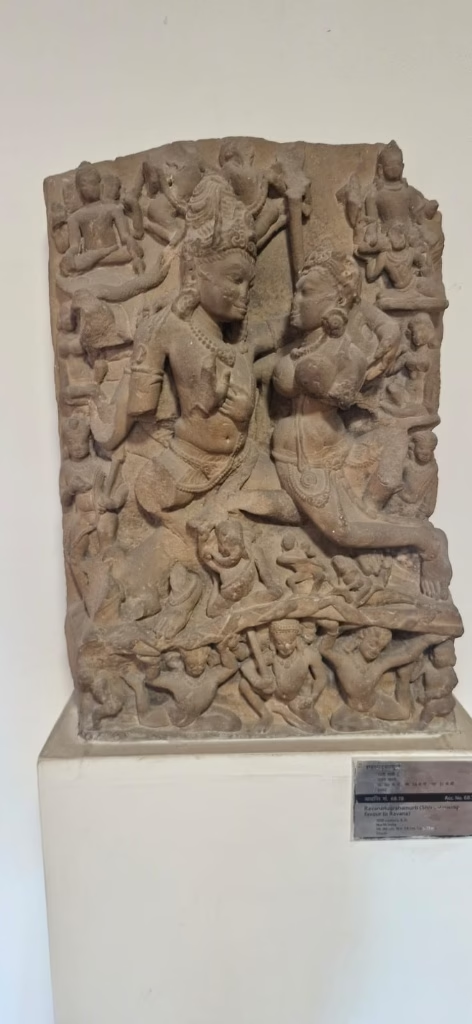
- The Elaborate Steles (image_b5647a.jpg & image_b563a1.jpg): In these large, complex stone carvings, we see intricate central figures surrounded by halos and secondary deities. In image if you look closely at the top of the archway, you can clearly see small, seated figures that are undeniably Buddha forms. Yet, the main piece is claimed for Hinduism.
- The Missing Faces: There is a chilling, unavoidable pattern in these galleries: the faces of the figures that are most undeniably Buddhist are almost always the ones that are broken off, smashed, or defaced. While natural wear and tear occurs, the specific targeting of the Buddha’s face across so many statues points toward a historical, targeted attempt to literally deface and physically erase Buddhist influence from the region.
Brahmani
Reclaiming the Narrative
This is not just an academic debate about ancient art; it is about who controls the narrative of Indian history. Dr. Babasaheb Bhimrao Ambedkar understood this deeply when he spearheaded the resurrection and re-energizing of Buddhism in India. His monumental efforts gave us Neo-Buddhism, which breathed life back into ancient philosophies that had intentionally been faded and erased from their land of origin.
When we walk through museums and blindly accept the Brahmanized labels on Buddhist artifacts, we are participating in the continued erasure of that history. We must challenge these fallacious narratives. A caste-free society must foster unity by breaking down these artificial barriers of hierarchy and reclaiming the truth of our collective past.
It is time to look at the stone, ignore the placards, and recognize the quiet, enduring presence of the Buddha that has been hiding in plain sight all along.
If you want to visit the Museum yourself, You can find more information here.

Skeptical Indian is an independent researcher documenting
caste discrimination through primary sources, Hindu
scriptures, court records, and government data.
CasteFreeIndia.com has published 100+ evidence-based
analyses since 2024.