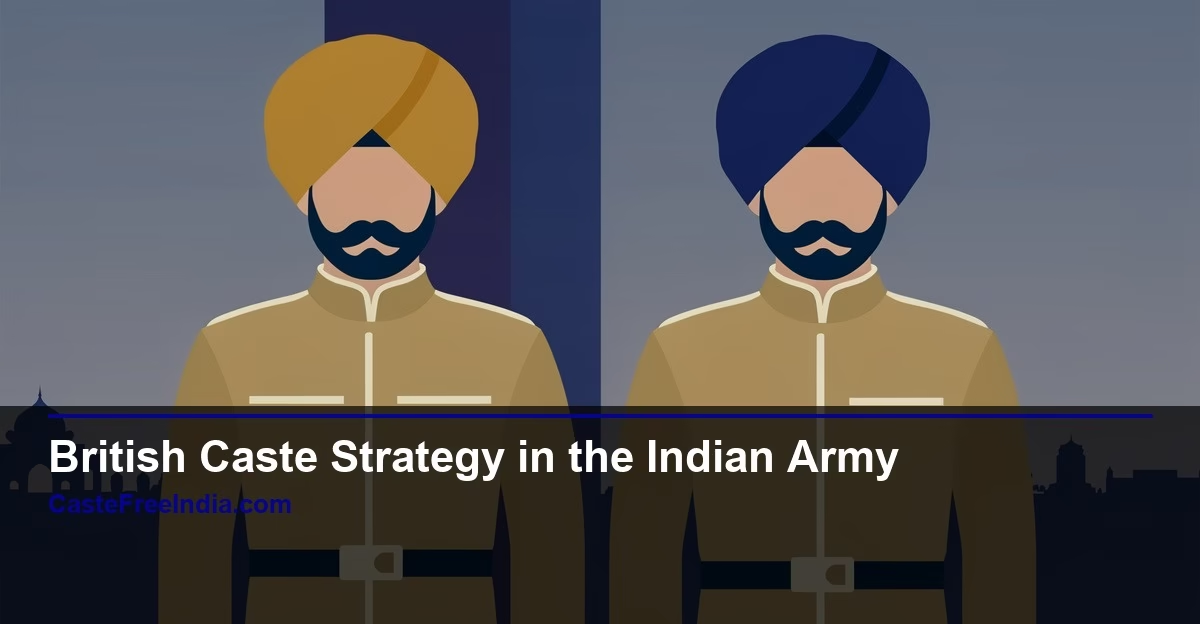
British Caste Strategy in the Indian Army
The history of the Indian freedom struggle is often told through grand narratives of political movements and national leaders. However, a crucial dimension consistently overlooked is the role of caste. The British colonial administration, in its quest to maintain power, masterfully employed the existing caste hierarchy to its advantage, particularly within the Indian Army. This caste strategy, rooted in the infamous “martial races” theory, shaped the army’s composition and had profound, lasting consequences for social mobility and representation for marginalized communities.
This article delves into how the British established and perpetuated a caste-based regimental system in the Indian Army, the impact it had on Dalit and Bahujan communities, and how these colonial legacies continue to affect India’s premier institution. Read more: History of Caste and Surname in India: A Comprehensive Guide
Dalit refers to communities historically considered ‘untouchable’ by the caste system, and Bahujan refers to the ‘majority population’ of India, encompassing various Other Backward Classes (OBCs), Scheduled Castes (SCs), and Scheduled Tribes (STs).
The 1857 Pivot: Identifying British Strategy
The Sepoy Mutiny and its Deep Roots
The Revolt of 1857, known by various names including the Sepoy Mutiny and the First War of Independence, was a watershed moment. While the greased cartridges incident is a famous trigger, the underlying causes were far more complex, involving widespread discontent among Indian sepoys and deposed rulers. The sepoys, often from upper-caste backgrounds, were aggrieved by perceived British interference in their religious practices and endured systemic mistreatment. The rebellion saw a temporary, albeit fragile, alliance between Hindu and Muslim soldiers united by shared grievances.
The Aftermath: A New Strategy of Control
After suppressing the revolt, the British administration shifted its policy. Moving away from earlier, more inclusive recruitment, they began strategizing on how to consolidate their rule. This involved forging alliances with princely states and, crucially, altering their military recruitment policies to leverage caste divisions.
The “Martial Races” Theory and Caste Division
Exploiting Division for Recruitment
The British East India Company, and later the Crown, developed the concept of “martial races.” This theory arbitrarily designated certain castes and communities as inherently more suited for military service than others. This colonial pseudoscience served a dual purpose: it justified the exclusion of many communities, particularly those from lower castes, from military service and created divisions within the existing ranks. By emphasizing supposed inherent qualities based on caste, the British fostered an environment where loyalty was often perceived as being tied to ethnic or caste affiliation rather than to the nation or the army itself. This division weakened potential solidarity among soldiers.
The Impact on Dalit and Bahujan Communities
Dr. B.R. Ambedkar, a pivotal figure in India’s social reform movement, highlighted the devastating impact of this policy shift on Dalit communities. Prior to 1857, individuals from lower castes, such as Mahars and Dusadhs, found employment opportunities in the British Indian Army. This provided a vital source of livelihood, dignity, and a means to escape the oppressive caste system. However, after 1857, the British systematically reduced the entry of lower-caste individuals into the army, appeasing upper castes and solidifying their own control. This disenfranchisement denied marginalized communities access to a key institution and perpetuated their social and economic marginalization.[source] Read more: Yes, Caste was asked: But Why, When, Where and Who asked?
Perpetuating Inequality in the Ranks
The regimental system established by the British often reinforced caste segregation within the army. Soldiers from different castes were frequently organized into separate companies or battalions, limiting inter-caste interaction and mutual understanding. This policy ensured that caste hierarchies mirrored those in civilian society, hindering the creation of a truly national and inclusive military force. The exclusion of significant portions of the population from military service also meant that opportunities for upward mobility and the development of leadership skills were denied to many.
Colonial Legacies in the Modern Indian Army
The Enduring Shadow of Recruitment Policies
Despite India’s independence, the legacy of these colonial recruitment policies has proven remarkably persistent. While the overt “martial races” theory has been officially discarded, subtle biases and traditional recruitment patterns can still influence the army’s composition. The historical exclusion of certain communities means that their representation in the officer corps and in specialized roles may still be disproportionately low. This lack of representation not only impacts the individuals from these communities but also affects the army’s ability to draw upon the full spectrum of India’s talent and perspectives.[source][source]
Calls for Reform and Increased Inclusivity
Contemporary discussions about the Indian Army often touch upon the need for greater inclusivity and representation. Activists and scholars argue that fully dismantling the colonial caste-based structures is essential for a truly national army. This includes addressing lingering biases in recruitment, promotion, and postings, and actively promoting diversity within all ranks. Ensuring that the army reflects the diverse social fabric of India is crucial for its legitimacy and effectiveness in a democratic society.
Conclusion
The British strategy of using caste to divide and control the Indian Army was a deliberate policy with far-reaching consequences. By institutionalizing caste divisions, the colonial rulers not only weakened potential resistance but also created deep-seated inequalities that continue to affect marginalized communities. Understanding this history is vital for recognizing how colonial tactics have shaped modern Indian institutions and for advocating for genuine social justice and equitable representation in all spheres of public life, including the military. Read more: Decoding Caste Politics, Creamy Layer & Social Justice: Truth Revealed
What Can You Do?
- Educate yourself and others about the history of caste in military recruitment.
- Support organizations working for social justice and caste equity in India.
- Advocate for policies that promote diversity and inclusion in all national institutions.
- Share this article to raise awareness about this critical issue.
Do you disagree with this article? If you have strong evidence to back up your claims, we invite you to join our live debates every Sunday, Tuesday, and Thursday on YouTube. Let’s engage in a respectful, evidence-based discussion to uncover the truth. Watch the latest debate on this topic below and share your perspective!

Skeptical Indian is an independent researcher documenting
caste discrimination through primary sources, Hindu
scriptures, court records, and government data.
CasteFreeIndia.com has published 100+ evidence-based
analyses since 2024.