The Unseen Polluter: How Hindu Religious Practices Endanger India’s Environment
While India grapples with a severe environmental crisis, this article delves into a critical yet often overlooked factor: the significant contribution of certain Hindu religious practices to pollution across air, water, and land. This examination explores the multifaceted ways in which Hindu rituals and traditions, from idol immersion to large-scale festivals, create significant pollution, impacting air, water, and soil. Drawing upon historical context, expert opinions, and alarming statistics, this article exposes the profound and often overlooked connection between religious observance and environmental degradation, challenging the conventional understanding of pollution sources and urging a critical re-evaluation of these practices for the well-being of present and future generations.
Table of Contents:
- The Paradox of Non-Violence: A Deeper Look into 'Ahimsa Parmo Dharma'
- Dr. Ambedkar's Stark Warning: Hindus as a "Sick" Population
- The Festival of Pollution: Diwali and Its Environmental Aftermath
- Beyond Diwali: The Pervasive Environmental Impact of Hindu Practices
- The Hidden Costs of Religious Practices: A Data-Driven Perspective
- The Way Forward: Towards Sustainable Religious Practices
The Paradox of Non-Violence: A Deeper Look into ‘Ahimsa Parmo Dharma’
The maxim “Ahimsa Paramo Dharma” (non-violence is the supreme duty) is widely recognized. However, the complete verse, “Ahimsa Paramo Dharma, Dharma Himsa Tatha Para”, reveals a more complex philosophy. It states that while non-violence is the highest duty, violence in the defense of dharma (righteousness or duty) is even superior. This latter part implies that violence is permissible, and even righteous, when protecting dharma. Thus, the concept of ahimsa inherently contains a conditional acceptance of violence, suggesting that the absolute negation of violence is not always the ultimate principle.
This nuanced understanding is often overlooked, creating a simplified and incomplete interpretation of a profound philosophical idea. The full verse itself suggests a hierarchy of duties, where the preservation of righteousness can, under certain circumstances, supersede the absolute adherence to non-violence. This has significant implications when considering the broader societal impact of practices that may cause harm, even if framed within a religious context.
Scholars debate the origin of the phrase “Ahimsa Parmo Dharma,” with connections drawn to the Mahabharata and Jainism. It is widely believed that Mahatma Gandhi drew heavily from Jain philosophical traditions, which place a strong emphasis on non-violence. However, the subsequent line, advocating for violence in the defense of dharma, highlights a strategic and philosophical justification for action when core principles are threatened.
This duality within the concept suggests that religious doctrines are not always monolithic and can contain internal tensions or interpretations that allow for seemingly contradictory actions. The very phrasing implies a dynamic understanding of duty, where adherence to principles must be balanced against the imperative to uphold righteousness. This inherent complexity is crucial when examining contemporary issues where religious practices intersect with public welfare and environmental sustainability.
Dr. Ambedkar’s Stark Warning: Hindus as a “Sick” Population
Dr. B.R. Ambedkar, a towering figure in Indian social reform, offered a prescient critique: “Hindus should understand that they are a sick people, and also that their sickness is fatal to the health and happiness of other Indians.” This statement, delivered with stark clarity, frames the issue of Hindu practices not just as a matter of internal cultural or religious concern, but as a public health and societal hazard.

Ambedkar’s assertion suggests a systemic ailment within the Hindu community that has detrimental consequences for the wider Indian populace. He identifies a “sickness” which is not merely individual but collective, implying a deeply embedded set of behaviors, beliefs, or social structures that create harm. This “sickness” is not contained; its impact is described as “fatal” to the well-being of others, indicating a severe and potentially irreversible damage to the health and happiness of non-Hindus and perhaps even Hindus themselves.
The implications of this “sickness” are far-reaching. It points towards a fundamental disconnect between certain Hindu practices and the principles of public health, environmental sustainability, and social harmony. When applied to the context of pollution, Ambedkar’s words gain an even sharper resonance. If the “sickness” manifests as a disregard for environmental consequences, or a prioritization of religious rituals over public health, then indeed, the health and happiness of all Indians are jeopardized.
This perspective challenges any notion that religious practices are sacrosanct and beyond critique, especially when they demonstrably harm others. It elevates the discussion from one of mere cultural preference to one of critical public concern, demanding attention and remediation for the well-being of the entire nation. The urgency conveyed by Ambedkar’s statement underscores the need to address the root causes of this perceived “sickness” and its pervasive, damaging effects.
The Festival of Pollution: Diwali and Its Environmental Aftermath
The annual celebration of Diwali in India, particularly in cities like Delhi, serves as a stark and recurring example of how religious festivities can exacerbate environmental problems. The widespread use of firecrackers during Diwali leads to a significant and immediate surge in air pollution. In recent years, efforts have been made to promote “green crackers” as a less harmful alternative, but their effectiveness has been limited. The scale of firecracker usage often overwhelms any potential benefits of these newer, supposedly eco-friendly options. This highlights a critical tension between the desire to celebrate religious traditions and the imperative to protect public health and the environment.
The Smoke and Mirrors of “Green” Crackers
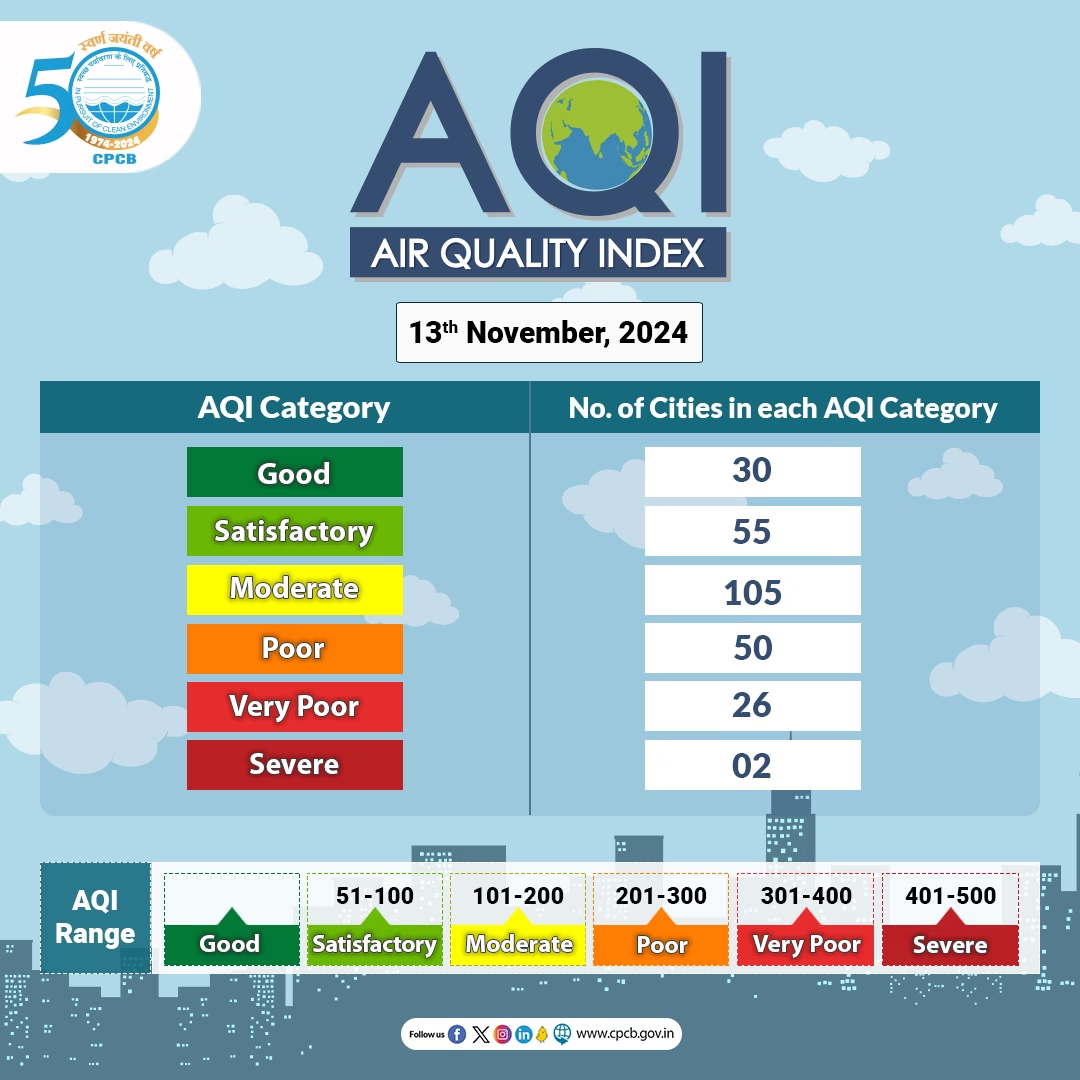
Reports from Delhi indicate that despite calls for restraint, firecrackers are set off with great fervor during Diwali, leading to predictable spikes in air pollution. For instance, after Diwali night, news outlets invariably report a sharp increase in the Air Quality Index (AQI), with many monitoring stations recording levels well above the “very poor” or “hazardous” thresholds. An AQI above 400 signifies extremely dangerous conditions, impacting respiratory health and exacerbating existing health issues. This annual cycle of celebration followed by a public health crisis raises serious questions about the efficacy of current mitigation strategies and the genuine commitment to environmental protection during religious festivals.
Political Rhetoric vs. Scientific Data: The Case of Delhi’s AQI
During Diwali, political figures often make statements that appear to downplay the severity of the pollution or attribute it to factors other than firecrackers. For example, the Delhi Chief Minister has been quoted as claiming that pollution levels were lower this year compared to previous years, despite heavy firecracker usage.
This assertion has been widely criticized as illogical and disconnected from observable facts. Experts and independent data analysis consistently refute such claims. Data from the Central Pollution Control Board (CPCB) revealed that Delhi’s pollution on Diwali day reached its highest point in four years, with PM2.5 concentrations soaring to dangerous levels. This stark contradiction between official statements and scientific data points to a broader issue of transparency and accountability in environmental reporting.
The Ultimate Irony: Air Purifiers for the Elite, Pollution for the Masses
The starkest illustration of the disconnect between the ruling class and the general populace regarding pollution can be seen in the conspicuous use of air purifiers by political leaders. Images of the Prime Minister using an expensive air purifier circulated widely, drawing public criticism. This practice suggests a disconnect between the leadership’s understanding of the severity of pollution and the public’s daily struggle. While leaders retreat into technologically advanced environments, the general populace is left to endure the toxic air, often fueled by religiously sanctioned practices. This situation breeds resentment and highlights the inequitable burden of pollution.

Beyond Diwali: The Pervasive Environmental Impact of Hindu Practices
While firecrackers represent a visible and acute form of pollution during festivals, the environmental impact of Hindu religious practices extends far beyond this. A vast array of rituals, from idol immersion to elaborate ceremonies, contributes to a pervasive and insidious form of pollution that often goes unaddressed and unquantified.
Idol Immersion: A Toxic Tide in India’s Water Bodies
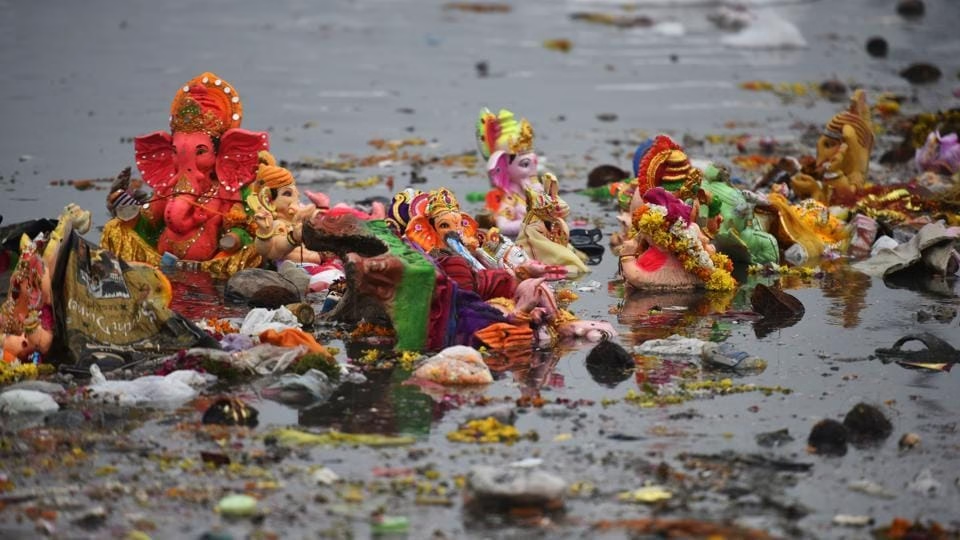
The practice of idol immersion, particularly during festivals like Ganesh Chaturthi and Durga Puja, is a major contributor to water pollution. The immersion of large idols into water bodies releases harmful chemicals, heavy metals, and non-biodegradable materials into rivers, lakes, and the sea. These idols are often made from Plaster of Paris, synthetic paints containing lead, mercury, and other toxic substances, which dissolve in water, increasing acidity, depleting oxygen levels, and decimating aquatic life. The residue of idols, plastic decorations, and other ritualistic waste further contaminates water sources, impacting ecosystems and human health. Experts emphasize that this practice not only pollutes water bodies but also diminishes their aesthetic value and poses long-term ecological consequences.
The Fallacy of “Eco-Friendly” Clay Idols
A misguided suggestion to use clay idols instead of Plaster of Paris ones, while seemingly well-intentioned, overlooks a more significant environmental concern: soil degradation. Even clay, when submerged in large quantities, can silt up water bodies, leading to shallower depths, increased flood risks, and ultimately, the displacement of fertile topsoil to the oceans. The formation of even a few meters of topsoil takes millennia. Displacing this precious resource through ritualistic practices is a grave disservice to future generations who depend on it for agriculture and sustenance. Environmentalists advocating for clay idols are therefore seen as promoting one form of environmental damage while ignoring a far more profound and long-lasting one.
The Sacred Spittoon: Religious Waste and Water Contamination
Beyond idol immersion, numerous daily and periodic religious rituals generate substantial waste. The remnants of these practices, often referred to as ‘religious waste,’ are frequently discarded into water bodies or burned openly, releasing pollutants into the air and water. This constant stream of ritualistic waste contributes significantly to the pollution of rivers and other water sources, further exacerbating the environmental crisis. India observes a staggering number of festivals throughout the year, often culminating in the discarding of offerings and paraphernalia into rivers and lakes.
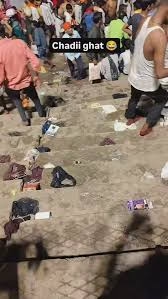
This practice, repeated across the country, creates immense pollution, turning sacred rivers into repositories of religious detritus. In parts of Madhya Pradesh, the tradition of discarding used undergarments into rivers on Saturdays for Shani Dev worship has led to the accumulation of filth, earning the banks the moniker ‘Chaddi Ghat’ (Underwear Ghat). This practice, driven by a distorted belief system, highlights the lack of basic hygiene and environmental consciousness associated with certain religious observances.
Mass Bathing and Collective Waste: The Kumbh Mela Example
Large-scale religious gatherings, such as the Kumbh Mela, involve millions of devotees participating in ritualistic bathing in rivers. While the spiritual significance is paramount for adherents, the sheer volume of people engaging in mass bathing, often accompanied by open defecation, leads to severe fecal contamination of water bodies. Studies conducted during previous Kumbh Melas have shown a dramatic increase in fecal coliform bacteria, indicating a significant rise in human waste contamination. This pollution does not remain localized; it flows downstream, affecting water quality and posing health risks to communities along the riverbanks. The practice of open defecation in and around sacred rivers underscores a critical public health and environmental challenge.
In certain parts of North India, the tradition of water burial, or immersing the mortal remains of the deceased in rivers, is practiced. While adherents consider it a sacred rite, this practice releases decomposing organic matter into water bodies, contributing to pollution and the spread of diseases. During times of crisis, such as the COVID-19 pandemic, the sight of numerous bodies floating in rivers like the Ganga became a stark and tragic symbol of this practice and its devastating environmental and public health implications.

The Funeral Pyre and the Earth: Cremation’s Environmental Toll
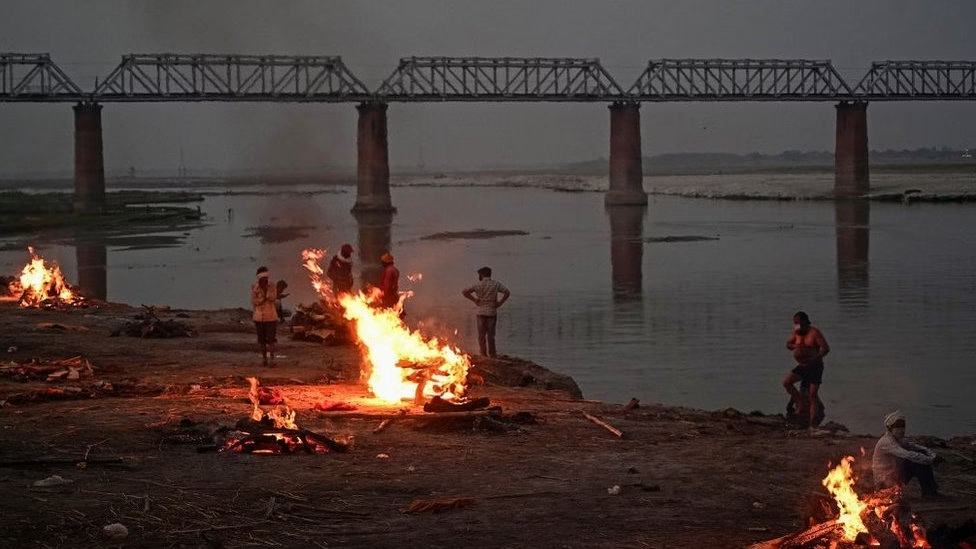
Hindu traditions often involve the cremation of the deceased, a practice that consumes large quantities of wood and other fuels, releasing pollutants into the atmosphere. While cremation is seen as a sacred rite, its environmental footprint is considerable. Furthermore, the practice of scattering ashes and other remnants into rivers, as part of post-cremation rituals like ‘pind daan’, adds to water pollution. The environmental cost of these deeply ingrained traditions is substantial and often overlooked in discussions about pollution.
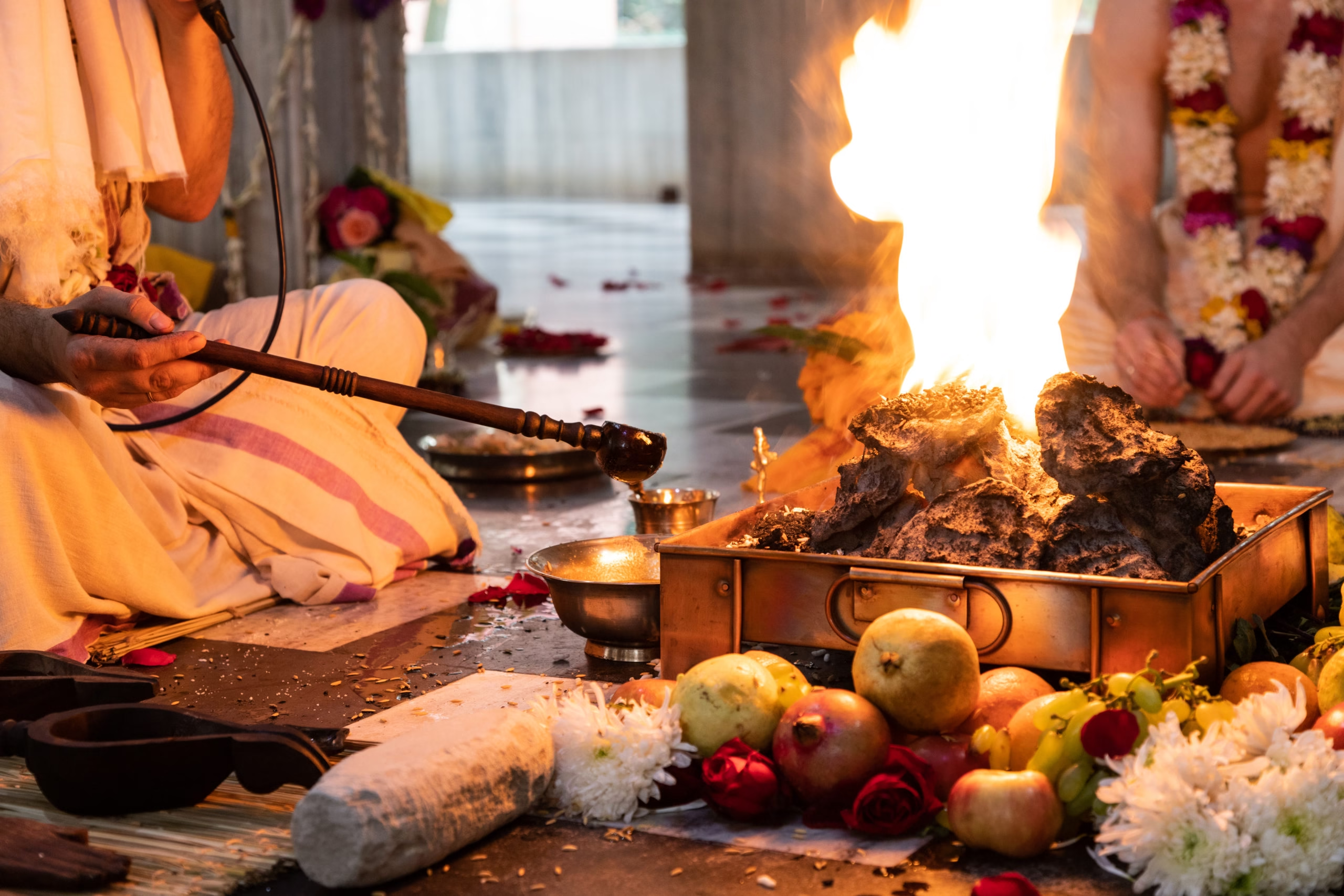
The practice of ‘havan’ (fire ritual) is often touted as a method for purifying the air. However, the widespread and extensive performance of these rituals, involving the burning of large quantities of wood, ghee, and other materials, releases significant amounts of particulate matter and greenhouse gases into the atmosphere. During winter months, when atmospheric circulation is limited, this pollution gets trapped at lower levels, exacerbating air quality issues. The sheer scale of these rituals, often involving massive ‘yagyas’ with hundreds or thousands of fire pits, negates any purported air-purifying benefits and actively contributes to air pollution and resource depletion.
Large religious gatherings, often organized by various gurus and spiritual leaders, involve the congregation of millions of people. The transportation of these devotees, whether by trains, buses, or private vehicles, consumes vast amounts of fuel, leading to significant emissions and air pollution. This indirect pollution, fueled by religious fervor and mass mobilization, is rarely accounted for in environmental impact assessments, yet it contributes substantially to the overall pollution load.
The Hidden Costs of Religious Practices: A Data-Driven Perspective
The environmental impact of religious practices in India is not merely anecdotal; it is supported by alarming statistics and scientific reports that paint a grim picture of the nation’s ecological health. These figures underscore the urgent need for a paradigm shift in how religious traditions are practiced and perceived in relation to environmental sustainability.
Air Pollution: A Daily Dose of Poison
The air quality in major Indian cities, particularly Delhi, has reached crisis levels, and religious activities are a significant contributing factor. Reports indicate that the average person in Delhi inhales toxic pollutants daily. While vehicular emissions and industrial activities are recognized contributors, the role of religious practices, such as the burning of firecrackers during Diwali and large-scale havans, in exacerbating this crisis cannot be overlooked.
The Environmental Performance Index (EPI) 2024 ranks India at a dismal 176th position out of 180 countries, indicating a severe environmental crisis. In terms of air pollution specifically, India ranks even lower at 177th. Reports reveal that millions of deaths in India are attributable to air pollution annually. This alarming reality necessitates a fundamental re-evaluation of practices that contribute to this crisis.
Water Pollution: Rivers of Waste
India’s water bodies are severely contaminated, with religious practices being a primary culprit. The immersion of idols, disposal of religious waste, and mass bathing during festivals lead to alarming levels of pollution. Data suggests that fecal coliform content in rivers can increase dramatically during major religious gatherings like the Kumbh Mela. This level of contamination renders water sources unsafe for consumption and poses a severe threat to aquatic ecosystems. The continuous discharge of untreated sewage and industrial waste further compounds the problem, creating a multi-faceted water pollution crisis.
The consequences of this water pollution are dire. A significant portion of India’s population relies on surface water sources for drinking, leading to a high incidence of waterborne diseases. The environmental damage extends to the loss of biodiversity and the degradation of aquatic ecosystems, further impacting livelihoods dependent on these resources.
Soil Degradation: The Fertile Ground Lost
While less discussed, the impact of religious practices on soil quality is also a significant concern. The widespread use of clay for idol making and its subsequent immersion in water bodies leads to the erosion and depletion of fertile topsoil. This topsoil, crucial for agriculture, takes millennia to form and cannot be easily replenished. The loss of this vital resource has profound implications for India’s food security and the livelihoods of its farmers. The continued degradation of soil quality exacerbates desertification and land degradation, further straining the country’s already limited natural resources.
The continued reliance on practices that degrade soil quality, combined with the impact of chemical fertilizers and unsustainable agricultural methods, creates a vicious cycle of environmental degradation. The long-term consequences of soil erosion and nutrient depletion are severe, potentially leading to widespread food shortages and increased reliance on chemical inputs, which further harm the environment.
The Way Forward: Towards Sustainable Religious Practices
The environmental crisis in India is undeniable, and religious practices, often overlooked, play a significant role in perpetuating it. Addressing this challenge requires a multi-pronged approach that involves education, policy intervention, and a critical re-evaluation of deeply ingrained traditions.
What Can You Do?
Individuals can take several steps to mitigate their environmental impact while still honoring their religious beliefs.
Firstly, opt for eco-friendly alternatives during religious festivals. This includes using biodegradable materials for idols, minimizing the use of firecrackers, and adopting sustainable practices for waste disposal.
Secondly, reduce ritualistic waste by consciously minimizing the amount of material used and discarded during religious ceremonies.
Thirdly, promote awareness by engaging in conversations about the environmental impact of religious practices within your community and encouraging a dialogue that promotes sustainable alternatives.
Finally, advocate for policy change by urging local and national governments to implement stricter regulations on environmentally harmful religious practices and promote policies that encourage sustainable alternatives.
By taking these steps, individuals can contribute to mitigating the environmental crisis and fostering a more sustainable future, ensuring the well-being of both current and future generations.
Governments and religious institutions also have a crucial role to play. Policy interventions can include stricter regulations on pollution-generating activities, incentives for eco-friendly practices, and public awareness campaigns. Religious leaders can champion sustainable alternatives and educate their followers about the importance of environmental stewardship. Collaboration between government, religious bodies, and civil society is essential to foster a cultural shift towards responsible religious observance that harmonizes faith with environmental protection.
Conclusion: A Call for Conscious Devotion
The evidence presented clearly indicates that certain Hindu religious practices contribute significantly to India’s environmental pollution crisis. From the toxic chemicals in idols to the air pollution from firecrackers and the waste generated during festivals, the ecological footprint is substantial. It is imperative that the narrative surrounding religious practices shifts from one of unquestioning adherence to one of conscious devotion, one that considers the well-being of the planet and future generations. By embracing sustainable alternatives and fostering a deeper understanding of our interconnectedness with nature, India can move towards a future where faith and environmental preservation coexist harmoniously.
The call to action is not to abandon religious practices, but to reform them. It is a plea for introspection and a commitment to finding ways to express devotion that do not harm the very environment that sustains us. The words of Dr. Ambedkar serve as a stark reminder of the potential consequences of inaction. The “sickness” he alluded to, when manifested as environmental degradation, poses a fatal threat to the health and happiness of all Indians. It is time for a collective awakening, a realization that true devotion must extend to the protection of the Earth, our shared home.
Read more about Unveiling the Truth: Hindu’s Ancient Science or Modern Propaganda?
Find out more about Unveiling History of Science: The Origins of Knowledge
Do you disagree with this article? If you have strong evidence to back up your claims, we invite you to join our live debates every Sunday, Tuesday, and Thursday on YouTube. Let’s engage in a respectful, evidence-based discussion to uncover the truth. Watch the latest debate on this topic below and share your perspective!

Skeptical Indian is an independent researcher documenting
caste discrimination through primary sources, Hindu
scriptures, court records, and government data.
CasteFreeIndia.com has published 100+ evidence-based
analyses since 2024.