The Lingam Myth: Uncovering the True Origins of an Ancient Symbol
A common narrative claims the Lingam is an ancient, indigenous symbol of Lord Shiva. But what does the evidence actually say about the origins of the Lingam? This article critically examines the widespread misconceptions and presents an evidence-based perspective.
- The Question of Antiquity: When Did the Lingam Emerge?
- The British Impact and the Shifting Sands of History
- The Indus Valley Civilization: A New Frontier of Debate
- The So-Called 'Lingam' from Kalibangan: Examining the Evidence
- Textual Silence: The Vedas and the Absence of Lingam Worship
- The Buddhist Connection: Vajrayana and the Sculptural Evidence
- Reappropriation and the Creation of a Narrative
- The 'Lingam' as a Stylized Pillar or Sculpture
- The Evolution of the Lingam: From Buddhist Iconography to Hindu Symbol
- The Role of Medieval Texts and Foreign Influence
- Frequently Asked Questions about the Lingam
- What is the primary theory regarding the origins of the Lingam?
- Is the Lingam mentioned in the Vedas?
- What is the significance of the Kalibangan artifact?
- How did Buddhist traditions influence the Lingam?
- Why is the dating of Puranic texts important for understanding the Lingam?
- Conclusion: A Call for Critical Inquiry
- What Can You Do?
- Disclaimer
The Question of Antiquity: When Did the Lingam Emerge?
When we seek the origins of the Lingam, two narratives emerge. One posits that the Lingam originated in India and spread outwards, placing India at the center of diffusion. However, scientific evidence, particularly regarding human migration, suggests a different story: humanity originated in Africa and dispersed globally. This fundamental difference in perspective, divine origin versus scientific migration creates a significant schism. The second narrative focuses on material evidence. If the Lingam is as ancient as claimed, where is the archaeological or textual evidence to support this antiquity? This is where the story becomes convoluted.[source]
The British Impact and the Shifting Sands of History
Before British scholarship, India’s historical narrative spoke of epochs like Satya Yuga, Treta Yuga, and Dwapara Yuga, suggesting an incredibly ancient civilization. The advent of British scholarship, however, shifted this narrative. Aryan Migration and Invasion theories, based on linguistic evidence, suggested Sanskrit and associated cultures originated from outside India. Later, DNA studies further complicated this, with some suggesting the Brahminical system had foreign origins. These theories have led to considerable debate, but for understanding the Lingam, we must focus on archaeological and textual evidence.[source] Read more: Bhavishya Purana: Puranic Chronology & Foreign Influence
The Indus Valley Civilization: A New Frontier of Debate
The discovery of the Indus Valley Civilization (IVC) in 1922 revolutionized our understanding of ancient India. Before this, India’s ancient past relied heavily on mythological chronologies. The IVC, with its sophisticated urban planning, revealed a civilization predating many accepted timelines. This discovery became a crucial point of contention regarding the Lingam. Proponents of the ancient origin of the Lingam began to claim evidence of its worship was found in IVC sites, pushing back its origins significantly.
The So-Called ‘Lingam’ from Kalibangan: Examining the Evidence
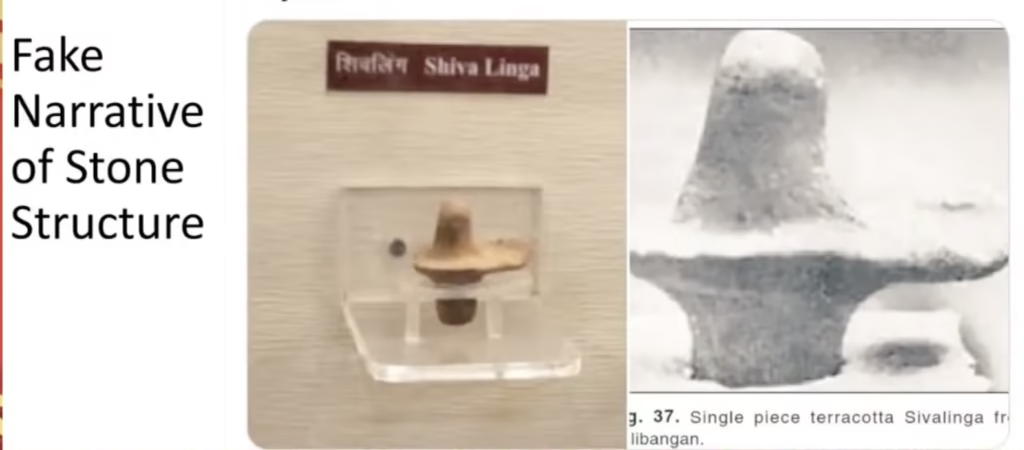
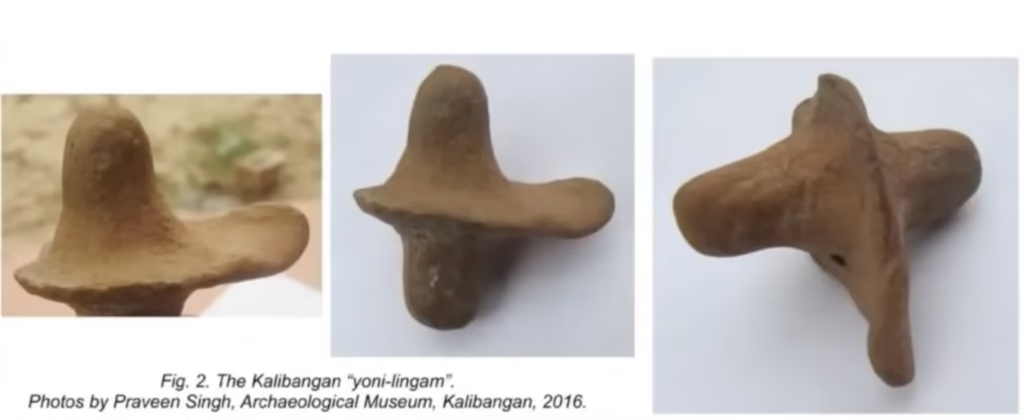
One frequently cited piece of evidence for an ancient Lingam comes from Kalibangan, an IVC site. Excavations uncovered a small, roughly 4-inch object, controversially presented as a Lingam. However, critical inconsistencies emerge upon closer examination. Firstly, the object is remarkably small. If Lingam worship was prevalent, larger, more prominent artifacts would be expected. Secondly, the structure is ambiguous—a cylindrical stone lacking a discernible base or features definitively marking it as a worshipped Lingam. Crucially, no associated temple structure exists. The narrative that this small stone is a Lingam is a recent assertion, unsupported by the archaeological context of its discovery. It appears to be an attempt to retroactively fit an ancient civilization into a later religious framework.[source][source]
Textual Silence: The Vedas and the Absence of Lingam Worship
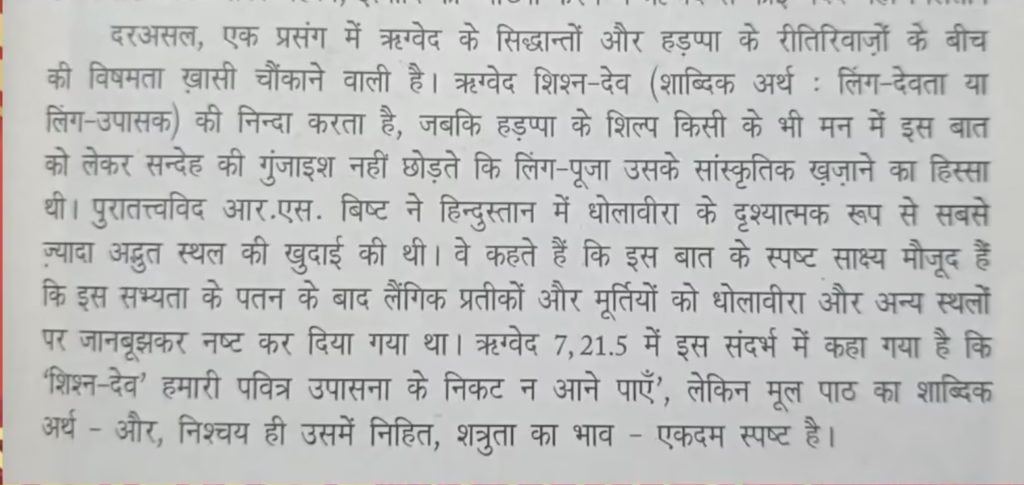
A critical aspect of the Lingam’s origin lies in the Vedic texts, considered among Hinduism’s oldest scriptures. Extensive research reveals a striking absence of any mention of Lingam worship or the deity Shiva as known today. While terms like Rudra appear, they are not consistently equated with the later Puranic Shiva, and crucially, no Lingam is mentioned. Some interpretations suggest the Vedas, in certain passages, criticize or condemn the worship of the phallus (Shishna), directly contradicting the idea of Lingam worship being an ancient Vedic practice. Does this textual silence significantly counter claims of the Lingam’s antiquity within the Vedic tradition?[source] Read more: Origins of Shivalinga Worship: Historical & Scriptural Views
The Buddhist Connection: Vajrayana and the Sculptural Evidence
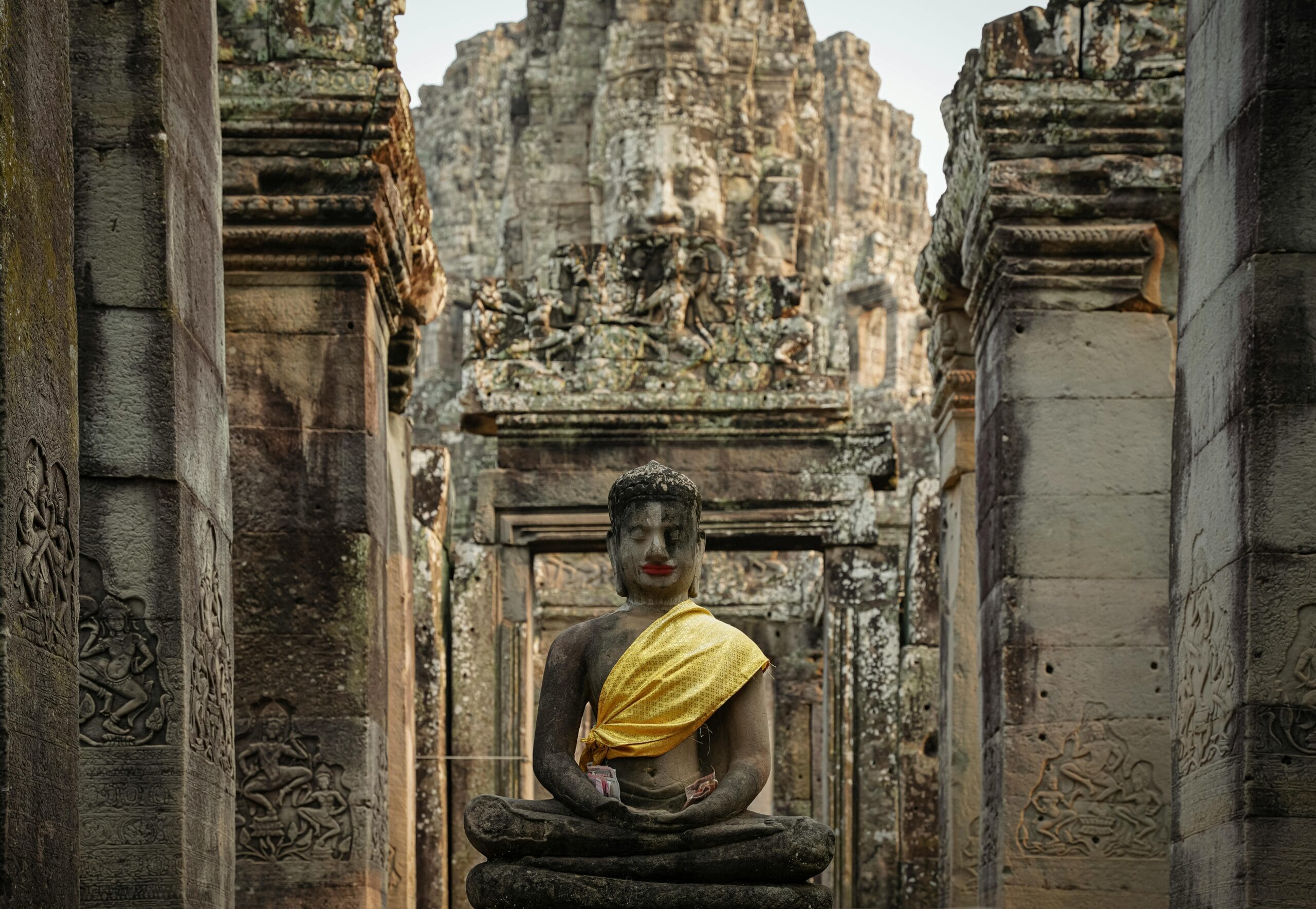
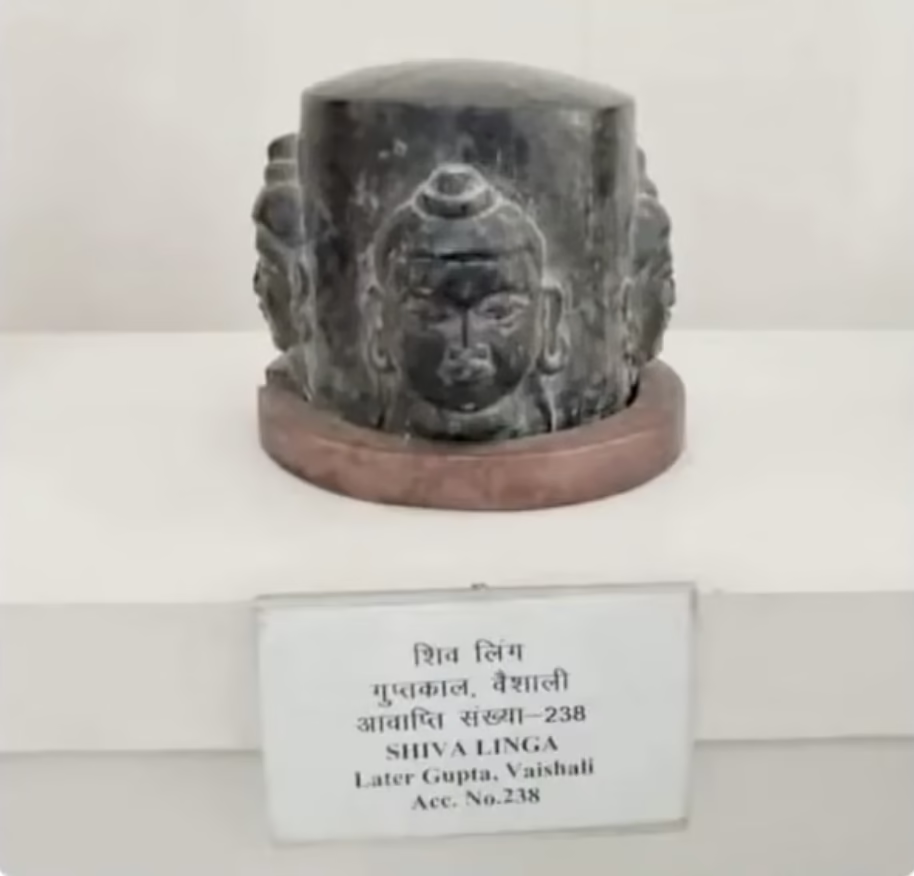
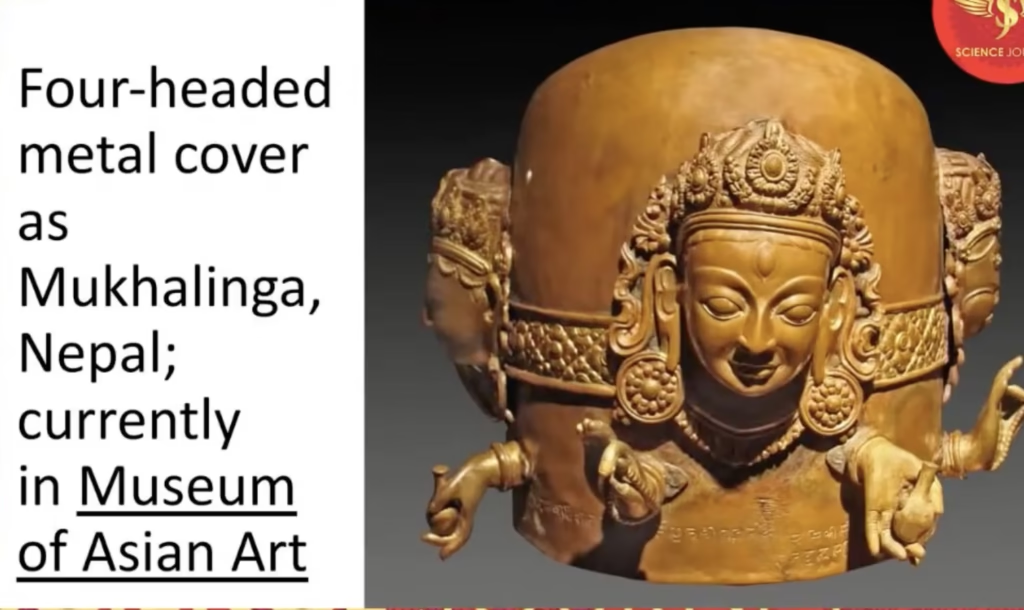
The story takes a significant turn with Buddhist art, particularly from the Vajrayana tradition. Many artifacts presented as ancient Lingams bear striking resemblances to Buddhist sculptures, especially from Vajrayana. These sculptures often depict Buddhist deities and Bodhisattvas. Asserting these are Lingams often overlooks their clear Buddhist origins. The practice of combining male and female generative symbols, the lingam and yoni, also has roots in Buddhist tantric traditions before its widespread adoption in what is now Hinduism. The emphasis on the union of male and female principles is a common theme in tantric traditions across various religions, including Buddhism. Could this be a primary source of the Lingam symbol?
Reappropriation and the Creation of a Narrative
Historical evidence strongly suggests a process of reappropriation and narrative construction. As Buddhism, particularly Vajrayana, flourished and later declined, its artistic and philosophical elements were absorbed and reinterpreted within emerging Brahmanical Hinduism. Deities and symbols were adopted and given new names and contexts. The Lingam appears to be a prime example of this phenomenon. Artifacts that were originally Buddhist were later identified as Lingams, integrating their worship into the Hindu pantheon. This reinterpretation served to bolster claims of antiquity and indigenous origin, effectively erasing their original context. Was this a deliberate act of cultural assimilation?[source]
The ‘Lingam’ as a Stylized Pillar or Sculpture
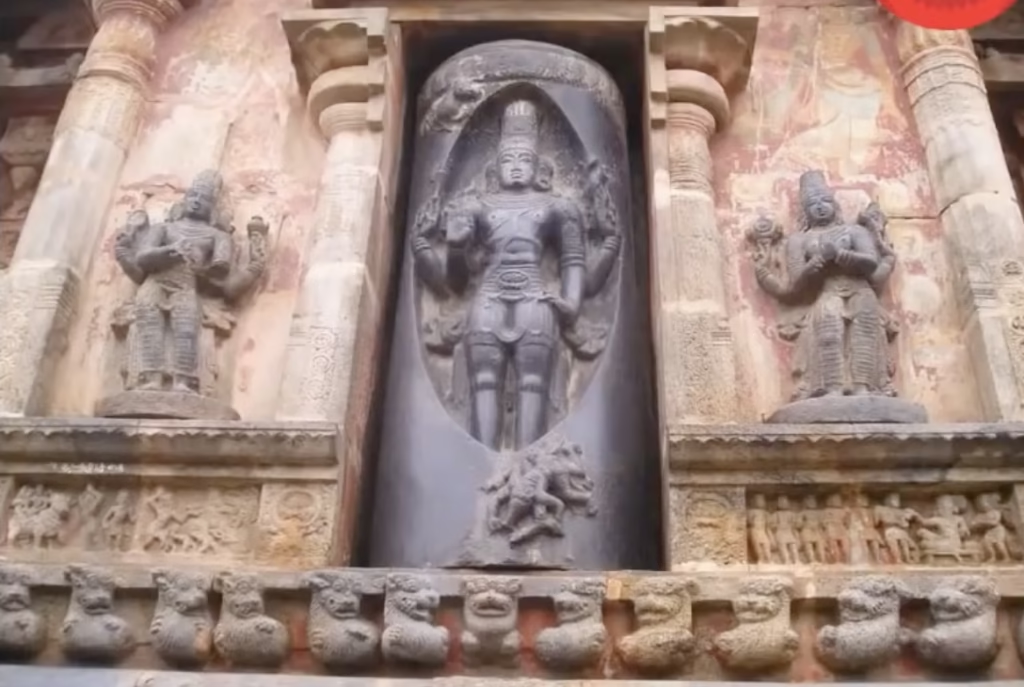
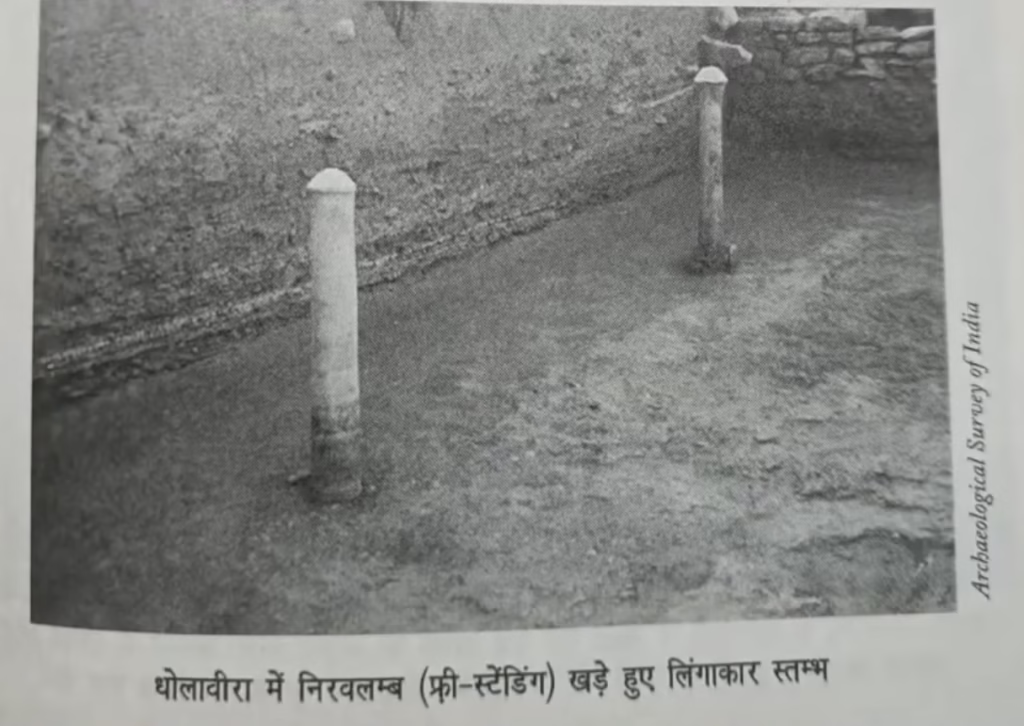
Much presented as evidence for ancient Lingam worship can be better understood as stylized pillars, sculptures, or architectural elements. Numerous free-standing pillars and stone structures have been unearthed. While some possess a vaguely cylindrical or phallic shape, this does not automatically qualify them as Lingams intended for worship. Many served architectural purposes, commemorative markers, or were decorative elements. The interpretation of these as Lingams is often imposed, not derived from archaeological context or inscriptions. For instance, structures described as ‘lingam-like pillars’ at Dholavira have been identified by archaeologists as significant architectural features, not necessarily Puranic religious icons.[source]
The Evolution of the Lingam: From Buddhist Iconography to Hindu Symbol
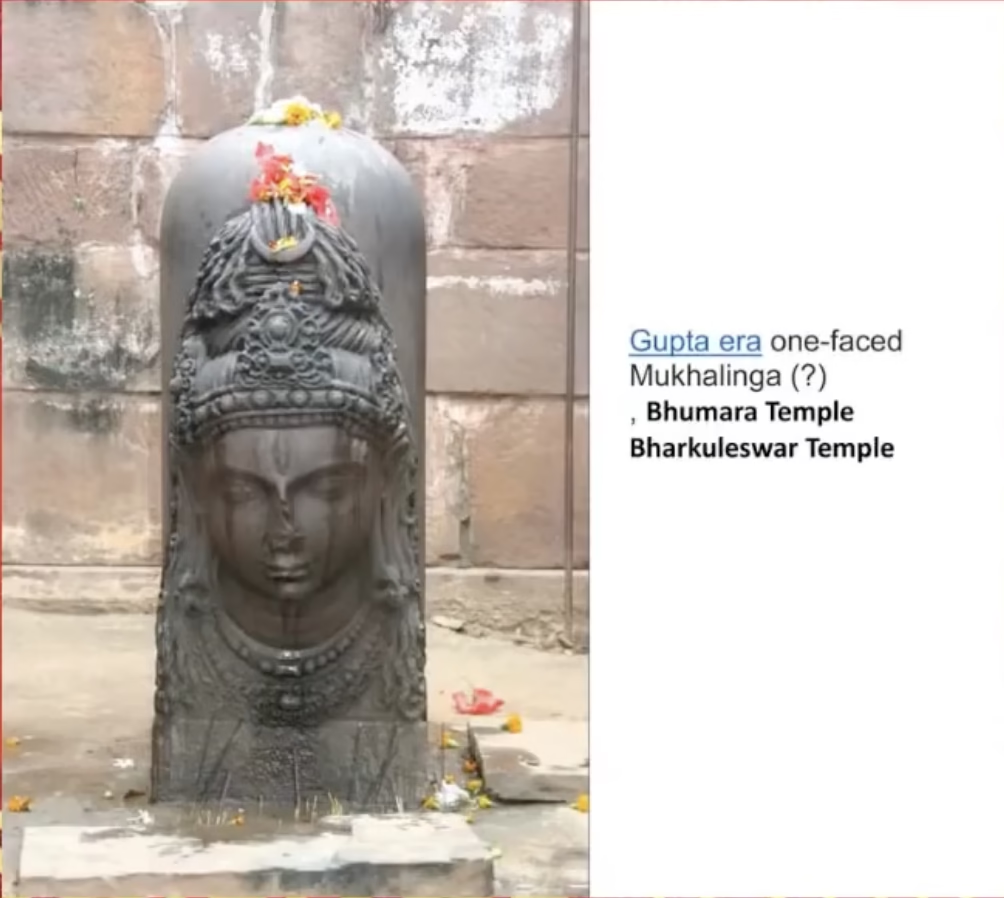
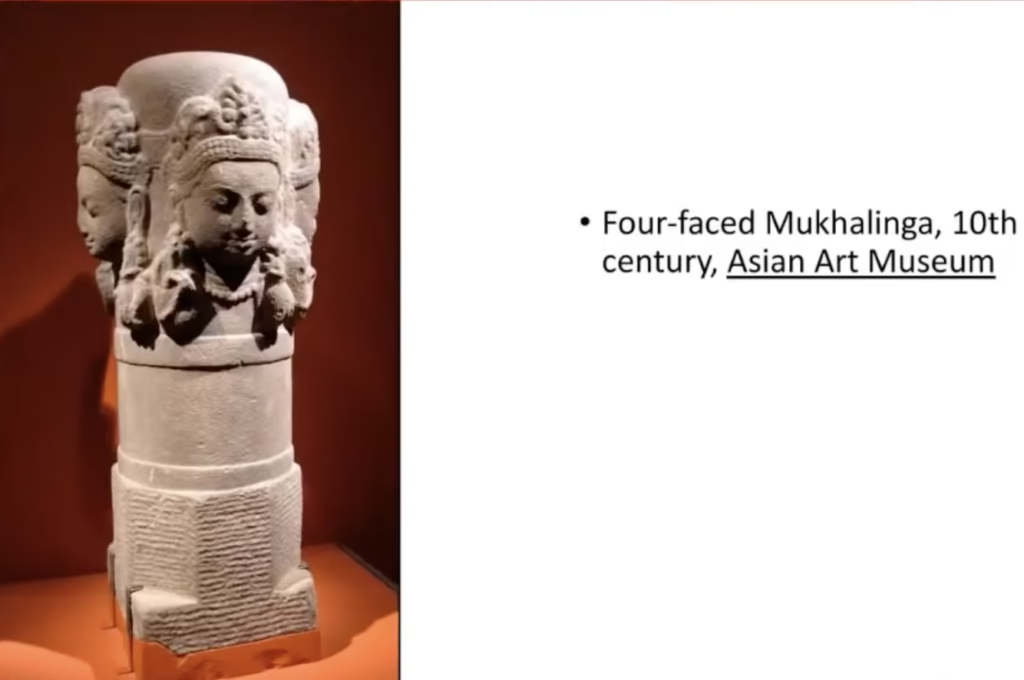
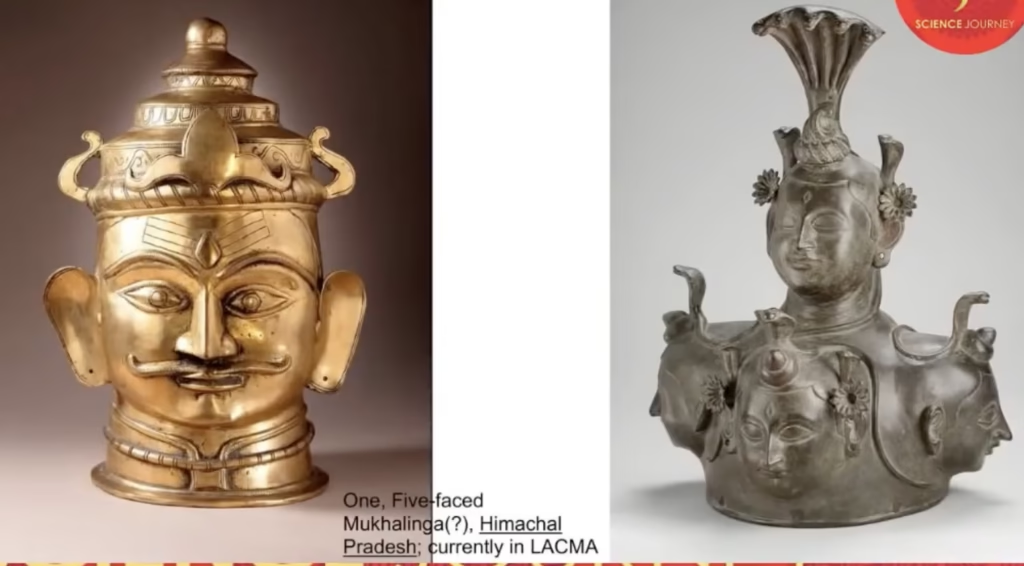
The Lingam, as recognized today, did not appear in its current form in the earliest Vedic period. Its evolution is complex, with significant influences from Buddhist traditions. Sculptures now identified as Lingams often display characteristics of Buddhist art, especially Vajrayana. Depicting deities with multiple faces or symbolic representations of generative principles has precedents in Vajrayana iconography. Over time, these Buddhist forms and symbols were integrated into the Brahmanical fold. For example, the Avalokiteshvara Bodhisattva was later reinterpreted as Shiva or Vishnu in some Brahmanical traditions. This process of assimilation and re-signification led to the adoption of Buddhist artistic motifs and their eventual association with Hindu symbols like the Lingam.[source][source] Read more: Deep Roots of Conspiracy Theories in Indian History
The Role of Medieval Texts and Foreign Influence
Many Puranic texts describing Lingam worship were compiled much later than the Vedas. Critically, some texts contain anachronisms, referencing historical figures and events long after their supposed composition. For example, mentions of Queen Victoria in texts attributed to ancient sages raise serious questions about their authenticity. Relying on these later, potentially interpolated, texts to establish the Lingam’s antiquity is problematic. Furthermore, the concept of the Lingam, particularly its explicit representation of the phallus and yoni, gained prominence during periods of interaction with or influence from foreign cultures and ideas.
Frequently Asked Questions about the Lingam
What is the primary theory regarding the origins of the Lingam?
The primary theory examined in this article suggests that the Lingam, as it is widely recognized today, evolved over time, with significant influences and reappropriation from Buddhist traditions, rather than being an ancient, indigenous Vedic symbol.
Is the Lingam mentioned in the Vedas?
No, the Vedic texts, considered among the oldest scriptures in Hinduism, do not contain any mention of Lingam worship. Some passages even appear to criticize phallic worship.
What is the significance of the Kalibangan artifact?
The small, roughly 4-inch stone artifact found at the Indus Valley Civilization site of Kalibangan has been controversially presented as an ancient Lingam. However, its size, ambiguity, and lack of associated ritualistic context challenge this interpretation, suggesting it may not be a Lingam at all.
How did Buddhist traditions influence the Lingam?
Buddhist art, particularly from the Vajrayana tradition, features sculptures and symbolic representations of generative principles that bear resemblance to later Lingam iconography. These Buddhist elements appear to have been absorbed and reinterpreted within Brahmanical Hinduism over time.
Why is the dating of Puranic texts important for understanding the Lingam?
Many Puranic texts that describe Lingam worship were compiled in the medieval period, long after the Vedic era. The presence of anachronisms in these texts casts doubt on their claimed antiquity and suggests that the widespread worship and iconography of the Lingam may be a later development.
Conclusion: A Call for Critical Inquiry
The journey to understand the Lingam reveals a fascinating, albeit contentious, history. Evidence from the Indus Valley Civilization, Vedic texts, and Buddhist iconography challenges the narrative of the Lingam as an ancient, indigenous Hindu icon with an unbroken lineage from Vedic times. Instead, it points towards cultural absorption, reinterpretation, and narrative construction. The small stone from Kalibangan, the absence of Lingam worship in the Vedas, the Buddhist origins of many artifacts identified as Lingams, and anachronisms in later Puranic texts paint a nuanced picture far removed from common assertions.
What Can You Do?
- Educate Yourself: Seek out evidence-based historical and archaeological research on the origins of religious symbols and practices in India.
- Question Narratives: Critically examine claims about antiquity and divine origin, especially when they lack corroborating evidence from multiple sources.
- Support Research: Encourage and support scholarly work that prioritizes factual accuracy and rigorous methodology in understanding our past.
- Share Knowledge: Disseminate accurate information to counter misinformation and promote a more informed understanding of history and religion.
Disclaimer
Lingam: In this context, the term Lingam refers to the aniconic representation often associated with Lord Shiva, typically a cylindrical or phallic symbol, often placed on a circular base representing the yoni. The article critically examines claims about its origins and prevalence in ancient Indian history.
Brahminical Hinduism: Refers to the form of Hinduism that is largely shaped by the traditions, rituals, and scriptures associated with the Brahmin priestly class. The article discusses theories regarding its origins and influences.
Vajrayana Buddhism: A branch of Mahayana Buddhism that emerged in India around the 5th century CE. It is characterized by tantric practices, symbolic rituals, and a rich iconographic tradition, which the article suggests has been a significant source for later Hindu iconography, including the Lingam.
Indus Valley Civilization (IVC): An ancient Bronze Age civilization that flourished in the northwestern regions of South Asia from c. 3300 to 1300 BCE. Its discovery provided significant insights into early urban societies in India but also became a site of historical debate regarding religious practices.
Reappropriation: The adoption and adaptation of symbols, practices, or ideas from one culture or tradition by another, often with a shift in meaning or context. The article suggests this process occurred with the Lingam and other Buddhist elements.
Anachronism: An error in chronology where a person, event, or object is placed in a time period to which it does not belong. The article points to anachronisms in certain Puranic texts as evidence of later composition or interpolation.
Do you disagree with this article? If you have strong evidence to back up your claims, we invite you to join our live debates every Sunday, Tuesday, and Thursday on YouTube. Let’s engage in a respectful, evidence-based discussion to uncover the truth. Watch the latest debate on this topic below and share your perspective!