How did India, a land once feared and respected across the known world, fall into centuries of subjugation? Why were its rulers unable to defend it against invaders? When you do not know the true history, you are fed narratives that sow confusion. Some will tell you it was due to treachery, but this raises a critical question: why did traitors emerge only in India? And why did this phenomenon begin as early as the 7th century? There was a time when Emperor Ashoka declared peace and propagated Dhamma.
For a thousand years after his reign, no one dared to challenge India. This article examines the story of how ancient power eroded, a story often hidden and distorted, focusing specifically on the evidence presented in the Chachnama regarding Chachnama and Caste Origins.
- The Chachnama and Caste Origins: Seeds of Vulnerability
- The Chachnama: A Brahmin Usurper's Rise to Power
- The Queen, the Usurper, and the Throne
- A Challenge from Chittor and a Brahmin's Ruthless Seizure of Power
- The 11 Restrictions: Early Caste-Based Oppression
- The Fluidity of 'Brahmin' Before the Rigid Caste System
- Internal Strife and the Erosion of Defense Under Dahar
- The Pretext for Invasion: Loot, Girls, and Arab Greed
- The Battle of Deval: Strategic Blunders and Symbol Destruction
- Dahar's Fatal Indecision and the Subjugation of Sindh
- The Legacy of the Chachnama: Analyzing Caste Construction
- What Can You Do?
The Chachnama and Caste Origins: Seeds of Vulnerability
Ancient India commanded respect, even fear; empires trembled at its name. The mention of ‘the land of Buddha and Ashoka’ could deter aggressors. Yet, the 13th century marked a turning point, with the first successful Muslim incursions beginning much earlier, in the 8th century. Muhammad bin Qasim, a young general whose name reflects a lineage—’Qasim’s son’—was merely 17 or 27 years old, depending on the account.
This naming convention, ‘son of father,’ contrasts with the Indian Buddhist tradition of naming a child after the mother first, like ‘Gautami Putra Satkarni’ or ‘Gagi Putra Sugan Raje,’ reflecting a matriarchal influence. The pre-patriarchal system of the Arabs, where the son’s name precedes the father’s, highlights a fundamental difference in societal structures.[source]
Even with advanced weaponry, such as the siege machines designed by the Greeks—large wooden contraptions operated by hundreds of men to hurl massive stones at fortresses—India’s defenses eventually faltered. The answers lie not in a sudden betrayal, but in a slow erosion of internal strength, beginning with a significant power shift in the 7th century.
The Chachnama: A Brahmin Usurper’s Rise to Power
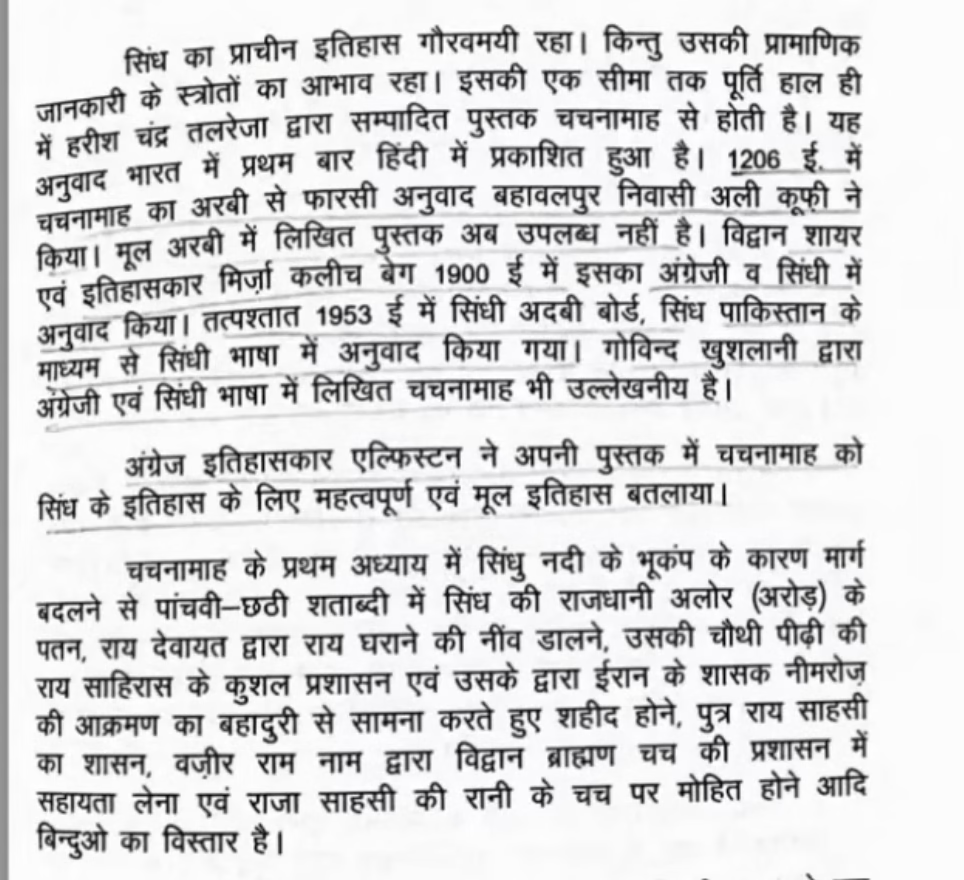
Historians primarily document the early Muslim conquest of Sindh in the Chachnama. Despite its name, which might suggest a pro-Arab bias, a closer reading reveals a different narrative. The Chachnama, much like the Akbarnama or Jahangirnama, centers on its main figure: Chach, a Brahmin who ascended to power in the 7th century, around 666 AD. This ascent marked the first time, according to the text, that Brahmins held political authority in the region.[source]
The story begins when Sahasi II, the ruler of Sindh, allowed his chief advisor, Ram, to manage his affairs. A Brahmin named Chach approached Ram, falsely claiming he had renounced worldly life with his father and brother. However, the Chachnama confuses Brahmins and ascetics (Shramanas), often using the terms interchangeably. Chach, skilled in administration, quickly secured a royal post. He soon caught the eye of the queen while she was with King Sahasi II. The Chachnama suggests Chach and the queen engaged in a clandestine affair after she developed feelings for him; the Tarikh-i-Masumi offers a slightly different account. Regardless, an illicit relationship is suggested, which, combined with the king’s illness and eventual death, created an opportunity for Chach.
The Queen, the Usurper, and the Throne
As King Sahasi II lay dying, the queen, likely named Sunanda or Sugananda, saw her chance. She and Chach conspired to conceal the king’s death. They confined the royal physician, preventing news of the demise from spreading. Their primary concern involved the king’s relatives and powerful figures who would vie for the throne. The queen devised a plan: she requested 500 shackles for the prison and began summoning the king’s potential successors.
The queen meticulously compiled a list of claimants. As each relative arrived, ostensibly to see the ailing king, they imprisoned and shackled them secretly. The queen, aware of the internal rivalries and ambitions, manipulated the situation. She told the imprisoned claimants that the dying king had two names, and if they eliminated the other potential successor, their name would advance. In this way, she orchestrated a bloodbath among the royal kin, pitting them against each other until many lay imprisoned in the dungeons. After six months of this charade, with the claimants disposed of, the queen announced that, as per the king’s dying wish, Chach, his most trusted advisor, would temporarily assume control of the kingdom.
A Challenge from Chittor and a Brahmin’s Ruthless Seizure of Power
This usurpation did not go unnoticed. A brother of the King of Chittor, a member of the Maurya dynasty, learned of the Brahmin’s rule. Suspecting foul play, he arrived with his soldiers, demanding the throne. The queen, identified as Sunanda, confronted him, offering him a choice: fight or accept defeat. Chach, a Brahmin who had never known warfare, hesitated. However, his advisors persuaded him to fight.
In a cunning move, Chach requested the Chittor king to dismount and fight on foot, claiming he, as a Brahmin, was unaccustomed to horseback combat. The unsuspecting king complied. Chach, using a pre-arranged signal to his general, mounted a horse strategically positioned behind him and, as the king approached, swiftly beheaded him. With the primary claimant eliminated, Chach solidified his power. Following this victory, Chach married the queen, Sunanda. The Chachnama and Tarikh-i-Masumi differ on whether the marriage occurred before or after the battle, but the marriage itself confirms the transfer of power from the royal lineage to a Brahmin.
The 11 Restrictions: Early Caste-Based Oppression
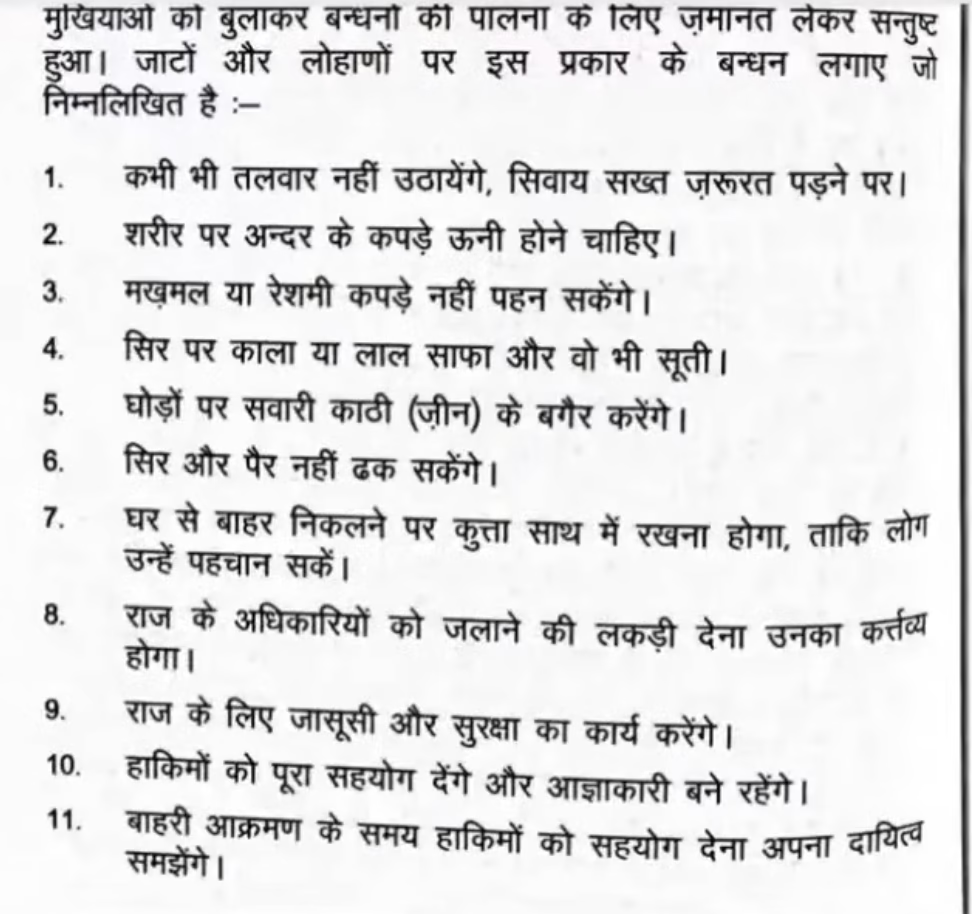
After consolidating his power, Chach implemented a series of discriminatory measures against two specific warrior communities: the Lohana and the Jat. He imposed 11 restrictions, fearing their potential to challenge his rule. This move, while securing his immediate power, immediately sowed seeds of future vulnerability. By alienating and oppressing potential defenders of the land, Chach inadvertently weakened India’s ability to resist future invasions.
The restrictions included:
- Forbidding the carrying of swords except in dire emergencies.
- Mandating the wearing of woolen inner garments, prohibiting silk or velvet.
- Requiring a black or red turban made of cotton.
- Prohibiting the use of saddles on horses for long-distance travel.
- Forbidding the covering of the head and feet.
- Requiring them to provide firewood for royal officials.
- Mandating that they serve as spies and security personnel for the state.
- Obliging them to assist the ruling class during external attacks.
- Orders to keep a dog with them when leaving their homes for easy identification.
These restrictions marked the first instance where specific castes faced targeted subjugation, laying the groundwork for the stricter caste system that would later emerge. The irony is that these oppressive measures were imposed by a Brahmin, yet they echo the later prescribed subservient roles associated with the Shudra varna, demonstrating how power structures become entrenched.
The Fluidity of ‘Brahmin’ Before the Rigid Caste System
The Chachnama provides crucial insights into the religious landscape of the time. Despite the region being named ‘Brahmanaabad,’ the dominant religion was Buddhism. Chach, a self-proclaimed Brahmin, married the widow of an Ahgham, who was Buddhist. He also married his niece, Dehsi, to Sarban, Ahgham’s son, indicating inter-caste and inter-religious marriages were occurring. This suggests that the rigid Brahmanical system, as understood today, was not yet fully established. The text frequently refers to Buddhist monks as ‘Brahmin’ or ‘Buddhist Brahmins,’ blurring the lines and implying that the term ‘Brahmin’ might have been used more broadly for scholars or priests, or that many who identified as Brahmins practiced Buddhist tenets.[source] Read more: Bhavishya Purana: Puranic Chronology & Foreign Influence
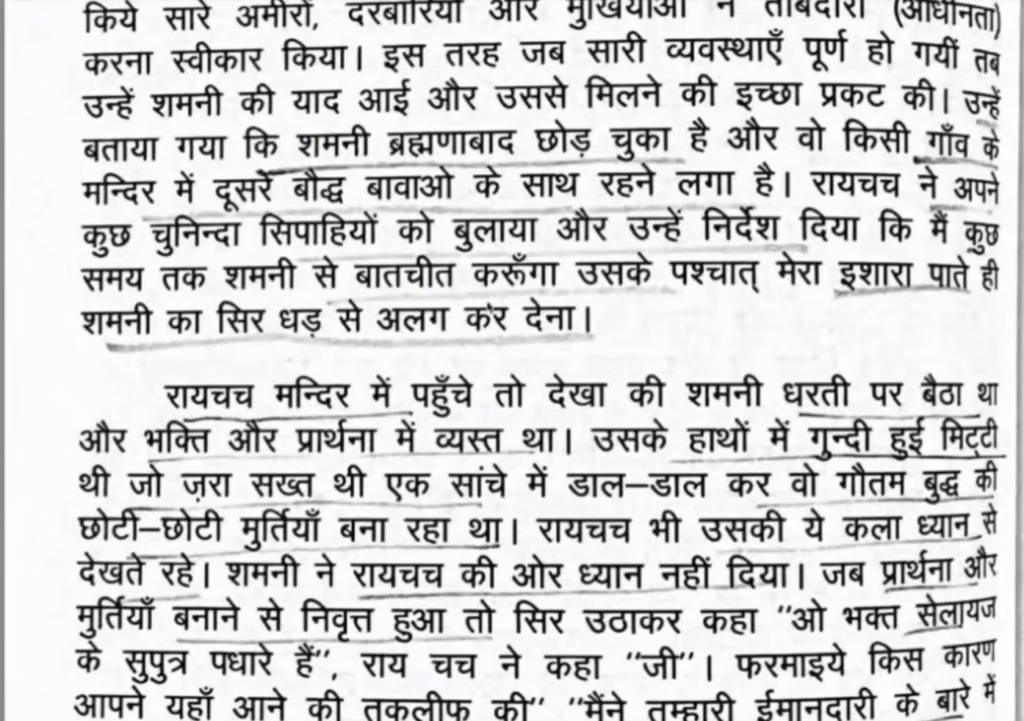
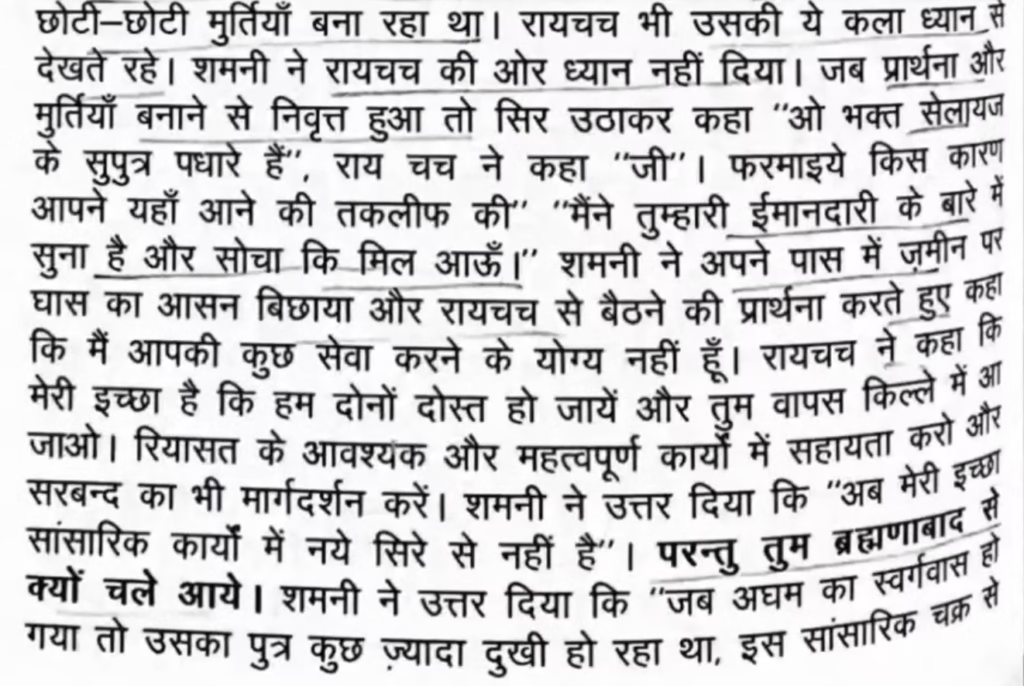
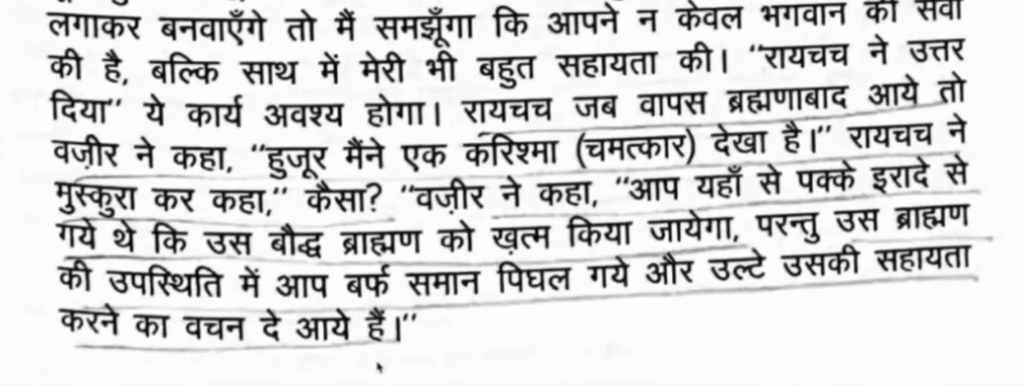
The absence of any mention of Hindu deities like Vishnu, Rama, or Krishna in the Chachnama further supports this. The text indicates that the strict Brahmanical system, with its rigid rituals and prohibitions, developed later, possibly in parallel to the rise of Islam, serving as a social countermeasure to gain dominance over prevailing Buddhist structures. This narrative points to a period where Buddhism was prevalent, and the Brahmanical identity was either nascent or highly fluid, contrasting sharply with later caste rigidity. Read more: Deep Roots of Conspiracy Theories in Indian History
Internal Strife and the Erosion of Defense Under Dahar
The Chachnama details the complex lineage of Chach and his descendants, highlighting internal conflicts fueled by astrology. Chach had three children: two sons and a daughter. Astrologers predicted that both his sons and his daughter’s husband would rule Sindh. This prediction caused confusion and internal strife among the successors. Dahar Sen, one of the sons, ruled part of Sindh when his sister became eligible for marriage. A soothsayer predicted her marriage to a king of Hindustan, whose kingdom would extend beyond the fort of Alor. Dahar, contemplating this, received advice from his minister to marry his own sister and then abstain from relations, a suggestion that bred further discord.
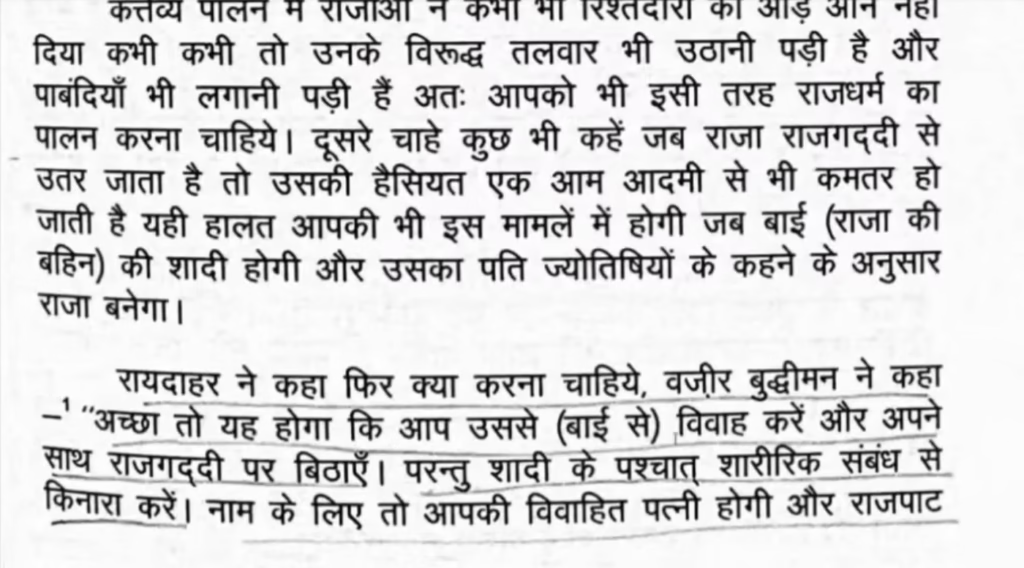
The text clearly states that Dahar married his sister, despite potential interpolations by Arab translators wishing to portray Arabs negatively. This internal conflict and questionable unions weakened the ruling family’s legitimacy and stability. The narrative depicts Dahar as complacent and indecisive, especially when facing Muhammad bin Qasim’s impending invasion. He failed to take decisive action, often relying solely on astrological predictions rather than sound strategy.[source]
The Pretext for Invasion: Loot, Girls, and Arab Greed
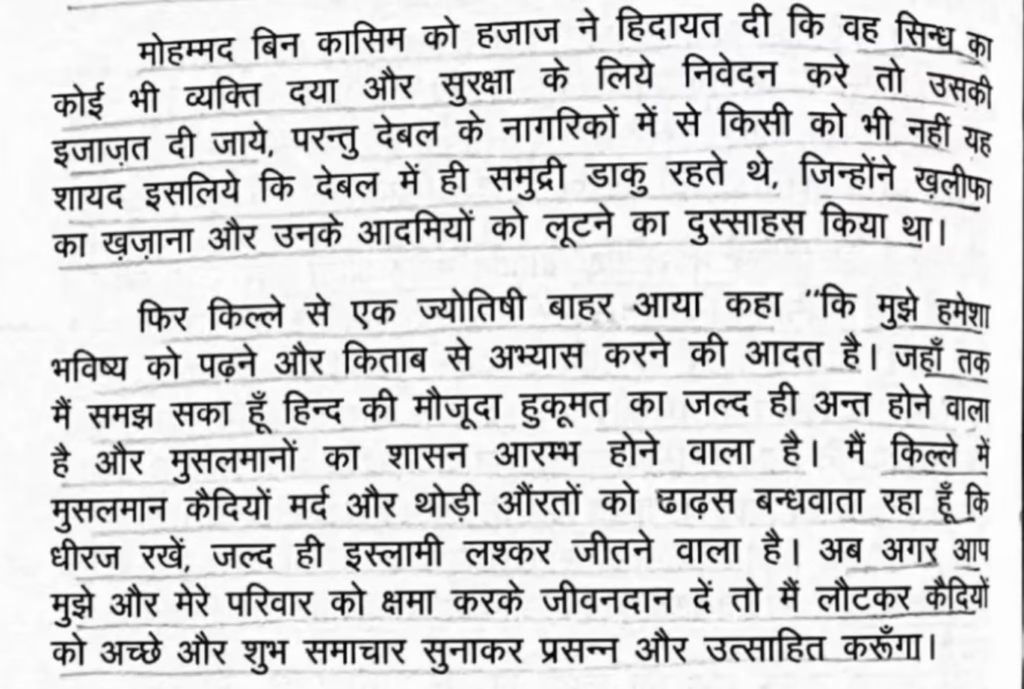
Muhammad bin Qasim’s invasion was not an unprovoked act; prior events provided a pretext. The Arab governor Hajjaj ibn Yusuf al-Thaqafi, eager to expand Arab influence beyond the Arabian Peninsula, sought opportunities. A pivotal incident involved ships carrying valuable gifts, including enslaved women and treasures, from Serendib (Sri Lanka) to the Caliphate. Pirates attacked and plundered these ships near the coast of Sindh.
Hajjaj used this incident to demand reparations from Dahar, accusing him of complicity. When Dahar failed to comply or offer a satisfactory explanation, Hajjaj used it as justification for war. Some accounts suggest the looted ships carried Muslim women, while others state they carried enslaved women from Serendib. Regardless, Hajjaj’s demand for retribution, coupled with his ambition for territorial expansion, set the stage for invasion. The desire for wealth and control over trade routes drove the aggression.
The Battle of Deval: Strategic Blunders and Symbol Destruction
Muhammad bin Qasim’s campaign began with the attack on Deval, modern-day Karachi. The city was heavily fortified, featuring a prominent Buddhist stupa, described as a 60-foot-high structure with a silk flag at its pinnacle. The city’s defenders, including the Brahmins, took refuge within the fort. After a prolonged siege, a Brahmin named Sudev emerged, claiming to be a soothsayer. He informed Qasim that the stupa held a magical talisman preventing the fort’s capture and advised him to destroy it and its flag first.
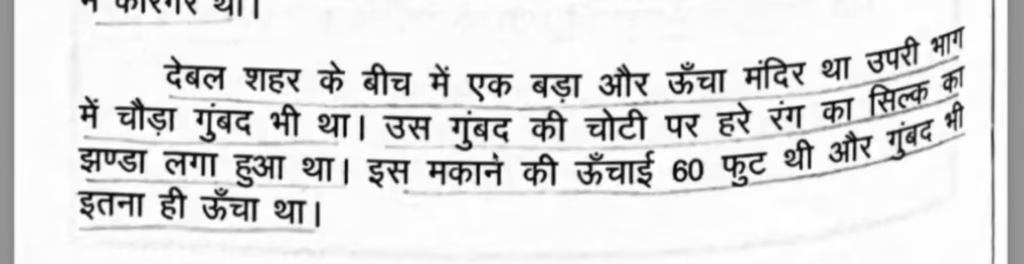
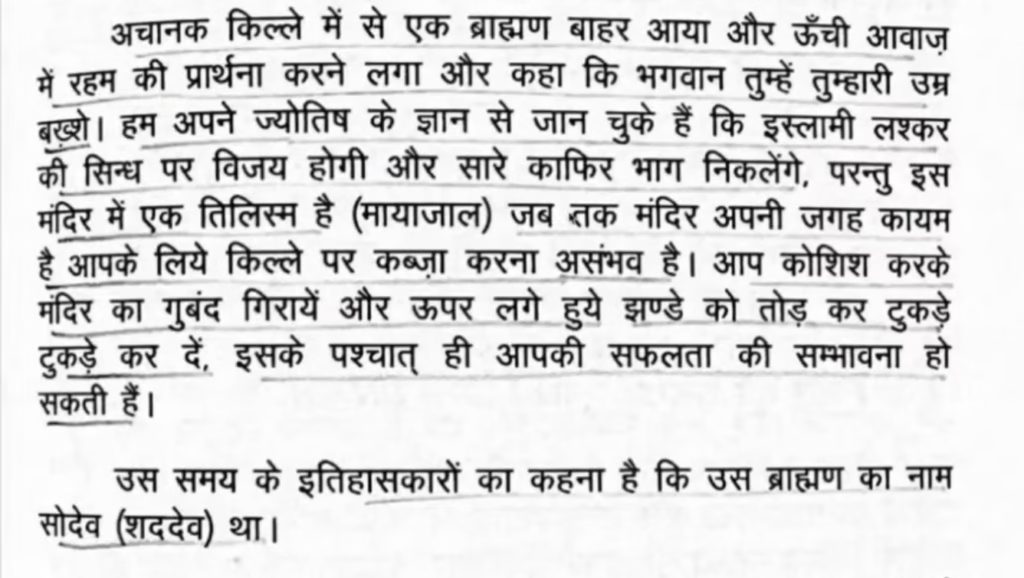
Qasim, employing siege engines (similar to Greek designs) that hurled large stones, bombarded the stupa and its flag. The destruction of this significant Buddhist structure, a symbol of the local faith, demoralized the defenders. The narrative highlights the role of Brahmins in advising the invaders, either through genuine astrological belief or as a means of appeasement. Deval’s fall led to the massacre of its inhabitants and the enslavement of its women. The invaders seized immense wealth and freed Arab prisoners held in the city.
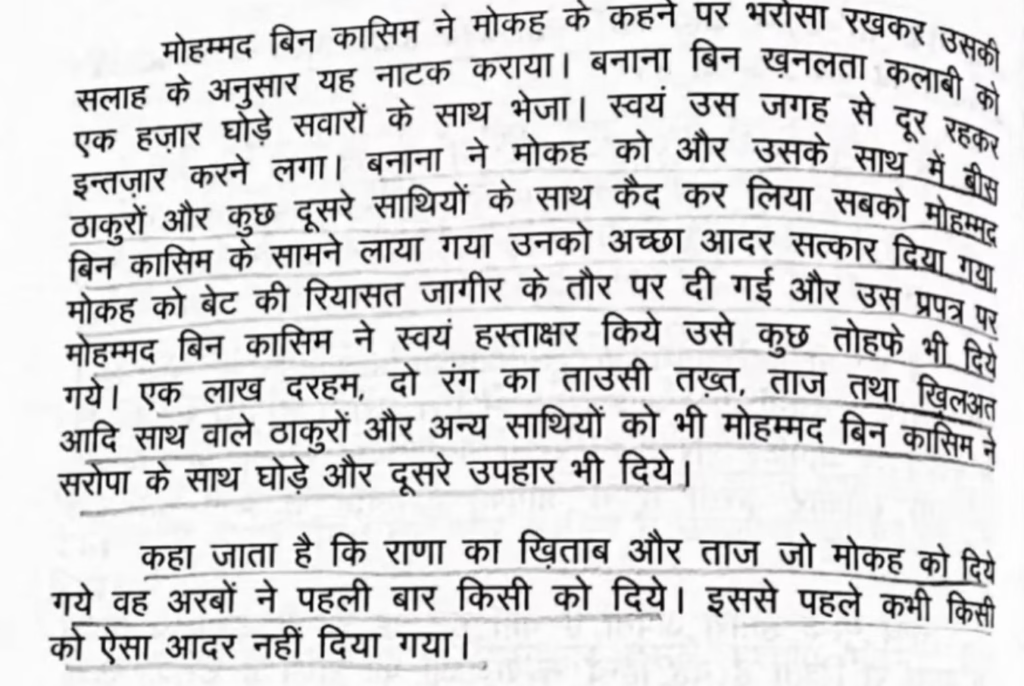
The Chachnama also mentions the Arabs conferring the title ‘Rana’ upon local chieftains who collaborated, a title previously unused in the region. This indicates a strategy of co-option and the establishment of a new power structure.
Dahar’s Fatal Indecision and the Subjugation of Sindh
Despite Muhammad bin Qasim’s initial successes, King Dahar remained largely passive. He missed numerous opportunities to intercept the Arab forces, particularly at the Indus River, failing to act decisively. His astrologers continued to predict his eventual victory, lulling him into a false sense of security. His military strategies proved questionable, bordering on negligent. During one battle, he sat in a palanquin on an elephant, accompanied by two maids—one offering him betel leaves and the other handing him arrows. This display of detachment and reliance on servants amidst fierce battle highlighted his lack of strategic acumen and leadership.
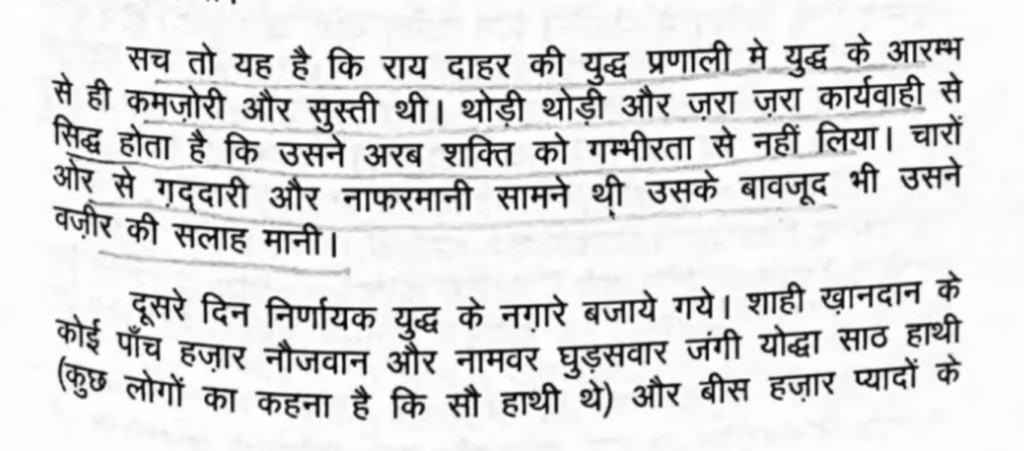
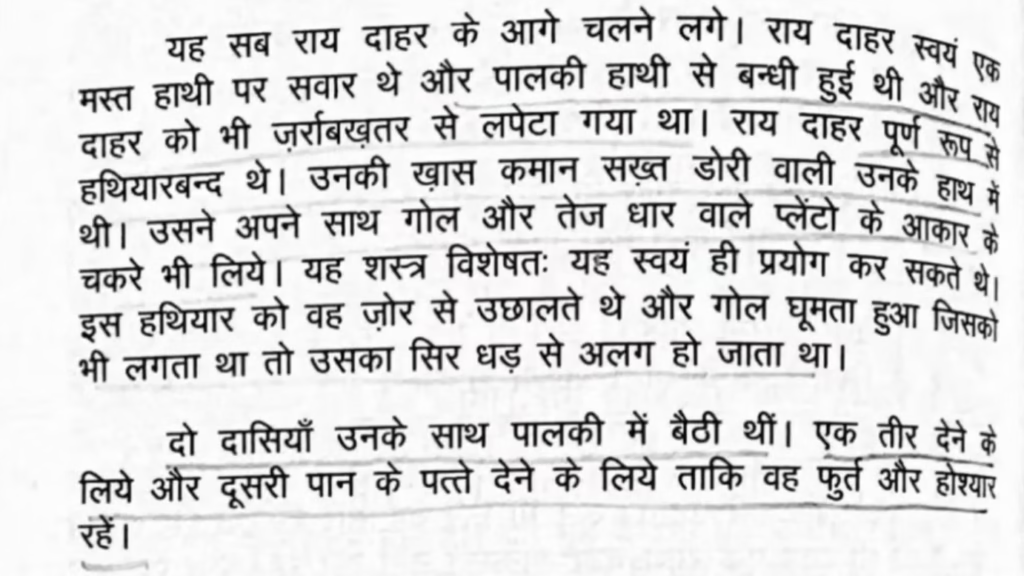
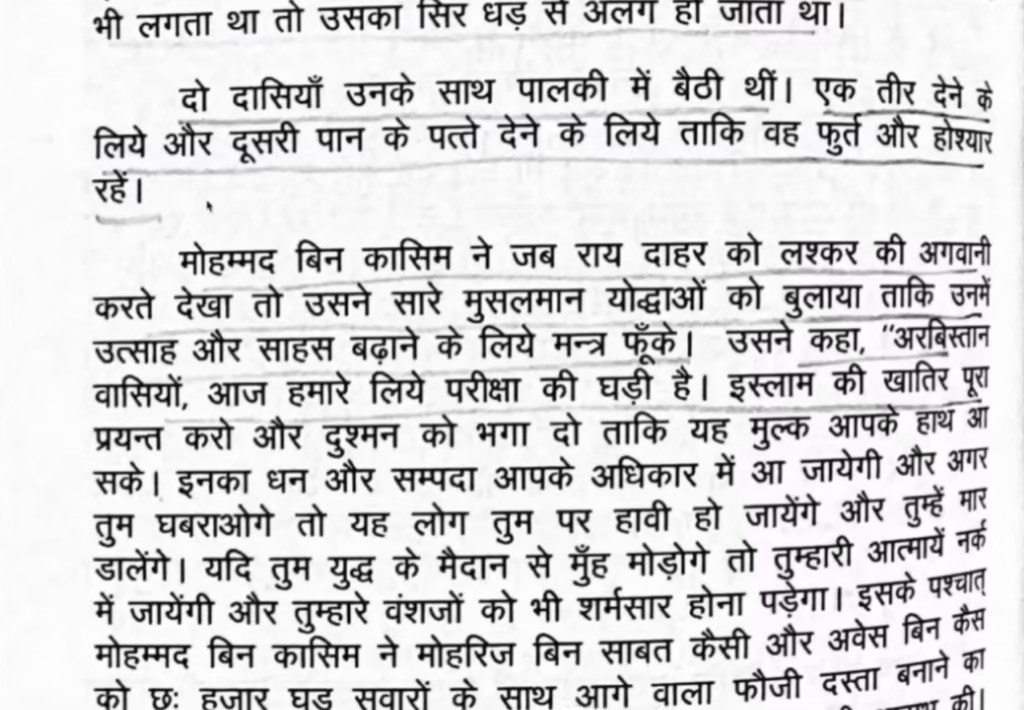
This indecisiveness, combined with internal divisions and the oppressive policies of the ruling class, left Sindh vulnerable. When Muhammad bin Qasim advanced, Dahar’s forces collapsed easily. Following Dahar’s death, his wives and daughters were captured. His two daughters, Surya Devi and Padmini, were sent to the Caliph in Damascus. Upon their arrival, the Caliph decided to marry them after learning of their lineage. This tragic end for the royal family marked the complete subjugation of Sindh.
The Legacy of the Chachnama: Analyzing Caste Construction
The Chachnama, translated from Arabic to Persian by Ali Kufi in 1206 AD, remains a crucial, albeit controversial, source for understanding this period. Its translations and interpretations have shaped historical narratives for centuries. The text reveals a society in flux, where religious and social structures transformed. Chach’s rise—a Brahmin who overturned the order, married a queen, and imposed discriminatory laws—set a precedent for future power grabs and social stratification, directly informing the development of the rigid caste system.
The narrative underscores the dangers of internal division, the consequences of oppressive rule, and the manipulation of religious and astrological beliefs for political gain. The story of Sindh’s fall, as told through the Chachnama, is not just a tale of foreign invasion but a stark reminder of how internal weaknesses pave the way for external conquest. It compels us to question traditional understandings of caste origins and highlights the complex interplay of religion, power, and social engineering in shaping India’s history.
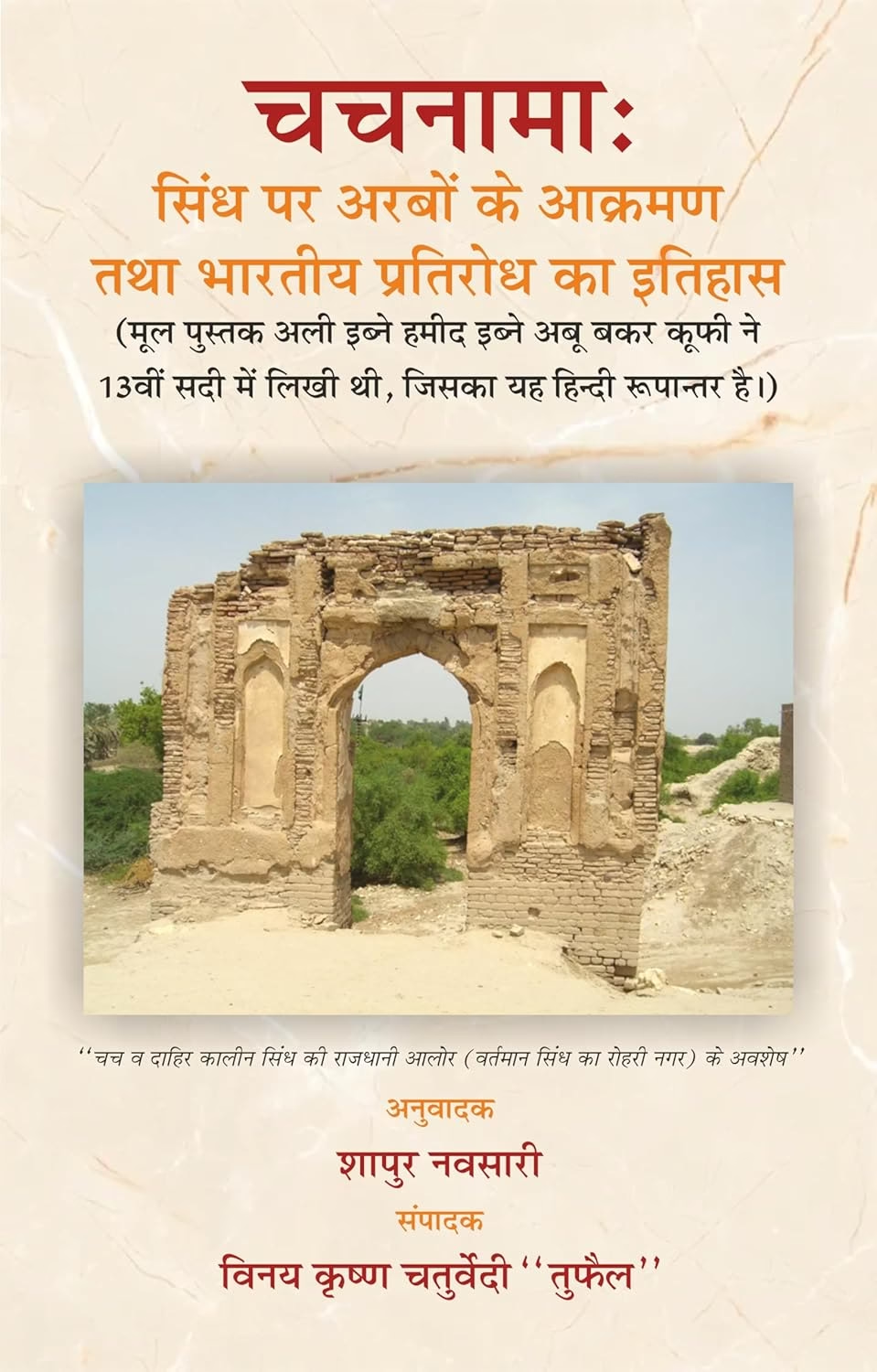
“CHACHNAMAH” written in 13th AD by Ali ibn Hamid ibn Abu Bakr Kufi. This is a history of series of Islamic Invasions of Sindh from 634 AD to 715 AD. This important historical event in the then western frontier of India has not been given its due place in the current curriculum in school or college level in India. Hindi rendition is an effort to reach out to the vast masses in the Hindi belt. It is immensely relevant for our young generation to know full details about this first Islamic Invasion on our soil. This Arab invasions of 7th and early 8th century were entirely different than the earlier invasions by Persians, Greeks, Sakas, Parthians, Kushanas and Hunas as these latter were soon assimilated with our ethos and culture, however the former were not so, rather in the wake of invasions, came the explicit intent to annihilate the indigenous culture and replace it with Islamic monotheism.
What Can You Do?
The history recounted in the Chachnama serves as a powerful lesson for anti-caste activism. To combat the historical roots of oppression and inequality, you must: Read more: History of Caste and Surname in India: A Comprehensive Guide
- Investigate Foundational Texts: Seek out and read diverse historical accounts, especially primary sources like the Chachnama that reveal systemic power dynamics rather than simple heroism or villainy.
- Deconstruct Power Narratives: Be critical of historical accounts that attribute complex societal changes solely to single events or leaders. Look for evidence of systemic oppression, such as the 11 restrictions.
- Analyze Social Engineering: Encourage critical analysis of how social stratification (like the early targeting of Lohanas and Jats) was implemented by elites to secure political control.
- Support Systemic Change: Engage with and support organizations and individuals actively working to dismantle caste-based discrimination and inequality in contemporary India based on evidence of historical precedent.
Do you disagree with this article? If you have strong evidence to back up your claims, we invite you to join our live debates every Sunday, Tuesday, and Thursday on YouTube. Let’s engage in a respectful, evidence-based discussion to uncover the truth. Watch the latest debate on this topic below and share your perspective!