


Introduction
As India engages in critical discussions around social justice, the aversion towards reservation policies, rooted in historical and societal biases, takes center stage. Why does reservation, designed to uplift marginalized communities, spark heated debate? Let’s discuss Caste Reservation and caste discrimination in India.
This article examines the complexities of caste discrimination in India and reservation policy, its manifestations, causes, and consequences. The core theme revolves around the deep-seated aversion to reservations among privileged sections of society, perpetuating inequality.
Table of Contents:
- The Roots of Aversion Towards Caste and Reservation
- The Hypocrisy of Selective Outrage
- The Impact on Education and Social Mobility
- Data-Driven Evidence of Caste Discrimination
- The Role of Systemic Factors
- Challenging Caste Discrimination: A Path Forward
- Periyar's Vision for Equality
- The Illusion of Meritocracy and the Persistence of Caste
- What can you do?
The Roots of Aversion Towards Caste and Reservation
Historical Context
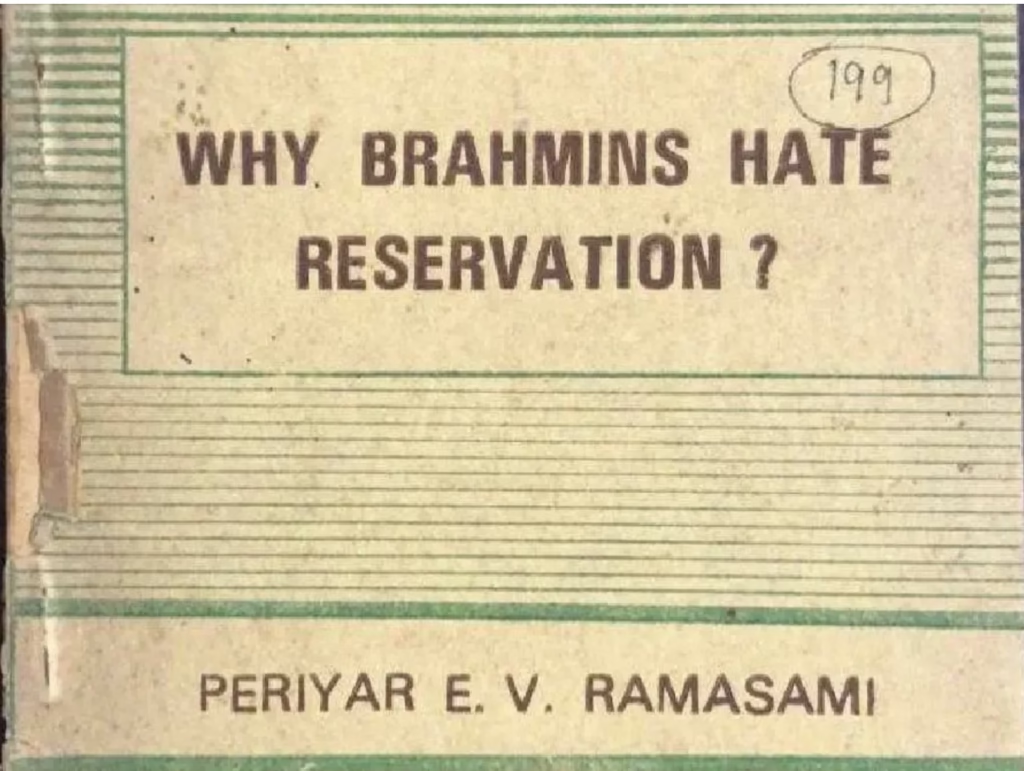
The aversion towards reservation is not new; it’s entrenched in India’s history. As Periyar E.V. Ramasamy (a prominent social reformer and activist) highlighted, animosity towards reservation among Brahmins stems from a desire to maintain privilege. This sentiment has evolved over time.
Contemporary Manifestations of Caste Discrimination
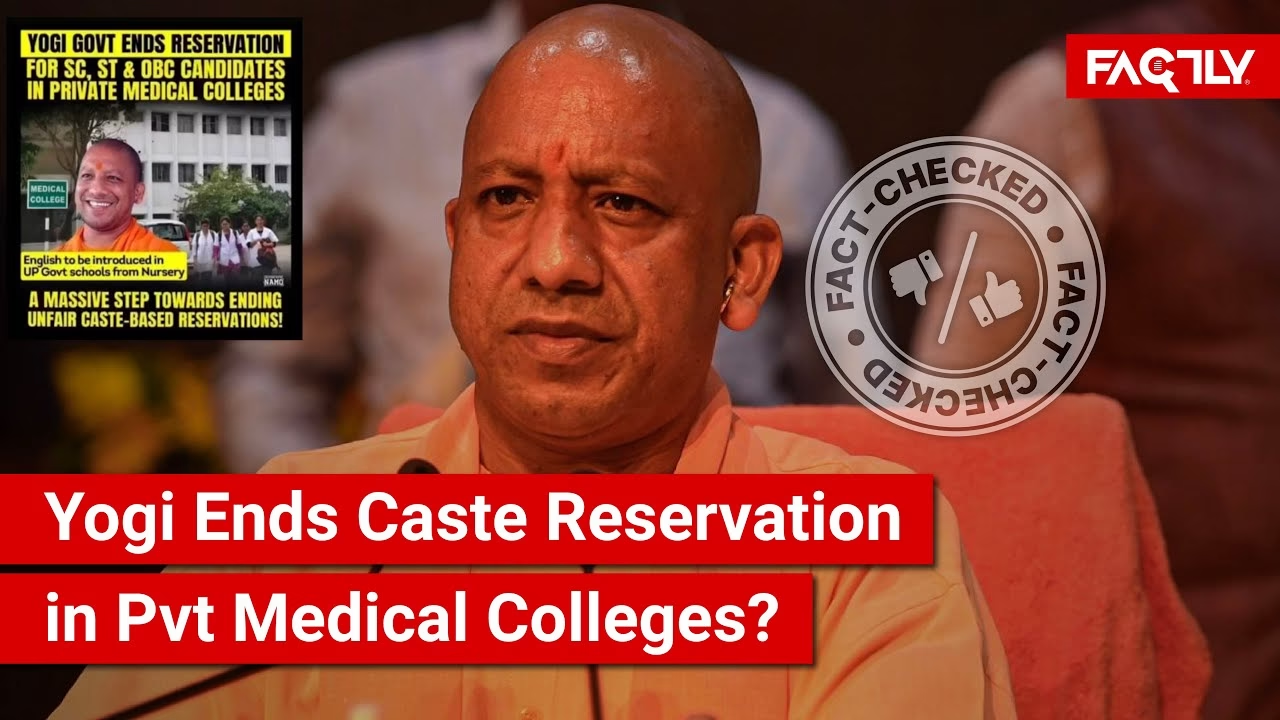
Today, this aversion is often expressed subtly. For example, Uttar Pradesh Chief Minister Yogi Adityanath critiques reservation policies, framing them as detrimental. This subtle critique exemplifies how aversion manifests in contemporary political discourse. Such narratives undermine affirmative action.
Subtle Forms of Caste Discrimination
The aversion to reservation manifests subtly. Accusations against beneficiaries, claims of disproportionate benefit, and narratives that pit groups against each other are common. For example, accusations often arise that OBCs are taking all the seats, leaving none for SC/ST candidates. These methods create a hostile environment.
The Hypocrisy of Selective Outrage
Silence on Upper Caste Reservation
A striking aspect is the selective outrage it elicits. While reservations for SC/ST/OBC communities are frequently questioned, the 10% reservation for Economically Weaker Sections (EWS) among upper castes is often met with silence. This disparity highlights a bias and a willingness to overlook privileges. Is aversion to reservation like complaining about a band-aid on a deep wound, while ignoring the wound itself?
The Normalisation of Upper Caste Privilege
The ease with which upper-caste reservations are accepted underscores a broader issue. It reveals how privileges are normalized, while efforts to uplift disadvantaged groups are viewed with resentment.
The Impact on Education and Social Mobility
Caste Discrimination in Educational Institutions
The negative attitudes towards reservation permeate education. Instances of subtle discrimination, such as professors singling out students admitted through reservation, are common. These actions impact students’ well-being.
The IIT Example for Caste Discrimination
The Indian Institutes of Technology (IITs) represent a microcosm of societal biases. Despite admission through exams, students from SC/ST/OBC backgrounds face discrimination, stigmatization, and a lack of support, leading to isolation. The question of aversion to reservation stands as a persistent challenge.
In what suppressed, hidden ways does discrimination against reservations happen in IITs? What are the thoughts of those people who have seen the hatred towards reservation within the academic system there? And their ways of expressing that hatred are direct – the suicide statistics – and also indirect. What are those [indirect ways]? How is this entire game played out there?
So, the question of hatred towards reservation stands before us like an insurmountable riddle (Yaksha Prashna). And Periyar, in his Complete Works, had duly written an article asking, ‘Why do Brahmins hate reservation?‘ Fundamentally, these ideas spread from there and then they easily float through the Savarna (upper caste) sections of society.
Data-Driven Evidence of Caste Discrimination
Suicide Rates in Higher Education due to Caste Discrimination
One alarming indicator is high suicide rates. Data reveals a disproportionate number of suicides among SC/ST/OBC students in IITs, IIMs, and central universities. These statistics underscore psychological distress. Imagine a race where some runners start miles behind; is it fair to judge them on finishing time?
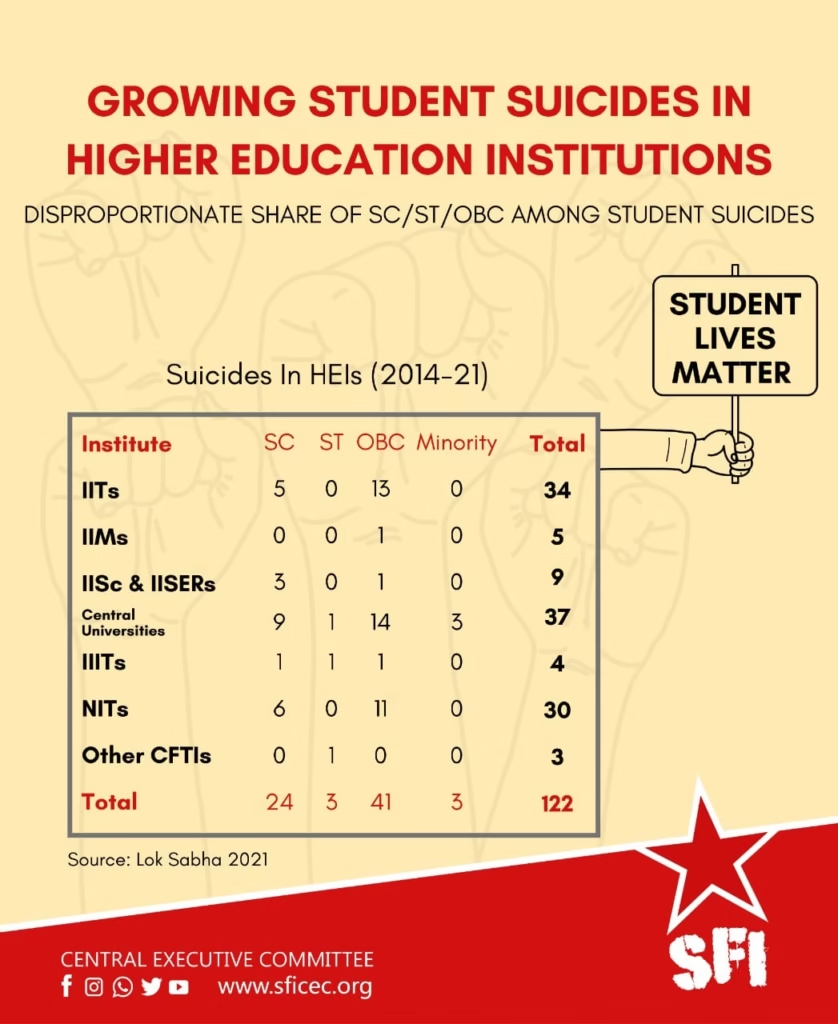
According to a statement by the Education Minister in December 2021, between 2014 and 2021, 122 students committed suicide in IITs, IIMs, and central universities, with 24 from Scheduled Castes, 3 from Scheduled Tribes, and 41 from Other Backward Classes (Jan Chowk). This data paints a grim picture of the systemic issues within these institutions.
Experiences of Dalit Students
Personal accounts highlight everyday challenges. From humiliation by professors to ostracization, these students endure reminders of their status. The effect leads to mental health issues and suicide.
Hatred/discrimination against Dalit and Adivasi students in higher institutions like IITs. Look at the IIT Bombay student Darshan Solanki committed suicide last February 19th – this is from 2023. Darshan, the son of a Dalit plumber, was only 18 years old and was in the second semester of Chemical Engineering
The Role of Systemic Factors
Institutional Bias
Systemic bias perpetuates discrimination. The lack of representation in faculty and administration, coupled with a curriculum that marginalizes experiences, creates an environment that is not conducive to their success. Institutions must address this to promote equality. Therefore, it is important to have unbiased system.

Social Exclusion
Social exclusion is another critical factor. Students often find themselves excluded from social activities essential for success. This exclusion can be subtle or overt. For example, exclusion from study groups, caste-based slurs, etc., all contribute to a sense of alienation.
The Impact of ‘Merit’
The concept of ‘merit’ often justifies discrimination. Critics argue that these students are less deserving. However, this ignores historical disadvantages. If meritocracy is the answer, why do historical disadvantages continue to dictate outcomes?
It is also important to note that Brahminical system does not let go off the people from backwards class.
Challenging Caste Discrimination: A Path Forward
Addressing Systemic Bias
Addressing systemic bias requires a multi-faceted approach. Institutions must create inclusive environments, diversify their faculty, and incorporate marginalized experiences. Additionally, anti-discrimination policies must be enforced. Therefore, it is crucial to have a systemic approach.
Promoting Social Inclusion
Promoting social inclusion requires breaking down barriers. Encouraging interaction between students can foster understanding. Additionally, creating safe spaces can help build community. For example, encourage community lunches and group projects.
The reason for mocking could be anything. Due to pre-existing hatred inside, anything about these individuals can be made fun of. Overall, the point is that if there is hatred in the mind, you can find 100 ways to mock someone.
It’s not as if these shortcomings don’t also exist among Savarnas (upper castes), but they tend to forgive/overlook them for their own people, right? In this mocking, anyone can be involved – fellow students, professors, office staff, right down to the guards. These circumstances slowly, gradually fill these individuals with depression.
Raising Awareness
Raising awareness is essential for changing attitudes. Campaigns, workshops, and seminars can educate about the impact of caste discrimination. Additionally, promoting discussions about merit, privilege, and social justice can challenge biases. Therefore, educational insitutions should take initiative.
The roots of caste hatred are embedded in every pore of our society. They are so deep that even the environment of higher education and technical institutions is unable to change them. We repeatedly come face-to-face with the realization that our familial and social environment is making us dull/stunted.
Periyar’s Vision for Equality
The Necessity of Representation
Periyar E.V. Ramasamy argued that representation based on caste is essential. In his writings, he emphasised that affirmative action is not merely a favor but a right.
It’s understandable why Brahmins oppose caste-based representation, even though they haven’t explicitly stated what’s wrong with uplifting marginalized Dalit people. Those who are against it say it shouldn’t be implemented, but they don’t explain why it shouldn’t be.
The Ultimate Goal: Equality
Periyar envisioned a society where caste-based representation would no longer be necessary because true equality had been achieved. Until that day arrives, affirmative action is indispensable.
This is the very path that can offer some relief to communities suffering oppression. The need for a system of caste-based representation will automatically end when equality is established among all communities.
The Illusion of Meritocracy and the Persistence of Caste
The Reality of Caste-Based Discrimination
Despite legal protections, caste-based discrimination remains pervasive. From everyday interactions to institutional practices, individuals continue to face prejudice. This undermines the promise of equality. Just search “Dalit Crimes” on google and see the latest incident. It won’t be more than 48 hours old.
What can you do?
Educate Yourself and Others
Start by educating yourself about the history and ongoing impact of caste discrimination. Share your knowledge. The first step towards equality is understanding.
Support Grassroots Organizations
Support organizations working to combat caste discrimination. These groups provide services and advocate for policy changes. For example, support the National Dalit Movement for Justice.
Speak Out Against Discrimination
Challenge caste-based discrimination whenever you encounter it. Speaking out sends a message that it will not be tolerated. Make your voice heard and show support.
Advocate for Policy Changes
Advocate for policies that promote equality. This includes supporting affirmative action and strengthening anti-discrimination laws. Advocate for the rights of every individual.
By taking these steps, we can help to create a more just and equitable society for all.
Disclaimer:
Throughout this article, several terms are used in specific contexts:
- Reservation: Reserving seats in education, jobs, and legislative bodies for backward classes.
- Savarna: (Upper Caste) A term referring to traditionally privileged castes in the Hindu caste system.
- SC/ST/OBC: (These are the groups who benefit from affirmative action policies) Acronyms for Scheduled Castes, Scheduled Tribes, and Other Backward Classes.
- Caste System: A hierarchical social structure determining social status and access to resources.
Do you disagree with this article? If you have strong evidence to back up your claims, we invite you to join our live debates every Sunday, Tuesday, and Thursday on YouTube. Let’s engage in a respectful, evidence-based discussion to uncover the truth. Watch the latest debate on this topic below and share your perspective!
[…] Read more about Caste Discrimination: Unmasking Caste Reservation Hate […]