How Brahmins Converted Buddhist Sites into Hindu Temples and Stole Their Wealth
India, a land steeped in history and diverse spiritual traditions, is witnessing a silent but significant historical erasure. Many ancient Buddhist sites, once vibrant centers of learning and devotion, have been systematically converted into Hindu temples. This process, which involves the Brahminical takeover of Buddhist sites, has not only rewritten history but also led to the appropriation of immense wealth that originated from these sacred spaces, known historically as Tirthas (sacred pilgrimage sites). This article delves into the historical evidence and scholarly accounts that expose this deep-rooted conspiracy, revealing how Buddhist Tirthas were claimed, rebranded as Hindu temples, and how their immense financial contributions were redirected, effectively stripping indigenous populations of their ancestral religious identity and heritage.
The Conspiracy: Brahminical Takeover of Buddhist Sites
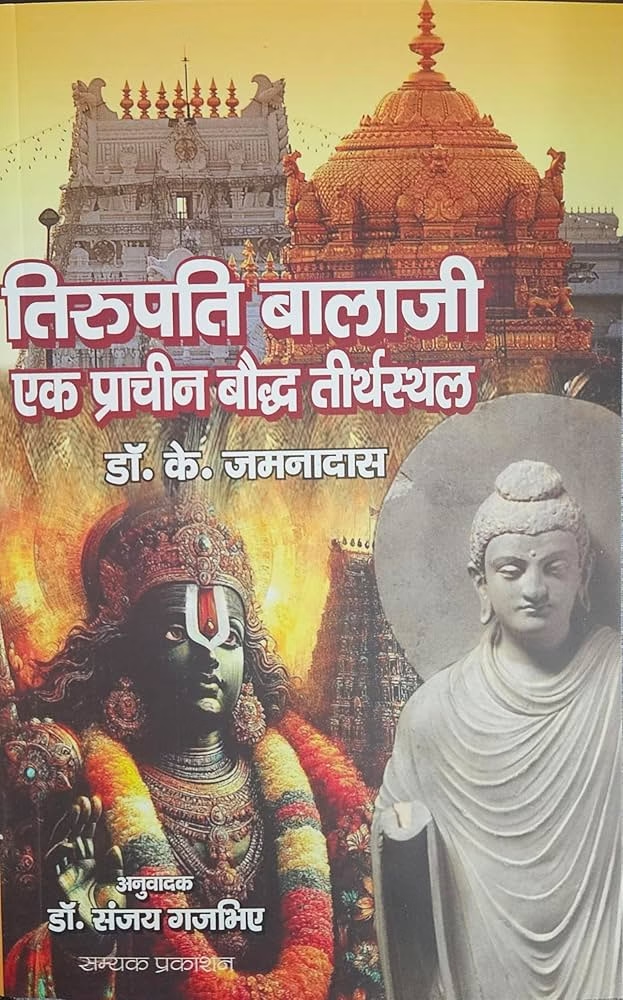
A crucial piece of evidence in understanding this historical appropriation is the book Tirupati Balaji: An Ancient Buddhist तीर्थ स्थल by Dr. K. Jamunadas, translated by Dr. Sanjay Gajaiya and published by Samyak Publication. This book meticulously details how numerous Buddhist sites across India underwent Brahminical takeover, re-established themselves as Hindu temples, and how the subsequent flow of donations and wealth from these Tirthas has been systematically siphoned off. The author, a surgeon and an Ambedkarite follower of Mahatma Phule and Periyar Ramasamy, presents a well-researched account, drawing upon his studies and quoting scholars, including those from the Brahmanical tradition, to substantiate his claims about the systematic conversion of Buddhist sites into Hindu temples.
The Strategy of Assimilation and Appropriation
The strategy employed to erase Buddhist heritage and establish Brahmanical dominance involved multiple steps. Firstly, authorities either destroyed historical Buddhist sites or, more cunningly, repurposed and rebranded them as Hindu temples. This action ensured that the physical presence of Buddhist heritage was either obliterated or assimilated into the Brahmanical narrative. Secondly, by claiming these sacred locations, the immense financial benefits derived from these pilgrimage sites, which traditionally attracted millions of devotees, transferred directly into the coffers of Brahmanical institutions. This financial drain has historically kept indigenous communities, particularly Dalits and Bahujans (SC/ST/OBC), in a state of economic disparity, as their ancestral wealth was usurped through this conversion process.[source]
Archaeological Evidence Speaks Volumes
The archaeological evidence across India overwhelmingly points to its Buddhist origins. As L.M. Joshi, a scholar quoted in the book, states, even considering only the later effects on Indian civilization, Shakyamuni Buddha was undoubtedly the greatest man born in India. Buddhism, before becoming a major belief and civilizational force in the world, was a great source of ideology and human culture in India. However, neglect of available Buddhist literature or limited access to Indian archaeology knowledge prevents many scholars from seeing Buddhist culture in its entirety. This deliberate obfuscation, as Joshi himself admits, actively hinders the widespread understanding of India’s Buddhist past. Read more: Deep Roots of Conspiracy Theories in Indian History
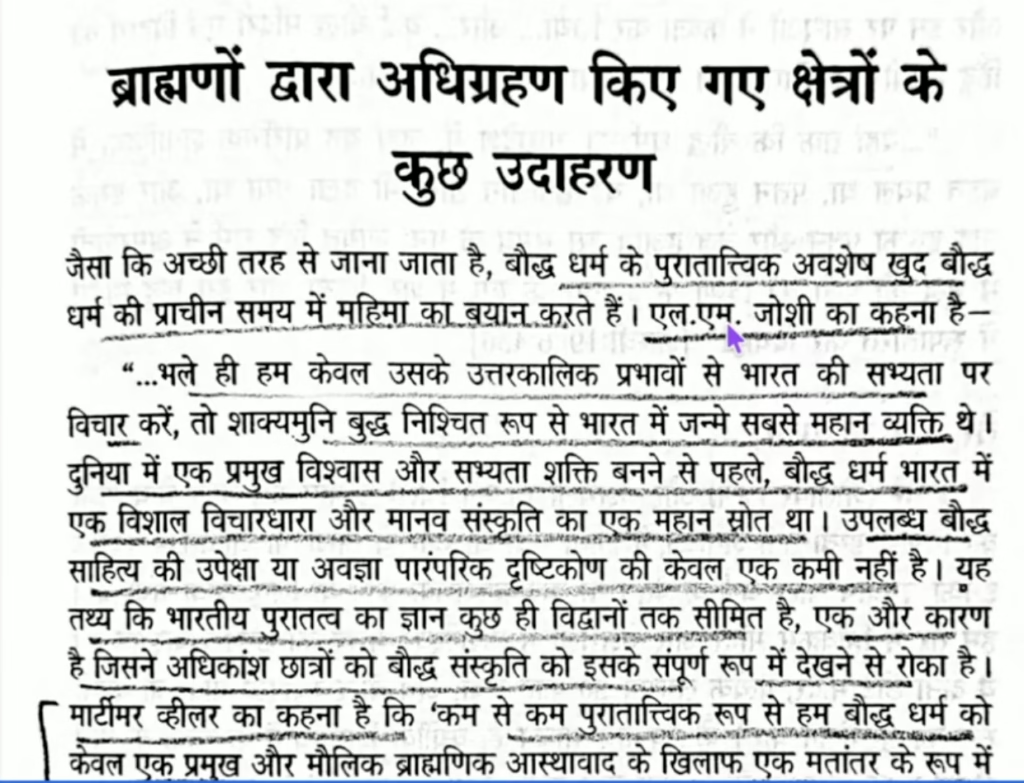
Even if we consider Indian civilization only from its later effects, Shakyamuni Buddha was undoubtedly the greatest man born in India. Before becoming a major belief and civilizational force in the world, Buddhism was a great source of ideology and human culture in India. The neglect or disregard of available Buddhist literature, or the fact that knowledge of Indian archaeology is limited to a few scholars, is one more reason which has prevented most students from seeing Buddhist culture in its entirety.
The Conversion of Buddhist Structures into Profitable Tirthas
The book highlights that powerful groups did not allow many Buddhist monuments to decay; instead, they adopted these structures for Brahmanical use. While some structures might have been lost to time, many others survived precisely because they became profitable ventures for Brahmanical establishments. If these Buddhist sites into Hindu temples had not generated revenue, they too might have faced destruction. This conversion into profitable enterprises ensured their survival, albeit under a new religious guise, solidifying the Brahminical takeover of Buddhist sites.
Andhra Pradesh and the Deccan: A Case Study in Site Conversion
The region of Andhra Pradesh, particularly around Tirupati, serves as a stark example of this historical shift. It is a recognized fact that numerous Buddhist sites here underwent conversion for Brahmanical worship. K.N. Shastri, himself a Brahmin scholar, noted in 1966 that in Andhra Pradesh, where Buddhism held strength in the early centuries CE, a powerful Hindu resurgence occurred. Authorities constructed new monasteries, and they converted existing Buddhist temples and viharas for Hindu use. He explicitly states that Buddhism declined in Andhra Pradesh, and the resurgent Hindu Dharma began worshipping Buddha as an avatar of Vishnu, thereby transforming Buddhist Tirthas into Hindu temples. Read more: The History of Vedanta in India: Unveiling the Truth
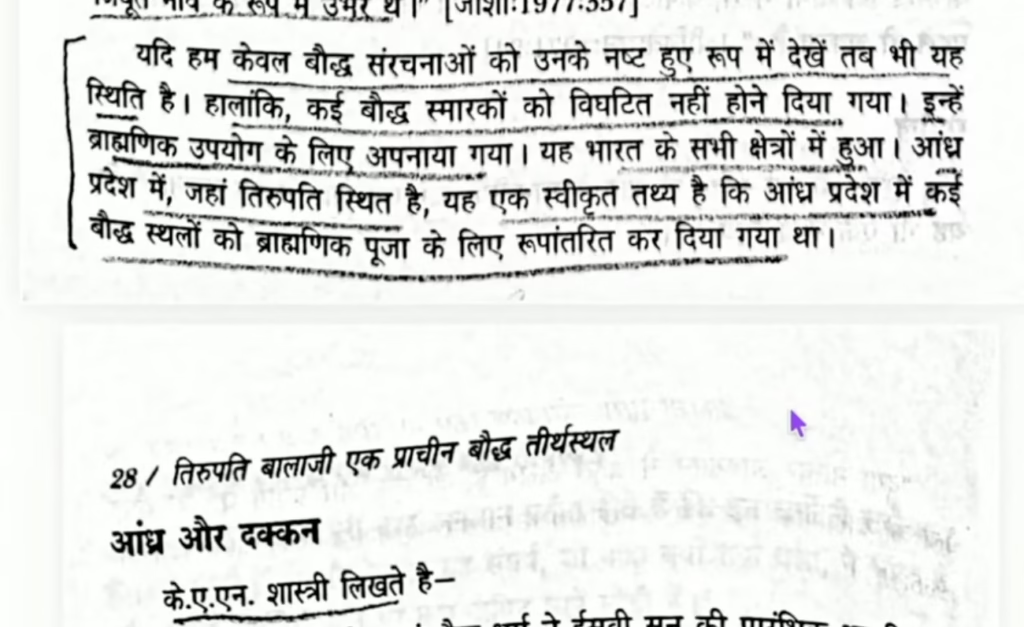
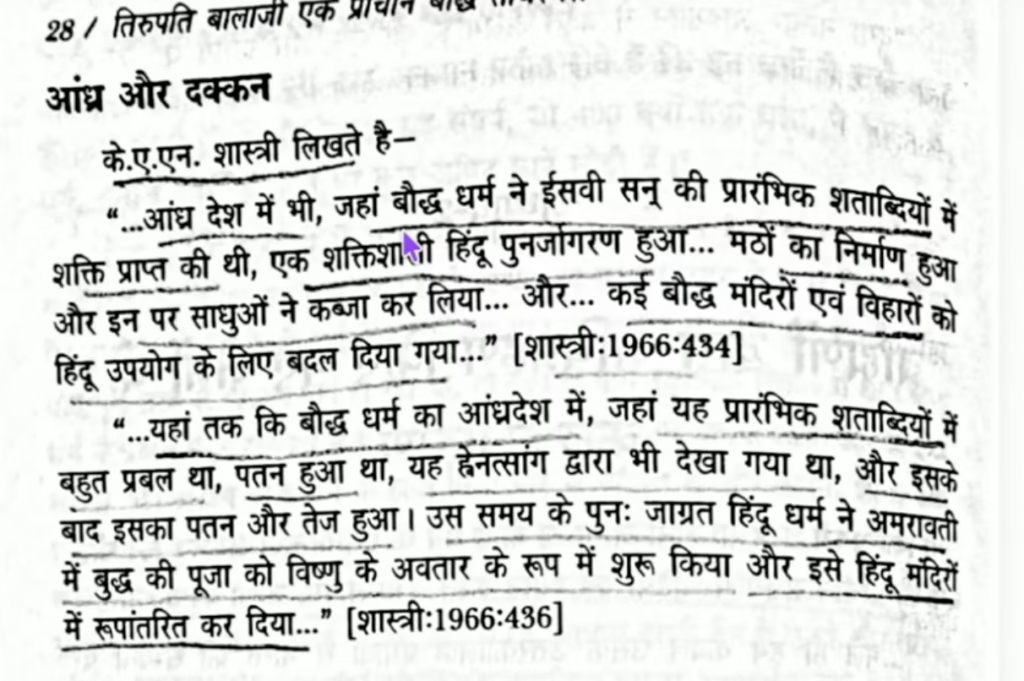
In Andhra Pradesh, where Buddhism had gained strength in the early centuries CE, a powerful Hindu resurgence occurred. Monasteries were built, and many Buddhist temples and viharas were converted for Hindu use. … The decline of Buddhism in Andhra Pradesh was followed by a resurgence of Hindu Dharma, which began worshipping Buddha as an avatar of Vishnu and transformed the sites into Hindu temples.
This practice of assimilating Buddha as an avatar of Vishnu and renaming Buddhist sculptures as deities like Vishnu began long ago, as documented by Shastri. The Tirupati Balaji temple itself stands as a prime example of this structural conversion. The elaborate adornments and decorations on the deity, often questioned for their perceived effeminacy or strangeness, argue scholars, represent a deliberate attempt to conceal the original Buddhist iconography and sculptural artistry of the idol during the Brahminical takeover. Read more: Ambedkar’s 22 Vows and Buddhism: Path to Equality
The Mystery of the Hidden Buddhist Roots in Major Shrines
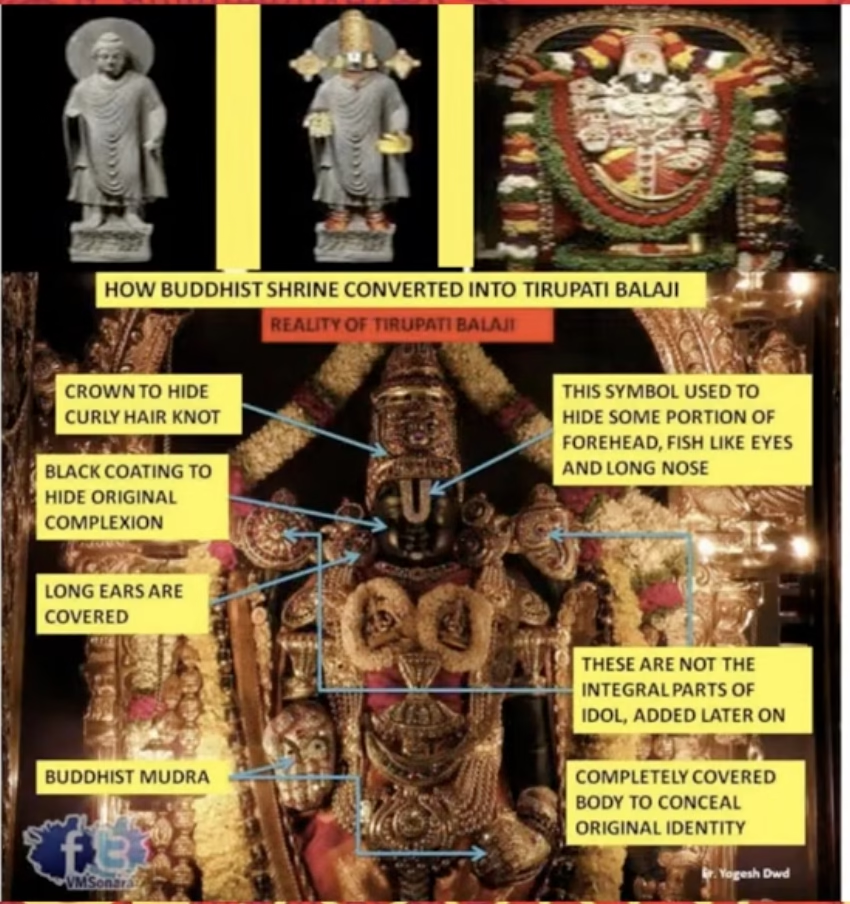
The deliberate obscuring of origins extends beyond Andhra Pradesh. Many major Hindu pilgrimage centers across India exhibit architectural traits and iconography that defy purely Puranic explanations. Scholars suggest that the current architecture often represents the final layer of an extensive Hindu overlay upon a pre-existing, often monumental, Buddhist structure. The continuous narrative of Hindu supremacy often glosses over the centuries of gradual, systematic reclamation necessary to establish new religious hegemony atop established centers of Buddhist power and pilgrimage wealth. Understanding the Brahminical takeover of Buddhist sites requires recognizing these layered historical palimpsests.[source]
This is a Hindi book by Jamnadas Shreeram that explores the Buddhist origins of the famous Tirupati temple.
The book presents historical and archaeological evidence suggesting that the Tirupati Balaji temple was originally a Buddhist pilgrimage site before becoming a Hindu temple. It examines the transformation of this sacred space through different religious traditions and periods in Indian history.
At 244 pages, this research-based work delves into the religious, historical, and sociological aspects of one of India’s most visited temples, offering an alternative perspective on its origins and development.
What Can You Do?
Combating historical erasure requires active engagement with evidence. If you find this evidence compelling, seek out the primary sources mentioned and support critical scholarship that challenges dominant narratives. Sharing factual, evidence-based accounts helps reverse the historical obfuscation that masks the widespread Brahminical takeover of Buddhist sites.
- Seek out and read Dr. K. Jamunadas’s work to understand the specifics of the financial and cultural appropriation.
- Support independent research that focuses on reclaiming the cultural and religious history of Bahujan communities.
- Critically examine local temple histories, particularly in regions known for early Buddhist strongholds like the Deccan and coastal areas.
Do you disagree with this article? If you have strong evidence to back up your claims, we invite you to join our live debates every Sunday, Tuesday, and Thursday on YouTube. Let’s engage in a respectful, evidence-based discussion to uncover the truth. Watch the latest debate on this topic below and share your perspective!