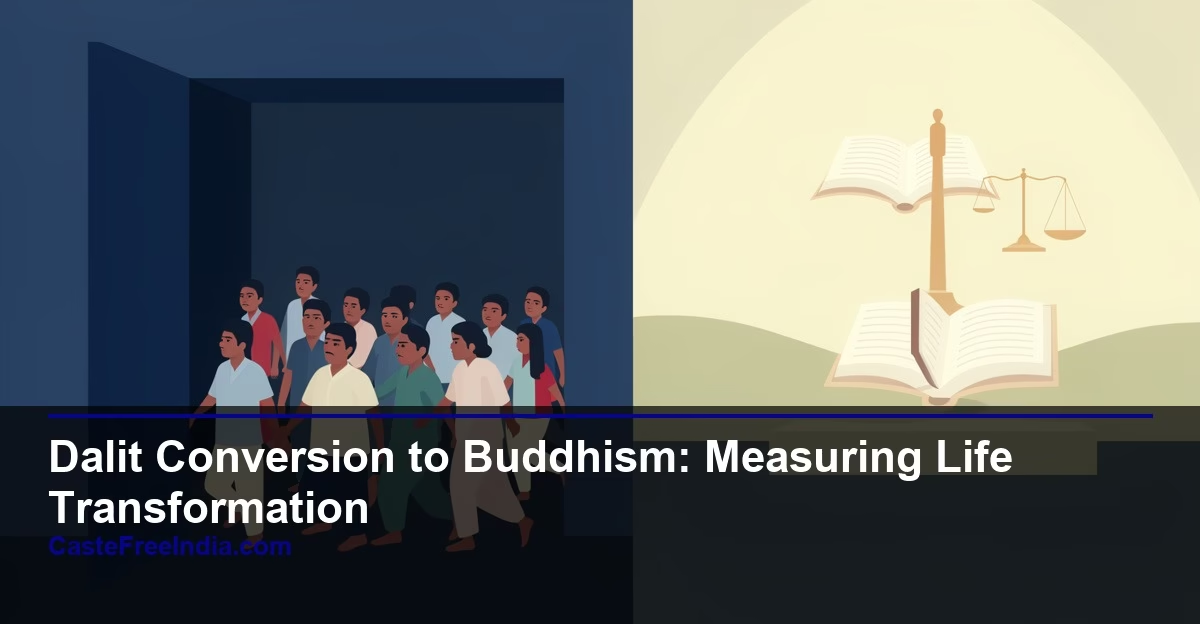
The Gujarat government’s notification, intended to clarify the status of dalit conversion to Buddhism, Jainism, and Sikhism, has ignited discussions about religious conversion in India. This notification highlights the complex relationship between these religions and Hinduism, and its implications. Our previous posts clarified that the Indian Constitution, particularly Article 25, recognizes religious freedom and groups distinct communities. Article 25(b) specifically acknowledges Buddhists, Jains, and Sikhs as separate entities from Hinduism, confirming Buddhism’s distinct identity.[source][source]
Following this, a critical question emerged regarding reservation benefits for Scheduled Caste (SC) and Scheduled Tribe (ST) individuals converting to Buddhism, Jainism, or Sikhism. These benefits are retained upon conversion to these faiths. However, conversion to Islam or Christianity leads to the loss of SC reservation benefits, though OBC reservations might become applicable based on state-specific criteria. ST reservation benefits remain regardless of religious conversion. OBC reservations, tied to socio-economic backwardness, generally transcend religious affiliations.[source][source]
These clarifications lead us to a vital question: Why do individuals from SC, ST, and OBC communities, collectively known as Bahujans (a term referring to Scheduled Castes, Scheduled Tribes, and Other Backward Classes, representing historically marginalized majorities), choose to convert to Buddhism? Beyond philosophical or ideological shifts, what are the tangible, measurable benefits experienced by those embracing Buddhism, especially those who converted with Dr. B.R. Ambedkar over 70 years ago? Does data reveal qualitative improvements in their education, economy, and social standing? This analysis will explore empirical evidence to determine if adopting Buddhism genuinely leads to a better life for these communities.
Table of Contents
- Why Do People Embrace Buddhism?
- The Psychological and Social Imperative of Conversion
- Evaluating the Outcomes: Data from the 2011 Census
- Regional Disparities and the Mahar Community
- Amartya Sen and the Idea of Capabilities
- The Role of Ideology and Collective Identity
- Frequently Asked Questions
- 1. Why did Dr. B.R. Ambedkar convert to Buddhism?
- 2. What are the main reasons Dalits convert to Buddhism today?
- 3. Does converting to Buddhism benefit Dalits economically and socially?
- 4. Are Neo-Buddhists still eligible for reservation benefits?
- 5. How does the Ambedkarite interpretation of Buddhism differ from traditional Buddhism?
- Conclusion: And the Path Forward
- What Can You Do?
- Disclaimer
Our analysis is presented in two parts. First, we examine the reasons drawing people to Buddhism. Second, and crucially, we delve into demographic data, particularly from census reports, to assess quantitative and qualitative improvements in the lives of Buddhist converts. This evaluation is vital for validating the historical premise that conversion to Buddhism offers a path to liberation from caste-based oppression and its disadvantages. The Neo-Buddhist movement, initiated by Dr. Ambedkar, represents individuals who have converted to Buddhism, primarily from Dalit communities, seeking escape from caste oppression.
This is not just an academic exercise; it is a critical assessment of Dr. Ambedkar’s legacy. While we have extensively critiqued Brahminical structures and opposed casteism, it is equally important to evaluate the outcomes of the alternatives offered. The findings will either reinforce or challenge existing narratives, revealing the real-world impact of embracing Buddhism. The truth lies within the data we will dissect.
Why Do People Embrace Buddhism?
The decision for Dalits to convert from Hinduism to Buddhism stems from centuries of oppression and the inherent inequalities of the caste system. Dr. B.R. Ambedkar, experiencing firsthand the humiliation of untouchability, became profoundly disillusioned with Hinduism. His extensive struggle against the caste system yielded limited success within Hinduism, prompting his search for an alternative.
On October 14, 1956, Ambedkar and millions of his followers embraced Buddhism. This mass conversion was a powerful declaration of self-respect and a quest for liberation from caste’s constraints. Since then, millions of Dalits have followed, seeking a new identity in Buddhism.[source]
A recurring reason for conversion is the persistent denial of equality and dignity within Hindu society. The tragic suicide of Dalit student Rohit Vemula, whose family later converted to Buddhism, starkly illustrates this. Rohit’s brother stated that discrimination due to his Dalit identity fueled Rohit’s wish to convert, a wish his family fulfilled in his memory.[source]
Each year, especially around Ambedkar Jayanti, significant numbers convert. Maharashtra has the largest Neo-Buddhist population, but conversions are increasing in Uttar Pradesh and Bihar. The core cause remains caste-based discrimination and untouchability. Ideological shifts play a role, but the primary driver is escaping oppressive social structures.[source]
Some Dalit intellectuals argue that legal reforms alone cannot eradicate social and religious oppression. They emphasize that the caste system embedded within Hinduism is the most significant barrier to Dalit upliftment. For many aware Dalits, renouncing Hinduism is the most pragmatic path toward self-respect and liberation.
Furthermore, some educated Dalits feel political parties exploit them as a vote bank without genuine welfare concern. Despite achieving some success, they continue to face casteism, compelling many to seek solace and a new identity in Buddhism.[source]
The Psychological and Social Imperative of Conversion
A common question is why an atheist like Dr. Ambedkar promoted Buddhism, a faith without deities or elaborate rituals. Many atheists today feel disconnected and experience identity crises. Ambedkar’s genius lay in recognizing that while individual atheism is a personal stance, humans are social beings. Lacking community can cause profound psychological distress. Religious communities offer belonging, collective security, and shared identity, crucial for individual and collective growth.
Even for atheists, belonging to a group provides a vital social framework. Ambedkar, a keen sociologist and psychologist, understood this fundamental human need. He knew simply advocating atheism would leave people isolated. Instead, he offered Buddhism: a religion without deities or superstition, but crucially, one that provided a community.
By reviving Buddhism, Ambedkar gave his followers collective identity, social support, and psychological security. Within this framework, individuals could remain non-believers while benefiting from community cohesion. This was a strategic move to uplift his people, offering them a dignified existence free from caste stigma and abuse.
Conversion to Buddhism offered freedom from ingrained caste discrimination and attendant social disabilities. Buddhist children do not face the caste-based insults their Hindu counterparts endure. They adopt a new identity, shedding inherited shame and disadvantage.
Ambedkar’s vision transcended religious change; it was about socio-political and psychological liberation. He understood that for the oppressed, community and collective identity are as vital as political rights or economic opportunities. This provides the foundation for self-respect and the assertion of rights. The Neo-Buddhist movement demonstrates Ambedkar’s profound understanding of human psychology and societal dynamics, offering a practical solution to caste discrimination. Read more: Debunking ‘Worshipping False Gods’: Analysis of Attacks on Dr. Ambedkar
Evaluating the Outcomes: Data from the 2011 Census
Have converts to Buddhism experienced tangible life improvements? To answer this, we turn to the data. The latest available census data is from 2011; the 2021 census is not yet released. Figures presented here are based on 2011 data, and it is probable that positive changes have significantly increased since then.
India’s Buddhist population is estimated at around 8.4 million. Approximately 87% are Neo-Buddhists—Dalits converted from Hinduism. The remaining 13% are traditional Buddhist communities from the Northeast and Himalayas. IndiaSpend’s analysis of the 2011 census shows Neo-Buddhists have better literacy rates, higher labor force participation, and a more favorable sex ratio than Hindu Scheduled Castes.[source]
Literacy Rates: A Marked Improvement
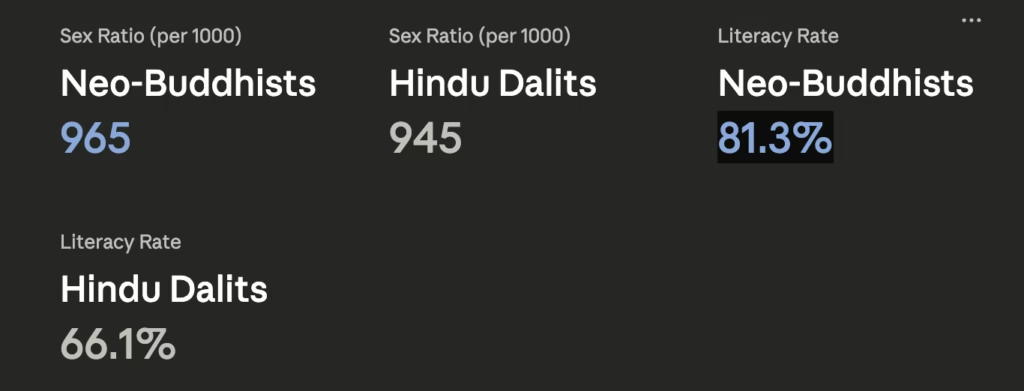
The 2011 census data is compelling. The overall literacy rate among Buddhists was 81.29%, significantly higher than the national average of 72.9%. This is particularly striking compared to the Hindu literacy rate of 73.27% and the SC population’s literacy rate of 66.07%. Even without the reservation benefits SC communities received at the time, Neo-Buddhists achieved a substantially higher literacy rate through ideological empowerment and motivation derived from adopting a religion valuing equality and self-worth. This surge indicates that Buddhism fosters a drive for education exceeding national and Hindu averages.[source]
Gender Equality and Sex Ratio
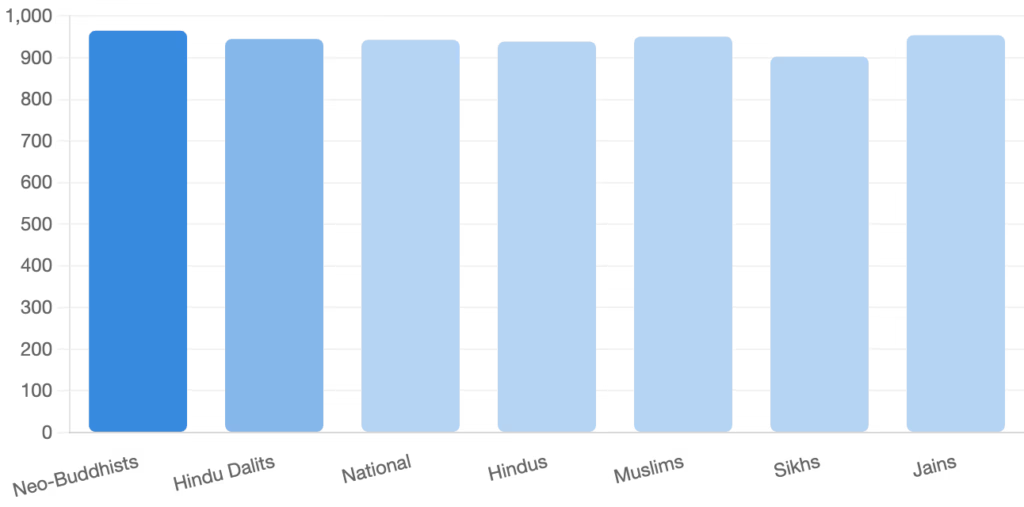
Data also reveals a more equitable sex ratio among Buddhists: 965 females per 1000 males in 2011, higher than the national average of 943 and the SC population’s ratio of 945. This suggests greater gender balance, influenced by Buddhism’s egalitarian principles and Ambedkar’s focus on women’s upliftment.[source]
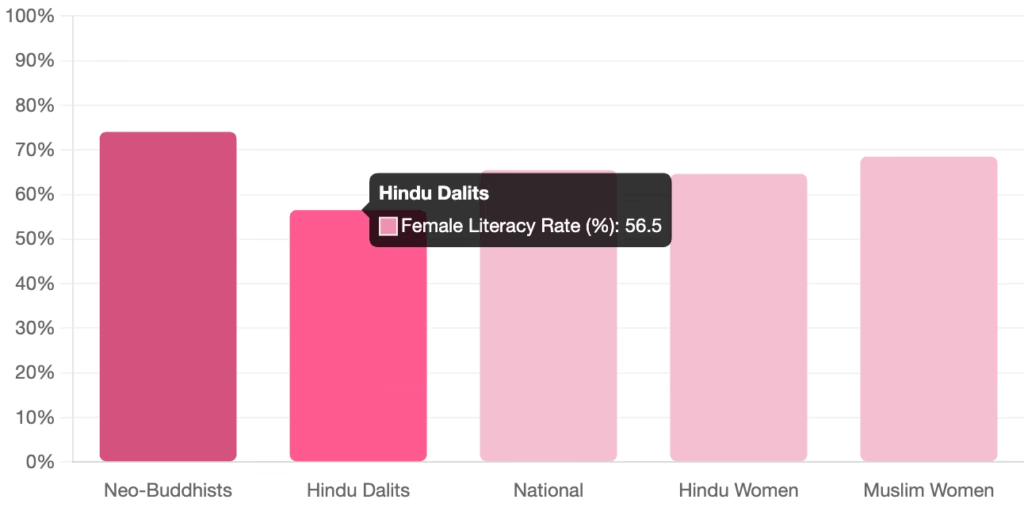
Female literacy among Buddhists was 74.04%, exceeding the national average for women (64.6%). While slightly below the national average for Buddhists in some states, it remained higher than SC literacy in those areas. This shows Buddhism positively impacts female education, fostering a more balanced and empowered society.[source]
Labor Force Participation
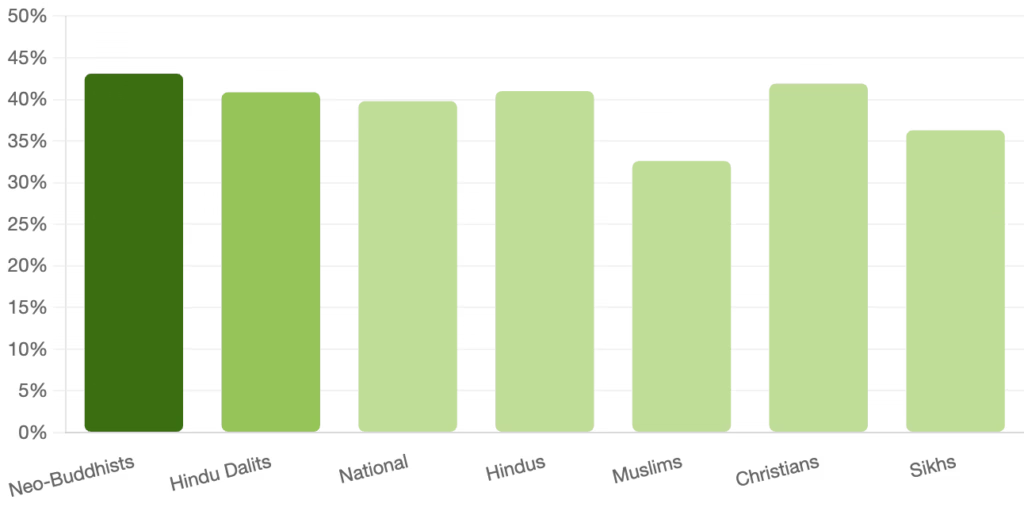
Buddhist labor force participation was 43.1%, higher than the SC average (40.8%) and the national average (39%). This indicates greater economic engagement, likely fueled by increased education, confidence, and opportunities stemming from their new socio-religious identity.[source]
Regional Disparities and the Mahar Community
While overall data is positive, regional variations exist. Traditional Buddhist communities in Mizoram and Arunachal Pradesh showed lower literacy rates in 2011. However, Neo-Buddhist communities in Chhattisgarh (87.32%), Maharashtra (83.17%), and Jharkhand (80.41%) exhibited exceptionally high literacy rates, often exceeding regional Hindu populations.[source]
The conversion movement is strongest in Maharashtra. The Mahar community, from which Ambedkar hailed, historically had less agricultural land and no fixed traditional occupations. This flexibility, combined with their embrace of education and urbanization, made them more mobile. Many Mahars pursued education and migrated to cities, contrasting with other communities. In Maharashtra, 47.76% of Buddhists lived in urban areas in 2011, slightly higher than the state average (45.2%), indicating a trend towards urban living and better economic prospects.[source]
Amartya Sen and the Idea of Capabilities
The improvements observed align with Amartya Sen’s capability approach, which measures development by individuals’ freedoms and abilities to achieve valued outcomes, not just income. For Dalits, escaping caste stigma is a primary valued capability. Converting to Buddhism grants them the capability to live with dignity, pursue education, and participate economically, free from caste constraints.[source]
The data supports this. Increased literacy, better sex ratios, and higher labor force participation indicate enhanced capabilities. Freedom from caste discrimination allows individuals to reach their full potential, a fundamental aspect of human development.
The Role of Ideology and Collective Identity
The data underscores the transformative power of ideology. Shifting from a belief system perpetuating inequality to one championing equality, liberty, and fraternity profoundly alters life trajectories. Buddhism, as reinterpreted by Ambedkar, provides a philosophical framework and a strong collective identity empowering individuals to challenge the status quo.
The stark contrast in educational achievements between Neo-Buddhists and Hindu SCs, even with reservations for the latter, suggests that while reservations offer support, ideological transformation and resulting self-worth are critical drivers of progress. The Neo-Buddhist identity shields against caste discrimination, fostering an environment where individuals can thrive without social stigma.[source]
Frequently Asked Questions
1. Why did Dr. B.R. Ambedkar convert to Buddhism?
Dr. B.R. Ambedkar converted to Buddhism in 1956, along with millions of his followers, as a rejection of the caste system and the discrimination he experienced as a Dalit. He saw Buddhism as a religion that promoted equality, compassion, and social justice, offering a path to liberation from centuries of oppression within Hinduism.
2. What are the main reasons Dalits convert to Buddhism today?
Dalits primarily convert to Buddhism to escape caste-based discrimination, untouchability, and the social injustices they face within Hindu society. Buddhism offers them a new identity based on equality and self-respect, along with a supportive community.
3. Does converting to Buddhism benefit Dalits economically and socially?
Data, particularly from the 2011 census, suggests significant benefits. Neo-Buddhists, on average, show higher literacy rates, better sex ratios indicating improved gender equality, and increased labor force participation compared to their Hindu SC counterparts. These factors point towards socio-economic and personal development.
4. Are Neo-Buddhists still eligible for reservation benefits?
Yes, individuals from Scheduled Caste (SC) communities who convert to Buddhism (and Jainism or Sikhism) retain their eligibility for reservation benefits in India. However, those converting to Islam or Christianity lose SC reservation benefits.[source]
5. How does the Ambedkarite interpretation of Buddhism differ from traditional Buddhism?
Ambedkarite Buddhism, or Neo-Buddhism, emphasizes the ethical and social teachings of Buddha, focusing on equality, liberty, and fraternity, and rejects supernatural elements, rituals, and deities found in some traditional Buddhist practices. It is primarily a socio-political movement aimed at challenging caste oppression and achieving human dignity. Read more: Ambedkar’s 22 Vows and Buddhism: Path to Equality
Conclusion: And the Path Forward
The 2011 census data strongly indicates that conversion to Buddhism has positively impacted the lives of Dalits and other Bahujan communities. Improved literacy, better sex ratios, and higher labor force participation represent tangible advancements in human development, freedom, and dignity.
The journey from oppressed caste member to dignified Buddhist citizen testifies to the transformative power of Ambedkar’s vision. While the fight against caste continues, embracing Buddhism offers a powerful pathway toward liberation, empowerment, and a more equitable future.
These statistics are more than numbers; they are stories of transformation, of communities breaking free from historical oppression and forging a new destiny. They highlight how ideological shifts, coupled with collective action, can drive profound societal change.
What Can You Do?
Educate Yourself and Others: Share this information and data to foster understanding. Understanding the impact of conversion and Buddhist principles is crucial.
Support Educational Initiatives: Advocate for and support educational programs empowering marginalized communities, as education is a key enabler of social mobility.
Promote Ambedkarite Ideology: Engage with and promote Dr. B.R. Ambedkar’s teachings, which emphasize equality, liberty, fraternity, and justice for all.
Challenge Caste Discrimination: Actively work to dismantle caste-based discrimination in all its forms. Support movements fighting for caste annihilation.
Engage in Dialogue: Foster open conversations about caste, religion, and social justice. Encourage critical thinking and evidence-based discussions.
Stay Informed: Follow future census data and research for updated insights into the progress and challenges faced by these communities.
Disclaimer
Neo-Buddhists: Individuals converted to Buddhism, primarily from Dalit communities, following Dr. B.R. Ambedkar’s path.
Bahujan: Encompasses Scheduled Castes (SC), Scheduled Tribes (ST), and Other Backward Classes (OBC), representing historically marginalized majorities.
Ambedkarite Ideology: Socio-political and philosophical principles by Dr. B.R. Ambedkar, emphasizing equality, liberty, social justice, and caste annihilation. Read more: Dr. B.R. Ambedkar: A Beacon of Equality and Social Justice
Labor Force Participation Rate: Percentage of the working-age population employed or seeking employment.
Sex Ratio: Number of females per 1,000 males. A higher ratio indicates greater gender parity.
Capability Approach: A framework focusing on individuals’ freedoms and abilities to achieve valued outcomes, developed by Amartya Sen.
Do you disagree with this article? If you have strong evidence to back up your claims, we invite you to join our live debates every Sunday, Tuesday, and Thursday on YouTube. Let’s engage in a respectful, evidence-based discussion to uncover the truth. Watch the latest debate on this topic below and share your perspective!

Skeptical Indian is an independent researcher documenting
caste discrimination through primary sources, Hindu
scriptures, court records, and government data.
CasteFreeIndia.com has published 100+ evidence-based
analyses since 2024.