The history of India, particularly its religious and philosophical landscape, is a tapestry woven with threads of appropriation and transformation. Often, what is presented as ancient truth is a later construct, deliberately altered to serve new narratives. This is especially true when examining the origins and evolution of what we now understand as Brahmanism. Many historical accounts, particularly those taught in mainstream educational institutions, conveniently omit or gloss over the complex and often contentious origins of religious doctrines, leaving us with a simplified, and at times, misleading, understanding of the past. This article discusses Brahmanical appropriation in Buddhist texts.
The erosion of authentic historical inquiry is evident in how history is taught, often confined to prescribed syllabi and rarely venturing into the suppressed narratives. Even in the realm of competitive exam coaching, the focus often drifts towards interpreting ancient texts like the Puranas and Vedas through a lens that distorts their original context, effectively Brahmanizing historical inquiry itself. This deliberate obfuscation of facts means that the true history remains elusive, buried beneath layers of imposed interpretations. To uncover this hidden past, we must delve into the suppressed chapters of our history, focusing specifically on the Brahmanical appropriation in Buddhist texts.
Table of Contents:
- Examination of Buddhist scriptures
- The Literary Precedence: Ashvaghosha Over Valmiki
- Textual Evidence of Brahmanical Appropriation: The Saundarananda
- Deconstructing the Narrative: Early Chapters and Lineage Fabrication
- The Role of Supernatural Elements and Deification
- The Brahmanical Overlay: Lineage and Linguistic Manipulation
- The Myth of Miracles: Riddhis, Siddhis, and Supernatural Feats
- The Direct Influence of Brahmanical Epics
- The Brahmanical Construction of Shared History
- What Can You Do?
Examination of Buddhist scriptures
One such critical area of investigation involves the examination of Buddhist scriptures, which have, over time, been subjected to significant Brahmanical influence, leading to the emergence of doctrines that are presented as foundational to Brahmanism. This is not to say that Buddhism has not itself faced criticism, but often, the criticisms leveled against it, particularly from a Brahmanical perspective, are rooted in misinterpretations or selective readings of texts that were themselves later altered.
A close examination of these altered texts reveals how Brahmanical ideology was constructed, often by co-opting and repurposing Buddhist narratives and philosophical concepts. The very foundations of what is now presented as Brahmanical thought can be traced back to this process of appropriation. Read more: Origins of Shivalinga Worship: Historical & Scriptural Views
The Literary Precedence: Ashvaghosha Over Valmiki
Who is India’s True Original Poet (Adi Kavi)?
A common assertion in Indian tradition is that the “Adi Kavi” (the First Poet) of India was Valmiki. However, there is a distinct lack of concrete evidence to support this claim. There is no verifiable proof of Valmiki’s existence, no definitive record of his birth or death, and crucially, no surviving manuscripts that can be definitively attributed to him in a way that aligns with linguistic or historical timelines. His supposed literary style and language do not match contemporary or earlier linguistic evidence. [source]
When questioned, the dating of Valmiki is often placed between the 2nd and 4th centuries CE. However, within the very texts attributed to Valmiki, such as the Ramayana, he appears as a character who is recounting the story, or is depicted as a contemporary of sages like Agastya. This internal inconsistency, coupled with the lack of external corroboration, strongly suggests that the figure of Valmiki, as the “Adi Kavi,” is a literary construct rather than a historical reality.
Ashvaghosha: The True Adi Kavi?
As research progresses and hidden histories are unearthed, a more accurate picture of India’s literary origins begins to emerge. It is increasingly evident that the true “Adi Kavi” of India was Ashvaghosha. While his works may have also undergone a process of Brahmanization and alteration over time, the core essence of his original writings is still discernible.
Ashvaghosha’s contributions are significant, and importantly, comparative stylistic analyses have revealed that large portions of the Ramayana appear to be directly copied or heavily inspired by Ashvaghosha’s magnum opus, the Buddhacharita. This suggests a later composition date for the Ramayana, firmly placing Ashvaghosha as the earlier and more original poet. His works predated the Ramayana, challenging the traditional narrative and pointing to a different trajectory of Indian literary history.
The Buddhacharita and the Copying of Style
The comparison between Ashvaghosha’s Buddhacharita and the Ramayana has yielded startling revelations. Scholars have noted that several chapters, or sargas within the Ramayana, bear a striking resemblance in style and content to the Buddhacharita. This suggests that the authors of the Ramayana borrowed heavily from Ashvaghosha’s work, effectively plagiarizing his style and narrative structure. This evidence points towards the Ramayana being composed much later than Ashvaghosha’s works, reinforcing the claim that Ashvaghosha, not Valmiki, holds the title of India’s original poet.
Textual Evidence of Brahmanical Appropriation: The Saundarananda
Having established the literary challenge posed by later narrative constructions, we now turn to specific textual evidence demonstrating the Brahmanical appropriation of Buddhism through the systematic alteration of Buddhist works. The Saundarananda, an epic poem attributed to Ashvaghosha, serves as a crucial case study in how Brahmanical ideology inserted itself into Buddhist doctrine after the decline of major Buddhist centers in India.
Unveiling the Text and its Name
Beyond the Buddhacharita, another significant work attributed to Ashvaghosha, and central to understanding the Brahmanization of Buddhist texts, is the Saundarananda. The title itself offers a clue to its nature. It is believed to be named after a couple: Saundari (or Sundari), the wife, and Nanda, the husband. Nanda, in Buddhist tradition, is often referred to as the younger half-brother of the Buddha, sometimes described as a cousin or step-brother. The work is structured as an epic poem, a genre that allowed for considerable narrative freedom and embellishment. The name itself hints at a narrative focus that deviates from the strictly doctrinal or biographical accounts typically found in core Buddhist scriptures.
Xuanzang’s Account and the Text’s Survival
The existence of the Saundarananda was documented by the Chinese traveler Xuanzang (also known as Yuan Chwang) during his visit to India in the 7th century CE (629-645 CE). Xuanzang noted its presence during his stay at Nalanda University. However, following the decline and eventual destruction of Buddhist centers in India, many of these precious texts were lost or destroyed. Some copies were taken abroad, to places like Tibet and Nepal, while others were left vulnerable to alteration. The Saundarananda, like many other Buddhist works, faced this fate, undergoing significant Brahmanical alteration and assimilation into later Brahmanical traditions.
The Purpose of the Work: Peace, Not Pleasure
Crucially, the author, purportedly Ashvaghosha, states the purpose of the Saundarananda is not to provide worldly pleasure or entertainment but to offer spiritual peace and insight into the path of liberation (Nirvana). The poet explicitly writes that the epic style was adopted to make the explanation of the path to liberation more engaging and accessible. This meta-commentary from the author himself is vital: it frames the narrative as a means to an end—spiritual attainment—rather than a literal historical account or a purely devotional text. The poet warns the reader to accept only the peace-bringing elements and discard the rest, comparing it to purifying gold by discarding dross.
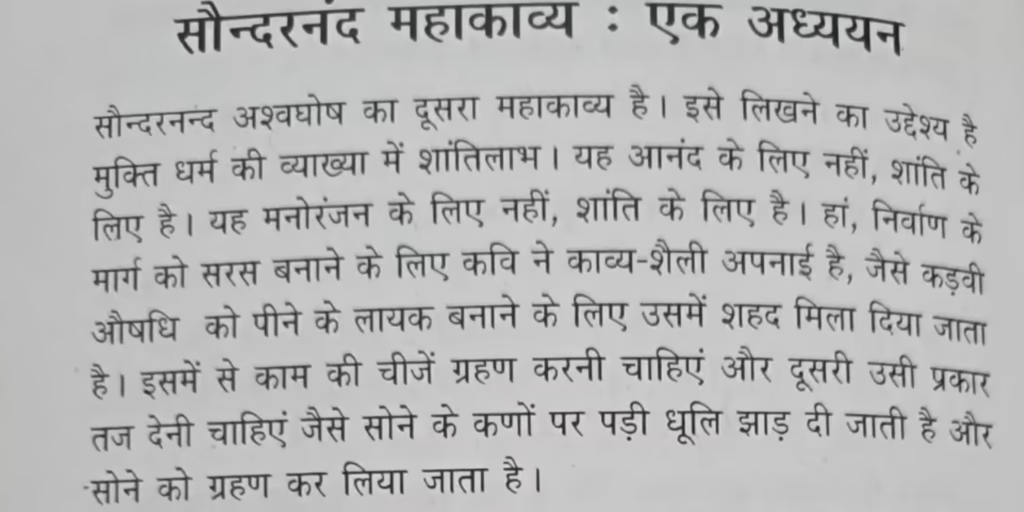
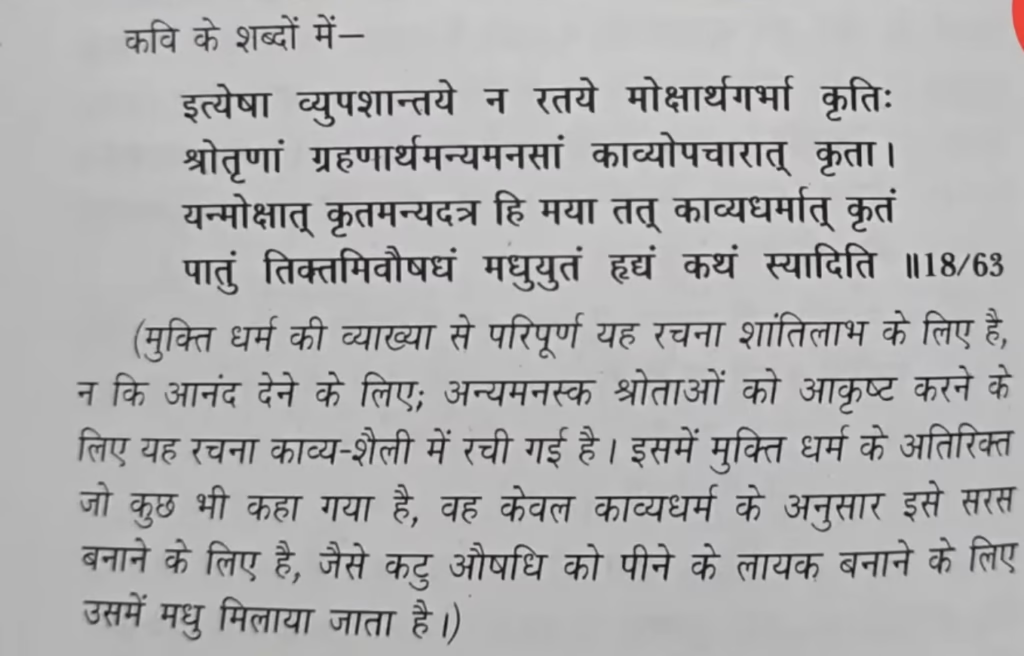
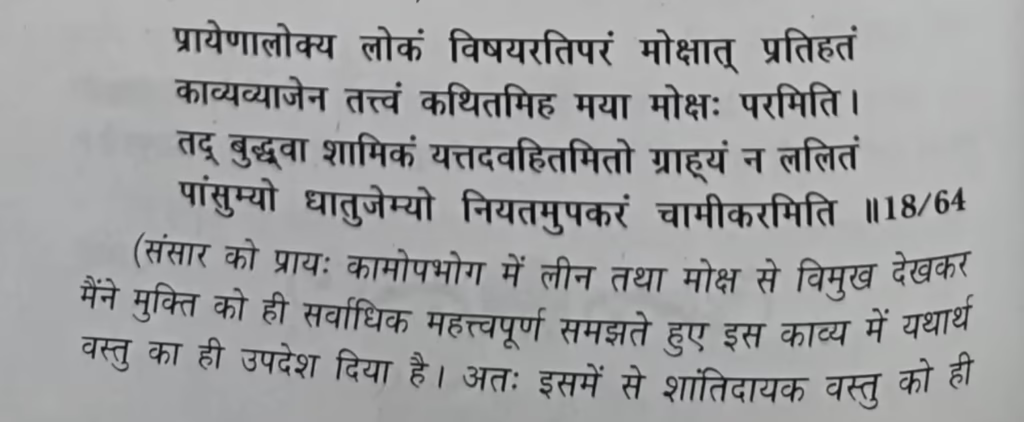
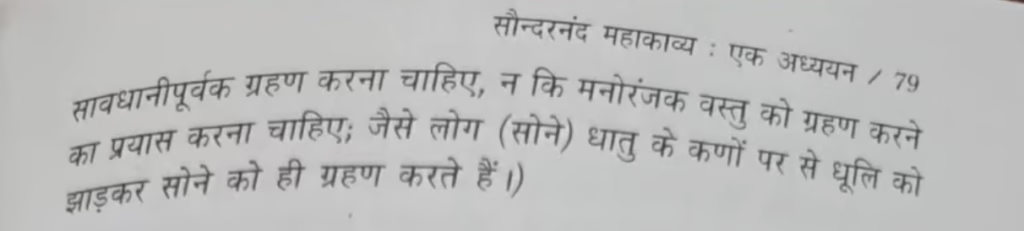
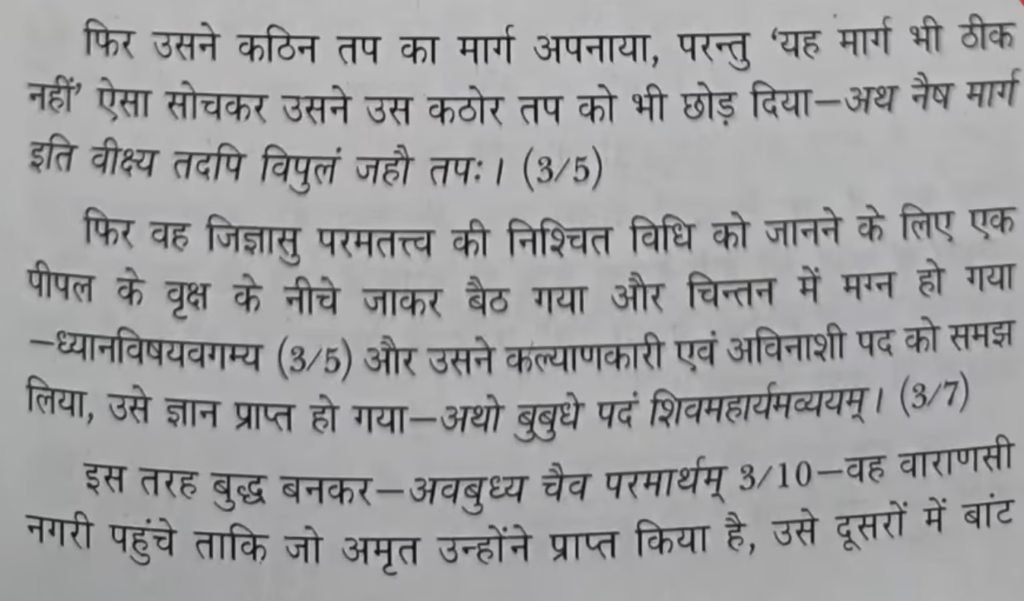
The composition, replete with explanations of the path to liberation, is for the attainment of peace, not for pleasure. This composition has been rendered in poetic style to attract the attention of inattentive listeners. Whatever else is stated in it besides the path to liberation is merely to make it melodious in accordance with the conventions of poetry.
Deconstructing the Narrative: Early Chapters and Lineage Fabrication
Kapilavastu and the Fabrication of History
In the first chapter of the Saundarananda, the poet, under the guise of Ashvaghosha, describes Kapilavastu. A significant alteration is introduced here: the mention of two princes from the Ikshvaku dynasty arriving at the hermitage of Rishi Gautam. The Ikshvaku dynasty is a later addition; it was not associated with the Buddha or the Shakya clan in early Buddhist texts. The Shakya clan, to which the Buddha belonged, was distinct from the Ikshvakus. Furthermore, the name “Gautam” itself, when referring to the sage, is often seen as a later insertion to connect with the Buddha’s lineage.
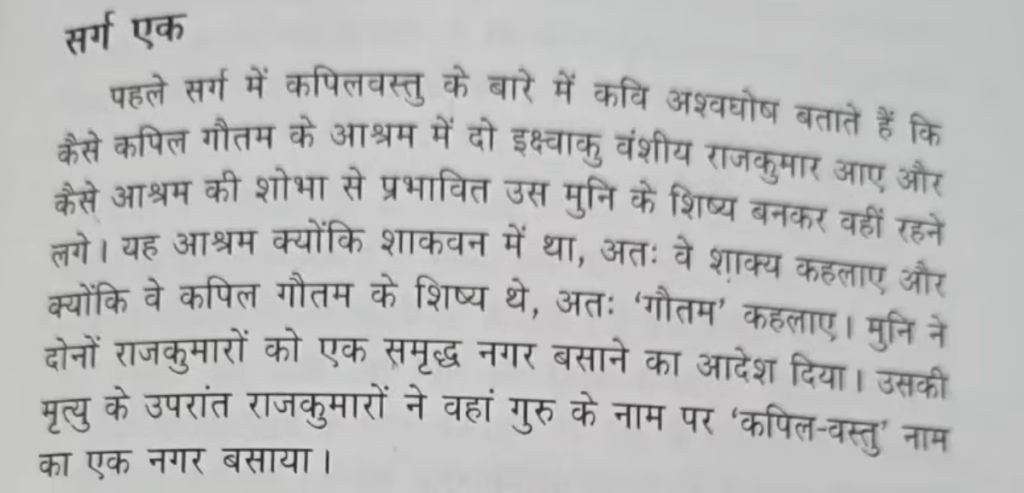
Early inscriptions, such as those of Emperor Ashoka, use Pali and Prakrit forms that do not typically include the “Gautam” epithet in the way it appears in later Sanskrit texts. This suggests a deliberate attempt to weave the Buddha’s story into a pre-existing Brahmanical dynasty, linking him to the Ikshvakus and creating a narrative where his origins are embedded within a Brahmanical framework.
The Divine Intervention and Shuddhodana’s Divinity
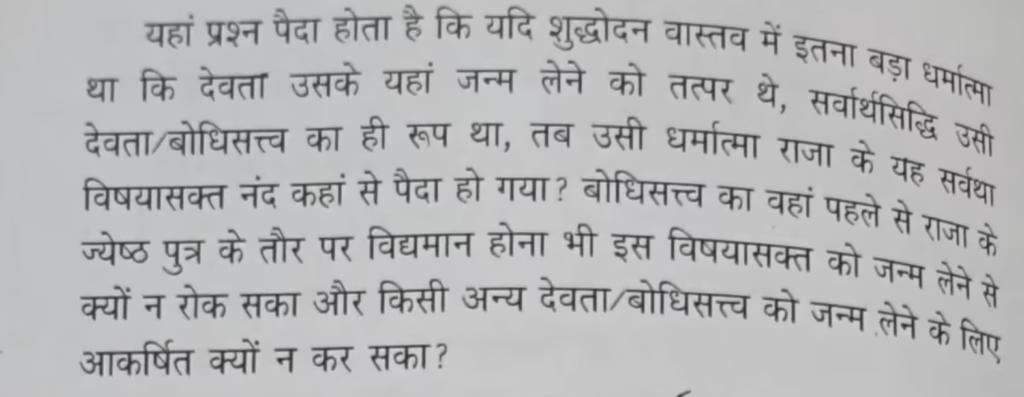
Chapter two introduces divine beings descending to earth to witness the virtuous King Shuddhodana. This portrayal of Shuddhodana as a “dharmatma” (righteous soul) is significant. While Shuddhodana was the Buddha’s father, the emphasis on his divine status and the intervention of gods in his lineage is a later development. The text then states that Bodhisattvas decided to take birth in his lineage.
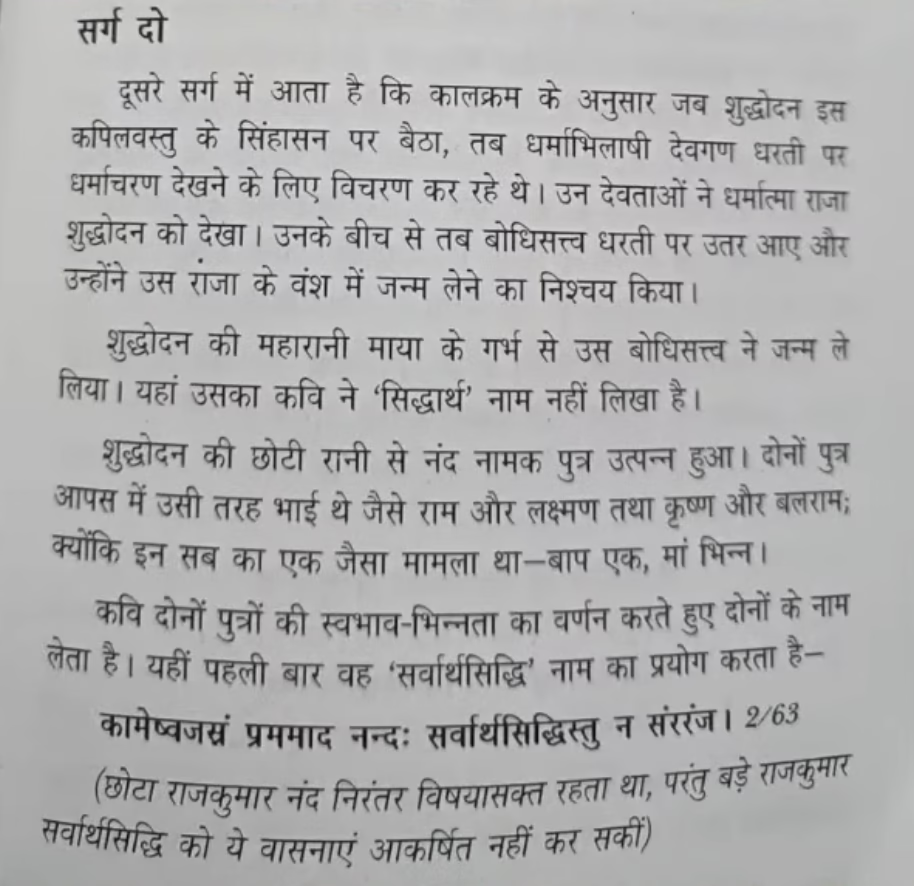
This narrative contradicts the Buddha’s own teachings, as he did not present himself as an avatar of a deity or claim divine origin in this manner. The Buddha’s emphasis was on self-effort and understanding the path to liberation, not on divine descent or preordained destiny. The introduction of Bodhisattvas deciding to take birth elevates the event to a cosmic significance, fitting it into a more theistic cosmology that was developing in Brahmanism.[source]
The Buddha’s Birth and the Naming of Siddhartha
The narrative proceeds to the birth of the child from Queen Maya’s womb. Intriguingly, the poet here does not use the name “Siddhartha” for the Buddha. This is a notable deviation from Ashvaghosha’s own Buddhacharita, where the name Siddhartha is used. Furthermore, the account mentions Maya seeing a white elephant in her dream, a motif commonly found in depictions of the Buddha’s conception.
This detail, along with the recurring imagery of the lotus flower often associated with the Buddha’s feet, is a common feature in Buddhist iconography. However, the absence of the name “Siddhartha” in this specific text, while present in another attributed to the same author, points to inconsistencies that may arise from later interpolations or the amalgamation of different traditions.
Nanda and the Introduction of Ramayana-Mahabharata Tropes
The text introduces Nanda, the Buddha’s younger half-brother, born to a second queen. This detail, along with the comparison of Nanda and the Buddha to the pairs of Ram-Laxman and Krishna-Balram, is a clear indicator of later Brahmanical influence. These epic pairs, central to Brahmanical narratives, were not part of the original Buddhist recounting of Nanda’s relationship with the Buddha. The inclusion of these familiar figures suggests that the Saundarananda, in its current form, was likely composed or heavily revised after the Ramayana and Mahabharata had gained significant prominence in Indian society. This indicates that the text was adapted to resonate with a Brahmanized audience, incorporating elements from their established epics.
The Conflation of Lineages and Avatars
The narrative further muddles the historical and religious lineages by suggesting that Nanda and the Buddha were like Ram and Laxman, or Krishna and Balram. This comparison implies a shared divine origin or at least a familial bond that mirrors the divine avatars of Brahmanical lore. This conflation of lineages serves to integrate the Buddha into a pantheon that includes figures from Brahmanical epics, thereby diminishing the distinctiveness of Buddhism and aligning it more closely with Brahmanical cosmology. The narrative seems to suggest that the Buddha’s birth was an event of cosmic significance, attracting the attention and decision of Bodhisattvas to be born in his lineage, mirroring the divine interventions described in Brahmanical texts.
The Role of Supernatural Elements and Deification
Bodhisattvas and Divine Intervention
The Saundarananda presents a narrative where Bodhisattvas decide to take birth in Shuddhodana’s lineage. This is a significant departure from the core Buddhist teachings, where the Buddha’s enlightenment is primarily attributed to his own efforts and understanding of the Dharma. While the concept of Bodhisattvas exists in Buddhism, their direct intervention in deciding the Buddha’s lineage and birth implies a cosmic hierarchy and a level of divine agency that aligns more with Brahmanical ideas of avatars and divine incarnations. The Buddha himself did not claim to be a divine avatar in the way Brahmanical deities are understood.
The Contradiction of the Buddha as a God
A critical contradiction arises when the text portrays the Bodhisattvas deciding to take birth. If the Buddha were a divine being, an avatar, as later interpretations suggest, why would other Bodhisattvas need to decide to be born in his lineage? This points to an internal inconsistency within the text, likely stemming from the efforts to elevate the Buddha’s status by imbuing him with divine attributes that were foreign to his original teachings. The text seems to be attempting to make the Buddha more palatable and perhaps even superior to other divine figures within a Brahmanical framework, leading to narrative distortions.
The Buddha’s Humanity vs. Divine Claims
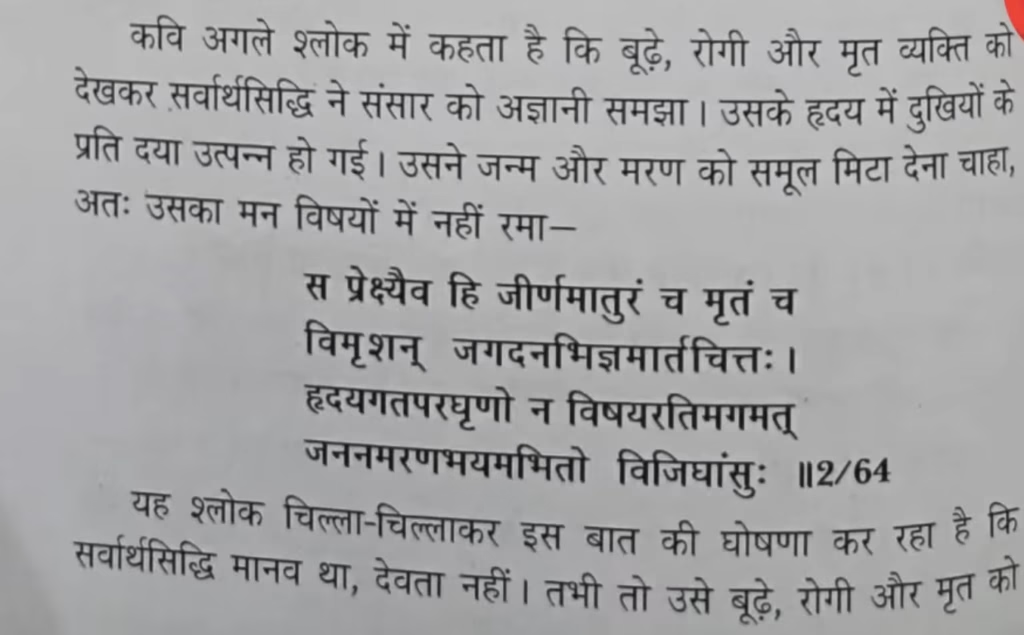
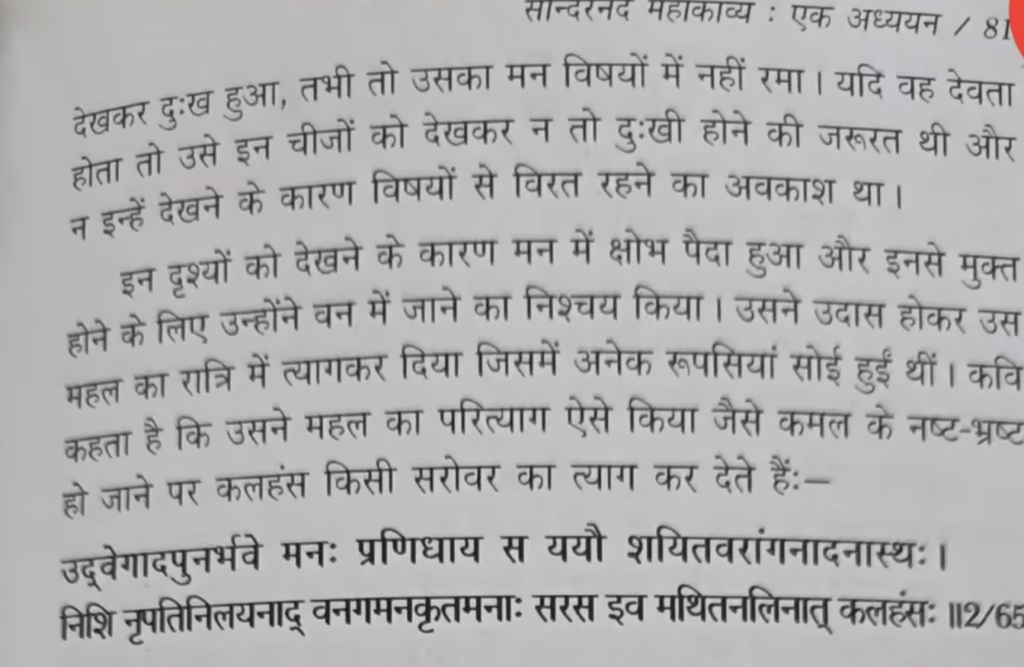
The narrative further complicates matters by presenting scenarios where the Buddha, supposedly a divine being or an avatar, experiences human emotions like sorrow upon witnessing suffering. The text asks: if he were a god, why would he be saddened by the sight of old age, sickness, and death? Why would he choose to renounce the world because of it? A divine being would presumably be above such reactions. This questioning highlights the tension between the humanistic and empirical path taught by the Buddha and the later attempt to portray him as a divine figure. The text itself, in its effort to make the Buddha divine, inadvertently underscores his humanistic approach by posing these rhetorical questions.
The Brahmanical Overlay: Lineage and Linguistic Manipulation
The Ikshvaku Dynasty and its Insertion
The spurious mention of the Ikshvaku dynasty is a prime example of Brahmanical interpolation. This dynasty, prominent in later Brahmanical traditions, had no documented connection to the early Shakya clan of the Buddha. Its insertion into the narrative aims to create a lineage that connects the Buddha to a historical Brahmanical royal line. This is a common tactic: to legitimize a new or evolving religious tradition by grafting it onto an established and respected lineage. The claim that the Shakya princes were of Ikshvaku descent is a historical fabrication designed to integrate Buddhism into the Brahmanical socio-political structure.[source]
The “Gautam” Epithet and Pali/Prakrit Evidence
The use of the epithet “Gautam” for the Buddha and the sage in whose hermitage the princes supposedly met is another point of contention. Early Buddhist scriptures, written in Pali and Prakrit, do not consistently use this epithet. Inscriptions from Emperor Ashoka’s time, a crucial historical period, also do not feature this nomenclature prominently. The widespread use of “Gautam” in later Sanskrit texts suggests its incorporation during the period when Sanskrit became the dominant liturgical language and Brahmanical influence intensified. This linguistic and epigraphic evidence challenges the authenticity of the “Gautam” association as presented in Sanskrit epics.
The Role of Emperor Ashoka
Emperor Ashoka’s reign (3rd century BCE) was a pivotal period for Buddhism. His patronage and the edicts he issued provide invaluable historical insights. However, the Saundarananda and similar texts appear to have been written or heavily revised much later, after the decline of Buddhism in India and the rise of Brahmanical dominance. The deliberate inclusion of elements that contradict early Buddhist records or align with Brahmanical narratives, such as the Ikshvaku lineage, indicates that these texts were likely shaped during a period when Buddhism was vulnerable and its doctrines could be more easily manipulated. This post-dates the Ashokan period significantly. Read more: Deep Roots of Conspiracy Theories in Indian History
The Myth of Miracles: Riddhis, Siddhis, and Supernatural Feats
The Introduction of Riddhis and Siddhis
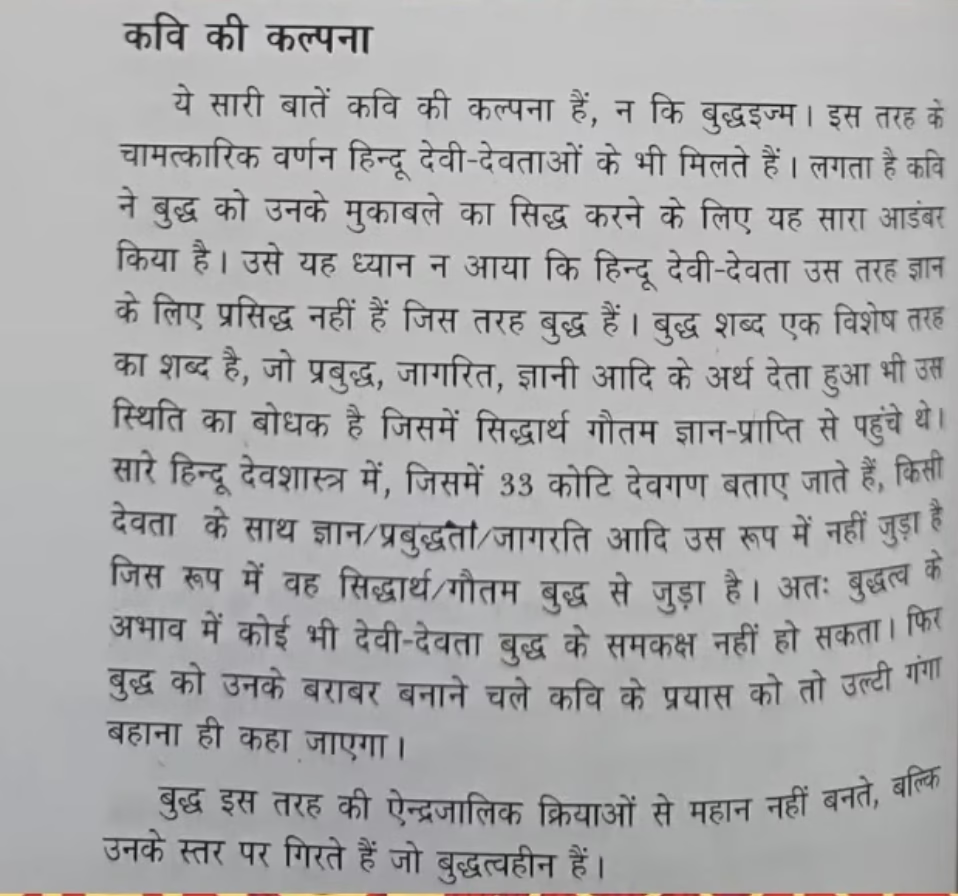
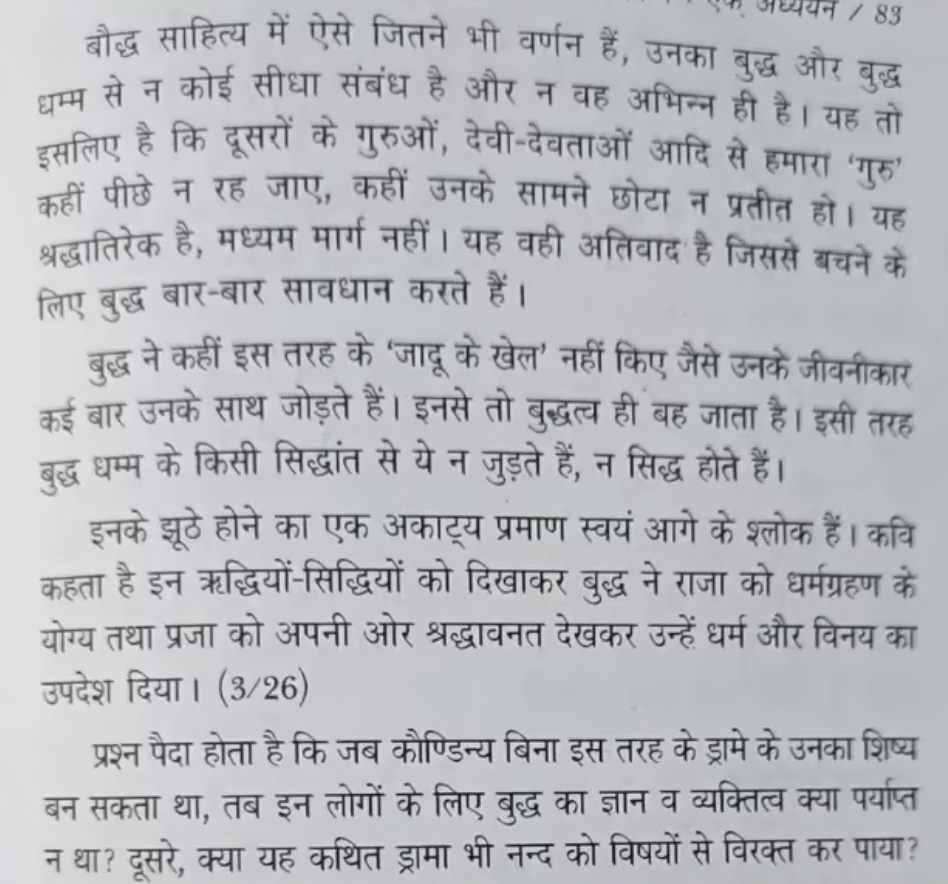
The Saundarananda, in its later interpolations, attributes miraculous powers, known as riddhis (supernatural abilities) and siddhis (perfections/accomplishments), to the Buddha. These include levitation, walking on air, appearing as a radiant sun, and raining down like a shower. Such descriptions are not found in the early Buddhist canonical texts, the Tripitaka. The Buddha himself often cautioned against the pursuit of supernatural powers, emphasizing the importance of ethical conduct, wisdom, and detachment. The introduction of these miracles serves to deify the Buddha, presenting him as a figure capable of supernatural feats, aligning him with the miraculous traditions prevalent in Brahmanism.
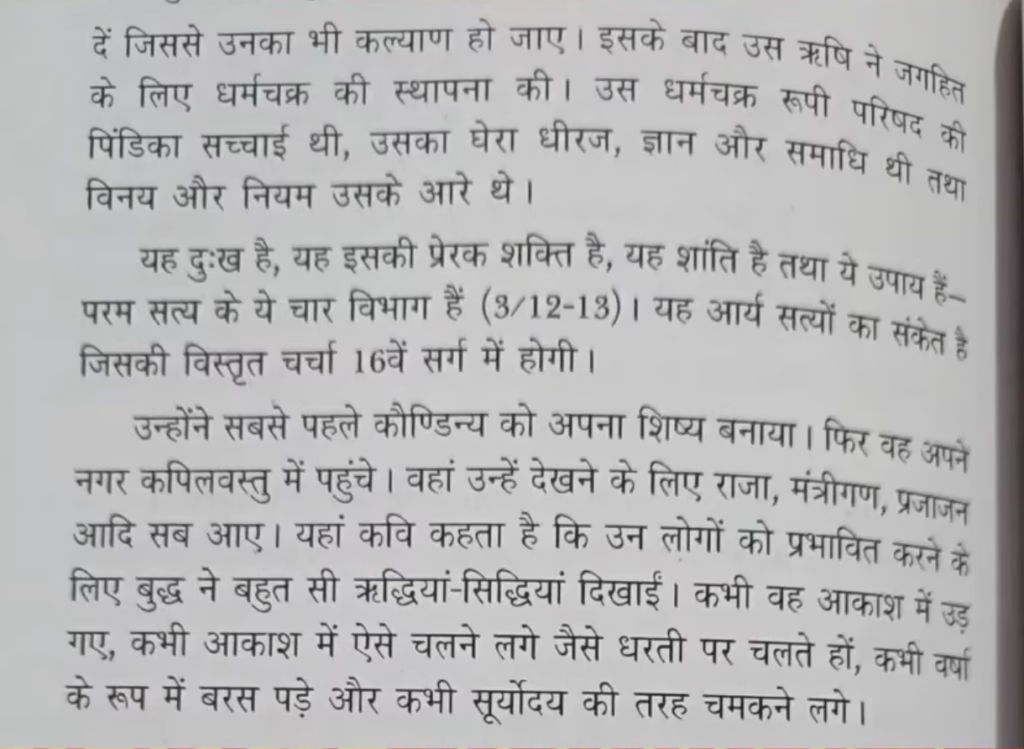
Ganesha’s Sons: Riddhi and Siddhi
The text references Riddhi and Siddhi, who are famously known in Brahmanical mythology as the two sons of Ganesha. Their inclusion, even indirectly, within a narrative associated with the Buddha underscores the extent of Brahmanical appropriation. The concepts of riddhis and siddhis themselves, while present in Indian traditions broadly, were particularly elaborated and integrated into the divine iconography and narratives of Brahmanism. Their association with the Buddha’s miracles suggests an attempt to imbue Buddhist stories with familiar Brahmanical deities and concepts.
The Contradiction with Early Buddhist Teachings
The Buddha’s core teachings emphasized rationality, mindfulness, and the understanding of the Four Noble Truths. He presented himself as a human being who achieved enlightenment through diligent practice, not as a divine being with inherent supernatural powers. The emphasis in early Buddhism was on self-reliance and the application of Dhamma (Dharma) to overcome suffering. The later addition of miracles in texts like the Saundarananda contradicts this fundamental aspect of Buddhism, attempting to frame the Buddha within a theistic and miraculous worldview, thus eroding his original message of human potential and ethical living.
The Direct Influence of Brahmanical Epics
Borrowing from Brahmanical Epics
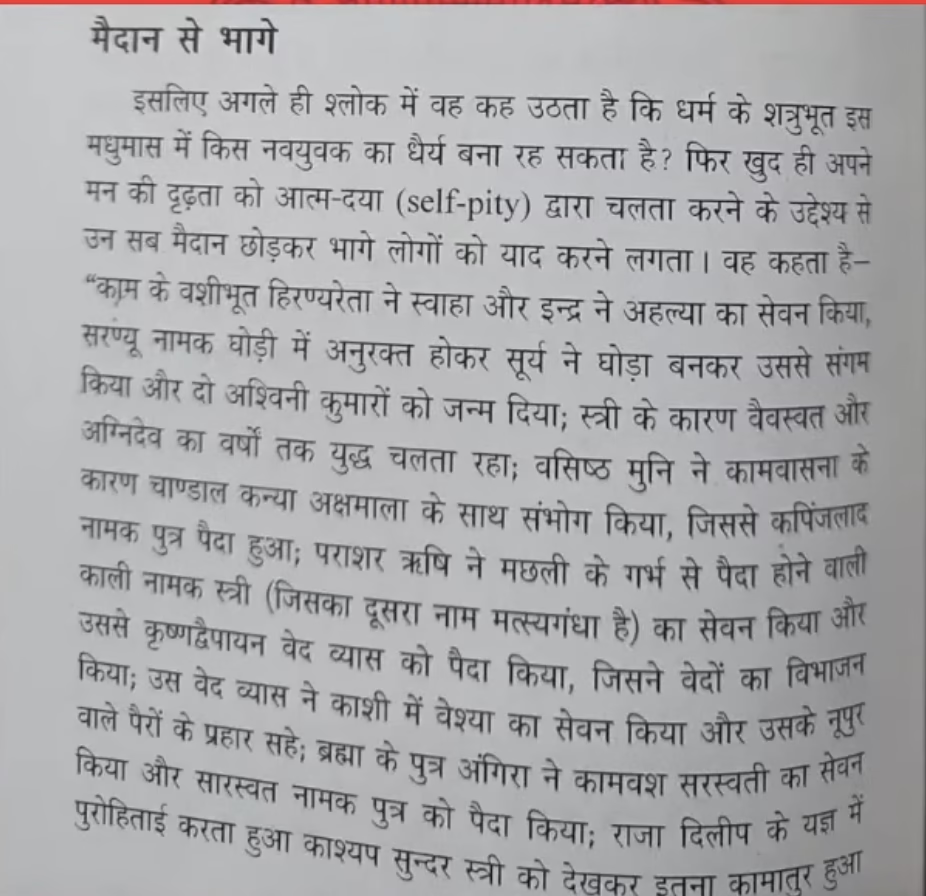
The Saundarananda contains narratives and character parallels that are strikingly similar to those found in Brahmanical epics like the Ramayana and Mahabharata. The mention of Ram and Laxman, Krishna and Balram, and even references to figures and stories from the Puranas, indicates a deliberate integration of Brahmanical mythological frameworks into Buddhist texts. This suggests that the Saundarananda, in its current form, was likely composed or heavily revised during a period when Brahmanical traditions were ascendant and Buddhism was in decline. The authors likely used these familiar tropes to make Buddhist narratives more accessible, or perhaps to co-opt them, to a Brahmanized audience.
The Birth of the Ashvini Kumaras
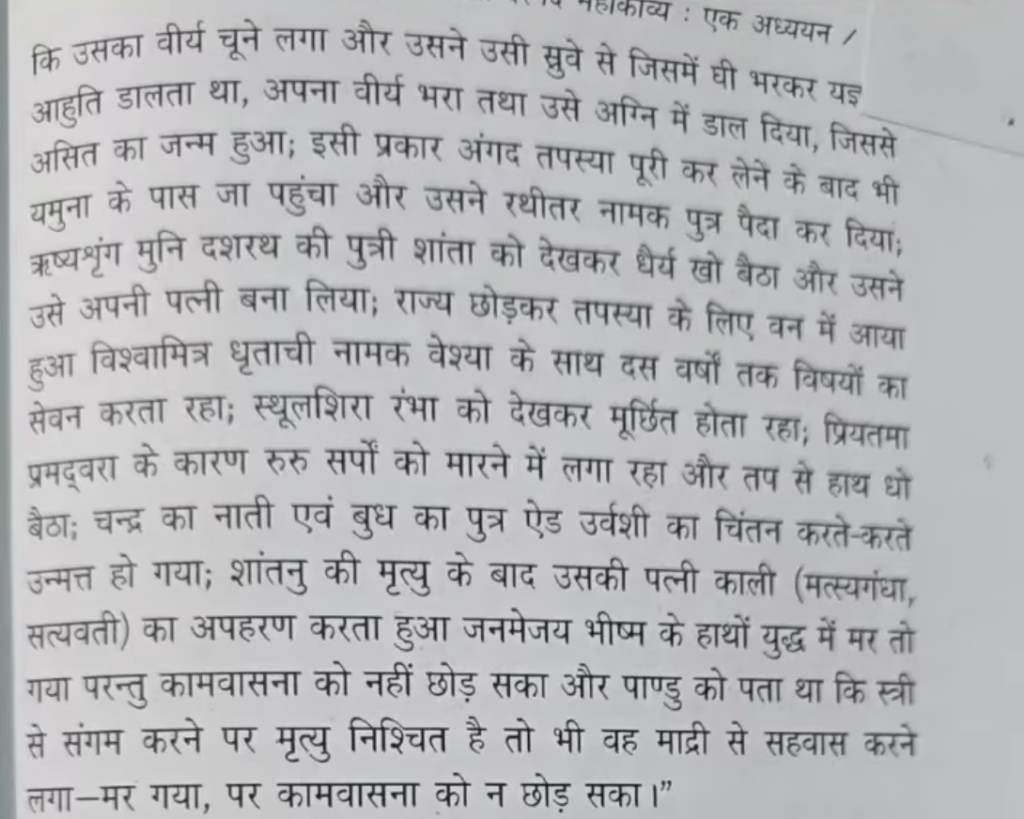
A particularly egregious example of this appropriation is the story of the birth of the Ashvini Kumaras. The text narrates how Surya (the sun god), in the form of a horse, consorted with the mare Anashvari, resulting in the birth of the Ashvini Kumaras. This is a direct borrowing from Brahmanical Puranic lore, where the Ashvini Kumaras are depicted as the divine physicians born from Surya and Anashvari. This story has no place in original Buddhist teachings and clearly demonstrates the extent to which Brahmanical myths were inserted into Buddhist narratives to create a syncretic and ultimately Brahmanized version of Buddhist history.
The Mahabharata’s Influence on Character Portrayals
The character portrayals and relationships within the Saundarananda also show the influence of the Mahabharata. For instance, the description of Nanda and his wife Saundari, and their interactions, draws parallels with characters and familial dynamics from the epic. The narrative seems to be structured to resonate with an audience already familiar with the complex relationships and moral dilemmas presented in the Mahabharata. This indicates a conscious effort to blend Buddhist figures and narratives with the established Brahmanical epic tradition, blurring the lines between the two and paving the way for Brahmanical dominance. Read more: Mahabharata: History, Lineages, and the Truth of ‘Niyoga’
The Brahmanical Construction of Shared History
The cumulative evidence drawn from analyzing the Saundarananda reveals a deliberate strategy of textual assimilation. By inserting Brahmanical lineage markers (Ikshvaku), incorporating familiar Puranic tropes (Ashvini Kumaras), and elevating the Buddha through concepts derived from Brahmanical theism (riddhis and siddhis), later editors sought to neutralize the radical, non-theistic essence of early Buddhism. This process was not accidental; it was a calculated historical restructuring intended to absorb a rival philosophy into the dominant Brahmanical structure. Understanding this appropriation is crucial for recovering the actual history of Indian thought.

The Saundarananda Mahakavyam is an ancient Sanskrit epic poem written by the renowned Buddhist poet Asvaghosha. This 288-page edition includes both the original Sanskrit text and Hindi translation.
About the Epic:
Subject: The story of Nanda, Buddha’s half-brother, and his spiritual transformation from worldly attachment to enlightenment
Literary Style: Classical mahakavya (great poem) format with sophisticated Sanskrit poetry
Historical Significance: One of the earliest Buddhist literary works, showcasing ancient Indian poetic traditions
What Can You Do?
Challenging established narratives requires active engagement with historical evidence. To counter the legacy of textual appropriation, individuals must:
- Demand Critical Education: Advocate for historical curricula that include evidence-based critiques of religious text evolution rather than relying solely on tradition.
- Support Original Research: Seek out and promote scholarly works that analyze linguistic and textual variations in early Buddhist and Brahmanical literature.
- Question Lineages: Recognize that dynastic and divine connections asserted in later texts (like the Ikshvaku link) are often tools for political and religious legitimation, not historical fact.
- Amplify Suppressed Voices: Prioritize anti-caste and evidence-based sources like castefreeindia.com that dedicate themselves to uncovering these buried historical truths.
Do you disagree with this article? If you have strong evidence to back up your claims, we invite you to join our live debates every Sunday, Tuesday, and Thursday on YouTube. Let’s engage in a respectful, evidence-based discussion to uncover the truth. Watch the latest debate on this topic below and share your perspective!

Skeptical Indian is an independent researcher documenting
caste discrimination through primary sources, Hindu
scriptures, court records, and government data.
CasteFreeIndia.com has published 100+ evidence-based
analyses since 2024.