

The Allegations of Foreign Appropriation in Ancient Scriptures
A significant point of contention arises when discussions turn to the antiquity of certain ancient Indian scriptures. Critics often counter traditional assertions by stressing the profound age of the civilization spanning millions of years, citing various Yugas such as Satya Yuga and Treta Yuga. However, a rigorous examination of the existing Puranic literature especially Bhavishya Purana, focusing specifically on Puranic Chronology Inconsistencies, reveals surprising textual evidence pointing towards significant cross-pollination and direct copying from Abrahamic and Buddhist narratives. This suggests these texts were compiled much later than traditionally claimed. The objective here is to systematically expose these textual parallels and chronological discrepancies embedded within these very scriptures, leaving no room for ambiguity regarding their actual timeline of composition and sources.
- Textual Overlaps with Abrahamic Traditions: Traces of Copying
- The Case of Chandragupta Maurya: A Re-evaluation of Identity
- Chronology of the Mahabharata Era: Reign Lengths and Yuga Discrepancies
- Direct Plagiarism from Abrahamic Flood Narratives
- Chandragupta Maurya: The Buddhist King and the Saleukos Connection
- Conclusion: What the Texts Reveal
Textual Overlaps with Abrahamic Traditions: Traces of Copying
Upon analyzing the scriptures, explicit references to figures and narratives resonant with Islamic, Jewish, and Christian traditions become apparent. For instance, there are indications of narratives concerning Noah, which appear to have been subsequently adapted and retold under the names of Manu and Shatarupa within the Hindu framework. The act of transcription or adaptation was not always flawless; scribes frequently made errors or oversights during this process of appropriation, meaning the transcription was imperfect. In instances where the intent was to replace a name like ‘Nuh’ with ‘Manu,’ the original source name occasionally persisted, leaving behind a clear textual trace.
This phenomenon is not isolated. If the Puranas are truly pristine records, why would they require such clumsy adaptations of universally known Near Eastern epics? Similar inconsistencies appear when examining the nomenclature related to deities. For example, while the deity Indra is associated with a horse as his vehicle, later Puranic writings sometimes mistakenly attribute an elephant as his mount, deviating from established earlier descriptions. Furthermore, the term ‘Shakra’ appearing in Buddhist narratives, which refers to Indra, is sometimes erroneously inserted as ‘Indra’ in the Hindu texts, further underscoring the pattern of copying from Buddhist sources.
Evidence strongly shows authors actively drew from external accounts—specifically those concerning figures like the prophet Muhammad, Jesus, and Moses. The story of Noah, for example, shows clear borrowing. The text itself inadvertently reveals these moments of textual borrowing, akin to how a person telling numerous lies eventually leaves behind traces of the original source material. This comprehensive review aims to present the evidence directly from the texts themselves, thereby dismantling the argument for absolute, independent antiquity for these specific passages. The critical focus remains on what the texts explicitly state about historical figures and events attributed to vastly different timeframes.
The Case of Chandragupta Maurya: A Re-evaluation of Identity
One critical area where the Puranic chronology clashes sharply with the asserted historical narrative concerns the identity of Chandragupta Maurya. There is a persistent, contemporary propagation that Chandragupta Maurya was a Hindu or a so-called ‘Vedic’ figure, rather than a Buddhist or Jain. This narrative is actively constructed today. However, when examining the scriptures compiled during the time these historical accounts were first being chronicled—specifically the Puranas—the perception of Chandragupta within those texts was entirely different. At the time of the Puranic composition, Chandragupta was viewed as a ‘Mleccha’ and a Shudra, and critically, he was identified as a Buddhist. The mindset of the contemporary writers never included the agenda of portraying him as Hindu or Vedic.
The textual evidence confirming his Buddhist affiliation remained intact in certain original scriptures, even as later efforts were made to revise or ‘Brahmanize’ his historical representation. These revisionist efforts intensified after the British deciphered the edicts of Emperor Ashoka. Upon realizing that Ashoka’s inscriptions would definitively expose the historical timeline, there was an impetus to retroactively establish figures like Chandragupta as ‘Vedic Hindu’ to assert control over the narrative before the full implications of the inscriptions were understood.
The introduction of these revisions often lagged behind the preservation of earlier, less-edited manuscripts. The survival of these older texts, which explicitly identified Chandragupta as a Buddhist, fundamentally undermines the later attempts at historical rebranding, exposing the deliberate manipulation of identity for ideological purposes.
Chronology of the Mahabharata Era: Reign Lengths and Yuga Discrepancies
To address the claims of the Mahabharata occurring 5,000 years ago, one must begin with the Puranic lineage (Vanshavali) starting from the Dwapara Yuga, as detailed in texts like the Bhavishya Purana. This Purana is cited as the eleventh most credible among the eighteen recognized Puranas, according to the Vishnu Purana. The sections detailing Satya Yuga and Treta Yuga will be bypassed to focus strictly on the Dwapara Yuga timeline presented within this text.
The Introduction of ‘Mleccha’ Terminology
The Bhavishya Purana explicitly uses the term ‘Mleccha’ to denote outsiders, specifically those identified today as Muslims, Christians, or Jews. The text indicates that the arrival of the ‘Mlecchas’ predated the birth of Krishna by a significant margin. The text even attempts to assimilate Abrahamic narratives, suggesting that Adam and Eve (referred to here as ‘Adam Hauva’) were somehow born through the grace or avatar of Vishnu, contrasting sharply with the Islamic assertion of creation by Allah. Readers are encouraged to review these scriptures to grasp the extent of these integrated accounts.
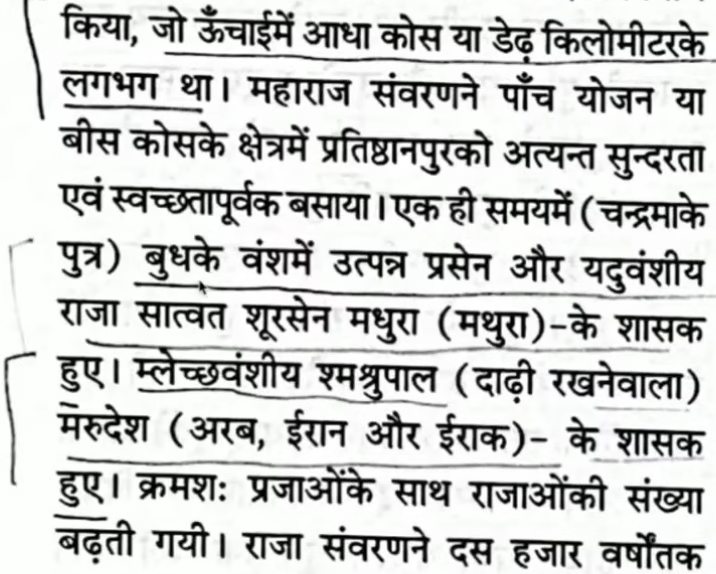
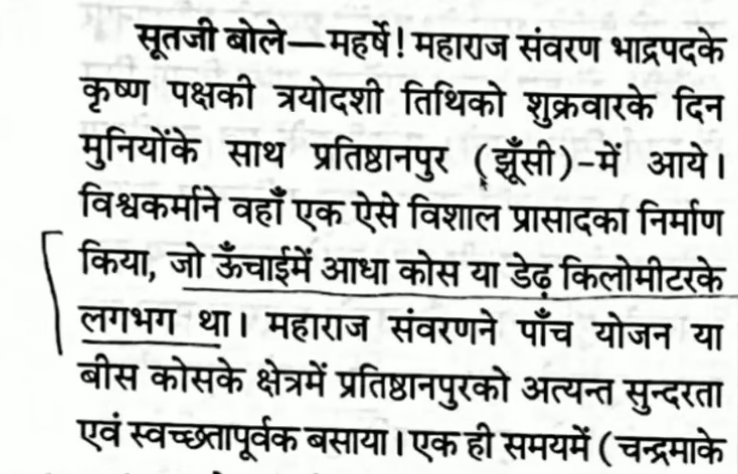
A point of critical dating evidence is the mention of specific weekdays. The text notes an event occurring on a Friday (‘Shukravar’) in the dark fortnight of Bhadrapada. Historically, the concept of naming weekdays (like Friday) was not prevalent in India until the fifth or sixth century CE. This temporal marker strongly suggests that the compilation or significant editing of these chapters occurred well after the introduction of the seven-day week structure and these specific day-names were not established in the purported time of the events.
Astonishingly Long Reigns in Dynastic Lists
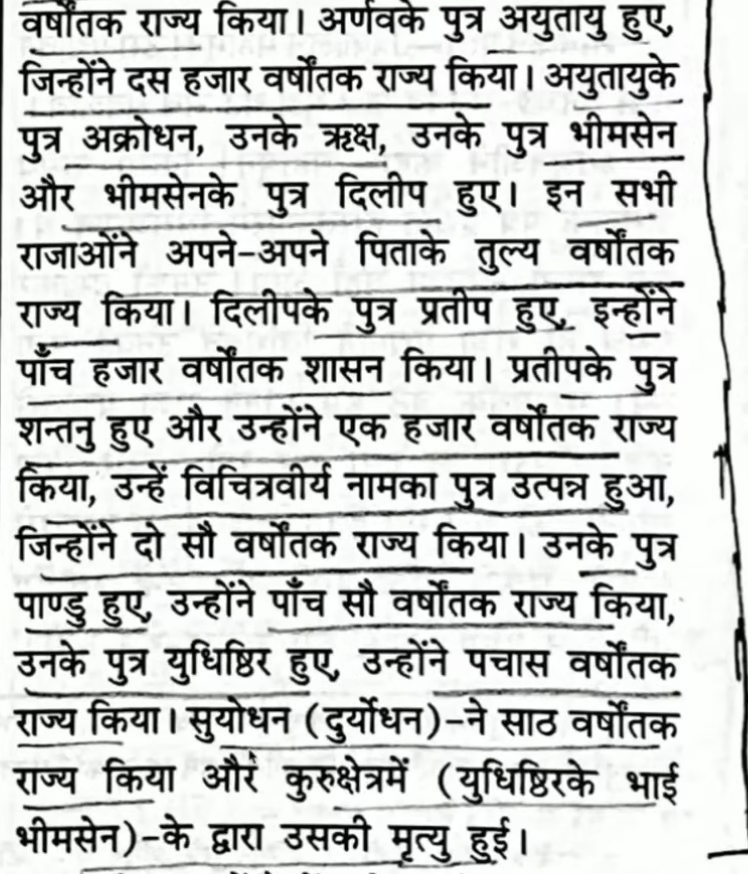
The genealogical records presented in the Bhavishya Purana during the Dwapara Yuga reveal reign durations that defy plausible historical chronology. The text describes kings ruling for tens of thousands of years. For instance, King Sāvarṇa is stated to have ruled for 10,000 years, followed by his son Archan, who also reigned for 10,000 years. Subsequently, the next ruler reigned for half that time, 5,000 years. This pattern of extraordinarily extended reigns continues throughout the lineage. The description extends to Dushyanta, Oṣanta, and Śakuntalā, whose combined rule is vaguely stated to be 18,000 years.
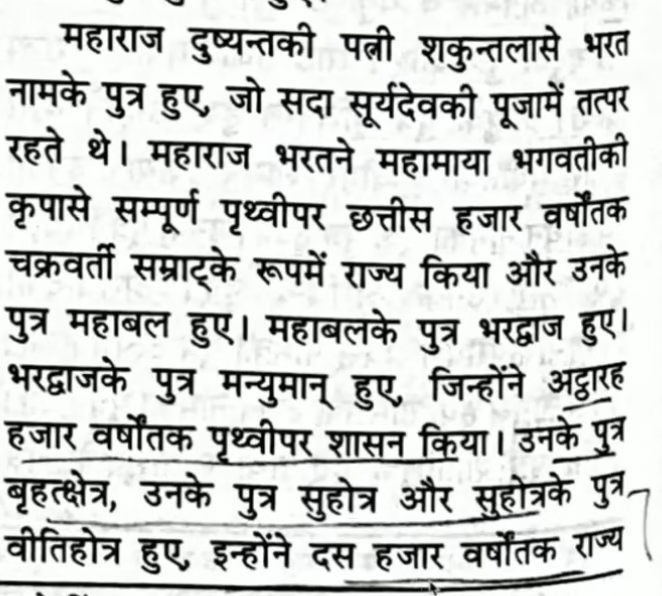
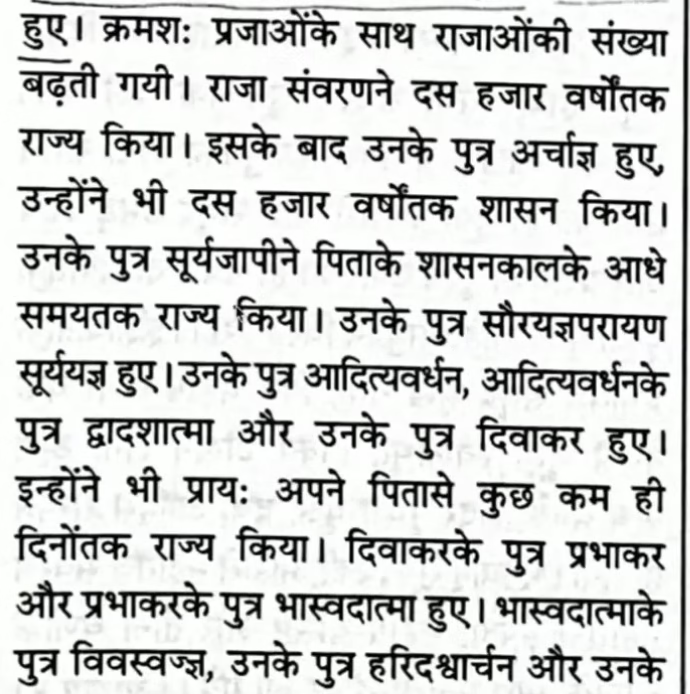
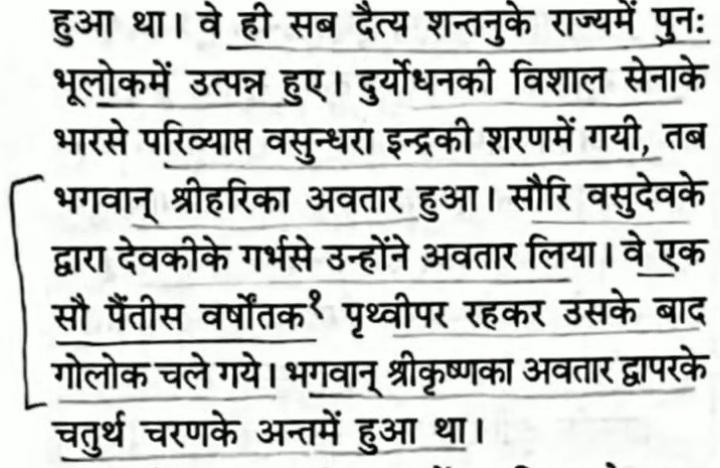
Are these thousands of years of reign lengths truly historical timelines, or are they less like a king’s ledger and more like a religious odometer stuck perpetually spinning? The text later details a break where Vichitravirya ruled for 200 years without issue, followed by Pāṇḍu, who reigned for 500 years. Following the supposed Mahabharata events, Yudhishthira ruled for 50 years, and Duryodhana (referred to as Suryodhana in the text) for 60 years. Finally, Krishna is credited with reigning for 135 years before departing to Goloka. These figures, when juxtaposed against the common claim of the war occurring 5,000 years ago, expose a massive chronological discrepancy within the Purana itself.
The Encounter with ‘Mlecchas’ Before the Yuga’s End
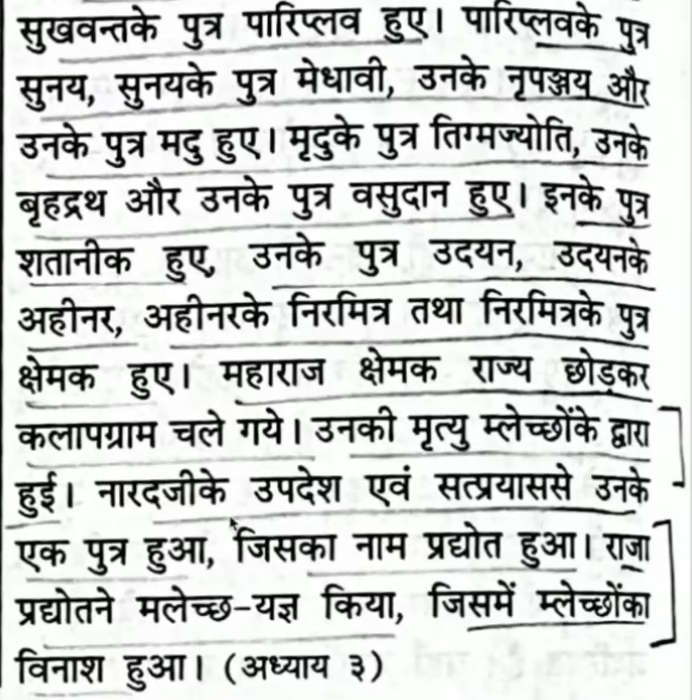
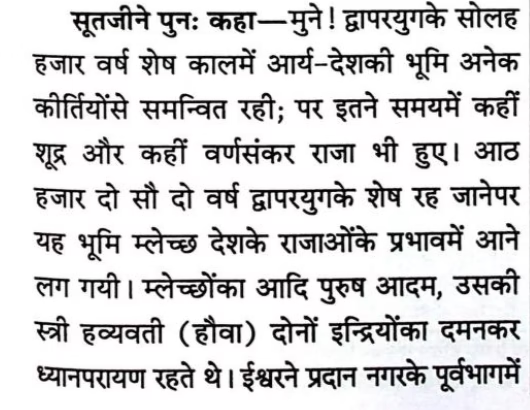
The genealogical descent continues until the lineage reaches Kṣemaka, whose death is attributed to the ‘Mlecchas’ who invaded. This occurrence is placed within the Dwapara Yuga, long before the conventional timeline for the advent of the Mleccha populations (i.e., Muslims or others mentioned). A subsequent ruler, King Pradota, performs a ‘Mleccha Yajna’ (a ritual sacrifice intended to destroy the Mlecchas). This ritual involves constructing a colossal sacrificial pit, described as a square structure sixteen ‘Yojanas’ in dimension (a Yojana being roughly 10 to 14 kilometers, suggesting a structure potentially 160-224 km wide).
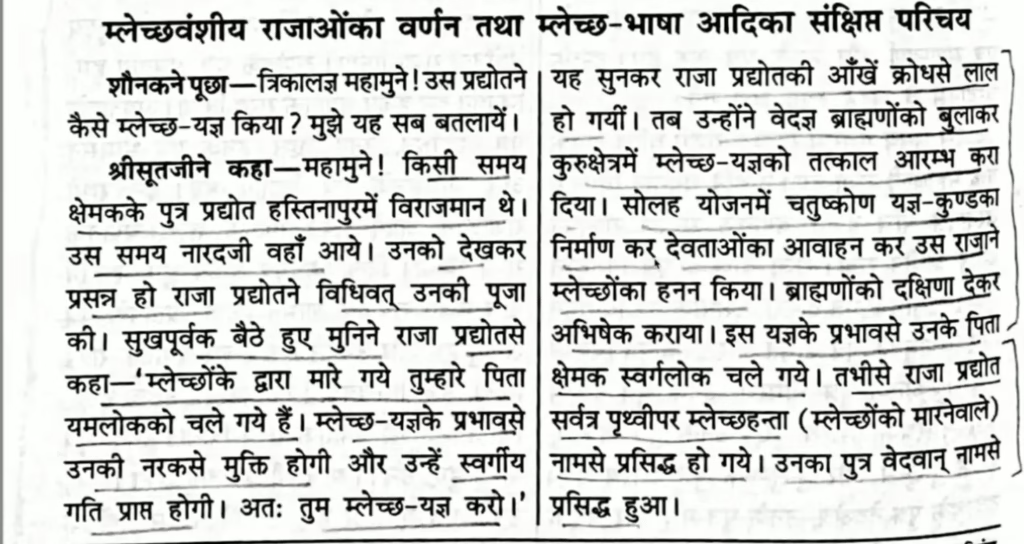
The text claims that through this immense fire ritual, the Mlecchas who were present were destroyed, and Kṣemaka’s father ascended to Svarga Loka, making King Pradota famous as the ‘Mleccha Hanta’ (Destroyer of Mlecchas). The complete absence of archaeological evidence for a king named Pradota or a 16-Yojana sacrificial structure, especially considering the discovery of Indus Valley artifacts, further validates the mythical nature of these later Puranic additions.
Direct Plagiarism from Abrahamic Flood Narratives
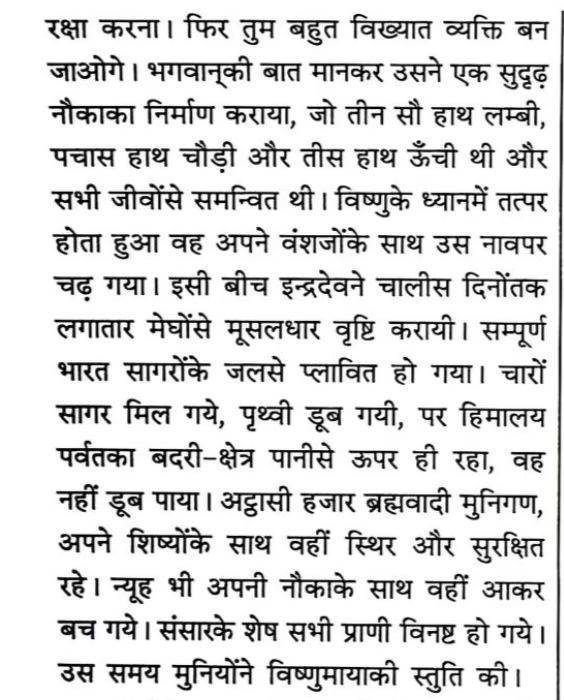
The compilation efforts evident in the Bhavishya Purana reveal extensive, direct appropriation from the Old Testament narratives, particularly the story of Noah’s Ark. The text recounts a deluge prophesied to occur seven days hence, instructing a devotee to board a ‘Siddh Nauka’ (a divinely constructed boat) with his family to ensure survival. This boat is meticulously detailed: 300 cubits long, 50 cubits wide, and 30 cubits high, built with specific interlocking joints. During this event, the god Indra causes forty continuous days of torrential rain, flooding the entirety of Bharata (India), with only the Badari region of the Himalayas remaining above water.
The Appearance of ‘Nūh’ and the Shift to Vishnu Devotion
Crucially, the narrative explicitly names the survivor as ‘Nūh’. This Nuh, along with the 88,000 Brahminical Rishis and their disciples, survives in the Badari region. The text then states that Nuh, along with his descendants, settled in a land called Śiśanā, which is located near the Himalayas in the province of India. This entire sequence—the warning, the ark construction, the forty days of rain orchestrated by Indra, the survival in the Himalayas, and the settlement in an Indian locale—is a direct transposition of the story of Noah, meticulously localized within the Indian geography. Despite using the name Nuh, the text asserts that this figure, Nuh, remained devoted to Lord Vishnu.
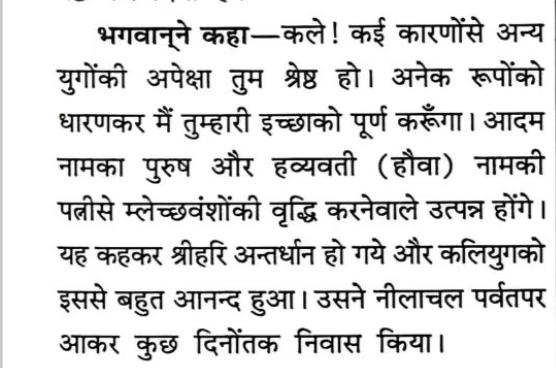
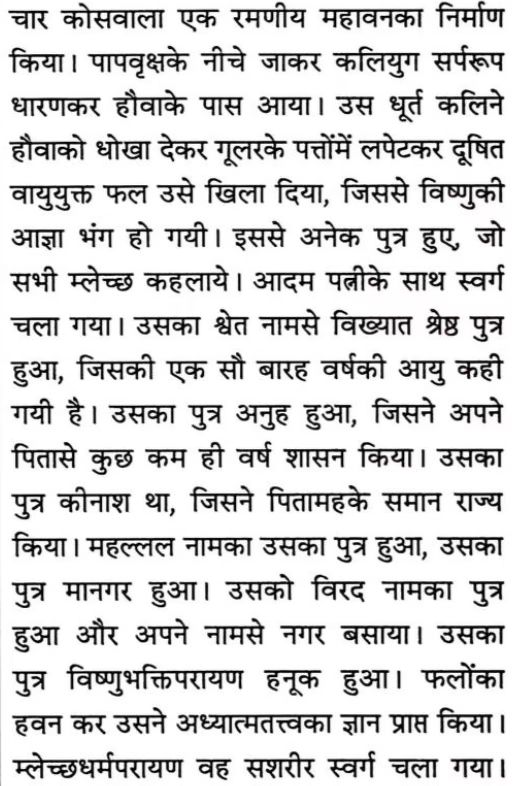
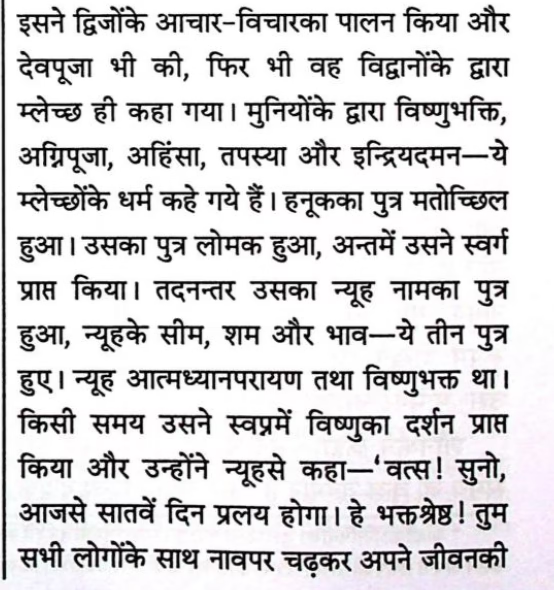
Following the flood, the text details the post-deluge lineage stemming from Nuh’s sons: Sīm, Saṁ, and Bhāva, whose names are explicitly stated to correspond to Sēm, Hām, and Yāqūt (Japheth), names directly traceable to the biblical lineage. Furthermore, it is narrated that Nuh’s progeny expanded the ‘Mleccha Bhasha’ (language of the Mlecchas), which was external to Sanskrit and Vedic texts.
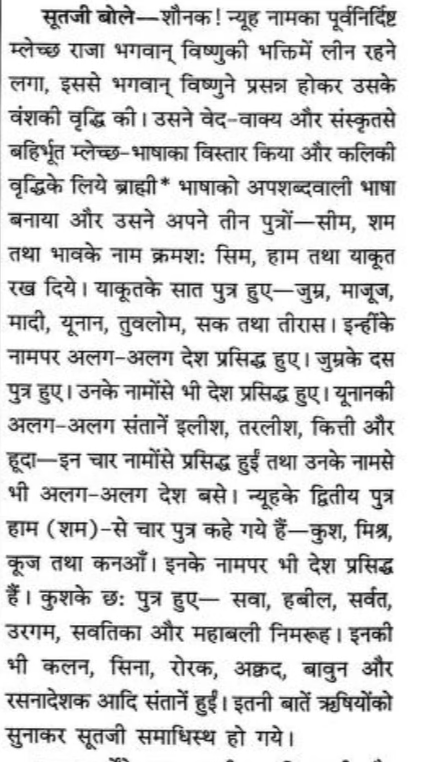
In a baffling assertion, it claims that this Mleccha language expanded by making the ‘Brāhmī Bhāshā’ (which it confusingly calls a language, not a script) into an ‘Abashabdāvalī Bhāshā’ (a language of abusive words). The text further describes how, millennia later in the Kali Yuga, the sage Kashyapa visited the land of Misr (Egypt), where he converted the local Mlecchas into ‘Dvijanma’ (twice-born).
Linguistic Corruption and Modern Misinterpretations
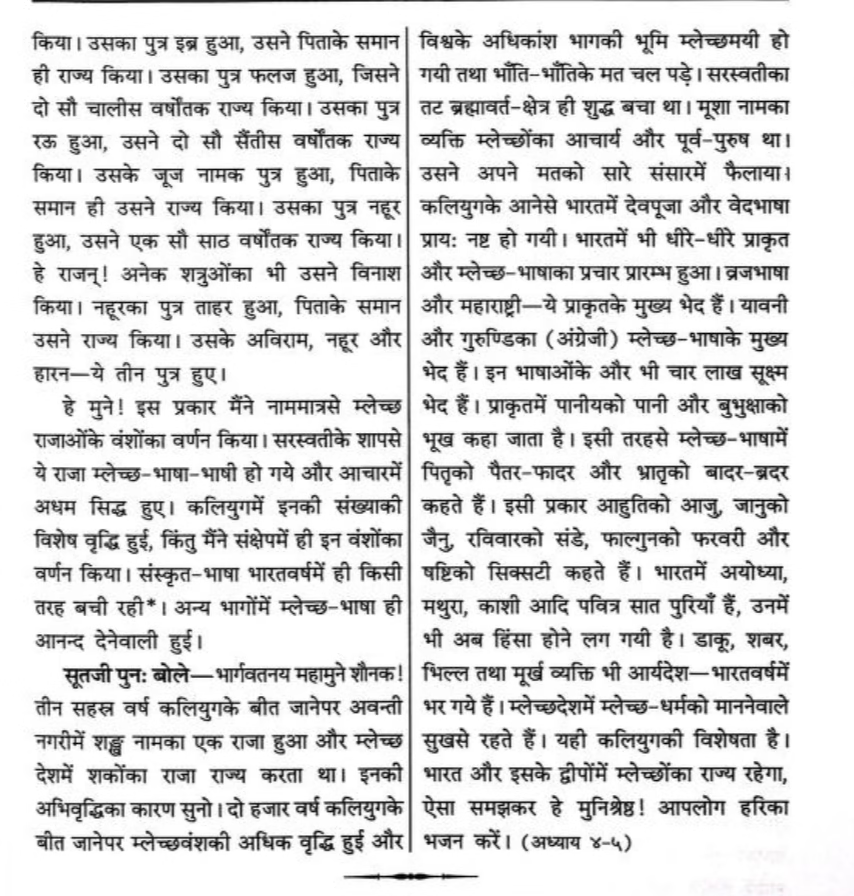
The authors of this section exhibit a clear misunderstanding of foundational concepts when analyzing linguistic shifts. The text claims that phonetic shifts occurred: ‘Pitṛi’ becoming ‘Paitar’ (Father), ‘Bhatry’ becoming ‘Badar’ (Brother), ‘Ahuti’ becoming ‘Aju,’ and notably, ‘Ravivar’ (Sunday) becoming ‘Sunday,’ and the month ‘Phalgun’ becoming ‘February.’ These linguistic observations directly point to a compilation period when Sanskrit/Prakrit vocabulary was being juxtaposed with contemporary English and possibly Persian/Arabic terms, a clear indication of colonial or post-colonial composition, especially given the explicit mention of English day-names and calendar months.
Chandragupta Maurya: The Buddhist King and the Saleukos Connection
The analysis shifts to show the continuity of Buddhism within the Puranic framework. Kashyapa Muni is described as traveling to Egypt (Mishra Desh) and converting the Mlecchas into ‘Dvijanma’ (a term suggesting second initiation, often associated with Buddhist ordination). The narrative confirms that the Magadh dynasty arose from the Sudra king Prithu, leading to the Mauryan line.
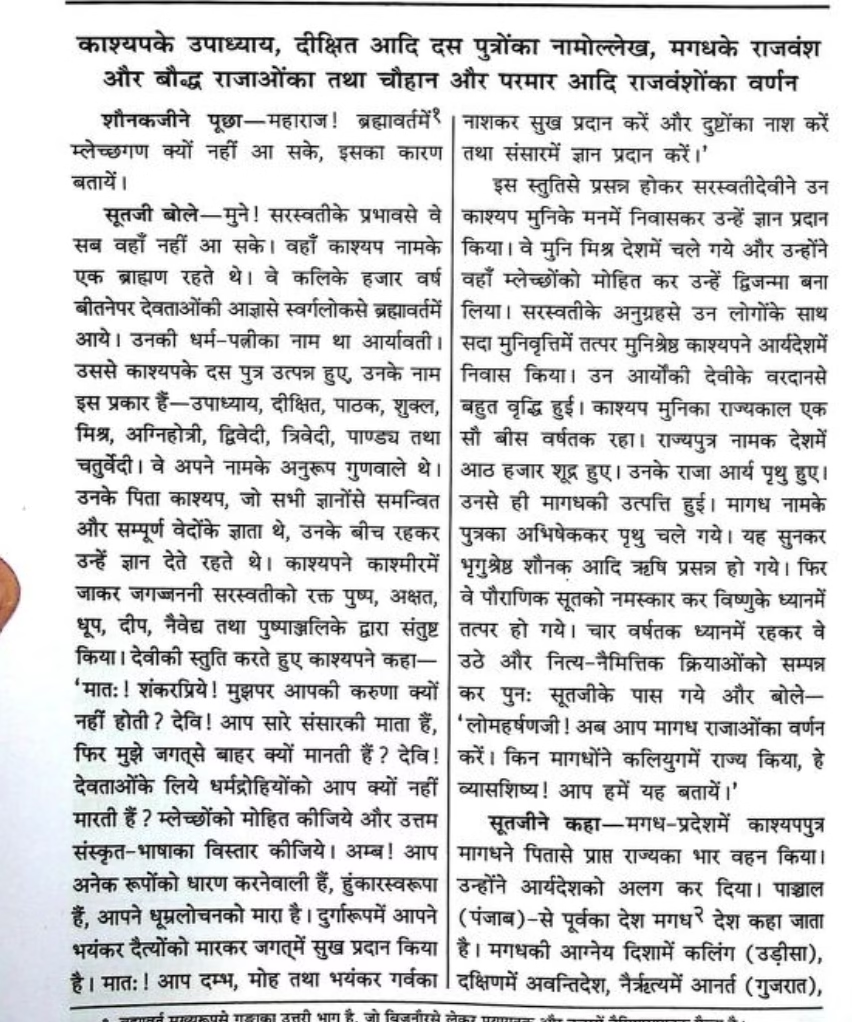
The Bhavishya Purana explicitly identifies Shakya Singh (Gautama Buddha) as the son of Shuddhodhana, stating that the line had ‘vinishta’ (destroyed) the Vedic path (Veda Mārga). The text states that in the 2000th year of the Kali Yuga, ‘almost everyone became Buddhist’ (praayah sabhi bauddh ho gaye). This admission confirms a period where Buddhism was the dominant cultural and religious force in the region described.
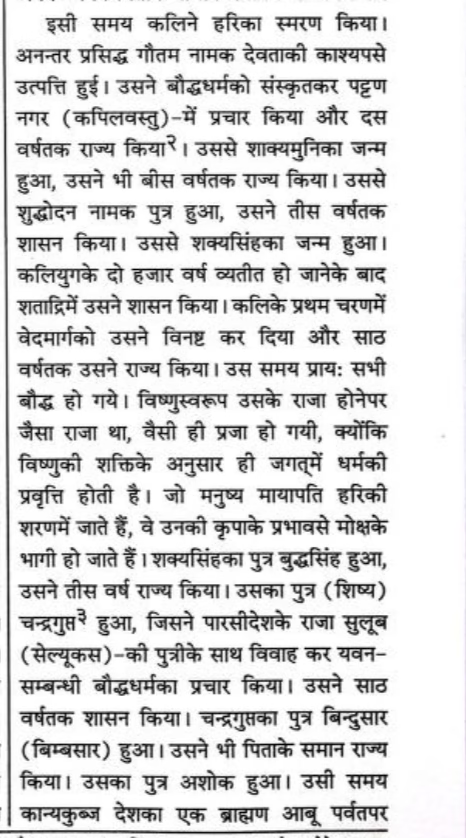
The most direct challenge to modern revisionist history comes in the lineage connecting Shakya Singh to Chandragupta Maurya. The text claims Chandragupta was the son of Buddhasimha (a son of Shakya Singh), making him the Buddha’s grandson within this constructed genealogy. Crucially, it states that Chandragupta married the daughter of the Persian King Sulub (Seleucus) and subsequently ‘preached the Yavana-related Buddhist Dharma’ (Yavani sambandhi bauddh dharma ka prachar kiya). This passage serves as primary textual evidence from a purportedly ancient source, recorded when the authors evidently had no motive to fabricate a connection to an earlier ‘Vedic’ identity for Chandragupta, directly contradicting the modern narrative that he was a Hindu king.
The Creation of Kshatriyas to Counter Buddhism
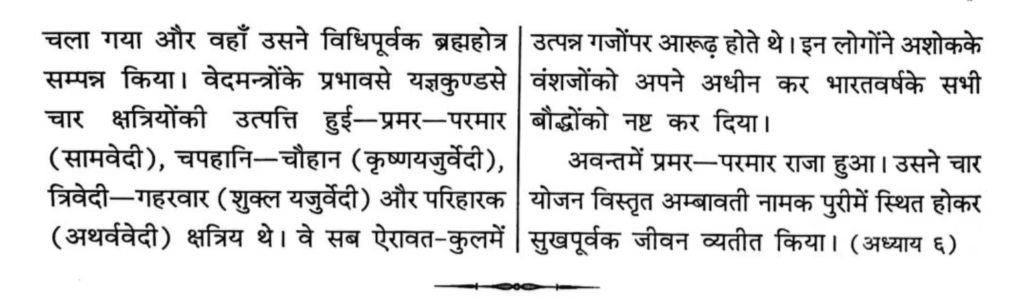
The final section detailing the Mauryas mentions Ashoka. The text then abruptly pivots, claiming that after Ashoka’s lineage, Brahmins, utilizing Vedic mantras during a ritual on Mount Abu, generated four distinct Kshatriya clans: Paramar, Chauhan, Gaharwar, and Pariharak, associated with the four Vedas. These newly created warrior classes are then credited with subduing the descendants of Ashoka and ‘destroying all the Buddhists in Bharatvarsha’. This internal textual admission suggests a deliberate, organized effort to dismantle the widespread Buddhist dominance acknowledged earlier in the very same Purana, by creating a new, ostensibly ‘Vedic’ warrior class structure.
Conclusion: What the Texts Reveal
The comprehensive review of the relevant sections of the Bhavishya Purana, particularly regarding the chronology of the Dwapara Yuga, the identification of Chandragupta Maurya, and the direct transcription of the Noah narrative, demonstrates that these scriptures contain authoritative internal evidence of later compilation and heavy reliance on external, non-Vedic sources. The claims of eternal antiquity for these specific passages are demonstrably false based on the texts themselves.
What you can do?
To engage critically with historical and religious claims, one must adopt a stance of **rational inquiry**. Readers should actively compare textual evidence from scriptures cited as ancient with established historical timelines and external religious texts. Specifically, research the timelines associated with the adoption of the seven-day week and the documented spread of Abrahamic religions in South Asia to contextualize the dated references found in the Puranas. Further investigation into the historical context of the British decipherment of Ashokan edicts can illuminate the political motivations behind later textual ‘revisions’ aimed at reshaping figures like Chandragupta Maurya. Hold these claims to the standard of archaeological and verifiable historical data, rather than accepting mythological chronologies at face value.
Disclaimer: Common Terms Used and Their Contextual Meaning
- Mleccha: In the context of the Bhavishya Purana, this term is used broadly to denote foreign populations, specifically those adhering to Abrahamic faiths (Muslims, Christians, Jews).
- Dvijanma: Literally ‘twice-born.’ In this text, it is used in a Buddhist context (referring to a monastic initiate) but also applied to people converted by Kashyapa in Misr.
- Nūh / Noah: The figure from the Abrahamic flood narrative, whose story is directly mapped onto a deluge event occurring in India.
- Brāhmī Bhāshā: Referred to confusingly as a language rather than the well-established script, suggesting the author’s lack of accurate linguistic knowledge.
- Bhavishya Purana: Cited here as the eleventh most reliable of the eighteen recognized Puranas, used as the primary source for this chronological analysis.
- Śākyasiṁha: The lineage name used for Siddhartha Gautama, the historical Buddha, showing his inclusion in the Puranic genealogy preceding Chandragupta.
Read more about Manusmriti: Why Brahmins Should Also Burn it?
Do you disagree with this article? If you have strong evidence to back up your claims, we invite you to join our live debates every Sunday, Tuesday, and Thursday on YouTube. Let’s engage in a respectful, evidence-based discussion to uncover the truth. Watch the latest debate on this topic below and share your perspective!

Skeptical Indian is an independent researcher documenting
caste discrimination through primary sources, Hindu
scriptures, court records, and government data.
CasteFreeIndia.com has published 100+ evidence-based
analyses since 2024.
[…] The Chachnama provides crucial insights into the religious landscape of the time. Despite the region being named ‘Brahmanaabad,’ the dominant religion was Buddhism. Chach, a self-proclaimed Brahmin, married the widow of an Ahgham, who was Buddhist. He also married his niece, Dehsi, to Sarban, Ahgham’s son, indicating inter-caste and inter-religious marriages were occurring. This suggests that the rigid Brahmanical system, as understood today, was not yet fully established. The text frequently refers to Buddhist monks as ‘Brahmin’ or ‘Buddhist Brahmins,’ blurring the lines and implying that the term ‘Brahmin’ might have been used more broadly for scholars or priests, or that many who identified as Brahmins practiced Buddhist tenets.[source] Read more: Bhavishya Purana: Puranic Chronology & Foreign Influence […]
[…] Before British scholarship, India’s historical narrative spoke of epochs like Satya Yuga, Treta Yuga, and Dwapara Yuga, suggesting an incredibly ancient civilization. The advent of British scholarship, however, shifted this narrative. Aryan Migration and Invasion theories, based on linguistic evidence, suggested Sanskrit and associated cultures originated from outside India. Later, DNA studies further complicated this, with some suggesting the Brahminical system had foreign origins. These theories have led to considerable debate, but for understanding the Lingam, we must focus on archaeological and textual evidence.[source] Read more: Bhavishya Purana: Puranic Chronology & Foreign Influence […]