
Understanding the complexities of the caste system is the first step toward dismantling it. Whether you are a student, an activist, or simply someone trying to make sense of Indian society, reading foundational texts and contemporary analysis is crucial.
The battle for a caste-free India is fought on many fronts, but the intellectual front is perhaps the most important. To challenge the status quo, we must first understand how it was built, how it is maintained, and how it is resisted.
We have compiled this comprehensive anti-caste reading list, featuring 20 essential books to understand caste in India, covering history, memoir, fiction, and revolutionary theory.
Foundational Texts of the Anti-Caste Movement
1. Annihilation of Caste – Dr. B.R. Ambedkar
What it contains: This is the cornerstone of anti-caste literature. Originally a speech that was too radical to be delivered, Dr. Ambedkar offers a precise, logical attack on the caste system and the Hindu scriptures that sanctify it. This edition, often accompanied by Arundhati Roy’s introduction, is vital.
What to expect: A intellectually rigorous argument that social equality is the prerequisite for political and economic freedom. It is essential reading.
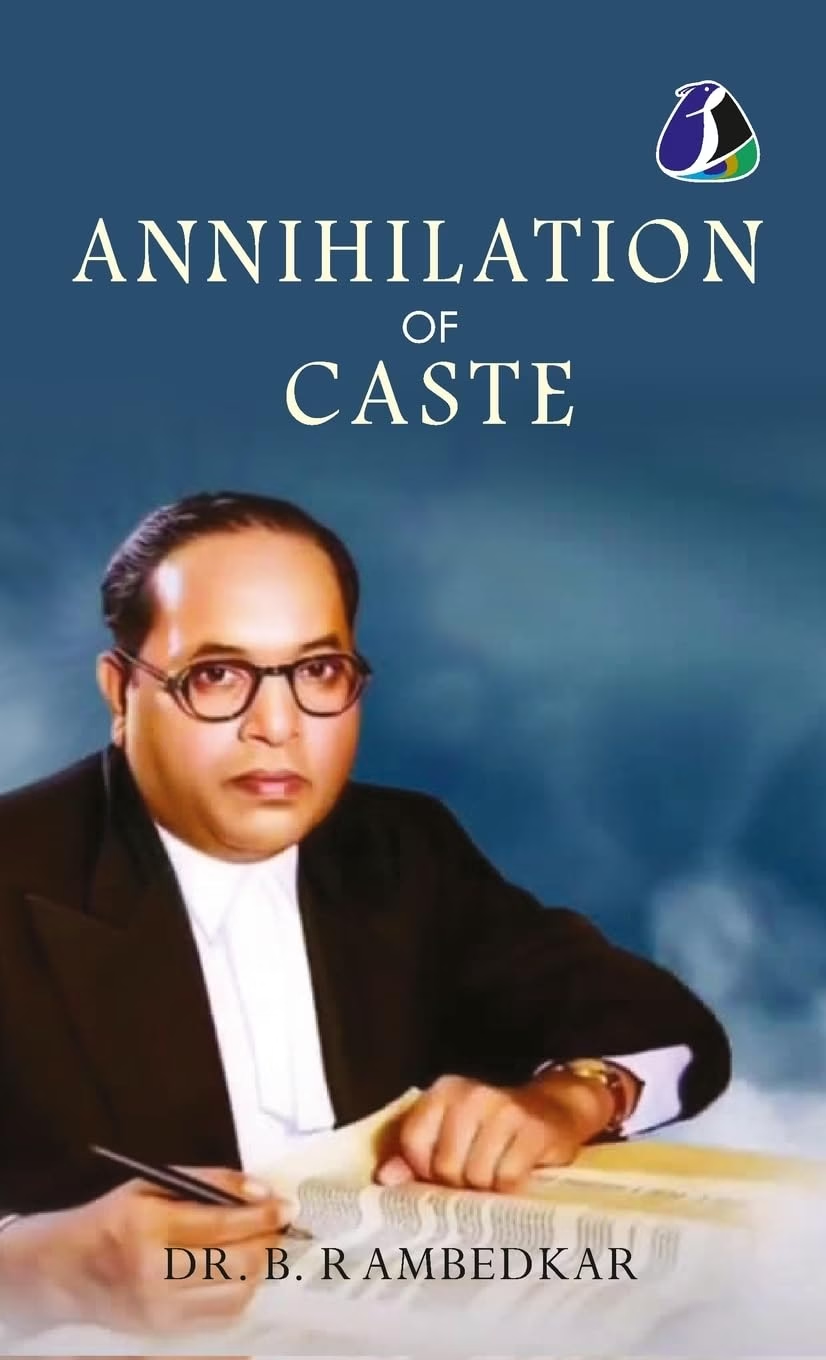
Annihilation of Caste is a seminal work by the Indian social reformer, Dr B.R. Ambedkar. Originally written as a speech, the book examines the deeply entrenched caste system in India and argues for its complete abolition. Dr Ambedkar exposes the injustices and inequalities perpetuated by the caste system and advocates for a society based on principles of liberty, equality, and fraternity. This book remains a powerful and influential critique of caste and a call to action for social justice and equality in India and beyond.
A powerful critique of the caste system in India.
Written in a clear and persuasive style, presenting logical arguments and evidence to support Ambedkar’s vision of a casteless society.
The book was originally written as a speech in 1936, and its publication in book form helped to ignite a movement for social justice and human rights in India.
Explores the intersections between caste, class, gender, and other forms of oppression.
The book continues to inspire activists and intellectuals to work towards a more just and equitable world.
2. Gulamgiri (Slavery) – Mahatma Jyotirao Phule
What it contains: Written in 1873, Phule dedication of this book to the American movement to abolish slavery highlights its revolutionary intent. He critiques the Brahmanical narrative of history and provides an alternative view of the origins of caste.
What to expect: A powerful historical argument that reframes caste as a form of foreign imposition and argues for the education and liberation of the lower castes.
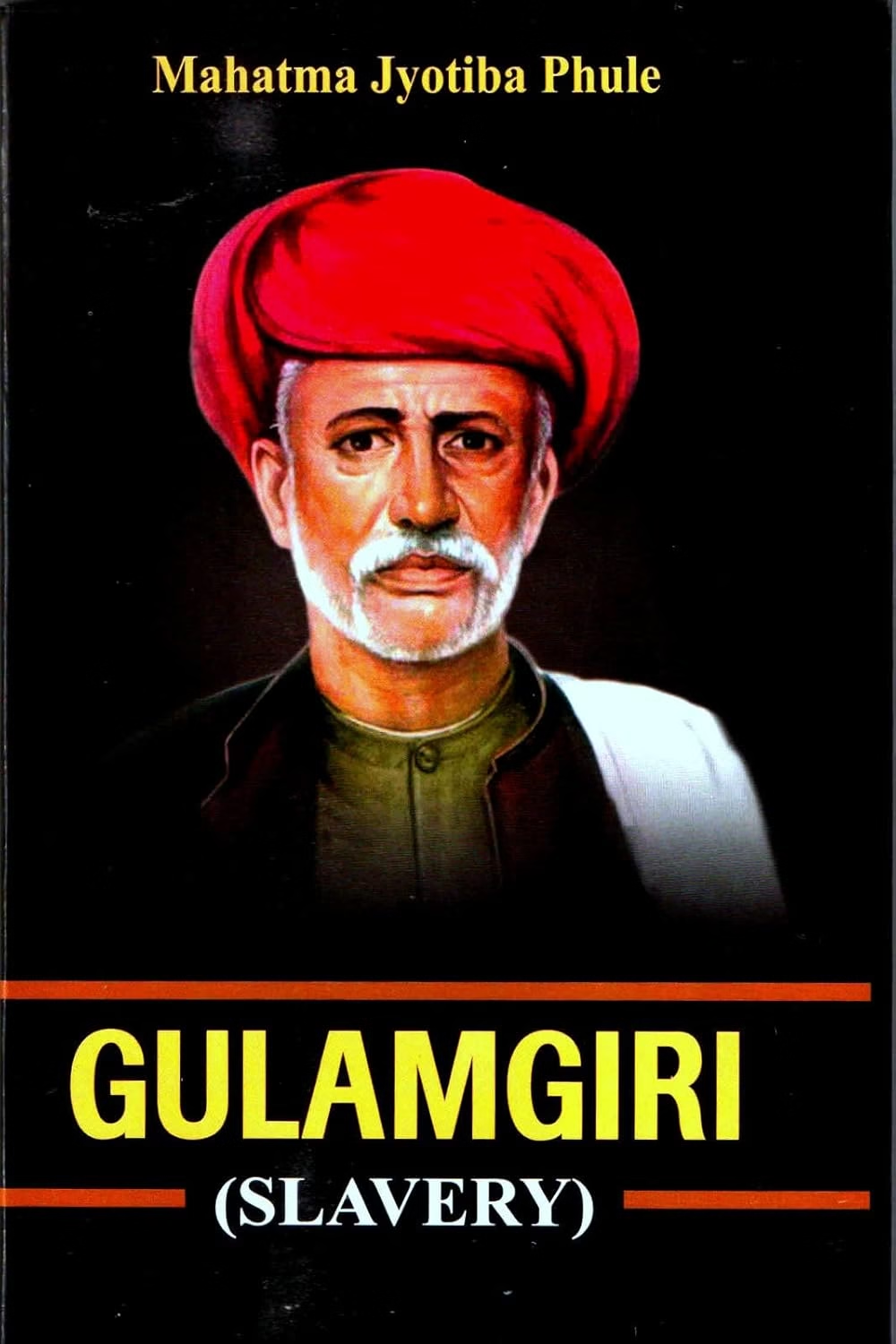
Gulamgiri (Slavery) by Mahatma Jyotirao Phule is a powerful social reform work originally published in 1873 that exposes the oppression of Shudras and Ati Shudras (lower castes) in Indian society.
Core Theme: The book attacks Brahminism and highlights how it keeps lower castes in intellectual, social, religious, and economic slavery. Phule argues that “lack of education leads to a lack of wisdom, which leads to a lack of morals, which leads to a lack of progress, which leads to a lack of money, which leads to the oppression of the lower classes.”
What Makes It Important:
A groundbreaking critique of the caste system written 150 years ago
Advocates for education as the key to liberation from social oppression
Presents harsh truths about how upper castes have historically oppressed Shudras and Dalits
3. Castes in India: Their Mechanism, Genesis and Development – Dr. B.R. Ambedkar
What it contains: A crucial paper presented at Columbia University. Ambedkar defines caste through the mechanism of “endogamy” (marriage restricted within a group), showing how the system is self-perpetuating. Read for free here.
What to expect: A classic sociological analysis that remains highly relevant for understanding how the caste system is maintained through social structures.
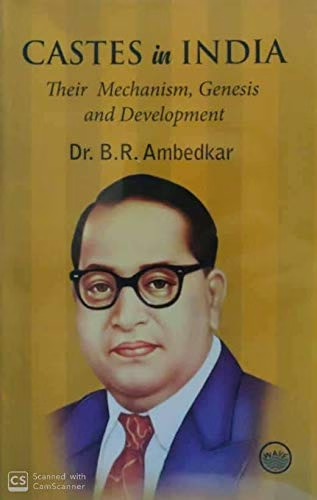
Castes in India – Their Mechanism, Genesis and Development is a seminal work by Dr. B.R. Ambedkar that provides a rational analysis of the origins and mechanisms of India’s caste system.
Key Topics Covered:
Origins of Caste: Challenges existing theories and presents Ambedkar’s own explanation for how castes developed
Endogamy Theory: Argues that closed marriages within groups (endogamy) is the primary mechanism that created and maintains castes
Social Structure: Examines how primitive communities transformed into rigid caste hierarchies
Critical Analysis: Provides a logical, emotion-free examination of how caste operates in Hindu society
The book demonstrates how castes are not natural formations but artificial social constructs that spread through imitation from top to bottom in the social hierarchy. Readers consistently praise its rational approach and clear arguments about this complex social phenomenon.
4. Joothan: An Untouchable’s Life – Om Prakash Valmiki
What it contains: A landmark of modern Dalit literature. This raw, honest memoir recounts the pervasive discrimination and brutality Valmiki faced growing up “untouchable” in rural Uttar Pradesh.
What to expect: Visceral, heartbreaking, yet inspiring evidence of how caste-based discrimination affects psychological and social growth from childhood.
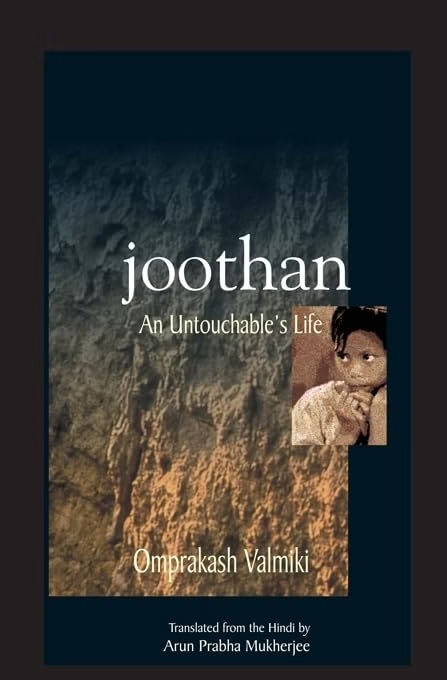
Joothan: An Untouchable’s Life is the powerful autobiography of Omprakash Valmiki, describing his life as a Dalit (untouchable) in newly independent India of the 1950s.
Key Themes:
“Joothan” refers to leftover scraps of food, symbolising the humiliation and poverty forced upon untouchables for centuries
Personal Struggle – Valmiki’s heroic journey to overcome preordained discrimination and persecution
Social Transformation – His evolution into a voice for the voiceless, inspired by Dalit leader B.R. Ambedkar
Historical Documentation – A rare firsthand account of Dalit experiences and systemic oppression
The book serves as both a memoir of survival against caste-based discrimination and a manifesto calling for revolutionary social change. Despite untouchability being legally abolished in 1949, Valmiki reveals how Dalits continued facing violence, economic deprivation, and social ridicule.
This 208-page autobiography is considered a major contribution to Dalit literature and Indian social history.
5. The Prisons We Broke – Baby Kamble
What it contains: One of the first autobiographies by a Dalit woman. Kamble captures the everyday struggles, rituals, and resilience of the Mahar community in Maharashtra, offering a vital feminist perspective on caste.
What to expect: A groundbreaking narrative showing the intersection of patriarchal control and caste oppression within communities.
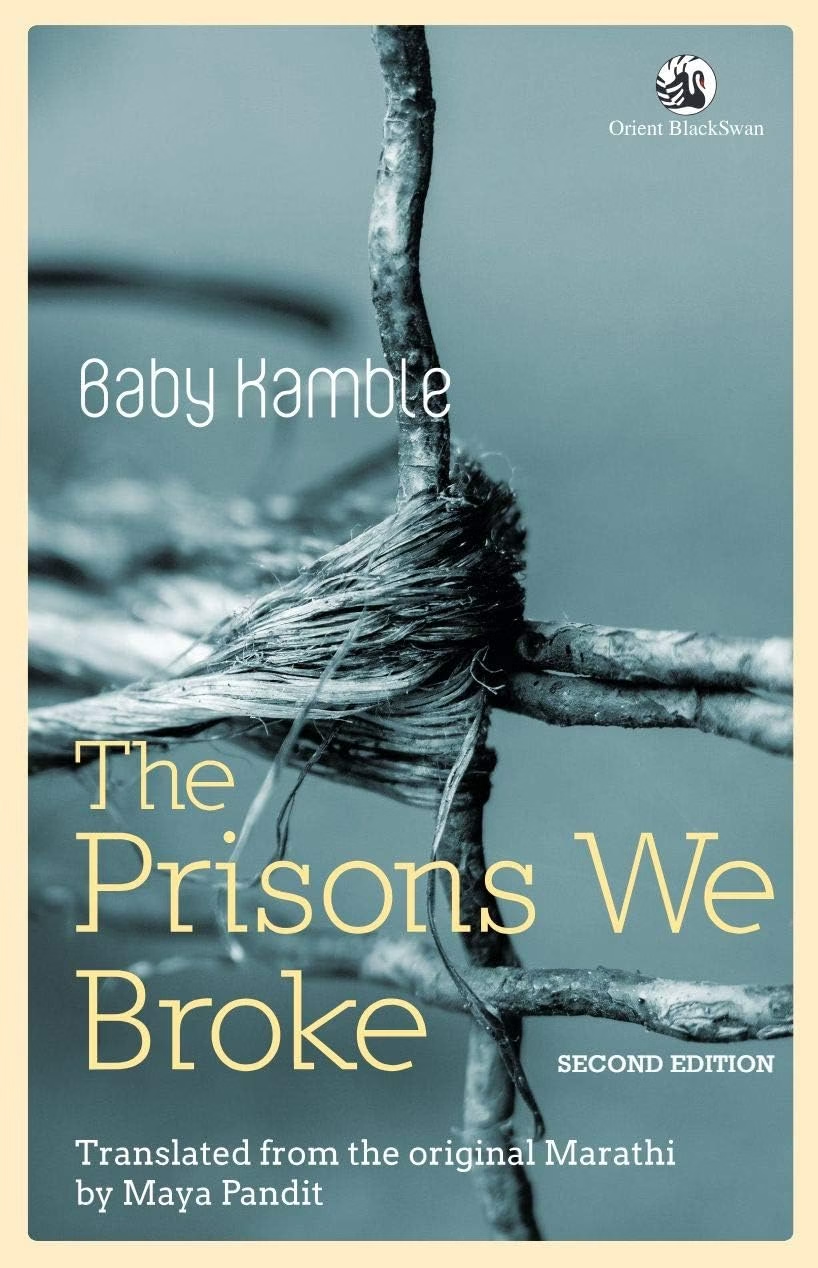
The Prisons We Broke is the powerful autobiography of Baby Kamble, a Dalit activist from Maharashtra. Originally written in Marathi as “Jina Amucha” and translated by Maya Pandit, this revised edition chronicles her life breaking through the social barriers and discrimination faced by Dalit communities.
What the book covers:
Personal Journey: Baby Kamble’s experiences growing up in a Dalit family and the systemic oppression she witnessed
Social Activism: Her involvement with the Dalit movement inspired by Dr Babasaheb Ambedkar’s leadership
Educational Reform: Her efforts to establish a government-approved residential school for socially backward students
Breaking Barriers: How she and her community challenged and overcame social “prisons” of caste discrimination
The book offers an intimate look at the Dalit experience in Maharashtra and serves as both a memoir and a testament to resilience. Readers praise it for its adventurous narrative and authentic portrayal of social struggles.
6. Coming Out as Dalit – Yashica Dutt
What it contains: A modern classic. Dutt describes her experience “passing” as upper-caste to survive in urban middle-class India, and her eventual journey of reclaiming her identity and “coming out” publically.
What to expect: An intimate look at how caste affects mental health, education, and social mobility in modern, progressive spaces. It is one of the most accessible books to understand caste in India today.
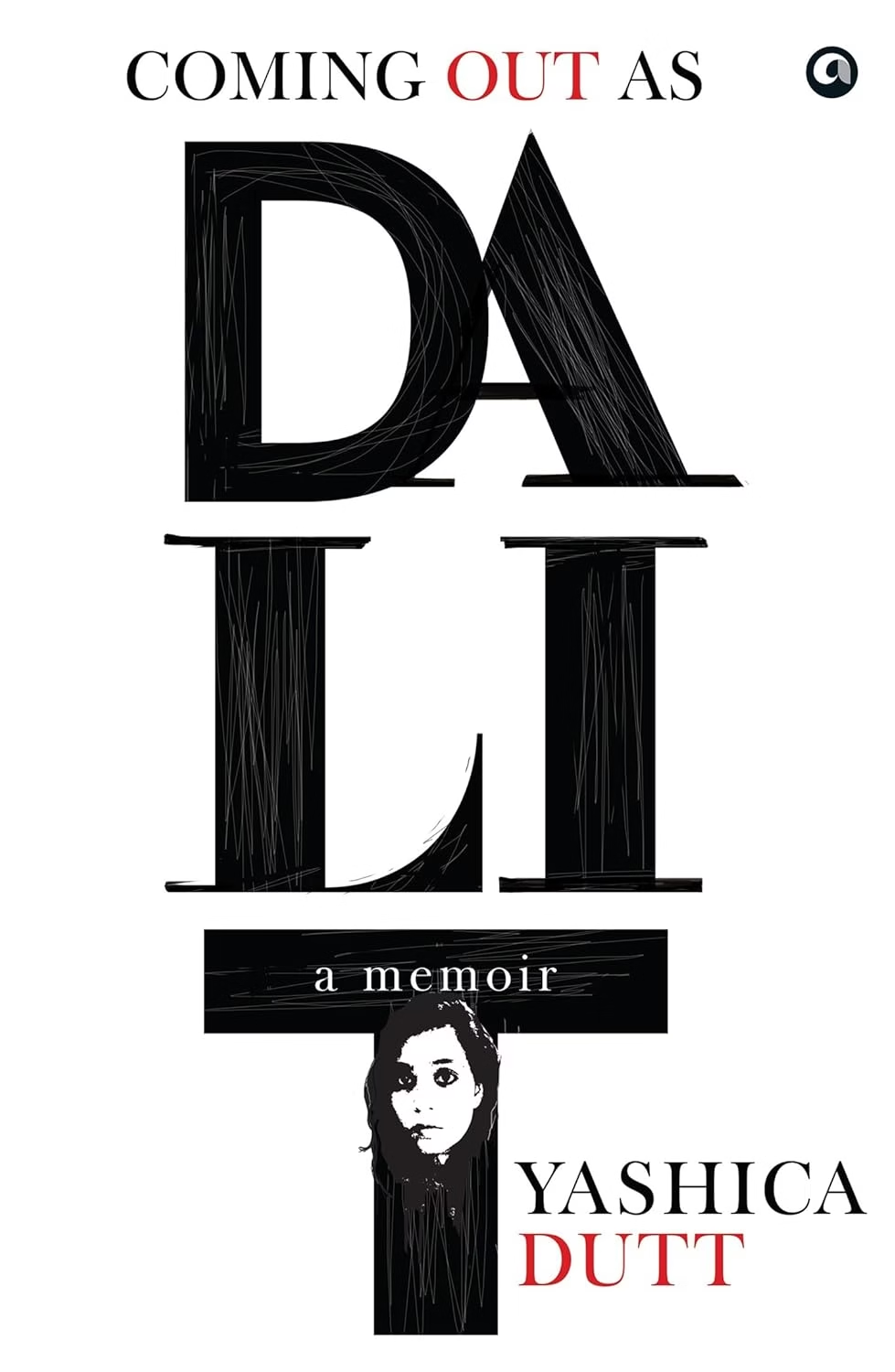
Dalit student Rohith Vemula’s tragic suicide in January 2016 started many charged conversations around caste-based discrimination in universities in India. For Yashica Dutt, a journalist living in New York, this was the moment to stop living a lie, and admit to something that she had hidden from friends and colleagues for over a decade—that she was Dalit. In Coming Out as Dalit, Dutt recounts the exhausting burden of living with the secret and how she was terrified of being found out. She talks about the tremendous feeling of empowerment she experienced when she finally stood up for herself and her community and shrugged off the fake upper-caste identity she’d had to construct for herself. As she began to understand the inequities of the caste system, she also had to deal with the crushing guilt of denying her history and the struggles of her grandparents and the many Dalit reformers who fought for equal rights. In this personal memoir that is also a narrative of the Dalits, she writes about the journey of coming to terms with her identity and takes us through the history of the Dalit movement; the consequences of her community’s lack of access to education and culture; the need for reservation; the paucity of Dalit voices in mainstream media; Dalit women’s movements and their ongoing contributions; and attempts to answer crucial questions about caste and privilege. Woven from personal narratives from her own life as well as that of other Dalits, this book forces us to confront the injustices of caste and also serves as a call to action.
7. Ants Among Elephants: An Untouchable Family and the Making of Modern India – Sujatha Gidla
What it contains: A compelling family saga focused on Gidla’s uncle, a leader in the communist movement in Andhra Pradesh.
What to expect: A grand narrative that ties personal family history to the broader failures of independent India to deliver social justice to its marginalized citizens.
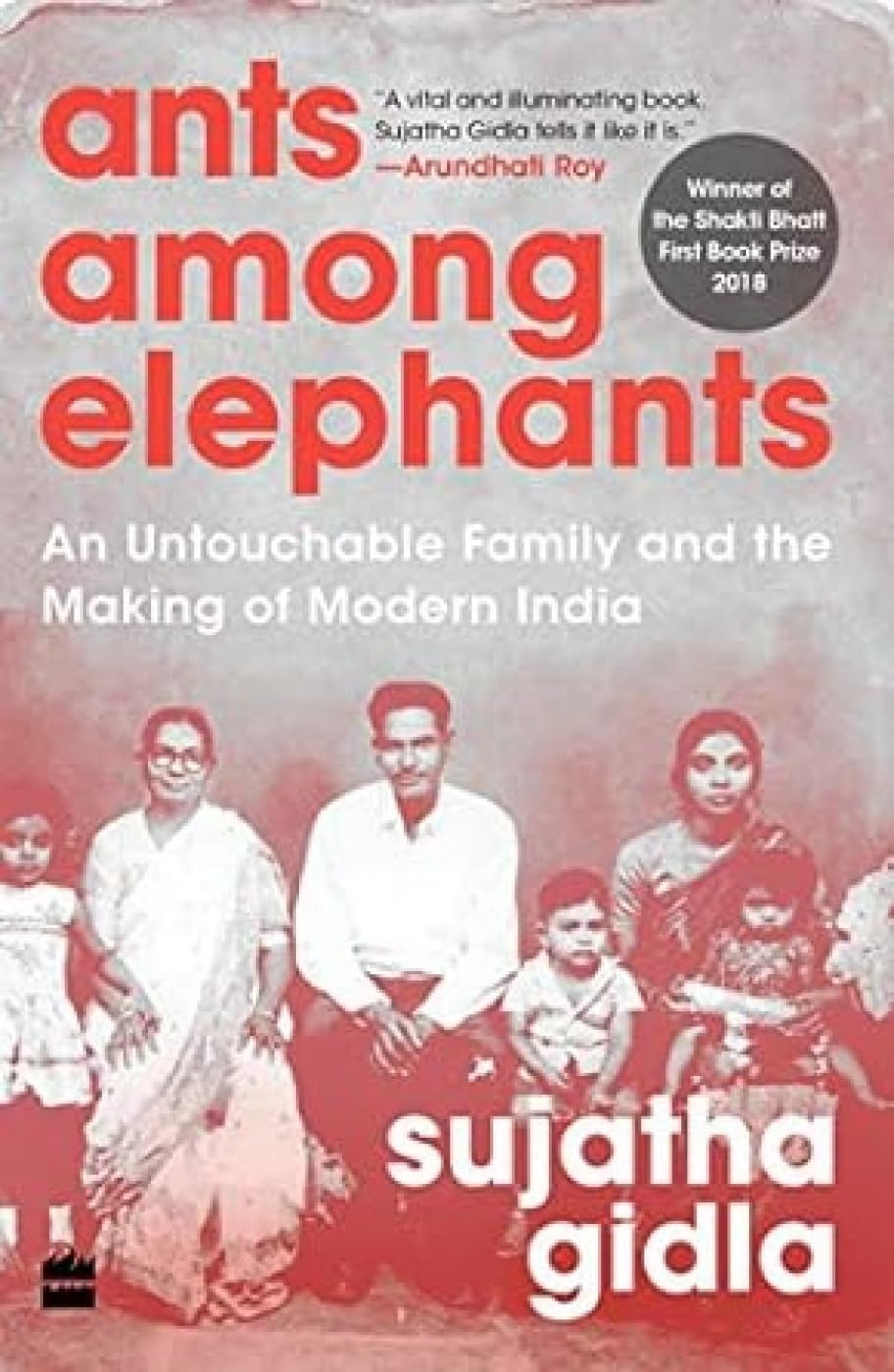
Winner of the Shakti Bhatt First Book Prize, 2018Sujatha Gidla was born an untouchable. Her family, belonging to the Mala caste, was educated in Warangal and Madras by Canadian missionaries in the 1930s, making it possible for Gidla to attend elite schools and move to America at the age of twenty-six. It was only then that she saw how extraordinary – and yet how typical – her family history truly was. Determined to uncover that history, and understand the social and political forces that made it possible, she traveled back to India to record the testimonies of her mother, her uncles, and their friends. In Ants Among Elephants, she tells their story. A moving portrait of love, hardship, and struggle, Ants Among Elephants is also that rare thing: a personal history of modern India told from the bottom up.
8. The Weave of My Life: A Dalit Woman’s Memoirs – Urmila Pawar
What it contains: Pawar chronicles three generations of women in her family, moving from a Konkan village to Mumbai, focusing on education, survival, and the Ambedkarite movement.
What to expect: A powerful testimonial to the resilience of Dalit women and their central role in the anti-caste struggle.
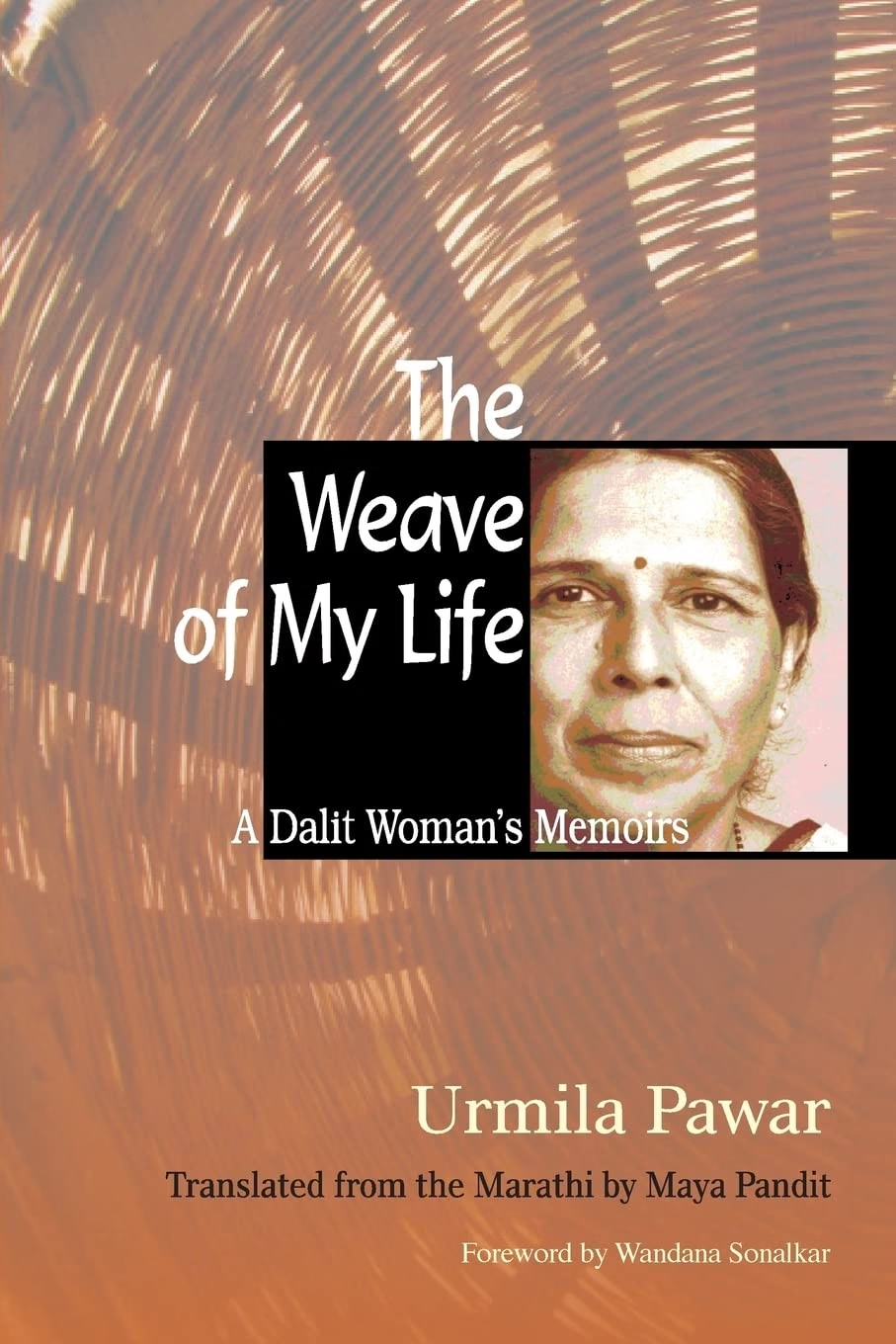
My mother used to weave aaydans, the Marathi generic term for all things made from bamboo. I find that her act of weaving and my act of writing are organically linked. The weave is similar. It is the weave of pain, suffering, and agony that links us.”
Activist and award-winning writer Urmila Pawar recounts three generations of Dalit women who struggled to overcome the burden of their caste. Dalits, or untouchables, make up India’s poorest class. Forbidden from performing anything but the most undesirable and unsanitary duties, for years Dalits were believed to be racially inferior and polluted by nature and were therefore forced to live in isolated communities.
Pawar grew up on the rugged Konkan coast, near Mumbai, where the Mahar Dalits were housed in the center of the village so the upper castes could summon them at any time. As Pawar writes, “the community grew up with a sense of perpetual insecurity, fearing that they could be attacked from all four sides in times of conflict. That is why there has always been a tendency in our people to shrink within ourselves like a tortoise and proceed at a snail’s pace.” Pawar eventually left Konkan for Mumbai, where she fought for Dalit rights and became a major figure in the Dalit literary movement. Though she writes in Marathi, she has found fame in all of India.
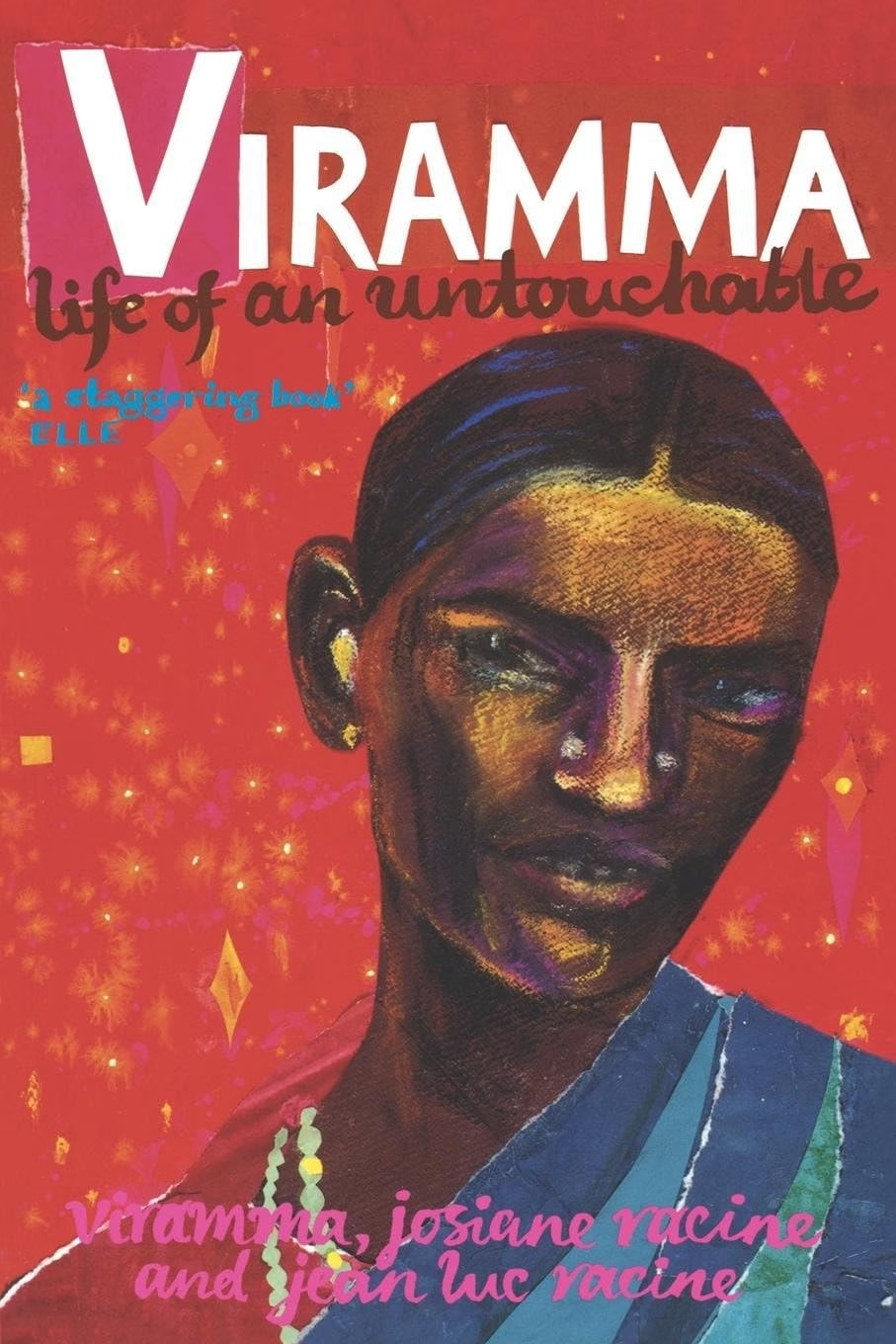
9. Viramma: Life of an Untouchable – Viramma (translated by Josiane Racine and Jean-Luc Racine)
What it contains: A fascinating oral history. Viramma, an “untouchable” woman in a Tamil village, narrates her life over many years, offering a rare, firsthand perspective that includes both suffering and joy.
What to expect: An unfiltered glimpse into the complexity of rural life and the pervasive nature of caste in a traditional setting.
My mother used to weave aaydans, the Marathi generic term for all things made from bamboo. I find that her act of weaving and my act of writing are organically linked. The weave is similar. It is the weave of pain, suffering, and agony that links us.”
Activist and award-winning writer Urmila Pawar recounts three generations of Dalit women who struggled to overcome the burden of their caste. Dalits, or untouchables, make up India’s poorest class. Forbidden from performing anything but the most undesirable and unsanitary duties, for years Dalits were believed to be racially inferior and polluted by nature and were therefore forced to live in isolated communities.
Pawar grew up on the rugged Konkan coast, near Mumbai, where the Mahar Dalits were housed in the center of the village so the upper castes could summon them at any time. As Pawar writes, “the community grew up with a sense of perpetual insecurity, fearing that they could be attacked from all four sides in times of conflict. That is why there has always been a tendency in our people to shrink within ourselves like a tortoise and proceed at a snail’s pace.” Pawar eventually left Konkan for Mumbai, where she fought for Dalit rights and became a major figure in the Dalit literary movement. Though she writes in Marathi, she has found fame in all of India.
10. Karukku – Bama
What it contains: This autobiography, written in a Tamil dialect that broke literary conventions, details Bama’s journey of discrimination within the Catholic Church and her eventual departure from a convent.
What to expect: A vital critique of how religious institutions in India have failed to eradicate caste, and often perpetuate it.
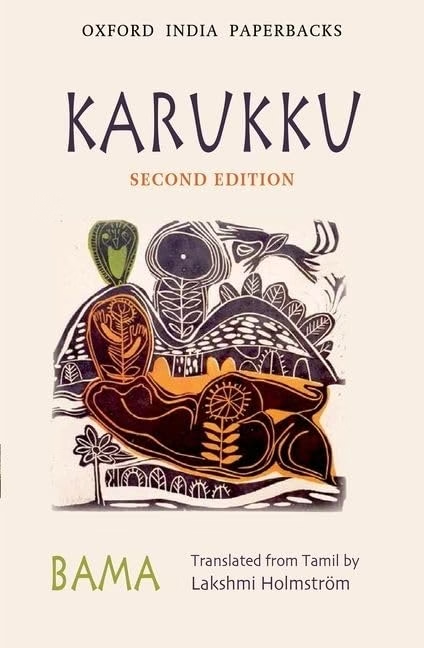
In 1992 when a Dalit woman left the convent and wrote her autobiography, the Tamil publishing industry found her language unacceptable. So Bama Faustina published her milestone work Karukku privately in 1992-a passionate and important mix of history, sociology, and the strength to remember. Karukku broke barriers of tradition in more ways than one. The first autobiography by a Dalit woman writer and a classic of subaltern writing, it is a bold and poignant tale of life outside mainstream Indian thought and function. Revolving around the main theme of caste oppression within the Catholic Church, it portrays the tension between the self and the community, and presents Bama’s life as a process of self-reflection and recovery from social and institutional betrayal. The English translation, first published in 2000 and recognized as a new alphabet of experience, pushed Dalit writing into high relief. This second edition includes a Postscript in which Bama relives the dramatic movement of her leave-taking from her chosen vocation and a special note ‘Ten Years Later’.
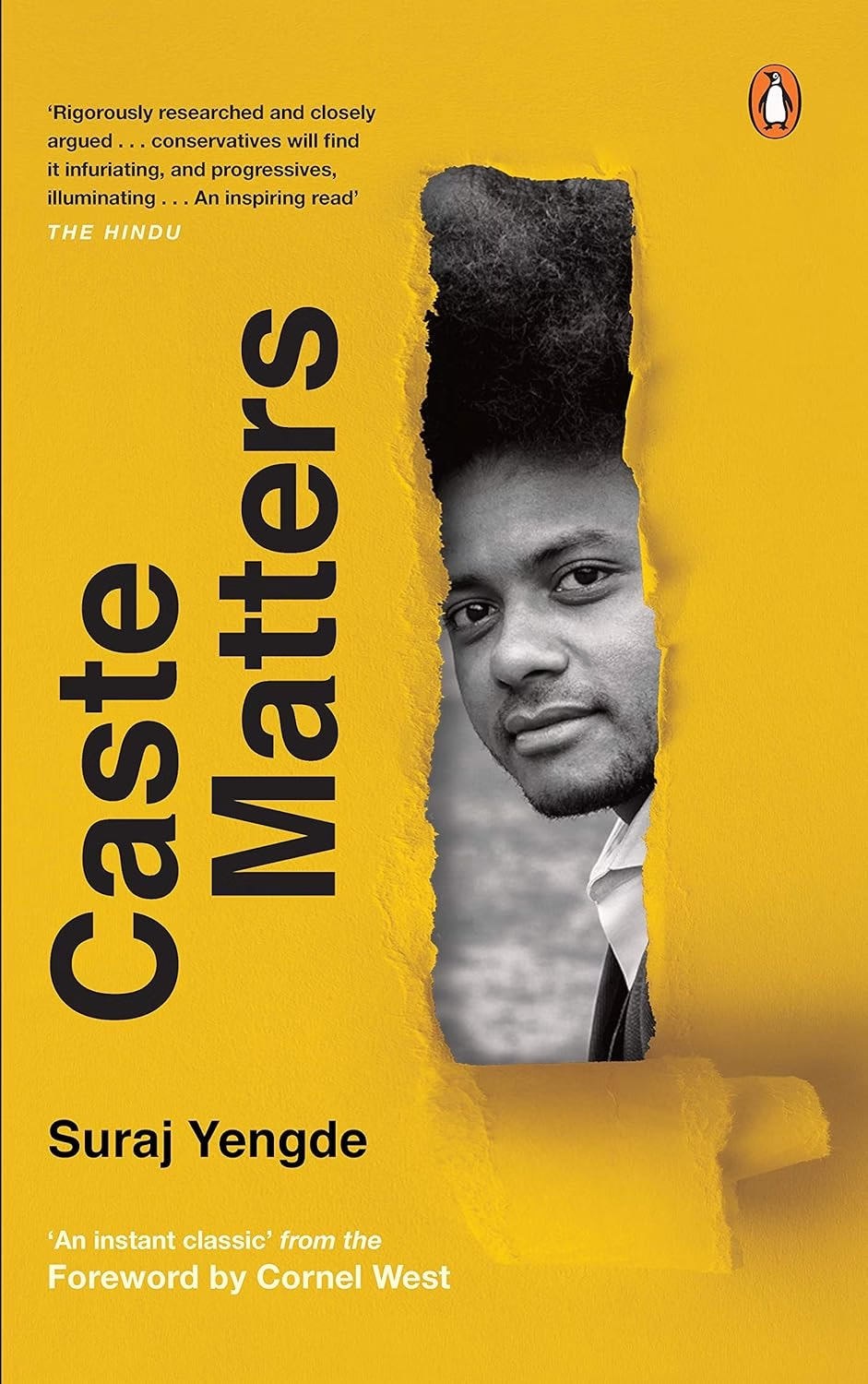
11. Caste Matters – Suraj Yengde
What it contains: Yengde, an elite-educated scholar, analyzes how caste operates in contemporary corporate, media, and global spaces. He critiques the “elite Dalit” as well as upper-caste hegemony.
What to expect: A bold, sometimes controversial, but absolutely essential perspective on caste in the 21st century. It challenges liberals and conservatives alike.
In 1992 when a Dalit woman left the convent and wrote her autobiography, the Tamil publishing industry found her language unacceptable. So Bama Faustina published her milestone work Karukku privately in 1992-a passionate and important mix of history, sociology, and the strength to remember. Karukku broke barriers of tradition in more ways than one. The first autobiography by a Dalit woman writer and a classic of subaltern writing, it is a bold and poignant tale of life outside mainstream Indian thought and function. Revolving around the main theme of caste oppression within the Catholic Church, it portrays the tension between the self and the community, and presents Bama’s life as a process of self-reflection and recovery from social and institutional betrayal. The English translation, first published in 2000 and recognized as a new alphabet of experience, pushed Dalit writing into high relief. This second edition includes a Postscript in which Bama relives the dramatic movement of her leave-taking from her chosen vocation and a special note ‘Ten Years Later’.
12. The Radical in Ambedkar: Critical Reflections – Suraj Yengde and Anand Teltumbde (Editors)
What it contains: A collection of essays from leading scholars analyzing various facets of Ambedkar’s thought—from economics to religion.
What to expect: A deep scholarly dive into Ambedkar’s philosophy, moving beyond a simplistic biographical understanding.
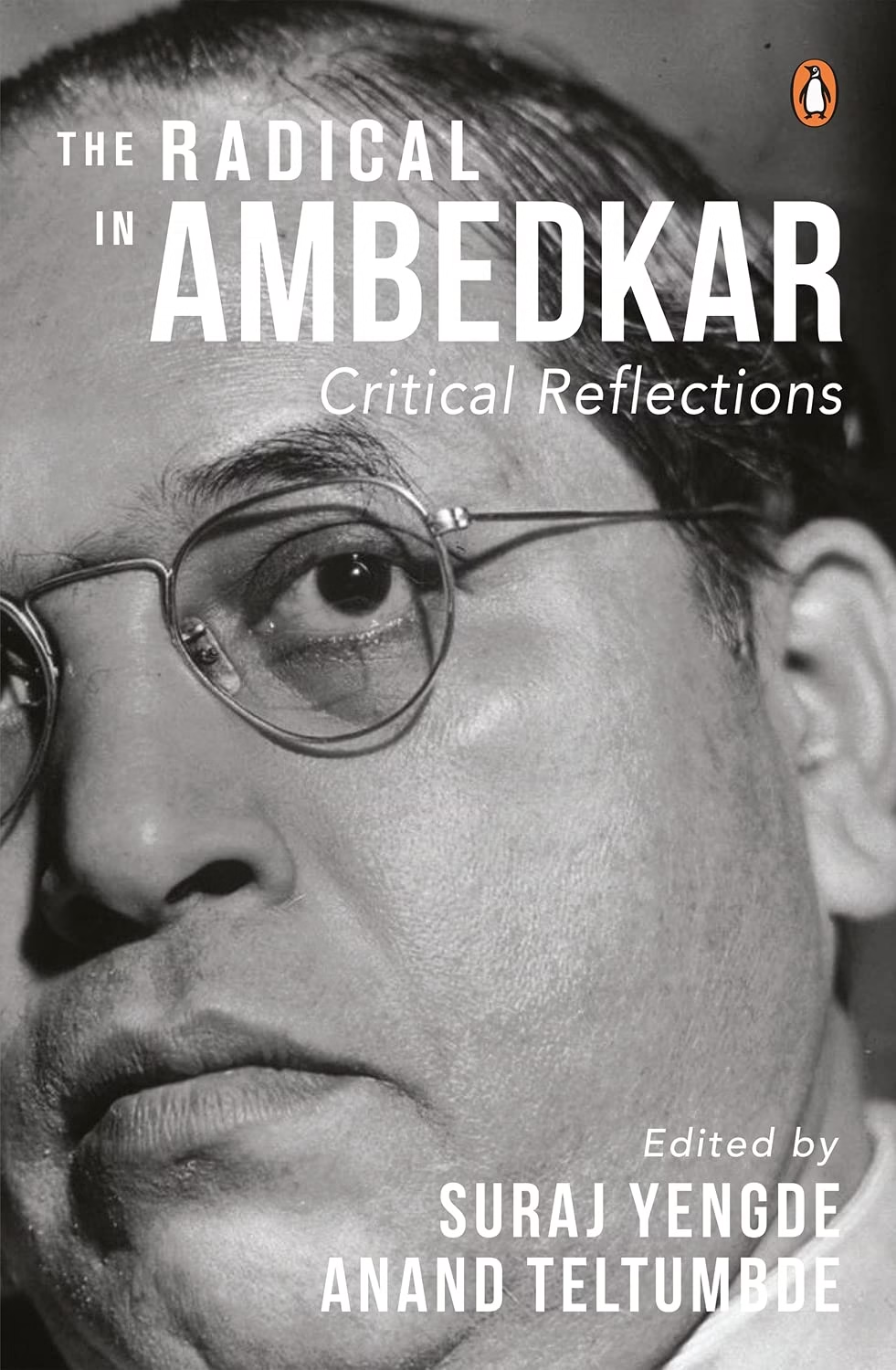
This landmark volume, edited and introduced by Anand Teltumbde and Suraj Yengde, establishes B.R. Ambedkar as the most powerful advocate of equality and fraternity in modern India. While the vibrant Dalit movement recognizes Ambedkar as an agent for social change, the intellectual class has celebrated him as the key architect of the Indian Constitution and the political establishment has sought to limit his concerns to the question of reservations. This remarkable volume seeks to unpack the radical in Ambedkar’s legacy by examining his life work from hitherto unexplored perspectives.
Although revered by millions today primarily as a Dalit icon, Ambedkar was a serious scholar of India’s history, society and foreign policy. He was also among the first dedicated human rights lawyers, as well as a journalist and a statesman. Critically evaluating his thought and work, the essays in this book-by Jean Drèze, Partha Chatterjee, Sukhadeo Thorat, Manu Bhagavan, Anupama Rao and other internationally renowned names-discuss Ambedkar’s theory on minority rights, the consequences of the mass conversion of Dalits to Buddhism, Dalit oppression in the context of racism and anti-Semitism, and the value of his thought for Marxism and feminism, among other global concerns.
An extraordinary collection of immense breadth and scholarship that challenges the popular understanding of Ambedkar, The Radical in Ambedkar is essential reading for all those who wish to imagine a new future.
13. Republic of Caste: Thinking Equality in the Time of Neoliberal Hindutva – Anand Teltumbde
What it contains: Teltumbde, a premier intellectual of the movement, analyzes the intersection of caste, class, and modern political ideologies in contemporary India.
What to expect: A sharp, rigorous Marxist-Ambedkarite critique of how state power and capitalism reinforce caste structures.
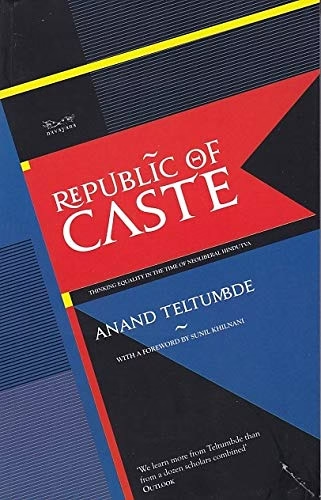
“Republic of Caste: Thinking Equality in the Time of Neoliberal Hindutva” by Anand Teltumbde is a comprehensive analysis of India’s caste system and its evolution in modern times.
Core Themes:
Caste in Contemporary India: Examines how the caste system persists and adapts in neoliberal, modern India
Political Exploitation: Analyses how various political parties use caste for electoral gains whilst failing to address structural inequality
Dr. Ambedkar’s Legacy: Critical examination of how political parties appropriate Ambedkar’s ideology
Economic Inequality: Explores the intersection of caste, class, and economic disparity in neoliberal policies
14. Persistence of Caste: The Khairlanji Murders and India’s Hidden Apartheid – Anand Teltumbde
What it contains: Using the horrific 2006 Khairlanji massacre as a focal point, Teltumbde exposes how caste violence is not accidental, but systemic. What to expect: A painful but necessary study of modern caste atrocities and the subsequent failures of the judicial system.
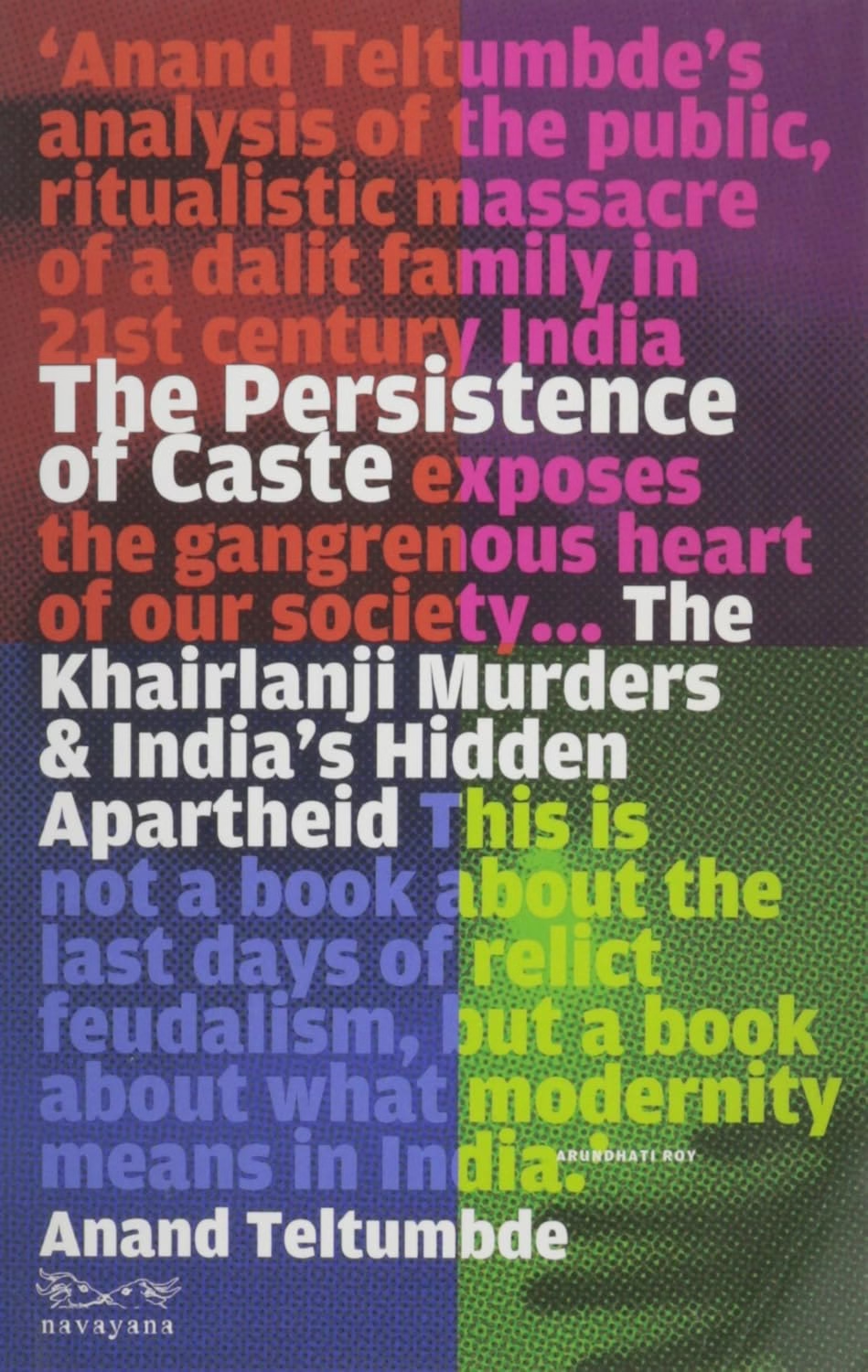
While the caste system has been formally abolished under the Indian Constitution, according to official statistics every eighteen minutes a crime is committed on a Dalit. The gouging out of eyes, the hacking off of limbs and being burned alive or stoned to death are routine in the atrocities perpetrated against India’s 170 million Dalits. What drives people to commit such inhuman crimes? The persistence of caste uses the shocking case of Khairlanji, the brutal murder of four members of a Dalit family in 2006, to explode the myth that caste no longer matters. Analysing context and crime, it seeks to locate this event in the political economy of the development process India has followed after independence. Br>‘teltumbde demonstrates how caste has shown amazing resilience—surviving Feudalism, capitalist industrialisation and a republican Constitution—to still be alive and well today, despite all denial, under neoliberal globalisation.
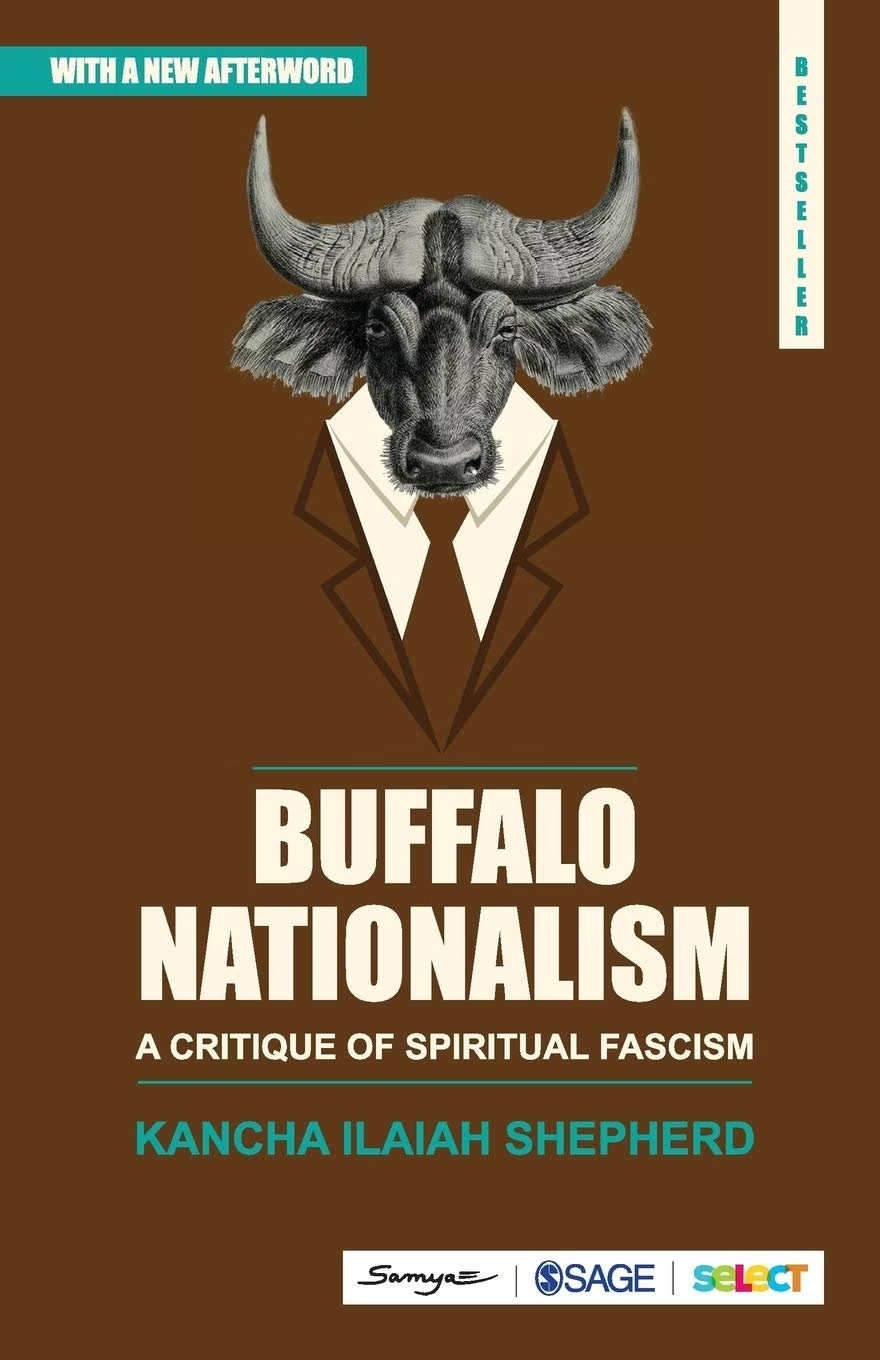
15. Buffalo Nationalism: A Critique of Spiritual Fascism – Kancha Ilaiah Shepherd
What it contains: Ilaiah argues that “Dalit-Bahujan” culture is inherently productive and productive, contrasting it with “Brahmanical” culture which he defines as non-productive and spiritually oppressive.
What to expect: A controversial, polemical, and highly original cultural critique that aims to build a new anti-caste identity.
‘O Mother Lachumamma, your blouse is torn,
Your hair is soiled, your sari in rags . . .
Even in that condition what have you done?
You planted saplings, walking backwards like a bull,
In order to produce food from the mud.’
Kancha Ilaiah Shepherd translates these words of the Telugu poet, singer, activist Gaddar to emphasize the productivity of the ordinary people, the Dalit-Bahujans of India, who receive so little in return. Arguing forcefully against spiritual fascism, which refuses equality or freedom to the majority, he commends the buffalo as a productive animal that epitomizes the qualities of the Dalit-Bahujans. This book contains a selection from Ilaiah Shepherd’s columns in The Hindu, Deccan Herald, Deccan Chronicle, Hindustan Times among others, and journals such as Mainstream and Economic and Political Weekly.
Of particular interest is the new Afterword that discusses his political and social programme for the Sudras of India, presenting his vision of a more just society.
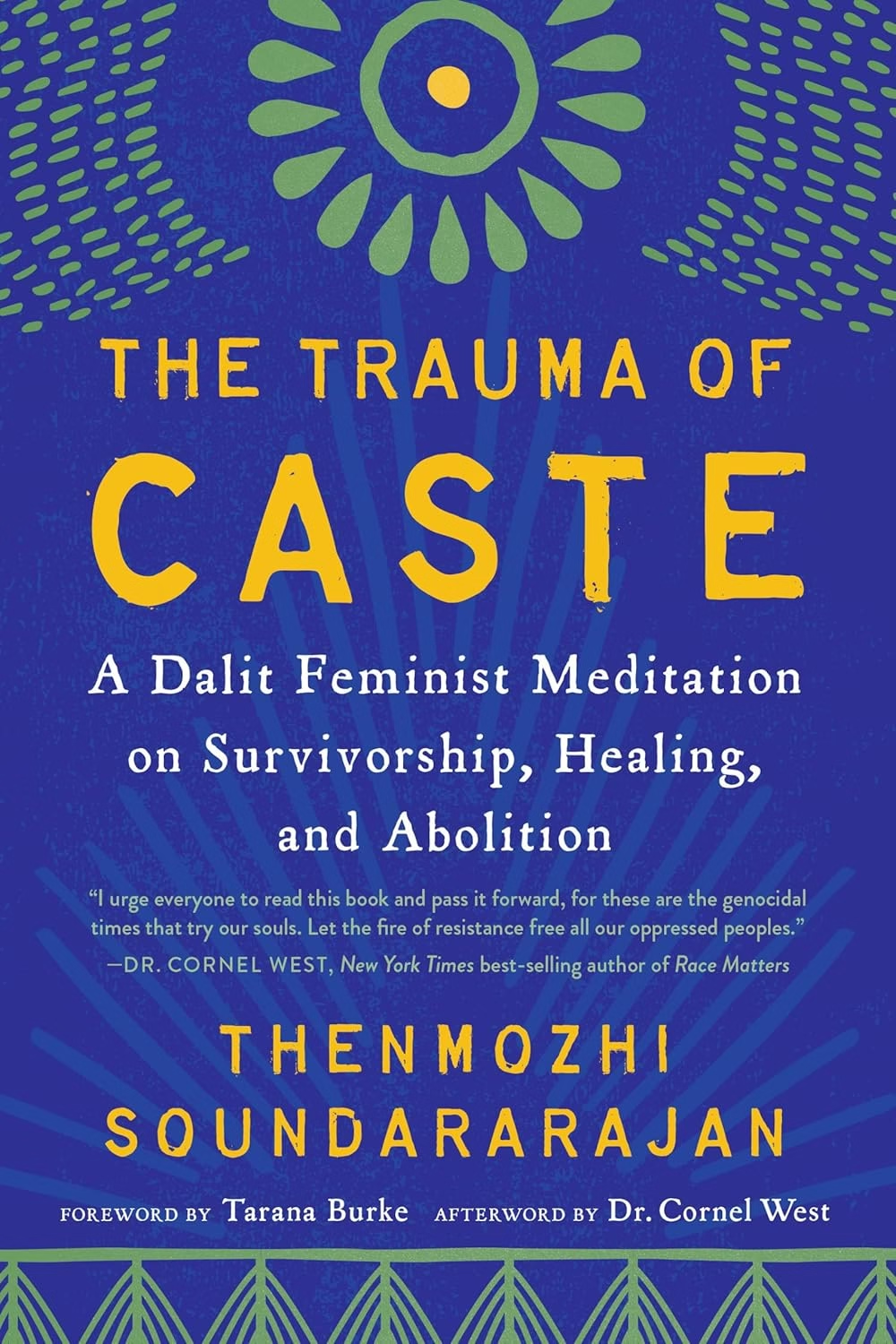
The Trauma of Caste: A Dalit Feminist Meditation on Survivorship, Healing, and Abolition
What it contains: A powerful anthology collecting seminal essays, poems, and manifestos from decades of the anti-caste struggle.
What to expect: A diverse range of voices (including figures like Periyar, Namdeo Dhasal, and contemporary activists) offering a comprehensive overview of the movement’s history and diversity.
Dalit” is the name that we chose for ourselves when Brahminism declared us “untouchable.” Dalit means broken. Broken by suffering. Broken by caste: the world’s oldest, longest-running dominator system…yet although “Dalit” means broken, it also means resilient.
Dalit American activist Thenmozhi Soundararajan puts forth a call to awaken and act, not just for readers in South Asia, but all around the world. She ties Dalit oppression to fights for liberation among Black, Indigenous, Latinx, femme, and Queer communities, examining caste from a feminist, abolitionist, and Dalit Buddhist perspective–and laying bare the grief, trauma, rage, and stolen futures enacted by Brahminical social structures on the caste-oppressed.
Soundararajan’s work includes embodiment exercises, reflections, and meditations to help readers explore their own relationship to caste and marginalization–and to step into their power as healing activists and changemakers. She offers skills for cultivating wellness within dynamics of false separation, sharing how both oppressor and oppressed can heal the wounds of caste and transform collective suffering. Incisive and urgent, The Trauma of Caste is an activating beacon of healing and liberation, written by one of the world’s most needed voices in the fight to end caste apartheid.
17. The God of Small Things – Arundhati Roy
What it contains: A Booker Prize-winning novel that weaves a complex story of forbidden love and tragedy, set against the backdrop of political and caste structures in Kerala.
What to expect: A masterfully written literary work that powerfully illustrates how “The Love Laws” (defining who should be loved, and how, and how much) are dictated by caste.
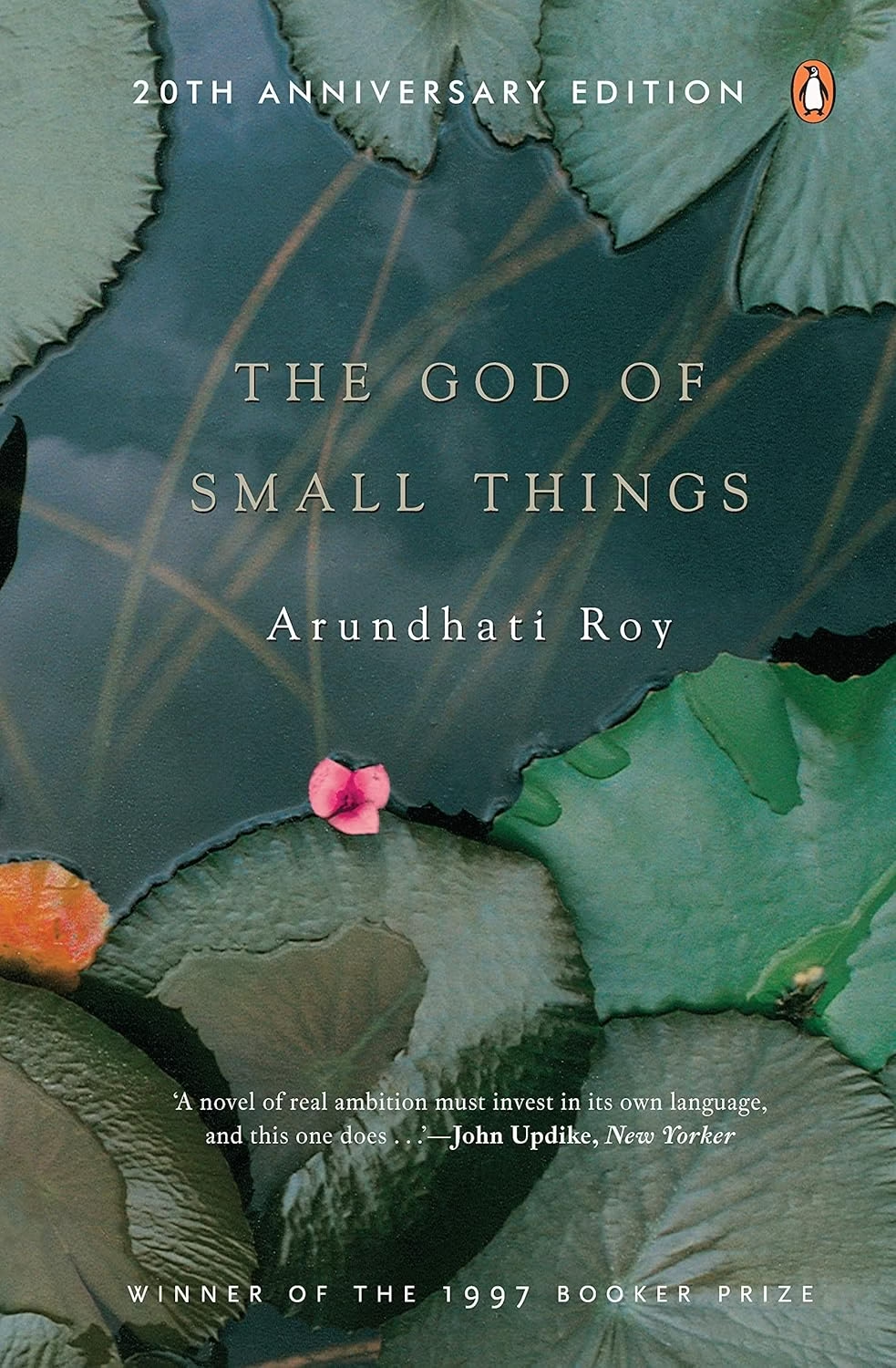
Special 20th anniversary edition of a perennial bestseller and one of the most beloved books of all time by Arundhati Roy
Winner of the 1997 Man Booker Prize for Fiction, the book has been translated in over 40 languages and has sold more than 6 MILLION COPIES WORLDWIDE
‘Richly deserving the rapturous praise it has received on both sides of the Atlantic . . . The God of Small Things achieves genuine tragic resonance. It is indeed a masterpiece’ – Observer
Still, to say that it all began when Sophie Mol came to Ayemenem is only one way of looking at it . . .
It could be argued that it actually began thousands of years ago. Long before the Marxists came. Before the British took Malabar, before the Dutch Ascendancy, before Vasco da Gama arrived, before the Zamorin’s conquest of Calicut. Before Christianity arrived in a boat and seeped into Kerala like tea from a teabag. That it really began in the days when the Love Laws were made. The laws that lay down who should be loved, and how. And how much.
18. Untouchable – Mulk Raj Anand
What it contains: Published in 1935, this classic novel follows a single day in the life of Bakha, an “untouchable” sweeper, and his series of humiliating encounters.
What to expect: A pioneering humanist work that aims to evoke empathy and expose the psychological cruelty of daily discrimination.
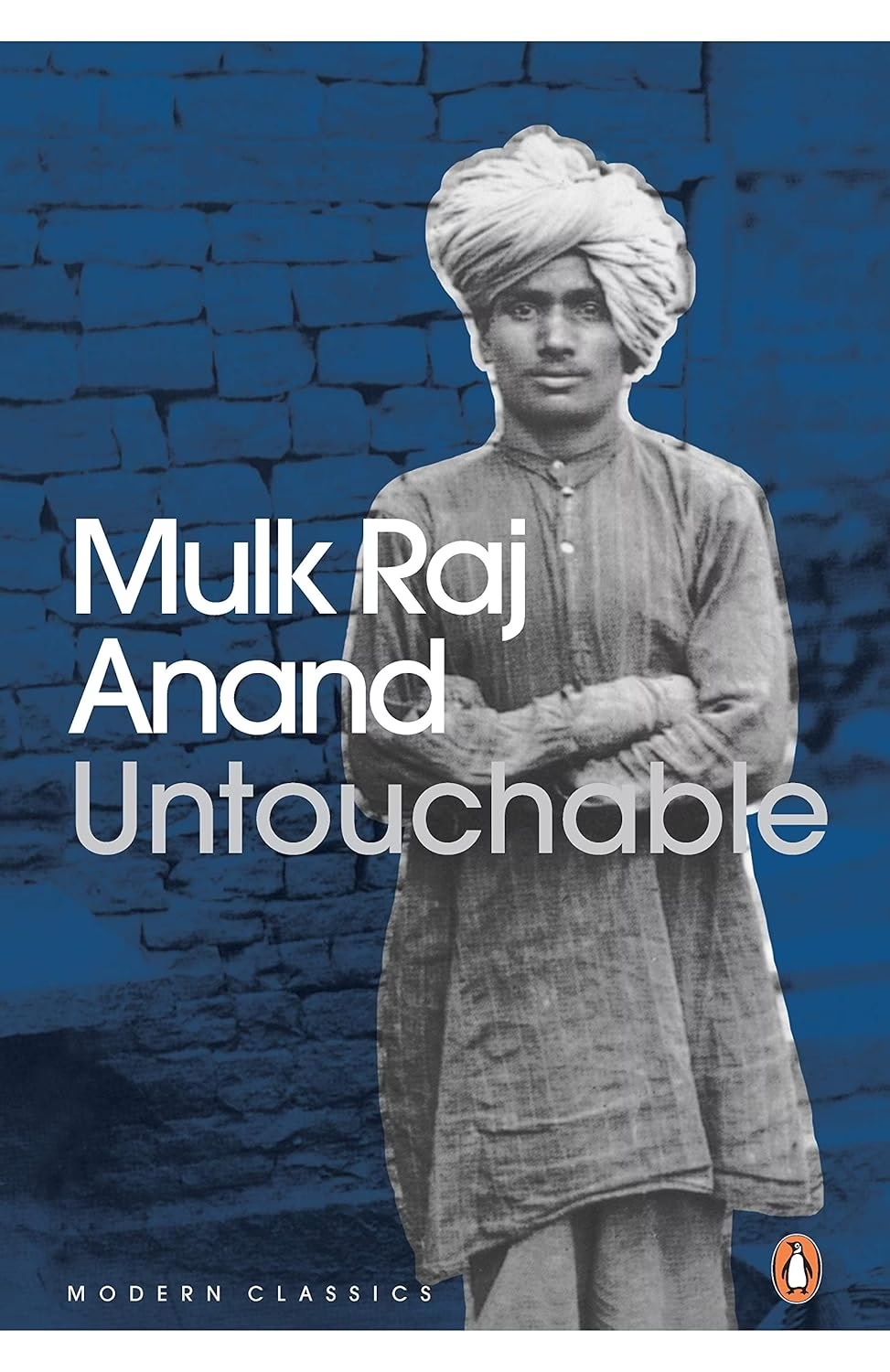
Untouchable by Mulk Raj Anand is a powerful novel about Bakha, an 18-year-old sweeper in pre-independence India who belongs to the “untouchable” caste.
The story takes place over one day in Bakha’s life, depicting the harsh realities of caste discrimination and untouchability in Indian society. Despite being influenced by British culture and aspiring to dress like English gentlemen, Bakha faces constant humiliation – he’s forbidden from drawing water from wells, barred from temples, and treated as “polluted” by higher-caste Hindus.
Through Bakha’s experiences, Anand vividly portrays the dehumanising treatment of Dalits, showing how they were forced to clean toilets and handle society’s “dirty work” whilst being considered impure themselves. The novel explores themes of social injustice, identity, dignity, and the psychological impact of systemic oppression.
The book ends with hope as Mahatma Gandhi appears, advocating for the abolition of untouchability. This classic work remains relevant today, offering insights into India’s caste system and its lasting effects on society.
19. Samskara: A Rite for a Dead Man – U.R. Ananthamurthy
What it contains: Set in a Kannada village, the story revolves around the death of a rebellious Brahman who broke caste rules, creating a theological crisis for the conservative village leader.
What to expect: A profound philosophical novel that critiques Brahmanical hypocrisy and the decay of traditional authority.
Samskara is one of the acknowledged masterpieces of modern world literature, a book to set beside Chinua Achebe’s Things Fall Apart and Tayeb Salih’s Season of Migration to the North. Taking its name from a Sanskrit word that means “rite of passage” but also “moment of recognition,” it begins when Naranappa, an inhabitant of a small south Indian town and a renegade Brahmin who has scandalously flouted the rules of caste and purity for years, eating meat, drinking alcohol, marrying beneath him, mocking God, unexpectedly falls ill and dies. The question of whether he should be buried as a Brahmin divides the other Brahmins in the village. For an answer they turn to Praneshacharyah, the most devout and respected member of their community, an ascetic who also tends religiously to his invalid wife. Praneshacharyah finds himself unable to provide the answer, though an answer is urgently needed since as he wonders and the villagers wait and the body festers, more and more people are falling sick and dying. But when Praneshacharyah goes to the temple to seek a sign from God, he discovers something else entirely—unless that something else is also God. Samskara is a tale of existential suspense, a life-and-death encounter between the sacred and the profane, the pure and the impure, the ascetic and the erotic.
20. Bheda (Difference) – Akhila Naik
What it contains: One of the first Dalit novels in Odia, it explores themes of resistance and conflict when a lower-caste village challenges upper-caste dominance in political and ritual spaces.
What to expect: A gritty, realistic look at grassroots resistance in rural India and the modern mechanisms used to maintain caste power.
The entire village was in an uproar when the news spread that Laltu had beaten up Yuvaraj. How dare a Dom boy thrash the gauntia’s nephew, a Teli? The Telis set out to seek revenge by breaking Laltu’s limbs.Conscious of the plight of the Dalits and the lower castes and hoping to improve their lot, Laltu leads an uprising against the upper castes. Does he succeed? Or is he silenced and crushed by caste power?Set in a remote village in the Kalahandi district of Odisha, the story draws from the real, lived experiences of the region’s Dalits. Bheda, the first Odia Dalit novel, is not only a poignant tale of rebellion and betrayal, it is also a record of the caste atrocities and cultural politics that have defined India.
Reading is not just about passive learning; it is an act of resistance. Every time you engage with these books to understand caste in India, you are challenging the manufactured ignorance that keeps the system alive. We hope this anti-caste reading list helps you decolonize your mind and joins us in the struggle for a truly caste-free India.
Read more about Caste Discrimination: Unmasking Caste Reservation Hate
Find out more about Allah Upanishad: Shocking Truth of Religious History