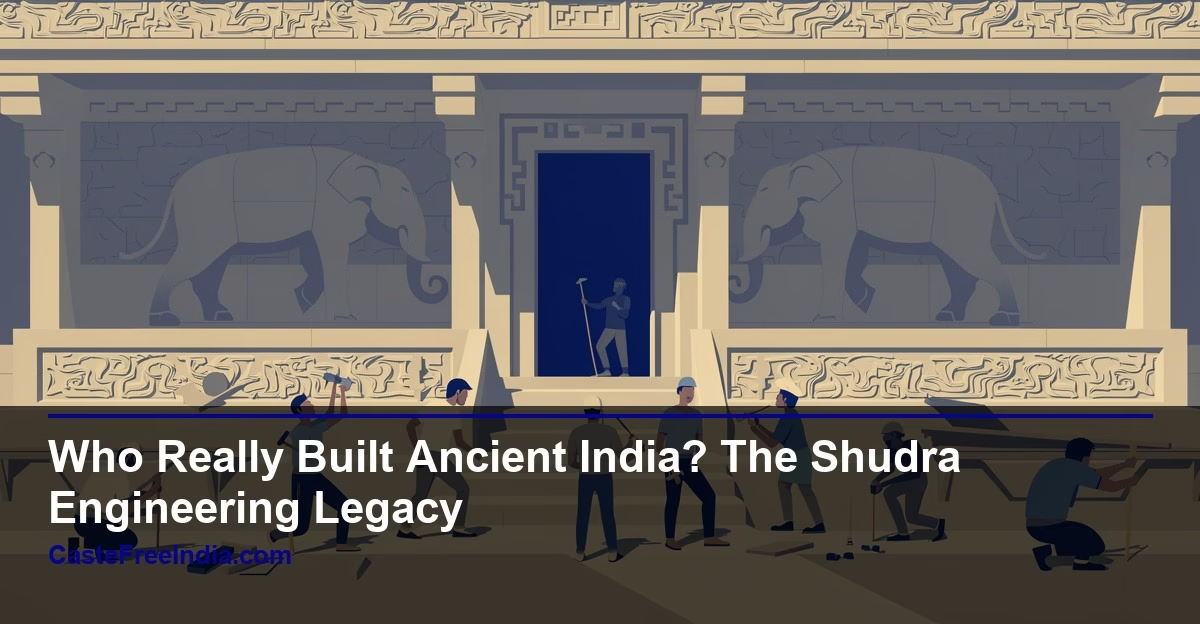
The Echoes of a Lost Legacy: Who Built Ancient India?
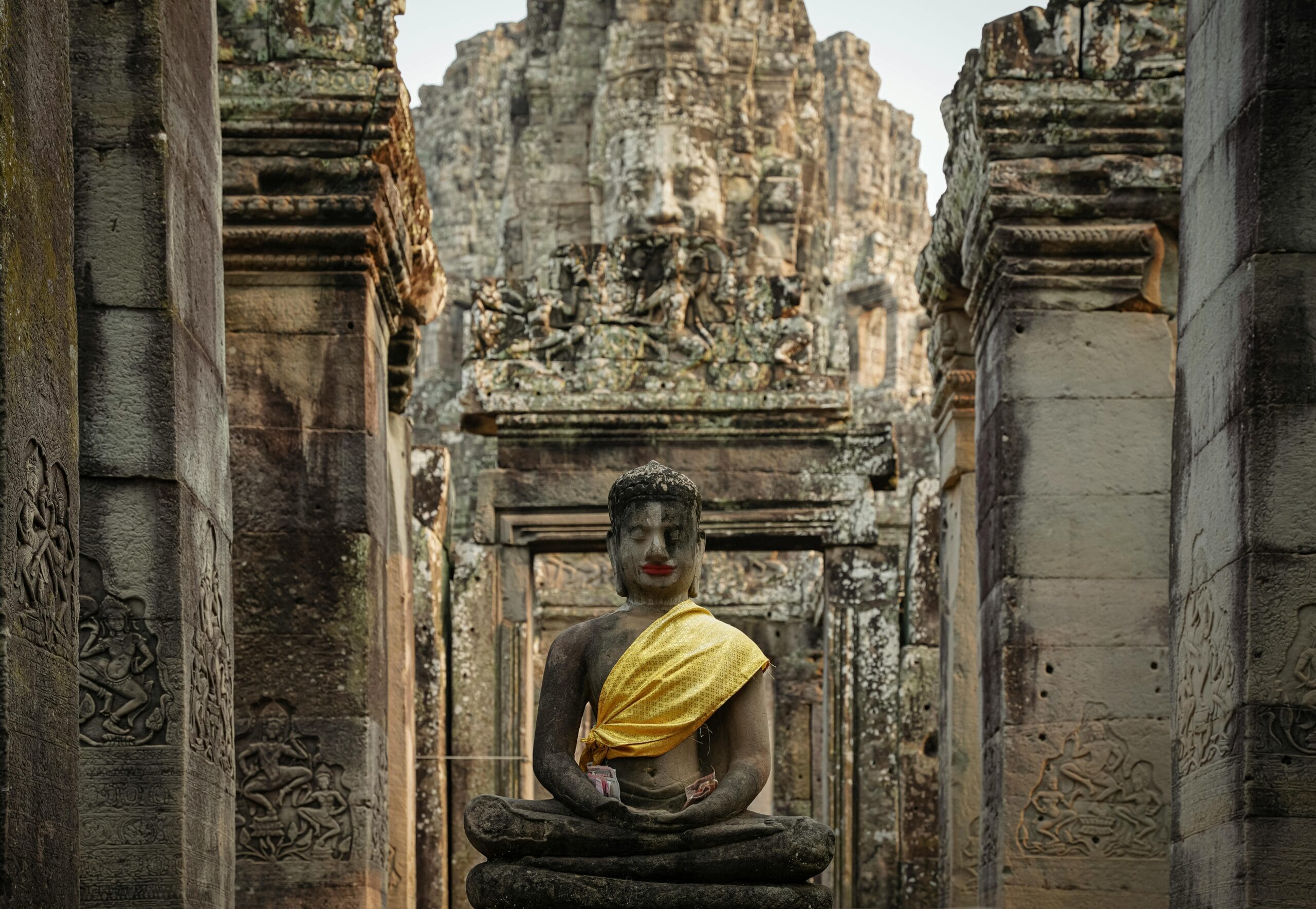
The question of who built India’s magnificent temples and intricate art persists (Hint: Shudra). Who were the architects of these archaeological marvels? Why did their creators seem to forget their own heritage? These critical questions demand exploration. We examine how communities now claiming ownership of these wonders may have contributed to their neglect and the suppression of their builders.
This information reveals how a significant part of India’s past was systematically undermined, and its rightful inheritors relegated to the lowest strata. We fact-check narratives showcasing temples, often with claims of “Science in Ancient India.” But were sages truly responsible? Did their religious texts mention architecture? The answers lie within the scriptures that form the basis of Brahmanism.
This exploration, backed by evidence, unveils how India’s architectural creators were stripped of their identity. A necessary legal disclaimer emphasizes this discussion fosters scientific temper; participants’ views are their own responsibility.
The Illusion of Brahmanical Authorship: Unpacking the Truth
The Engineering Backbone of Ancient India
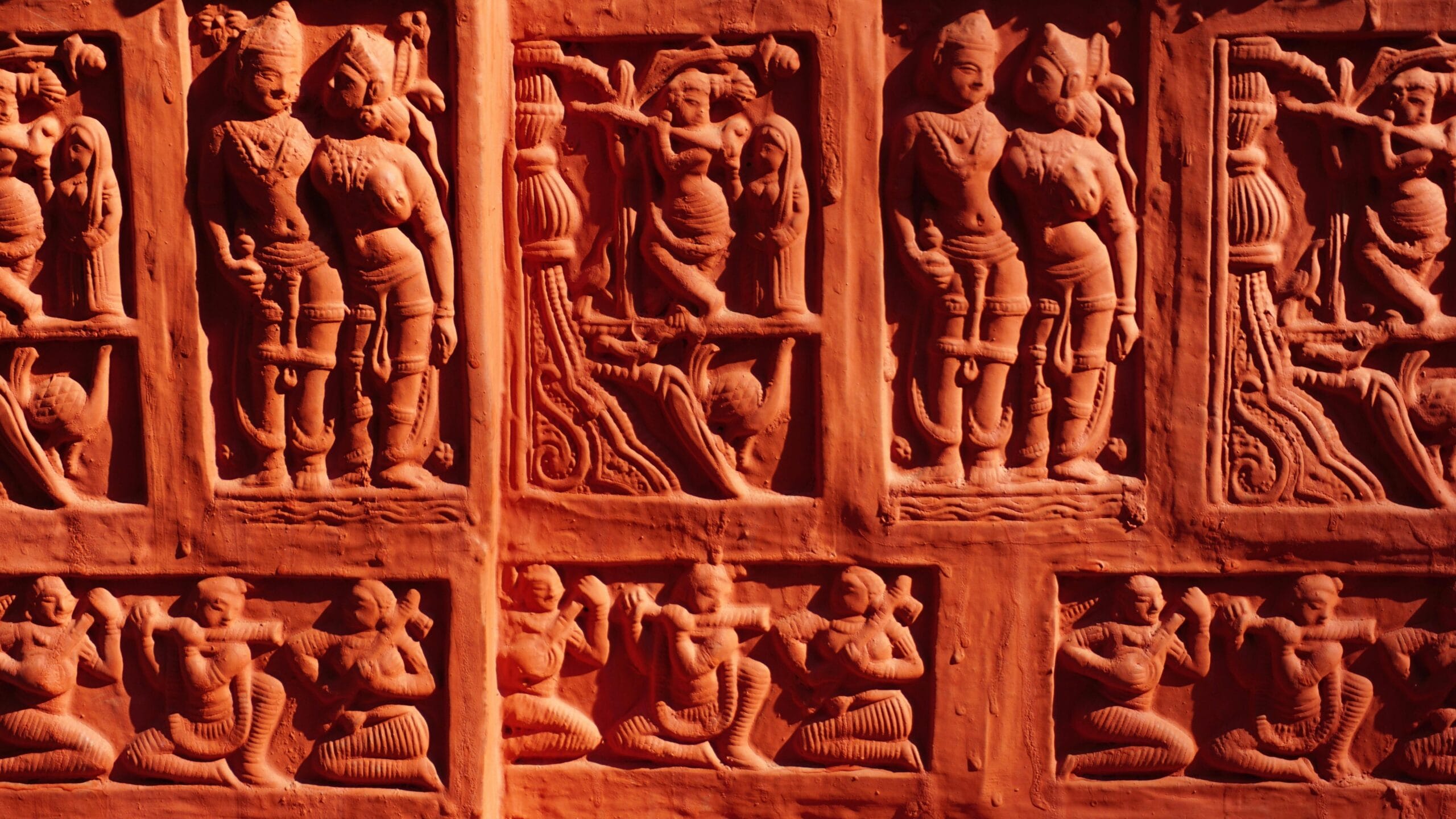
Who created India’s exquisite art and archaeological evidence? Who conceived these structures? Such intricate designs require high societal status. Today, we pursue fields like computer science for careers. In ancient India, craftsmanship and architecture offered prestige and employment. Becoming a sculptor or architect meant a comfortable life, with rulers commissioning grand structures. For others, agriculture and household chores were primary. Engineering meant craftsmanship.
Families aspired for their children to excel in these crafts, recognizing the financial security and social standing offered. High demand led rulers to invite architects and craftsmen from other regions. This is evident from the Mathura and Gandhara art schools. Clearly, the craftsman or architect role promised good earnings and respect.
Scriptural Condemnation of Artisans
If these artisans were integral and skilled, why do Brahmanism proponents claim sages were masterminds? Claims involve intricate scientific principles in temple designs. But who built these structures? We now present the facts, separating myth from reality.
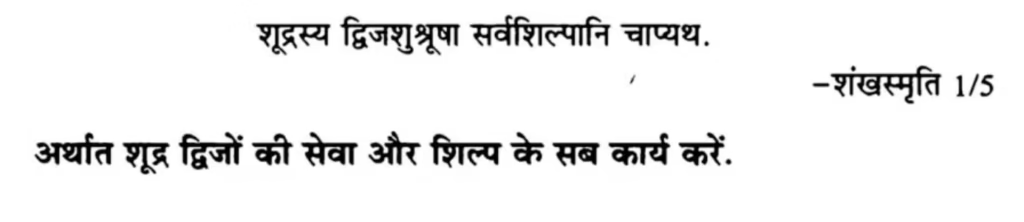
Let’s examine scriptures to understand the reverence for craftsmanship within Brahmanism. The Sankhyā Smriti, Chapter 1, Verse 5, states: “The Shudra shall perform service for the Dvijas and all crafts of artisans.” This indicates the artisan role lacked high status. Brahmins did not accord artisans significant position. The implication is that the builders of advanced civilization were deemed Shudras. As these scriptures were written, India’s past creators were relegated to the lowest rung by the Brahmanical order.[source]
“The Shudra shall perform service for the Dvijas and all crafts of artisans.” – Sankhyā Smriti, Chapter 1, Verse 5
The Vayu Purana echoes this. It states: “God has ordained for the Shudras to serve and to earn their livelihood through crafts.” This implies temples and structures were created by people later designated Shudras. Their divine mandate, according to these texts, was service and sustenance through craft.[source]
“God has ordained for the Shudras to serve and to earn their livelihood through crafts.” – Vayu Purana
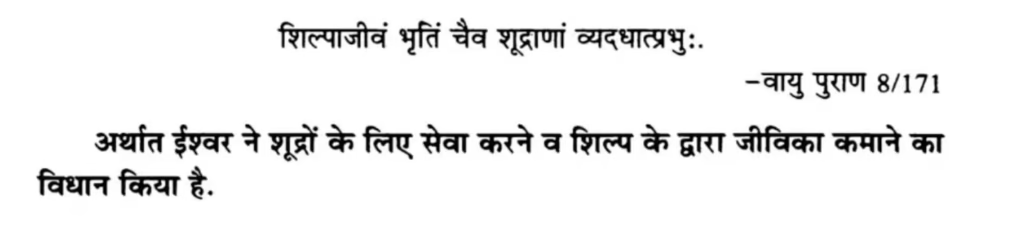
A popular misconception attributes the beheading of all Taj Mahal artisans to Shah Jahan. While unsubstantiated, scriptures provide a more chilling reality: Brahmanism systematically degraded artisans, branding them Shudras.
Redefining Shudra: A Deliberate Degradation
The term “Shudra” is often misinterpreted as uneducated. However, scriptures define their role. If craftsmanship and engineering show intelligence, artisans should be revered. Like modern engineers are respected, ancient artisans were intellectual pillars. Yet, they were branded Shudras. Scriptures stipulated Shudras couldn’t own wealth; their purpose was service, often involving forced labor or begari.
The Devala Smriti, Chapter 1, Verse 120, clarifies Shudra duties: “They shall serve the Dvijas, and also engage in agriculture, animal husbandry, carrying loads, buying and selling, painting, dance, and music.” This includes artistic pursuits like painting and music as Shudra domains.[source]
“They shall serve the Dvijas, and also engage in agriculture, animal husbandry, carrying loads, buying and selling, painting, dance, and music.” – Devala Smriti, Chapter 1, Verse 120
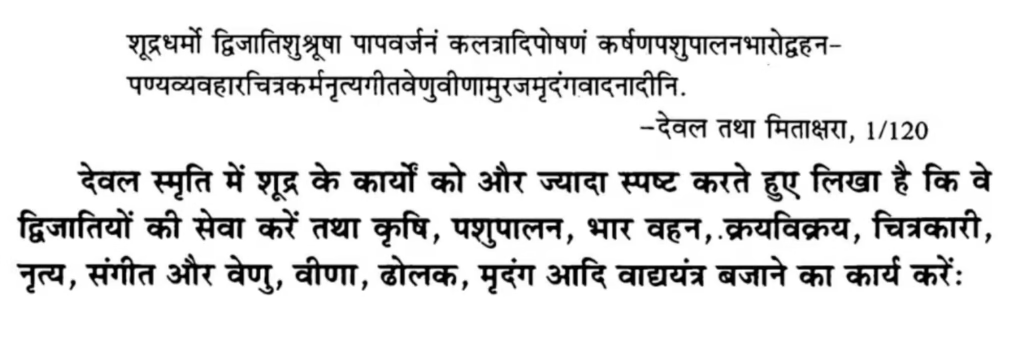
Some question the inclusion of dance and music. However, Devala Smriti states these, along with art, are Shudra duties. This contradicts the notion that ancient artisans were not those labeled Shudras.
Even Kautilya’s Arthashastra states: “The duty of the Shudra is to serve the Dvijas, and also to engage in agriculture, animal husbandry, craftsmanship (kaarigari), painting (chitrakaari), music, and entertainment.”
“The duty of the Shudra is to serve the Dvijas, and also to engage in agriculture, animal husbandry, craftsmanship (kaarigari), painting (chitrakaari), music, and entertainment.” – Kautilya’s Arthashastra
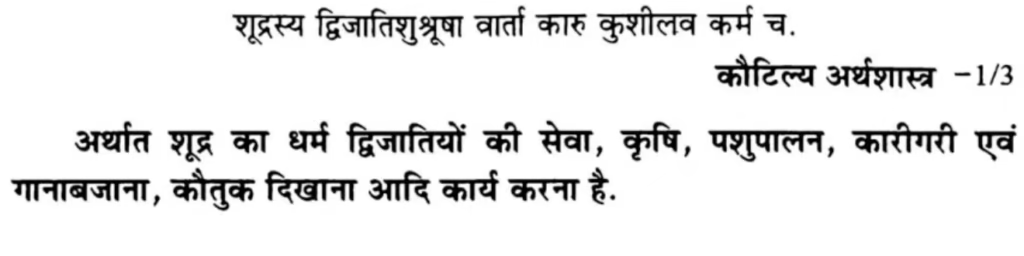
It is clear that ancient India’s structures were built by those designated Shudras. The narrative that these achievements belong to Brahmin sages is a distortion. The artisans, engineers, and architects were intellectual powerhouses, yet systematically downgraded.
The Brahmanical Assault on Craftsmanship and Knowledge
Manu Smriti: The Blueprint for Degradation
The Manu Smriti, a cornerstone of Brahmanical law, solidifies this subjugation. Chapter 10, Verse 99, states: “If a Shudra is unable to perform service to the Dvijas (and his wife and children are suffering from hunger), he may maintain himself by practicing mechanical arts (kaarigari).” This implies craftsmanship was a fallback, pursued only when service failed, viewed as inferior.[source]
“If a Shudra is unable to perform service to the Dvijas (and his wife and children are suffering from hunger), he may maintain himself by practicing mechanical arts (kaarigari).” – Manu Smriti, Chapter 10, Verse 99
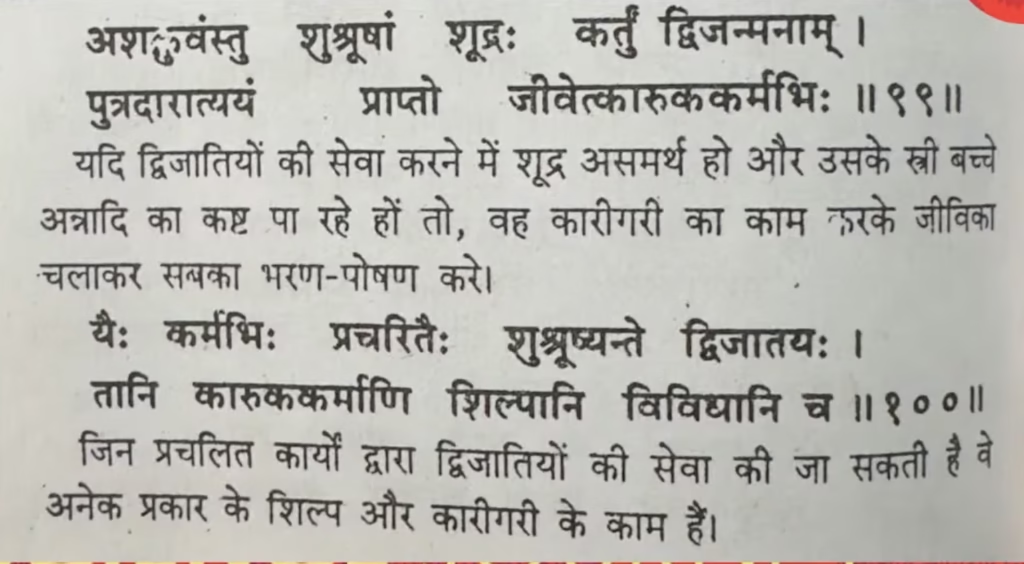
Verse 100 reinforces this, stating crafts belong to Shudras, not Brahmins, Kshatriyas, or Vaishyas. This labels creators of India’s architectural heritage as lower caste. Read more: Examining Historical Caste Status: Texts & Legal Battles
The science and glory of ancient India, celebrated today, were creations of the Shudras. Brahmins, claiming ownership, were not its creators. Their own scriptures proclaim this truth.
The Devaluation of Artisans: From Skilled Labor to Outcasts
Brahmanical texts systematically devalued artisans, reducing their contributions to mere service or survival. This erased their identity and allowed their achievements to be claimed. The contrast between respect for modern engineers and the treatment of ancient artisans in these scriptures is stark.
Consider Manu Smriti, Chapter 11, Verse 130: “If a Brahmin kills a Shudra, he shall perform this penance for six months and give a bull and eleven white cows as a donation to the Brahmins.” This indicates killing a Shudra was a minor offense, with a simple penance. The value of a Shudra’s life was minimal, absolving perpetrators easily.
“If a Brahmin kills a Shudra, he shall perform this penance for six months and give a bull and eleven white cows as a donation to the Brahmins.” – Manu Smriti, Chapter 11, Verse 130
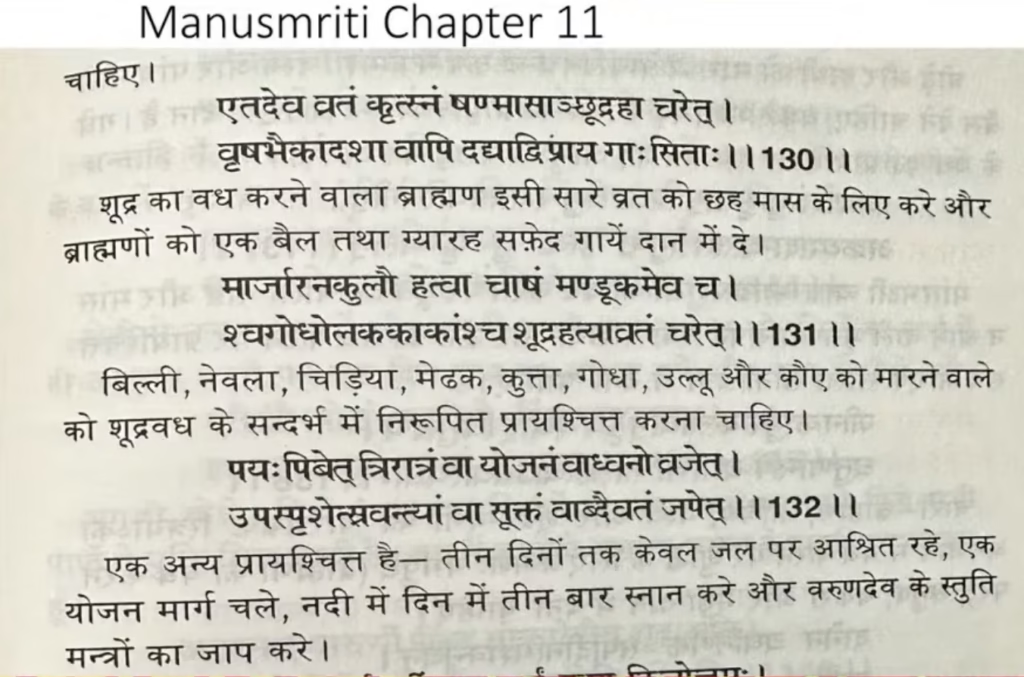
Verse 131 equates killing a Shudra to killing animals like cats or dogs, requiring minor atonement. This devaluation of life facilitated the elimination of skilled artisans, stifling their craft’s continuation.[source]
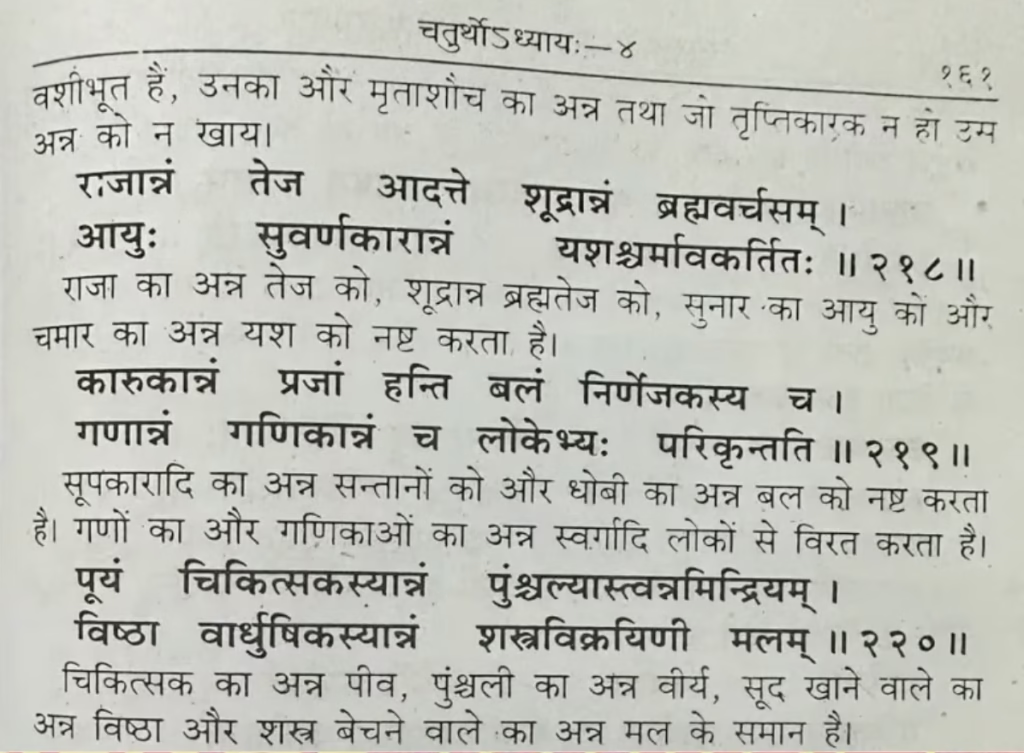
Scriptures also dictated discriminatory food and social interaction practices. Manu Smriti, Chapter 4, Verse 218, states: “The food of a Shudra destroys Brahmic radiance; the food of a goldsmith destroys longevity; the food of a cobbler destroys fame.” This reveals a deliberate boycott of artisans, aiming to isolate and marginalize them.[source]
“The food of a Shudra destroys Brahmic radiance; the food of a goldsmith destroys longevity; the food of a cobbler destroys fame.” – Manu Smriti, Chapter 4, Verse 218
More Scriptural Evidence
Verse 219 adds: “The food of a cook and others destroys progeny; the food of a washerman destroys strength.”
Verse 220: “The food of a physician is like pus; the food of a sweeper is like semen; the food of one who sells weapons is like feces.”
These verses show a systematic attempt to demonize entire communities, including those in essential trades, effectively severing social ties and undermining economic viability.
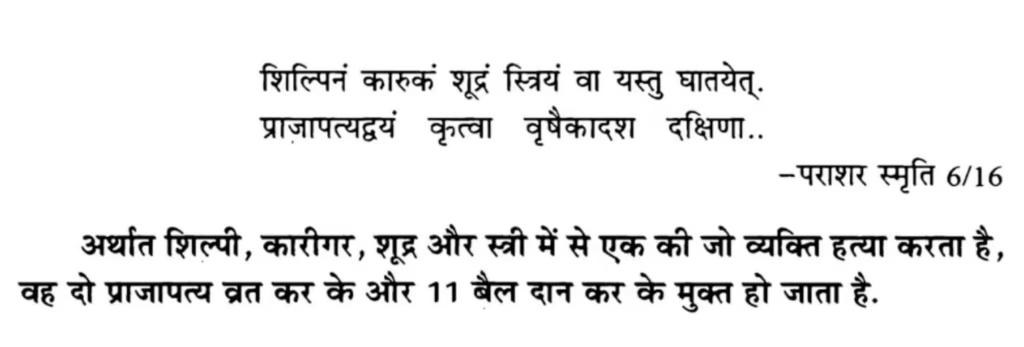
The Parashara Smriti, Chapter 6, Verse 16, states: “One who kills a shilpi, artisan, Shudra, or woman, is freed by performing two Prajapatya vows and donating eleven bulls.” This highlights the ease with which artisans’ lives could be taken, with minimal consequences.[source]
“One who kills a shilpi, artisan, Shudra, or woman, is freed by performing two Prajapatya vows and donating eleven bulls.” – Parashara Smriti, Chapter 6, Verse 16
The systematic suppression and elimination of artisans through scriptural injunctions led to craftsmanship’s decline in India. Vibrant artistic traditions gradually faded, replaced by Brahmanism’s doctrines.
Caste and the Suppression of Knowledge
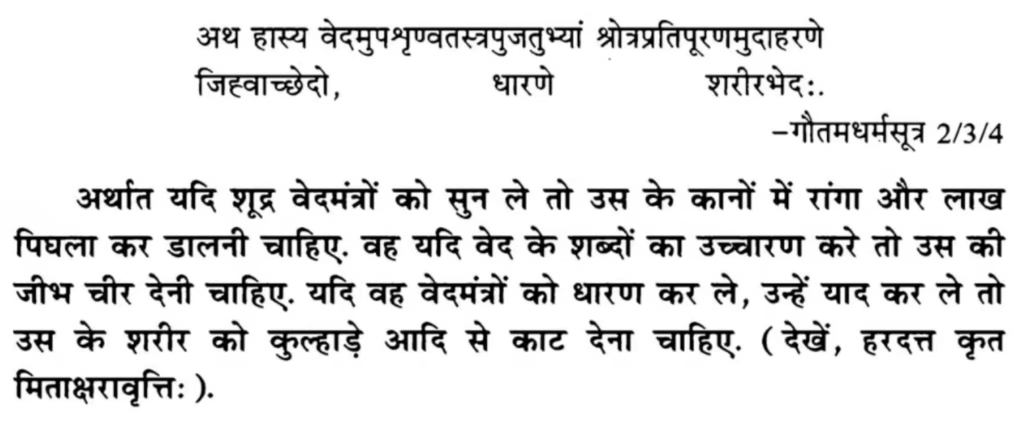
Brahmanical scriptures prevented Shudras, including artisans, from accessing knowledge, especially Vedic texts. Gautam Dharma Sutra, Chapter 2, Section 3, Verse 4, explicitly states: “If a Shudra listens to Vedic verses, molten lead or lac should be poured into his ears. If he utters them, his tongue should be slit. If he remembers them, his body should be cut with an axe.”[source]
“If a Shudra listens to Vedic verses, molten lead or lac should be poured into his ears. If he utters them, his tongue should be slit. If he remembers them, his body should be cut with an axe.” – Gautam Dharma Sutra, Chapter 2, Section 3, Verse 4
This brutality underscores Brahmanism’s fear of knowledge dissemination beyond their caste. Even Dayanand Saraswati, in his Rigveda commentary, stated Shudras should not be taught Vedas, implying a lack of intelligence.
This denial of education to artisans and engineers systematically erased their intellectual contributions. They were reduced to laborers, their ingenuity suppressed, their legacy claimed by Brahmins with no hand in their creation.
The Skanda Purana, Vaishnava Khanda, further states: “If any Brahmin instructs a Shudra or imparts any knowledge to him, other Brahmins should ostracize him like a Chandala and banish him from the village.” This prohibits imparting knowledge to Shudras, keeping artisans ignorant to maintain Brahmanical hierarchy.[source]
“If any Brahmin instructs a Shudra or imparts any knowledge to him, other Brahmins should ostracize him like a Chandala and banish him from the village.” – Skanda Purana, Vaishnava Khanda
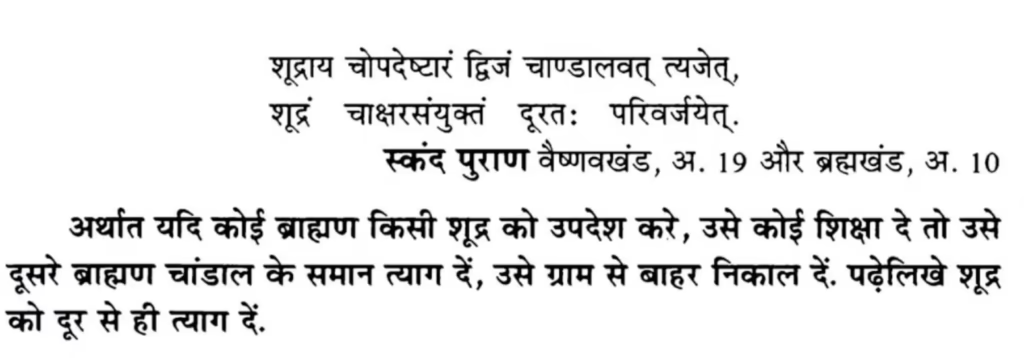
The evidence from these scriptures is overwhelming. Ancient India’s architectural and artistic achievements were primarily the work of Shudras, systematically denied education and respect. Brahmanism, far from creating this heritage, actively worked to suppress and appropriate it.
The Systematic Destruction of a Civilization
Begari: The Unpaid Labor of India’s Artisans
Begari, or forced unpaid labor, was central to Brahmanism, impacting the Shudra community, including artisans. Manu Smriti, Chapter 7, Verse 138, states: “The king may demand from artisans, labourers, and workers, one day’s work in a month as tax.”[source]
“The king may demand from artisans, labourers, and workers, one day’s work in a month as tax.” – Manu Smriti, Chapter 7, Verse 138
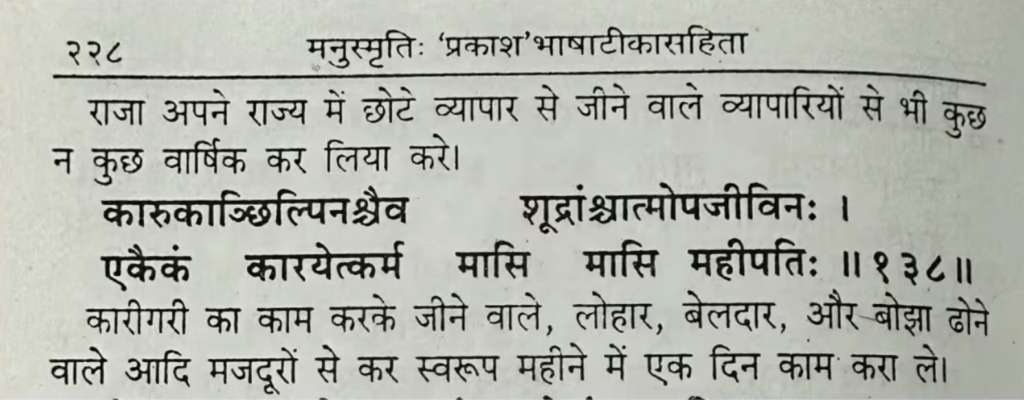
This provision legalized artisan exploitation, forcing them to work without compensation. This was a systematic extraction of labor, ensuring creators toiled without reward while Brahmins claimed ownership.
This contrasts with modern employment practices where fair wages are fundamental. Destitute are often tax-exempt, yet here, artisans were subjected to free labor. This highlights Brahmanism’s oppressive nature, designed to benefit the priestly class.
Erosion of Craftsmanship: A Thousand Years of Decline
Scriptural injunctions, devaluation of work, and legal forced labor devastated craftsmanship’s continuation in India. Over centuries, artistic traditions declined. Construction of caves, temples, and sculptures gradually ceased.
The decline was a direct consequence of Brahmanism’s assault on its creators. Fear, social ostracization, and economic exploitation made thriving impossible. Skilled artisans were eliminated, forced into other occupations, or their traditions dismantled.
Historical records show decreased monumental architecture and art creation after Brahmanical dominance consolidated. Earlier periods saw flourishing artistic endeavors, but subsequent centuries witnessed stagnation. This decline resulted from Brahmanism’s systematic suppression of skilled individuals.
Ancient India’s glory was built on artisans’ labor and ingenuity. Brahmanical scriptures aimed to dismantle this legacy, replacing it with a narrative prioritizing priestly authority over practical skill.
The Intentional Erasure: Why Brahmanism Targeted the Arts
Brahmanism’s animosity towards craftsmanship stemmed from a desire to consolidate its power. By denigrating artisans, Brahmins established their intellectual and spiritual supremacy. Impressive structures were often associated with Buddhism, which Brahmins sought to suppress.
The argument that ancient Indian science and architecture came solely from Brahmin sages is a distortion. Scriptures show Brahmins were not creators; they were relegated to the Shudra class, the actual builders. This appropriation of Buddhist and Shudra achievements legitimized Brahmanical dominance.
The intent was clear: erase artisan contributions, dismantle their civilization, and establish Brahmanism as the sole inheritor of India’s glory. This was achieved through scriptural manipulation, social engineering, and systematic elimination of skilled individuals. The result was a thousand-year decline in Indian arts and sciences, a loss resonating today.
The Lasting Scars: A Legacy of Suppression
The Myth of Vishwakarma: A Deity Reduced to a Servant
The narrative surrounding Vishwakarma, the divine architect, illustrates Brahmanical appropriation. While revered as a creator deity, the Mahabharata (Udyoga Parva) portrays a complex relationship with Indra. Indra killed Vishwakarma’s son, Trishira. Vishwakarma created Vritra for revenge. Indra, with Vishnu, destroyed Vritra.[source]
“Trishira was killed by Indra. Enraged by this, Vishwakarma created Vritra. Indra, thinking that if he did not destroy him by deceit, it would not be good for him, recalled Vishnu. Vishnu entered Vritra and destroyed him.” – Mahabharata, Udyoga Parva, Chapter 9, Verses 45-46 & Chapter 10, Verses 36-39 (paraphrased from context)
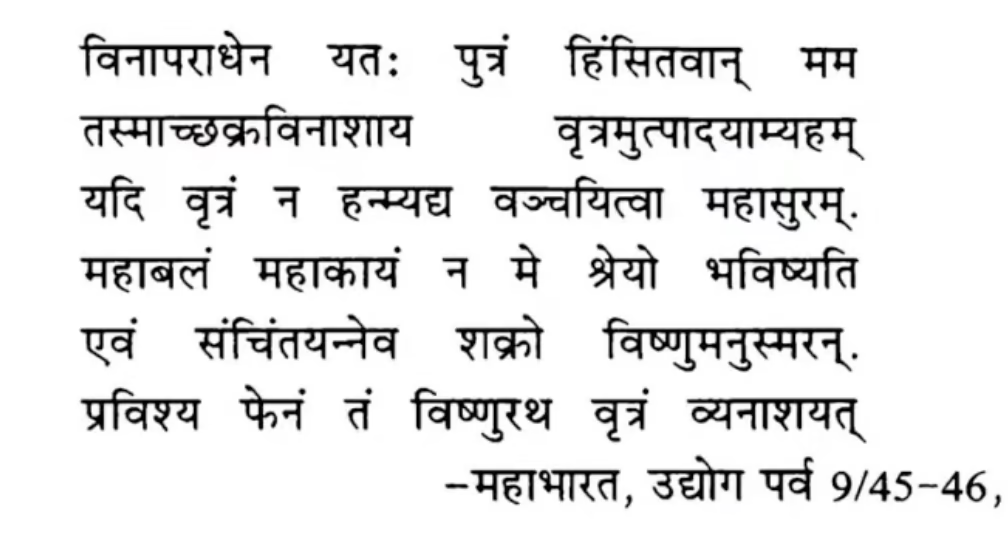
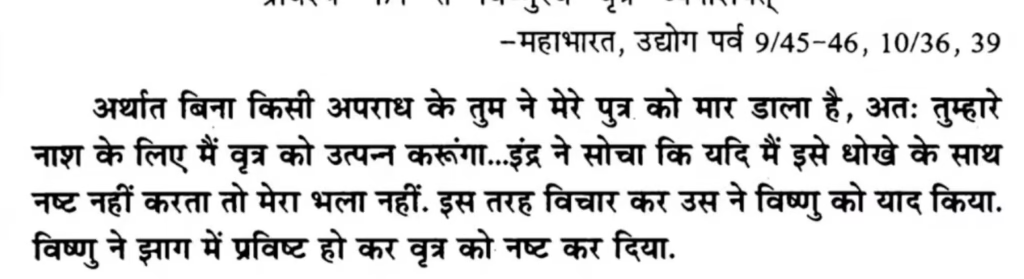
This narrative depicts the chief Vedic god Indra in conflict with the divine architect. It suggests Vishwakarma, despite his role, was subservient and vulnerable within Brahmanism. This diminishes craftsmanship’s significance, reinforcing that even divine artisans were subjugated by the priestly class.
The Appropriation of Buddhist Art and Architecture
Buddhist art and architecture represent a pinnacle of ancient Indian craftsmanship. Ajanta, Ellora, Mathura, and Gandhara are testaments to this past. However, Brahmanical narratives have consistently sought to appropriate this heritage, reinterpreting it as Hindu tradition.
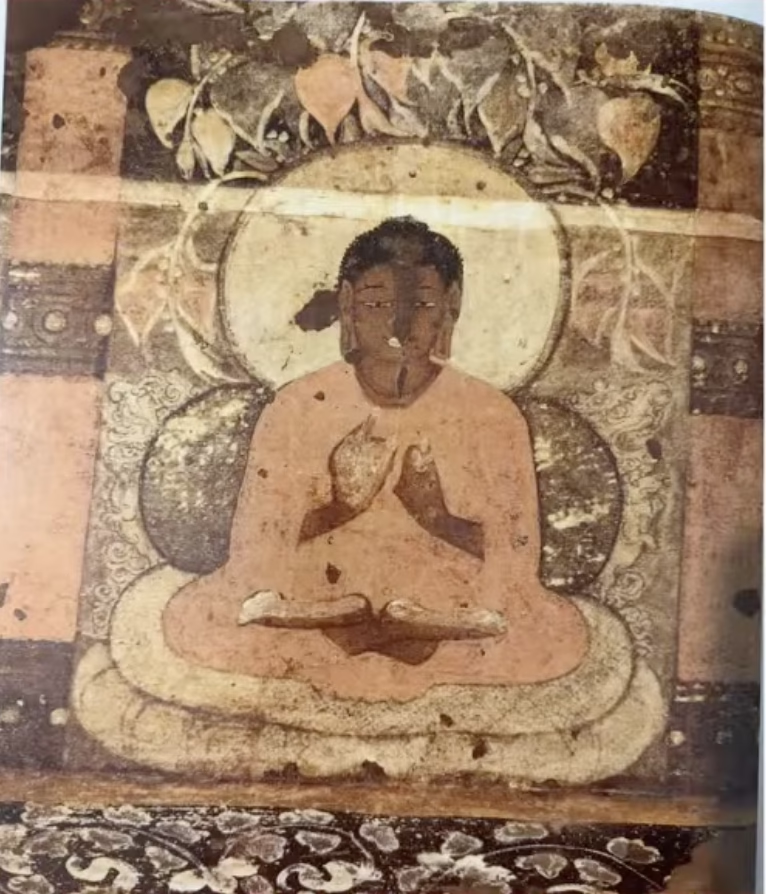
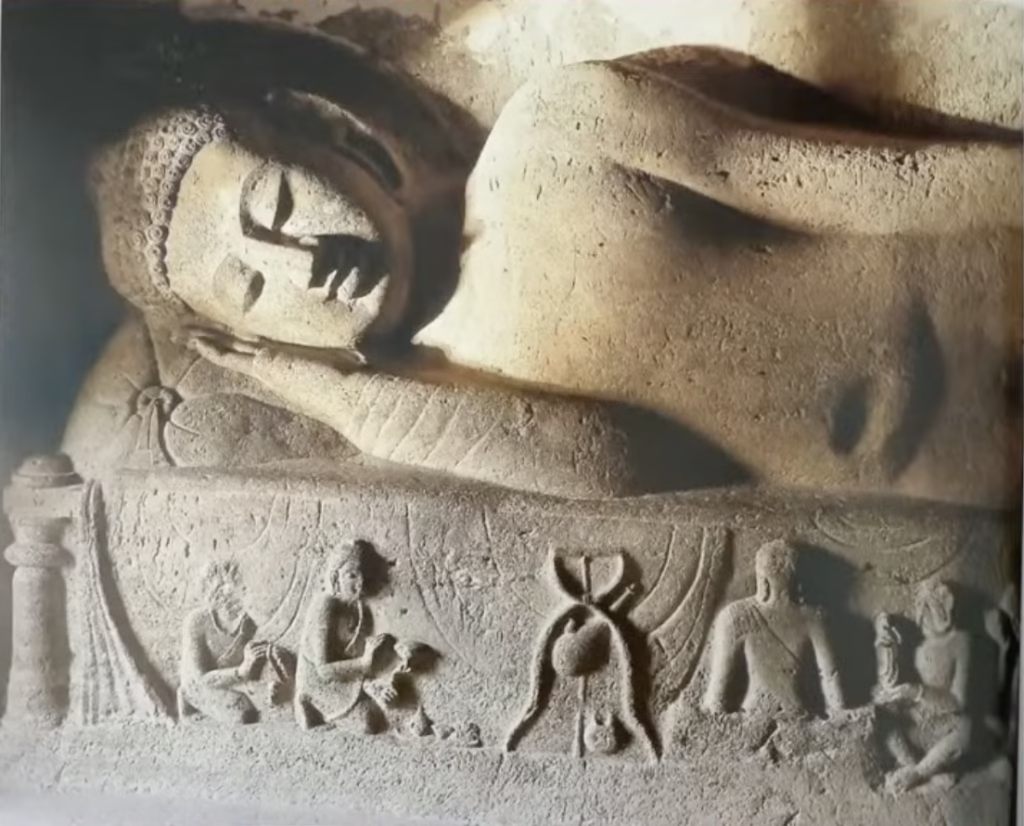
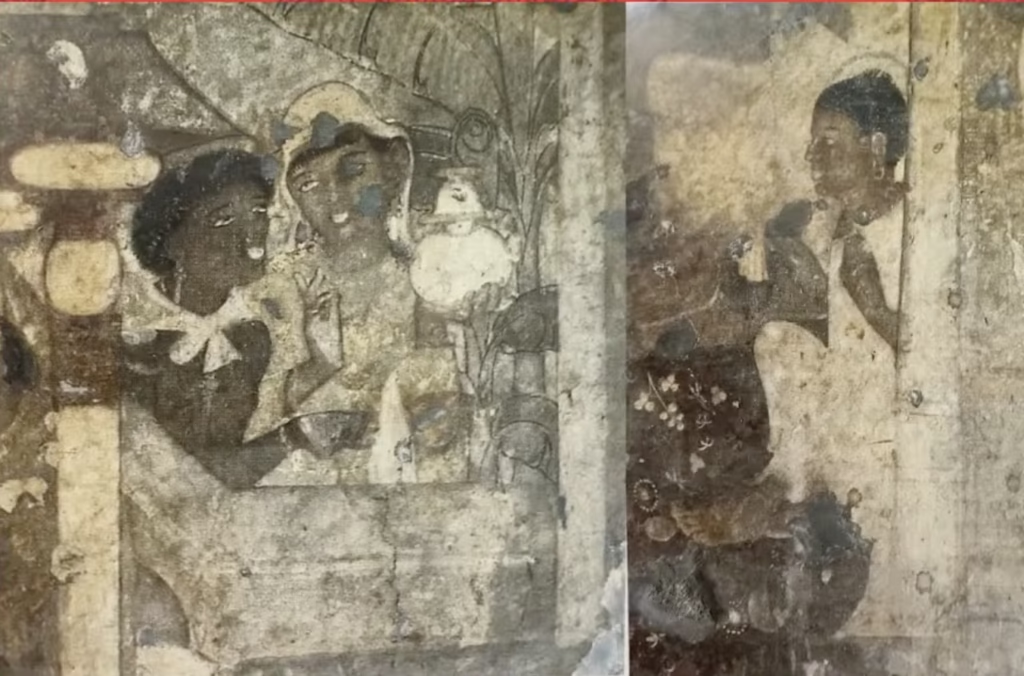
The Jataka tales, depicted in Ajanta caves, tell stories of the Buddha’s past lives. These murals, created centuries before the common era, show advanced skills and narrative illustration. Yet, Brahmanical interpretations embed Brahminical characters to claim them as Hindu mythology.
Sculptures of Bodhisattvas are frequently re-labeled as Hindu deities like Vishnu or Shiva. This re-appropriation erases Buddhist origins and integrates them into the Brahmanical fold, bolstering claims of ancient Indian art being inherently Brahmanical. Read more: Origins of Shivalinga Worship: Historical & Scriptural Views
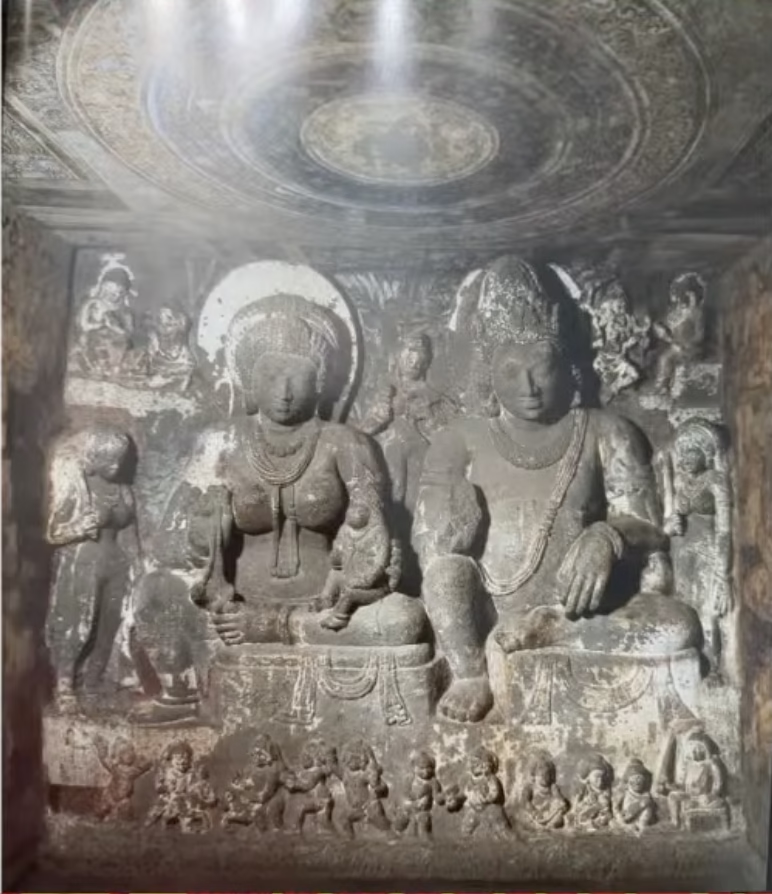
This appropriation is key to Brahmanism rewriting history and legitimizing its dominance. By claiming Buddhist art and architecture, Brahmins erase contributions of Buddhists and Shudras, the primary creators.
The evidence is irrefutable: ancient India’s achievements were largely the product of Buddhist and Shudra artisans. Brahmanical scriptures systematically suppressed, devalued, and appropriated this legacy.
The Reality on the Ground: Archaeological Evidence
Ajita Caves: A Testament to Buddhist Artistry
The Ajanta Caves, a UNESCO World Heritage Site, showcase ancient India’s artistic and engineering prowess, primarily by Buddhist artisans. Dating back to the 2nd century BCE, these caves feature breathtaking murals and sculptures. The detail, vibrancy, and narrative complexity of the paintings are astonishing, depicting Jataka tales and Buddhist life.
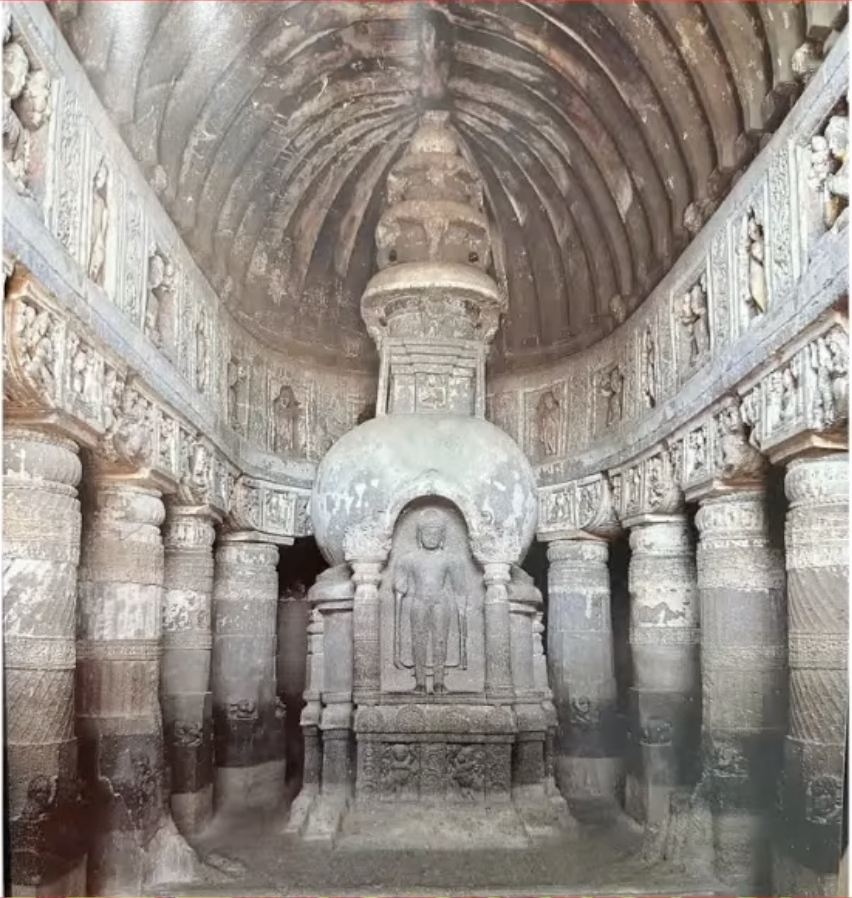
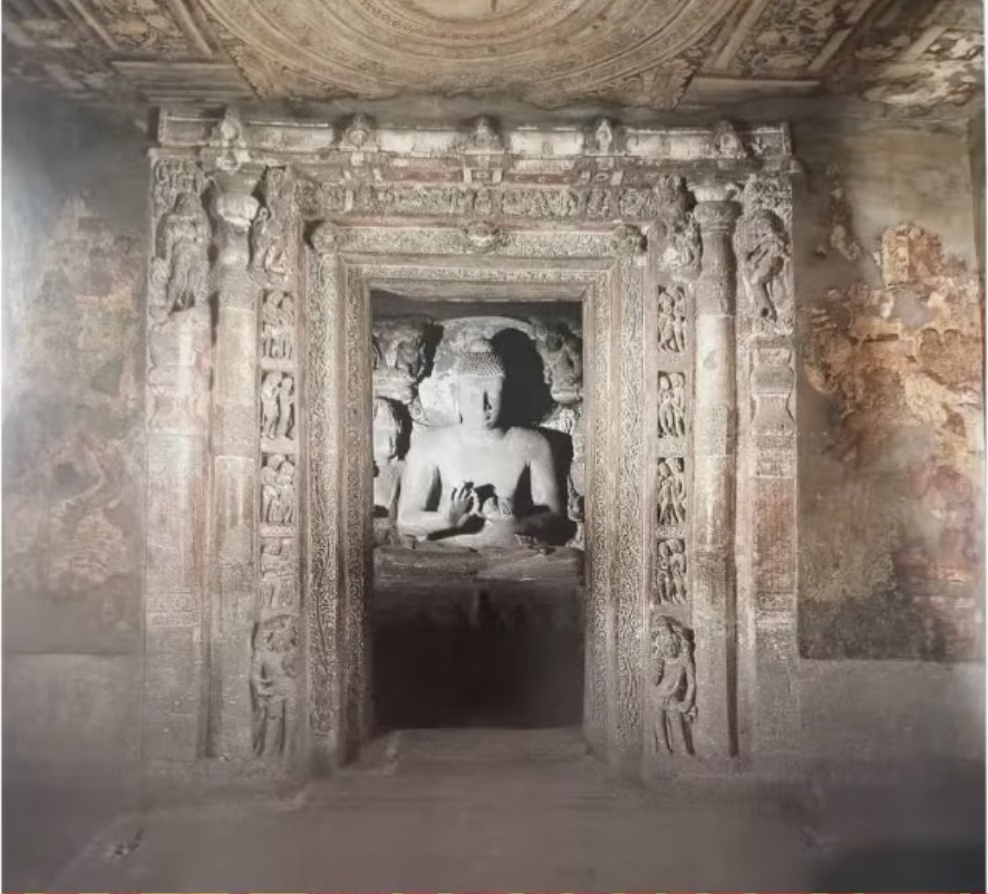
These artworks, created over centuries, show advanced perspective, anatomy, and color theory. Their longevity speaks volumes about the quality of materials and techniques used. This artistry was not from Brahmanical sages but skilled Buddhist craftsmen, marginalized by Brahmanism.
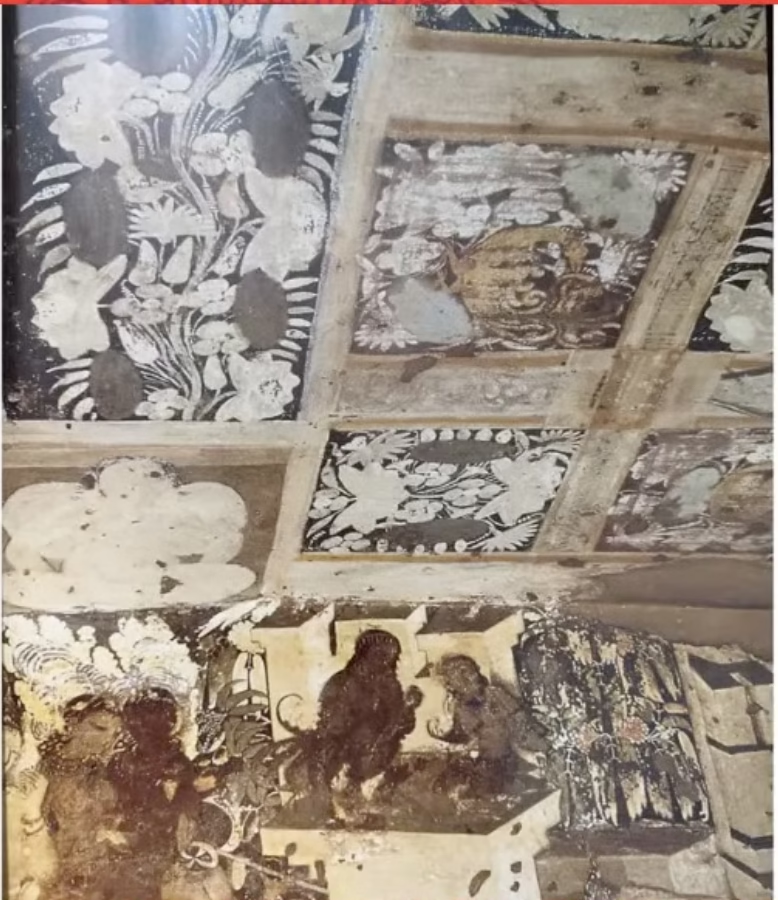
The architectural marvel of the caves—carved from rock—demonstrates incredible engineering skills. The planning, execution, and brilliance point to a sophisticated society valuing art and engineering. This heritage, undeniably Buddhist and part of non-Brahmanical traditions, was overshadowed by Brahmanical narratives.
The Systematic Decline and Eradication of Craftsmanship
Brahmanism’s rise and texts like Manu Smriti led to craftsmanship’s systematic decline. Artisans branded Shudras, denied education, and subjected to forced labor, saw their skills erode. Patronage shifted towards Brahmanical rituals, neglecting sophisticated engineering and artistry.
Subsequent invasions did not reverse this trend. While some rulers commissioned art, the social structure, influenced by Brahmanism, continued devaluing artisans. This led to a gradual disappearance of grand temple building, sculpture, and painting traditions.
Fear and lack of social mobility discouraged pursuing these crafts. India’s engineering and artistry legacy faded, leaving ruins and suppressed history.
What Can You Do?
The historical truths here are critical to understanding present social dynamics. The suppression of knowledge and vilification of communities have lasting consequences. To combat this legacy of casteism and historical revisionism:
- Educate Yourself and Others: Seek evidence-based historical accounts. Share information widely to counter misinformation.
- Support Marginalized Voices: Amplify perspectives of historically oppressed communities whose histories have been erased.
- Challenge Dominant Narratives: Question prevailing historical interpretations, especially those glorifying Brahmanism while denigrating others.
- Promote Critical Thinking: Encourage engagement with scriptures and historical claims, advocating for a scientific approach.
- Advocate for Historical Accuracy: Support initiatives preserving and accurately representing all communities’ histories, bringing marginalized histories to light.
Disclaimer
This post draws upon interpretations of historical texts and archaeological evidence. Terms used have specific meanings: Read more: Deep Roots of Conspiracy Theories in Indian History
- Shudra: In this context, refers to the caste designated in scriptures for service and labor, including artisanal work. The post argues this group primarily created ancient Indian art and architecture.
- Dvijas (Twice-born): The three upper castes: Brahmins, Kshatriyas, and Vaishyas.
- Brahmanism: The religious and social system associated with Brahmins, characterized by caste hierarchy and scriptures.
- Craftsmanship/Artisans/Engineers: In ancient India, these encompassed skilled builders, sculptors, painters, and creators of structures and art. The post argues these roles were held by those labeled Shudras.
- Begari: Forced, unpaid labor, mandated by scriptures for lower castes.
Do you disagree with this article? If you have strong evidence to back up your claims, we invite you to join our live debates every Sunday, Tuesday, and Thursday on YouTube. Let’s engage in a respectful, evidence-based discussion to uncover the truth. Watch the latest debate on this topic below and share your perspective!