The epic Ramayana, a cornerstone of Indian culture and spirituality, has been subjected to numerous interpretations and retellings over centuries. However, one particular version, E.V. Ramasamy’s “Sacchi Ramayanam” (True Ramayana), originally “Ramayanam Pathi Rangal” in Tamil, stands out for its controversial and critical examination of the characters of Rama and Sita. This work has not only stirred immense debate but also faced legal battles, reaching the Supreme Court of India. At its core, “Sacchi Ramayanam” challenges the conventional, hagiographic portrayal of these revered figures, offering a perspective that has often been deemed heretical by traditionalists.
This post analyzes how Periyar’s Sacchi Ramayanam functions as a powerful critique of Brahminical Hinduism and caste norms, exploring its historical genesis, its critical analysis of Sita’s character, and the broader implications of its existence in the Indian socio-political landscape. Read more: Valmiki Ramayana: Shambuka Episode Exposed Casteism
- The Historical Genesis of "Sacchi Ramayanam"
- The Anti-Caste Critique Embedded in Periyar's Reading
- Periyar's Critical Lens on Sita's Character
- Origin Mysteries and Age Discrepancies
- Strained Relationships and Disdain for Bharata
- Perception of Rama and Verbal Assertions
- Sita's Materialism and Disregard for Asceticism
- Contested Conduct with Ravana and Allegations of Consent
- The Pregnancy Controversy and Abandonment
- Reinterpretation of Ravana's Character
- Conclusion: Sacchi Ramayanam as a Socio-Political Text
- What Can You Do?
- Read or download the book here for free
The Historical Genesis of “Sacchi Ramayanam”
The journey of “Sacchi Ramayanam” began with E.V. Ramasamy (Periyar), a towering figure of Dravidian ideology and social reform in South India. His original Tamil work, “Ramayanam Pathi Rangal,” was first published in 1954. The book’s intent was to offer a rational and critical perspective on the Ramayana, questioning its historicity and the moral uprightness of its central characters.
Early Publications and Translations
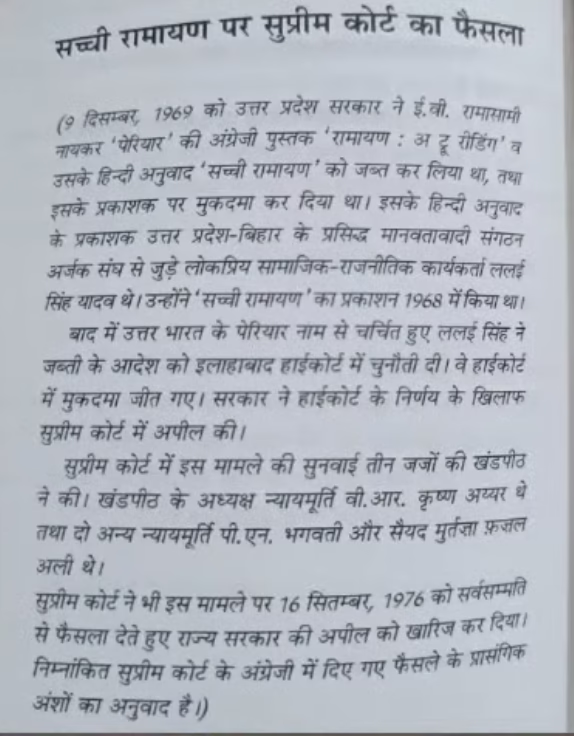
The first Hindi translation of Periyar’s work was published in 1968 by Lalai Singh Yadav, a prominent social activist associated with the social reformist organization Arjak Sangh. Yadav, often referred to as the “Periyar of North India,” took on the significant task of bringing this critical analysis to a wider audience. This Hindi version was titled “Sacchi Ramayanam.” Subsequently, an English translation, “Ramayana: A True Reading,” was published in 1969. The publication of these versions, particularly the Hindi one, was met with fierce opposition.
The Controversy and Legal Battles
As anticipated, the book’s critical stance on the Ramayana deeply offended religious sentiments. In India, where religious beliefs are often intertwined with cultural identity, such critiques ignite widespread outrage. The Uttar Pradesh government, at the time, took severe action against the book, seizing all copies of both the Hindi and Tamil versions. This action was followed by a legal case against Lalai Singh Yadav, the publisher of the Hindi translation.
Supreme Court’s Intervention
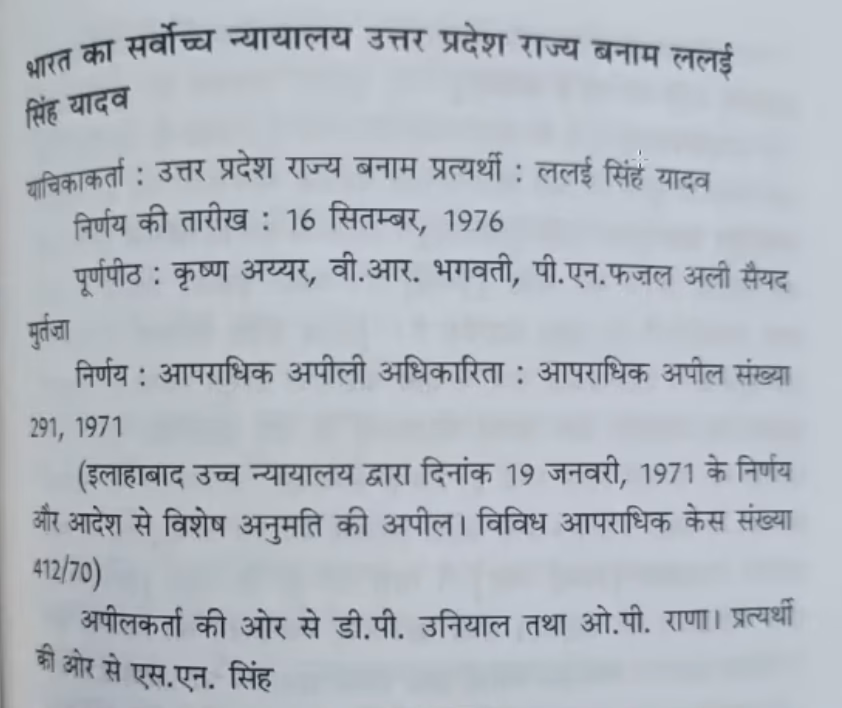
Undeterred, Lalai Singh Yadav challenged the government’s seizure order in the Allahabad High Court, where he emerged victorious. The state government then appealed this decision to the Supreme Court of India. The case was heard by a three-judge bench, presided over by Justice V.R. Krishna Iyer, along with Justices P.N. Bhagwati and Syed Murtaza Fazal Ali. On December 16, 1976, the Supreme Court delivered a unanimous verdict, quashing the state government’s appeal and ruling in favor of Lalai Singh Yadav. This landmark judgment effectively permitted the publication and circulation of “Sacchi Ramayanam,” stating, in essence, that it held as much truth as any other version of the Ramayana, including the widely accepted Valmiki Ramayana.
Post-Supreme Court Saga
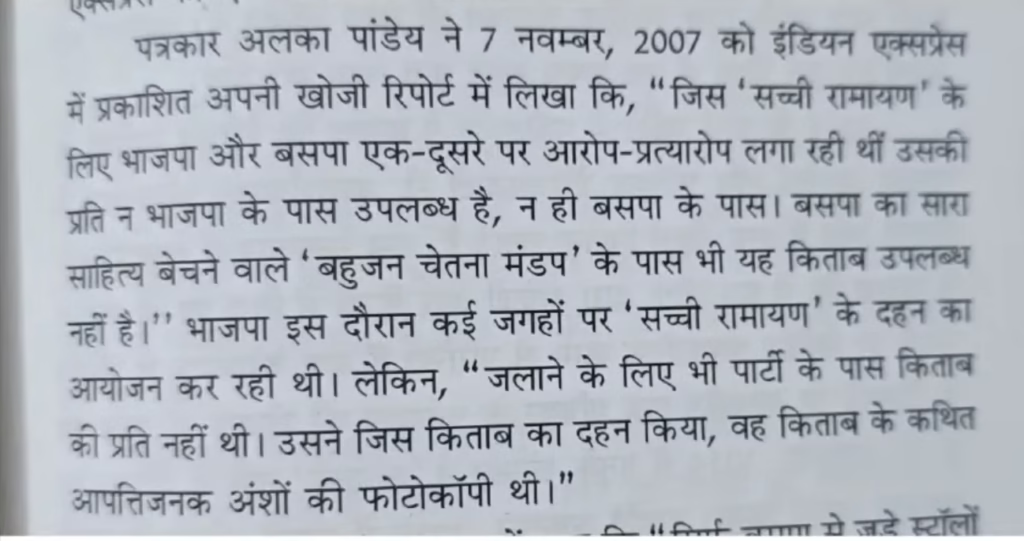
Despite the Supreme Court’s clear verdict, the book continued to face hurdles. In 2007, the Bahujan Samaj Party (BSP) government in Uttar Pradesh reportedly faced accusations of promoting the book, leading to political wrangling. The ban on the book was only lifted in 1995, following the rise of the Kasiram government, allowing it to become accessible to the public. The protracted legal battle and subsequent political controversies highlight the deep-seated resistance to critical examinations of religious texts in India, a stark contrast to the robust tradition of criticism prevalent in many Western societies.
The Anti-Caste Critique Embedded in Periyar’s Reading
Periyar’s ideological framework, rooted in Dravidian identity and rationalism, used the Ramayana not merely as mythology but as a textual basis for justifying caste hierarchies and the subjugation of women. His critique aimed to deconstruct the divinity of Rama, whom he saw as an Aryan imposition, and expose the subjugated status of Sita, representing the oppressed social strata. Understanding this framework is crucial before diving into his specific textual deconstructions.
Periyar challenged the narrative structure itself, arguing that the story served to cement a social order where purity and pollution dictated relationships. The abduction by Ravana—who is often portrayed as a powerful, non-Brahminical ruler, often conflated with Dravidian identity—and Sita’s subsequent trial by fire (Agni Pariksha) were reinterpreted as tools of patriarchal control, reinforcing the need for women’s absolute sexual purity, a concept central to maintaining caste lineage. Read more: Caste Denial: How Manusmriti Ideology Distorts History
Periyar’s Critical Lens on Sita’s Character
Periyar Ramasamy, in “Sacchi Ramayanam,” meticulously dissects the character of Sita, presenting an interpretation that starkly diverges from the traditional narrative. He systematically analyzes various incidents and dialogues attributed to Sita, drawing them from the Valmiki Ramayana, to paint a picture of a complex, flawed, and at times, morally ambiguous individual.
Origin Mysteries and Age Discrepancies
One of the first points raised by Periyar concerns the very origin of Sita. He highlights that her birth is shrouded in mystery and subject to various interpretations, often pointing to discrepancies within the Ramayana itself. According to his analysis, Sita is presented as older than Rama, a detail that contradicts the typical depiction of a younger bride.
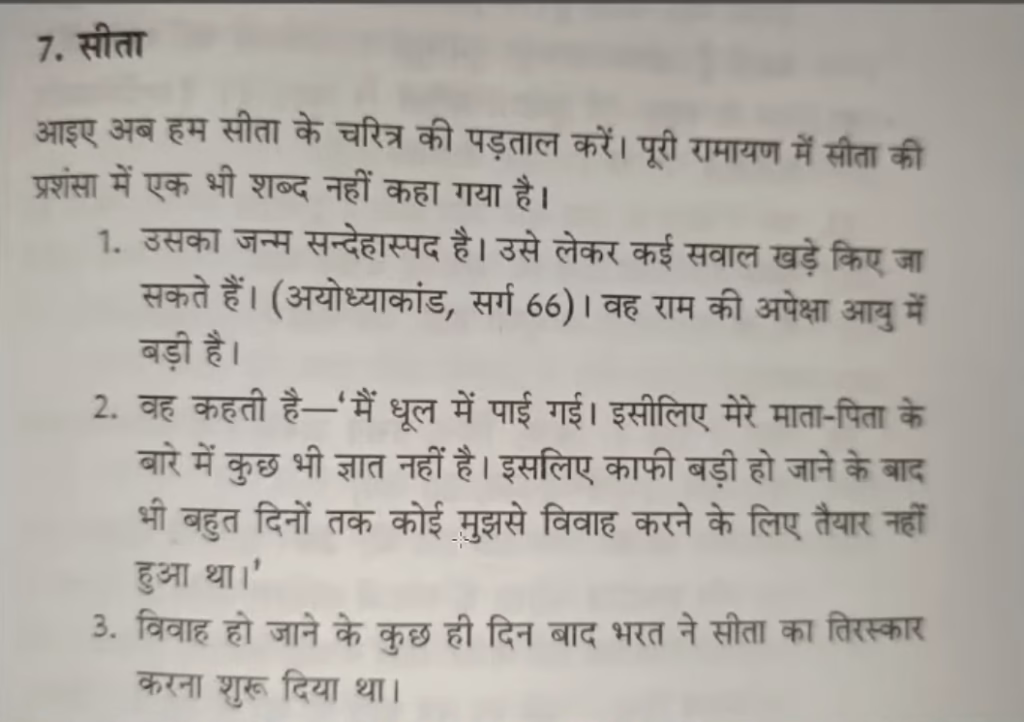
Periyar emphasizes Sita’s own words, as recorded in the Ayodhya Kanda, where she states she was found in the earth, implying her parents are unknown. This lack of known parentage, he suggests, led to a prolonged period of unmarried life even after reaching adulthood. He notes that Sita herself expressed her frustration over not being married for a long time, even after attaining a marriageable age.[source]
Strained Relationships and Disdain for Bharata
The text of “Sacchi Ramayanam” points to a strained relationship between Sita and her brother-in-law, Bharata, shortly after her marriage to Rama. Periyar cites instances where Sita expresses her inability to get along with Bharata. This animosity is further underscored by Rama’s alleged statement to Sita, suggesting that Bharata did not think highly of her, indicating a lack of familial harmony.
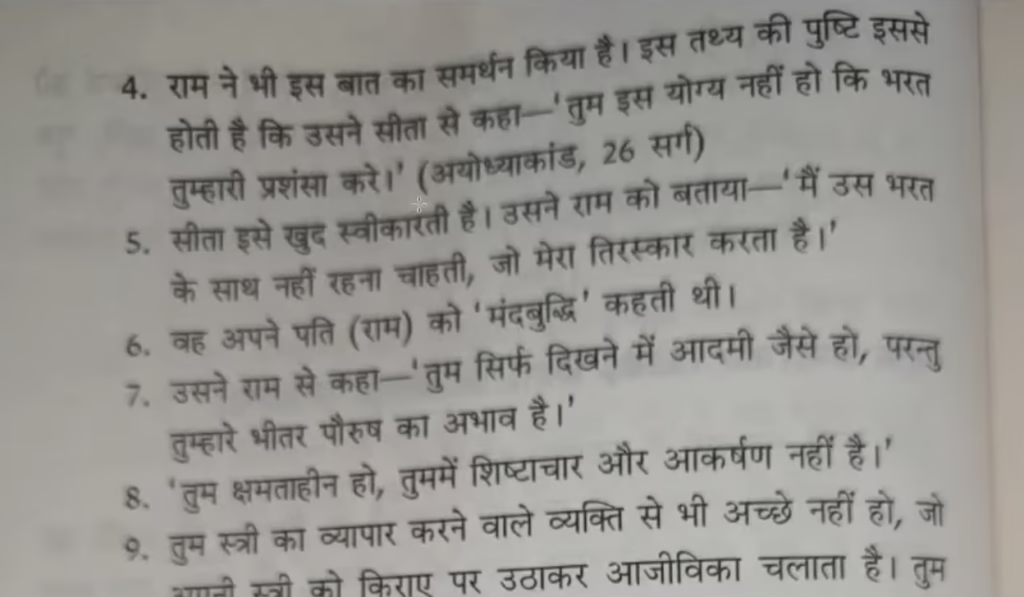
Sita’s own reluctance to live with Bharata is presented as evidence of this discord. She reportedly told Rama that she did not wish to stay with someone who disrespected her. This dynamic is interpreted by Periyar as a significant flaw in the domestic life of the royal household, hinting at underlying tensions and personality clashes.
Perception of Rama and Verbal Assertions
Periyar’s analysis presents Sita as someone who held a rather low opinion of her husband (as shown in last image), Rama. She is quoted as calling him “dull-witted” and lacking in “manliness.” His interpretation suggests Sita found Rama to be deficient in essential qualities, lacking decorum, charm, and even basic respectability. The text further alleges that Sita compared Rama unfavorably to individuals who exploit women, even suggesting he was no better than a pimp, implying his desire to profit from her through prostitution.[source]
These are severe accusations, portraying Sita as someone who not only disrespected her husband but also openly expressed her contempt. The interpretation suggests Sita accused Rama of being incompetent and lacking the very essence of manhood. Furthermore, the text highlights Sita’s accusation that Rama looked at her with suspicion, despite her repeated assertions of love and loyalty. This points to a deep-seated distrust within their relationship.
Sita’s Materialism and Disregard for Asceticism
A significant aspect of Periyar’s critique focuses on Sita’s apparent materialism and her unwillingness to embrace an ascetic lifestyle, even during their period of exile. While Rama and Lakshmana are depicted as adopting simple bark garments, Sita reportedly refused to do the same. This refusal is presented as a stark contrast to the ascetic ideals expected of someone in exile.
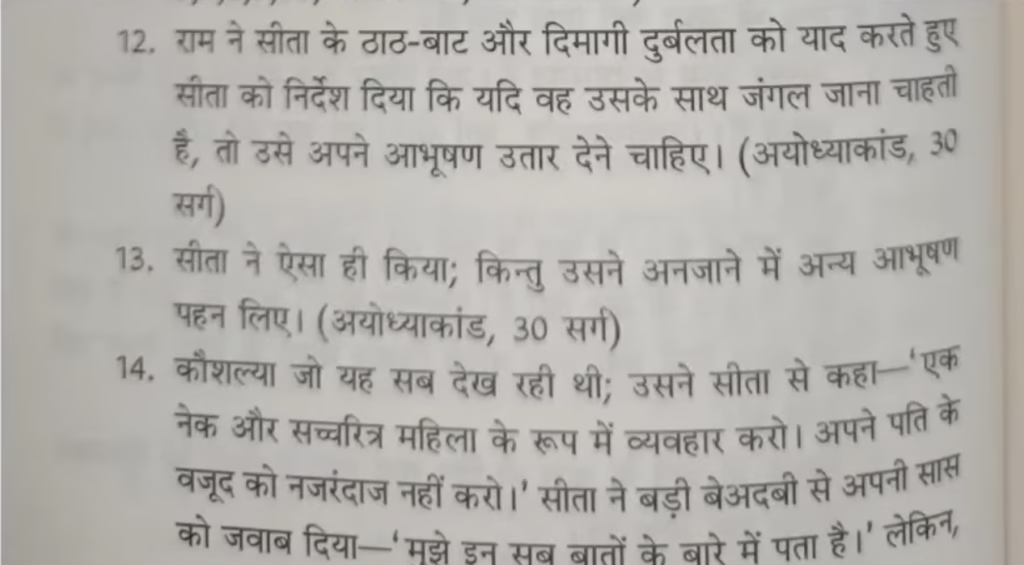
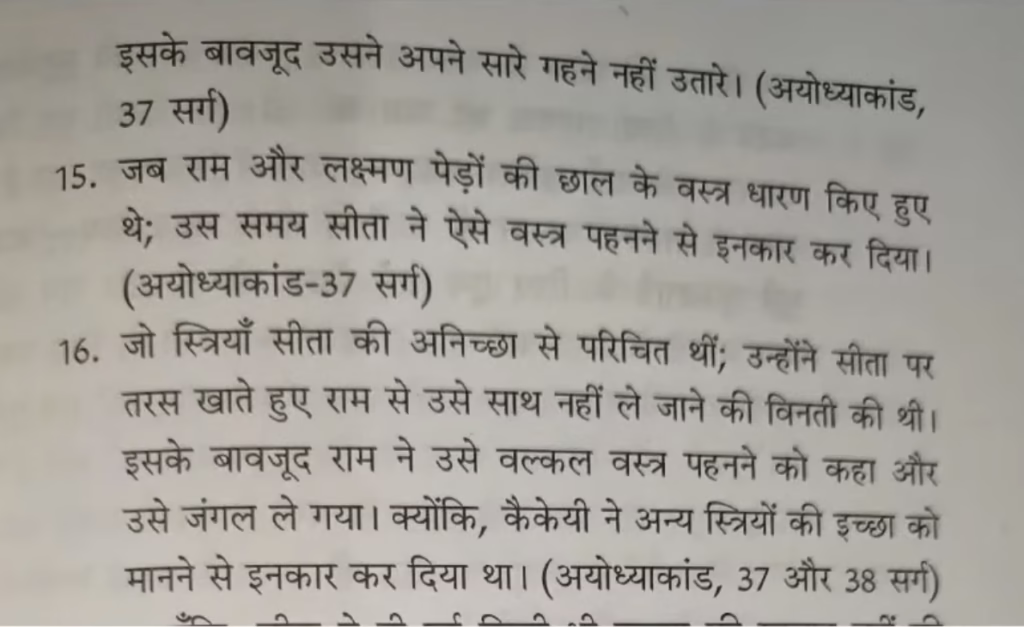
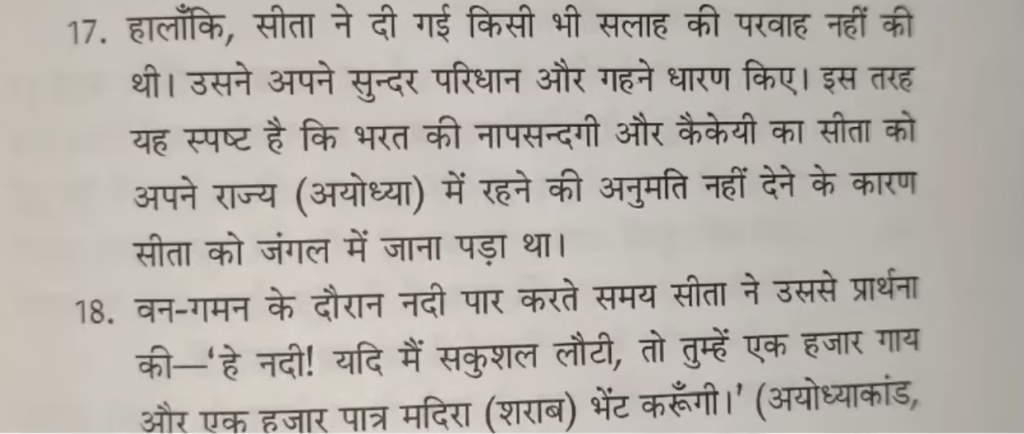
The narrative suggests that other women in the hermitage felt pity for Sita and appealed to Rama not to take her into the forest, given her apparent aversion to the hardships. However, Rama insisted she accompany them, requiring her to wear bark garments, which she reluctantly did after some persuasion. Periyar uses this incident to portray Sita as someone deeply attached to her fine clothes and ornaments, unwilling to sacrifice them for her husband’s cause or the rigors of forest life.
Contested Conduct with Ravana and Allegations of Consent
Perhaps the most contentious aspect of Periyar’s analysis revolves around Sita’s interactions with Ravana, the antagonist king. The text alleges that Ravana, upon arriving at Sita’s hermitage, was immediately captivated by her beauty. Instead of showing revulsion or condemnation, Sita is depicted as welcoming him warmly and even admiring his physical attributes. Periyar questions the narrative, asking how a virtuous woman would react to such advances.
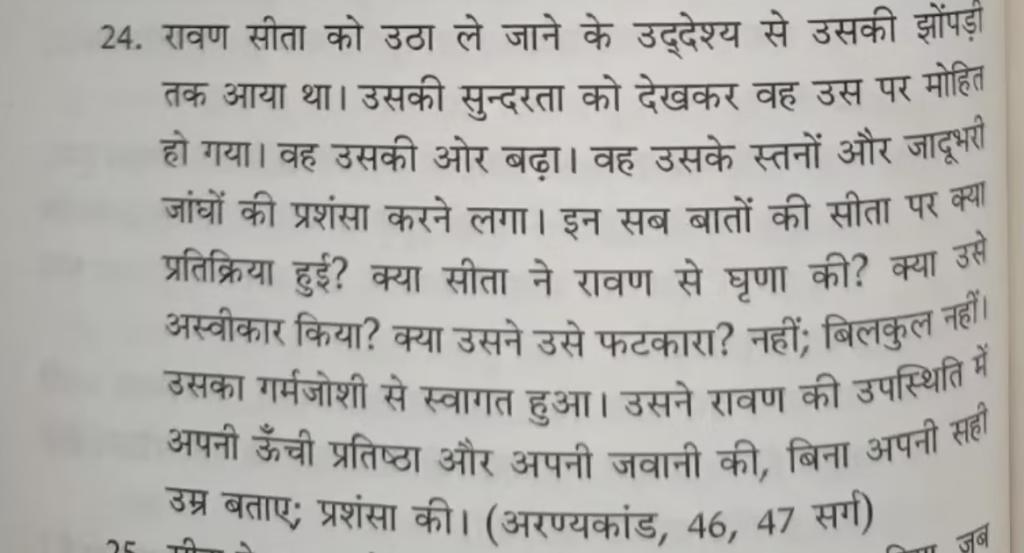
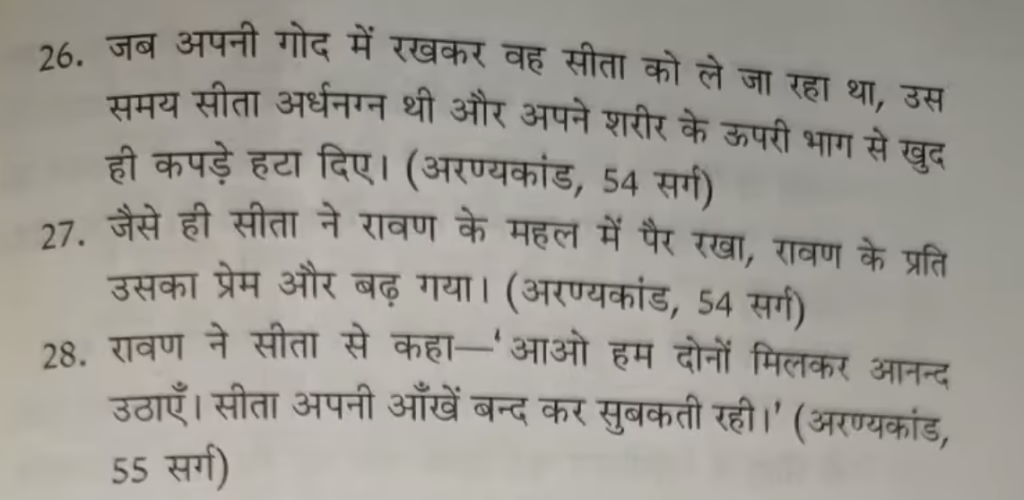
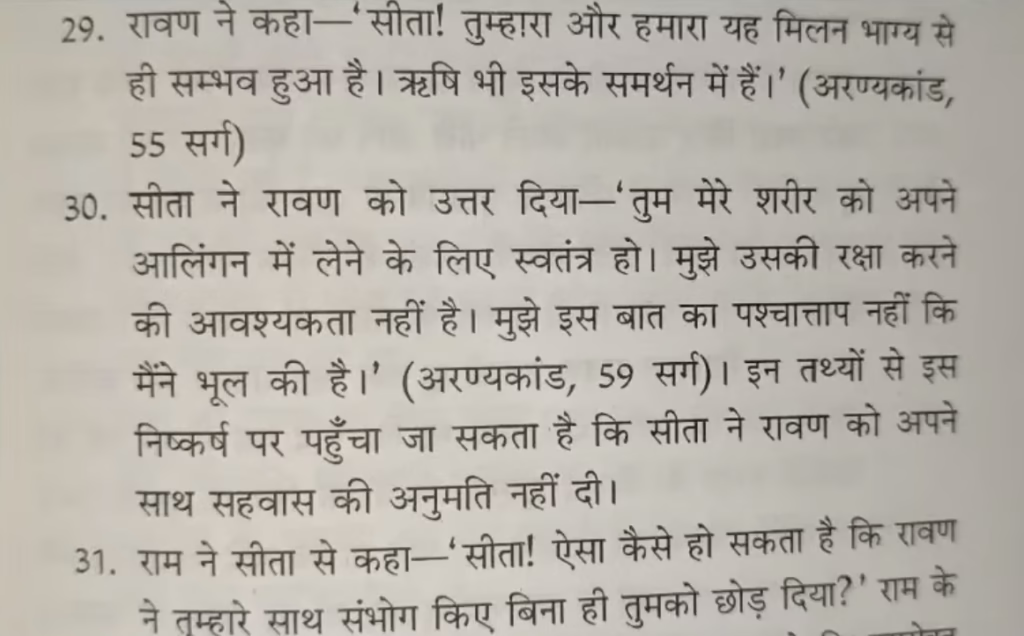
The “Sacchi Ramayanam” goes further, suggesting that Sita’s dislike for Ravana only began when she learned he was a Rakshasa chief (a demon or barbarian in Hindu tradition). This implies a prior level of acceptance or even attraction. Furthermore, the text describes Sita as being semi-nude while being carried away by Ravana, and that she herself removed upper garments. It is stated that upon reaching Ravana’s palace, Sita’s affection for him grew, and they engaged in consensual intimacy.
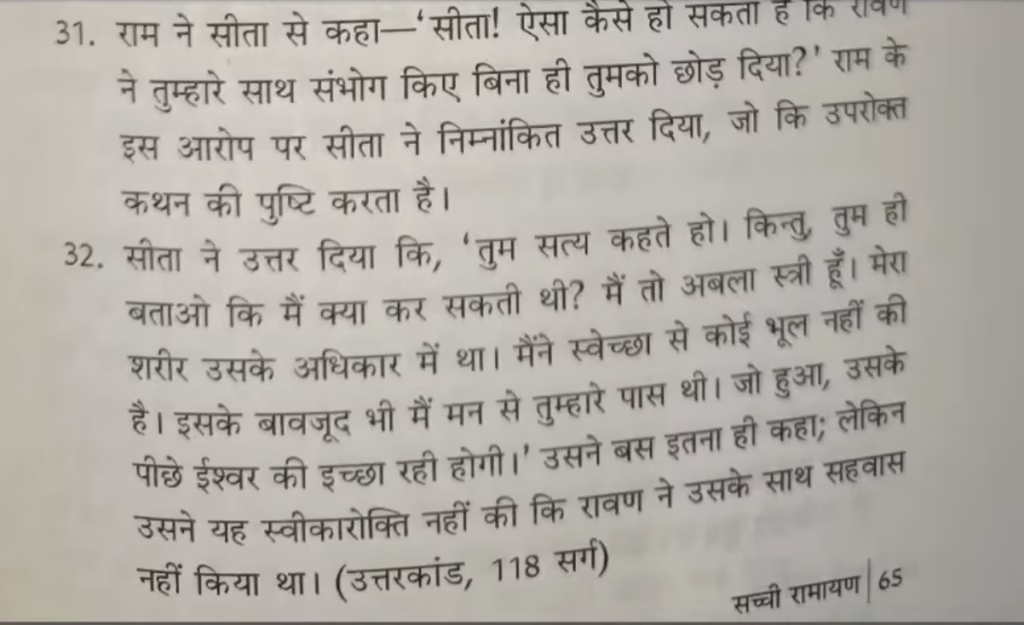
Periyar cites Sita’s response to Rama after her return, where she states, “You are free to use my body as you wish. I do not need to protect it.” He interprets this as an admission of intimacy with Ravana. He also points to Sita’s statement, “I am a woman of the earth. My body was in his control. I did not make any mistake of my own free will. Despite this, my mind was with you. What happened must have been God’s will.” This, according to Periyar, is not a denial of intercourse but an explanation of circumstances beyond her control.
The Pregnancy Controversy and Abandonment
The issue of Sita’s pregnancy is a pivotal point in “Sacchi Ramayanam.” Periyar challenges the narrative that Sita was pregnant when she was with Ravana. He presents evidence suggesting that the pregnancy was a result of her union with Ravana. Rama’s suspicion is ignited when Sita, after her return, displays her pregnant belly to Lakshmana, proclaiming, “Look, I am pregnant.”[source]
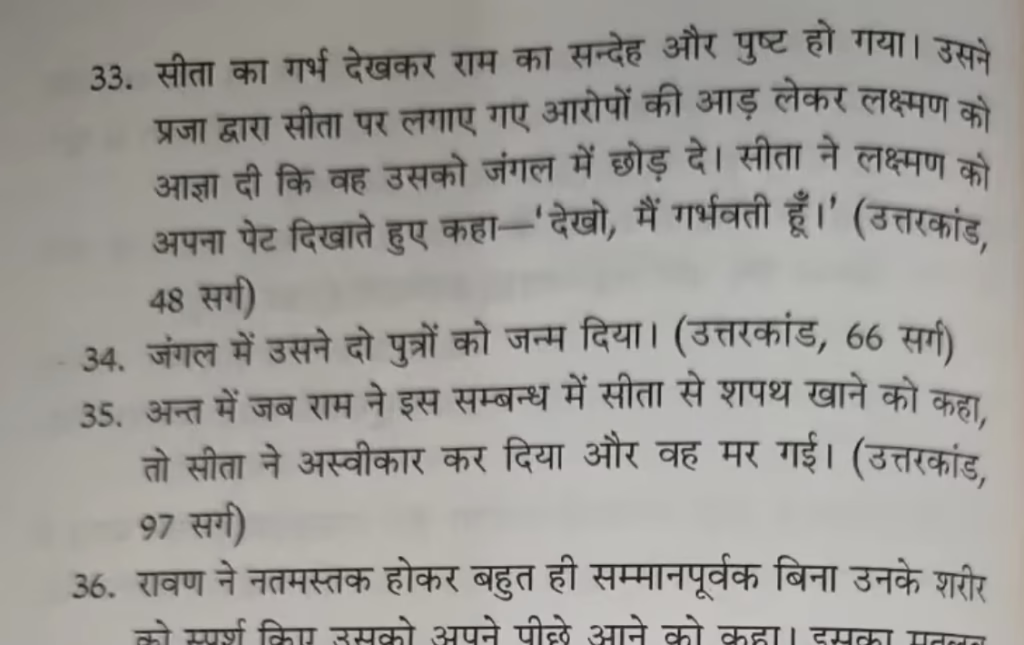
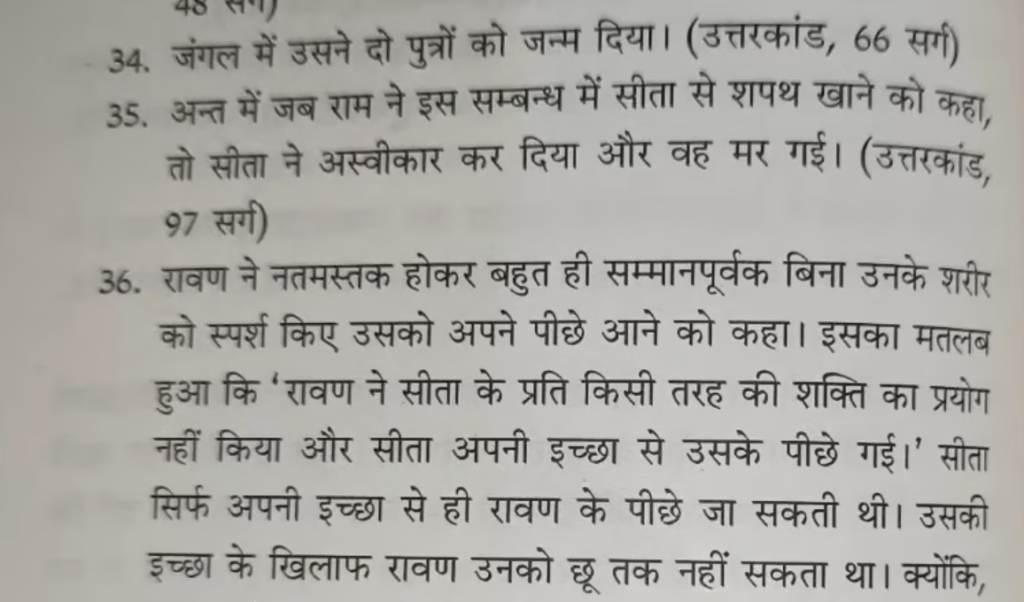
Periyar argues that the timing of this revelation is suspect. If Sita had been with Ravana for an extended period, and this pregnancy was a consequence, her subsequent explanation to Lakshmana, claiming her “wound” (referring to her pregnancy) was four months along, is presented as contradictory. This fuels the suspicion that the pregnancy was indeed a result of her time in Lanka.
The abandonment of Sita by Rama, described as a harsh and inhumane decision, is heavily criticized. The text highlights that the moment Rama learned of Sita’s pregnancy, he ordered Lakshmana to abandon her in the forest the very next day. Periyar questions the swiftness and cruelty of this act, especially considering Sita’s condition.
Reinterpretation of Ravana’s Character
In stark contrast to his portrayal of Sita and Rama, Periyar offers a more favorable interpretation of Ravana. He presents Ravana not as a villain, but as a scholar, a knowledgeable king, and a powerful ruler. Periyar suggests that Ravana’s actions, particularly his abduction of Sita, were not driven by lust but by a desire for revenge against Rama and Lakshmana for the humiliation and disfigurement of his sister, Surpanakha.
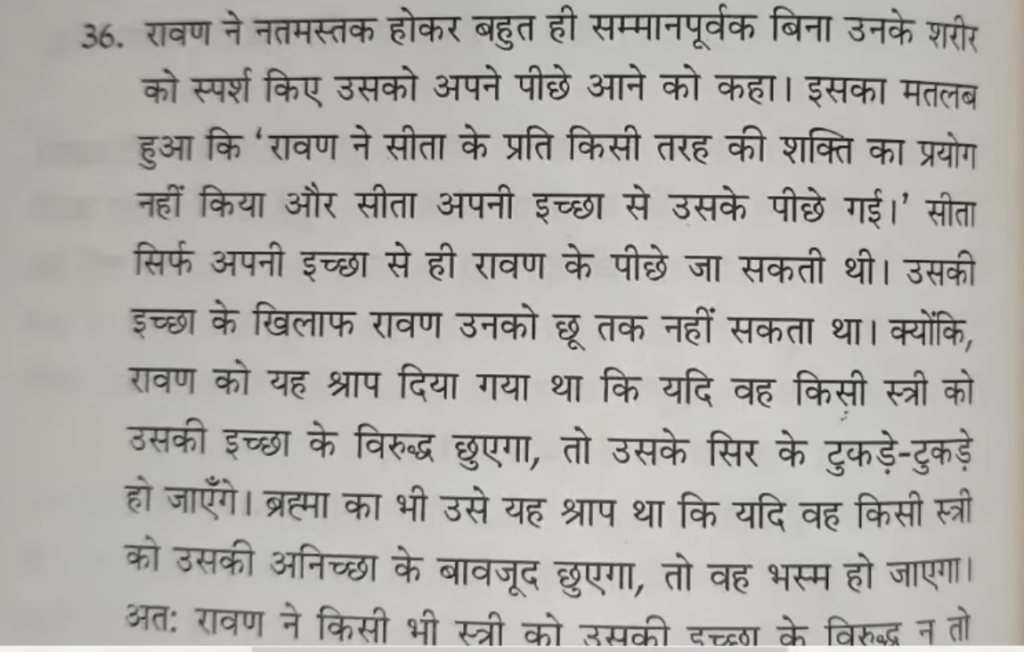
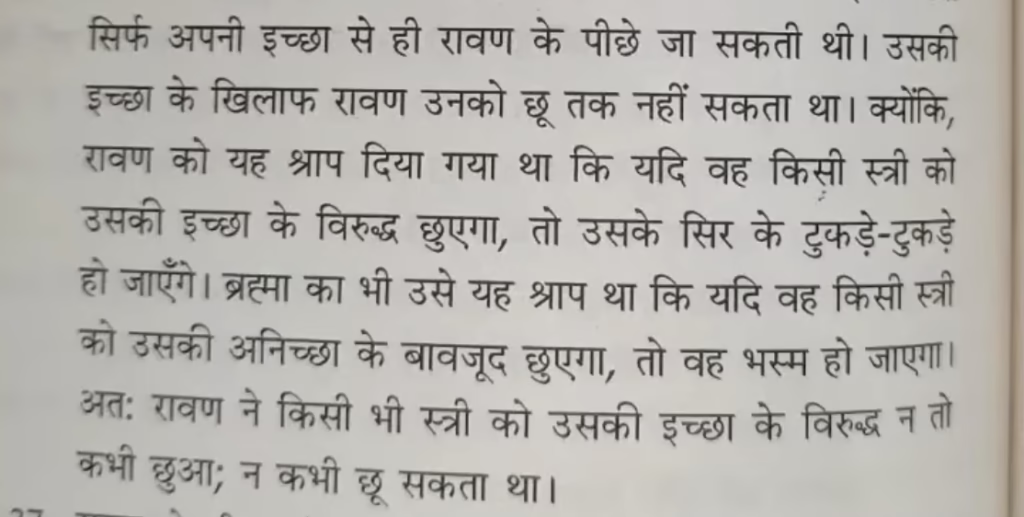
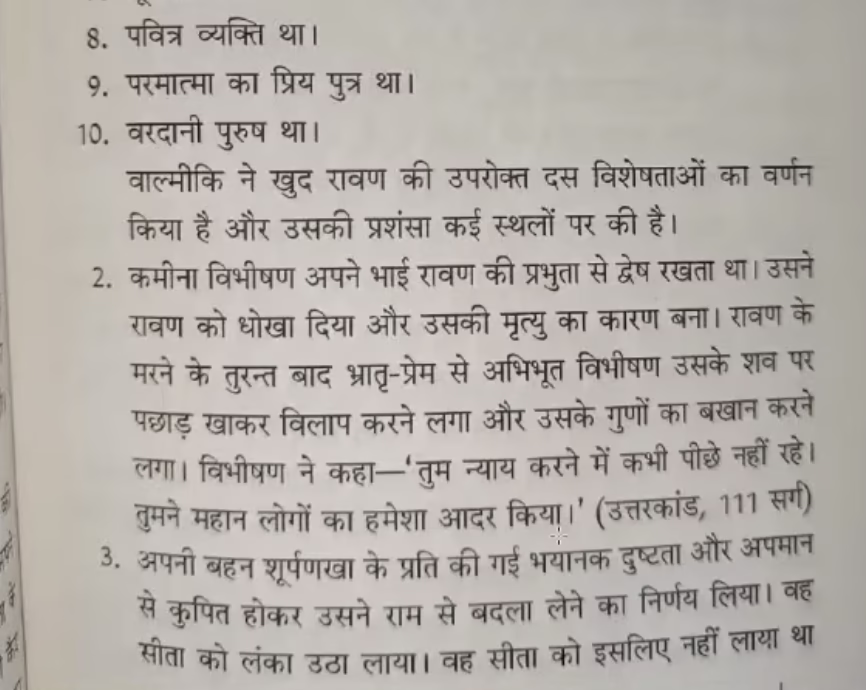
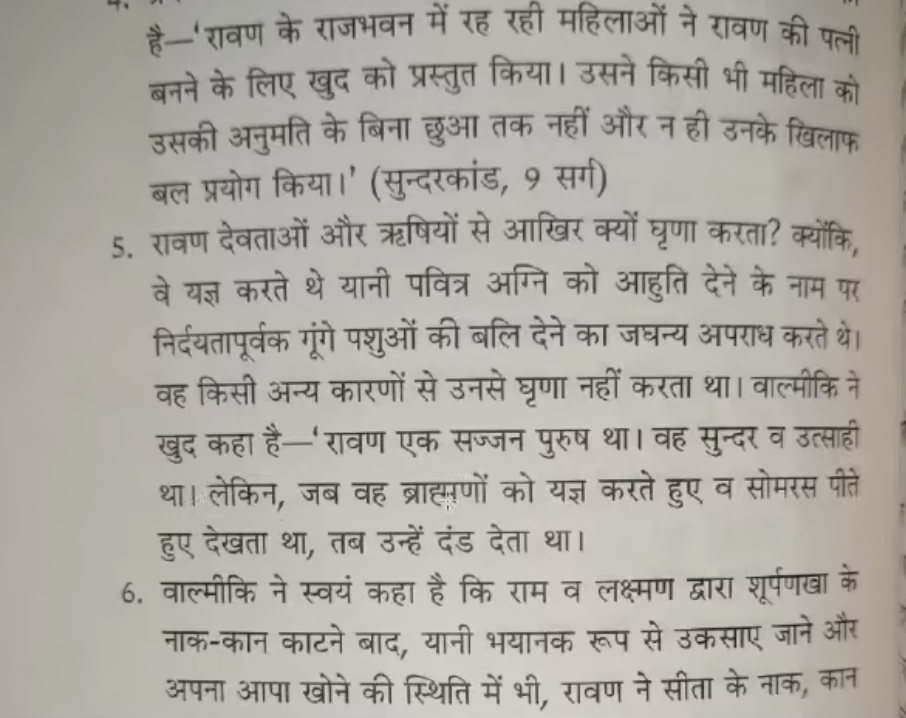
The text emphasizes that Hanuman himself praised Ravana’s virtues. Furthermore, it is stated that women in Ravana’s court voluntarily offered themselves to him, and he never touched any woman against her will. Periyar also highlights Ravana’s disdain for rituals like Yagna (fire sacrifice) and the animal sacrifices performed by Brahmins, suggesting Ravana was more enlightened and just than those who upheld these practices.
The book cites Valmiki’s own accounts, suggesting that even when provoked, Ravana did not resort to the mutilation of Sita’s body, unlike the actions of Rama and Lakshmana towards Surpanakha. This perspective positions Ravana as a more honorable and less barbaric figure compared to the protagonists.
Conclusion: Sacchi Ramayanam as a Socio-Political Text
E.V. Ramasamy’s “Sacchi Ramayanam” transcends religious commentary; it is fundamentally a political document challenging the moral supremacy embedded within Sanskritic epics. By deconstructing Rama’s righteousness and Sita’s expected purity, Periyar aimed to dismantle the ideological foundations that supported existing social hierarchies, particularly patriarchy and Brahminical dominance. The book forces readers to confront whether the revered epic serves as a moral guide or a historical blueprint for oppression.
The consistent legal challenges surrounding the work demonstrate the immense power these narratives hold over the collective consciousness. Ultimately, the perseverance of “Sacchi Ramayanam” signifies a crucial, ongoing struggle for narrative control, where marginalized voices seek evidence-based readings to validate their opposition to entrenched caste norms. Read more: Casteism in India: An Unflinching Contemporary Examination
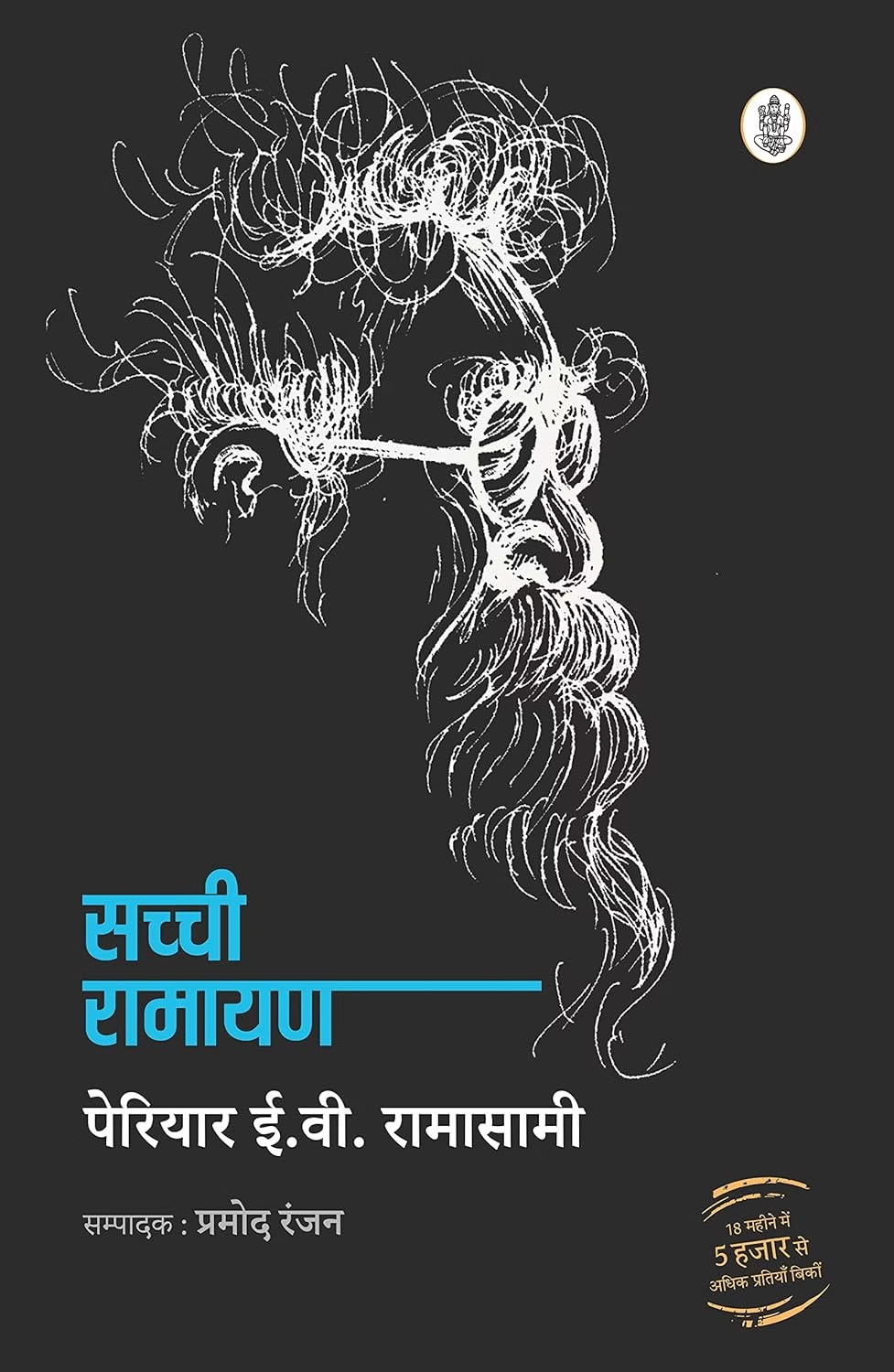
The Sachchi Ramayan is a controversial work by E.V. Ramasamy ‘Periyar’, who viewed the Ramayana not as a religious text, but as a political tool used to justify the dominance of Northern Aryans over Southern Dravidians, and Brahmins over non-Brahmins.
Key Highlights:
Research: Periyar studied various versions of the Ramayana (Valmiki, Tulsidas, Kamban, Buddhist, and Jain) for 40 years before publishing his analysis in 1944.
Legal Battle: The Hindi version, published by activist Lalai Singh Yadav in 1968, was banned by the UP government in 1969. Yadav challenged the ban and won in both the Allahabad High Court and the Supreme Court (1976), marking a landmark victory for freedom of speech.
Current Edition: This book provides a precise translation of Periyar’s work, along with his biography and related essays. It is essential reading for anyone interested in India’s socio-cultural history.
What Can You Do?
- Support Critical Inquiry: Seek out and read historical, sociological, and philosophical critiques of religious texts from diverse perspectives, including those challenging established narratives.
- Amplify Subaltern Voices: Share factual, evidence-based resources from anti-caste intellectuals that offer alternative readings of Indian history and mythology.
- Engage Respectfully: Participate in discussions about religious texts by focusing on socio-political impact rather than mere theological interpretation.
Read or download the book here for free
e0a4b8e0a49ae0a58de0a49ae0a580-e0a4b0e0a4bee0a4aee0a4bee0a4afe0a4a3-by-e0a4aae0a587e0a4b0e0a4bfe0a4afe0a4bee0a4b0-e0a4b2e0a4b2e0a488Do you disagree with this article? If you have strong evidence to back up your claims, we invite you to join our live debates every Sunday, Tuesday, and Thursday on YouTube. Let’s engage in a respectful, evidence-based discussion to uncover the truth. Watch the latest debate on this topic below and share your perspective!