

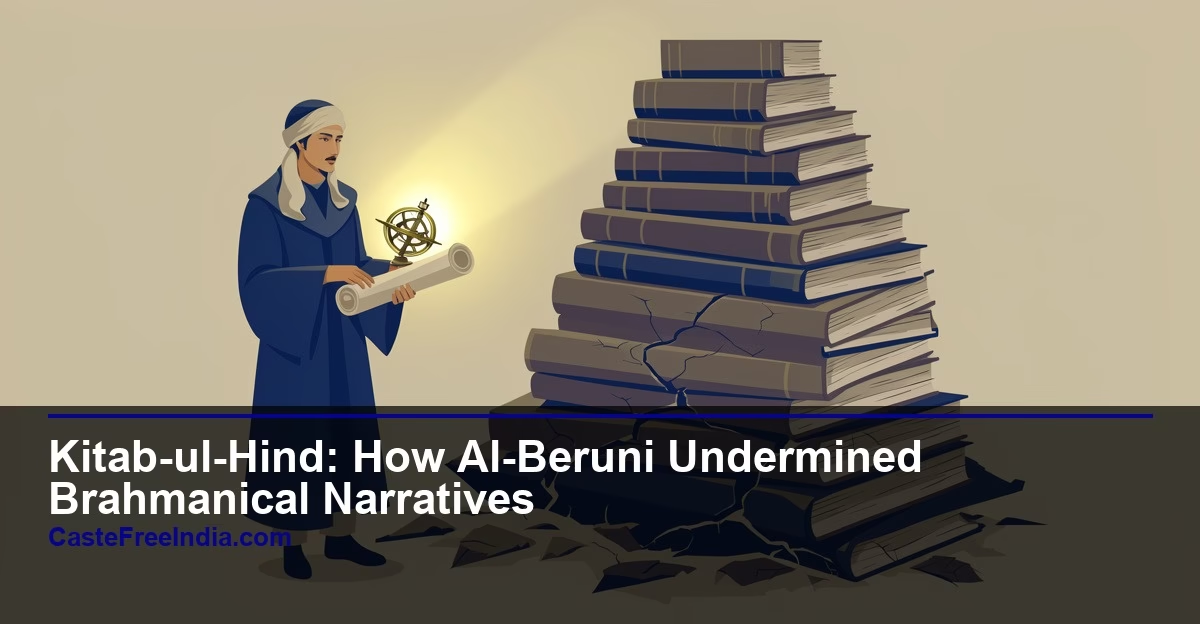
The Unveiling of India’s Past Through Foreign Eyes
What is the history we understand? It’s often a constructed narrative. While archaeological evidence, linguistic analysis, and accounts from contemporary authors and foreign travelers are crucial, their interpretation can be complex. In India, the self-proclaimed custodians of history, the Brahmins, largely failed to document the nation’s genuine past. Instead, they filled this void with fabricated myths, fantastical tales from Puranas and Ramayana, and invented heroes. The true Indian history was systematically ignored, buried under layers of Brahmanical claims.[source]
Archaeological discoveries began to chip away at this deliberate obfuscation. However, a significant turning point arrived with European scholars, particularly the British during their colonial rule. Their vast empire inadvertently fostered an interest in the histories of the lands they governed, leading to the exploration and translation of ancient texts. These efforts revealed a past deliberately suppressed. In 1831, a British official discovered the meticulously kept notes of Al-Beruni, an 11th-century scholar from Khwarazm.
The discovery was monumental. Recognizing its immense historical value, the official enlisted Arab scholars to decipher the complex 11th-century Arabic script. Translations into English and later other languages opened a window into India’s past, a past obscured by Brahmanical narratives. Al-Beruni’s work, titled “Kitab-ul-Hind,” provided a detailed account of India in the 10th and 11th centuries, directly challenging the fabricated histories presented in Brahmanical texts which often lack verifiable evidence and are dismissed by global academia.[source][source][source]
Table of contents:
- Legacy of Al-Beruni and other foreign scholars
- The Genesis of Al-Beruni's 'India'
- Al-Beruni's Observations on Indian Society and Religion
- Challenging Brahmanical Narratives: Buddhism vs. Brahmanism
- Al-Beruni's Account of the Caste System
- Al-Beruni on Historical Inaccuracies and Brahmanical Manipulation
- Social Practices and the Tyranny of Tradition
- The Complexities of Marriage and Polygamy
- Al-Beruni's Legacy and the Fight for Historical Truth
- What Can You Do?
- Frequently Asked Questions
- What is the primary significance of Al-Beruni's Kitab-ul-Hind?
- How did Al-Beruni challenge Brahmanical narratives regarding Indian history?
- What does Al-Beruni's account reveal about the caste system in the 11th century?
- Did Al-Beruni's work influence later historical understanding?
- How does Al-Beruni's perspective differ from that of contemporary Brahmanical texts?
- Disclaimer: Key Terms and Their Context
Before Al-Beruni, foreign travelers’ accounts were limited. Early translations mentioned only Megasthenes and Xuanzang. Al-Beruni’s comprehensive work, however, significantly expanded this knowledge. His “India” is considered an irrefutable source, offering a historical account by a Muslim scholar that shapes our understanding of ancient and medieval India. The academic world largely disregarded Brahmanical claims about Vedic civilization, recognizing them as unsubstantiated. Al-Beruni’s objective account, conversely, gained universal acceptance.[source]
Legacy of Al-Beruni and other foreign scholars
Even other foreign travelers’ accounts, like Megasthenes’ “Indica,” faced scrutiny for including fantastical elements. Al-Beruni’s “India” remained remarkably accurate and authoritative, prompting even Brahmanical scholars to reference it. This work is a crucial testament to the era, presenting not just Al-Beruni’s observations but also reflecting the prevailing thoughts and beliefs of the time, offering an objective counterpoint to Brahmanical dogma.[source]
The legacy of Al-Beruni’s “India” is profound. It offers an unparalleled glimpse into the 10th and 11th centuries, painting a vivid picture of India’s socio-cultural, religious, and political landscape. This blog post delves into the revelations within this seminal work, highlighting its significance in understanding India’s true historical trajectory, particularly concerning the deeply entrenched caste system. How did Al-Beruni’s foreign perspective challenge the narratives of those in power?
The Genesis of Al-Beruni’s ‘India’
A Scholar’s Journey
Abu Rayhan Muhammad ibn Ahmad al-Biruni, known as Al-Beruni, was born in 973 CE in Khwarazm, Central Asia. His thirst for knowledge led him to India, where he spent approximately 12 to 13 years, likely arriving around 1020 CE. During his stay, he immersed himself in Sanskrit and Indian sciences. This was a period when classical Sanskrit was prevalent, coinciding with Buddhism’s decline and Brahmanism’s ascendancy, which increased the emphasis on Sanskrit.[source][source][source]
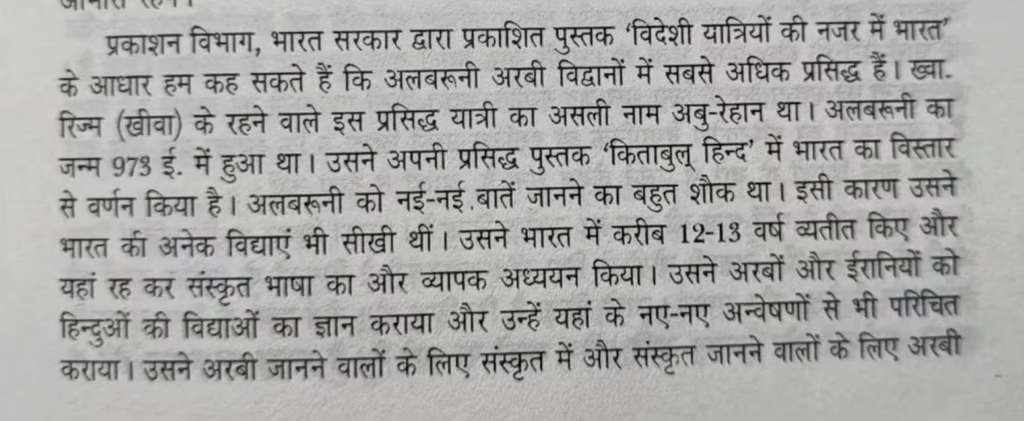
Bridging Worlds: Translation and Knowledge Dissemination
Al-Beruni’s scholarly pursuits involved active learning and translation. He learned Sanskrit, a language then associated with Brahmanical traditions. Despite being Muslim, he delved into its intricacies, a feat denied to Shudras and Vaishyas within the Indian caste system, who were often denied education. Al-Beruni noted this discriminatory practice in his writings, highlighting how knowledge was restricted by social standing.
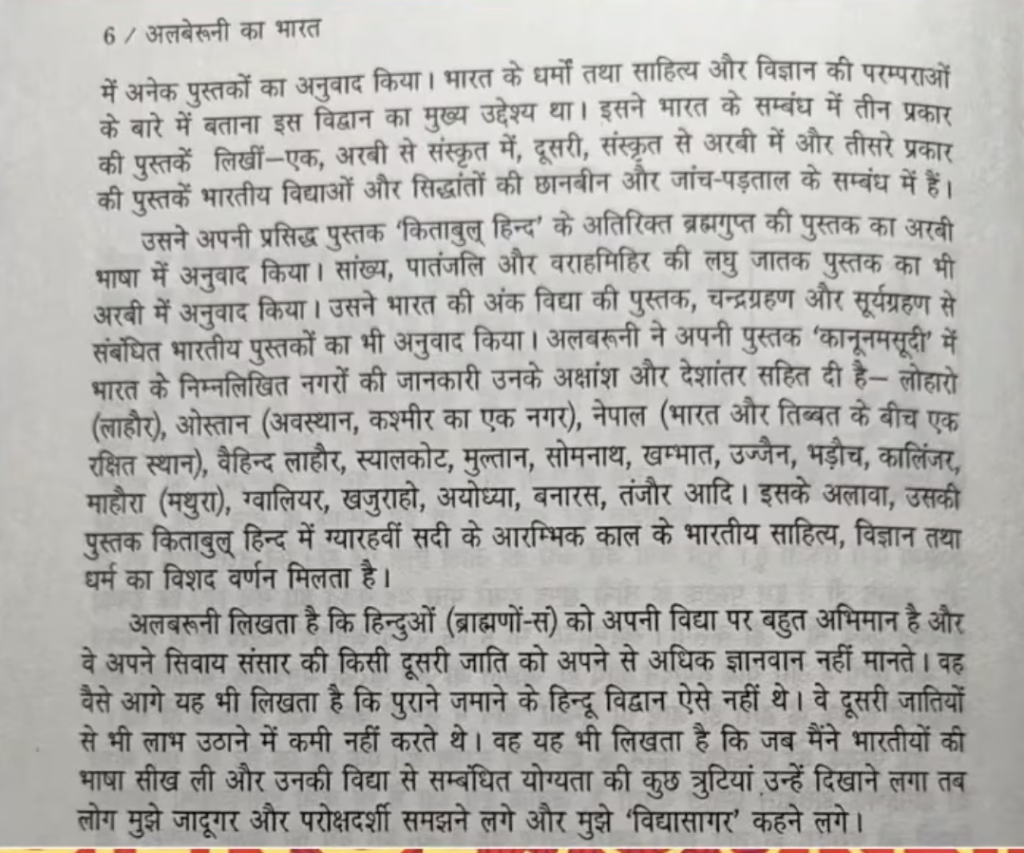
His work extended to translating Indian scientific and philosophical texts into Arabic, sharing Indian knowledge globally. He also translated Persian texts into Sanskrit. Al-Beruni’s primary objective was documenting and disseminating information about Indian religions, literature, and sciences. He authored books translating from Arabic to Sanskrit, Sanskrit to Arabic, and those investigating Indian scholars and their knowledge, effectively bridging cultural divides.[source][source]
Al-Beruni’s Observations on Indian Society and Religion
A Critical Look at Brahmanical Arrogance
Al-Beruni observed a distinct arrogance among the Brahmins of his time. He noted their intellectual pride and belief that no other race possessed superior knowledge. He implied this was a later development, as earlier scholars, whom he often referred to as “Hindus” (likely meaning Buddhists and other non-Brahmanical scholars), were more open and shared knowledge readily. This contrasts with the later insular nature of Brahmanical scholarship he witnessed.[source][source]
The Shift from Buddhism to Brahmanism
Al-Beruni’s writings suggest a significant societal shift. By the 11th century, a narrow-mindedness had crept into Indian society. While earlier travelers like Xuanzang and I-tsing in the 7th century found a more liberal society, Al-Beruni documented Brahmins increasingly restricting knowledge and segregating themselves. This period coincided with Buddhism’s decline and Brahmanical dominance consolidating. India was still religiously liberal due to Buddhism’s lingering influence, but superstition grew, overshadowing rational thought.[source][source]
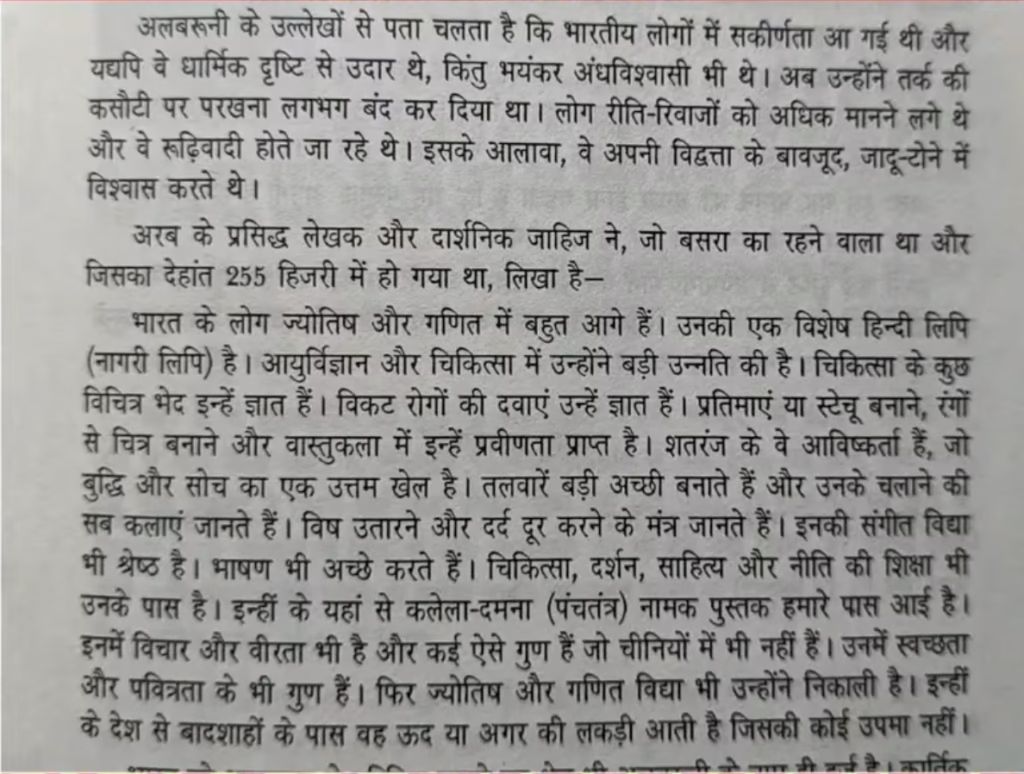
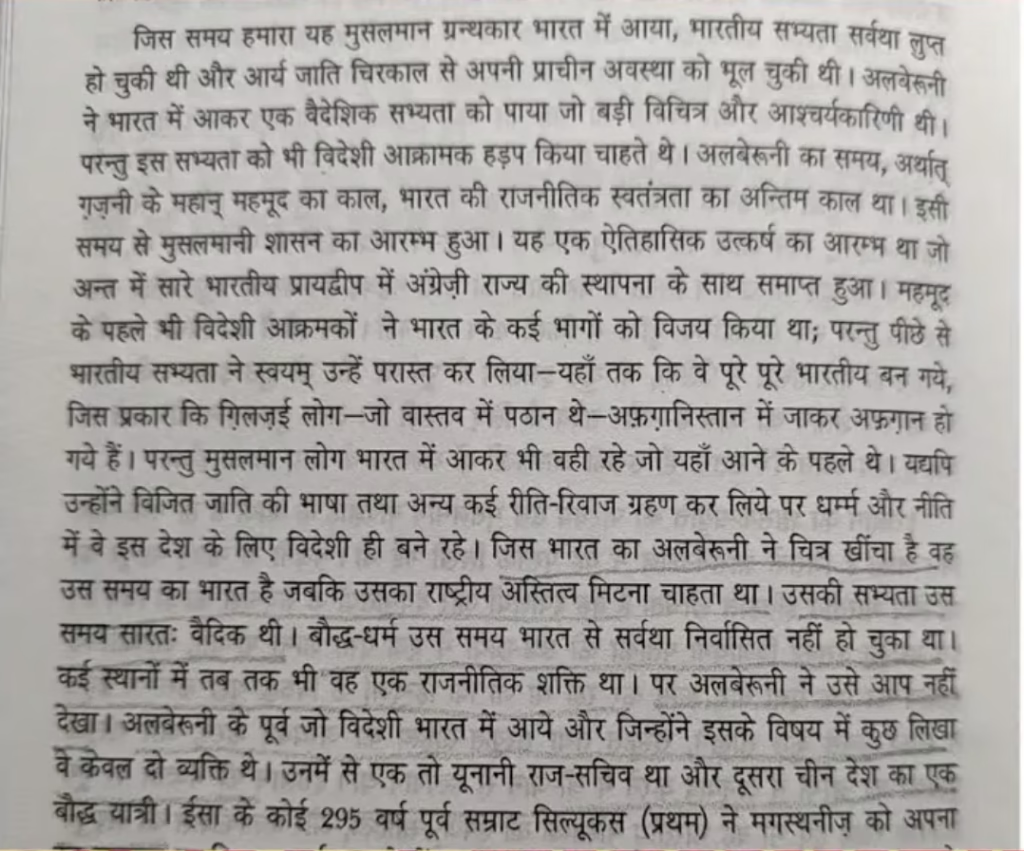
Rational thought and critical inquiry, once hallmarks of Indian traditions, were being overshadowed by blind faith and rituals. Al-Beruni observed a growing reliance on customs over logic. Despite intellectual achievements in astrology and mathematics, a belief in magic and sorcery had also taken root, indicating a societal shift towards the mystical over the empirical.[source][source][source]
Challenging Brahmanical Narratives: Buddhism vs. Brahmanism
The Hijacking of Buddhist Heritage
Al-Beruni’s work provides crucial evidence for the appropriation and Brahmanization of Buddhist traditions. He mentions scholars like Varahamihira and texts like “Laghu Jataka,” integral to the Buddhist intellectual landscape. However, as Brahmanism gained prominence, these Buddhist contributions were systematically re-attributed as Brahmanical, a historical falsification erasing Buddhism’s legacy. This re-writing of history aimed to consolidate Brahmanical authority by claiming ownership of intellectual and spiritual achievements.[source][source][source] Read more: Deep Roots of Conspiracy Theories in Indian History
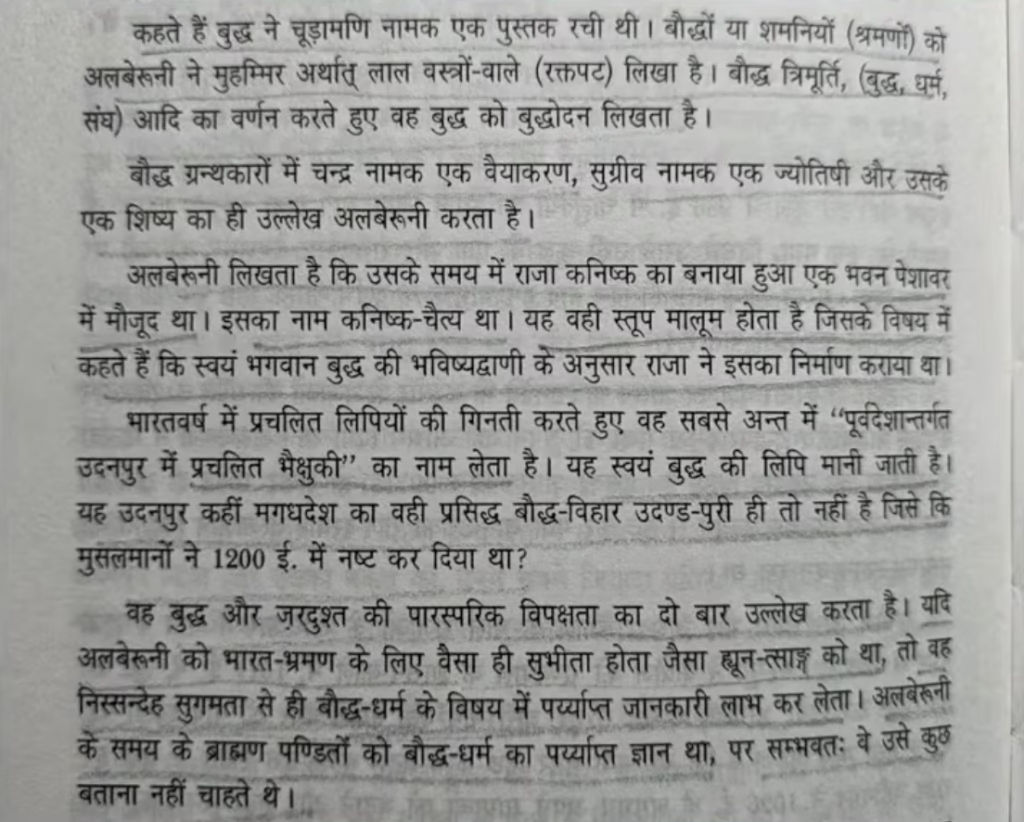
He highlights the destruction of Buddhist institutions, such as the Uddantapuri monastery in 1220 CE, which aided the Brahmanical agenda of erasing Buddhist history. Al-Beruni’s documentation reveals many texts attributed to Brahmins originated in Buddhist traditions. Even names of Buddhist figures were co-opted, distorting original meanings and contexts to fit Brahmanical narratives.[source][source] Read more: Bhavishya Purana: Puranic Chronology & Foreign Influence
The True Origin of Sanskrit
Contrary to Brahmanical claims of Sanskrit originating from foreign lands, Al-Beruni’s observations suggest its roots are firmly in India. He posits Sanskrit evolved from mixed Pali and Prakrit dialects, with significant development driven by the Buddhist tradition. This contradicts the narrative of Sanskrit being purely Brahmanical or an import. His work implies Sanskrit’s emphasis grew as Buddhism declined and Brahmanism rose, indicating shifts in linguistic and religious power.[source]
Al-Beruni’s Account of the Caste System
The Rigidity of the 11th Century Varna System
Al-Beruni’s “India” offers a stark depiction of the 11th-century caste system. He meticulously details the distinct practices and restrictions imposed upon Brahmins, Kshatriyas, Vaishyas, and Shudras. Brahmins held the highest status, followed by Kshatriyas, Vaishyas, and Shudras at the bottom. This hierarchical structure dictated every aspect of life, from occupation to religious participation.
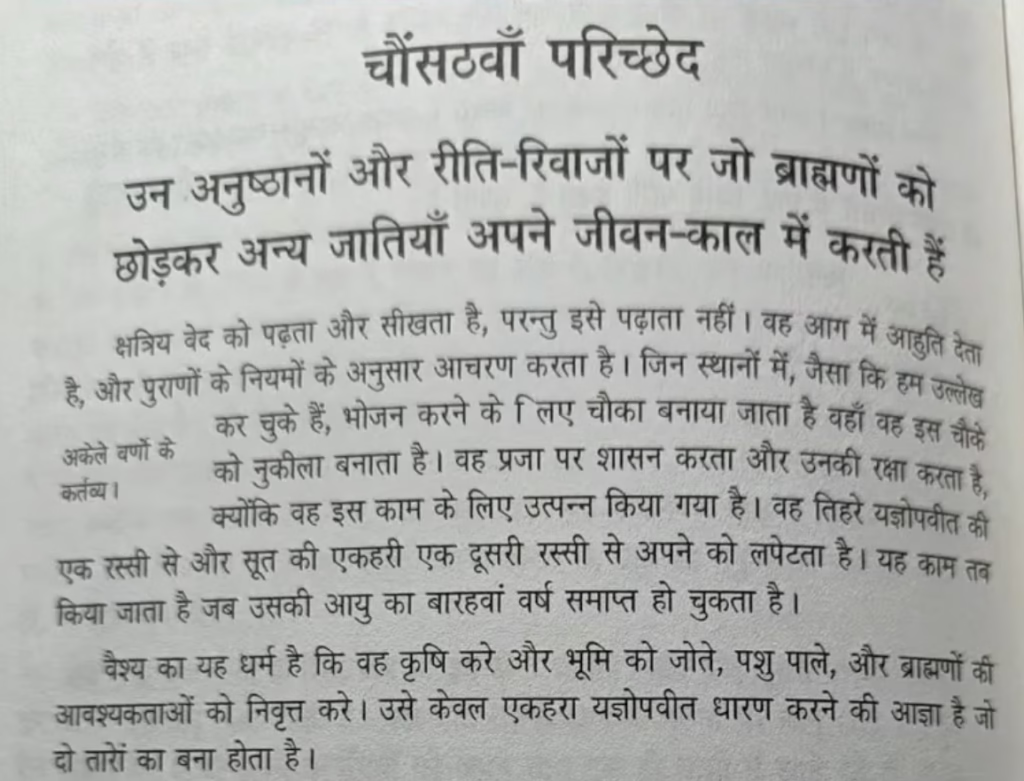
He notes Kshatriyas could study Vedas but not teach them, performing Yajnas (fire sacrifices) and adhering to Puranic rules. Vaishyas focused on agriculture and cattle rearing, serving Brahmins. Shudras, the lowest, were servants obligated to serve Brahmins. Even the poorest Shudra aspired to wear a sacred thread (Yajñopavīta), often making one from bark, symbolizing a desire for recognition within the Varna system.[source][source][source]
The Sacred Thread and Exclusion from Knowledge
The sacred thread (Yajñopavīta) symbolized status. Kshatriya boys underwent the ceremony at 12, wearing a triple-stranded thread; Vaishyas wore a double-stranded thread. Shudras, despite poverty, aspired to wear one, often from bark, signifying their deep desire for recognition. Crucially, Al-Beruni highlights that Shudras and Vaishyas were forbidden from reciting Vedas, praying, or performing Yajnas. This exclusion reinforced their subordinate status and denied them access to religious and cultural knowledge.[source][source]
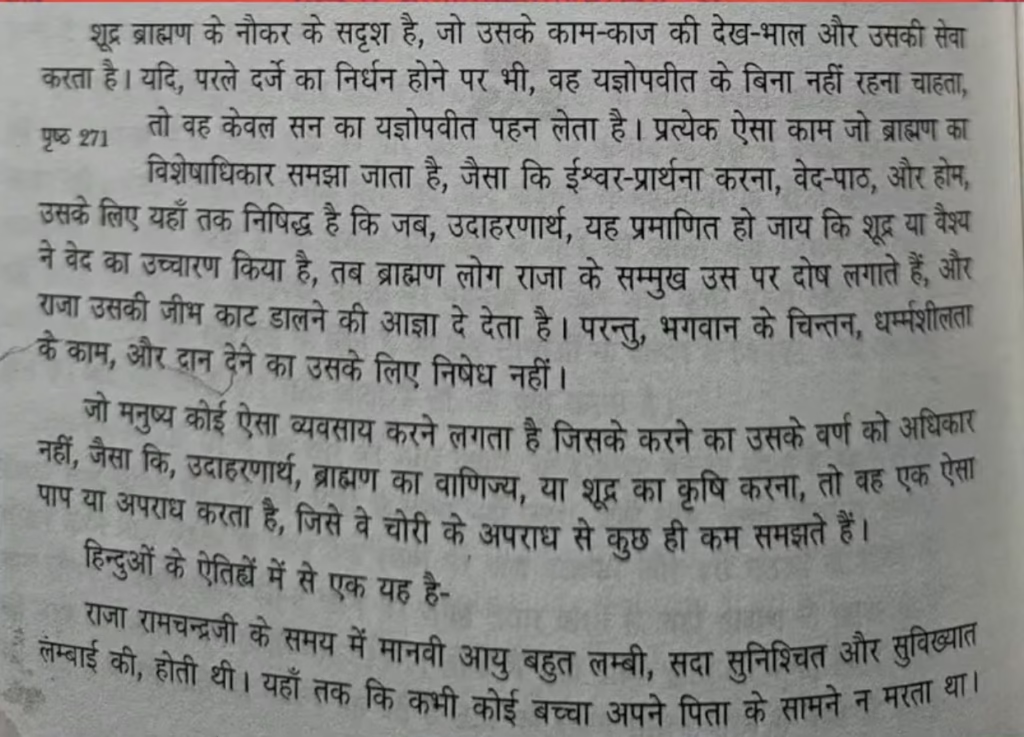
The penalty for violating these rules was severe. A Shudra or Vaishya found reciting Vedic verses could face the king’s order to have their tongue cut out. This brutal enforcement ensured adherence to the caste hierarchy and prevented challenges to Brahmanical authority. Al-Beruni’s account underscores that the claimed Vedic civilization was not universally practiced; the majority was systematically denied access to its core tenets.[source][source][source][source]
Al-Beruni on Historical Inaccuracies and Brahmanical Manipulation
The Myth of Ancient Vedic Civilization
Al-Beruni’s writings directly challenge the notion of a widespread, ancient Vedic civilization. By the 11th century, he points out, the majority (over 90%) was unaware of the Vedas. This contrasts sharply with Brahmanical claims of a Vedic society where everyone lived by Vedic principles. His account reveals a stark reality: Vedas were largely inaccessible and unknown to the populace, their study the exclusive preserve of Brahmins.[source][source][source]
The Brazen Fabrication of the Ramayana and Krishna
Al-Beruni’s work sheds light on the evolving nature of Indian epics and religious figures. He describes a 11th-century story of “Sambuka Vadh” (killing of Sambuka) differing from the Ramayana’s Uttara Kanda, suggesting later interpolations. In Al-Beruni’s account, a Shudra named Sambuka is killed by a king for performing penances, unlawful for his caste. This act, causing a Brahmin’s son’s death, led to the king’s intervention.[source]
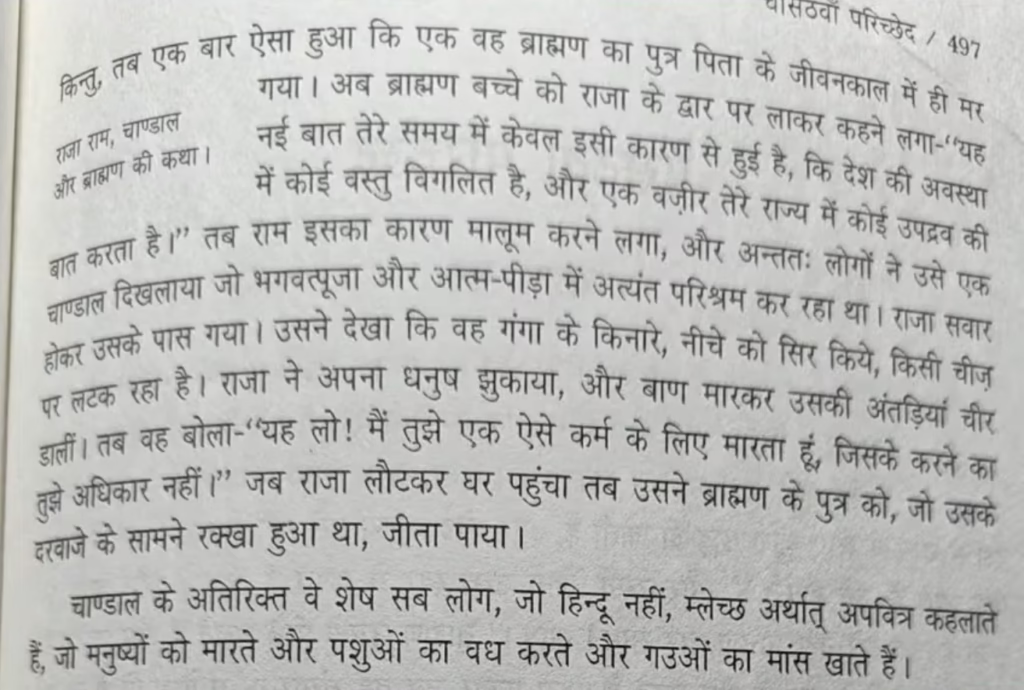
This story was interpreted differently by communities. Al-Beruni highlights that “Bhagavat” was often associated with Buddha, indicating Buddha’s reverence persisted. The Brahmanical narrative later transformed these stories, re-interpreting “Bhagavat” and attributing Sambuka’s killing to Rama, a divine figure in their evolving pantheon. This Brahmanization involved altering narratives and inserting characters to align with Brahmanical ideology.[source][source]
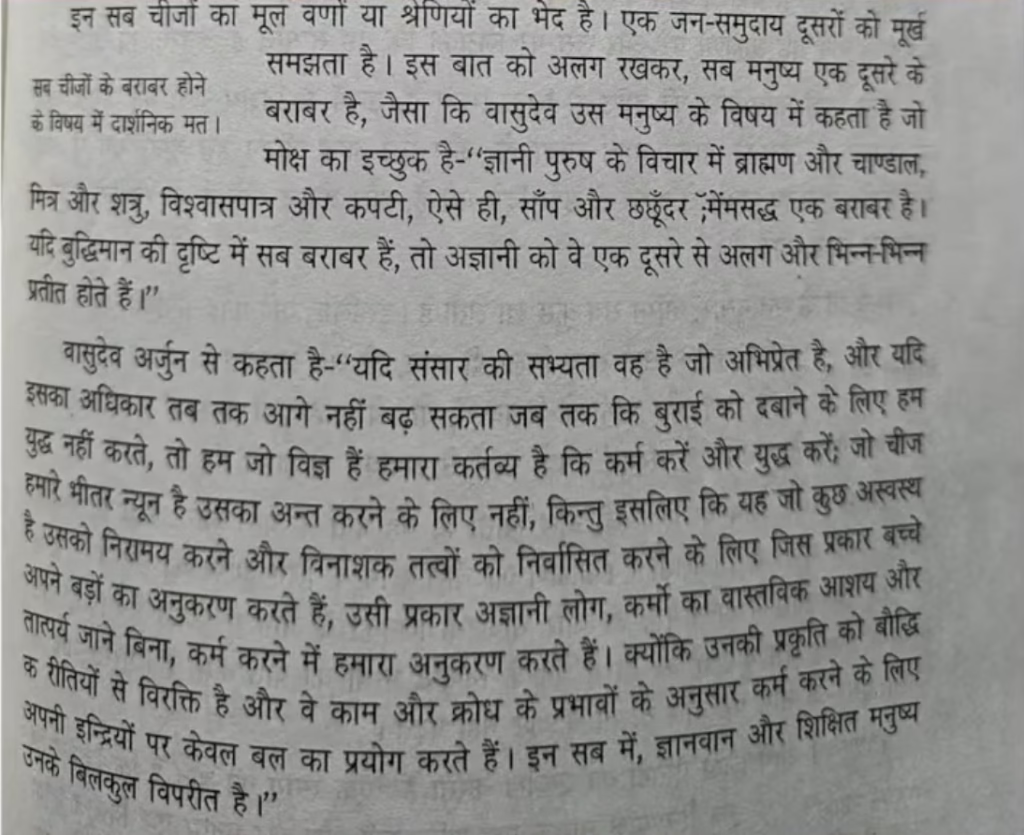
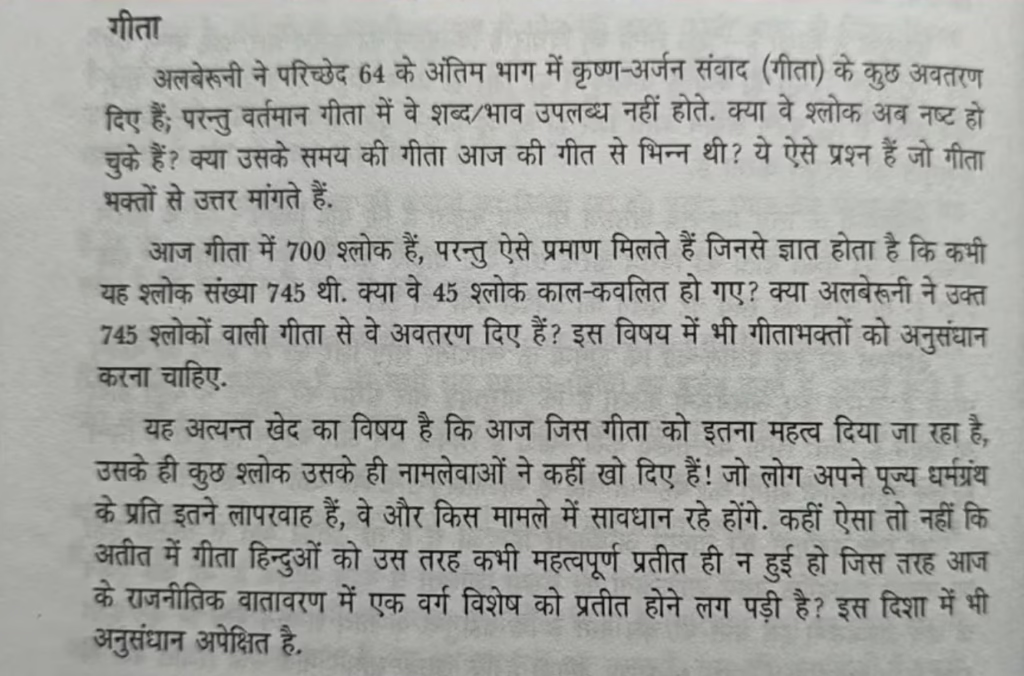
Furthermore, Al-Beruni mentions Vasudeva and Arjuna, indicating circulating stories (possibly from Jataka tales) depicted them as brothers. This contrasts with the later Mahabharata narrative where Krishna (identified with Vasudeva) is a charioteer to Arjuna. The absence of “Krishna” in Al-Beruni’s records, replaced by “Vasudeva,” strongly suggests the epic character of Krishna and the Mahabharata were later creations or significantly altered during Brahmanization. Scholars note Krishna’s absence in early Mahabharata versions, supporting the idea of later insertions.[source][source]
Social Practices and the Tyranny of Tradition
Child Marriage and Parental Control
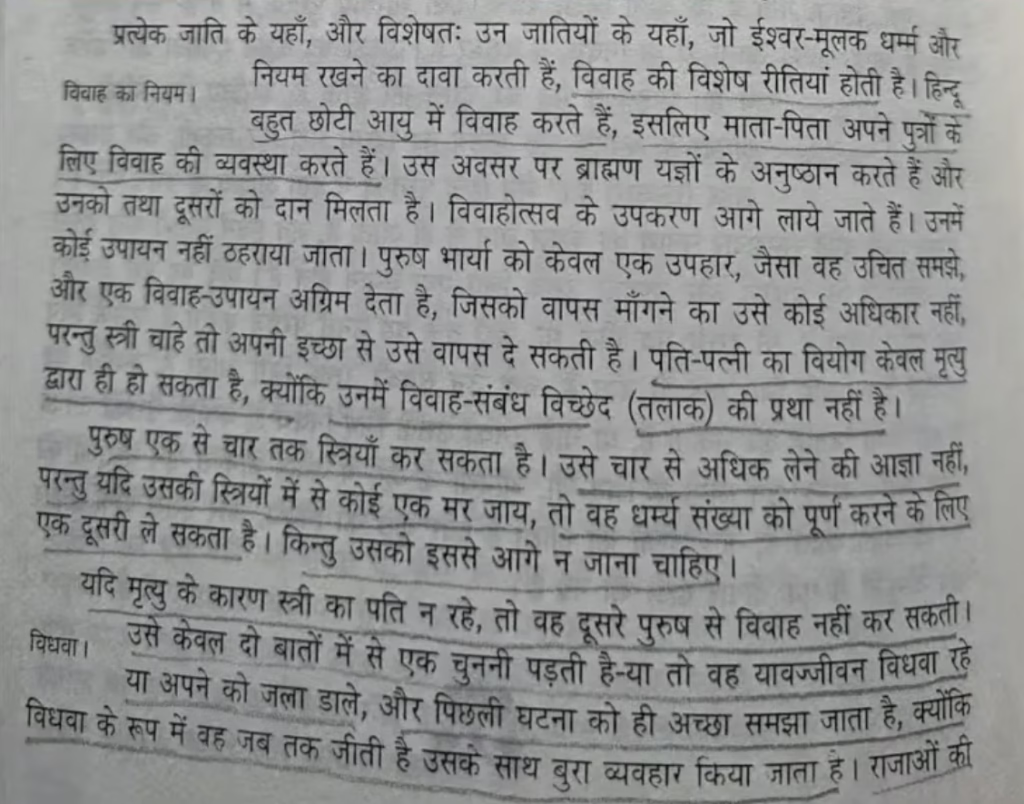
Al-Beruni’s observations in Chapter 69 of “Al-Beruni’s India” reveal entrenched social practices, including child marriage and rigid parental control. He notes “Hindus” (followers of Brahmanical traditions) married young, with parents arranging unions. This ensured children, too young for independent decisions, were bound to their parents’ choices. This legacy persists today, with parents exerting pressure on children regarding marriage, influenced by ingrained beliefs about caste and tradition.[source][source]
The Absence of Divorce and its Consequences
A significant restriction highlighted by Al-Beruni is the religious prohibition of divorce. He states separation was only possible through death. This absence perpetuated unhappy marriages, especially for women. Lack of recourse led to suffering, with women facing dire consequences if their husbands died, including pressure to commit Sati (self-immolation).[source][source][source]
Al-Beruni’s account contradicts revisionist claims that Sati arose due to Muslim invasions. His writings, dating to 1031 CE, predate significant Muslim rule. He explicitly states widows had two options: live as widows or immolate themselves, the latter often considered more honorable, yet a brutal imposition. He notes widows were treated poorly, making immolation a tragically preferred or forced choice, particularly among royal families, where queens were often compelled to commit Sati without consent to prevent scandal.[source][source][source][source][source]
The Complexities of Marriage and Polygamy
Polygamy and the Influence of Islamic Practices
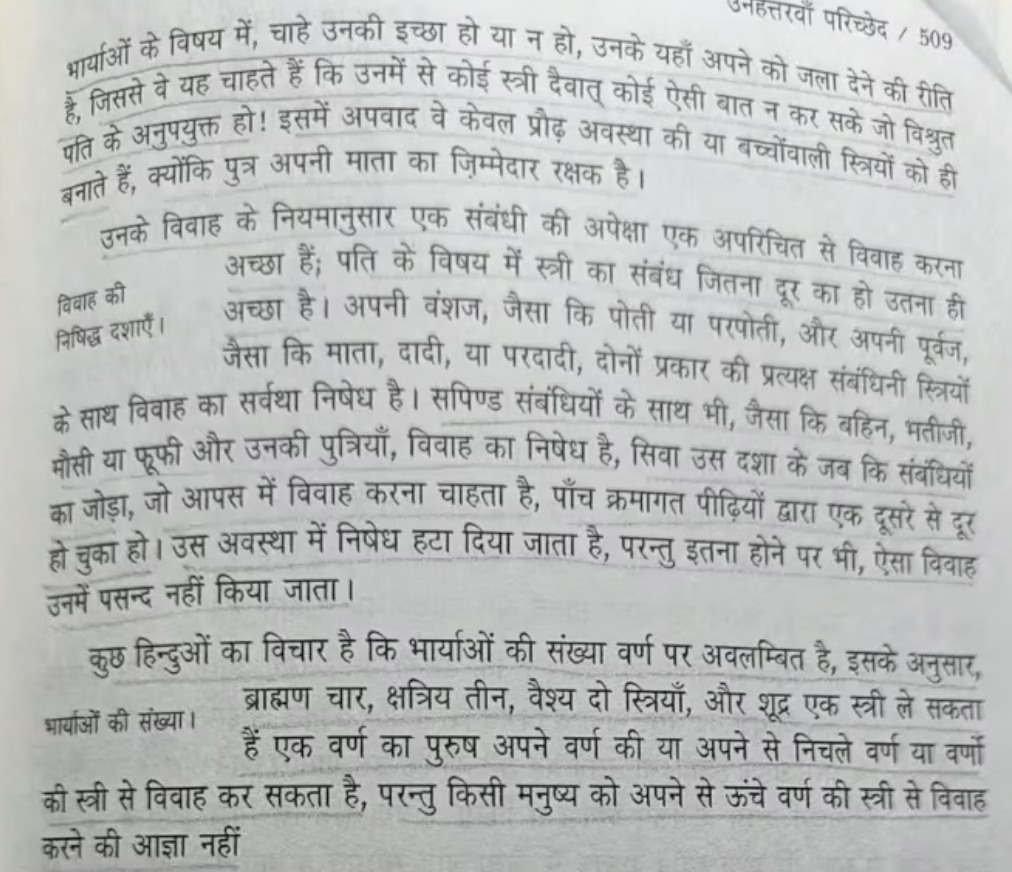
Al-Beruni observed men marrying up to four wives, a practice influenced by Islamic traditions. Brahmins adopted this, with variations by caste: Brahmins up to four, Kshatriyas three, Vaishyas two, and Shudras only one. This suggests syncretic adoption, where Brahmanism incorporated elements from other cultures, shaping social norms around marriage.[source]
Restrictions on Inter-Varna Marriage and Consanguinity
While polygamy was permitted, strict rules governed inter-Varna marriage. A man could marry a woman from his own or a lower Varna, but not a higher one. Inter-Varna marriages were discouraged. Al-Beruni also noted prohibitions against marrying close relatives, like first cousins, unless a significant generational distance (five generations) passed. However, even then, these marriages were often socially frowned upon. This contrasts with Islam and some regional Indian traditions where cousin marriages are common. Strict marriage rules and the absence of divorce maintained caste endogamy and social stratification.[source][source][source]
Al-Beruni’s Legacy and the Fight for Historical Truth
The Editorial Contributions of Dr. Surendra Kumar Sharma
Modern accessibility to Al-Beruni’s work owes much to scholars like Dr. Surendra Kumar Sharma. When Santram B.A.’s Hindi translation of “Al-Beruni’s India” was suppressed, Dr. Sharma ensured its re-publication in three volumes. His editorial work cross-referenced Santram B.A.’s translation with original Arabic manuscripts and scholarly annotations, ensuring textual accuracy and authenticity. This effort preserved a vital historical record.[source]
The preface by Buddhist scholar Acharya Shanti Swarup further validates “Al-Beruni’s India.” Shanti Swarup highlights Al-Beruni’s birth in 973 CE and his extensive stay, emphasizing his detailed descriptions in “Kitab-ul-Hind.” The preface underscores Al-Beruni’s objective approach, sharply contrasting with fabricated Brahmanical historical accounts.[source][source]
The Ongoing Battle for Historical Consciousness
Al-Beruni’s “India” remains a cornerstone for understanding pre-medieval Indian history. It provides irrefutable evidence challenging the Brahmanical narrative of a continuous, divinely ordained social order. His meticulous observations on the caste system, religious practices, and social customs offer a counter-narrative to idealized versions in Brahmanical texts, proving invaluable for historical accuracy.[source][source][source]
The suppression and manipulation of historical records, seen in efforts to erase Buddhist contributions and alter epic narratives, underscore the importance of critically examining sources. Al-Beruni’s work, despite attempts to undermine it, stands as a testament to objective scholarship’s power in uncovering historical truths. The ongoing struggle to reclaim and disseminate this unadulterated history is crucial for dismantling oppressive social structures and building a more equitable future.
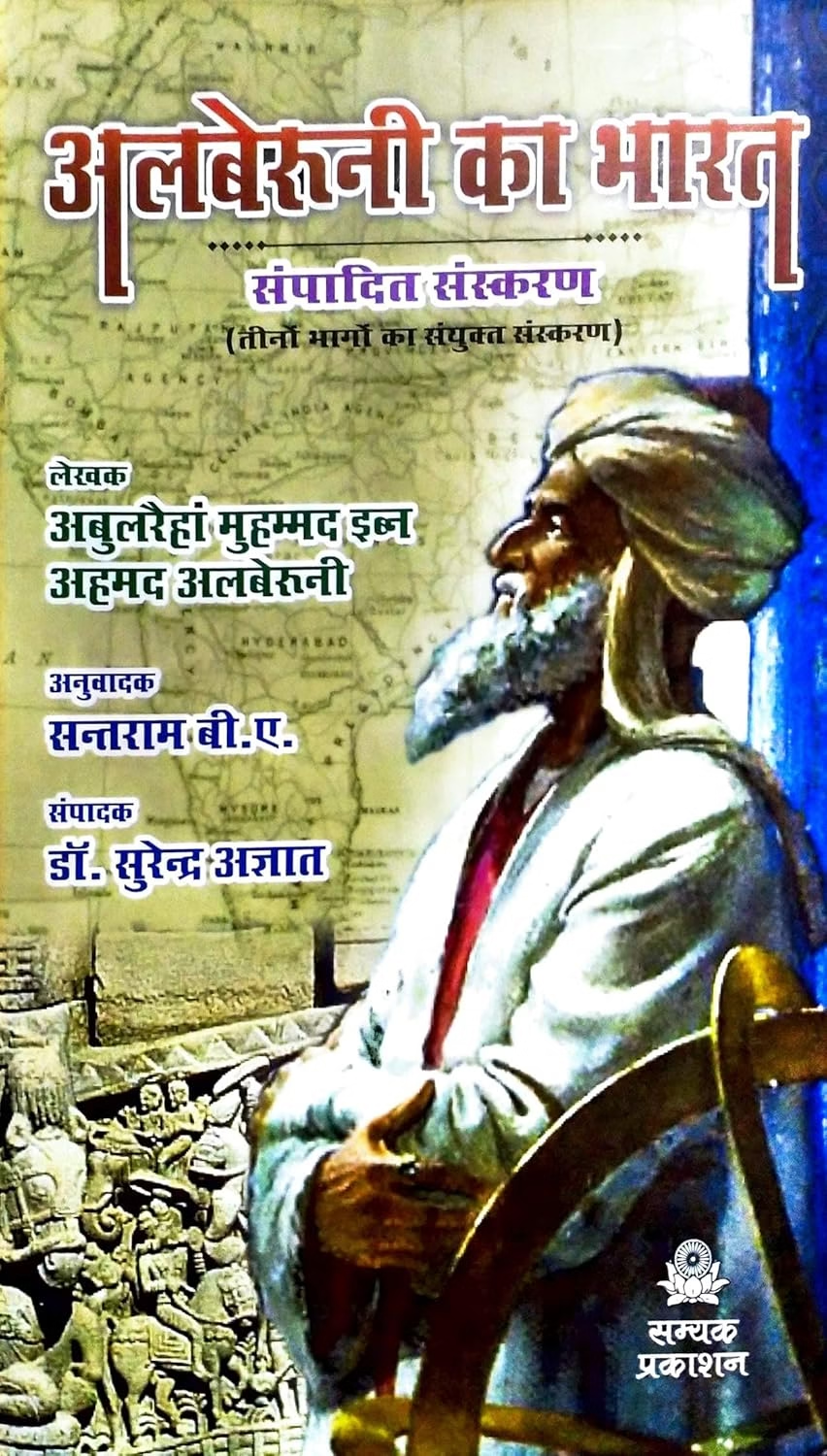
Albaruni Ka Bharat (अलबेरुनी का भारत) is a Hindi-language book that explores the scholarly work and observations of Al-Biruni, the renowned 11th-century Persian scholar who documented his extensive study of India.
Al-Biruni spent considerable time in India and wrote detailed accounts about Indian society, culture, religion, philosophy, science, and customs. This book likely presents his historical perspectives on ancient Indian civilisation, making his scholarly observations accessible to Hindi readers.
The book is published by SamyakPrakashan and offers insights into how a medieval Islamic scholar viewed and understood Indian culture during a significant period in history.
What Can You Do?
- Educate Yourself: Read Al-Beruni’s “India” and critical historical accounts challenging dominant narratives. Seek works by scholars like Dr. B.R. Ambedkar, Periyar E.V. Ramasamy, and historians focusing on subaltern and non-Brahmanical traditions.
- Share Knowledge: Disseminate what you learn. Share articles, discussions, and verified historical facts. Counter misinformation and challenge historical distortions.
- Support Research: Advocate for and support academic research uncovering and preserving unadulterated historical records, especially those of marginalized communities and suppressed histories.
- Demand Historical Accuracy: In educational institutions and public discourse, advocate for diverse historical perspectives, including those challenging traditional Brahmanical interpretations.
Frequently Asked Questions
What is the primary significance of Al-Beruni’s Kitab-ul-Hind?
Al-Beruni’s “Kitab-ul-Hind” is significant because it provides an objective, external account of 11th-century Indian society, religion, science, and customs. It critically challenges and often contradicts the prevailing Brahmanical narratives of the time, offering invaluable counter-evidence for historians.
How did Al-Beruni challenge Brahmanical narratives regarding Indian history?
Al-Beruni challenged Brahmanical narratives by meticulously documenting practices and beliefs that contradicted their claims. For instance, he noted the widespread ignorance of the Vedas among the populace, the appropriation of Buddhist heritage by Brahmins, and the strict, often brutal, enforcement of the caste system, directly refuting idealized accounts of Vedic civilization.
What does Al-Beruni’s account reveal about the caste system in the 11th century?
Al-Beruni’s account reveals a rigid 11th-century Varna system with strict social hierarchies, occupational duties, and severe restrictions. He details the limitations placed on Shudras and Vaishyas, their exclusion from religious texts like the Vedas, and the brutal punishments for transgressions, underscoring the system’s oppressive nature.
Did Al-Beruni’s work influence later historical understanding?
Yes, Al-Beruni’s work significantly influenced later historical understanding by providing a critical, external perspective. His “India” became a key source for challenging Brahmanical historical claims and for understanding the social, religious, and political realities of medieval India, prompting scholars to re-examine existing narratives.
How does Al-Beruni’s perspective differ from that of contemporary Brahmanical texts?
Al-Beruni’s perspective is primarily objective and observational, focusing on verifiable details of daily life and social structures. In contrast, Brahmanical texts often served to legitimize priestly authority and the caste hierarchy, sometimes presenting idealized or religiously motivated accounts. Al-Beruni’s work exposed the discrepancies between these Brahmanical claims and the lived realities he documented.
Disclaimer: Key Terms and Their Context
Al-Beruni: An 11th-century Persian scholar and writer who extensively documented his observations of India in his book “Kitab-ul-Hind.” His work is considered a primary source for understanding Indian society, religion, and science during that period.
Brahmanism: The religious and social system emphasizing the authority and practices of Brahmins (priests and scholars), often associated with the caste system and Vedic traditions. Al-Beruni’s work suggests a complex, evolving religious landscape. Read more: Origins of Shivalinga Worship: Historical & Scriptural Views
Brahmanization: The process by which Buddhist and other non-Brahmanical traditions, texts, and figures were co-opted and attributed to Brahmanical origins to solidify Brahmanical dominance, often involving historical falsification.
Yajñopavīta: The sacred thread worn by Brahmins, Kshatriyas, and Vaishyas as a symbol of their initiation and eligibility for religious duties. Its material and strands varied by Varna.
Kitab-ul-Hind: The original Arabic title of Al-Beruni’s seminal work on India, later translated into Hindi as “Al-Beruni ka Bharat.”
Sambuka Vadh: The story of the killing of Sambuka, a Shudra punished for religious austerities. Al-Beruni’s 11th-century account differs from later Ramayana versions, highlighting caste-based restrictions.
Vasudeva: A deity often identified with Krishna in later traditions. Al-Beruni primarily uses the name Vasudeva, suggesting the character of Krishna and the Mahabharata evolved significantly over time.
Sati: The practice of widow immolation. Al-Beruni’s account, predating significant Muslim rule, indicates this Brahmanical practice existed then, often as a brutal imposition on widows.
Do you disagree with this article? If you have strong evidence to back up your claims, we invite you to join our live debates every Sunday, Tuesday, and Thursday on YouTube. Let’s engage in a respectful, evidence-based discussion to uncover the truth. Watch the latest debate on this topic below and share your perspective!

Skeptical Indian is an independent researcher documenting
caste discrimination through primary sources, Hindu
scriptures, court records, and government data.
CasteFreeIndia.com has published 100+ evidence-based
analyses since 2024.

[…] we understand is frequently a constructed narrative; as highlighted in discussions regarding Al-Biruni’s historical accounts, the self-proclaimed custodians of history, the Brahmins, have heavily influenced how India’s […]