India, a land often lauded as the ‘abode of festivals,’ has a rich tapestry of traditions and celebrations that have endured through millennia. Despite invasions and the establishment of foreign powers, Indian culture has, in many ways, persisted, albeit in forms that have sometimes been altered and reinterpreted. In recent times, a concerning trend has emerged where certain historical narratives surrounding festivals have been manipulated—a process often referred to as Brahminization—to serve specific agendas. This article will points to one such festival – Gudi Padwa.
- Brahminization
- The Myth of the First Day of the Hindu Year and Gudi Padwa Controversial Origins
- Unpacking the Visual Symbolism of Gudi Padwa
- The Shivaji Maharaj Connection and its Flaws
- The Sambhaji Maharaj Connection: A Disturbing Revelation
- The Testimony of Al-Biruni and Historical Records on Gudi Padwa
- The Calendar Conspiracy: Vikram Samvat vs. Shak Samvat
- Theories Connecting Gudi Padwa to Deaths of Kings
- What Can You Do?
Brahminization
What is Brahminization? It is the historical process of imposing or assimilating socio-religious practices and hierarchical structures associated with the Brahmin varna onto existing folk traditions, often erasing or obscuring marginalized histories. Understanding the true origins and meanings of these celebrations is crucial for discerning historical fact from fabricated lore. This is particularly relevant when examining festivals like Gudi Padwa, a celebration that, upon closer inspection, reveals a complex and controversial history rooted in power struggles and historical revisionism.
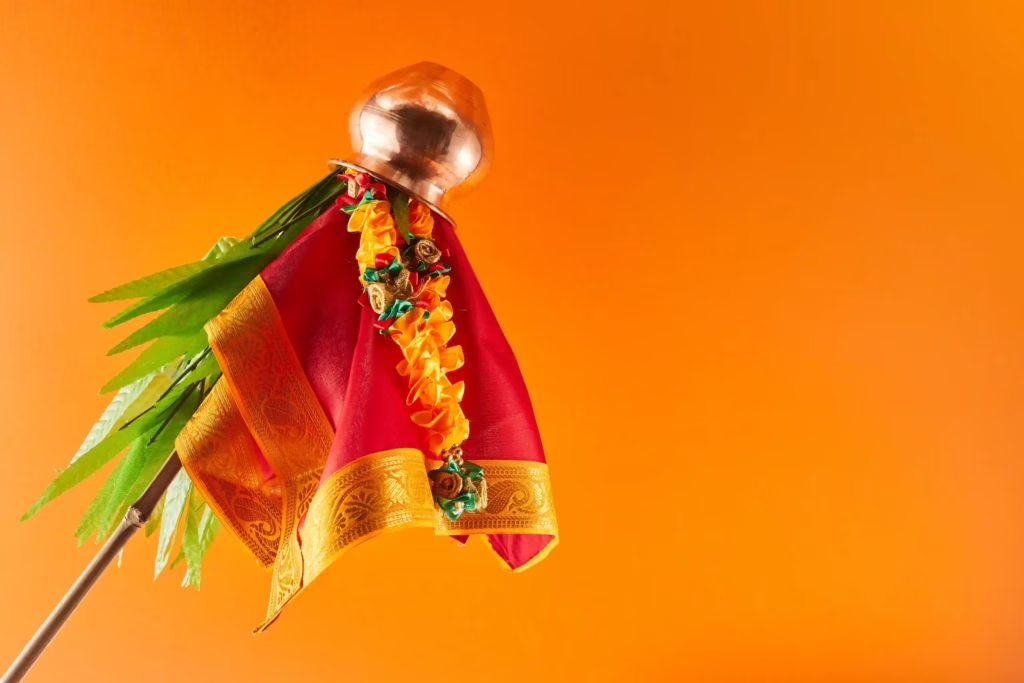
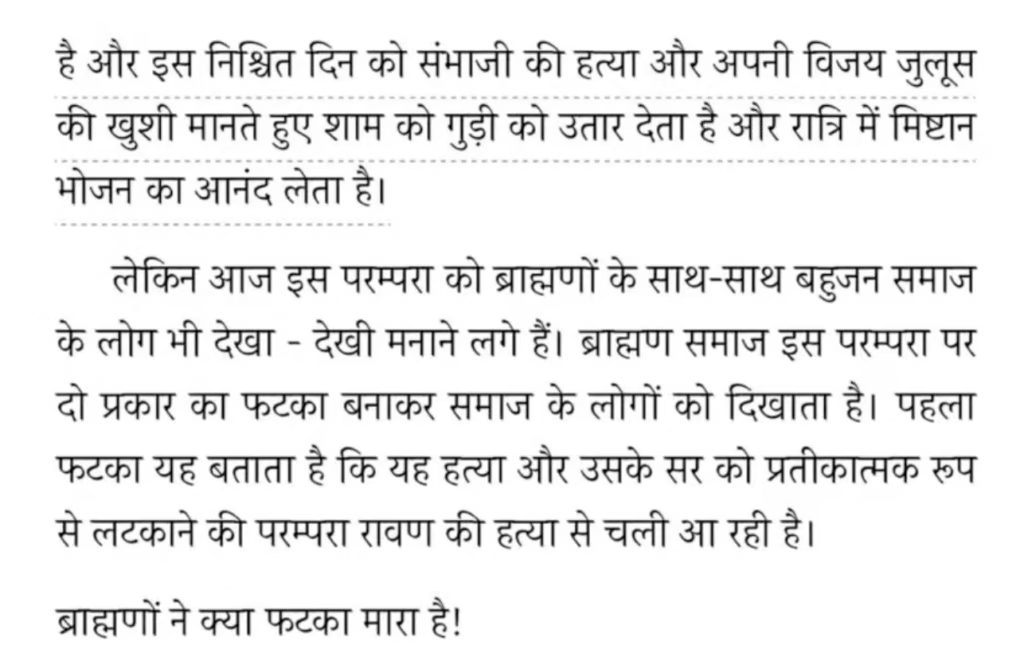
The visual symbolism associated with Gudi Padwa is striking. Typically, it involves a pole adorned with a copper or silver pot, resembling a human head, draped with colourful fabrics, and often placed in front of homes. This effigy bears a resemblance to scarecrows used by farmers to deter animals, a symbol of human presence. However, the deeper meanings and origins attributed to this practice conceal a more sinister historical event. The practice, predominantly observed in Maharashtra and the Konkan region, has in recent years spread to other parts of India, prompting a closer look at its true significance.
The common narrative presented to the public regarding Gudi Padwa is multifaceted, often attempting to legitimize it as a significant religious and cultural observance. One prevalent claim is that Gudi Padwa marks the first day of the Hindu New Year, according to the lunisolar calendar. Another significant assertion is that it commemorates the creation of the universe by Lord Brahma. Furthermore, it is often linked to the return of Lord Rama to Ayodhya after his victory over Ravana. A more recent, localized narrative suggests that it celebrates Shivaji Maharaj’s victories over the Mughals.
The Myth of the First Day of the Hindu Year and Gudi Padwa Controversial Origins
Challenging the Universal Celebration Claim
A critical examination of the claim that Gudi Padwa is universally celebrated as the first day of the Hindu New Year immediately raises questions. If this were indeed the primary New Year for the entirety of India or even for Hindus across the subcontinent, one would expect its observance to be widespread. However, Gudi Padwa is largely confined to Maharashtra. Many people in other regions of India, and even within Maharashtra itself, may not be aware of its specific traditions. While other regions might celebrate their New Year on similar dates, they do not typically involve the symbolic effigy of a severed head on a pole. This regional specificity suggests a localized origin rather than a pan-Indian religious mandate.
The Brahma Creation Myth
One of the most frequently cited reasons for celebrating Gudi Padwa is the belief that Lord Brahma created the cosmos on this day, marking it as the first day of creation. This narrative, however, raises a logical quandary: if Brahma created the universe and established the calendar, how did the knowledge of this specific first day survive and become precisely calculable? The ability to pinpoint such an ancient event with such accuracy, especially when many individuals struggle to ascertain their own ancestors’ birth dates, casts doubt on the historicity of this claim. It suggests a narrative constructed to imbue the festival with divine significance, rather than one based on verifiable historical or astronomical evidence.
Lord Rama’s Return to Ayodhya
Another widely propagated story connects Gudi Padwa with the return of Lord Rama to Ayodhya after defeating Ravana. This narrative, however, presents several inconsistencies. If Rama defeated Ravana and returned to Ayodhya on this day, it creates a temporal conflict with the established tradition of celebrating Dussehra, which commemorates the victory over Ravana and the subsequent burning of Ravana’s effigy, typically observed in September or October. The supposed six-month gap between defeating Ravana and returning to Ayodhya, even considering the mythical ‘Pushpak Vimana,’ strains credulity. The juxtaposition of these events suggests a deliberate conflation of different narratives to reinforce the festival’s purported antiquity and significance.
The Harvest Festival Argument
A further justification for Gudi Padwa links it to the harvesting of Rabi crops and the onset of spring. While the celebration of harvests and seasons is common across cultures, this argument also faces scrutiny. If Gudi Padwa celebrates the harvest, then what is the significance of festivals like Holi, which also occurs around the same time and is similarly linked to the arrival of new crops? The proximity and overlapping narratives suggest a potential for historical appropriation, where multiple agricultural and seasonal celebrations might have been consolidated or reinterpreted under the umbrella of a single festival.
The argument that a new harvest is ready every 15 days, as implied by the timing of festivals like Holi and Gudi Padwa, further undermines the plausibility of a single, distinct harvest celebration.
Unpacking the Visual Symbolism of Gudi Padwa
The Effigy and its Historical Context
The visual representation of Gudi Padwa, particularly the pole with an effigy resembling a severed head, is unsettling and starkly contrasts with the purported celebratory nature of the festival. This imagery evokes comparisons to depictions in Hollywood films where severed heads are paraded as trophies of war. When questioned, those who celebrate the festival often offer vague explanations or rehash popular myths without a clear understanding of the symbolism’s origins. This disconnect between the visual representation and the explained meaning suggests a deliberate obfuscation of the festival’s true historical roots.
The ‘Gudi’ and ‘Padwa’ Terminology
The Marathi terms ‘Gudi’ (meaning fort or palace) and ‘Padwa’ (meaning falling or to fall) are often interpreted in the context of Gudi Padwa as signifying the fall or destruction of a kingdom or empire. This interpretation, when combined with the visual symbolism, begins to paint a picture that is far removed from a simple celebration of the New Year or a harvest festival. It hints at a commemoration of a significant event involving conquest or downfall.
The Shivaji Maharaj Connection and its Flaws
Localized Victory Celebration?
A more recent narrative attributes the origin of Gudi Padwa to Shivaji Maharaj’s victories over the Mughals. While Shivaji Maharaj is a revered figure in Maharashtra for his role in establishing Maratha rule, this explanation is problematic. Shivaji Maharaj achieved numerous victories throughout his reign, and attributing the festival to a single, unspecified triumph diminishes the significance of his broader legacy. Furthermore, the narrative struggles to explain why this particular victory, among many, would be singled out for such a prominent commemoration, especially given the festival’s unique and unsettling symbolism.
Read more: Caste Denial: How Manusmriti Ideology Distorts History
The Brahminical Resistance to Shivaji Maharaj
It is crucial to acknowledge that the historical relationship between Shivaji Maharaj and the Brahminical establishment was complex and often adversarial. Despite Shivaji Maharaj’s efforts to unite various communities, including those considered ‘Shudra’ by Brahmins, and his coronation as a ruler, Brahmin priests initially refused to perform his coronation rites, deeming him a Shudra. This context is vital when considering narratives that link Gudi Padwa to Shivaji Maharaj, as it highlights the potential for manipulation by those who historically opposed his rise to power.
Read more: Examining Historical Caste Status: Texts & Legal Battles
The Sambhaji Maharaj Connection: A Disturbing Revelation
The Assassination of Sambhaji Maharaj
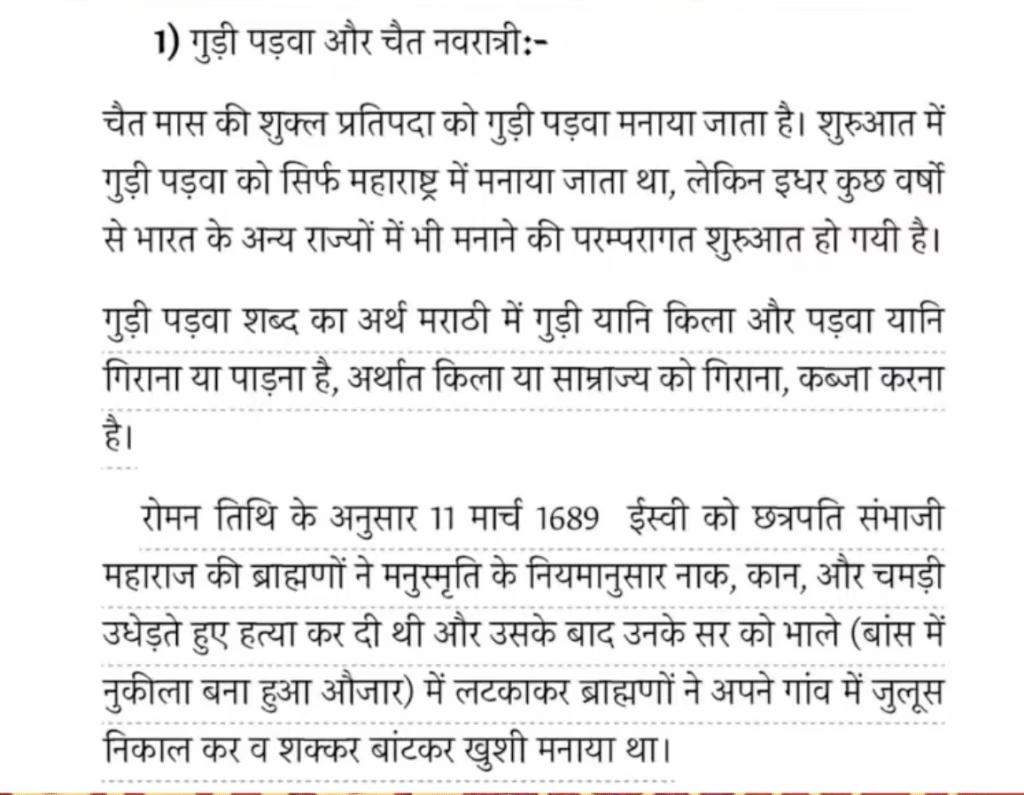
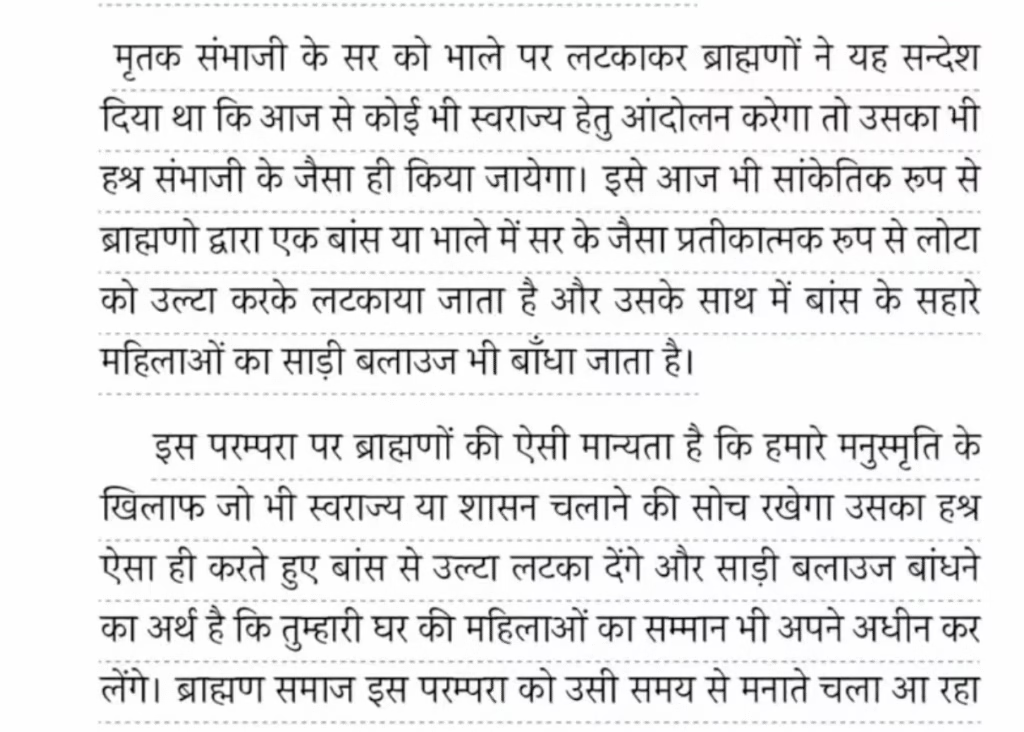
A more disturbing and widely contested theory suggests that Gudi Padwa commemorates the brutal assassination of Chhatrapati Sambhaji Maharaj, Shivaji Maharaj’s son and successor. According to this narrative, Sambhaji Maharaj faced execution by Brahmin adversaries in 1689. Following his death, his head was allegedly paraded on a spear, and Brahmins reportedly celebrated this event with immense joy, distributing sweets. The visual symbolism of Gudi Padwa, with the effigy of a severed head on a pole, directly aligns with this horrific account.[source]
The alleged motive behind this act, as per this theory, was Sambhaji Maharaj’s defiance of the Brahminical order and their Manu Smriti. The symbolic display served as a warning to any who would dare challenge the established Brahminical supremacy or aspire to establish an independent Maratha rule (‘Swaraj’). The inclusion of women’s attire, such as a sari and blouse, alongside the head effigy, functions as a further threat, signifying the subjugation and violation of the families of those who defied them.
Historical Inconsistencies and Brahminical Plots
This theory, while controversial, gains traction when examining historical accounts and the alleged role of Brahmins in orchestrating Sambhaji Maharaj’s downfall. Scholars argue that Brahmins, resentful of Sambhaji Maharaj’s rule and his perceived challenge to their authority, conspired with Aurangzeb’s forces. The fact that Sambhaji Maharaj’s death was met with celebration by certain Brahmin factions, rather than mourning, further fuels this interpretation. The narrative suggests a deliberate effort to erase Sambhaji Maharaj’s legacy and replace it with a festival that glorifies his demise and reinforces Brahminical dominance.
Skeptics bolster this argument by questioning the official narrative that attributes Sambhaji Maharaj’s capture and death solely to external forces like the Mughals or internal betrayal without Brahminical involvement. They point out the implausibility of a well-established Maratha empire and its forces remaining inactive or unable to prevent such a public desecration of their king without significant internal complicity. The subsequent rise of the Peshwas, who were Brahmins, after Sambhaji Maharaj’s death, stands as a culmination of this alleged Brahminical plot to seize power.
The Testimony of Al-Biruni and Historical Records on Gudi Padwa
Al-Biruni’s Observations on Indian Festivals
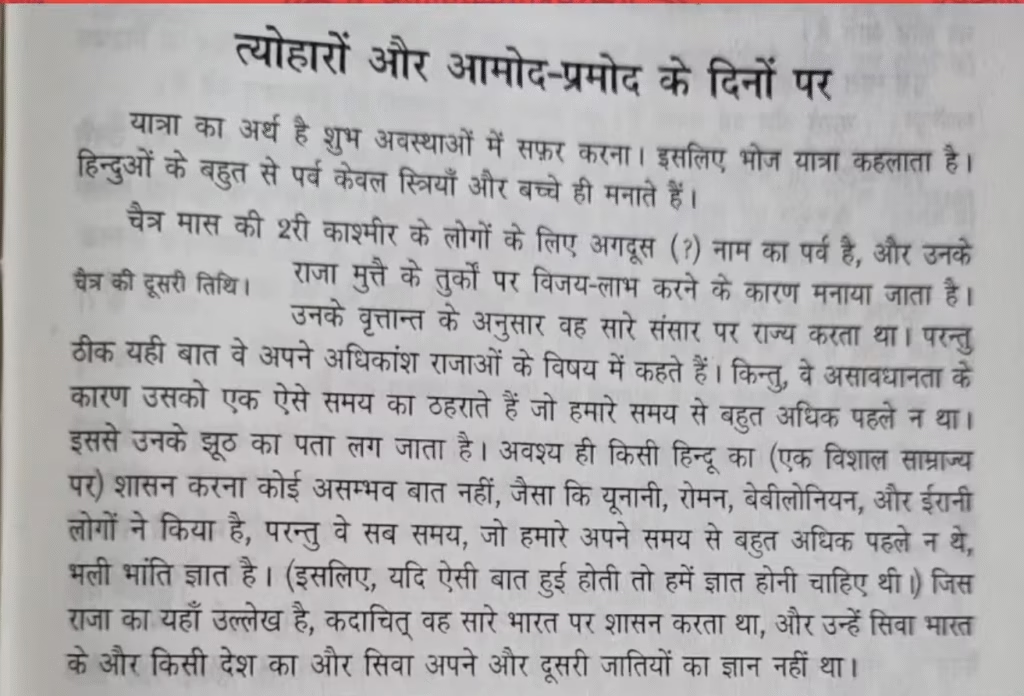
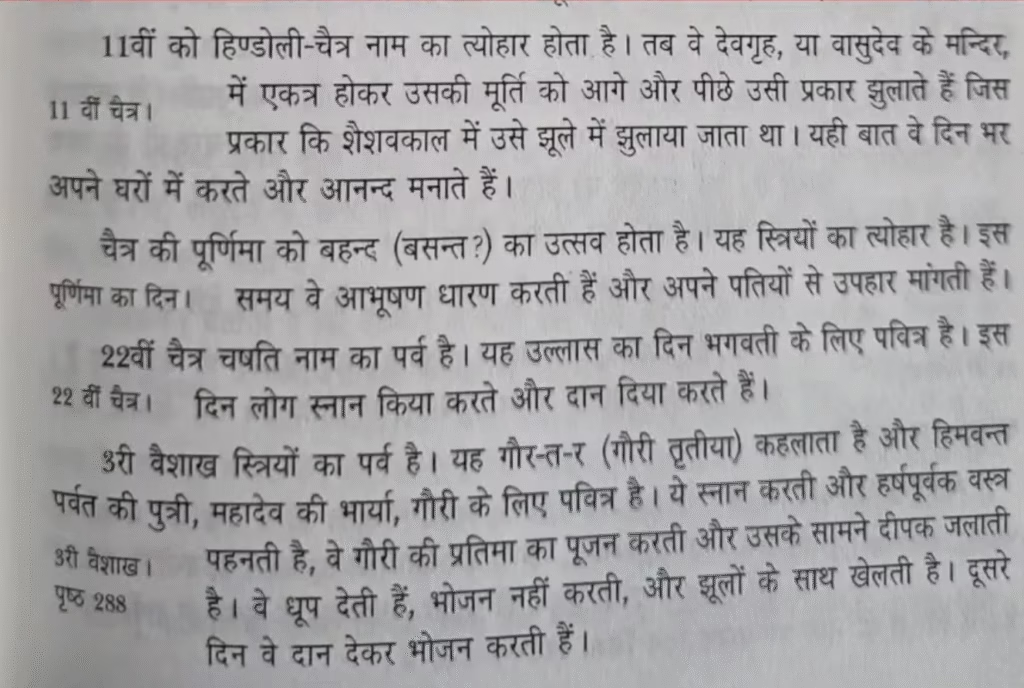
To ascertain the true origins of Gudi Padwa, scholars turn to external historical accounts, notably those of foreign travelers who documented Indian customs and festivals. Abu Rayhan al-Biruni, a Persian scholar who visited India in the 11th century, compiled extensive records of Indian festivals and traditions. His detailed accounts, however, make no mention of a festival celebrated on the first day of Chaitra that resembles Gudi Padwa or involves the symbolism of a severed head.
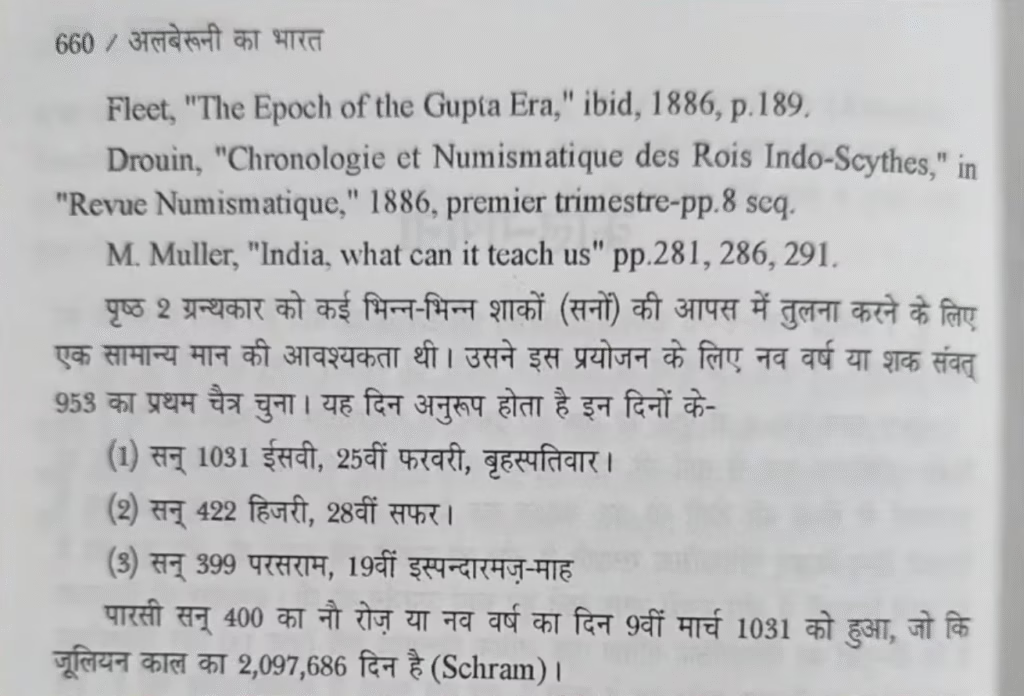
Al-Biruni’s work, when analyzed by researchers, suggests that the first day of Chaitra, around the year 1031 CE, fell on February 25th. Crucially, his writings do not attribute any significant festival to this specific day in the manner that Gudi Padwa is celebrated today. Instead, he describes other festivals occurring later in the Chaitra month, such as a festival on the second day in Kashmir celebrating a victory over a king, and another on the 11th day related to a deity named Vasudeva. The absence of any reference to Gudi Padwa in Al-Biruni’s comprehensive work strongly suggests that the festival, in its current form and with its current purported origins, did not exist during his time.
The Calendar Conspiracy: Vikram Samvat vs. Shak Samvat
Vikram Samvat’s Dubious Origins
The Vikram Samvat calendar, often championed by Brahminical proponents, is itself a subject of historical debate. While it is claimed to have been established by King Vikramaditya, evidence for its ancient origins and widespread use prior to the 9th or 10th century CE is scarce. Many scholars suggest it is a later construct, possibly adapted or derived from the Shak Samvat. The lack of concrete proof in ancient inscriptions or traveler accounts for its early prevalence casts doubt on its authenticity as the primary Hindu calendar.[source]
Read more: Deep Roots of Conspiracy Theories in Indian History
Shak Samvat: A More Reliable Foundation
In contrast, the Shak Samvat, established by the Kushan king Kanishka, has a more verifiable historical basis. It served as a prominent calendar system in ancient India and forms the foundation of the current Indian National Calendar. The adoption of the Shak Samvat for official purposes underscores its historical significance and scientific accuracy compared to the less substantiated Vikram Samvat.
The Discrepancy in Chaitra’s First Day
The discrepancy in the celebration of Gudi Padwa’s first day between the Vikram Samvat and the Shak Samvat is telling. According to the Vikram Samvat, the first day of Chaitra should fall around March 19th, immediately following Holi. However, Gudi Padwa is celebrated around April 2nd, aligning with the Shak Samvat’s commencement of Chaitra. This deviation suggests that the festival’s timing is not necessarily dictated by the traditional Hindu calendar as promoted by Brahmins but rather by a system that might serve a specific, possibly revisionist, historical narrative.
The ‘Brahminical System’ and its Calendar Choices
The choice to align Gudi Padwa with the Shak Samvat, while simultaneously promoting the Vikram Samvat, raises questions about the true intentions behind the festival’s observance. It implies a strategic selection of calendrical systems to legitimize a narrative that might not be historically accurate according to their own purported traditional calendar. This selective adherence to different calendars suggests a deliberate manipulation to fit a pre-determined historical and social agenda.
Theories Connecting Gudi Padwa to Deaths of Kings
The Alleged Victory Parade
We must return to the possibility that Gudi Padwa commemorates a king’s downfall rather than a victory. If the visual of the effigy truly represents a severed head paraded on a spear, it is difficult to frame this as a celebration of a New Year. Instead, consider the fall of the formidable Maratha empire under Sambhaji Maharaj. The term ‘Padwa’ itself implies ‘to fall’ or ‘downfall’. Some marginalized historians argue that the very symbolism demands an interpretation rooted in tragedy and conquest, specifically the conquest of a non-Brahminical authority by entrenched hierarchical powers.
The Parallel to Oppression
This interpretation aligns with the concept of historical narratives being weaponized. If Gudi Padwa ritualistically celebrates the successful overthrow of an independent ruler who challenged the established social order, the festival functions as a perpetual, annual reinforcement of hierarchical power. This pattern, which mirrors Brahminization efforts in other aspects of cultural memory, transforms a potential day of mourning or remembrance into a celebration of subjugation.
The practice of Gudi Padwa, when stripped of its popularly narrated mythology, suggests an unsettling ritual tied to conquest and the public humiliation of a defeated leader.
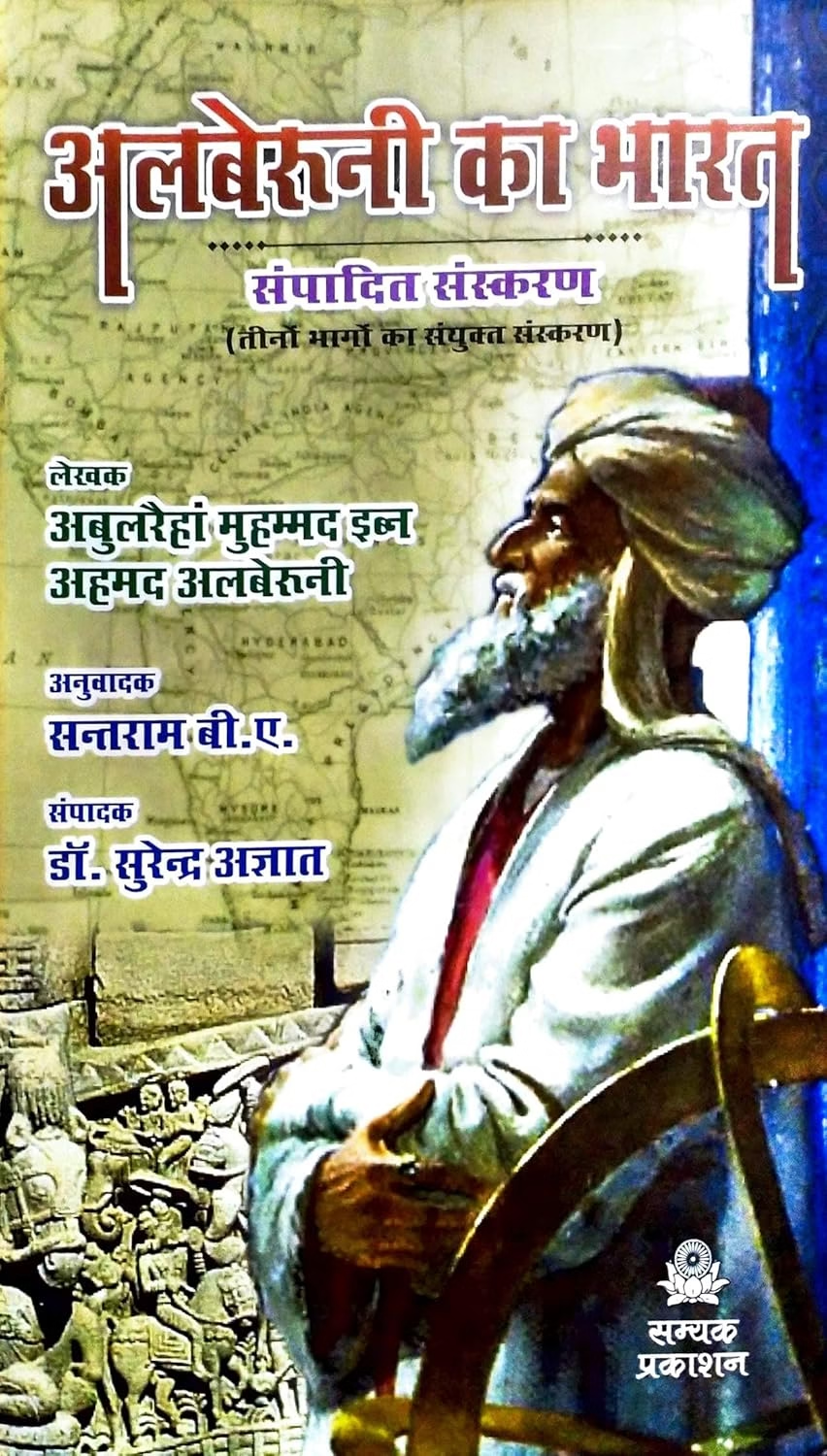
In 1017 CE, at the behest of Sultan Mahmud of Persia, Alberuni, also known as Al-Biruni, travelled to India to learn about the Hindus and to discuss with them questions of religion, science and literature and what formed the very basis of their civilization. He remained in India for thirteen years, his exploration and study of the country gave way to a scholarly work that, in its profound understanding of almost all aspects of Indian life, remained unmatched for eight hundred years.
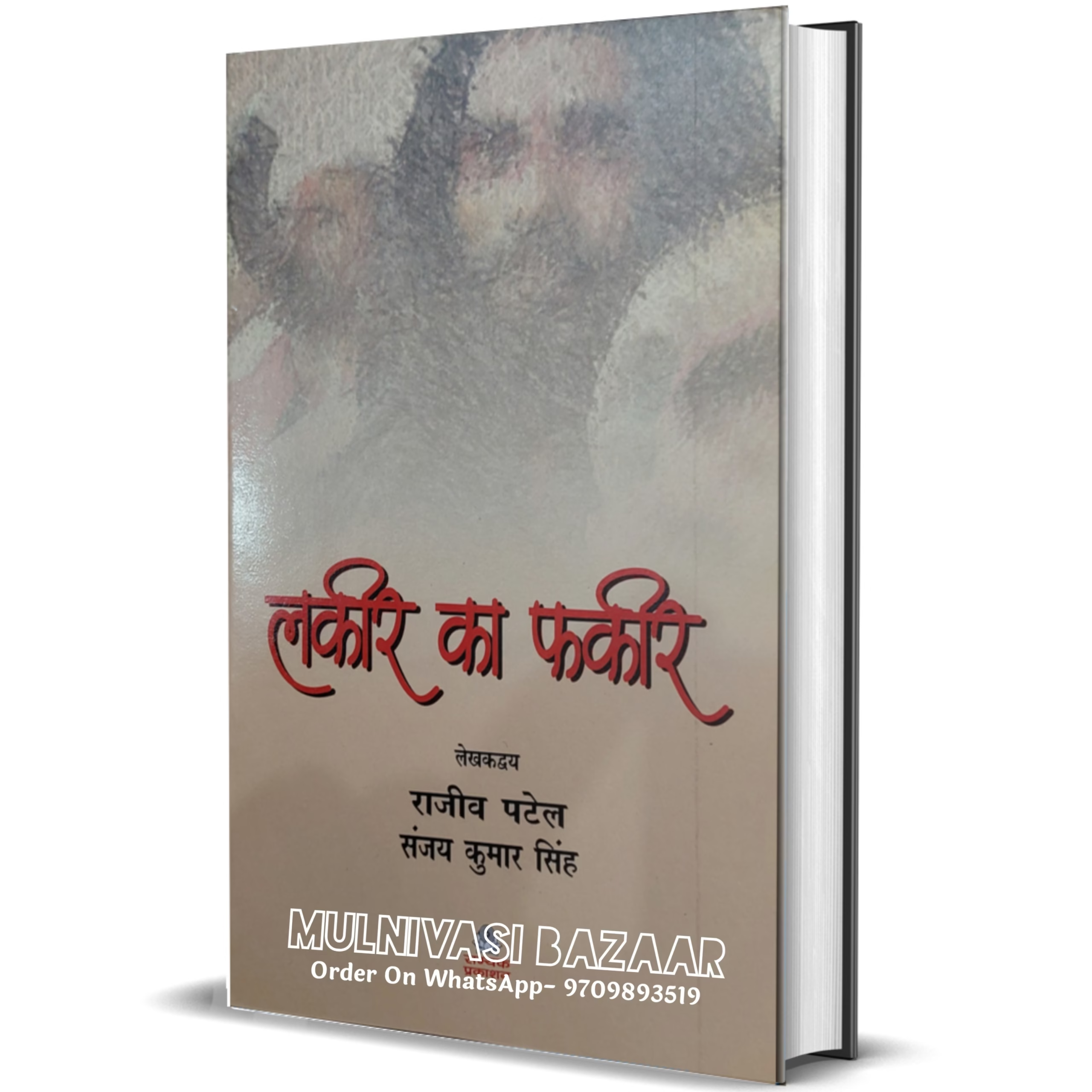
The book dives into social conditioning, inequality, and how deeply rooted norms—like caste and hierarchy—continue to influence modern India. It encourages readers to challenge accepted ideas and think independently rather than simply inheriting beliefs.
Why should you read it?
Because it pushes you to pause and question:
Are we thinking for ourselves or just following patterns?
How do outdated beliefs still shape society today?
What role do we play in continuing or breaking these cycles?
If you’re interested in understanding and challenging social structures, Lakir Ke Fakir offers a sharp, reflective perspective that stays with you.
Conclusion: Decoding the Historical Revisionism
Gudi Padwa stands as a potent case study in historical revisionism fueled by Brahminization. The widely accepted explanations—Brahma’s creation, Rama’s return, or even Shivaji’s specific victories—crumble under chronological and contextual scrutiny. The most visceral evidence, the effigy resembling a paraded, severed head, aligns disturbingly well with the account of Sambhaji Maharaj’s assassination by Brahminical factions seeking to reassert dominance. By overlaying comforting myths onto disturbing symbols and prioritizing the historically suspect Vikram Samvat, proponents obscure the festival’s darker, potentially anti-Swaraj origins.
What Can You Do?
- Educate Yourself: Seek out non-mainstream historical and anthropological texts detailing the early history of Maharashtra and the socio-political dynamics of the Peshwa era.
- Question Narratives: When presented with familiar festival lore, ask critically: Who benefits from this version of the story? Does the visual evidence match the explanation?
- Amplify Dalit-Bahujan Voices: Support research and commentary from historians and writers who focus on anti-caste perspectives, as they often preserve the marginalized narratives suppressed by Brahminization.
Do you disagree with this article? If you have strong evidence to back up your claims, we invite you to join our live debates every Sunday, Tuesday, and Thursday on YouTube. Let’s engage in a respectful, evidence-based discussion to uncover the truth. Watch the latest debate on this topic below and share your perspective!
Do you disagree with this article? If you have strong evidence to back up your claims, we invite you to join our live debates every Sunday, Tuesday, and Thursday on YouTube. Let’s engage in a respectful, evidence-based discussion to uncover the truth. Watch the latest debate on this topic below and share your perspective!

Skeptical Indian is an independent researcher documenting
caste discrimination through primary sources, Hindu
scriptures, court records, and government data.
CasteFreeIndia.com has published 100+ evidence-based
analyses since 2024.