The Rashtriya Swayamsevak Sangh (RSS ideology) is a prominent Hindu nationalist organization that has significantly shaped India’s socio-political landscape for decades. While often publicly associated with cultural preservation and national unity, a deeper examination reveals a complex interplay of ideology, influence, and internal dynamics. This exploration delves into the origins, operational methods, and societal impact of the RSS, drawing insights from personal accounts and historical records to provide a comprehensive understanding of its role in contemporary India.
Table of Contents:
- The Genesis of the RSS: Early Ideological Formations
- The RSS's Organizational Structure and Operational Methods
- Internal Dynamics and Caste-Based Stratification
- Ideological Critiques and Societal Impact
- Personal Transformation and Disillusionment
- The RSS's Broader Organizational Network
- Historical References and Ideological Comparisons
- A Call for Critical Engagement
- What can you do?
- Disclaimer
The Genesis of the RSS: Early Ideological Formations
Seeds of Nationalism and Cultural Purity
Founded in 1925 by Keshav Baliram Hedgewar, the RSS aimed to unite the Hindu community and instill national pride. The prevailing political climate under British rule, coupled with a perceived decline in Hindu cultural values, created fertile ground for such an organization. Early RSS discourse emphasized India’s historical glory and the necessity of reviving its cultural and spiritual heritage. The organization focused on creating a disciplined cadre of volunteers, or ‘swayamsevaks,’ dedicated to the cause of Hindutva.
The Influence of Early Thinkers
Key figures like M.S. Golwalkar, Hedgewar’s successor as Sarsanghchalak (chief), were pivotal in articulating the RSS’s ideological framework. Golwalkar’s writings, particularly ‘We, or Our Nationhood Defined,’ presented a distinct vision of Hindu nationalism, stressing a unified cultural identity and often creating sharp divisions between the majority Hindu population and religious minorities. This ideological stance, which viewed certain minority groups as internal threats to national cohesion, has long been a subject of considerable debate and criticism.
Early Recruitment and Ideological Indoctrination
The RSS initially focused on establishing ‘shakhas’ (branches) in local communities. These shakhas served as hubs for physical training, ideological discussions, and community activities. For young individuals, especially from rural or less privileged backgrounds, the shakhas offered a sense of belonging and purpose. These early recruitment drives often targeted those who felt marginalized or disenfranchised, providing them with a powerful narrative of collective identity and historical grievance. The indoctrination process was subtle yet effective, gradually shaping the worldview of young volunteers.
The RSS’s Organizational Structure and Operational Methods
The Shakha System: A Microcosm of the Sangh
The daily or weekly shakha remains the foundation of the RSS’s organizational structure. These gatherings typically include physical exercises, patriotic songs, ideological discussions, and a review of current events from the RSS’s perspective. The emphasis on discipline, uniformity, and collective action is paramount. Children are often drawn to these activities through games and camaraderie, sometimes unaware of the deeper ideological currents at play. The book ‘Mein Ek Karsevak Tha’ by Bhanwar Meghwanshi provides a stark account of how these early experiences shape young minds, instilling a particular worldview through seemingly innocuous activities.
The Role of Propaganda and Narrative Control
A significant aspect of the RSS’s operation is its adeptness at crafting and disseminating narratives that reinforce its ideology. By controlling the flow of information and framing issues from a specific ideological standpoint, the organization influences public opinion. This is evident in how historical events and societal problems are often presented through the lens of Hindu victimhood and the perceived threat from minority communities. The book highlights how narratives about historical injustices, such as the Babri Masjid dispute, were used to create a sense of urgency and mobilize support.
Mobilization and ‘Karseva’
‘Karseva,’ or voluntary service, is a key operational method. While often presented as acts of community service, ‘karseva’ activities can also serve to mobilize cadres for specific political or ideological objectives. The author’s personal experience as a ‘karsewak’ during the Ram Janmabhoomi movement illustrates how young individuals were galvanized for action, often fueled by emotional appeals and a strong sense of righteous purpose. However, this mobilization sometimes came at the cost of critical thinking and independent inquiry.
Internal Dynamics and Caste-Based Stratification
The Caste Divide Within the Sangh
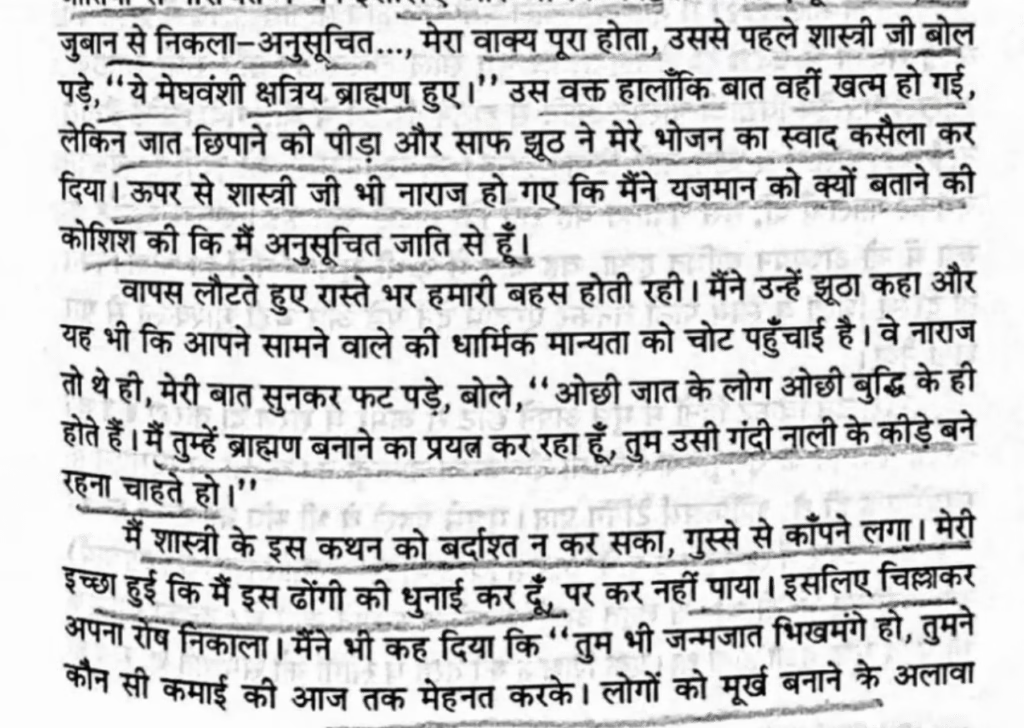
Despite its rhetoric of Hindu unity, the RSS is not immune to the deep-rooted caste system prevalent in India. The book ‘Mein Ek Karsevak Tha’ offers a poignant critique of this internal stratification. The author, hailing from a marginalized community, recounts experiences of subtle discrimination and the realization that despite holding positions of responsibility within the organization, the caste hierarchy persisted. This internal contradiction between the ideal of a casteless Hindu society and the reality of caste-based attitudes within the RSS is a critical point of examination.
Leadership and Brahminical Dominance
A recurring theme in the analysis of the RSS is the disproportionate representation of Brahmins in its leadership positions. Historical data and the author’s observations suggest that despite the organization’s claim of inclusivity, top leadership roles have predominantly been held by individuals from the Brahmin community. While exceptions exist, the overarching trend points towards continued dominance, raising questions about the genuine representation of all Hindu communities within the Sangh’s hierarchy.
The Experience of Marginalized Communities
The experiences of individuals from Scheduled Castes (SC), Scheduled Tribes (ST), and Other Backward Classes (OBC) within the RSS are central to understanding its internal dynamics. The book details instances where individuals from these communities, despite their dedication and contributions, faced subtle forms of exclusion and caste-based prejudice. The author’s personal narrative vividly illustrates the disillusionment that can arise when the ideals of equality and fraternity are contradicted by lived experiences of discrimination within the very organization that espouses them.
Ideological Critiques and Societal Impact
The Construction of an ‘Other’
A significant aspect of the RSS ideology, as critiqued in the book, is the construction of an ‘other’ – primarily Muslims and, to some extent, Christians. This narrative often portrays these minority groups as inherently anti-national or a threat to Hindu culture and security. By creating a common enemy, the RSS aims to foster solidarity among Hindus. However, this strategy often leads to the perpetuation of stereotypes, prejudice, and intolerance, as seen in the chilling accounts of how individuals are judged based on their appearance or religious affiliation.
The Impact on Youth and Radicalization
The RSS’s influence on young minds is a critical concern. The book highlights how the organization’s narratives, when internalized uncritically, can lead to radicalization and a propensity for violence. The author draws parallels between the indoctrination processes within the RSS and those in extremist groups globally, emphasizing the role of persuasive rhetoric and the creation of an ‘us vs. them’ mentality. Incidents of communal violence and hate crimes in India are often linked to the spread of such divisive ideologies, raising serious questions about the societal consequences of the RSS’s teachings.
Contradictions with Constitutional Values
The RSS’s ideology and actions often conflict with India’s constitutional values of secularism, equality, and fraternity. The emphasis on a majoritarian Hindu identity and the historical marginalization of minority groups challenge the foundation of India as a pluralistic democracy. The author’s reflections on the RSS’s stance on issues like the Tiranga (national flag) and its historical interactions with colonial powers further underscore these contradictions.
Personal Transformation and Disillusionment
Seeds of Doubt and Critical Inquiry
The journey from a fervent believer to a disillusioned critic is often triggered by specific events that expose inherent contradictions within the organization. For the author, this turning point came through lived experiences of caste discrimination within the RSS, particularly the incident where food prepared for him was discarded by fellow members. This stark realization of hypocrisy shattered the idealized image of Hindu unity he had been taught.
The Influence of Alternative Perspectives
Exposure to alternative viewpoints and intellectual traditions can also play a crucial role in challenging deeply ingrained ideologies. The author’s encounters with the writings of Osho and Ambedkar, even when initially discouraged by RSS leaders, opened new windows of understanding. These encounters highlighted the limitations of the RSS’s narrative and offered a more inclusive and critical perspective on society and identity.
The Quest for Truth and Self-Identity
Leaving an organization like the RSS is often fraught with personal turmoil and a re-evaluation of one’s identity. The author’s narrative depicts a painful but ultimately liberating journey of self-discovery. By questioning the foundational tenets of the ideology he once embraced, he embarked on a path towards a more nuanced and humane understanding of society, one that prioritizes critical thinking, empathy, and genuine equality over divisive narratives.
The RSS’s Broader Organizational Network
Affiliated Organizations and Expanding Influence
The RSS operates through a vast network of affiliated organizations, often referred to as the ‘Sangh Parivar.’ These organizations span various sectors, including student movements (Akhil Bharatiya Vidyarthi Parishad – ABVP), labor unions (Bharatiya Mazdoor Sangh – BMS), women’s wings (Rashtra Sevika Samiti), and religious groups. This extensive network allows the RSS to exert influence across different strata of society and mobilize support for its agenda.
Notable Offshoots and Their Roles
Organizations like the Bajrang Dal and Vishva Hindu Parishad (VHP) are prominent examples of RSS affiliates that have been active in promoting Hindutva and, at times, involved in controversial activities. The author mentions the emergence of organizations like the Rashtriya Sikh Sangat, indicating the RSS’s attempts to broaden its appeal and co-opt other community identities. The sheer number and diversity of these organizations underscore the pervasive reach of the RSS ideology.
The Historical Context of Political Engagement
The establishment of the Bharatiya Jana Sangh in 1951, and later the Bharatiya Janata Party (BJP), marked the RSS’s significant foray into electoral politics. While the RSS officially maintains a non-political stance, its deep-rooted connections with the BJP have been undeniable. This symbiotic relationship allows the RSS to influence political discourse and policy-making, while the BJP benefits from the organizational strength and cadre base of the RSS.
Historical References and Ideological Comparisons
The Legacy of Golwalkar and Hedgewar
The ideological foundations laid by M.S. Golwalkar and K.B. Hedgewar continue to shape the RSS’s worldview. Golwalkar’s emphasis on cultural nationalism and his controversial views on minority communities remain central to the organization’s identity. The book implicitly references their teachings and the manner in which they are disseminated through the RSS’s organizational channels.
Comparisons with Global Nationalist Movements
The author draws parallels between the RSS’s methods and those of other nationalist and extremist movements globally. The focus on creating an ‘other,’ the use of propaganda, and the mobilization of youth for ideological causes are common threads. This comparative perspective helps in understanding the universal mechanisms of ideological indoctrination and radicalization, irrespective of geographical or cultural contexts.
The Role of Historical Grievances
The RSS often leverages historical grievances, real or perceived, to fuel its nationalist agenda. Narratives surrounding historical invasions, colonial rule, and the partition of India are frequently invoked to foster a sense of victimhood and a desire for retribution or rectification. The book points to the Ram Janmabhoomi movement as a prime example of how historical narratives are mobilized for contemporary political ends.
A Call for Critical Engagement
Understanding the Roots of Division
The exploration of the RSS’s ideology and operations reveals the complex roots of social division and communal tension in India. It underscores the importance of critically examining the narratives we consume and the ideologies that shape our understanding of the world. The book serves as a powerful reminder that unchallenged beliefs can lead to profound societal consequences.
The Power of Personal Testimony
Personal testimonies, like that of Bhanwar Meghwanshi, offer invaluable insights into the lived realities of individuals within ideological organizations. These firsthand accounts challenge official narratives and provide a more nuanced and human perspective on complex socio-political phenomena. The courage to share such experiences is essential for fostering open dialogue and promoting critical self-reflection.
Promoting Rationality and Inclusivity
Ultimately, this discussion calls for a commitment to rationality, critical thinking, and inclusivity. In a diverse society like India, fostering understanding and empathy across different communities is paramount. By engaging with diverse perspectives and challenging divisive ideologies, we can work towards building a more harmonious and just future for all.
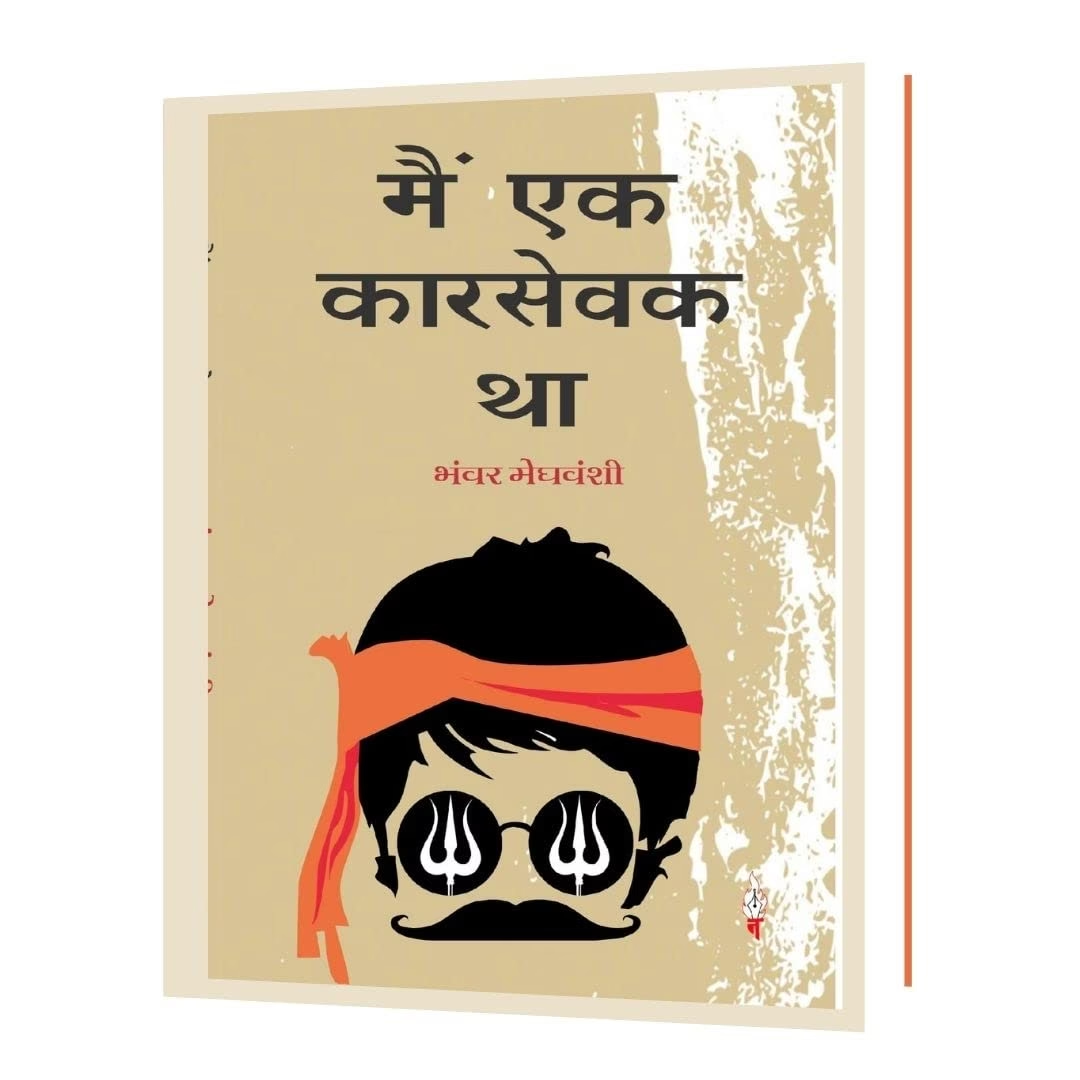
Dalit autobiographies have generally introduced people to the suffering, deprivations, and inhuman conditions that were either beyond the imagination of the general public or which they did not consider inhuman (or did not want to consider inhuman), even while participating in the efforts to maintain those very conditions. However, the autobiography of activist, writer, and journalist Bhanwar Meghwanshi—titled “Main Ek Karsevak Tha” (I Was a Karsevak)—reveals a new form of discrimination and hypocrisy.
What can you do?
To foster a more informed and inclusive society, it is crucial to engage critically with the information we encounter. Read widely from diverse sources, including personal accounts and historical analyses, to gain a comprehensive understanding of complex issues. Encourage critical thinking among young people by exposing them to various perspectives and fostering an environment where questions are welcomed, not suppressed. Support inter-community dialogue and initiatives that promote understanding and empathy across religious and social divides. Finally, advocate for policies and educational curricula that uphold the constitutional values of secularism, equality, and justice for all citizens.
Disclaimer
This article discusses concepts and terms related to the Rashtriya Swayamsevak Sangh (RSS) and its ideological framework. The following terms are used in the context of the provided information:
- Sangh/Shakha: Refers to the Rashtriya Swayamsevak Sangh and its local branches, respectively. Shakhas are meeting points for ideological discussion, physical training, and community activities.
- Swayamsevak: A volunteer or member of the RSS.
- Hindutva: A political ideology advocating for Hindu cultural and national identity, often distinct from the religious practice of Hinduism.
- Karsevak: A volunteer engaged in ‘karseva’ (voluntary service), often associated with specific movements like the Ram Janmabhoomi movement.
- OBC/SC/ST: Acronyms for Other Backward Classes, Scheduled Castes, and Scheduled Tribes, respectively, referring to historically marginalized communities in India.
- Brahmin: The highest varna (social class) in the traditional Hindu caste system, historically associated with religious scholarship and priestly duties.
- Panchjanya: A Hindi-language weekly magazine published by the RSS, serving as a platform for its ideological discourse.
- Vimarsh: Discussion or deliberation.
- Vidharmi: Literally means ‘one of a different religion,’ often used in a derogatory or exclusionary manner towards non-Hindus.
- Hindu Rashtra: A concept advocating for India to be recognized as a Hindu nation, with Hindutva principles guiding its governance and culture.
Read more about Casteism in India: An Unflinching Contemporary Examination
Find out more about Unmasking Caste Bias: Impact of Shrimad Bhagavat Purana on Society
Do you disagree with this article? If you have strong evidence to back up your claims, we invite you to join our live debates every Sunday, Tuesday, and Thursday on YouTube. Let’s engage in a respectful, evidence-based discussion to uncover the truth. Watch the latest debate on this topic below and share your perspective!

Skeptical Indian is an independent researcher documenting
caste discrimination through primary sources, Hindu
scriptures, court records, and government data.
CasteFreeIndia.com has published 100+ evidence-based
analyses since 2024.