The Reinforcement of Caste through Marriage Law Amendments in Uttar Pradesh
The Indian social fabric is deeply entangled with the entrenched caste system, a hierarchical structure that dictates social interactions, opportunities, and, historically, even marriage. While the constitution of India strives for equality and prohibits discrimination based on caste, contemporary legislative and judicial actions in certain regions seem to be inadvertently or deliberately reinforcing this age-old system. This analysis delves into the recent amendments and interim orders concerning marriage registration in Uttar Pradesh, examining how these measures, ostensibly aimed at regulating marriage and weaponising it by calling it Love Jihad, are paradoxically strengthening the very casteist and Brahmanical structures they appear to challenge.
The core argument posits that the current legislative trends, particularly in Uttar Pradesh, are not merely about regulating marriages or Love Jihad but are a calculated effort to preserve the existing caste hierarchy by restricting inter-caste and inter-religious marriages, thereby limiting social mobility and perpetuating inequality. This is achieved through a series of legislative and administrative measures that create significant hurdles for individuals seeking to marry outside their prescribed social strata.
Table of Contents:
- The Historical Context of Caste and Marriage
- Why Inter-caste and Inter-religious Marriages Threaten the Caste System
- The Political and Ideological Underpinnings of Anti-Interfaith Marriage Stance
- The Legislation Against 'Love Jihad' and Forced Conversions
- Data and Statistics on Inter-caste and Inter-religious Marriages
- Love Jihad: Statistics Debunk the 'Widespread Threat' Narrative 📊
- The Uttar Pradesh Marriage Registration Amendment Act: A Step Towards Reinforcing Caste?
- Reassertion of Traditional Authority and Control
- The Role of Judiciary and Bureaucracy in Upholding Caste Norms
- Undermining Autonomy: The Impact of New Rules
- The Broader Implications: UCC, Live-in Relationships, and the Control of Personal Lives
- State Intervention and the Scrutiny of Unconventional Relationships
- The Attack on Inter-caste Marriages and the Future of Love Marriages
- Profound Consequences: Erosion of Constitutional Ideals
- Conclusion: The Pervasive Influence of Caste Ideology
- What you can do?
The Historical Context of Caste and Marriage
The caste system, rooted in ancient traditions, has historically mandated endogamy, meaning marriage within one’s own caste. This practice was crucial for the maintenance of the hierarchical order, ensuring the purity of caste lines and the preservation of social status. The Brahmanical order, in particular, emphasized endogamous marriages to maintain its perceived superiority and ritualistic purity. Any deviation from this norm was seen as a transgression, threatening the very foundations of the established social hierarchy.
The Manusmriti, an ancient legal text, provides significant guidance on social conduct, including marriage, and often reflects the prevailing caste-based norms of its time. While interpretations vary, it has been historically cited to uphold caste-based social structures, including rules related to marriage alliances. The text, for instance, discusses the progeny resulting from inter-caste unions, often portraying them in a negative light, further discouraging such marriages.
Society often enforced the emphasis on marrying within one’s own Varna (broad social class) or Jati (specific caste group) not just through social custom, but also through social ostracization, economic sanctions, and, in extreme cases, violence. This historical context is vital for understanding the deep-seated resistance to inter-caste and inter-religious marriages, which are perceived by proponents of the traditional order as a direct challenge to the established social and religious norms.
Why Inter-caste and Inter-religious Marriages Threaten the Caste System
In modern India, the rise of inter-caste and inter-religious marriages poses a significant challenge to the traditional caste system. These unions transcend caste and religious boundaries, fostering social integration and challenging the endogamous practices that have sustained the caste hierarchy for centuries.
Such marriages are viewed as a threat by those who benefit from or uphold the Brahmanical and Manuwadi systems, as they disrupt the rigid social stratification and promote a more fluid and egalitarian society. The proliferation of inter-caste marriages, in particular, directly undermines the concept of Jati purity and the social exclusivity that defines the caste system. Similarly, inter-religious marriages challenge religious boundaries and often lead to greater understanding and integration between different communities.
The fear is that if individuals can freely choose partners irrespective of their caste or religion, the traditional social order, which relies heavily on these distinctions, will crumble. This perceived threat is a primary driver behind the legislative and administrative actions aimed at curtailing such unions. The very essence of the caste system, which is built upon endogamy and the preservation of distinct caste identities, is threatened when individuals form unions across these lines.
This is not just about personal choice; it is seen by some as a dismantling of a millennia-old social order, leading to increased social mixing and the potential breakdown of traditional power structures. Isn’t the aspiration for a society free from such rigid divisions a fundamental human desire?
The Political and Ideological Underpinnings of Anti-Interfaith Marriage Stance
The political landscape in India, particularly concerning the actions of parties like the BJP and organizations like the RSS, often reflects an agenda to re-establish and reinforce traditional social hierarchies, including the caste system. This agenda is often framed as a defense of ‘Hindu culture’ and ‘tradition’ against perceived external threats.
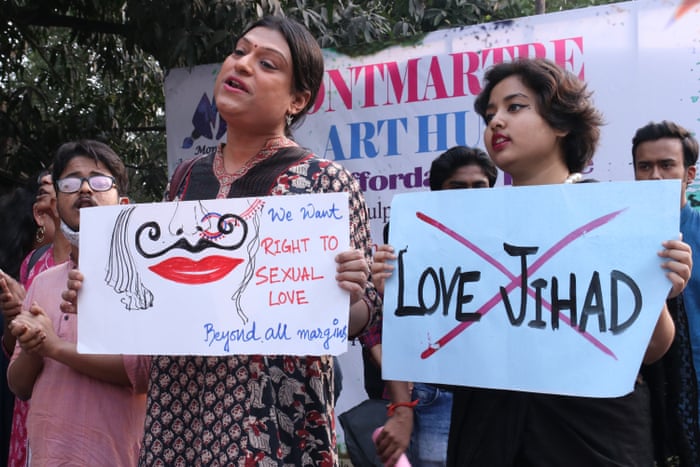
The narrative of ‘love jihad,’ which alleges that Muslim men deceptively marry Hindu women to convert them to Islam, has been a prominent tool used to foster communal polarization and justify stringent laws against inter-religious marriages. This narrative, amplified by certain media outlets and political actors, creates a climate of fear and suspicion, painting inter-religious unions as a threat to the Hindu community.
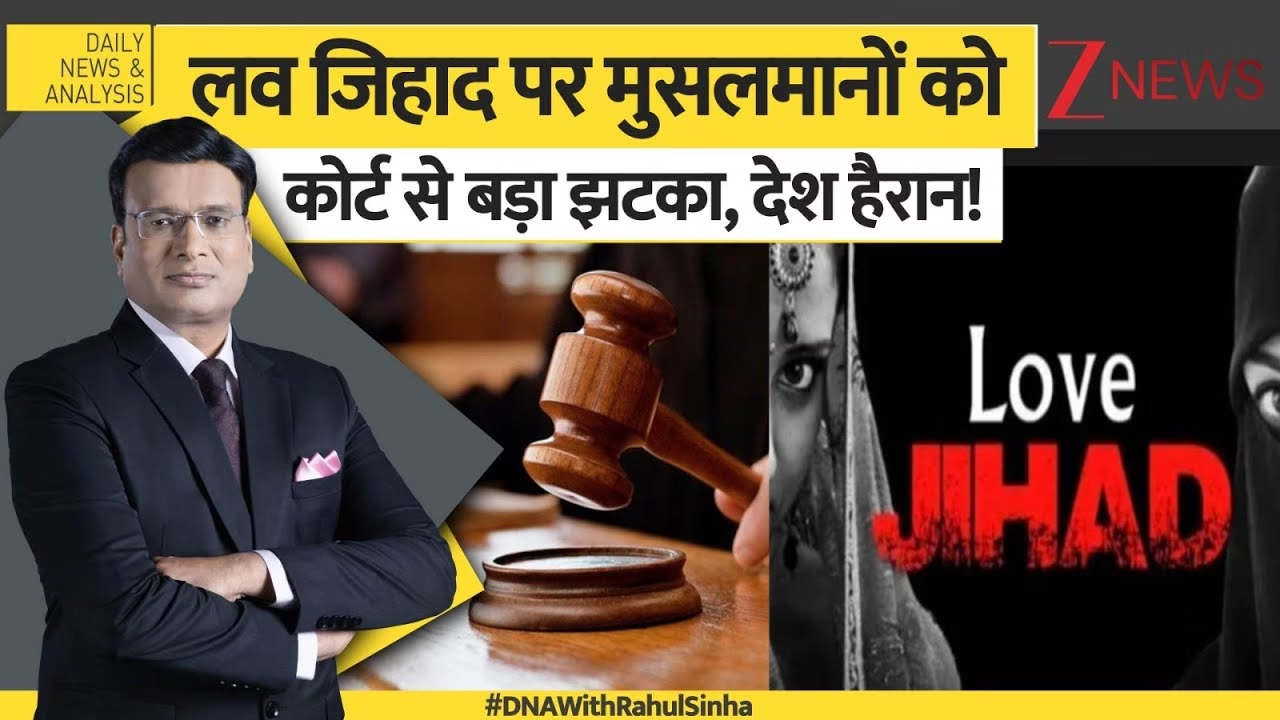
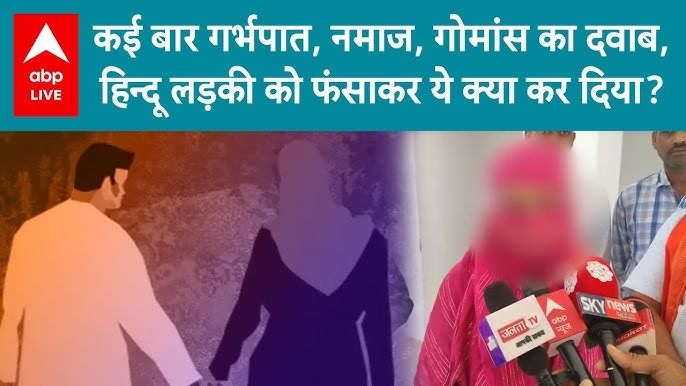

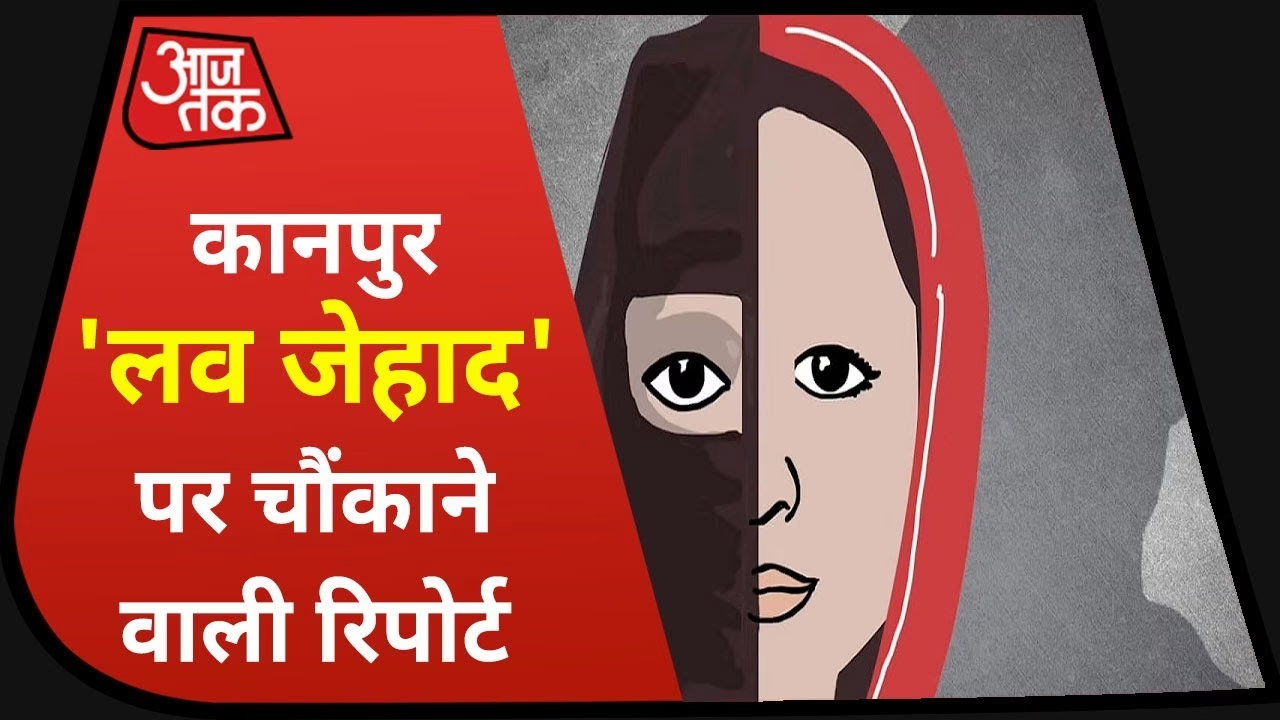
The political strategy involves creating moral panics around such marriages, using them as a justification for enacting laws that restrict religious conversions and inter-religious marriages. This approach serves multiple purposes: it consolidates a specific political base, distracts from socio-economic issues, and, crucially, reinforces the idea of distinct and potentially conflicting religious communities, thereby hindering social integration.
The focus on ‘love jihad’ also serves to deflect attention from internal social issues like caste discrimination and inequality within the Hindu fold, redirecting public concern towards an ‘external’ threat. The political discourse often frames inter-religious marriages not as personal choices but as a conspiracy against the majority community, necessitating state intervention.
This narrative is particularly effective in mobilizing support among sections of the population that are concerned about social change and the erosion of traditional norms. Is the ‘defense of Hindu culture’ a genuine concern, or a convenient shield for reinforcing age-old hierarchies that benefit a select few?
The Legislation Against ‘Love Jihad’ and Forced Conversions
In response to the ‘love jihad’ narrative, several BJP-ruled states have enacted stringent anti-conversion laws. While ostensibly aimed at preventing forced religious conversions, these laws have been criticized for being discriminatory and disproportionately affecting inter-religious marriages. The laws often impose burdensome procedures for religious conversion, making it difficult for individuals to change their faith. Furthermore, they criminalize conversions motivated by marriage, even if the conversion is consensual.
This has created a chilling effect on inter-religious marriages, as individuals face legal scrutiny and potential prosecution. The reasoning behind these laws, as presented by proponents, is to protect vulnerable individuals, particularly women and members of Scheduled Castes (SC) and Scheduled Tribes (ST), from coercion and deception. However, critics argue that these laws are a pretext to prevent inter-religious marriages and maintain social segregation.
The laws often include provisions that require prior permission for conversion, mandate registration of conversions, and impose penalties on those who facilitate or abet conversions. This legislative framework effectively makes it exceedingly difficult for individuals from different religious backgrounds to marry, thereby undermining the constitutional right to freedom of religion and personal liberty.
The focus on SC/ST individuals in some of these laws is particularly concerning, as it suggests a belief that these communities are more susceptible to ‘luring’ and conversion, thereby reinforcing caste-based prejudices. The laws create a legal environment where inter-religious marriage is fraught with peril, discouraging couples and pushing them towards compliance with traditional endogamous norms.
Data and Statistics on Inter-caste and Inter-religious Marriages
Statistical data provides crucial insights into the prevalence of inter-caste and inter-religious marriages in India, often contradicting the alarmist narratives propagated by certain sections of society.
Reports from reputable sources, such as The Hindustan Times and the National Family Health Survey (NFHS), offer a more nuanced picture. For instance, a 2020 report by The Hindustan Times, referencing NFHS data, indicated that only a small percentage of couples (around 2.5%) engage in inter-religious marriages, while about 13% engage in inter-caste marriages.
This data suggests that the phenomenon of inter-religious marriages, which forms the basis of the ‘love jihad’ narrative, is statistically rare. Furthermore, the NFHS data from the same period revealed interesting trends based on socio-economic status.
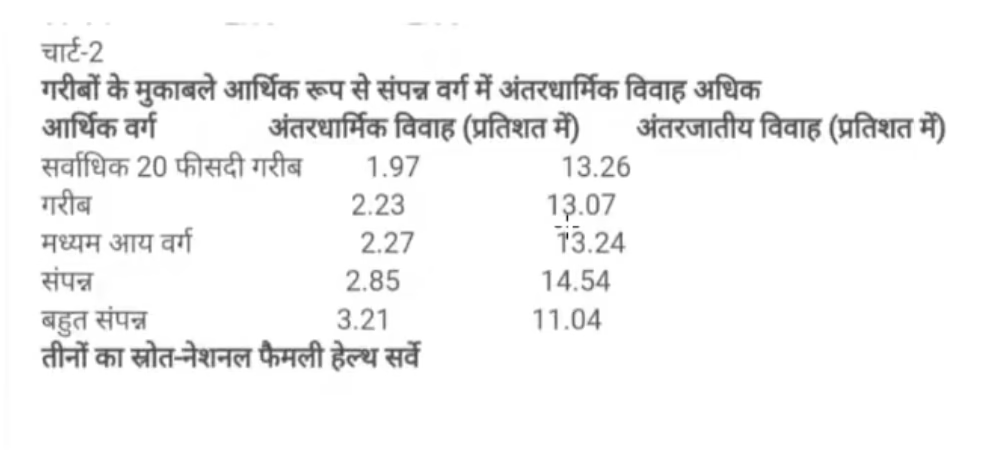
The report indicated that the poorest sections of society (often comprising SC, ST, and OBC communities) were more likely to engage in inter-caste marriages (13.26%) compared to inter-religious marriages (1.97%). Conversely, wealthier sections, often predominantly from upper castes, showed a slightly higher propensity for inter-religious marriages (3.21%) than inter-caste marriages (11.04%).
Love Jihad: Statistics Debunk the ‘Widespread Threat’ Narrative 📊
This disparity challenges the notion that inter-religious marriages are primarily a tool for exploiting vulnerable communities; instead, it suggests a more complex interplay of social, economic, and personal factors influencing marriage choices across different demographics. The data consistently shows that the vast majority of marriages in India are still endogamous, occurring within one’s own caste and religion.
The small percentage of individuals who do marry outside their caste or religion are not indicative of a widespread societal shift that threatens the fabric of society as often portrayed. This statistical evidence serves as a crucial counterpoint to narratives that sensationalize inter-religious and inter-caste marriages as a widespread threat.
The data also highlights that the claim that inter-religious marriages are predominantly used to target and convert vulnerable SC/ST women is not supported by broad statistical trends, which show lower rates of inter-religious marriages among the poorest segments compared to inter-caste marriages.
The Uttar Pradesh Marriage Registration Amendment Act: A Step Towards Reinforcing Caste?
Recent developments in Uttar Pradesh, particularly concerning amendments to the marriage registration laws, have raised serious concerns about the state’s intentions. An interim order, issued in the wake of a High Court directive, has introduced stringent requirements for marriage registration, effectively making inter-caste and love marriages significantly more difficult.
The new rules mandate the presence of blood relatives of both the bride and groom, including parents, siblings, and grandparents, as witnesses for marriage registration. Furthermore, the affidavit of the priest or officiant solemnizing the marriage, along with their testimony, is now required. Crucially, the registration must now take place in the sub-registrar’s office of the locality where the parents of either the bride or groom are permanent residents.
This effectively ties the registration to the parental home, undermining the autonomy of individuals who may wish to marry outside their families’ wishes. The stated objective behind these measures is to curb the menace of fake marriage certificates and prevent couples from seeking police protection based on fraudulent documents, especially in cases of elopement. However, critics argue that these rules disproportionately impact individuals opting for love marriages or inter-caste marriages, as their families may not be supportive.
Reassertion of Traditional Authority and Control
The requirement for parental presence and consent, even indirectly, gives families a veto power over their children’s marriage choices, thereby reinforcing patriarchal control and caste endogamy. The involvement of priests and the mandatory video recording of the ceremony, along with submitting affidavits, adds layers of bureaucratic and religious control, making the entire process cumbersome and intrusive.
This move appears to be a systematic attempt to reassert traditional authority and control over marriage decisions, effectively strangulating personal liberty and freedom of choice. The emphasis on parental and community involvement, while seemingly aimed at preventing fraud, serves to empower traditional structures that uphold caste endogamy, making it nearly impossible for those who defy these norms to register their marriages legally.
The High Court’s initial directive to improve the marriage registration process and prevent fraud has been interpreted in a manner that introduces significant obstacles for couples, particularly those from marginalized communities or those who have chosen to marry outside their caste. The interim nature of these orders, while awaiting new legislation, suggests a government eager to implement these restrictive measures swiftly, underscoring a clear ideological leaning towards preserving traditional social structures.
The Role of Judiciary and Bureaucracy in Upholding Caste Norms
The judiciary and the bureaucratic apparatus often play a critical role in either upholding or challenging existing social structures. In the context of marriage registration in Uttar Pradesh, the judiciary, through its directives, and the bureaucracy, through the implementation of interim orders, appear to be inadvertently reinforcing caste norms.
The Allahabad High Court’s suo motu cognizance of alleged fake marriage certificates in Prayagraj, followed by its directive to the state government to amend marriage registration rules within six months, has set the stage for these restrictive measures. While the intent may be to prevent fraud, the implemented interim orders place immense power in the hands of registrars and mandate a level of parental and community involvement that effectively grants them veto power over marriages.
This creates a scenario where the bureaucracy, often influenced by prevailing social norms, can become an instrument for enforcing caste endogamy. The subsequent actions by the Inspector General of Registration to issue interim rules, even before the government formulates new laws, highlight a proactive approach to implement these restrictive measures. This suggests an alignment with the prevailing political ideology that seeks to preserve traditional social structures.
Undermining Autonomy: The Impact of New Rules
The reliance on affidavits from priests and the mandatory presence of family members effectively re-establishes the authority of patriarchal structures and religious intermediaries, who have historically played a role in maintaining caste boundaries. The power vested in the registrar to grant or deny registration based on their satisfaction further opens the door for subjective interpretations and potential discrimination.
This bureaucratic control over personal choices, disguised as a measure against fraud, can become a potent tool for enforcing caste-based restrictions on marriage. The reliance on parental consent, even indirectly, grants families a significant say in their children’s marital choices, undermining the principle of individual autonomy and the right to marry freely.
The interim orders, by mandating these checks and balances, effectively shift the burden of proof onto the couples, who must now navigate a complex and intrusive process to legitimize their unions, especially if they deviate from societal norms. The sheer logistical challenges, coupled with the potential for exorbitant costs and bureaucratic delays, make inter-caste and inter-religious marriages significantly more arduous, if not impossible, for many.
The Broader Implications: UCC, Live-in Relationships, and the Control of Personal Lives
The recent legislative and judicial actions in Uttar Pradesh cannot be viewed in isolation. They are part of a broader trend that seeks to exert greater control over personal lives, particularly concerning marriage and relationships. The push for a Uniform Civil Code (UCC), although primarily a central government initiative, has seen some state governments, like Uttarakhand, enacting their own versions.
The UCC, in its current interpretation by some political factions, seems to be less about gender equality and more about imposing a standardized set of personal laws that align with a particular ideological framework. For instance, the Uttarakhand UCC’s provision for mandatory registration of live-in relationships has been criticized for infringing on privacy and personal autonomy.
The logic behind this is that if individuals are not entering into formal marriages, their relationships must be regulated and monitored, ostensibly to protect women and children. However, critics argue that this invasive approach stems from a desire to control unconventional relationships and discourage lifestyles that deviate from traditional norms, thereby indirectly supporting the caste system by discouraging practices that might lead to its dilution. The fear is that if live-in relationships become more prevalent, it could lead to a further breakdown of traditional family structures and caste endogamy.
State Intervention and the Scrutiny of Unconventional Relationships
Similarly, the attempts to regulate and register live-in relationships can be seen as an extension of the state’s increasing intervention in personal choices. The rationale often presented is that such relationships need oversight to prevent exploitation, but the practical effect is a curtailment of individual freedom.
This move, coupled with the stringent marriage registration laws, creates a restrictive environment where personal relationships, especially those that deviate from traditional norms, are heavily scrutinized and controlled. The overarching goal appears to be to maintain a degree of social order that aligns with conservative values, which includes the preservation of the caste system. The narrative shifts from solely targeting inter-religious marriages to encompassing all forms of relationships that challenge traditional structures.
This creates a pervasive sense of surveillance and control over personal lives, where even intimate relationships are subject to state and societal oversight. The underlying objective remains consistent: to prevent the erosion of traditional hierarchies, including the caste system, by controlling personal choices and relationships. This extends to discouraging any form of cohabitation or partnership that does not conform to state-sanctioned marital norms, thereby reinforcing the idea that marriage, and by extension, relationships, must be conducted under the watchful eyes of the state and traditional authorities.
The Attack on Inter-caste Marriages and the Future of Love Marriages
The current trajectory of legislative and judicial actions in Uttar Pradesh indicates a systematic effort to dismantle the possibility of inter-caste and inter-religious marriages, effectively pushing society back towards a more rigid, caste-based order. The initial focus on ‘love jihad’ laws and stringent anti-conversion measures aimed at inter-religious unions has now expanded to encompass inter-caste marriages through the new marriage registration rules.
The requirement for parental consent, affidavits from priests, and registration tied to parental residences creates insurmountable hurdles for couples who choose to marry outside their caste or family’s approval. This not only makes ‘love marriages’ incredibly difficult but also risks criminalizing them by making legal registration nearly impossible. The ultimate aim appears to be to ensure that individuals marry within their caste and religion, thereby preserving the existing social hierarchy and preventing upward or lateral social mobility.
Profound Consequences: Erosion of Constitutional Ideals
The consequences of these measures are profound: they stifle individual freedom, perpetuate discrimination, and undermine the constitutional ideals of equality and liberty. The potential for increased harassment, violence, and social ostracization against couples who defy these norms is also a significant concern. The state’s role is shifting from facilitating civil marriages to acting as a gatekeeper, enforcing traditional social norms under the guise of preventing fraud. This trend, if allowed to continue, will further entrench caste divisions and limit the progressive evolution of Indian society. The implications are far-reaching, impacting not only individual lives but also the broader social fabric, by reinforcing divisions and hindering the development of a truly egalitarian society.
The future of love marriages, especially those that cross caste and religious lines, appears increasingly precarious in such an environment, where legal recognition becomes contingent on familial and religious approval, effectively nullifying the very essence of a love-based union. This creates a scenario where individuals are forced to conform to traditional norms, lest they face legal and social repercussions, effectively ceding personal autonomy to societal and familial pressures that are deeply rooted in the caste system. The erosion of personal choice in marriage is a direct attack on individual liberty and a dangerous step towards a society where tradition and hierarchy trump equality and freedom.
Conclusion: The Pervasive Influence of Caste Ideology
The recent developments in Uttar Pradesh regarding marriage registration laws are not isolated incidents but are indicative of a deeper ideological agenda to preserve the Brahmanical and casteist order. The rhetoric surrounding ‘love jihad,’ stringent anti-conversion laws, the push for UCC, and now the restrictive marriage registration rules all point towards a systematic effort to control personal lives and relationships, particularly those that challenge traditional hierarchies. The ultimate goal is to ensure that individuals marry within their caste and religion, thereby preventing social mixing and perpetuating the existing power structures.
The data on inter-caste and inter-religious marriages consistently shows that these unions are relatively rare and do not pose the existential threat that is often portrayed. However, the narrative of threat is strategically employed to justify legislative and administrative measures that curtail personal freedoms and reinforce social divisions. The continued emphasis on the purity of caste lines and the control of women’s reproductive choices, often framed as protecting cultural heritage, reveals the deep-seated patriarchal and casteist underpinnings of these actions.
The judiciary and bureaucracy, by implementing and upholding such measures, inadvertently become agents of caste preservation, further entrenching inequality in the name of social order or prevention of fraud. This creates a pervasive environment where individual liberty is subjugated to the dictates of a regressive social system, pushing society further away from the constitutional ideals of equality, liberty, and fraternity. The fight against casteism, therefore, must extend beyond legal battles to challenging the underlying ideology that seeks to perpetuate these divisions and control individual lives under the guise of tradition and social order.
The current legislative trends represent a significant setback for progressive social change, reinforcing the notion that the caste system, despite constitutional prohibition, continues to exert a powerful influence on governance and societal norms.
What you can do?
To counter the erosion of personal freedom and the reinforcement of casteism through marriage laws, active engagement and awareness are crucial. Here are several actions individuals and communities can take:
- Educate Yourself and Others: Understand the historical context of the caste system and its impact on marriage laws. Share factual information and statistical data to counter misinformation and alarmist narratives. Disseminate data regarding the low prevalence of inter-religious marriages and the actual trends in inter-caste marriages.
- Promote Inter-caste and Inter-religious Dialogue: Foster spaces for open and honest conversations about caste and inter-community relations. Encourage understanding and empathy between different groups to break down prejudices and build bridges.
- Advocate for Policy Change: Engage with policymakers, elected representatives, and government officials to voice concerns about these restrictive laws. Demand legislative reforms that uphold individual liberty, freedom of choice, and equality in marriage.
- Support Inter-caste/Inter-religious Couples: Offer support and solidarity to couples who face societal pressure, harassment, or legal hurdles due to their inter-caste or inter-religious marriages. Provide legal, emotional, and social assistance where needed.
- Promote Awareness through Media and Social Media: Use social media platforms and other communication channels to raise awareness about the issue. Share personal stories, expert opinions, and factual analyses to counter the dominant narratives.
- Strengthen Civil Society Organizations: Support and collaborate with civil society organizations working on issues of human rights, gender equality, and social justice. Collective action is often more effective in bringing about systemic change.
By taking these steps, individuals can contribute to a society where personal freedom and equality are paramount, and where marriage is a choice based on love and mutual respect, rather than a tool for perpetuating social hierarchies.
Read more about Casteism & Corruption: Weakening India’s Judiciary
Find out more about Casteism in India: An Unflinching Contemporary Examination
Disclaimer
The following terms are used in this article with the specific meanings in this context:
- Caste System: A hierarchical social stratification system prevalent in India, dividing society into rigid groups based on birth, with specific social and occupational roles assigned to each.
- Brahmanical Order: The social and religious system associated with the Brahmin caste, traditionally considered the highest in the Hindu hierarchy, emphasizing ritual purity and adherence to ancient scriptures.
- Manuwadi System: A social system based on the principles and laws outlined in the Manusmriti, an ancient legal text often interpreted as upholding caste distinctions and patriarchal norms.
- Endogamy: The practice of marrying only within one’s own social group, caste, or tribe.
- Inter-caste Marriage: A marriage between individuals belonging to different castes.
- Inter-religious Marriage: A marriage between individuals belonging to different religious faiths.
- Love Jihad: A term used to allege that Muslim men deceptively marry Hindu women to convert them to Islam. This narrative is widely disputed and often seen as a political tool for communal polarization.
- Sub-Registrar Office: A government office responsible for registering documents, including marriages, deeds, and other legal instruments, typically at the local administrative level.
- Affidavit: A sworn written statement confirmed by oath or affirmation, used as evidence in court or for official purposes.
- Priest/Officiant: A religious leader or authorized person who solemnizes a marriage ceremony according to religious rites.
Do you disagree with this article? If you have strong evidence to back up your claims, we invite you to join our live debates every Sunday, Tuesday, and Thursday on YouTube. Let’s engage in a respectful, evidence-based discussion to uncover the truth. Watch the latest debate on this topic below and share your perspective!

Skeptical Indian is an independent researcher documenting
caste discrimination through primary sources, Hindu
scriptures, court records, and government data.
CasteFreeIndia.com has published 100+ evidence-based
analyses since 2024.